
Cancer Therapeutics and Supportive Care Drugs Market Share, Size & Demand by 2034
Coverage: By Application (Blood Cancer, Lung Cancer, Colorectal Cancer, Prostate Cancer, Breast Cancer, Cervical Cancer, Head and Neck Cancer, Melanoma, Others); Therapeutic Class (Anti-emetics, Bisphosphonates, Opioids, NSAIDs, Erythropoiesis Stimulating Agents); Top Selling Brands (Revlimid, Avastin, Herceptin, Rituxan, Opdivo, Gleevec, Velcade, Imbruvica, Ibrance, Zytiga, Others); Distribution Channel (Hospitals Pharmacies, Retail Pharmacies, Oncology Centers) , and Geography (North America, Europe, Asia Pacific, and South and Central America)
- Status : Data Released
- Report Code : TIPRE00019746
- Category : Life Sciences
- No. of Pages : 150
- Available Report Formats :


- Last update date : August 17, 2026


2025 Market Size
US$ 16.14 Bn
Base year value
2034 Forecast
US$ 33.74 Bn
Projected by 2034
CAGR 2026-2034
8.54 %
Growth rate
Addressable Market
US$ 223.75 Bn
(2026-2034)
The Cancer Therapeutics and Supportive Care Drugs Market will witness growth from US$ 16.14 Billion in 2025 to US$ 33.74 Billion by 2034, witnessing a CAGR of 8.54% during 2026-2034. The growth in market indicates that the oncology drug therapy adoption is increasing, the usage of supportive regimens is becoming more common, and the focus on improving patient outcomes such as survival, treatment compliance, and treatment tolerability is increasing.
North America continues to remain the most mature market region. The Cancer Therapeutics and Supportive Care Drugs Market size in North America is influenced by good reimbursement scenarios, high intensity of oncology screening programs, and adoption of immuno-oncology and targeted drugs. The region is anticipated to witness a CAGR of 7.8-8.4% during 2026-2034.
Cancer Therapeutics and Supportive Care Drugs Market Assessment and Insights
- North America: The region accounted for 39–42% share in 2025 and is growing at a CAGR between 2026–2034 of 7.8–8.4%, driven by oncology innovation, premium biologics access, and structured supportive care pathways.
- US: The U.S. represented 78–82% of North America in 2025 and is growing at a CAGR between 2026–2034 of 7.7–8.3%, strengthened by broad immunotherapy use and specialty pharmacy integration.
- Europe: Europe held 24–27% share in 2025 and is growing at a CAGR between 2026–2034 of 7.2–7.8%, led by Germany, the UK, France, Italy, and Spain through centralized reimbursement and clinical guideline alignment.
- Asia Pacific: Asia Pacific represented 21–24% share in 2025 and is growing at a CAGR between 2026–2034 of 9.1–9.8%, with China, Japan, South Korea, and India driving access expansion.
- Largest Segment: Blood cancer held 28–31% market share in 2025 and is growing at a CAGR range of 8.0–8.6%, supported by targeted therapies, immunomodulators, and relapse management protocols.
- High Growth Segment: Melanoma held 8–10% market share in 2025 and is growing at a CAGR range of 9.4–10.1%, reflecting checkpoint inhibitor penetration and biomarker-led treatment sequencing.
- Key companies analyzed in detail: Amgen Inc., Johnson & Johnson, Helsinn Healthcare SA, F. Hoffmann-La Roche Ltd, Bristol-Myers Squibb Company, AbbVie Inc., Celgene Corporation, Astellas Pharma Inc., Pfizer Inc., Novartis AG.
Source: The Insight Partners' analysis based on proprietary research, government publications, company annual reports, investor presentations, industry databases, and expert interviews.
Precision medicine has brought a paradigm shift in the treatment approach from a generalized cytotoxic regime to tumor-specific, immune-based, and pathway-based therapies. The manufacture has also moved from conventional to biological drugs, antibody drug conjugates, cell-targeting drugs, and cold chain specialty manufacturing. The Cancer Therapeutics and Supportive Care Drugs Market is now dependent upon both the therapeutic efficacy and supportive care continuity, as antiemetics, bone protectants, analgesics, and hematological support will determine dose intensity and retention rate.
Emerging oncology systems in Asia Pacific and some countries of the Middle East will bring in incremental prescriptions during the forecast period, whereas the matured market will continue to be driven by value. Regulatory pathways for novel therapeutics, biosimilars to established biologics, and investment by hospitals in oncology infusions may affect access in the future. The Cancer Therapeutics and Supportive Care Drugs Market will reward companies with efficacy, safety, convenience, and payer data.
Cancer Therapeutics and Supportive Care Drugs Market Report Scope
| Report Attribute | Details |
|---|---|
| Market size in 2025 | US$ 16.14 Billion |
| Market Size by 2034 | US$ 33.74 Billion |
| Global CAGR (2026 - 2034) | 8.54% |
| Historical Data | 2021-2024 |
| Forecast period | 2026-2034 |
Cancer Therapeutics and Supportive Care Drugs Market Analysis
Increasing incidence of cancer, extended treatment period, and use of multiple lines have created demand from a commercial perspective in terms of curative, metastatic, and maintenance indications. Market growth for cancer therapeutics and supportive care drugs market will also be driven by the requirement of sustained support for various combination therapies which require supportive care such as nausea, pain, anemia, and skeletal events.
Coordinating environment for drug development companies, diagnostic labs, group purchasing organizations, specialty distributors, hospital pharmacies, and oncology care centers will become essential because of increasing complexities involved in manufacturing of biologics, injectables, and sterile supportive care products. Demand will now depend on approvals as well as fill-finish capability, coding, and management of adverse events post treatment.
The competition will be driven by those companies that have an oncology pipeline and lifecycle management expertise. Analysis of Cancer Therapeutics and Supportive Care Drugs Market suggests that F. Hoffmann-La Roche Ltd, Bristol-Myers Squibb Company, Pfizer Inc., Novartis AG, and Johnson & Johnson are positioned with their immunotherapy, targeted oncology, and hematology products, while Helsinn Healthcare SA and Amgen Inc. enhance their position with supportive and biologic care products. AbbVie Inc., Astellas Pharma Inc., and Celgene Corporation still retain their relevance with their hematologic and prostate cancer products.
Trends suggest that there will be investments in early-line indications, subcutaneous products, radioligand therapy, and supportive products which lower the need for hospitalization. Positioning will increasingly require evidence package which demonstrates survival benefits, quality of life improvements, minimal adverse events, and combinability. Companies that are able to withstand payer criticism while extending their clinical utility in multiple cancers will continue to maintain market access.
● REPORT CUSTOMIZATION
Tailor This Report To Align With Your Specific Business Requirements
This report can be customized to align precisely with your business objectives, scope, and target markets. Customization options include tailored segmentation, geography, competitive analysis, and strategic insights to support informed decision-making.
Customize This Report →WHAT YOU CAN ADJUST
- ● Segmentations
- ● Geography
- ● Competitive Analysis
- ● Language Preferences
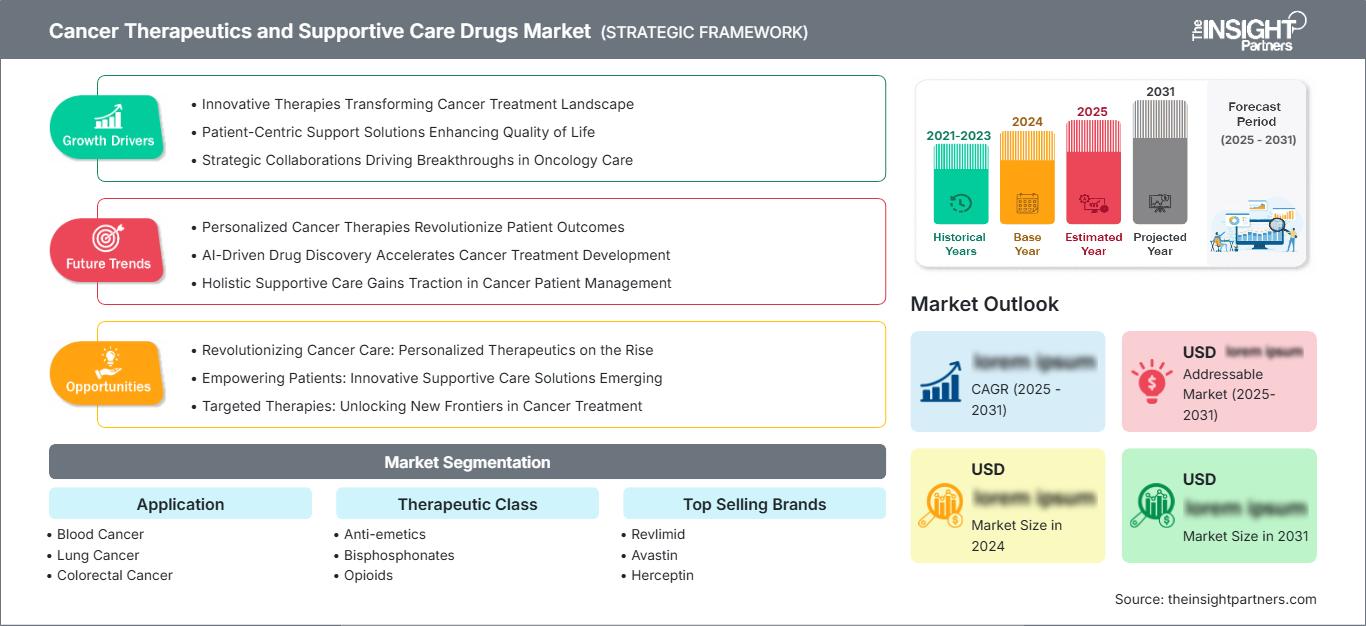
Cancer Therapeutics and Supportive Care Drugs Market: Strategic Insights
Regional Insights
North America Cancer Therapeutics and Supportive Care Drugs Market
North America accounted for 39–42% share in 2025 and is projected to grow at a CAGR range of 7.8–8.4% during 2026–2034. The region benefits from high oncology diagnosis rates, broad access to molecular testing, strong clinical trial activity, and early use of branded biologics. The Cancer Therapeutics and Supportive Care Drugs Market share remains concentrated in advanced hospitals, specialty pharmacies, and integrated cancer networks.
Treatment adoption is supported by payer coverage for immunotherapies, oral targeted drugs, anti-emetics, bisphosphonates, and erythropoiesis stimulating agents when clinically justified. The U.S. drives most regional value, while Canada contributes through public reimbursement and provincial oncology protocols. Biosimilar uptake is moderating expenditure in mature biologic classes but also widening patient access across budget-constrained care settings.
U.S. Cancer Therapeutics and Supportive Care Drugs Market
The U.S. represented 78–82% share of North America in 2025 and is expected to expand at a CAGR range of 7.7–8.3% during 2026–2034. Growth is linked to rapid inclusion of new oncology drugs in treatment pathways, extensive specialty pharmacy infrastructure, and physician adoption of biomarker-driven care. Demand is strongest in blood cancer, lung cancer, breast cancer, and prostate cancer applications.
Company presence is deep, with Amgen Inc., Pfizer Inc., Bristol-Myers Squibb Company, Johnson & Johnson, and Novartis AG maintaining major commercial, regulatory, and clinical operations. Oncology centers increasingly use oral and infused therapies alongside supportive drugs to maintain dose intensity. Value-based reimbursement, pathway compliance, and real-world evidence are becoming decisive factors in formulary access.
Europe Cancer Therapeutics and Supportive Care Drugs Market
Europe accounted for 24–27% market share in 2025 and is expected to expand at CAGR of 7.2–7.8% in the forecast period 2026–2034. Germany leads the region owing to its access, hospital oncology facilities, and reimbursement assessment processes. The UK focuses on cost-effectiveness and managed access that facilitates the selection of new cancer drugs by means of health technology assessment.
France, Italy, and Spain play their part in form of cancer control plans, enhanced screening programs, and systematic hospital procurement. Though adoption varies with respect to reimbursement time, there is no difference in the requirements of anti-emetic, opioid, non-steroidal anti-inflammatory drugs (NSAIDs), bisphosphonates, and erythropoiesis stimulating drugs. The Cancer Therapeutics and Supportive Care Drugs Market is supported by coordinated efforts of European Medicine Agency and rising biosimilars acceptance.
APAC Cancer Therapeutics and Supportive Care Drugs Market
The share of Asia Pacific in 2025 was 21–24%, and its CAGR will be 9.1–9.8% during the forecast period 2026-2034. China is the main market of region owing to oncology reimbursement, innovations, and investments in hospitals. In addition, Japan and South Korea are driven by precision oncology, while India and Australia are growing owing to their cancer center development and specialized therapy access.
As part of the industrial policy, biologics manufacturing is increasing locally, hence reducing the country’s reliance on foreign products in the chosen markets. The Cancer Therapeutics and Supportive Care Drugs Market can benefit from an increase in private insurance, accelerated regulatory approval, and growing demand for supportive drugs accompanying intensive chemotherapy and combination therapy.
Middle East & Africa Cancer Therapeutics and Supportive Care Drugs Market
The Middle East & Africa region is expected to grow at a CAGR range of 6.6–7.2% during 2026–2034, led by Saudi Arabia and the UAE. Government investment in tertiary hospitals, oncology centers, and diagnostic capacity is improving access to advanced medicines. South Africa remains the most structured sub-Saharan market due to specialist availability and private healthcare infrastructure.
Energy-linked fiscal capacity in Gulf countries supports healthcare modernization, while infrastructure gaps limit consistent access in the Rest of MEA. Supportive care medicines retain strategic importance because pain control, anti-emetic use, and anemia management can be delivered more broadly than complex biologics in resource-limited oncology settings.
Segmentation Analysis
Application
The Application segment is expected to grow at a CAGR range of 8.2–8.8% during 2026–2034. Cancer Therapeutics and Supportive Care Drugs Market scope is broadest across high-burden tumor types where survival extension creates recurring need for maintenance, relapse, and supportive therapies. Blood cancer leads by value, while melanoma and lung cancer show strong incremental uptake from immunotherapy and targeted regimens.
- Blood Cancer: Blood cancer remains the largest application because multiple myeloma, lymphoma, and leukemia patients often require prolonged lines of therapy, relapse management, infection control, anemia support, and durable specialty pharmacy coordination.
- Lung Cancer: Lung cancer demand is shaped by high incidence, immunotherapy combinations, EGFR and ALK targeted drugs, and supportive care for fatigue, nausea, pain, and chemotherapy-associated complications.
- Colorectal Cancer: Colorectal cancer contributes steady prescription volume through chemotherapy backbones, anti-angiogenic therapy, targeted biomarker regimens, and supportive drugs used in metastatic and adjuvant treatment pathways.
- Prostate Cancer: Prostate cancer adoption is increasing with androgen pathway inhibitors, radioligand options, bone-protective therapies, and pain management needs across metastatic hormone-sensitive and castration-resistant disease.
- Breast Cancer: Breast cancer remains strategically important due to HER2-targeted therapy, CDK4/6 inhibitors, endocrine combinations, anti-emetic support, and large treated populations across early and metastatic settings.
- Cervical Cancer: Cervical cancer demand is supported by immunotherapy combinations, chemotherapy use, pain management, and broader screening-linked treatment access in emerging markets with high disease burden.
- Head and Neck Cancer: Head and neck cancer requires integrated therapeutic and supportive approaches because swallowing difficulty, pain, nutrition issues, and radiation-linked toxicity complicate treatment adherence.
- Melanoma: Melanoma is the high-growth application as checkpoint inhibitors and targeted combinations expand into earlier lines, with supportive care focused on immune-related symptoms and treatment continuity.
Therapeutic Class
The Therapeutic Class segment is projected to expand at a CAGR range of 7.6–8.2% during 2026–2034. Supportive care classes remain essential because aggressive oncology regimens can trigger nausea, skeletal events, inflammation, pain, and anemia. While core cancer drugs drive revenue, supportive medicines protect treatment completion rates and reduce avoidable hospitalization.
- Anti-emetics: Anti-emetics are critical in chemotherapy and radiation regimens, supporting adherence by reducing nausea, vomiting, dehydration risk, and treatment discontinuation across high-emetogenic cancer protocols.
- Bisphosphonates: Bisphosphonates maintain relevance in bone metastases and myeloma care by reducing skeletal-related events, fracture risk, and pain burden in long-duration oncology treatment.
- Opioids: Opioids remain clinically important for moderate-to-severe cancer pain, especially in metastatic disease, palliative care, and head and neck cancer-related symptom management.
- NSAIDs: NSAIDs address inflammatory pain and are used selectively where renal, bleeding, and gastrointestinal risks are manageable, supporting outpatient symptom control in multimodal care plans.
- Erythropoiesis Stimulating Agents: Erythropoiesis stimulating agents support chemotherapy-induced anemia management in selected patients, helping reduce transfusion dependence when aligned with safety and guideline criteria.
Top Selling Brands
The Top Selling Brands segment is expected to grow at a CAGR range of 6.8–7.4% during 2026–2034. Mature oncology brands remain commercially meaningful because physician familiarity, strong clinical evidence, and expanded indications support continued use. However, biosimilar competition, patent erosion, and payer management are reshaping brand-level pricing power.
- Revlimid: Revlimid remains important in blood cancer treatment history, supported by multiple myeloma use, combination protocols, and continued relevance in markets where access and generics shape prescribing.
- Avastin: Avastin demand is sustained by anti-angiogenic use across solid tumors, though biosimilar competition has shifted procurement priorities toward affordability and broader patient access.
- Herceptin: Herceptin retains clinical significance in HER2-positive breast and gastric cancer treatment, with biosimilars expanding availability while preserving trastuzumab-based therapeutic strategies.
- Rituxan: Rituxan remains foundational in B-cell malignancies and autoimmune overlap settings, although biosimilars are increasingly influencing hospital purchasing and payer-preferred pathways.
- Opdivo: Opdivo continues to benefit from broad immuno-oncology use across tumor types, lifecycle expansion, and combination studies targeting earlier treatment settings and durable response.
- Gleevec: Gleevec represents a benchmark targeted therapy in chronic myeloid leukemia and gastrointestinal stromal tumors, with generic availability supporting affordable long-term disease control.
- Velcade: Velcade remains relevant in multiple myeloma and mantle cell lymphoma, supported by combination regimens, clinician familiarity, and access in both mature and emerging markets.
- Imbruvica: Imbruvica contributes to hematology treatment pathways, though competitive BTK inhibitor dynamics and safety considerations are influencing positioning in chronic lymphocytic leukemia.
- Ibrance: Ibrance remains a key CDK4/6 inhibitor in breast cancer, supported by physician experience, oral administration, and ongoing evidence in specific maintenance contexts.
- Zytiga: Zytiga maintains demand in prostate cancer, particularly where cost, availability, and combination familiarity support use in metastatic hormone-sensitive and castration-resistant disease.
Distribution Channel
The Distribution Channel segment is projected to grow at a CAGR range of 8.1–8.7% during 2026–2034. Distribution is shifting toward integrated models where hospitals manage infusion and acute toxicity, retail pharmacies support oral regimens, and oncology centers coordinate multidisciplinary care. Cold-chain logistics, reimbursement documentation, and adherence monitoring are key differentiators.
- Hospitals Pharmacies: Hospitals pharmacies dominate infused oncology and high-acuity supportive care because they manage procurement, compounding, administration schedules, adverse-event response, and reimbursement documentation within clinical pathways.
- Retail Pharmacies: Retail pharmacies are gaining importance as oral oncology and supportive prescriptions increase, supporting refill adherence, patient counseling, insurance navigation, and chronic symptom management.
- Oncology Centers: Oncology centers provide coordinated diagnosis, infusion, monitoring, and supportive care, making them strategically important for complex therapies, clinical trial access, and multidisciplinary treatment planning.
Opportunity Snapshot
| Segment Name | Revenue Contribution | Trend Tag | Adoption Stage |
| Blood Cancer | High | Relapse Care | Mature |
| Lung Cancer | High | Biomarker Therapy | Scaling |
| Colorectal Cancer | Medium | Targeted Lines | Mature |
| Prostate Cancer | High | Radioligand Use | Scaling |
| Breast Cancer | High | CDK Sequencing | Mature |
| Cervical Cancer | Medium | Immunotherapy Access | Scaling |
| Head and Neck Cancer | Medium | Toxicity Control | Scaling |
| Melanoma | Medium | Checkpoint Expansion | Scaling |
Cancer Therapeutics and Supportive Care Drugs Market Growth Drivers and Impact Analysis
Rising Multi-Line Oncology Treatment Intensity
In cancer treatment, the use of line of therapy, maintenance, and combination approaches has led to increased commercial lifespan of cancer and supportive drugs. Patients who have responded positively to initial line of therapy go on to receive maintenance or relapse therapy, thus making it necessary to prescribe anti-emetic, analgesics, anemia and bone supportive treatments. Such a market driver is evident in the area of blood cancer, breast cancer, prostate cancer and lung cancer because improvement in survival rates leads to lengthening of treatment periods. The market for Cancer Therapeutics and Supportive Care Drugs is positively influenced by this trend because there is need for hospitals to take care of both tumor control and toxicity.
Expansion of Precision Oncology and Biomarker Testing
Wider use of genomic testing is improving therapy selection and increasing eligibility for targeted treatments. Lung cancer, breast cancer, colorectal cancer, melanoma, and prostate cancer increasingly rely on biomarkers to determine drug choice, sequence therapy, and identify resistance mechanisms. As tests get integrated into care pathways, patient pools who qualify for the test will be more identifiable by doctors, insurers, and companies. From the commercial perspective, there is an increase in the probability of a transition from diagnosis to treatment, particularly in those cases where a diagnostic is paired with a pharmaceutical drug and a known molecular target exists. In addition, supportive care is improved since the targeted and immune drugs have their specific toxicities.
Specialty Pharmacy and Oncology Center Integration
Distribution infrastructure is becoming a strategic growth driver as oral oncology drugs, injectables, and supportive medicines require tighter coordination between prescribers, payers, and dispensers. Specialty pharmacies improve prior authorization, refill management, cold-chain handling, and patient education, while oncology centers provide infusion services and toxicity monitoring. This integration reduces treatment delays and supports adherence for complex regimens that combine multiple therapeutic classes. For manufacturers, strong channel partnerships can accelerate launch uptake and improve real-world evidence generation. For providers, integrated workflows reduce avoidable hospital visits and improve patient experience. The result is a more structured access environment that supports sustained revenue growth across branded therapies and supportive care drugs.
Cancer Therapeutics and Supportive Care Drugs Market Future Trends
Shift Toward Earlier-Line Immunotherapy and Targeted Combinations
Cancer Therapeutics and Supportive Care Drugs Market trends indicate a clear movement of advanced therapies from late-stage disease into adjuvant, neoadjuvant, and first-line settings. This trend will increase treated populations before extensive disease progression, particularly in breast cancer, lung cancer, melanoma, and hematologic malignancies. Earlier use changes commercial dynamics because therapy duration, monitoring needs, and supportive care requirements differ from heavily pretreated populations. It also raises payer expectations for durable endpoints, survival benefit, and tolerability. Companies that demonstrate clear benefit in earlier disease while managing adverse events efficiently will gain stronger differentiation. Supportive care demand will evolve toward prevention, adherence, and long-term toxicity management.
Growth of Patient-Convenient Formulations and Care Settings
Future market development will be shaped by subcutaneous dosing, oral regimens, home-administered supportive care, and shorter infusion schedules. These formats reduce chair time, lower indirect costs, and help oncology centers manage capacity constraints. Patient convenience is becoming clinically relevant because long travel times, frequent monitoring, and treatment fatigue can reduce adherence. Manufacturers are therefore investing in formulation innovation, device compatibility, and simplified administration protocols. The shift will not eliminate hospital-based oncology, but it will redistribute selected treatments toward outpatient and community settings. This trend favors companies that combine clinical efficacy with operational efficiency, payer acceptance, and patient-centered delivery models.
Cancer Therapeutics and Supportive Care Drugs Market Opportunities
Emerging Market Access Expansion Through Oncology Infrastructure
Emerging economies offer actionable investment potential as public and private providers expand cancer diagnosis, infusion capacity, and specialty pharmacy access. Cancer Therapeutics and Supportive Care Drugs Market Forecasts indicate that Asia Pacific will remain the fastest-growing regional base, while Gulf countries improve access through tertiary care investment. Companies can capture opportunity by aligning pricing, patient assistance, distribution partnerships, and local evidence generation. Supportive care drugs may provide near-term volume because they are used across multiple cancer regimens and require less complex diagnostic infrastructure than some precision therapies. Long-term success will depend on regulatory engagement, physician education, supply reliability, and affordability programs.
Supportive Care Differentiation in Complex Treatment Pathways
Supportive care is often underrecognized commercially, yet it directly influences treatment completion, hospitalization risk, and patient quality of life. Companies can create value by developing improved anti-emetics, safer analgesic approaches, anemia protocols, and bone-protective strategies that fit modern oncology combinations. Opportunity is strongest where therapy intensity is rising, such as blood cancer, lung cancer, breast cancer, and prostate cancer. Integration with digital symptom tracking and oncology nurse-led monitoring could further strengthen adoption. Payers are likely to support supportive interventions when evidence shows fewer emergency visits, reduced inpatient stays, or better adherence. This creates room for differentiated products beyond core tumor-directed medicines.
Recent Developments
- July 2026: Novartis AG announced that the U.S. FDA approved Pluvicto for PSMA-positive metastatic hormone-sensitive prostate cancer in combination with an androgen receptor pathway inhibitor. The approval expanded radioligand therapy use across metastatic prostate cancer and was supported by Phase III PSMAddition data showing reduced risk of progression or death.
- June 2026: Pfizer Inc. received U.S. FDA approval for Ibrance in combination with trastuzumab, with or without pertuzumab, and endocrine therapy for maintenance treatment of adults with HR-positive, HER2-positive locally advanced or metastatic breast cancer following induction treatment. The decision was based on PATINA trial progression-free survival results.
- March 2026: Bristol-Myers Squibb Company announced expanded U.S. and European approvals for Opdivo in classical Hodgkin lymphoma, including U.S. approval with doxorubicin, vinblastine, and dacarbazine for previously untreated Stage III or IV disease in adults and pediatric patients aged 12 years and older.
Frequently Asked Questions

- Comprehensive Market Sizing and Forecast Analysis
- Detailed Segmentation Analysis
- In-Depth Market Dynamics Assessment
- Regional and Country-Level Insights
- Competitive Landscape and Company Benchmarking
- Strategic Business Intelligence
Recent Reports
Testimonials

The Insight Partners provided valuable market intelligence that supported our global go-to-market strategy. Their team was professional, responsive, and attentive to our feedback, providing thoughtful analysis and helpful methodological clarifications throughout the project.
Junmo Kim Chief Financial Officer (CFO), Enertech Co., Ltd.
The Insight Partners' SCADA System Market report is comprehensive, with valuable insights on current trends and future forecasts. The team was highly professional, responsive, and supportive throughout. We are very satisfied and highly recommend their services.
RAN KEDEM Partner, Reali Technologies LTDs
I requested a report on a very specific software market and the team produced the report in a few days. The information was very relevant and well presented. I then requested some changes and additions to the report. The team was again very responsive and I got the final report in less than a week.
JEAN-HERVE JENN Chairman, Future Analytica
We worked with The Insight Partners for an important market study and forecast. They gave us clear insights into opportunities and risks, which helped shape our plans. Their research was easy to use and based on solid data. It helped us make smart, confident decisions. We highly recommend them.
PIYUSH NAGPAL Sr. Vice President, High Beam Global
The Insight Partners delivered insightful, well-structured market research with strong domain expertise. Their team was professional and responsive throughout. The user-friendly website made accessing industry reports seamless. We highly recommend them for reliable, high-quality research services
YUKIHIKO ADACHI CEO, Deep Blue, LLC.
This is the first time I have purchased a market report from The Insight Partners.While I was unsure at first, I visited their web site and felt more comfortable to take the risk and purchase a market report.I am completely satisfied with the quality of the report and customer service. I had several questions and comments with the initial report, but after a couple of dialogs over email with their analyst I believe I have a report that I can use as input to our strategic planning process.Thank you so much for taking the extra time and making this a positive experience.I will definitely recommend your service to others and you will be my first call when we need further market data.
JOHN SUZUKI President and Chief Executive Officer, Board Director, BK Technologies
I wish to appreciate your support and the professionalism you displayed in the course of attending to my request for information regarding to infectious disease IVD market in Nigeria. I appreciate your patience, your guidance, and the fact that you were willing to offer a discount, which eventually made it possible for us to close a deal. I look forward to engaging The Insight Partners in the future, all thanks to the impression you have created in me as a result of this first encounter.
DR CHIJIOKE ONYIA MANAGING DIRECTOR, PineCrest Healthcare Ltd.Reason to Buy
- Informed Decision-Making
- Understanding Market Dynamics
- Competitive Analysis
- Identifying Emerging Markets
- Customer Insights
- Market Forecasts
- Risk Mitigation
- Boosting Operational Efficiency
- Strategic Planning
- Investment Justification
- Tracking Industry Innovations
- Aligning with Regulatory Trends





 Get Free Sample for