
Canine Atopic Dermatitis Treatment Market Size, Share & Growth by 2034
Coverage: By Product (Glucocorticoids, Antihistamines, Immunosuppressants, MAbs, Others); Administration (Topical, Oral, Parenteral); Distribution Channel (Retail, E-commerce, Vet Pharmacies), and Geography (North America, Europe, Asia Pacific, and South and Central America)
- Status : Data Released
- Report Code : TIPRE00020944
- Category : Life Sciences
- No. of Pages : 150
- Available Report Formats :


- Last update date : August 17, 2026


2025 Market Size
US$ 5.51 Bn
Base year value
2034 Forecast
US$ 13.3 Bn
Projected by 2034
CAGR 2026-2034
10.28 %
Growth rate
Addressable Market
US$ 83.49 Bn
(2026-2034)
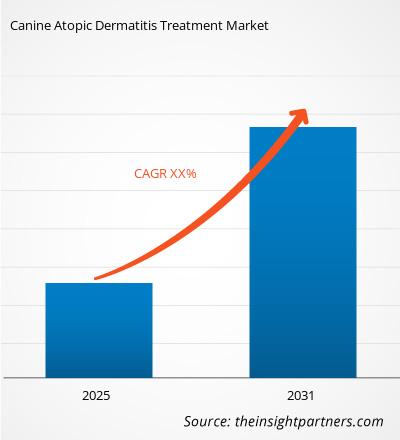
The Canine Atopic Dermatitis Treatment Market is expected to expand from US$ 5.51 Billion in 2025 to US$ 13.3 Billion by 2034 at a CAGR of 10.28% during 2026-2034. Expansion is attributed to increased diagnosis of canine allergic skin diseases, widespread adoption of antipruritic medications, and greater availability of prescribed dermatological drugs via veterinary practices, online pharmacies, and specialized distribution channels.
The North American region continues to dominate the market and is anticipated to show 2026-2034 expansion in the mid to low-double digit CAGR category. Canine Atopic Dermatitis Treatment Market Size in this region is driven by higher medicalization rate of companion animals, greater physician involvement in prescriptions, and rapid adoption of monoclonal antibodies and oral immunomodulators.
Canine Atopic Dermatitis Treatment Market Assessment and Insights
- North America accounted for 39–42% share in 2025 and is growing at a CAGR of 9.5–10.5% during 2026–2034, supported by high pet insurance coverage, specialist dermatology networks, and rapid biologics adoption.
- US represented 82–86% of North America in 2025 and is growing at a CAGR of 9.8–10.8% during 2026–2034, driven by premium prescription access and clinic-administered injectable therapies.
- Europe held 24–27% share in 2025 and is growing at a CAGR of 8.8–9.8% during 2026–2034, led by Germany, the UK, France, Italy, and Spain.
- Asia Pacific captured 18–21% share in 2025 and is growing at a CAGR of 11.2–12.4% during 2026–2034, with China, Japan, South Korea, India, and Australia supporting faster veterinary dermatology penetration.
- Largest Segment: Oral administration held 44–48% market share in 2025 and is growing at a CAGR of 9.6–10.6% during 2026–2034, reflecting high convenience and repeat prescription use.
- High Growth Segment: MAbs held 18–22% market share in 2025 and are growing at a CAGR of 12.4–13.6% during 2026–2034, supported by targeted itch control and extended dosing intervals.
- Key companies analyzed in detail: Zoetis Inc., Virbac S.A., Novartis AG, Boehringer Ingelheim International GmbH, AB Science S.A., Toray Industries Inc., Elanco Animal Health Incorporated, Bimeda Inc., Vetoquinol S.A., Ceva Santé Animale, Boragen Inc., Immunomic Therapeutics Inc., and Nexvet Biopharma plc.
Source: The Insight Partners' analysis based on proprietary research, government publications, company annual reports, investor presentations, industry databases, and expert interviews.
Technological evolution in the Canine Atopic Dermatitis Treatment Market is progressing from global anti-inflammatory control to specific pathways for managing pruritus, inflammation, and skin barrier issues. Changes are also taking place in terms of production capability, where biologicals production facilities and tastier oral drugs become important. Combination of systemic therapy and topical treatments, diagnostics, diet assessments, and monitoring has been increasingly used in veterinary clinics to minimize recurrence of the condition.
In the coming years, incremental opportunities in the emerging regions will account for a higher share of growth opportunities owing to the increasing number of pets in urban areas, digitization of veterinary services, and infrastructure for prescription filling. Wherever regulatory policies support the idea that companion animal chronic disease treatment is a valuable category in veterinary treatment, there is a positive trend in regulatory dynamics. Investment will be made in scaling up biologic drugs, new oral drugs, prescription drug verification online, and clinical training programs.
Canine Atopic Dermatitis Treatment Market Report Scope
| Report Attribute | Details |
|---|---|
| Market size in 2025 | US$ 5.51 Billion |
| Market Size by 2034 | US$ 13.3 Billion |
| Global CAGR (2026 - 2034) | 10.28% |
| Historical Data | 2021-2024 |
| Forecast period | 2026-2034 |
Canine Atopic Dermatitis Treatment Market Analysis
Increased detection rates will boost Canine Atopic Dermatitis Treatment Market development as more veterinarians detect chronic itch early and shift their focus away from episodic steroid treatment only. Allergic dermatitis is prevalent amongst dogs, with an average prevalence rate for allergic skin disorders being around 10-15% according to the available literature on clinical conditions that affect dogs predisposed by certain breeds and environments. The market ecosystem encompasses pharmaceutical companies, contract manufacturers, veterinary wholesalers, online pharmacies, specialist clinics, and consumers demanding long-term protocols instead of quick fixes.
The supply side is influenced by prescription controls, biologics cold chain requirements, and dosage form differentiation. Orally administered drugs are essential because of the possibility of home administration, while injectable drugs attract more interest when owners are interested in professional treatment adherence. According to market analysis, the ability of manufacturers to educate doctors about the importance of diagnostics, monitoring, and patient safety will preserve prescription volumes.
Competition revolves around companies with companion animal franchises. For instance, Zoetis Inc. is positioned with dermatological franchises, whereas Elanco Animal Health Incorporated has been bolstered by JAK inhibitors and monoclonal antibodies. The supporting dermatology, anti-infectives, and skin care portfolios include Virbac S.A., Vetoquinol S.A., Ceva Santé Animale, Bimeda Inc., and Boehringer Ingelheim International GmbH.
Strategic positioning is now based on convenience of administration, speed of action, label inclusion, acceptance by clinics, and patient adherence. Companies still relevant for discussions of pipeline, franchise, or platform, with regard to immunology and specialty therapeutics informing veterinary dermatology drug development, include AB Science S.A., Toray Industries Inc., Immunomic Therapeutics Inc., Boragen Inc., Nexvet Biopharma plc, and Novartis AG.
● REPORT CUSTOMIZATION
Tailor This Report To Align With Your Specific Business Requirements
This report can be customized to align precisely with your business objectives, scope, and target markets. Customization options include tailored segmentation, geography, competitive analysis, and strategic insights to support informed decision-making.
Customize This Report →WHAT YOU CAN ADJUST
- ● Segmentations
- ● Geography
- ● Competitive Analysis
- ● Language Preferences
Canine Atopic Dermatitis Treatment Market: Strategic Insights

Regional Insights
North America Canine Atopic Dermatitis Treatment Market
The North American market share was 39-42% in 2025 and projected to witness growth at a CAGR of 9.5-10.5% between 2026 and 2034. The reason behind this is the high veterinary spending on each pet, referral network of dermatologists in specialized clinics, and swift transition from symptomatic treatment using topical medications to the use of systemic treatments.
Furthermore, the Canine Atopic Dermatitis Treatment Market share in North America is boosted by strong purchasing mechanisms at veterinary clinics and reimbursement support from insurance companies for chronic disease treatment. There will be demand for the disease due to the awareness of seasonal allergy triggers, environmental factors, and specific breeds prone to atopy. The United States generates maximum revenues in the region, whereas Canada provides steady prescription rates due to urban veterinary clinics.
U.S. Canine Atopic Dermatitis Treatment Market
The US comprised 82-86% share of North America in 2025 and expected to witness a growth rate of 9.8%-10.8% CAGR from 2026 to 2034. The huge availability of companion dogs, advanced networks of clinics, and greater availability of insurance in veterinary visits ensure continued adoption of prescriptions. The company presence is prominent with Zoetis Inc. and Elanco Animal Health Incorporated leading product awareness and prescribing practices.
Oral tablets and injectable MAbs are preferred for at-home treatments in case of compliant dogs. The use of e-commerce and vet pharmacies in providing refills is increasing, but the process of diagnosing and choosing treatment is still under the guidance of veterinarians. Increased owner acceptance to treat chronic itch drives the premium drug products.
Europe Canine Atopic Dermatitis Treatment Market
Europe represented 24–27% share in 2025 and is growing at a CAGR of 8.8–9.8% during 2026–2034. Germany remains a leading country due to high veterinary standards, structured prescribing, and strong pet health spending. The UK also supports demand through established companion animal clinics and increasing use of multimodal therapies that combine systemic medicines with barrier-support products.
France, Italy, and Spain provide important volume growth as pet humanization and urban ownership increase. Virbac S.A., Vetoquinol S.A., and Ceva Santé Animale strengthen regional access through European dermatology portfolios and veterinarian engagement. Market development is moderated by reimbursement variability and price sensitivity, but chronic allergic disease management continues to gain clinical priority.
APAC Canine Atopic Dermatitis Treatment Market
Asia Pacific held 18–21% share in 2025 and is forecast to grow at a CAGR of 11.2–12.4% during 2026–2034. China is the leading growth contributor, supported by urban pet ownership, digital veterinary services, and higher spending on companion animal wellness.
Japan, South Korea, Australia, and India add demand through premium clinics, dermatology awareness, and expanding pet pharmacy access. Industrial drivers include stronger distribution networks and localized companion animal product portfolios. Policy support for animal welfare and veterinary professionalization improves diagnosis quality, although affordability differences shape therapy selection across countries.
Middle East & Africa Canine Atopic Dermatitis Treatment Market
Middle East & Africa is expected to grow at a CAGR of 8.2–9.2% during 2026–2034. Saudi Arabia and the UAE lead adoption through premium veterinary clinics, higher disposable income, and growing companion animal ownership, particularly in major cities.
South Africa remains the most structured market in Sub-Saharan Africa due to established veterinary infrastructure and retail pharmacy access. Rest of MEA demand is developing gradually, with infrastructure, cold-chain reliability, and specialist availability affecting biologics uptake. Energy-linked income growth and urban infrastructure expansion indirectly support premium pet health expenditure.
Segmentation Analysis
Product
Product is expected to grow at a CAGR of 10.0–11.0% during 2026–2034. The Canine Atopic Dermatitis Treatment Market scope across product categories reflects a shift from low-cost symptom suppression to targeted chronic control. Clinical choice depends on disease severity, recurrence pattern, comorbid infection, owner adherence, and safety profile. Biologics are gaining strategic relevance, while glucocorticoids and antihistamines retain roles in acute and adjunctive care.
- Glucocorticoids remain widely used for short-term flare control because of affordability and fast anti-inflammatory action, though long-term use is increasingly limited by safety monitoring requirements.
- Antihistamines serve as adjuncts in mild or seasonal cases, especially where veterinarians combine them with diet control, topical therapy, or allergen avoidance strategies.
- Immunosuppressants are important for moderate to severe chronic disease where steroid-sparing maintenance is required, but monitoring and delayed onset affect prescribing confidence.
- MAbs are strategically important for targeted itch control, clinic-administered adherence, and differentiation in dogs unsuitable for daily oral therapy or broad immunosuppression.
Administration
Administration is projected to grow at a CAGR of 9.8–10.8% during 2026–2034. Oral treatment dominates because daily dosing is familiar to owners and supports refill-based revenue. Topical products remain important in localized lesions and skin barrier support. Parenteral administration is advancing as monoclonal antibodies provide longer dosing intervals and reduce home-administration burden.
- Topical therapy is preferred for localized inflammation, secondary skin support, and combination protocols, with shampoos, sprays, creams, and barrier products improving comfort and reducing lesion escalation.
- Oral administration leads due to convenience, broad prescribing familiarity, and suitability for recurring disease, especially when owners can maintain therapy through pharmacy refills.
- Parenteral administration is expanding through biologics that are delivered in clinics, improving adherence for owners who struggle with tablets or require sustained itch control.
Distribution Channel
Distribution Channel is expected to grow at a CAGR of 10.1–11.1% during 2026–2034. Channel dynamics are shifting as veterinarian diagnosis remains central, while online refill models improve continuity. Retail channels support accessible skin-care products, but prescription therapies depend on compliance checks, safety counseling, and veterinary oversight. The strongest growth is expected where digital pharmacy infrastructure integrates with clinic authorization.
- Retail channels support over-the-counter skin-care, supplements, and maintenance products, particularly where owners seek accessible solutions before veterinary consultation or between prescription cycles.
- E-commerce is gaining importance for authorized refills, subscription delivery, and price transparency, although prescription validation remains essential for regulated systemic therapies.
- Vet Pharmacies remain the most influential channel for diagnosis-linked dispensing, biologics administration, safety counseling, and repeat treatment monitoring in chronic allergic cases.
Opportunity Snapshot
| Segment Name | Revenue Contribution | Trend Tag | Adoption Stage |
| Glucocorticoids | Medium | Flare Control | Mature |
| Antihistamines | Low | Adjunct Relief | Mature |
| Immunosuppressants | Medium | Steroid Sparing | Scaling |
| MAbs | High | Targeted Biologics | Scaling |
Canine Atopic Dermatitis Treatment Market Growth Drivers and Impact Analysis
Rising Chronic Itch Diagnosis in Companion Dogs
Veterinary appreciation of recurring itching, erythema, paw licking, ear infections, and seasonal pattern presentations is driving the earlier treatment of Canine Atopic Disease. The veterinary literature cites atopic dermatitis as a prevalent allergic skin disease, usually occurring in genetically disposed breeds and necessitating prolonged treatment over intermittent treatment. Market implications include increased repeat prescription rates, increased follow-up appointments, and an increased need for treatments to decrease the itch-scratch cycle. There is also better owner education about early detection, avoiding infections, and compliance. This driver supports systemics, medicated topicals, and prescription refills, since the disease tends to be chronic in nature.
Shift Toward Targeted Immunology and Biologics
The focus of treatment is shifting from overall suppression of the process to targeting specific pathways associated with inflammation and itch. The monoclonal antibody therapies and JAK pathway drugs have altered veterinarian expectations about how quickly something works, how long it will work, how well-tolerated it will be, and patient compliance. The impact of such treatments on the market is evident in increased willingness to pay for more differentiated therapy, particularly those therapies which limit multiple doses of steroids or make the disease easier to manage. Biologics increase the value of revenue for clinic administered therapies due to injections leading to regular appointments.
Expansion of Vet Pharmacy and Digital Refill Infrastructure
Prescription access is becoming easier as veterinary pharmacies and authorized e-commerce platforms improve repeat fulfillment for chronic dermatology medicines. Owners managing recurring itch benefit from reminders, subscription deliveries, and direct clinic authorization, which reduce missed doses and treatment gaps. The impact is especially important for oral maintenance products and topical support regimens, where consistency determines clinical outcomes. Digital channels also help manufacturers gather demand signals, support education, and improve product availability outside large metropolitan clinics. However, veterinarian oversight remains essential because systemic therapies require diagnosis, safety assessment, and monitoring of secondary infection or comorbid disease.
Canine Atopic Dermatitis Treatment Market Future Trends
Precision Dermatology Protocols
Canine Atopic Dermatitis Treatment Market trends will increasingly reflect precision protocols combining allergy history, lesion scoring, cytology, breed risk, seasonality, diet response, and owner adherence profile. Future practice models are expected to classify dogs by flare frequency, itch severity, and treatment tolerance before selecting oral, topical, or injectable regimens. This approach will support more consistent outcomes and reduce trial-and-error prescribing. Manufacturers can benefit by aligning products with decision trees, monitoring tools, and veterinarian education. As digital records improve, clinics may use longitudinal itch scores to justify therapy switching and optimize maintenance intervals.
Longer-Interval Injectable Therapies
Injectable dermatology therapies are expected to evolve toward longer dosing intervals, improved convenience, and broader use in dogs with poor tablet compliance. The commercial appeal is strong because owners often value clinic-delivered certainty when chronic itch disrupts sleep, behavior, and household routines. Over time, longer-acting biologics could expand use beyond specialist practices into general veterinary clinics, provided cold-chain handling and pricing remain manageable. Competitive differentiation will depend on onset of relief, durability, safety, and label clarity. This trend may also create new service revenue models built around scheduled dermatology follow-up visits.
Canine Atopic Dermatitis Treatment Market Opportunities
Integrated Dermatology Care Bundles
Manufacturers and veterinary groups can build bundled care models that combine systemic therapy, topical maintenance, cytology checks, diet counseling, and scheduled follow-up. Canine Atopic Dermatitis Treatment Market Forecasts indicate stronger revenue durability where therapies are positioned as part of structured chronic care rather than one-time symptom treatment. Bundles can improve adherence, reduce secondary infections, and create clearer value for owners paying out of pocket. Companies with broad portfolios are well placed to supply multiple components, while digital platforms can automate reminders and refill authorization. The opportunity is strongest in North America, Europe, Japan, Australia, and premium urban clinics in Asia.
Emerging Market Veterinary Education Programs
Emerging markets offer a scalable opportunity through veterinarian training, owner awareness, and diagnostic standardization. Many dogs with chronic itch are still treated late or managed with intermittent low-cost products, creating unmet need for better protocols. Investment in continuing education, sample programs, pharmacy partnerships, and localized affordability strategies can expand prescription penetration. Companies entering these markets should prioritize clear dosing guidance, visible clinical outcomes, and access through trusted veterinary channels. This opportunity is particularly relevant in China, India, Southeast Asia, the Gulf states, and parts of Latin America where companion animal spending is rising quickly.
Recent Developments
- May 2026: Elanco Animal Health Incorporated began phased launch activity for Befrena, its anti-IL-31 monoclonal antibody injection for canine allergic and atopic dermatitis, following USDA approval in December 2025. The therapy is positioned around 6 to 8 weeks of itch control and clinic-based administration.
- March 2025: Ceva Santé Animale renewed its shareholding structure and added Mérieux Institute and ARCHIMED as investors to support international expansion and innovation. The company highlighted €1.77 billion revenue in the prior year and continued investment in companion animal health portfolios, including dermatology.
- October 2024: Animal Dermatology Group acquired four specialty dermatology practices in Maryland, Tennessee, Florida, and California, expanding to more than 90 doctors. The network expansion strengthened referral capacity for skin, allergy, and ear disease management across major US companion animal markets.
Frequently Asked Questions

- Comprehensive Market Sizing and Forecast Analysis
- Detailed Segmentation Analysis
- In-Depth Market Dynamics Assessment
- Regional and Country-Level Insights
- Competitive Landscape and Company Benchmarking
- Strategic Business Intelligence
Recent Reports
Testimonials

The Insight Partners' SCADA System Market report is comprehensive, with valuable insights on current trends and future forecasts. The team was highly professional, responsive, and supportive throughout. We are very satisfied and highly recommend their services.
RAN KEDEM Partner, Reali Technologies LTDs
I requested a report on a very specific software market and the team produced the report in a few days. The information was very relevant and well presented. I then requested some changes and additions to the report. The team was again very responsive and I got the final report in less than a week.
JEAN-HERVE JENN Chairman, Future Analytica
We worked with The Insight Partners for an important market study and forecast. They gave us clear insights into opportunities and risks, which helped shape our plans. Their research was easy to use and based on solid data. It helped us make smart, confident decisions. We highly recommend them.
PIYUSH NAGPAL Sr. Vice President, High Beam Global
The Insight Partners delivered insightful, well-structured market research with strong domain expertise. Their team was professional and responsive throughout. The user-friendly website made accessing industry reports seamless. We highly recommend them for reliable, high-quality research services
YUKIHIKO ADACHI CEO, Deep Blue, LLC.
This is the first time I have purchased a market report from The Insight Partners.While I was unsure at first, I visited their web site and felt more comfortable to take the risk and purchase a market report.I am completely satisfied with the quality of the report and customer service. I had several questions and comments with the initial report, but after a couple of dialogs over email with their analyst I believe I have a report that I can use as input to our strategic planning process.Thank you so much for taking the extra time and making this a positive experience.I will definitely recommend your service to others and you will be my first call when we need further market data.
JOHN SUZUKI President and Chief Executive Officer, Board Director, BK Technologies
I wish to appreciate your support and the professionalism you displayed in the course of attending to my request for information regarding to infectious disease IVD market in Nigeria. I appreciate your patience, your guidance, and the fact that you were willing to offer a discount, which eventually made it possible for us to close a deal. I look forward to engaging The Insight Partners in the future, all thanks to the impression you have created in me as a result of this first encounter.
DR CHIJIOKE ONYIA MANAGING DIRECTOR, PineCrest Healthcare Ltd.Reason to Buy
- Informed Decision-Making
- Understanding Market Dynamics
- Competitive Analysis
- Identifying Emerging Markets
- Customer Insights
- Market Forecasts
- Risk Mitigation
- Boosting Operational Efficiency
- Strategic Planning
- Investment Justification
- Tracking Industry Innovations
- Aligning with Regulatory Trends





 Get Free Sample for