
Cannabidiol Supplements Market Demand, Trends & Forecast by 2034
Coverage: By Product Type (Food and Beverages, Medicines and Therapeutics, Skincare Products, Others); Application (Epilepsy, Multiple Sclerosis, Bipolar disorder, Schizophrenia, Parkinson Disease, Others); Form (Capsules, Oil, Aerosol Spray, Edibles, Tinctures, Topicals, Others); Distribution Channel (Hospital Pharmacy, Retail Pharmacy, Drug Stores, Others) , and Geography (North America, Europe, Asia Pacific, and South and Central America)
- Status : Data Released
- Report Code : TIPRE00008532
- Category : Life Sciences
- No. of Pages : 150
- Available Report Formats :


- Last update date : August 17, 2026


2025 Market Size
US$ 1.84 Bn
Base year value
2034 Forecast
US$ 7.37 Bn
Projected by 2034
CAGR 2026-2034
16.64 %
Growth rate
Addressable Market
US$ 38.64 Bn
(2026-2034)
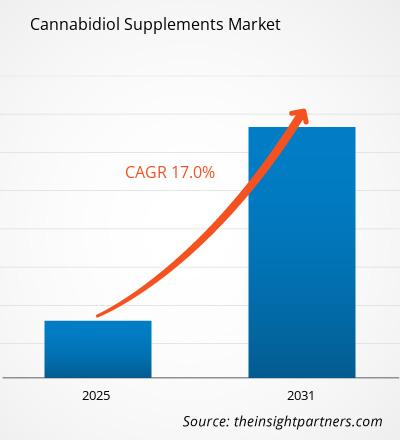
Cannabidiol Supplements Market size is expected to reach US$ 7.37 Billion by 2034, from US$ 1.84 Billion in 2025 at a CAGR of 16.64% from 2026 to 2034. The increasing adoption of cannabidiol formulations in the medicines and therapeutics, food and beverages, and cosmetics and skin care segments, with different delivery options available such as capsules, oil, edible products, tincture, aerosol spray, and topicals.
North America is considered the most commercially organized region, as its market size is influenced by structured sources of hemp, pharmacy-based access, and familiarity regarding epilepsy-related applications. North America is anticipated to experience a CAGR growth of 15.5% - 17.0% in 2026 - 2034 on account of better testing and control of product labels and improved consumer awareness regarding their cannabinoid content.
Cannabidiol Supplements Market Assessment and Insights
- North America held 43–47% share in 2025 and is expected to grow at a CAGR of 15.5–17.0% during 2026–2034, led by mature hemp sourcing, testing infrastructure, and pharmacy-oriented product access.
- US accounted for 78–82% of North America in 2025 and is projected to register a CAGR of 15.0–16.5% during 2026–2034, driven by branded oils, capsules, and topicals.
- Europe represented 23–27% share in 2025 and is estimated to grow at a CAGR of 14.5–16.0% during 2026–2034, with the UK, Germany, France, Italy, and Spain leading commercialization.
- Asia Pacific captured 17–21% share in 2025 and is forecast to grow at a CAGR of 18.0–20.0% during 2026–2034, supported by Japan, China, South Korea, India, and Australia.
- Largest Segment medicines and therapeutics held 40–44% market share in 2025 and is expected to grow at a CAGR of 15.8–17.2% during 2026–2034.
- High Growth Segment edibles held 12–15% market share in 2025 and is expected to grow at a CAGR of 19.0–21.0% during 2026–2034.
- Key companies analyzed in detail: Folium Biosciences, LLC, Global Cannabinoids, Inc., HempMeds, Hemp Depot LLC, Pure Hemp Botanicals, Endoca BV, Genesee Nutrition LLC, Medical Marijuana, Inc., Elixinol Wellness Limited, Isodiol International Inc.
Source: The Insight Partners' analysis based on proprietary research, government publications, company annual reports, investor presentations, industry databases, and expert interviews.
Technological progress in extraction, winterization, chromatography, and nanoemulsion development is pushing the market from commoditized hemp oil towards standardized finished supplements. Brand differentiation has begun occurring through controlled THC extracts, batch-specific certifications, and bioavailability benefits by format. The Cannabidiol Supplements Market is also taking advantage of contract manufacturing capabilities offering capsule, tincture, edible, and topical formats, while keeping capital investment low for new branded players.
In the next ten years, growth will be driven by regulated channels of wellness, medical recommendation networks, and specialty retail across borders. Regulatory progress is still inconsistent, but the novel food framework in Europe, ongoing federal dialogue in the United States, and Asia Pacific pilot schemes have led to improved documentation. Suppliers with audited sourcing, pharmacovigilance standards, and pharmaceutical connections should win out as consumers avoid unverified CBD products.
Cannabidiol Supplements Market Report Scope
| Report Attribute | Details |
|---|---|
| Market size in 2025 | US$ 1.84 Billion |
| Market Size by 2034 | US$ 7.37 Billion |
| Global CAGR (2026 - 2034) | 16.64% |
| Historical Data | 2021-2024 |
| Forecast period | 2026-2034 |
Cannabidiol Supplements Market Analysis
The adoption among consumers has been influenced by the rising trend for non-intoxication products, greater transparency around hemp ingredients, and increasing demand for options within neurological, stress relief, and pain-related wellness regimens. The growth in Cannabidiol Supplements market is highly dependent on the credibility of the supply chain since the contamination test and THC level check have become necessary in the supply of products to retail stores and pharmacies.
From the perspective of supply, the availability of floral hemp, capacity for extraction and standardization of ingredients affect prices. According to USDA data, the value of industrial hemp has recovered in 2025 in the US, which signifies good supply of cannabinoid inputs. This has been favorable to processors for capsules, oils, tinctures, and topicals although the problem of excess supply impacts bulk extract pricing.
Competitive intensity is strong because market analysis reveals fragmented brand ownership, inconsistent regulatory expertise, and low barriers to web entry. Folium Biosciences, LLC and Global Cannabinoids, Inc. highlight scale of raw materials, whereas HempMeds, Endoca BV, Elixinol Wellness Limited, and Medical Marijuana, Inc. are focused on branded customer and international models.
Investments are being made in compliance, formulation science, and retail performance rather than just acreage growth. Hemp Depot LLC, Pure Hemp Botanicals, Genesee Nutrition LLC, and Isodiol International Inc. have been built around unique hemp ingredients, portfolio of wellness products or distribution networks. Positioning of players becomes more about quality systems, format differentiation and operating in pharmacy, drugstore, and retail pharmacy distribution channels.
● REPORT CUSTOMIZATION
Tailor This Report To Align With Your Specific Business Requirements
This report can be customized to align precisely with your business objectives, scope, and target markets. Customization options include tailored segmentation, geography, competitive analysis, and strategic insights to support informed decision-making.
Customize This Report →WHAT YOU CAN ADJUST
- ● Segmentations
- ● Geography
- ● Competitive Analysis
- ● Language Preferences
Cannabidiol Supplements Market: Strategic Insights

Regional Insights
North America Cannabidiol Supplements Market
The market share of North America was 43–47% in 2025 and is projected to grow at a CAGR of 15.5–17.0% between 2026 and 2034. The leading position is driven by industrial hemp cultivation, cannabinoid extraction capabilities, and awareness among consumers about oils, gummies, capsules, and topical supplements. The value of U.S. hemp production has increased to US$739 million in 2025, facilitating the supply of raw materials for processing and manufacture of final supplements.
Cannabidiol Supplements Market share in North America is also driven by the presence of pharmacies, labelling transparency, and greater number of specialty brands. The uncertainty in federal regulation on CBD in food and dietary supplements can be considered a barrier. In particular, the FDA mentioned that food and supplement pathways are not sufficient for CBD.
U.S. Cannabidiol Supplements Market
The United States represents 78–82% of the North American region in 2025 and is forecast to witness a CAGR of 15.0–16.5% in 2026–2034. The key demand areas include oils, capsules, edibles, and topicals owing to the growth witnessed in e-commerce, natural product retailing, pharmacies, and wellness adjacent to practitioners. There is significant formulation activity in sleep, calmness, recovery, and balance formulations.
The companies are varied in nature and include HempMeds, Folium Biosciences, LLC, Global Cannabinoids, Inc., Hemp Depot LLC, Pure Hemp Botanicals, and Medical Marijuana, Inc. The market is headed towards greater levels of documentation as FDA oversight reduces disease claims and drives the brands towards compliance within the wellness space. The clinical expertise is available in epilepsy-related cannabidiol discussions while supplements are different from prescription CBD.
Europe Cannabidiol Supplements Market
Europe represented 23–27% share in 2025 and is forecasted to experience growth at CAGR of 14.5–16.0% during 2026–2034. Germany is leading the category due to medical cannabis infrastructure, pharmacy experience, and better healthcare channel management. The United Kingdom has commercial significance due to consumer adaptation, specialty stores, and novel food pathway of CBD products that is somewhat visible.
France, Italy, and Spain are moving at a slower pace with growth based on permitted product classes, labeling discipline, and defined THC limits. The 2025 EFSA opinion on safety of synthetic cannabidiol was unable to confirm safety due to insufficient evidence, making the development of toxicology package, purity criteria, and conservative dosing an important issue in Europe.
In Europe, successful companies are those that can balance the compliance of formulas and documentation. Companies like Endoca BV and Elixinol Wellness Limited still have significance thanks to their brand presence in Europe, whereas ingredient providers should consider country-specific regulatory interpretations. Growth will be more stable than in North America due to difficulties in the authorization process.
APAC Cannabidiol Supplements Market
APAC registered 17–21% market share in 2025 and will witness an estimated CAGR of 18.0–20.0% between 2026 and 2034. Japan stands out as the top contributor owing to the increased demand for non-intoxicant wellness products along with higher demands for THC-free imports. The participation of China includes hemp farming and extraction raw material inputs, whereas South Korea, India, and Australia have selected interests in medical and wellness products.
The policy landscape may be fragmented; however, APAC offers manufacturing capacity, increased wellness expenditures, and growth in cross-border e-commerce. The background of Australian pharmacy and medicinal cannabis will help gain trust through better routes of entry, whereas the opportunity for India is more long-term in nature.
Middle East & Africa Cannabidiol Supplements Market
Middle East & Africa is expected to grow at a CAGR of 12.5–14.0% during 2026–2034, from a low 2025 base. South Africa is the leading country because of relatively clearer cannabis discussion, retail experimentation, and wellness product demand. The UAE and Saudi Arabia remain tightly controlled, requiring conservative compliance and limited claims.
Infrastructure investment, digital pharmacies, and premium wellness retail can gradually support adoption, especially in urban markets. Rest of MEA remains constrained by import controls, religious and cultural sensitivities, and limited cannabinoid-specific regulation. Growth will favor products with transparent ingredients, verified THC status, and non-therapeutic positioning.
Segmentation Analysis
Product Type
The Product Type segment is expected to grow at a CAGR of 15.5–17.0% during 2026–2034. This Cannabidiol Supplements Market scope covers food and beverages, medicines and therapeutics, and skincare products, each requiring different formulation, claims, and distribution capabilities. Medicines and therapeutics remain largest because clinical familiarity supports structured use, while skincare and beverages broaden consumer entry points through topical and functional wellness routines.
- Food and Beverages: Demand is expanding through gummies, infused drinks, and functional snacks, but regulatory limits make clean labelling, low-dose positioning, and verified THC compliance essential for retailers.
- Medicines and Therapeutics: This sub-segment leads due to epilepsy-related familiarity, neurological research interest, and pharmacy-linked supervision, although supplement claims must remain distinct from prescription cannabinoid therapies.
- Skincare Products: Topicals appeal to consumers seeking localized wellness and cosmetic benefits, with strategic importance tied to beauty retail, dermatology-adjacent positioning, and lower digestive bioavailability concerns.
Application
The Application segment is expected to grow at a CAGR of 15.8–17.2% during 2026–2034. Epilepsy remains the most recognized application context because CBD has prescription precedent in specific seizure disorders, while multiple sclerosis and Parkinson disease are supported by broader cannabinoid research interest. Bipolar disorder and schizophrenia require careful positioning because evidence standards and safety monitoring expectations are higher.
- Epilepsy: Adoption is strongest where consumers and clinicians differentiate regulated prescription CBD from general supplements, creating awareness that indirectly supports quality-led products.
- Multiple Sclerosis: Demand is linked to spasticity and pain-adjacent awareness, with strategic relevance in medical channels that already understand cannabinoid combinations and monitoring needs.
- Bipolar disorder: This remains an emerging and cautious area, where brands must avoid therapeutic claims and focus on research literacy, transparency, and clinician-directed discussions.
- Schizophrenia: Market relevance is limited but scientifically monitored, as psychiatric applications require rigorous safety evidence, interaction screening, and conservative communication.
- Parkinson Disease: Interest is supported by neurodegenerative research and patient-driven wellness exploration, but adoption depends on physician awareness, interaction management, and credible formulation quality.
Form
The Form segment is expected to grow at a CAGR of 16.2–18.0% during 2026–2034. Oils and capsules remain important because they support dose consistency and routine use, while edibles are the high-growth segment due to taste, convenience, and mainstream familiarity. Tinctures and aerosol sprays serve users seeking faster or flexible administration, and topicals address localized wellness demand.
- Capsules: Capsules support dose discipline, pharmacy acceptance, and repeat purchasing, making them important for consumers who prioritize routine supplementation and measured intake.
- Oil: Oils remain foundational because they offer flexible serving sizes, broad product availability, and established consumer familiarity across entry-level and premium formulations.
- Aerosol Spray: Sprays serve niche demand for convenience and controlled dispensing, particularly where consumers prefer alternatives to swallowing capsules or measuring tinctures.
- Edibles: Edibles are strategically important because gummies and functional formats lower trial barriers, improve taste acceptance, and help brands compete in wellness retail.
- Tinctures: Tinctures provide flexible administration and formulation variety, supporting consumers who want adjustable serving sizes and faster routine integration than capsules.
- Topicals: Topicals are relevant in skincare and recovery positioning, with appeal driven by localized application, cosmetic channel acceptance, and lower systemic exposure concerns.
Distribution Channel
The Distribution Channel segment is expected to grow at a CAGR of 14.8–16.5% during 2026–2034. Hospital pharmacies support trust for monitored wellness and neurology-adjacent discussions, while retail pharmacies and drug stores expand accessibility for routine products. Channel strategy is increasingly tied to documentation, insurance-adjacent potential, and the ability to meet retailer audits for potency, contaminants, and label accuracy.
- Hospital Pharmacy: This channel supports high-trust access where clinician oversight, interaction awareness, and compliant communication are important for patients using other medicines.
- Retail Pharmacy: Retail pharmacies provide scalable visibility, repeat purchasing, and pharmacist interaction, making them strategically important for standardized oils, capsules, and topical products.
- Drug Stores: Drug stores improve convenience and mass-market reach, but require strong packaging, conservative claims, and price points suitable for broad wellness consumers.
Opportunity Snapshot
| Segment Name | Revenue Contribution | Trend Tag | Adoption Stage |
| Epilepsy | High | Seizure Care | Mature |
| Multiple Sclerosis | Medium | Spasticity Support | Scaling |
| Bipolar disorder | Low | Mood Research | Emerging |
| Schizophrenia | Low | Psychiatric Study | Emerging |
| Parkinson Disease | Medium | Neuro Wellness | Scaling |
Cannabidiol Supplements Market Growth Drivers and Impact Analysis
Rising Demand for Standardized Non-Intoxicating Wellness Formats
The consumer's shift towards accepting standard Cannabidiol Supplements, having specified CBD content, clearly-defined servings, and third-party verification, is another key driver that affects business directly. It allows to develop various capsule, oil, edible and topical products without mentioning of the banned disease claims. Retailers ask for certification, contaminant testing, and THC content compliance. That means that it is more advantageous for professional manufacturers than for non-professional vendors. As pharmacies and drug stores start to create categories related to cannabinoids, the repeat-purchase items get shelf space. Consequently, the result is a more professional Cannabidiol Supplements Market, where safety and consistent claims become more revenue generators than just availability of extracts.
Improving Hemp Supply and Processing Infrastructure
The resurgence of the value of hemp production in the USA and the amount of floral material that is harvested provides better supply security for cannabinoid processors, which helps minimize the fluctuations in the sourcing of the extracts. The increased supply provides manufacturers the opportunity to have more productive manufacturing periods, to ensure stability of costs of the ingredients and to engage in private labeling or contract manufacturing. This trend also helps in innovation as the manufacturers have the opportunity to invest their manufacturing capacities into minor cannabinoid blends, into the nano-emulsion formats and the topicals formulations. But increased supply does not necessarily mean higher profits.
Pharmacy Channel Expansion and Compliance-Led Retailing
Pharmacy and drug store channels are becoming more important because they provide consumer trust, controlled merchandising, and access to shoppers already purchasing wellness products. This driver changes competitive dynamics by making documentation, conservative labelling, and retailer education central to market access. Businesses that have the product dossier, the laboratory results linked through QR code, and proper claims stand a better chance of getting wider listings, while those without consistent potency and with therapeutic language are at risk of being removed. Although hospitals are going to be picky with their pharmacies, their influence will go a long way in making it okay for professional conversation about CBD products.
Cannabidiol Supplements Market Future Trends
Clinical-Literacy Branding and Evidence-Guided Positioning
The next phase of Cannabidiol Supplements Market trends will be shaped by brands translating scientific caution into clearer consumer education. Rather than broad claims, leading companies will explain dosage ranges, ingredient purity, interaction warnings, and differences between supplements and prescription cannabinoids. This trend reflects regulatory pressure and consumer demand for reliable guidance. Companies that invest in medical advisory boards, pharmacist training, and adverse-event monitoring will build greater institutional trust. Over time, evidence-guided positioning could separate premium products from low-cost CBD items, especially in applications linked to epilepsy, multiple sclerosis, and neurological wellness.
Format Innovation Around Bioavailability and Daily Use
Formulation technology will increasingly focus on absorption, convenience, and predictable usage occasions. Nano-emulsions, liposomal liquids, fast-acting edibles, and combined botanical formulas are likely to gain attention where permitted. The strongest commercial opportunities will come from formats that offer measurable quality without overstating clinical outcomes. Oils and tinctures will remain relevant, but edibles and capsules will grow through habit formation, taste acceptance, and portability. Topicals will evolve through skincare and recovery applications, where brands can use cosmetic language more safely than therapeutic claims. Innovation will therefore be practical, compliance-aware, and closely tied to repeat consumption.
Cannabidiol Supplements Market Opportunities
Pharmacy-Ready Product Lines for Older Consumers
Companies can build differentiated value by developing pharmacy-ready oils, capsules, and topicals for older consumers who demand measured serving sizes, transparent labels, and interaction-aware guidance. Cannabidiol Supplements Market Forecasts indicate that compliant, pharmacist-supported products will be better positioned than purely lifestyle-oriented offerings as healthcare-adjacent channels expand. Investment should focus on GMP production, QR-linked certificates of analysis, conservative packaging, and education materials for pharmacists. This opportunity is strongest in North America and parts of Europe, where consumers already use pharmacies for wellness products and where trusted access can reduce confusion around cannabidiol legality, safety, and appropriate use.
Premium Skincare and Topical Recovery Expansion
CBD skincare and topical recovery products offer an attractive route because they can reach beauty, sports recovery, and wellness shoppers without relying on oral supplement claims. Brands can invest in dermatologically tested bases, fragrance-free options, and premium packaging to compete with functional skincare products. This opportunity is especially relevant in Europe and Asia Pacific, where topical formats may face fewer ingestion-related barriers than foods or supplements. Strategic partnerships with cosmetic manufacturers, spas, and specialty retailers can help companies scale while maintaining quality controls. The best-positioned products will focus on ingredient transparency, sensory performance, and localized wellness routines.
Recent Developments
- June 2026: Charlotte’s Web Holdings, Inc. provided an update on diverging hemp policies, highlighting federal momentum around therapeutic hemp product access while noting California restrictions. The company positioned the update as relevant to compliant full-spectrum hemp products and continued access for consumers seeking regulated cannabinoid options.
- August 2025: CV Sciences, Inc. launched Ignite, a men’s performance formula combining botanicals with full-spectrum CBD. The launch expanded the company’s wellness portfolio beyond traditional CBD formats and followed recent additions including +PlusCBD Extra Support Sleep and Calm Gummies, Reserve gummies, and pet products.
- May 2025: Canopy Growth Corporation introduced product innovations across Canadian high-demand cannabis formats, including vapes, flower, pre-rolls, and edibles under Tweed, 7ACRES, Claybourne, and Deep Space. The launch reflected a focused format strategy and strengthened the company’s cannabinoid product pipeline.
Frequently Asked Questions

- Comprehensive Market Sizing and Forecast Analysis
- Detailed Segmentation Analysis
- In-Depth Market Dynamics Assessment
- Regional and Country-Level Insights
- Competitive Landscape and Company Benchmarking
- Strategic Business Intelligence
Recent Reports
Testimonials

The Insight Partners' SCADA System Market report is comprehensive, with valuable insights on current trends and future forecasts. The team was highly professional, responsive, and supportive throughout. We are very satisfied and highly recommend their services.
RAN KEDEM Partner, Reali Technologies LTDs
I requested a report on a very specific software market and the team produced the report in a few days. The information was very relevant and well presented. I then requested some changes and additions to the report. The team was again very responsive and I got the final report in less than a week.
JEAN-HERVE JENN Chairman, Future Analytica
We worked with The Insight Partners for an important market study and forecast. They gave us clear insights into opportunities and risks, which helped shape our plans. Their research was easy to use and based on solid data. It helped us make smart, confident decisions. We highly recommend them.
PIYUSH NAGPAL Sr. Vice President, High Beam Global
The Insight Partners delivered insightful, well-structured market research with strong domain expertise. Their team was professional and responsive throughout. The user-friendly website made accessing industry reports seamless. We highly recommend them for reliable, high-quality research services
YUKIHIKO ADACHI CEO, Deep Blue, LLC.
This is the first time I have purchased a market report from The Insight Partners.While I was unsure at first, I visited their web site and felt more comfortable to take the risk and purchase a market report.I am completely satisfied with the quality of the report and customer service. I had several questions and comments with the initial report, but after a couple of dialogs over email with their analyst I believe I have a report that I can use as input to our strategic planning process.Thank you so much for taking the extra time and making this a positive experience.I will definitely recommend your service to others and you will be my first call when we need further market data.
JOHN SUZUKI President and Chief Executive Officer, Board Director, BK Technologies
I wish to appreciate your support and the professionalism you displayed in the course of attending to my request for information regarding to infectious disease IVD market in Nigeria. I appreciate your patience, your guidance, and the fact that you were willing to offer a discount, which eventually made it possible for us to close a deal. I look forward to engaging The Insight Partners in the future, all thanks to the impression you have created in me as a result of this first encounter.
DR CHIJIOKE ONYIA MANAGING DIRECTOR, PineCrest Healthcare Ltd.Reason to Buy
- Informed Decision-Making
- Understanding Market Dynamics
- Competitive Analysis
- Identifying Emerging Markets
- Customer Insights
- Market Forecasts
- Risk Mitigation
- Boosting Operational Efficiency
- Strategic Planning
- Investment Justification
- Tracking Industry Innovations
- Aligning with Regulatory Trends





 Get Free Sample for