
Cannabis Cultivation Market Growth, Size & Forecast by 2034
Coverage: By Product (Buds, Oils, Tinctures); Applications (Medical, Recreational, Industrial Hemp), and Geography
- Status : Data Released
- Report Code : TIPRE00009791
- Category : Life Sciences
- No. of Pages : 150
- Available Report Formats :


- Last update date : August 26, 2026


2025 Market Size
US$ 681.85 Bn
Base year value
2034 Forecast
US$ 2,947.19 Bn
Projected by 2034
CAGR 2026-2034
17.66 %
Growth rate
Addressable Market
US$ 15,090.16 Bn
(2026-2034)
The Cannabis Cultivation Market is projected to grow from US$ 681.85 Billion in 2025 to US$ 2,947.19 Billion by 2034, registering a CAGR of 17.66% during 2026–2034. Expansion is being shaped by regulated medical access, licensed adult-use programs, and industrial hemp commercialization. Cultivators are moving from capacity-led expansion toward genetics, indoor automation, post-harvest standardization, and compliance-led supply chains for flower, oil, and tincture production.
Across North America, the Cannabis Cultivation Market size is supported by state-level legalization, established medical access, and structured retail frameworks. The region is estimated to expand at a CAGR range of 16.8–17.4% during 2026–2034. Growth is driven by vertically integrated cultivation, branded flower formats, extraction-grade biomass demand, and rising use of controlled-environment agriculture to improve yield consistency and cannabinoid standardization.
Cannabis Cultivation Market Assessment and Insights
- North America: The region accounted for 39–42% share in 2025 and is expected to grow at a CAGR between 2026–2034 of 16.8–17.4%, led by licensed production, medical channels, and adult-use retail maturity.
- US: The US represented 83–86% of North America in 2025 and is projected to grow at a CAGR between 2026–2034 of 16.5–17.2%, supported by multi-state operators and dispensary-linked cultivation.
- Europe: Europe held 27–30% share in 2025 and is expected to grow at a CAGR between 2026–2034 of 18.2–18.9%, with Germany, the UK, and France leading medical-grade cultivation demand.
- Asia Pacific: Asia Pacific captured 19–22% share in 2025 and is forecast to grow at a CAGR between 2026–2034 of 19.8–20.6%, led by Australia, Japan, China, India, and South Korea.
- Largest Segment: Buds held 54–58% market share in 2025 and are expected to grow at a CAGR range of 16.7–17.3%, underpinned by flower preference and medical dispensing.
- High Growth Segment: Oils held 24–28% market share in 2025 and are projected to grow at a CAGR range of 18.8–19.6%, supported by precision dosing, extraction capacity, and pharmacy channels.
- Key companies analyzed in detail: Canopy Growth Corporation, Tilray Brands, Inc., Aurora Cannabis Inc., Jazz Pharmaceuticals plc, Tikun Olam Cannbit Pharmaceuticals Ltd., Cannabis Sativa, Inc., CannTrust Holdings Inc., MediPharm Labs Corp., The Cronos Group Inc., VIVO Cannabis Inc.
Source: The Insight Partners' analysis based on proprietary research, government publications, company annual reports, investor presentations, industry databases, and expert interviews.
Cultivation economics have moved away from scaling up greenhouses towards measuring productivity, terpene preservation, and traceability of batches. Licensed growers are spending on climate control, tissue culture, integrated pest management, and EU-GMP processing in order to cut down losses and deliver on pharmacy standards. The Cannabis Cultivation Market is no longer rewarding scale of production, as buyers assess cannabinoid composition, microbial content, moisture, and post-harvest processes before committing to supply deals.
During the forecast period, newly enacted legal regimes in Europe and Asia Pacific regions will drive cultivation assets to set up shop closer to consuming markets. Investment focus is on modular buildings, access to renewable energy sources, and the ability to meet export standards. Legal tailwinds will be present wherever the government has distinguished medical distribution from recreational use.
Cannabis Cultivation Market Report Scope
| Report Attribute | Details |
|---|---|
| Market size in 2025 | US$ 681.85 Billion |
| Market Size by 2034 | US$ 2,947.19 Billion |
| Global CAGR (2026 - 2034) | 17.66% |
| Historical Data | 2021-2024 |
| Forecast period | 2026-2034 |
Cannabis Cultivation Market Analysis
There is an increase in the requirements for the production of medical prescriptions, adult-use cannabis stores, and industrial channels involving hemp products. The cannabis cultivation market growth is increasingly tied to supply security, and not necessarily to the volume of cannabis produced, since pharmacies and branded companies demand consistency in moisture, potency, and contaminants.
The value chain involves genetic suppliers, cultivators, extractors, testing laboratories, packaging suppliers, distributors, and licensed retailers. The supply chain remains inconsistent as premium indoor flower is demanded, while biomass for oils and tinctures is vulnerable to stock cycles. Diversified forms of production help producers avoid the volatility in dried flower prices.
Positioning within the industry is being defined by the factors of consolidation, global medical reach, and smart allocation of capital. Based on the Cannabis Cultivation Market analysis, the firms Tilray Brands, Canopy Growth Corporation, Aurora Cannabis Inc., and The Cronos Group Inc. are emphasizing exports, brands, and efficiencies over unlimited growth.
Expert companies like Tikun Olam Cannbit Pharmaceuticals Ltd., MediPharm Labs Corp., and Jazz Pharmaceuticals plc reinforce the clinical and extraction end of the spectrum. However, Cannabis Sativa, Inc., CannTrust Holdings Inc., and VIVO Cannabis Inc. continue to play a role in legacy, branding, or production assets where ownership and operations have shifted.
● REPORT CUSTOMIZATION
Tailor This Report To Align With Your Specific Business Requirements
This report can be customized to align precisely with your business objectives, scope, and target markets. Customization options include tailored segmentation, geography, competitive analysis, and strategic insights to support informed decision-making.
Customize This Report →WHAT YOU CAN ADJUST
- ● Segmentations
- ● Geography
- ● Competitive Analysis
- ● Language Preferences
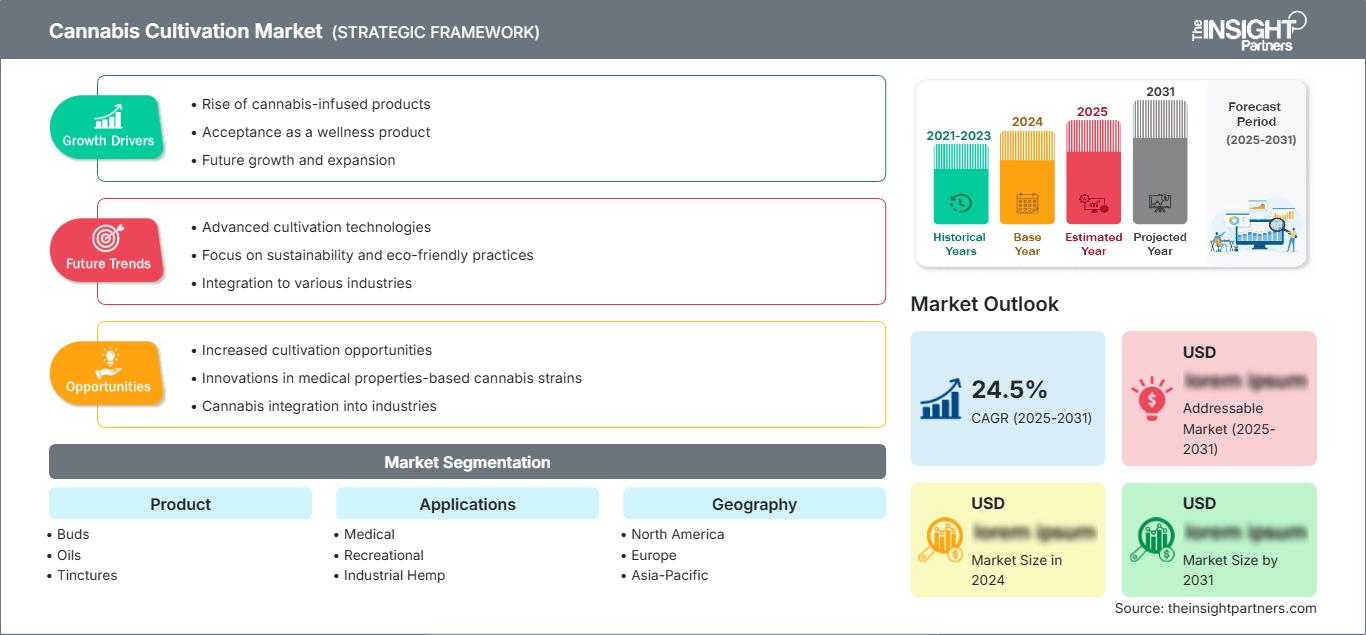
Cannabis Cultivation Market: Strategic Insights
Regional Insights
North America Cannabis Cultivation Market
North America accounted for 39–42% of the global share in 2025 and is projected to grow at a CAGR range of 16.8–17.4% during 2026–2034. The Cannabis Cultivation Market share in the region reflects dense dispensary networks, mature Canadian licensing, and US state-level adult-use frameworks. Structural demand is strongest for premium buds, vape-grade oils, and standardized medical products.
Automation is becoming central to margin protection as labor, energy, and compliance costs remain elevated. Licensed producers are using environmental sensors, crop steering, fertigation software, and microbial testing to improve batch uniformity. North America’s advantage is not only demand scale but also institutional cultivation of knowledge, brand architecture, and established testing infrastructure.
U.S. Cannabis Cultivation Market
The US represented 83–86% of North America in 2025 and is expected to grow at a CAGR range of 16.5–17.2% during 2026–2034. MSOs are improving cultivation discipline with the help of production clusters, localized forecasting, and product segmentation by flower, pre-roll material, extraction products, and edible lines. State-level regulation keeps things complicated for business operations, but also shields legal supply chains from illegal operations.
The company operates most successfully in flower-oriented adult use segments, whereas medical cannabis demand drives up the market for tinctures and oils in prescription states. Current application patterns include increased interest in potent flower, solvent-less concentrates, and cultivar nomenclature consistency. The impact of the federal-level political situation on finance and commerce remains evident.
Europe Cannabis Cultivation Market
Europe held 27–30% share in 2025 and is projected to grow at a CAGR range of 18.2–18.9% during 2026–2034. Germany stands out as a leader due to the pharmacy dispensation, cultivation criteria, and import needs. The UK is progressing via the private prescription pathway, where doctors prefer flower and oil forms that have been tried via regulated distribution.
Germany is a country whose cultivation environment is characterized by EU-GMP production, medical doctor involvement, and pharmacy dispensation. Companies that cultivate in Germany or Portugal stand to offer continuous medical flower and extracts. Tilray Brands, Inc. and Aurora Cannabis Inc. have been leveraging European infrastructure to meet clinical criteria in terms of product documentation and quality assurance.
France, Italy, and Spain have different development paces. France is establishing medical pathways; Italy has controlled access to products via public and import means, while Spain is still an important player for research, club experience and cultivation expertise.
APAC Cannabis Cultivation Market
Asia Pacific held 19–22% share in 2025 and is forecast to grow at a CAGR range of 19.8–20.6% during 2026–2034. Australia is at the forefront when it comes to the cultivation and regulation of medical cannabis. Japan, South Korea, India, and China are concentrating on pharmaceutical cannabinoids and hemp uses and research.
There are significant differences in the policy motivations in the region. Australia has its clinician-based approach that is based on oils and flower imports. China has its industrial hemp experience, and India has its botanical history, which can result in formula developments in the future.
Middle East & Africa Cannabis Cultivation Market
Saudi Arabia and the UAE remain restrictive, but pharmaceutical infrastructure and controlled import systems create long-term monitoring opportunities. South Africa is the leading country in the region, supported by medical licensing, export ambitions, and agricultural capability. The regional CAGR range is projected at 15.2–16.0% during 2026–2034.
Energy and infrastructure costs influence cultivation feasibility across the region. Greenhouse production can benefit from sunlight, but export-grade operations require water management, stable power, testing laboratories, and secure logistics. The rest of MEA adoption is expected to remain selective, with medical policy preceding broader commercial cultivation.
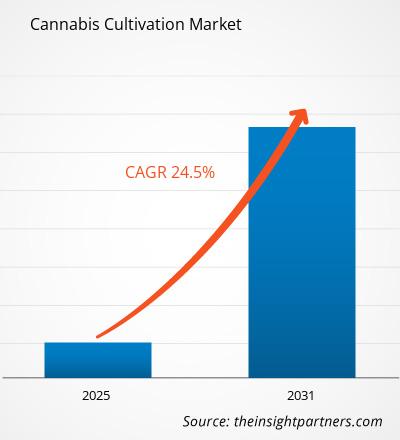
Segmentation Analysis
Product
Product is projected to grow at a CAGR range of 17.1–17.8% during 2026–2034. The Cannabis Cultivation Market scope across product formats is shaped by flower quality, extractable biomass, and dosing preferences. Cultivators increasingly plan crops by end format, with premium buds preserved for retail and medical flower while secondary biomass supports oils and tinctures.
- Buds: Buds remain the primary commercial format due to consumer familiarity, medical dispensing acceptance, and premium cultivar differentiation. Quality depends on genetics, trimming, curing, moisture control, and terpene preservation.
- Oils: Oils are strategically important for medical access because they support controlled dosing, repeatable formulation, and pharmacy distribution. They also create an outlet for extraction-grade biomass.
- Tinctures: Tinctures serve patients and wellness-oriented consumers seeking measured administration without combustion. Their position depends on formulation consistency, packaging compliance, and physician or pharmacist confidence.
Applications
Applications are forecast to grow at a CAGR range of 17.5–18.2% during 2026–2034. Demand differs by regulatory pathway, product standards, and buyer expectations. Medical use requires tighter documentation, recreational use prioritizes brand and sensory attributes, and industrial hemp depends on fiber, seed, CBD, and non-intoxicating cannabinoid regulations.
- Medical: Medical applications favor standardized chemovars, validated testing, and physician-directed use. Cultivators serving this channel invest in certified facilities, pharmacovigilance support, and consistent cannabinoid profiles.
- Recreational: Recreational applications are driven by adult-use retail, brand differentiation, and flower innovation. Operators compete on strain rotation, potency tiers, packaging, and reliable availability across licensed stores.
- Industrial Hemp: Industrial hemp supports fiber, seed, wellness ingredients, and sustainable materials. Its strategic value lies in agricultural scalability, lower-input cultivation models, and policy separation from intoxicating cannabis.
Opportunity Snapshot
| Segment Name | Revenue Contribution | Trend Tag | Adoption Stage |
|---|---|---|---|
| Medical | High | Pharmacy Access | Scaling |
| Recreational | High | Premium Flower | Mature |
| Industrial Hemp | Medium | Fiber Materials | Emerging |
Cannabis Cultivation Market Growth Drivers and Impact Analysis
Expansion of Regulated Medical Access
The legalization of marijuana for medical purposes will transform the growing of cannabis into a healthcare chain with quality control processes. Those countries that have legal prescription have certain criteria for genetics, contaminants, batches and ranges of active ingredients. It is more costly for cultivators to fulfill those demands, but at the same time, it allows them to get higher prices due to certificates. The constant support of medicines with cannabinoids by the WHO as therapeutic products requires clinical studies, pharmacovigilance and standardization of manufacturing. One can see its influence in Europe and Australia, where pharmacies have a preference for those who can offer their flowers and oils in repeatable formats according to EU-GMP, national imports and prescription demands.
Controlled-Environment Agriculture Improves Yield Reliability
Indoor and greenhouse systems have become a necessity due to the need for potency, safety from pathogens, and controlled harvesting times from licensed buyers. Controlled-environment agriculture allows producers to control light levels, humidity, carbon dioxide levels, fertigation, and pest control much better than field crops. Even though energy density is still an issue, producers are using LED lighting, heat capture, closed irrigation, and crop steering based on data to increase their grams per square foot ratio. From a commercial point of view, consistency and less batch failure risk result in better pricing in case of premium buds or predictable inputs in case of oil production.
Industrial Hemp Creates Agricultural Diversification
Industrial hemp is broadening cultivation opportunities not only into intoxicating applications but also into other channels of sale. Fiber, seeds, hemp ingredients, and bio-materials generate demand for agriculture, which is related to such fields as textiles, building materials, nutrition, and sustainable packaging. This factor is particularly significant for those countries that allow cultivating hemp below the THC limits while having limitations on cultivating high-THC cannabis. Hemp could be used for crop rotation, soil treatment, and commercialization of biomass; however, the shortage of facilities for processing is an issue. The influence on the market is the most significant in those cases when governments encourage low-carbon materials and rural diversification.
Cannabis Cultivation Market Future Trends
Genetics-Led Cultivation and Chemovar Standardization
Cannabis Cultivation Market trends will increasingly center on genetics ownership, cultivar stability, and chemovar documentation. The operators must employ tissue culture, pathogen indexing, and proprietary breeding to achieve consistency among the harvests. The change will ensure that reliance on strains as names becomes less necessary and pushes the buyers towards profiles of cannabinoids, terpenes, and other compounds. The medical consumers will prefer consistency, while adult users will utilize genetics for differentiation purposes. With time, the contracts will be based on chemovar efficacy and not quantity.
Lower-Carbon Production Models
The cultivators will come under increasing pressure when it comes to electricity use, water usage, packaging, and waste disposal. It is anticipated that future facilities will incorporate the sourcing of renewable electricity, greenhouse hybridization, recycling of water, and the use of biomass in order to minimize the environmental footprint. This will have more impact in regions where there are higher costs of energy or mandatory carbon reporting. Those producers who can prove that their facilities require fewer resources will be favored by institutions, exports, and eco-conscious retailers.
Cannabis Cultivation Market Opportunities
Export-Ready Medical Cultivation Hubs
Investors can target the Cannabis Cultivation Market Forecasts by building export-ready medical cultivation hubs in jurisdictions with stable licensing, suitable climates, and recognized quality systems. Countries like Portugal, Germany, Australia, and certain nations in Latin America represent the model through their experience in agriculture, together with their access to the medical import market. The potential lies in the ability of companies to build scalable facilities, achieve either EU-GMP certification or an equivalent, and work with distributors while increasing acreage. They will not be chasing volume but will concentrate on contract farming, standard oil production, medical flower, and documentation kits.
Specialized Biomass for Extracts and Formulations
Extraction-focused cultivation offers a practical route for companies that cannot compete in premium flower branding. Oils, tinctures, capsules, and future pharmaceutical formulations require biomass with predictable cannabinoid content, pesticide compliance, and efficient extraction yields. Cultivators can create value by matching genetics to extraction performance and designing harvest protocols for target compounds. This opportunity is attractive because it supports medical, wellness, and industrial hemp channels. Strategic partnerships with processors, pharmacies, and consumer packaged goods companies can reduce market access risk while improving utilization of non-flower plant material.
Recent Developments
- June 2026: Tilray Brands, Inc. launched ARX, a premium medical cannabis brand developed and cultivated in Germany at its Aphria RX facility in Neumünster. The launch strengthened Tilray’s local cultivation position in Europe’s largest medical cannabis market and supported supply reliability through German production, EU-GMP standards, and national distribution infrastructure.
- December 2025: The Cronos Group Inc. entered into a definitive agreement to acquire CanAdelaar B.V., a Netherlands adult-use cannabis pilot program operator, for upfront consideration of US$67.0 million plus contingent consideration. The transaction was positioned to establish Cronos’ European footprint and support its borderless product strategy in the regulated Dutch market.
- February 2025: Tilray Brands, Inc. expanded its medical cannabis extract portfolio in Germany with additional balanced THC and CBD formulations, including new formats designed for patient access and physician-directed treatment. The development supported pharmacy availability across Germany and reinforced the company’s focus on standardized extracts within regulated medical channels.
Frequently Asked Questions

- Comprehensive Market Sizing and Forecast Analysis
- Detailed Segmentation Analysis
- In-Depth Market Dynamics Assessment
- Regional and Country-Level Insights
- Competitive Landscape and Company Benchmarking
- Strategic Business Intelligence
Recent Reports
Testimonials

The Insight Partners' SCADA System Market report is comprehensive, with valuable insights on current trends and future forecasts. The team was highly professional, responsive, and supportive throughout. We are very satisfied and highly recommend their services.
RAN KEDEM Partner, Reali Technologies LTDs
I requested a report on a very specific software market and the team produced the report in a few days. The information was very relevant and well presented. I then requested some changes and additions to the report. The team was again very responsive and I got the final report in less than a week.
JEAN-HERVE JENN Chairman, Future Analytica
We worked with The Insight Partners for an important market study and forecast. They gave us clear insights into opportunities and risks, which helped shape our plans. Their research was easy to use and based on solid data. It helped us make smart, confident decisions. We highly recommend them.
PIYUSH NAGPAL Sr. Vice President, High Beam Global
The Insight Partners delivered insightful, well-structured market research with strong domain expertise. Their team was professional and responsive throughout. The user-friendly website made accessing industry reports seamless. We highly recommend them for reliable, high-quality research services
YUKIHIKO ADACHI CEO, Deep Blue, LLC.
This is the first time I have purchased a market report from The Insight Partners.While I was unsure at first, I visited their web site and felt more comfortable to take the risk and purchase a market report.I am completely satisfied with the quality of the report and customer service. I had several questions and comments with the initial report, but after a couple of dialogs over email with their analyst I believe I have a report that I can use as input to our strategic planning process.Thank you so much for taking the extra time and making this a positive experience.I will definitely recommend your service to others and you will be my first call when we need further market data.
JOHN SUZUKI President and Chief Executive Officer, Board Director, BK Technologies
I wish to appreciate your support and the professionalism you displayed in the course of attending to my request for information regarding to infectious disease IVD market in Nigeria. I appreciate your patience, your guidance, and the fact that you were willing to offer a discount, which eventually made it possible for us to close a deal. I look forward to engaging The Insight Partners in the future, all thanks to the impression you have created in me as a result of this first encounter.
DR CHIJIOKE ONYIA MANAGING DIRECTOR, PineCrest Healthcare Ltd.Reason to Buy
- Informed Decision-Making
- Understanding Market Dynamics
- Competitive Analysis
- Identifying Emerging Markets
- Customer Insights
- Market Forecasts
- Risk Mitigation
- Boosting Operational Efficiency
- Strategic Planning
- Investment Justification
- Tracking Industry Innovations
- Aligning with Regulatory Trends





 Get Free Sample for