
Carbinoxamine Market Size, Share & Growth by 2034
Coverage: By Product (Tablet, Oral Solution); Indication (Allergy, Hay Fever, Others); Application (Hospital, Clinic, Others) , and Geography (North America, Europe, Asia Pacific, and South and Central America)
- Status : Data Released
- Report Code : TIPRE00019747
- Category : Life Sciences
- No. of Pages : 150
- Available Report Formats :


- Last update date : August 21, 2026


2025 Market Size
US$ 131.7 Mn
Base year value
2034 Forecast
US$ 216.89 Mn
Projected by 2034
CAGR 2026-2034
5.70 %
Growth rate
Addressable Market
US$ 1,579.95 Mn
(2026-2034)
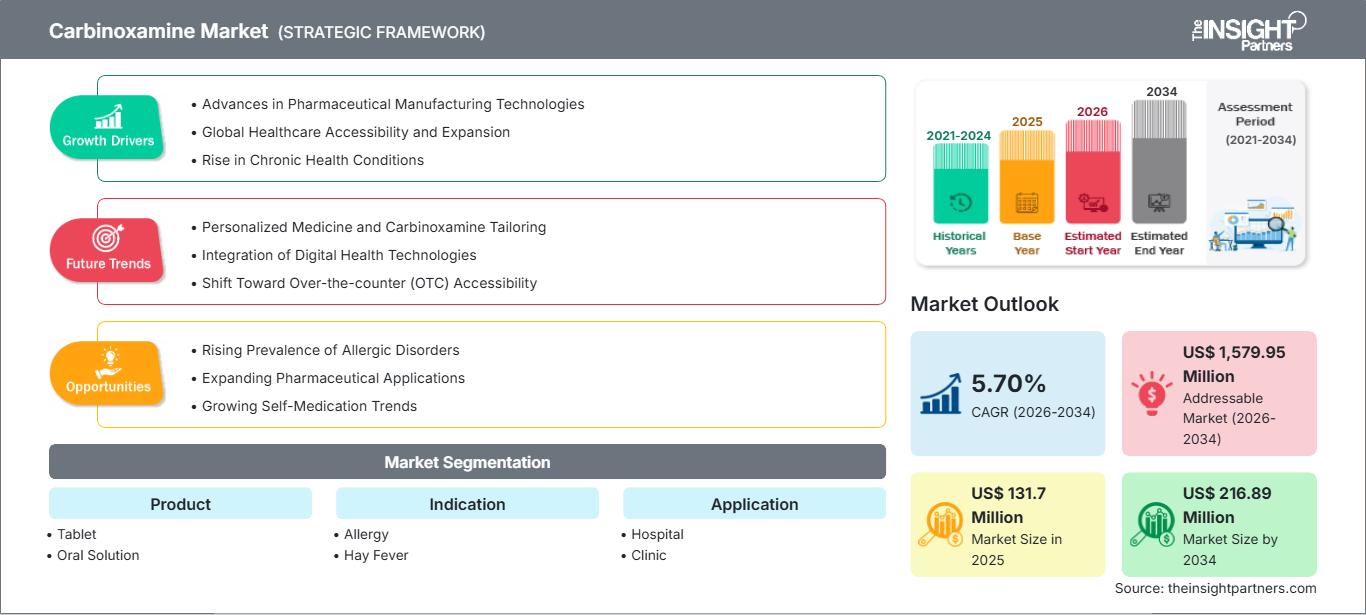
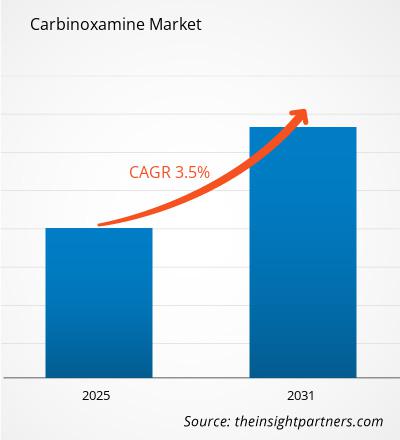
The Carbinoxamine Market is projected to grow from US$ 131.7 Million in 2025 to US$ 216.89 Million by 2034. The market is expected to register a CAGR of 5.70% during 2026–2034, supported by sustained demand for first-generation antihistamines in allergy, hay fever, rhinitis, and clinical symptom-management settings where physician familiarity and established safety monitoring remain important.
North America remains the most structured revenue base, with the Carbinoxamine Market size supported by prescription continuity, pediatric allergy consultations, and established hospital and clinic dispensing channels. The region is estimated to expand at a CAGR range of 5.2–5.8% during 2026–2034, driven by regulated product labeling, branded extended-release formulations, and steady use in patients requiring alternatives to non-sedating antihistamines.
Carbinoxamine Market Assessment and Insights
- North America accounted for 42–46% share in 2025 and is projected to grow at 5.2–5.8% CAGR between 2026–2034, supported by established allergy care pathways, pediatric prescribing discipline, and stronger product traceability through regulated pharmacy channels.
- US represented 84–88% of North America in 2025 and is expected to grow at 5.3–5.9% CAGR between 2026–2034, led by Karbinal ER use and generic tablet availability.
- Europe held 24–28% share in 2025 and is projected to grow at 4.6–5.2% CAGR between 2026–2034, with Germany, the UK, France, Italy, and Spain supporting stable antihistamine demand.
- Asia Pacific accounted for 18–22% share in 2025 and is expected to grow at 6.4–7.1% CAGR between 2026–2034, led by China, India, Japan, South Korea, and Australia.
- Largest Segment: Tablets held 66–70% market share in 2025 and are projected to grow at 5.0–5.6% CAGR during 2026–2034, reflecting affordability and broad formulary access.
- High Growth Segment: Oral Solution held 30–34% market share in 2025 and is projected to grow at 6.3–6.9% CAGR during 2026–2034, due to pediatric and swallowing-constrained patients.
- Key companies analyzed in detail: Johnson & Johnson Services, Inc., Abbott Laboratories, Endo International plc, Mikart, LLC, Cipla Inc., Cosmed Pharmaceutical Co., Ltd., Perrigo Company plc, Everest Pharmaceuticals Co., Ltd., Merck KGaA, and Tris Pharma, Inc.
Source: The Insight Partners' analysis based on proprietary research, government publications, company annual reports, investor presentations, industry databases, and expert interviews.
Manufacturing practices in the Carbinoxamine Market have evolved from the historical use of broad-spectrum antihistamine combinations toward highly regulated, single-ingredient products tailored to specific dosage strengths and patient groups. Market participants are increasingly focused on compliance-driven formulation development, controlled excipient selection, and adherence to stringent quality standards throughout production. While tablet formulations continue to benefit from established manufacturing efficiencies and economies of scale, oral solutions and extended-release (ER) suspensions require more sophisticated processes to ensure taste masking, viscosity control, dosage uniformity, stability, and regulatory compliance. As a result, contract development and manufacturing organizations (CDMOs) play an increasingly important role in supporting specialty products and maintaining reliable supply for lower-volume prescription therapies.
Looking ahead, market growth is expected to be influenced by rising allergy diagnosis rates, changing prescribing patterns, and greater patient awareness of available treatment options. Emerging markets are likely to prioritize affordable and accessible antihistamine formulations, while developed regions will focus on product differentiation through advanced delivery systems, clearer labeling, and enhanced patient convenience. Regulatory emphasis on pediatric safety, bioequivalence requirements, and pharmacovigilance standards will continue to shape product development strategies and competitive positioning. Consequently, manufacturers are expected to invest in flexible small-batch production capabilities, innovative liquid formulations, and strategic partnerships with CDMOs specializing in nonsterile liquid dosage forms to strengthen market presence and ensure long-term sustainability.
Carbinoxamine Market Report Scope
| Report Attribute | Details |
|---|---|
| Market size in 2025 | US$ 131.7 Million |
| Market Size by 2034 | US$ 216.89 Million |
| Global CAGR (2026 - 2034) | 5.70% |
| Historical Data | 2021-2024 |
| Forecast period | 2026-2034 |
Carbinoxamine Market Analysis
Demand for antihistamines remains closely linked to seasonal allergy incidence, environmental allergen exposure, and prescribing preferences among healthcare professionals. The Carbinoxamine Market continues to benefit from patients requiring alternative therapeutic options when newer antihistamines do not deliver adequate symptom control, particularly in situations where clinically supervised sedative effects are considered beneficial.
The market value chain covers active pharmaceutical ingredient procurement, formulation development, manufacturing, quality assurance testing, regulatory compliance, packaging, wholesale distribution, and pharmacy dispensing. Companies focus on ensuring consistent product availability, maintaining manufacturing reliability, and managing inventory efficiently across both tablet and oral solution formats.
Competitive dynamics are shaped by formulation expertise, product quality, and distribution reach. Tris Pharma, Inc. and Aytu Therapeutics, LLC hold notable positions in extended-release suspension formulations, while Mikart, LLC is recognized for its capabilities in oral solid dosage and nonsterile liquid manufacturing. Additional participants include Johnson & Johnson Services, Inc., Abbott Laboratories, Perrigo Company plc, and Cipla Inc.
Market analysis indicates that niche prescription antihistamine products can remain commercially viable through effective regulatory compliance, payer engagement, and product differentiation strategies. Companies such as Endo International plc, Cosmed Pharmaceutical Co., Ltd., Everest Pharmaceuticals Co., Ltd., and Merck KGaA contribute through diversified pharmaceutical and chemical supply capabilities, supporting steady demand and long-term market stability.
● REPORT CUSTOMIZATION
Tailor This Report To Align With Your Specific Business Requirements
This report can be customized to align precisely with your business objectives, scope, and target markets. Customization options include tailored segmentation, geography, competitive analysis, and strategic insights to support informed decision-making.
Customize This Report →WHAT YOU CAN ADJUST
- ● Segmentations
- ● Geography
- ● Competitive Analysis
- ● Language Preferences
Carbinoxamine Market: Strategic Insights
Regional Insights
North America Carbinoxamine Market
North America accounted for 42–46% share in 2025 and is projected to grow at 5.2–5.8% CAGR during 2026–2034. The region benefits from regulated prescription channels, high allergy consultation rates, and continued physician familiarity with first-generation antihistamines. The Carbinoxamine Market share is reinforced by patient access to tablets as well as extended-release oral suspension, particularly in pediatric and recurrent rhinitis cases.
Structural demand is strongest where allergy seasons, indoor allergens, and managed-care formularies support recurring prescriptions. Hospital use remains narrower than clinic prescribing, but hospital pharmacies support continuity after emergency allergy care. North America also benefits from clear contraindication labeling for children below two years, which helps formalize safe use and supports confidence among prescribers, pharmacists, and caregivers.
U.S. Carbinoxamine Market
The U.S. represented 84–88% of North America in 2025 and is projected to grow at 5.3–5.9% CAGR during 2026–2034. Demand is driven by pediatric allergy visits, branding of suspension products, and several abbreviated new drug application products. Aytu Therapeutics, LLC, Tris Pharma, Inc., Leading Pharma, LLC, and Tripoint Therapeutics, LLC enhance product visibility on prescription databases and dispensing systems at pharmacies.
Application trend patterns vary based on care settings. The clinics are key for routine allergy and hay fever prescriptions, while hospitals provide support for acute allergic cases and medication reconciliation. Demand for the tablet formulation is related to cost-sensitive use by adults, while demand for oral solution and suspension forms relates to children and patients requiring dosage flexibility.
Europe Carbinoxamine Market
Europe accounted for 24–28% share in 2025 and is projected to grow at 4.6–5.2% CAGR during 2026–2034. German pharmacies are the most advanced in Europe due to a strong pharmaceutical system, allergy diagnosis by doctors and steady consumption of antihistamines. The UK makes its contribution by providing primary care in case of allergic rhinitis and cost-effective generics, although new nonsedative antihistamines slow down the quick adoption of medications.
The country uses well-structured reimbursement schemes and is more concerned about documenting product quality. France, Italy and Spain make their contributions by having the burden of seasonal allergies, exposure to pollution of the urban environment and use of outpatient clinics. Growth is moderate since preference is usually started with second generation medicines, however, carbinoxamine has some importance.
APAC Carbinoxamine Market
APAC held 18–22% share in 2025 and is projected to grow at 6.4–7.1% CAGR during 2026–2034. China is the leading country, supported by expanding healthcare access, urban allergy prevalence, and domestic manufacturing scale. Japan and South Korea emphasize regulated products, while India supports affordability-led expansion.
Australia contributes through allergy diagnosis and pharmacy accessibility. Industrial drivers include regional API capacity, contract manufacturing, and rising branded generic penetration. Policy emphasis on essential medicines, local production, and quality standards is expected to support wider access, although sedating antihistamine use remains guided by physician caution.
Middle East & Africa Carbinoxamine Market
The Middle East & Africa is projected to grow at 4.8–5.4% CAGR during 2026–2034, with Saudi Arabia as the leading country. The demand is backed by hospital infrastructure investments, allergy associated with dust exposure, and the modernization of pharmacies. UAE makes contributions with private clinics and imported branded medications.
South Africa promotes greater access with its retail pharmacy chain operations. However, the Rest of MEA is inconsistent owing to procurement challenges. Energy-based national investments in healthcare infrastructure in Gulf regions make private hospital facilities more efficient, but usage depends on physician knowledge, product registration, and cost considerations.
Segmentation Analysis
Product
Product is projected to grow at 5.4–6.0% CAGR during 2026–2034. The Carbinoxamine Market scope across product types is shaped by convenience, patient age, swallowing ability, and dispensing economics. Tablets dominate because they are easy to package, transport, and price competitively, while oral solution formats serve patients needing flexible administration and dose adjustment.
- Tablet remains the primary format because it supports adult prescribing, lower logistics complexity, longer shelf handling, and broad pharmacy stocking across clinics and hospital outpatient departments.
- Oral Solution is strategically important for pediatric patients, geriatric users, and individuals with swallowing difficulties, making taste, dosing accuracy, and caregiver acceptance central to adoption.
Indication
Indication is projected to grow at 5.3–5.9% CAGR during 2026–2034. Allergy-related use anchors demand because carbinoxamine addresses multiple histamine-mediated symptoms, including rhinitis, conjunctivitis, urticaria, and angioedema support. Hay fever creates predictable seasonal demand, while year-round allergy symptoms provide refill potential.
- Allergy represents the broader treatment base, including seasonal and perennial allergic rhinitis, allergic conjunctivitis, and mild skin manifestations where physician-directed antihistamine selection remains important.
- Hay Fever generates recurring seasonal prescriptions, especially where pollen exposure, air quality, and outpatient consultation patterns create predictable peaks in antihistamine utilization.
Application
Application is projected to grow at 5.5–6.1% CAGR during 2026–2034. Hospitals and clinics both contribute, but clinics drive routine prescription initiation and follow-up. Hospitals support emergency allergy care, medication review, and discharge continuity when patients require symptomatic control after acute presentation.
- Hospital use is linked to acute allergic symptoms, supervised dosing considerations, and formulary-backed access for patients needing follow-up therapy after emergency or inpatient encounters.
- Clinic use is stronger for recurring allergy and hay fever management, with primary care, pediatric, and allergy practices influencing prescriptions and caregiver education.
Opportunity Snapshot
| Segment Name | Revenue Contribution | Trend Tag | Adoption Stage |
| Hospital | Medium | Acute Care | Mature |
| Clinic | High | Outpatient Allergy | Scaling |
Carbinoxamine Market Growth Drivers and Impact Analysis
Rising Managed Allergy Burden in Outpatient Care
Normal allergic treatment trends are tilting towards periodic outpatient treatment in areas with higher seasonal pollen allergies, indoor allergen exposure, and urban settings that drive patient visits to physicians. This contributes to consistent demand for antihistamines that continue to be effective and important for some patients. This effect is more pronounced in clinics as physicians have the chance to examine the dangers of sedation, contraindications, and the history of reactions before prescribing the medication. Pharmacists get the advantage of consistent repeat prescriptions during peak seasons. From the manufacturer's point of view, this ensures that there is a foundation of consistent demand rather than an explosive start.
Need for Flexible Pediatric and Swallowing-Friendly Formulations
Liquid oral preparations are increasingly becoming relevant due to their flexible dosing capabilities for pediatric patients and those with restricted swallowing abilities. For carbinoxamine, there are safety margins related to its use in pediatric populations, necessitating controlled formulations as well as guidelines. The market implication of this driver is high value per unit prescription for oral solutions and suspensions relative to plain tablets. Those manufacturers that continue to retain flavor masking technology, proper dosing systems, and consistent production of nonsterile liquids can build up their differentiation. Clinics will most probably be the starting point, with pharmacy counseling being adherence-related.
Regulatory Clarity and Bioequivalence Pathways
Clear regulatory expectations foster confidence in prescription antihistamines by laying out dosage forms, strengths, labeling, and bioequivalence. In the case of mature molecules, a clear pathway will make it possible to have controlled generic entry and rule out non-compliant products. Market benefits from such an approach are two-fold – branded products can retain their value due to the properties of the formulation and generics will increase accessibility and availability. A manufacturer stands to gain if its ability to develop the product in compliance with the expectations is facilitated by clear regulatory guidelines.
Carbinoxamine Market Future Trends
More Precise Formulation Differentiation
The next phase of Carbinoxamine Market trends will likely focus on formulation precision rather than indication expansion. Taste profiles, viscosity, package sizes, dosing systems, and enhanced release properties need to be improved by companies to optimize adherence in pediatrics and in managed care. The reason why this trend is significant is that established antihistamines seldom distinguish themselves through innovative mechanisms of action. Rather, what sets them apart is ease of administration, safety messaging, and consistent pharmacokinetics. Companies with liquid non-sterile expertise have an advantage to go after premium market share where physicians want options for patients failing non-sedating medicines.
Greater Role for Digital Labeling and Pharmacovigilance
Digital prescribing, digital labeling, and pharmacy databases will become an important driver through increased visibility and comparison. This development is relevant to sedating antihistamines as their contraindications, interactions, and age limitations should be communicated in a consistent manner. Up-to-date labeling can have an impact on prescribing, reimbursement, and substitution. In the long run, firms that keep updated with their products and pharmacovigilance systems might become preferred by institutions. It will be particularly evident in the U.S. and Europe, but eventually it will become a factor in APAC as well.
Carbinoxamine Market Opportunities
Clinic-Led Allergy Care Partnerships
Clinics are the most actionable channel for investment because they influence diagnosis, product selection, caregiver counseling, and repeat prescriptions. Companies can support growth by developing physician education around appropriate patient selection, administration guidance, and safety monitoring. The opportunity is especially relevant for pediatric practices and allergy clinics where liquid formulations are more valuable. Carbinoxamine Market Forecasts indicate that firms aligning sampling discipline, pharmacy availability, and clinician education can improve prescription continuity. This approach does not depend on aggressive promotion, but on reducing uncertainty around when an older first-generation antihistamine remains useful.
Selective Expansion in High-Growth APAC Markets
APAC presents an operational expansion strategy where allergen testing, urban healthcare accessibility, and generic medicines usage are all on the rise simultaneously. The strategy involves focusing on China, India, and Southeast Asia, selectively using local registration, contract manufacturing, and pharmacy collaborations. The strategy requires appropriate adjustments related to labeling, pricing, and doctor preferences by country. Orally delivered solids can be the first to enter the market due to their scalability, followed by liquids in cases of clear pediatric demand. Companies that have API availability, documentation, and regional distributors do not need big direct sales forces.
Recent Developments
- March 2026: Aytu Therapeutics, LLC updated the U.S. DailyMed label for Karbinal ER, its carbinoxamine maleate extended-release oral suspension, with dosage forms and strengths listed for a 4 mg per 5 mL strawberry-banana flavored suspension. The update reinforces the product’s regulated status for adults and pediatric patients aged two years and above.
- December 2025: Biocomp Pharma, Inc. updated its DailyMed listing for carbinoxamine maleate tablets, covering a 4 mg tablet presentation under abbreviated new drug application status. The update supports ongoing generic availability in the U.S. prescription channel and indicates continued manufacturer participation in oral solid carbinoxamine supply.
- July 2025: Leading Pharma, LLC updated its carbinoxamine maleate tablet label for a 6 mg immediate-release oral product. The listing details antihistamine mechanism, pharmacokinetic parameters, warnings, and contraindications, supporting product traceability for prescribers and pharmacists managing allergy and rhinitis prescriptions.
Frequently Asked Questions

- Comprehensive Market Sizing and Forecast Analysis
- Detailed Segmentation Analysis
- In-Depth Market Dynamics Assessment
- Regional and Country-Level Insights
- Competitive Landscape and Company Benchmarking
- Strategic Business Intelligence
Recent Reports
Testimonials

The Insight Partners provided valuable market intelligence that supported our global go-to-market strategy. Their team was professional, responsive, and attentive to our feedback, providing thoughtful analysis and helpful methodological clarifications throughout the project.
Junmo Kim Chief Financial Officer (CFO), Enertech Co., Ltd.
The Insight Partners' SCADA System Market report is comprehensive, with valuable insights on current trends and future forecasts. The team was highly professional, responsive, and supportive throughout. We are very satisfied and highly recommend their services.
RAN KEDEM Partner, Reali Technologies LTDs
I requested a report on a very specific software market and the team produced the report in a few days. The information was very relevant and well presented. I then requested some changes and additions to the report. The team was again very responsive and I got the final report in less than a week.
JEAN-HERVE JENN Chairman, Future Analytica
We worked with The Insight Partners for an important market study and forecast. They gave us clear insights into opportunities and risks, which helped shape our plans. Their research was easy to use and based on solid data. It helped us make smart, confident decisions. We highly recommend them.
PIYUSH NAGPAL Sr. Vice President, High Beam Global
The Insight Partners delivered insightful, well-structured market research with strong domain expertise. Their team was professional and responsive throughout. The user-friendly website made accessing industry reports seamless. We highly recommend them for reliable, high-quality research services
YUKIHIKO ADACHI CEO, Deep Blue, LLC.
This is the first time I have purchased a market report from The Insight Partners.While I was unsure at first, I visited their web site and felt more comfortable to take the risk and purchase a market report.I am completely satisfied with the quality of the report and customer service. I had several questions and comments with the initial report, but after a couple of dialogs over email with their analyst I believe I have a report that I can use as input to our strategic planning process.Thank you so much for taking the extra time and making this a positive experience.I will definitely recommend your service to others and you will be my first call when we need further market data.
JOHN SUZUKI President and Chief Executive Officer, Board Director, BK Technologies
I wish to appreciate your support and the professionalism you displayed in the course of attending to my request for information regarding to infectious disease IVD market in Nigeria. I appreciate your patience, your guidance, and the fact that you were willing to offer a discount, which eventually made it possible for us to close a deal. I look forward to engaging The Insight Partners in the future, all thanks to the impression you have created in me as a result of this first encounter.
DR CHIJIOKE ONYIA MANAGING DIRECTOR, PineCrest Healthcare Ltd.Reason to Buy
- Informed Decision-Making
- Understanding Market Dynamics
- Competitive Analysis
- Identifying Emerging Markets
- Customer Insights
- Market Forecasts
- Risk Mitigation
- Boosting Operational Efficiency
- Strategic Planning
- Investment Justification
- Tracking Industry Innovations
- Aligning with Regulatory Trends





 Get Free Sample for