
Cardiac Arrhythmia Therapeutics Market Size, Trends & Demand by 2034
Cardiac Arrhythmia Therapeutics Market Size and Forecasts (2021 - 2034), Global and Regional Share, Trends, and Growth Opportunity Analysis Report Coverage : by Drug Class (Sodium-channel Blockers, Beta-blockers, Potassium-channel Blockers, Calcium-channel Blockers); Distribution Channel (Hospital Pharmacies, Retail Pharmaciesand); and Geography (North America, Europe, Asia Pacific, and South and Central America)
- Status : Data Released
- Report Code : TIPRE00040140
- Category : Life Sciences
- No. of Pages : 150
- Available Report Formats :


- Last update date : August 26, 2026


2025 Market Size
US$ 17.59 Bn
Base year value
2034 Forecast
US$ 24.38 Bn
Projected by 2034
CAGR 2026-2034
3.69 %
Growth rate
Addressable Market
US$ 190.59 Bn
(2026-2034)
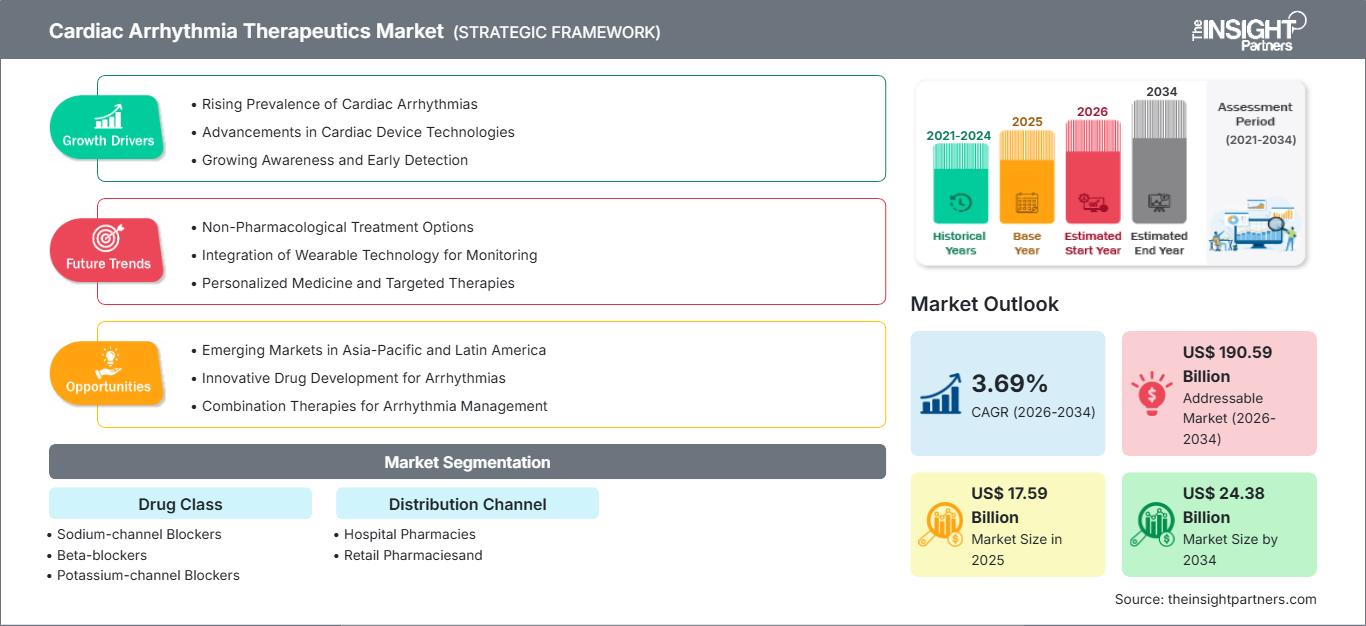
The Cardiac Arrhythmia Therapeutics Market was valued at US$ 17.59 Billion in 2025 and is projected to reach US$ 24.38 Billion by 2034, registering a CAGR of 3.69% during 2026–2034. The market reflects steady demand for pharmacological rhythm and rate control, supported by hospital-based diagnosis, chronic prescription management, and wider use of therapies across atrial fibrillation, supraventricular tachycardia, and ventricular rhythm disorders.
Across North America, the Cardiac Arrhythmia Therapeutics Market size is supported by an estimated CAGR range of 3.4–3.9% through 2034, reflecting high arrhythmia diagnosis rates, structured anticoagulation and electrophysiology pathways, and strong payer coverage for chronic cardiovascular medicines. Growth is also reinforced by aging demographics, retail refill continuity, and integrated hospital pharmacy networks that accelerate initiation of beta-blockers, calcium-channel blockers, and other antiarrhythmic therapy classes.
Cardiac Arrhythmia Therapeutics Market Assessment and Insights
- North America accounted for 38–41% share in 2025 and is expected to grow at a CAGR between 3.4–3.9% during 2026–2034, supported by diagnosis intensity, reimbursement depth, and long-term medication adherence programs.
- US represented 82–85% of North America in 2025 and is projected to grow at a CAGR between 3.5–4.0% during 2026–2034, led by prescription access and cardiology capacity.
- Europe held 26–29% share in 2025 and is expected to grow at a CAGR between 3.0–3.5% during 2026–2034, with Germany, the UK, France, Italy, and Spain leading therapy adoption.
- Asia Pacific captured 22–25% share in 2025 and is forecast to grow at a CAGR between 4.2–4.8% during 2026–2034, driven by China, Japan, India, South Korea, and Australia.
- Largest Segment: Beta-blockers held 34–37% market share in 2025 and are expected to grow at a CAGR between 3.2–3.7% during 2026–2034 due to broad rate-control use.
- High Growth Segment: Hospital Pharmacies held 51–54% market share in 2025 and are expected to grow at a CAGR between 3.8–4.4% during 2026–2034 as acute initiation increases.
- Key companies analyzed in detail: Bristol-Myers Squibb Company, Pfizer Inc., Bayer AG, Abbott Laboratories, Medtronic plc, Boston Scientific Corporation, St. Jude Medical LLC, Boehringer Ingelheim International GmbH, Novartis AG, Johnson & Johnson Services, Inc., Daiichi Sankyo Company, Limited, Sanofi S.A., and Milestone Pharmaceuticals Inc.
Source: The Insight Partners' analysis based on proprietary research, government publications, company annual reports, investor presentations, industry databases, and expert interviews.
From suppression therapy to stratified risk-based disease management, the therapeutic approach has shifted to align medication choices with comorbid heart failure, stroke risk, renal function, and rhythm burden. Generic beta-blockers and calcium-channel blockers predominate in terms of volume, while innovations are mostly focused on anticoagulation-related products, acute conversion treatments, and electrophysiology pathways. The manufacturing trends tend to favor established small molecule production, large-scale retail distribution, and hospital formularies for standard first-line use.
In terms of future outlooks, the adoption of the treatment modality will increase in urbanized Asia, Gulf health systems, and secondary European hubs due to screening programs, wearable technology detection, and network cardiology referrals. The regulatory agencies have embraced more patient-centered endpoints, such as episodes of out-of-hospital conversion and fewer emergency room visits. Innovation investments go into product differentiation, combination therapies, and proof of concept of reduced hospitalization.
Cardiac Arrhythmia Therapeutics Market Report Scope
| Report Attribute | Details |
|---|---|
| Market size in 2025 | US$ 17.59 Billion |
| Market Size by 2034 | US$ 24.38 Billion |
| Global CAGR (2026 - 2034) | 3.69% |
| Historical Data | 2021-2024 |
| Forecast period | 2026-2034 |
Cardiac Arrhythmia Therapeutics Market Analysis
Cardiac Arrhythmia Therapeutics Market growth is anchored in the rising diagnosed burden of atrial fibrillation and related rhythm disorders among older adults. The demand is driven by prescription repeat orders, acute conversions and doctors’ preference for cheap treatment options, consistent with guidelines. Hospitals are the key players in the launch of new drugs following electrocardiogram confirmation, while retail pharmacies ensure the continuity of treatment in managing chronic rate and rhythm.
The value chain includes suppliers of raw materials for manufacturing active pharmaceutical ingredients, branded and generic manufacturers, hospitals’ formulary, retail pharmacies, payers, cardiology practices and digital health providers. The supply chain is fairly stable for old generation antiarrhythmic drugs, but it requires regulatory proof, safety and acceptance among payers in case of differentiated solutions.
The Cardiac Arrhythmia Therapeutics Market analysis shows a competitive field split between pharmaceutical companies with durable cardiovascular franchises and medtech players influencing diagnosis and procedural escalation. Prescription relationships are valuable for cardiovascular treatments by Bristol-Myers Squibb Company and Pfizer Inc., while Bayer AG, Boehringer Ingelheim International GmbH, Daiichi Sankyo Company, Limited, and Sanofi S.A. retain their relevance through cardiometabolic and antithrombotic product offerings.
The strategic positioning is shifting towards integrated healthcare services and not merely products. Monitoring and ablation technologies of Abbott Laboratories, Medtronic plc, Boston Scientific Corporation, St. Jude Medical LLC, and Johnson & Johnson Services, Inc. help create pathways that influence drug prescription. The potential to offer acute treatment by itself is added by Milestone Pharmaceuticals Inc., while Novartis AG retains its relevance through chronic disease management expertise.
● REPORT CUSTOMIZATION
Tailor This Report To Align With Your Specific Business Requirements
This report can be customized to align precisely with your business objectives, scope, and target markets. Customization options include tailored segmentation, geography, competitive analysis, and strategic insights to support informed decision-making.
Customize This Report →WHAT YOU CAN ADJUST
- ● Segmentations
- ● Geography
- ● Competitive Analysis
- ● Language Preferences
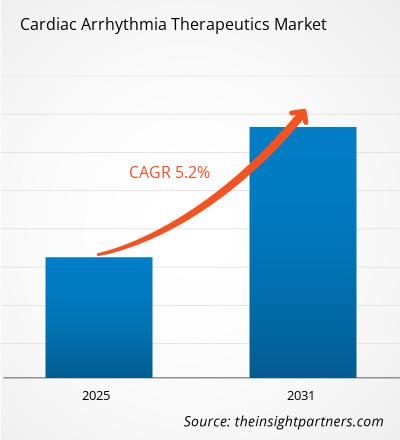
Cardiac Arrhythmia Therapeutics Market: Strategic Insights
Regional Insights
North America Cardiac Arrhythmia Therapeutics Market
North America represented 38–41% share in 2025 and is expected to expand at a CAGR of 3.4–3.9% during 2026–2034. The region benefits from high electrocardiogram use, specialist access, structured stroke-prevention pathways, and strong chronic prescription coverage. The Cardiac Arrhythmia Therapeutics Market share in this region is also supported by large treated populations using rate-control agents and rhythm therapies.
Demand is driven by the U.S. and Canada hospital networks that begin treatment following their emergency assessment, ablation test, or inpatient monitoring. The retail channels drive the refill business, while the payers favor generics for clinically proven cases unless differentiating products proves to have less usage. Growth is expected to be moderate due to the maturity of diagnosis but additional opportunities lie ahead.
U.S. Cardiac Arrhythmia Therapeutics Market
The U.S. accounted for 82–85% of North America in 2025 and is projected to grow at a CAGR of 3.5–4.0% during 2026–2034. Broad cardiology coverage, pharmacy benefit management, and rapid uptake of new cardiovascular products support its leadership. Company presence is deep, with Pfizer Inc., Bristol-Myers Squibb Company, Abbott Laboratories, Medtronic plc, and Boston Scientific Corporation maintaining strong commercial and clinical networks.
Application patterns are shifting toward earlier rhythm evaluation, home-based episode management, and therapy selection based on comorbidity profiles. Hospital pharmacies remain important for acute conversion and initiation after monitored events, while retail pharmacies dominate maintenance therapy. Growing use of wearables and implantable monitors is expected to increase confirmed diagnoses, translating more detected arrhythmias into formal pharmacological treatment pathways.
Europe Cardiac Arrhythmia Therapeutics Market
Europe held 26–29% share in 2025 and is expected to grow at a CAGR of 3.0–3.5% during 2026–2034. Germany is the leading country, supported by cardiology infrastructure, reimbursement consistency, and high procedural capacity. The UK emphasizes guideline-based rate control, anticoagulation assessment, and community pharmacy continuity, making its growth dependent on NHS access and waiting-list normalization.
Germany benefits from specialist density and early adoption of advanced electrophysiology care, which supports both procedural and pharmacological treatment pathways. France maintains steady demand through chronic cardiovascular disease management, while Italy and Spain show growth from aging populations, regional hospital upgrades, and broader diagnosis. Pricing controls limit revenue expansion, but high treatment persistence supports a stable long-term outlook.
APAC Cardiac Arrhythmia Therapeutics Market
APAC accounted for 22–25% share in 2025 and is projected to grow at a CAGR of 4.2–4.8% during 2026–2034. Contributions to growth in China come from expanding capabilities of urban cardiology, larger populations of diagnosed elderly patients, and greater availability of chronic cardiovascular medications. Japan is mature but stable due to specialist-driven healthcare and age-related drug prescribing trends.
India, South Korea, and Australia contribute to growth thanks to the expansion of insurance, diagnostics, and improvements in emergency care systems. The policy emphasis on non-communicable diseases improves diagnosis rates, while the industrial capacity of generic drug producers helps make treatment affordable. The potential of the region hinges on overcoming underdiagnosis and turning pulse detection into therapy initiation.
Middle East & Africa Cardiac Arrhythmia Therapeutics Market
The Middle East & Africa is expected to grow at a CAGR of 3.6–4.2% during 2026–2034, with Saudi Arabia leading regional demand. The UAE supports premium cardiology access, while South Africa anchors therapy use in more established hospital and retail channels. The rest of MEA demand remains uneven because diagnosis and reimbursement infrastructure vary widely.
Energy-funded infrastructure programs in Gulf countries are expanding tertiary cardiac centers and specialist capacity. Over time, electronic health records, screening campaigns, and growing private insurance participation should improve therapy continuity. However, affordability gaps and fragmented access outside major cities will constrain faster penetration of branded arrhythmia medicines.
Segmentation Analysis
Drug Class
The Drug Class segment is projected to grow at a CAGR of 3.3–3.8% during 2026–2034. The Cardiac Arrhythmia Therapeutics Market scope across drug classes remains defined by physicians' balancing of rhythm suppression, rate control, adverse-event risk, and comorbidity fit. Adoption is strongest where therapies are backed by a long prescribing history, generic availability, and inclusion in hospital protocols.
- Sodium-channel Blockers are strategically important in rhythm-control settings where patient selection, monitoring, and contraindication management are central to safe prescribing across atrial and ventricular arrhythmia care.
- Beta-blockers hold the largest position because they are widely used for rate control, sympathetic suppression, and comorbid hypertension or ischemic heart disease management in chronic cardiovascular patients.
- Potassium-channel Blockers remain important for rhythm maintenance in selected patients, especially where physicians prioritize antiarrhythmic potency and accept monitoring requirements for safety management.
- Calcium-channel Blockers support rate-control strategies, particularly in supraventricular tachyarrhythmias, and retain strategic relevance because oral and acute-care formulations fit hospital and outpatient pathways.
Distribution Channel
The Distribution Channel segment is forecast to grow at a CAGR of 3.5–4.0% during 2026–2034. Hospital pharmacies dominate initiation after monitored arrhythmia episodes, while retail pharmacies sustain recurring prescriptions and adherence. Channel value is shaped by inpatient protocols, emergency department conversion, formulary access, and refill convenience across chronic cardiovascular care.
- Hospital Pharmacies lead revenue contribution because medication initiation often follows emergency assessment, inpatient telemetry, electrophysiology consultation, or post-procedure care requiring controlled dispensing and clinical supervision.
- Retail Pharmaciesand support long-term continuity for stable patients, enabling chronic refills, payer-managed substitution, counseling, and access to widely prescribed generic rate-control therapies.
Opportunity Snapshot
| Segment Name | Revenue Contribution | Trend Tag | Adoption Stage |
| Sodium-channel Blockers | Medium | Rhythm Select | Mature |
| Beta-blockers | High | Rate Control | Mature |
| Potassium-channel Blockers | Medium | Maintenance Use | Scaling |
| Calcium-channel Blockers | Medium | Acute Control | Mature |
| Hospital Pharmacies | High | Monitored Start | Mature |
| Retail Pharmaciesand | High | Refill Access | Scaling |
Cardiac Arrhythmia Therapeutics Market Growth Drivers and Impact Analysis
Rising diagnosed arrhythmia burden in aging populations
The persistence of demand for arrhythmia treatment will be due to the fact that the prevalence of arrhythmia increases significantly with age, along with hypertension, diabetes, ischemic heart disease, and heart failure. Elderly patients tend to require follow-up and adjustment and continuous treatment, which means that there will be recurring demand for prescriptions and not only one-time treatment. The effect will be especially strong in developed countries with a well-developed system of referral to a cardiologist due to pulse irregularities, alarms, or electrocardiograms.
Stronger hospital-to-retail treatment continuity
The start of therapy is often done in emergency rooms, cardiology units, or electrophysiology environments, but the sustained value comes from retail refills. Hospital formularies set standards for first-line selection via protocolization, whereas pharmacies maintain sustained usage via substitution, counseling, and chronic packaging. Such coupling decreases discontinuities upon discharge, builds clinical confidence about outpatient management, and increases formulary relevance commercially. It benefits the manufacturer capable of providing proof for both starting therapy and distribution in pharmacies.
Improved detection through monitoring and digital cardiology
Wearable devices, implantable sensors, mobile electrocardiograms, and telemetry will create more individuals with rhythm event documentation. Improved detection does not mean improved therapy, but it increases the clinically treatable population through the reduction of undetected or episodically symptomatic cases. The commercial implication is significant since rhythm event confirmation leads to initiating, titrating, and escalating treatments. Companies will make money out of monitoring technologies that provide clinically actionable data for starting treatment regimens.
Cardiac Arrhythmia Therapeutics Market Future Trends
Patient-directed acute episode therapy
Cardiac Arrhythmia Therapeutics Market trends point toward more patient-controlled treatment for intermittent rhythm episodes, especially where therapies can reduce emergency visits without compromising safety. Self-administered acute conversion solutions, digital verification of symptoms, and defined actions by clinicians could change the way care is provided for selected patients. This development will need appropriate labeling, education of patients, and evidence from payers that the use of an intervention at home lowers overall cost. The implementation process is likely to be slow since cardiologists would want to ensure safety first.
Precision selection using comorbidity and rhythm data
The choice of medications in the future will depend more on the comprehensive analysis of data from electrocardiograms, renal function, heart failure state, structural heart disease, and rhythm burden. Rather than selecting medication based only on the class of drugs, doctors will be able to prescribe treatments that are less likely to have pro-arrhythmic properties and lead to better adherence to the treatment regimen. Such an approach will favor medications that are backed by real-world evidence and decision-supporting systems.
Cardiac Arrhythmia Therapeutics Market Opportunities
Retail expansion for differentiated chronic therapies
Manufacturers can capture value by strengthening retail access for differentiated therapies that fit chronic arrhythmia management. The opportunity lies in payer dossiers that demonstrate fewer emergency visits, improved adherence, and reduced treatment switching. Cardiac Arrhythmia Therapeutics Market Forecasts indicate that distribution efficiency will matter as much as clinical differentiation, especially when chronic refills define lifetime revenue. Companies should prioritize pharmacist education, prior-authorization support, and patient-assistance models that reduce abandonment at the first fill.
Emerging-market access partnerships
Emerging geographies present interesting upside potential due to under-diagnosed cases of arrhythmia combined with growing infrastructure in the field of cardiology. Drug companies can collaborate with hospital groups, companies providing electrocardiography via digital means, and national cardiovascular programs in order to transform the screening procedure into the beginning of treatment. The best value-added opportunities would be affordable portfolio of generics, training for physicians, and city-level retail access.
Recent Developments
- December 2025: Abbott Laboratories announced U.S. FDA approval of the Volt PFA System to treat patients with atrial fibrillation, expanding its electrophysiology portfolio. The approval was supported by the VOLT-AF IDE study across 392 patients at 40 centers, strengthening Abbott’s role in rhythm-care pathways that influence drug initiation and post-procedure therapy planning.
- December 2025: Milestone Pharmaceuticals Inc. received U.S. FDA approval for CARDAMYST, etripamil nasal spray, for conversion of acute symptomatic paroxysmal supraventricular tachycardia episodes to sinus rhythm in adults. The approval introduced the first self-administered nasal spray option for PSVT, with U.S. retail pharmacy availability expected in early 2026.
- July 2025: Boston Scientific Corporation received U.S. FDA approval for expanded labeling of the FARAPULSE PFA System for drug-refractory, symptomatic persistent atrial fibrillation. The approval was supported by ADVANTAGE AF evidence, including 260 enrolled patients across 43 global sites and reported symptomatic recurrence-free outcomes at one year.
Frequently Asked Questions

- Comprehensive Market Sizing and Forecast Analysis
- Detailed Segmentation Analysis
- In-Depth Market Dynamics Assessment
- Regional and Country-Level Insights
- Competitive Landscape and Company Benchmarking
- Strategic Business Intelligence
Recent Reports
Testimonials

The Insight Partners provided valuable market intelligence that supported our global go-to-market strategy. Their team was professional, responsive, and attentive to our feedback, providing thoughtful analysis and helpful methodological clarifications throughout the project.
Junmo Kim Chief Financial Officer (CFO), Enertech Co., Ltd.
The Insight Partners' SCADA System Market report is comprehensive, with valuable insights on current trends and future forecasts. The team was highly professional, responsive, and supportive throughout. We are very satisfied and highly recommend their services.
RAN KEDEM Partner, Reali Technologies LTDs
I requested a report on a very specific software market and the team produced the report in a few days. The information was very relevant and well presented. I then requested some changes and additions to the report. The team was again very responsive and I got the final report in less than a week.
JEAN-HERVE JENN Chairman, Future Analytica
We worked with The Insight Partners for an important market study and forecast. They gave us clear insights into opportunities and risks, which helped shape our plans. Their research was easy to use and based on solid data. It helped us make smart, confident decisions. We highly recommend them.
PIYUSH NAGPAL Sr. Vice President, High Beam Global
The Insight Partners delivered insightful, well-structured market research with strong domain expertise. Their team was professional and responsive throughout. The user-friendly website made accessing industry reports seamless. We highly recommend them for reliable, high-quality research services
YUKIHIKO ADACHI CEO, Deep Blue, LLC.
This is the first time I have purchased a market report from The Insight Partners.While I was unsure at first, I visited their web site and felt more comfortable to take the risk and purchase a market report.I am completely satisfied with the quality of the report and customer service. I had several questions and comments with the initial report, but after a couple of dialogs over email with their analyst I believe I have a report that I can use as input to our strategic planning process.Thank you so much for taking the extra time and making this a positive experience.I will definitely recommend your service to others and you will be my first call when we need further market data.
JOHN SUZUKI President and Chief Executive Officer, Board Director, BK Technologies
I wish to appreciate your support and the professionalism you displayed in the course of attending to my request for information regarding to infectious disease IVD market in Nigeria. I appreciate your patience, your guidance, and the fact that you were willing to offer a discount, which eventually made it possible for us to close a deal. I look forward to engaging The Insight Partners in the future, all thanks to the impression you have created in me as a result of this first encounter.
DR CHIJIOKE ONYIA MANAGING DIRECTOR, PineCrest Healthcare Ltd.Reason to Buy
- Informed Decision-Making
- Understanding Market Dynamics
- Competitive Analysis
- Identifying Emerging Markets
- Customer Insights
- Market Forecasts
- Risk Mitigation
- Boosting Operational Efficiency
- Strategic Planning
- Investment Justification
- Tracking Industry Innovations
- Aligning with Regulatory Trends





 Get Free Sample for