
Cardiac Diagnostics Catheters Market Size, Share & Demand by 2034
Coverage: By Product (Diagnostic imaging Catheters, Non-imaging Diagnostic Catheters); Indications (Coronary artery disease, Evaluate the left ventricular function, Assessment of pericardial and myocardial diseases, Assessment of congenital heart diseases, Evaluation of heart failure); End-User (Hospitals, Diagnostic Centers, Others), and Geography (North America, Europe, Asia Pacific, and South and Central America)
- Status : Data Released
- Report Code : TIPRE00029937
- Category : Life Sciences
- No. of Pages : 150
- Available Report Formats :


- Last update date : September 07, 2026


2025 Market Size
US$ 3.81 Bn
Base year value
2034 Forecast
US$ 7.38 Bn
Projected by 2034
CAGR 2026-2034
7.63 %
Growth rate
Addressable Market
US$ 50.42 Bn
(2026-2034)
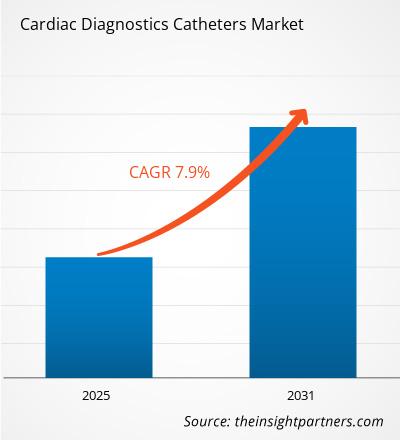
The Cardiac Diagnostics Catheters Market was valued at US$ 3.81 Billion in 2025 and is expected to reach US$ 7.38 Billion by 2034, registering a CAGR of 10.15% during 2026–2034. Expansion is supported by rising diagnostic catheterization volumes, broader electrophysiology capabilities, and increasing clinical dependence on intracardiac imaging, pressure measurement, angiography, and hemodynamic assessment for identifying structural, coronary, congenital, and rhythm-related cardiac abnormalities.
North America remains the principal commercial and clinical adoption center, with an estimated CAGR of 9.6–10.4% through 2034. The Cardiac Diagnostics Catheters Market size in the region benefits from extensive catheterization laboratory infrastructure, established reimbursement pathways, and growing procedural use of high-density mapping and intracardiac echocardiography. Increasing cardiovascular disease prevalence and hospital investment in integrated imaging platforms further support recurring catheter procurement.
Cardiac Diagnostics Catheters Market Assessment and Insights
- North America: Accounted for a 38–41% share in 2025 and is projected to record a CAGR of 9.6–10.4% during 2026–2034, supported by advanced electrophysiology laboratories, favorable reimbursement, specialist availability, and rapid adoption of integrated imaging and mapping workflows.
- US: Represented 84–87% of North American revenue in 2025 and is expected to expand at a CAGR of 9.8–10.6% during 2026–2034 as hospitals modernize interventional cardiology and electrophysiology infrastructure.
- Europe: Held a 27–30% share in 2025 and is projected to grow at a CAGR of 8.8–9.6% during 2026–2034. Germany leads regional adoption, while the UK, France, Italy, and Spain sustain procedure growth.
- Asia Pacific: Captured a 22–25% share in 2025 and is forecast to register a CAGR of 11.8–12.8% during 2026–2034, led by China, Japan, India, South Korea, and Australia as cardiac care capacity expands.
- Largest Segment: Diagnostic imaging catheters represented a 56–60% market share in 2025 and are projected to grow at a CAGR of 10.4–11.2% during 2026–2034, reflecting demand for image-guided procedural precision.
- High Growth Segment: Diagnostic centers held a 21–24% market share in 2025 and are expected to register a CAGR of 11.2–12.1% during 2026–2034 as outpatient cardiovascular evaluation and referral networks expand.
- Key companies analyzed in detail: Abbott Laboratories, Boston Scientific Corporation, Ares Medikal Sanayi ve Ticaret A.Ş., Medtronic plc, BrosMed Medical Co., Ltd., Cascade Health Care, Inc., Johnson & Johnson, Koninklijke Philips N.V., Merit Medical Systems, Inc., and Teleflex Incorporated.
Source: The Insight Partners' analysis based on proprietary research, government publications, company annual reports, investor presentations, industry databases, and expert interviews.
The development of products has moved away from traditional pressure sensing and angiography tools towards multipolar mapping, intracardiac ultrasound, contact visualization, and platform-integrated catheters. The coordination between the manufacture of catheters and consoles, software, and navigation systems has grown as manufacturers seek to increase fidelity and reproducibility of signals. The process of production relies upon medical grade polymers, electrodes, sensors, braided shafts, and the capacity to sterilize. Thus, vertical supplier selection, traceability, and clean room production have emerged as key elements of commercial success within the Cardiac Diagnostics Catheters Market.
Future growth in the market will require expansion into Asia Pacific, the Middle East, and certain countries within Latin America that are expanding their capacity for catheterization and electrophysiology procedures. Capital expenditure will move towards digital laboratories, regional physician training, and minimally invasive diagnostics. The regulatory push for clinical evidence, usability, cybersecurity, and post-market surveillance will benefit those manufacturers able to create full technology ecosystems. Public screening programs and private hospitals are likely to expand patient referrals for cardiac evaluations.
Cardiac Diagnostics Catheters Market Report Scope
| Report Attribute | Details |
|---|---|
| Market size in 2025 | US$ 3.81 Billion |
| Market Size by 2034 | US$ 7.38 Billion |
| Global CAGR (2026 - 2034) | 7.63% |
| Historical Data | 2021-2024 |
| Forecast period | 2026-2034 |
Cardiac Diagnostics Catheters Market Analysis
Factors driving Cardiac Diagnostics Catheters Market growth are the rising incidences of coronary artery disease, arrhythmias, heart failures, and congenital heart diseases that require direct anatomical or electrophysiological evaluation. Demand for catheters comes from hospitals, and supplies from suppliers include polymers, conductors, transducers, electrodes, coatings, and connectors used in making catheters.
Supply economics will depend on validation of the vendors, controlled manufacturing environment, sterilization, and vendor's regional regulatory registrations. Imaging consoles and mapping systems affect choice of catheters since clinicians usually select consumables that are compatible with their capital equipment and do not add variability to their workflow. Decision-making process will consider signal fidelity, torque response, tip stability, visualization, safety and procedural efficiency rather than cost per unit.
Analysis of the Cardiac Diagnostics Catheters Market suggests that competition in this market exists based on platform ownership, equipment installed base, clinical support, and broad portfolio. Abbott Laboratories, Boston Scientific Corporation, Johnson & Johnson, Medtronic plc, and Koninklijke Philips N.V. have cardiovascular distribution channel already in place. Meanwhile, Merit Medical Systems, Inc., Teleflex Incorporated, and BrosMed Medical Co., Ltd. compete with focused catheters and access portfolio.
Capital investments are focused on high density sensors, intracardiac echocardiography, reduced fluoroscopy workflow, and catheter-platform integration. Ares Medikal Sanayi ve Ticaret A.Ş. and Cascade Health Care, Inc. help by providing regional distribution and clinical supplies. Competing effectively requires development of the evidence-based practice, physician education, clinical inventory, and technical services.
● REPORT CUSTOMIZATION
Tailor This Report To Align With Your Specific Business Requirements
This report can be customized to align precisely with your business objectives, scope, and target markets. Customization options include tailored segmentation, geography, competitive analysis, and strategic insights to support informed decision-making.
Customize This Report →WHAT YOU CAN ADJUST
- ● Segmentations
- ● Geography
- ● Competitive Analysis
- ● Language Preferences
Cardiac Diagnostics Catheters Market: Strategic Insights

Regional Insights
North America Cardiac Diagnostics Catheters Market
North America held a 38–41% share in 2025 and is projected to expand at a CAGR of 9.6–10.4% during 2026–2034. Cardiac Diagnostics Catheters Market share results from wide distribution of catheterization laboratories, high procedure volumes, developed electrophysiology infrastructure, and availability of intracardiac imaging. Hospitals tend to standardize catheters along with compatible mapping, ultrasound, and hemodynamic systems for consistency and better control over inventories.
Drivers include cardiovascular disease testing, aging population, multidisciplinary heart care programs, and relocation of certain procedures to outpatient facilities. Demand in Canada is bolstered by provincial funding of cardiac facilities, and in Mexico, by the development of private hospitals and health tourism. Regulatory demand for clinical evidence encourages suppliers that have clinical evidence base and post-market expertise. Purchases are mainly limited to integrated delivery systems, with specialist facilities exerting some impact on adoption of sophisticated mapping and imaging systems.
U.S. Cardiac Diagnostics Catheters Market
The US represented 84–87% of North American revenue in 2025 and is forecast to record a CAGR of 9.8–10.6% during 2026–2034. Its position is supported by a large base of cardiac catheterization and electrophysiology laboratories, established cardiology referral systems, and rapid commercialization of platform-integrated catheters. Diagnostic imaging is increasingly incorporated into complex rhythm, structural, and coronary procedures.
There are Abbott Laboratories, Boston Scientific Corporation, Johnson & Johnson, Medtronic plc, Koninklijke Philips N.V., Merit Medical Systems, Inc. and Teleflex Incorporated that have direct marketing or clinical support capabilities in the country. Hospitals prefer high-resolution electrograms recording, exact anatomical imaging and decreased exposure to radiation. Buying committees also consider sterilization assurance, continuity of supply, compatibility of connectors and training needs for the personnel. Ambulatory cardiac centers are a growing customer base, however, complicated congenital, structural and heart failure assessments are performed in tertiary hospitals with surgical backup and sophisticated imaging facilities.
Europe Cardiac Diagnostics Catheters Market
Europe accounted for a 27–30% share in 2025 and is projected to register a CAGR of 8.8–9.6% during 2026–2034. Germany leads, backed by a wide hospital infrastructure, interventional cardiology expertise, and reimbursement systems. Implementation now stresses clinical proof of effectiveness, regulatory compliance, and compatibility with current capital equipment systems.
The UK takes advantage of cardiac network innovation and centralization of specialist procedures, but lengthy procurement processes might delay implementation. Germany features both high procedural capacity and university assessment of electrophysiology and intracardiac imaging techniques. France encourages implementation through hospital networks and specialist cardiac facilities.
Italy and Spain represent potential markets due to laboratory system upgrading, increasing arrhythmia referrals, and replacement of old equipment. Europe-wide medical device regulation necessitates greater evidence gathering, monitoring, and quality management. These circumstances favor vendors capable of sustaining technical documentation, training, and reliable distribution in addition to responding to hospitals' demand for efficiency and cost predictability.
APAC Cardiac Diagnostics Catheters Market
Asia Pacific held a 22–25% share in 2025 and is projected to grow at a CAGR of 11.8–12.8% during 2026–2034. China leads regional revenue through hospital capacity expansion and domestic device manufacturing. Japan contributes mature electrophysiology demand, while South Korea and Australia support advanced imaging adoption.
India offers strong volume potential as private hospitals add catheterization laboratories and insurance coverage broadens. Policy support for local manufacturing, cardiovascular screening, and tertiary care infrastructure strengthens regional supply. Training availability and affordability remain important determinants of platform-connected catheter adoption outside major metropolitan centers.
Middle East & Africa Cardiac Diagnostics Catheters Market
The region is expected to register a CAGR of 8.2–9.1% during 2026–2034. Saudi Arabia leads investment through hospital modernization and specialized cardiac centers, while the UAE supports premium technology adoption and medical tourism. South Africa remains the principal sub-Saharan market for advanced catheter-based diagnostics.
Healthcare infrastructure programs, localization policies, and digital hospital investment improve long-term access. However, import dependence, uneven reimbursement, specialist shortages, and limited maintenance coverage restrain adoption across the Rest of Middle East and Africa. Distributor capability remains decisive for product availability, training, and technical support.
Segmentation Analysis
Product
Product is projected to record a CAGR of 10.0–10.8% during 2026–2034. The Cardiac Diagnostics Catheters Market scope across this segment includes imaging-enabled products for direct anatomical visualization and non-imaging devices for pressure, electrical, and angiographic data acquisition. Adoption depends on procedural complexity, laboratory platform compatibility, clinical evidence, catheter maneuverability, and total procedure economics. Imaging integration is becoming increasingly important for complex electrophysiology and structural assessments.
- Diagnostic imaging Catheters: These products hold the leading position because intracardiac visualization improves anatomical interpretation, device guidance, and procedural confidence. Demand is strongest in complex electrophysiology, structural heart, congenital, and image-guided interventional workflows.
- Non-imaging Diagnostic Catheters: Steady demand arises from angiographic imaging, electrophysiological recording, pressure measurement, and routine hemodynamic assessment. Their strategic importance reflects broad procedural utility, familiar handling, and compatibility with established laboratory infrastructure.
Indications
Indications are expected to expand at a CAGR of 9.9–10.7% during 2026–2034. Demand is distributed across coronary, ventricular, myocardial, pericardial, congenital, and heart failure evaluations. Coronary artery disease produces recurring procedural volume, whereas congenital and myocardial assessments require specialized configurations and interpretation. Increasing multimorbidity encourages clinicians to combine anatomical, electrical, and hemodynamic findings when planning treatment.
- Coronary artery disease: This indication generates substantial procedure volume because angiography remains central to identifying stenosis, evaluating coronary anatomy, and determining whether patients require medical management, percutaneous intervention, or surgical revascularization.
- Evaluate the left ventricular function: Diagnostic catheterization supports direct pressure measurement and ventricular performance assessment when noninvasive findings are inconclusive, particularly among patients undergoing complex structural, ischemic, or heart failure evaluations.
- Assessment of pericardial and myocardial diseases: Catheters provide hemodynamic information that can distinguish constrictive, restrictive, and pressure-related abnormalities. Clinical demand is specialized but strategically important because accurate differentiation directly affects treatment selection.
- Assessment of congenital heart diseases: Specialized catheter procedures measure pressures, oxygen saturation, shunts, and anatomical relationships. Demand is concentrated in pediatric and adult congenital heart centers with multidisciplinary expertise and advanced imaging capabilities.
- Evaluation of heart failure: Catheter-based hemodynamic assessment supports difficult diagnoses, advanced therapy decisions, and transplant evaluation. Utilization rises when clinicians require direct filling-pressure and cardiac-output information beyond routine noninvasive testing.
End-User
End-user demand is projected to grow at a CAGR of 10.1–10.9% during 2026–2034. Hospitals dominate complex procedures because they provide catheterization laboratories, electrophysiology platforms, anesthesia, intensive care, and surgical backup. Diagnostic centers are gaining relevance for planned evaluations and referral-based services. Purchasing patterns vary according to procedure mix, reimbursement, installed equipment, physician preference, and inventory-management capabilities.
- Hospitals: Hospitals maintain the leading position because tertiary and multispecialty facilities manage complex coronary, congenital, structural, and electrophysiology cases. Their procurement emphasizes platform compatibility, clinical support, supply reliability, and standardized workflows.
- Diagnostic Centers: These facilities are increasing their role in scheduled cardiovascular assessment and outpatient referral pathways. Their strategic value rests on faster patient throughput, localized access, focused capital deployment, and lower-overhead service models.
Opportunity Snapshot
| End-User | Revenue Contribution (High/Medium/Low) | Trend Tag | Adoption Stage (Emerging/Scaling/Mature) |
| Hospitals | High | Integrated Labs | Mature |
| Diagnostic Centers | Medium | Outpatient Testing | Scaling |
| Others | Low | Specialty Access | Emerging |
Cardiac Diagnostics Catheters Market Growth Drivers and Impact Analysis
Rising Burden of Complex Cardiovascular Disease
Population aging and longer survival with chronic cardiovascular conditions enlarge the pool requiring detailed anatomical and hemodynamic assessment. There is often overlap between coronary artery disease, arrhythmias, congenital problems, cardiomyopathies, and heart failure, complicating diagnosis. Catheterization can still be useful when non-invasive testing is inconclusive or contradictory. The financial driver goes beyond the number of procedures due to the fact that some patients may require the use of various catheters, as well as imaging and measurement. There is, thus, a trend of hospitals building up their teams and facilities able to diagnose structural, electrical, and vascular disorders as part of an organized process. Companies that cater to more diagnostic needs will have higher penetration, fewer procurement headaches, and streamlined clinical processes.
Expansion of Electrophysiology and Structural Heart Laboratories
Anatomical visualization, electrical signal sensing, and pressure measurements are critical requirements for electrophysiology and structural heart procedures prior to and during interventions. As hospitals open their own labs, catheters will be regular disposable items associated with their installed mapping, imaging, and hemodynamic systems. Expansion of the lab will generate needs for physicians' education, technical support, supply management, and compatible access tools. From a commercial perspective, vendors with technology portfolios will benefit from interoperability through which variability of setup is reduced and procedures standardized. Additional diagnostic capabilities come from high-density mapping and intracardiac ultrasound, providing additional data in complicated cases. Market consequences include increased usage of catheters per procedure, wider use of high-end options, and enhanced supplier relations. However, growth will continue to be contingent on skilled staff, financial resources, insurance coverage, and patient referrals.
Clinical Preference for Minimally Invasive Diagnostic Pathways
The use of catheters in diagnosing provides physiological and anatomical information by using smaller access sites into blood vessels compared to open surgical procedures. Innovations in shaft design, coatings, tip design, and sensing and imaging have led to greater maneuverability and information accuracy. Reductions in fluoroscopy and navigation using platforms reduce radiation exposure of the laboratory personnel to their work. Such factors are motivating the use of catheter diagnostics in coronary, congenital, electrophysiology, and heart failure procedures in which accurate measurements are necessary for treatment planning. From the perspective of manufacturers, the use of minimally invasive technology gives an opportunity to distinguish products by their atraumatic design, visualization, signals, and effectiveness of procedures. Hospitals consider these positive aspects together with complications, training requirements, and costs of the whole procedure.
Cardiac Diagnostics Catheters Market Future Trends
Convergence of Imaging, Mapping, and Navigation
Cardiac Diagnostics Catheters Market trends will increasingly favor catheters that combine anatomical visualization, electrical sensing, positional data, and software-guided interpretation within unified workflows. Platform convergence can reduce catheter exchanges, simplify laboratory setup, and provide clinicians with synchronized information during complex procedures. Manufacturers are expected to prioritize sensor integration, connector standardization, advanced signal processing, and compatibility across mapping and ultrasound environments. Hospitals will assess whether integrated systems improve procedural predictability and reduce fluoroscopy without creating excessive capital dependence. Commercial differentiation will consequently shift from isolated catheter features toward ecosystem performance, clinical evidence, data usability, and technical support. This transition can strengthen recurring revenue for platform owners while creating interoperability opportunities for specialist suppliers.
Data-Assisted Catheter Selection and Procedural Planning
Clinical software will increasingly use historical case information, imaging data, anatomical models, and procedural signals to support catheter selection and laboratory planning. Data-assisted workflows may help teams anticipate access difficulty, choose appropriate curves, and identify measurements required for specific disease pathways. This development will not remove physician judgment, but it can improve consistency across institutions with varying experience levels. Suppliers will need robust data governance, cybersecurity controls, and evidence demonstrating that software-supported recommendations improve workflow or outcomes. Connected inventory systems may also match scheduled procedures with compatible catheters and consoles. Over time, these capabilities could reduce waste, prevent unavailable-device delays, and make purchasing patterns more predictable for hospitals and manufacturers.
Cardiac Diagnostics Catheters Market Opportunities
Localized Manufacturing and Training in High-Growth Asian Markets
Manufacturers can address Asia Pacific expansion by combining localized assembly, regulatory expertise, physician education, and tiered product configurations. Cardiac Diagnostics Catheters Market Forecasts indicate particularly strong momentum where governments and private hospitals are expanding catheterization capacity. Local production can shorten lead times, improve tender responsiveness, and reduce exposure to import costs, provided quality systems and supplier controls remain consistent. Investment should focus on metropolitan referral centers before extending to secondary cities with sufficient procedure volumes. Partnerships with teaching hospitals can accelerate clinician familiarity and evidence generation. Companies that coordinate products, technical service, and training are better positioned than suppliers relying solely on distributor-led sales, especially for imaging and mapping catheters requiring platform-specific expertise.
Purpose-Built Products for Ambulatory Cardiovascular Services
Growth in outpatient cardiovascular services creates an opportunity for streamlined catheter portfolios designed around predictable procedures, rapid setup, and efficient inventory management. Diagnostic centers require products offering reliable performance without the operational complexity associated with large tertiary laboratories. Manufacturers can develop procedure-specific kits, standardized connectors, compact support systems, and replenishment programs aligned with scheduled case volumes. Commercial strategies should distinguish between independent centers, hospital-affiliated facilities, and specialist networks because purchasing authority and reimbursement exposure differ. Evidence supporting procedural efficiency and safe patient selection will be important for adoption. Suppliers that pair products with competency-based training, remote technical support, and demand forecasting can build recurring relationships as suitable cardiac evaluations migrate toward lower-cost care settings.
Recent Developments
- July 2026: Johnson & Johnson received US Food and Drug Administration approval for the Dual Energy THERMOCOOL SMARTTOUCH SF Platform, which enables electrophysiologists to deliver radiofrequency and pulsed-field energy through one catheter. Integration with the CARTO ecosystem supports mapping, imaging, contact-force information, and energy selection based on anatomy and procedural complexity.
- May 2026: Boston Scientific Corporation reported that its FRACTURE investigational device exemption study of the SEISMIQ 4CE coronary intravascular lithotripsy catheter met primary safety and effectiveness endpoints. The 420-patient study evaluated the technology in severely calcified coronary artery disease and reported high procedural success and freedom from major adverse cardiac events at 30 days.
- February 2026: Johnson & Johnson announced the full commercial release of the NUVISION NAV Ultrasound Catheter, described as a four-dimensional intracardiac imaging catheter integrated with the CARTO 3 System. The release supports real-time intracardiac visualization, navigation, complex electrophysiology procedures, limited catheter manipulation, and workflows intended to reduce dependence on fluoroscopy.
Frequently Asked Questions

- Comprehensive Market Sizing and Forecast Analysis
- Detailed Segmentation Analysis
- In-Depth Market Dynamics Assessment
- Regional and Country-Level Insights
- Competitive Landscape and Company Benchmarking
- Strategic Business Intelligence
Recent Reports
Testimonials

The Insight Partners provided valuable market intelligence that supported our global go-to-market strategy. Their team was professional, responsive, and attentive to our feedback, providing thoughtful analysis and helpful methodological clarifications throughout the project.
Junmo Kim Chief Financial Officer (CFO), Enertech Co., Ltd.
The Insight Partners' SCADA System Market report is comprehensive, with valuable insights on current trends and future forecasts. The team was highly professional, responsive, and supportive throughout. We are very satisfied and highly recommend their services.
RAN KEDEM Partner, Reali Technologies LTDs
I requested a report on a very specific software market and the team produced the report in a few days. The information was very relevant and well presented. I then requested some changes and additions to the report. The team was again very responsive and I got the final report in less than a week.
JEAN-HERVE JENN Chairman, Future Analytica
We worked with The Insight Partners for an important market study and forecast. They gave us clear insights into opportunities and risks, which helped shape our plans. Their research was easy to use and based on solid data. It helped us make smart, confident decisions. We highly recommend them.
PIYUSH NAGPAL Sr. Vice President, High Beam Global
The Insight Partners delivered insightful, well-structured market research with strong domain expertise. Their team was professional and responsive throughout. The user-friendly website made accessing industry reports seamless. We highly recommend them for reliable, high-quality research services
YUKIHIKO ADACHI CEO, Deep Blue, LLC.
This is the first time I have purchased a market report from The Insight Partners.While I was unsure at first, I visited their web site and felt more comfortable to take the risk and purchase a market report.I am completely satisfied with the quality of the report and customer service. I had several questions and comments with the initial report, but after a couple of dialogs over email with their analyst I believe I have a report that I can use as input to our strategic planning process.Thank you so much for taking the extra time and making this a positive experience.I will definitely recommend your service to others and you will be my first call when we need further market data.
JOHN SUZUKI President and Chief Executive Officer, Board Director, BK Technologies
I wish to appreciate your support and the professionalism you displayed in the course of attending to my request for information regarding to infectious disease IVD market in Nigeria. I appreciate your patience, your guidance, and the fact that you were willing to offer a discount, which eventually made it possible for us to close a deal. I look forward to engaging The Insight Partners in the future, all thanks to the impression you have created in me as a result of this first encounter.
DR CHIJIOKE ONYIA MANAGING DIRECTOR, PineCrest Healthcare Ltd.Reason to Buy
- Informed Decision-Making
- Understanding Market Dynamics
- Competitive Analysis
- Identifying Emerging Markets
- Customer Insights
- Market Forecasts
- Risk Mitigation
- Boosting Operational Efficiency
- Strategic Planning
- Investment Justification
- Tracking Industry Innovations
- Aligning with Regulatory Trends





 Get Free Sample for