
Cardiac Rhythm Disease Management Market Size, Growth & Trends by 2034
Coverage: By Product (Defibrillators, Pacemakers, Cardiac Resynchronization Therapy Devices); End User (Hospital, Specialty Cardiac Centers, Others); , and Geography (North America, Europe, Asia Pacific, and South and Central America)
- Status : Data Released
- Report Code : TIPRE00006865
- Category : Life Sciences
- No. of Pages : 150
- Available Report Formats :


- Last update date : September 07, 2026


2025 Market Size
US$ 25.9 Bn
Base year value
2034 Forecast
US$ 44.38 Bn
Projected by 2034
CAGR 2026-2034
6.17 %
Growth rate
Addressable Market
US$ 318.22 Bn
(2026-2034)
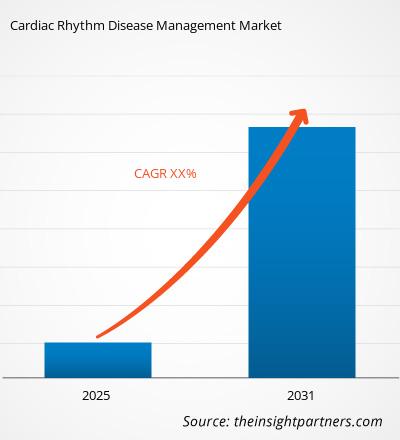
The global Cardiac Rhythm Disease Management market was valued at US$ 25.9 billion in 2025 and is expected to reach US$ 44.38 billion by 2034; it is estimated to record a CAGR of 6.17% during 2026-2034.
Cardiac Rhythm Disease Management Market Assessment and Insights
- North America: Accounted for an estimated 42–44% share in 2025 and is expected to grow at a CAGR of 6.2–6.8% during 2026–2034, supported by reimbursement coverage, implant volumes, and technology upgrades.
- US: Represented approximately 82–85% of North American revenue in 2025 and is projected to expand at a CAGR of 6.1–6.7% through 2034.
- Europe: Held an estimated 27–29% share in 2025 and is forecast to register a CAGR of 5.8–6.4% during 2026–2034, led by Germany, the UK, France, Italy, and Spain.
- Asia Pacific: Captured approximately 21–23% share in 2025 and is expected to advance at a CAGR of 7.8–8.6% through 2034, with China, Japan, India, and South Korea leading adoption.
- Largest Segment: Hospitals accounted for an estimated 63–67% market share in 2025 and are projected to register a CAGR of 6.2–6.8% during 2026–2034.
- High Growth Segment: Specialty cardiac centers represented approximately 33–37% market share in 2025 and are expected to grow at a CAGR of 7.4–8.2% during 2026–2034.
- Key companies analyzed in detail: Medtronic plc, Boston Scientific Corporation, Abbott Laboratories, BIOTRONIK SE & Co. KG, ABIOMED, Inc., MicroPort Scientific Corporation, Terumo Corporation, ZOLL Medical Corporation, LivaNova PLC, and Edwards Lifesciences Corporation.
Source: The Insight Partners' analysis based on proprietary research, government publications, company annual reports, investor presentations, industry databases, and expert interviews.
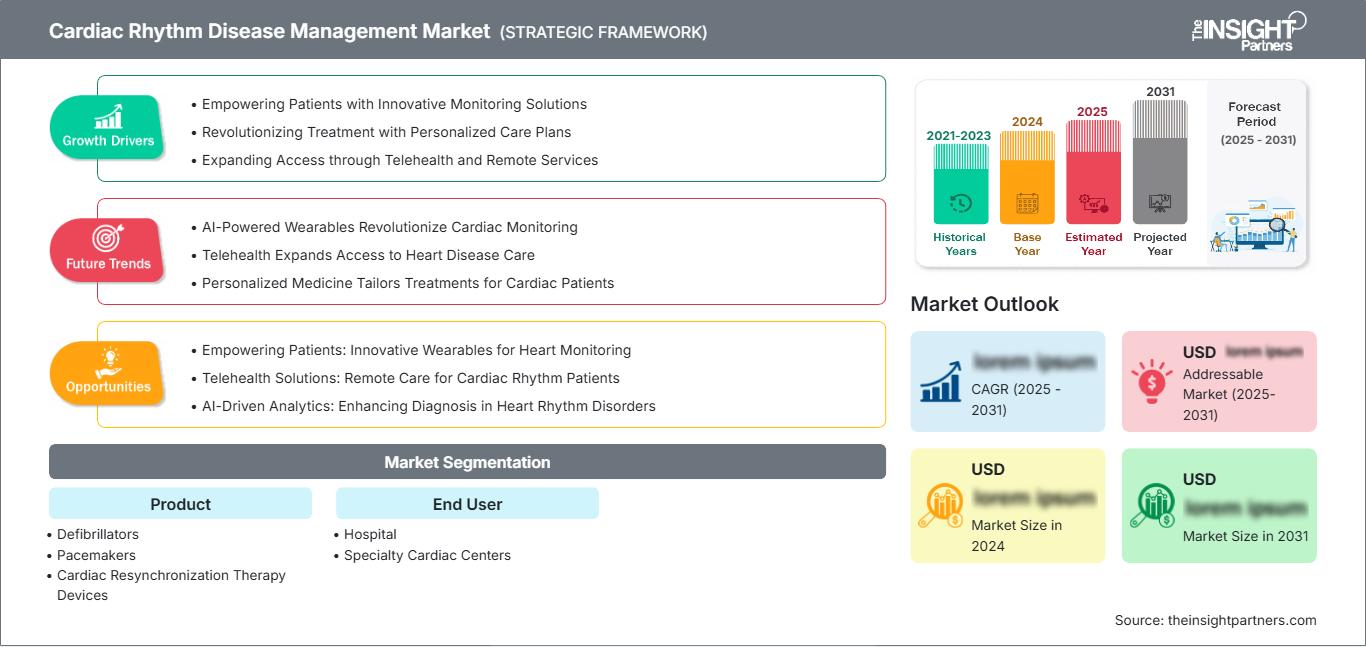
Heart rhythm management systems have evolved from traditional transvenous systems to smaller implantable systems, physiological pacing, subcutaneous defibrillation, and computerized surveillance. The industry is now increasingly incorporating reliable pulse generators with rhythm event classification and transmission algorithms. As such, manufacturing is increasingly moving towards specialist semiconductors, medical batteries, hermetically sealed cases, and precision leads. Strict quality standards, vendor qualification cycles, and sterilization processes are still essential due to the fact that implantable devices need to last and perform consistently under challenging physiological conditions.
Between now and 2034, investments are expected to focus on leadless designs, conduction system pacing, remote programming, and device platforms capable of working within future health care systems. Regulations that acknowledge clinically distinct implant devices can be accelerated through strong safety data support. Growth in the Asia Pacific, the Middle East, and select Latin American markets would hinge on physician training, tertiary cardiac care facilities, and reimbursement development. Thus, partnerships between medical device manufacturers, hospitals, distributors, and digital monitors are likely to shape the pace at which advanced therapies penetrate new markets.
Cardiac Rhythm Disease Management Market Report Scope
| Report Attribute | Details |
|---|---|
| Market size in 2025 | US$ 25.9 Billion |
| Market Size by 2034 | US$ 44.38 Billion |
| Global CAGR (2026 - 2034) | 6.17% |
| Historical Data | 2021-2024 |
| Forecast period | 2026-2034 |
Cardiac Rhythm Disease Management Market Analysis
Factors contributing to the development of the Cardiac Rhythm Disease Management Market include population aging, higher number of heart failure cases, and more detections of atrial and ventricular rhythm diseases. According to the World Health Organization, in 2022, 19.8 million people died of cardiovascular disease, accounting for approximately 32% of all global deaths. In addition, hospitals are the core of the ecosystem, coordinating the diagnosis, implantation, follow-up, and complication management of the patients, while specialist centers focus on electrophysiology knowledge and complicated case loads.
Suppliers of upstream inputs supply batteries, electrodes, leads, microelectronics, polymers, and telemetry components under very tight manufacturing regulations. Device manufacturers assemble these inputs in implantable or external systems, programming equipment, and monitoring software. Availability and validation of semiconductors can limit rapid modifications, so dual sourcing and long-term supplier contracts are critical.
According to the Cardiac Rhythm Disease Management Market analysis, the market has a highly concentrated competitive structure where clinical evidence, implanting physician familiarity, reliability record, and installed monitoring networks generate significant entry barriers. Medtronic plc, Boston Scientific Corporation, and Abbott Laboratories compete on the basis of their large rhythm portfolios, while BIOTRONIK SE & Co. KG and MicroPort Scientific Corporation focus on their distinct pacing, defibrillation, and connectivity.
Allocations of capital are shifting toward smaller devices, better lead performance, physiologic pacing, and remote data services. ZOLL Medical Corporation is a leading competitor in external defibrillation; Terumo Corporation, ABIOMED, Inc., LivaNova PLC, and Edwards Lifesciences Corporation have cardiovascular technologies and channels of distribution that are useful for the integrated treatment of cardiac rhythm diseases. The strategic positioning will rely on receiving indications expanding the target population without increasing workload.
● REPORT CUSTOMIZATION
Tailor This Report To Align With Your Specific Business Requirements
This report can be customized to align precisely with your business objectives, scope, and target markets. Customization options include tailored segmentation, geography, competitive analysis, and strategic insights to support informed decision-making.
Customize This Report →WHAT YOU CAN ADJUST
- ● Segmentations
- ● Geography
- ● Competitive Analysis
- ● Language Preferences
Cardiac Rhythm Disease Management Market: Strategic Insights
Regional Insights
North America Cardiac Rhythm Disease Management Market
North America held an estimated 42–44% global share in 2025 and is forecast to grow at a CAGR of 6.2–6.8% during 2026–2034. The Cardiac Rhythm Disease Management market share includes existing electrophysiology labs, relatively high implantation rates, structured reimbursement, and regular post-procedure monitoring. Increasing number of elderly patients as well as increased survivability after myocardial infarction leads to the increasing numbers of people who will need pacing, defibrillation or resynchronization.
Hospitals are moving towards connecting devices that would lower the necessity for routine visits and emphasize clinically important notifications. Canada brings into play health care system that is universal and uses centralized purchases, and Mexico is developing tertiary cardiac infrastructure in large cities. Purchasing processes in regions now also take into account the life span of batteries and leads, cybersecurity issues and total cost of follow-up as opposed to the purchase price alone.
U.S. Cardiac Rhythm Disease Management Market
The US accounted for approximately 82–85% of North American revenue in 2025 and is projected to advance at a CAGR of 6.1–6.7% through 2034. Large hospital systems, specialized electrophysiology programs, Medicare reimbursement, and extensive clinical investigation back up its leadership. Pathways for FDA approval exist for expanded indications, new leads, software updates, and novel pacing modes.
Medtronic plc, Boston Scientific Corporation, Abbott Laboratories, BIOTRONIK SE & Co. KG, and ZOLL Medical Corporation have significant operations to sell and clinically support their products. The applications for pacemakers are changing from leadless pacemakers, conduction system pacing, subcutaneous or extravascular defibrillation, and remote follow-up.
Delivery systems will increasingly standardize on outcomes, long-term performance, service responsiveness, and integration into electronic medical records. Early diagnosis through ambulatory monitoring can also help patients who fit the criteria enter specialist pathways before becoming emergencies.
Europe Cardiac Rhythm Disease Management Market
Europe represented an estimated 27–29% share in 2025 and is forecast to expand at a CAGR of 5.8–6.4% during 2026–2034. In Germany, leadership emerges via high procedural capacity, reimbursement, and availability of specialist cardiology. In procurement, emphasis is shifting towards clinical evidence, longevity, and life-cycle costs.
Centralized care pathways and telemonitoring initiatives are advantages for the UK, although financial constraints may prolong the uptake process. France is distinguished by national reimbursement and well-developed tertiary heart care network. Italy and Spain offer significant procedural volumes via regional hospital networks, yet access is variable.
In general, in Europe, growing aging populations, heart failure treatment programs, and adoption of physiologic pacing drive demand. Regulatory requirements in Europe call for more evidence and surveillance, thus favoring firms with well-established quality, clinical, and post-market systems. Follow-up through connectivity is strategically essential in cases of limited human resources.
APAC Cardiac Rhythm Disease Management Market
Asia Pacific accounted for approximately 21–23% share in 2025 and is expected to record a CAGR of 7.8–8.6% during 2026–2034. China leads regional revenue through hospital expansion, local manufacturing, and rising treatment access. Japan sustains demand through its aging population and advanced specialist infrastructure.
India offers substantial long-term potential as insurance coverage and cardiac centers expand. South Korea favors rapid technology adoption, while Australia supports mature reimbursement and remote care. Policy investment in tertiary hospitals and electrophysiology training will determine whether diagnosis growth converts into device implantation.
Middle East & Africa Cardiac Rhythm Disease Management Market
The region is projected to grow at a CAGR of 6.7–7.3% during 2026–2034. Saudi Arabia leads through hospital investment, specialist recruitment, and national healthcare modernization. The UAE supports premium cardiac services and medical tourism, while South Africa anchors sub-Saharan specialist capacity.
Infrastructure availability remains uneven across the Rest of MEA. Oil-supported public investment in Gulf countries funds advanced cardiac facilities, whereas electricity reliability, trained personnel, referral access, and device affordability constrain adoption elsewhere. Distributor networks and manufacturer-led clinical education are essential to market development.
Segmentation Analysis
Product
The Product segment is expected to register a CAGR of 6.4–7.0% during 2026–2034. The Cardiac Rhythm Disease Management Market scope covers devices that detect or correct abnormal cardiac electrical activity, prevent sudden cardiac death, or improve ventricular coordination. Growth depends on clinical indication expansion, longer battery life, reduced lead complications, and systems that simplify implantation and subsequent patient management.
- Defibrillators: Implantable and external defibrillators address life-threatening ventricular arrhythmias and emergency resuscitation, making the category strategically important across tertiary hospitals, emergency services, public-access programs, and high-risk outpatient populations.
- Pacemakers: Pacemakers serve patients with bradycardia and conduction disorders, with demand increasingly influenced by leadless designs, physiologic pacing techniques, smaller generators, extended longevity, and remote device surveillance.
- Cardiac Resynchronization Therapy Devices: These devices coordinate ventricular contraction in selected heart failure patients, supporting demand where guideline-based evaluation, echocardiographic assessment, skilled implantation, and structured follow-up are consistently available.
End User
The End User segment is projected to expand at a CAGR of 6.5–7.1% during 2026–2034. Adoption is determined by electrophysiology expertise, procedural infrastructure, reimbursement, referral intensity, and access to device follow-up. Hospitals retain the broadest emergency and surgical capabilities, while specialty cardiac centers gain importance by concentrating trained clinicians and standardized rhythm-management workflows.
- Hospital: Hospitals manage emergency arrhythmias, complex implantation, imaging, anesthesia, and postoperative complications, supporting their dominant position and making them primary purchasers of implantable systems, programmers, and defibrillation equipment.
- Specialty Cardiac Centers: Specialty centers concentrate electrophysiology expertise and scheduled procedures, enabling efficient patient selection, advanced pacing techniques, focused follow-up, and faster adoption of clinically differentiated rhythm-management technologies.
Opportunity Snapshot
| End User | Revenue Contribution (High/Medium/Low) | Trend Tag | Adoption Stage |
| Hospital | High | Connected Implants | Mature |
| Specialty Cardiac Centers | Medium | Physiologic Pacing | Scaling |
Cardiac Rhythm Disease Management Market Growth Drivers and Impact Analysis
Rising Clinical Burden of Cardiovascular and Rhythm Disorders
Cardiovascular disease remains the leading global cause of death, creating a large clinical population requiring rhythm assessment and intervention. Based on WHO estimates, there were an estimated 19.8 million deaths attributed to cardiovascular diseases in 2022, with three-quarters being recorded in developing nations. Aging, hypertension, diabetes, ischaemic heart disease, and heart failure raise the vulnerability to bradyarrhythmia and arrhythmic ventricular rhythms. Improved emergency care increases the number of patients in need of sustained protection. The effects are felt by the Cardiac Rhythm Disease Management Market through the demand for devices, replacements, and investments in infrastructure. Commercial effect is seen when all aspects of care act in concert.
Adoption of Leadless and Physiologic Pacing Technologies
Leadless pacemakers and conduction system pacing address recognized limitations of conventional pacing, including pocket complications, lead failure, and less physiological ventricular activation. Growing physician experience and clinical data are driving the use in carefully selected patients with bradycardia, conduction disorder, or resynchronization indications. Miniaturized delivery devices can lower procedure complexity, although adoption demands training, imaging capacity, and selective patient screening. Manufacturers gain from premium branding of their products and extensions of platforms. Providers consider benefits of lowered complication rate and follow-up burden. The market influence goes beyond the implantations themselves due to the fact that advances in pacing technology drive innovations in generators, leads, catheters, and programmers as well.
Expansion of Remote Device Monitoring and Connected Care
Rhythm event monitoring, battery status updates, lead measurement, and therapy monitoring of implanted devices can be transmitted using remote monitoring solutions. Such a feature decreases reliance on regular in-person visits and enables prioritization of patients who need to receive clinical interventions. In addition, such an aspect becomes more relevant when the number of implanted patients grows faster than the number of specialists. Clinics can use alert protocols to manage clinical resources, while companies can build service relationships with patients by using security enabled monitoring solutions. Remote monitoring adoption demands interoperable solutions, cybersecurity policies, patient connectivity, and responsibilities for alert management. Commercial implications of remote monitoring adoption are essential since buying decisions increasingly rely on services, workflows, and life-cycle costs.
Cardiac Rhythm Disease Management Market Future Trends
Progression Toward Modular and Leadless Cardiac Systems
Cardiac Rhythm Disease Management Market trends will increasingly favor modular systems in which separately implanted components communicate to provide pacing, sensing, and defibrillation functions. The implementation of such designs will lower dependency on transvenous leads and help in developing therapies based on the patient’s changing needs. The major focus during their development will be on safe device-to-device communication, retrieval capacity, power efficiency, and consistent implantation procedures. However, for these designs to gain clinical acceptance, it will be necessary to prove their superior performance in comparison to the traditional implantable systems. These devices can change the approaches to replacements and can address the challenges caused by leads.
Artificial Intelligence for Alert Prioritization and Therapy Planning
The Cardiac Rhythm Disease Management Market forecast indicates that artificial intelligence will be employed on large sets of information coming from devices in order to make classifications of rhythm episodes, detect deteriorating physiological profiles, and filter alerts that have clinical significance. The future systems will incorporate implant data along with electronic medical records, imaging, medications, and patient symptoms. The main advantage will be in improving efficiency rather than making autonomous treatment decisions. It will be important for algorithms to have generalizability, interpretability, and stability across different populations and devices. Governance and cybersecurity will be essential elements in regulating AI. The vendors who will succeed in integrating the validated analytics into clinical practice will improve their retention, as the hospitals will consider the ability of platforms to alleviate the workload.
Cardiac Rhythm Disease Management Market Opportunities
Building Affordable Care Pathways in Emerging Economies
Manufacturers can address substantial untreated demand by developing tiered portfolios, financing models, and service networks for emerging economies. The opportunity extends beyond lowering device prices. Companies must support physician training, implantation tools, programming equipment, referral protocols, and dependable post-implant follow-up. Regional assembly or qualified local sourcing may improve tender competitiveness and supply continuity where volumes justify investment. Partnerships with public hospitals, insurers, and cardiac foundations can identify eligible patients and reduce fragmented access. The Cardiac Rhythm Disease Management Market Report provides a framework for prioritizing countries where disease burden, hospital development, reimbursement reform, and specialist availability are advancing together and can support sustainable adoption.
Creating Integrated Specialty-Center Service Platforms
Specialty cardiac centers offer an investment opportunity for standardized implantation, monitoring, and follow-up services. Device suppliers can establish long-term partnerships covering clinical education, inventory planning, programming systems, cybersecurity support, and remote-monitoring workflow design. Centers benefit from predictable procedure pathways and concentrated expertise, while manufacturers gain faster feedback on device performance and adoption barriers. Opportunities are particularly attractive in urban areas where rising insurance coverage supports scheduled cardiac interventions but public hospitals face capacity constraints. Any partnership must preserve independent clinical decision-making and transparent procurement. Scalable service platforms can differentiate suppliers without relying exclusively on hardware pricing or incremental product features.
Recent Developments
- August 2026: Medtronic plc announced an expanded CE Mark indication for its Affera Mapping and Ablation System and Sphere-9 Catheter for ventricular arrhythmia treatment. The indication positions the dual-energy catheter for ventricular ablation using integrated mapping and focal pulsed-field or radiofrequency energy, widening the company’s rhythm-management capabilities beyond atrial applications.
- April 2026: Boston Scientific Corporation reported Heart Rhythm 2026 data from the AVANT GUARD trial, in which its FARAPULSE platform achieved a 56.0% primary effectiveness rate at 12 months compared with 30.1% for anti-arrhythmic drug therapy in previously untreated persistent atrial fibrillation patients.
- April 2026: Abbott Laboratories presented late-breaking evidence across its pulsed-field ablation and conduction system pacing portfolio. Reported programs included the TactiFlex Duo catheter, Volt system, investigational UltiSynq defibrillator lead, and AVEIR conduction system pacing platform, demonstrating continued investment in complex atrial fibrillation treatment and physiologic pacing.
Frequently Asked Questions

- Comprehensive Market Sizing and Forecast Analysis
- Detailed Segmentation Analysis
- In-Depth Market Dynamics Assessment
- Regional and Country-Level Insights
- Competitive Landscape and Company Benchmarking
- Strategic Business Intelligence
Recent Reports
Testimonials

The Insight Partners' SCADA System Market report is comprehensive, with valuable insights on current trends and future forecasts. The team was highly professional, responsive, and supportive throughout. We are very satisfied and highly recommend their services.
RAN KEDEM Partner, Reali Technologies LTDs
I requested a report on a very specific software market and the team produced the report in a few days. The information was very relevant and well presented. I then requested some changes and additions to the report. The team was again very responsive and I got the final report in less than a week.
JEAN-HERVE JENN Chairman, Future Analytica
We worked with The Insight Partners for an important market study and forecast. They gave us clear insights into opportunities and risks, which helped shape our plans. Their research was easy to use and based on solid data. It helped us make smart, confident decisions. We highly recommend them.
PIYUSH NAGPAL Sr. Vice President, High Beam Global
The Insight Partners delivered insightful, well-structured market research with strong domain expertise. Their team was professional and responsive throughout. The user-friendly website made accessing industry reports seamless. We highly recommend them for reliable, high-quality research services
YUKIHIKO ADACHI CEO, Deep Blue, LLC.
This is the first time I have purchased a market report from The Insight Partners.While I was unsure at first, I visited their web site and felt more comfortable to take the risk and purchase a market report.I am completely satisfied with the quality of the report and customer service. I had several questions and comments with the initial report, but after a couple of dialogs over email with their analyst I believe I have a report that I can use as input to our strategic planning process.Thank you so much for taking the extra time and making this a positive experience.I will definitely recommend your service to others and you will be my first call when we need further market data.
JOHN SUZUKI President and Chief Executive Officer, Board Director, BK Technologies
I wish to appreciate your support and the professionalism you displayed in the course of attending to my request for information regarding to infectious disease IVD market in Nigeria. I appreciate your patience, your guidance, and the fact that you were willing to offer a discount, which eventually made it possible for us to close a deal. I look forward to engaging The Insight Partners in the future, all thanks to the impression you have created in me as a result of this first encounter.
DR CHIJIOKE ONYIA MANAGING DIRECTOR, PineCrest Healthcare Ltd.Reason to Buy
- Informed Decision-Making
- Understanding Market Dynamics
- Competitive Analysis
- Identifying Emerging Markets
- Customer Insights
- Market Forecasts
- Risk Mitigation
- Boosting Operational Efficiency
- Strategic Planning
- Investment Justification
- Tracking Industry Innovations
- Aligning with Regulatory Trends





 Get Free Sample for