
Cellulosic Man-Made Fiber Market Size, Share & Trends by 2034
Coverage: By Type (Viscose, Acetate, Lyocell, Modal, Others); Application (Apparel, Home Textile, Industrial, Others), and Geography (North America, Europe, Asia Pacific, and South and Central America)
- Status : Data Released
- Report Code : TIPRE00017571
- Category : Chemicals and Materials
- No. of Pages : 150
- Available Report Formats :


- Last update date : August 07, 2026


2025 Market Size
US$ 31.39 Bn
Base year value
2034 Forecast
US$ 42.93 Bn
Projected by 2034
CAGR 2026-2034
3.54 %
Growth rate
Addressable Market
US$ 337.54 Bn
(2026-2034)
The Cellulosic Man-Made Fiber market size held value of US$ 31.39 billion in 2025 and is estimated to reach US$ 42.93 billion by 2034, exhibiting a CAGR of 3.54% during the forecast period 2026-2034. The market growth can be attributed to rising adoption of bio-based textile materials, developments in closed-loop fiber manufacturing, and rise in demand for renewable substitutes to fossil fuel-derived synthetic fibers in various industries including clothing, home furnishings, and industrial applications.
Manufacturers in North America are increasingly incorporating sustainable textile feedstock within their fashion, automotive, and technical textile value chains owing to growing scrutiny from regulators with respect to environmental impact. The Cellulosic Man-Made Fiber Market size would continue to receive impetus due to rising consumer inclination towards biodegradable fibers, rising investments in textile recycling technology, and commitment by leading global apparel brands to use cellulosic man-made fibers. The regional market size would witness a CAGR of 3.0-3.8% during 2026-2034.
Cellulosic Man-Made Fiber Market Assessment and Insights
- North America: The region accounted for a 22–26% Cellulosic Man-Made Fiber Market share in 2025 and is anticipated to expand at a CAGR of 3.0–3.8% during 2026–2034. Sustainable apparel manufacturing, environmental regulations, and investments in specialty textile production continue to support regional demand.
- U.S.: The U.S. represented 72–76% of the North American market in 2025 and is projected to grow at a CAGR of 3.1–3.9% during 2026–2034, supported by technical textiles, industrial applications, and sustainable fashion initiatives.
- Europe: Europe held a 28–32% share in 2025 and is forecast to register a CAGR of 3.2–4.0% during 2026–2034. Germany, Italy, France, and the UK remain major consumers due to advanced textile manufacturing and circular economy policies.
- Asia Pacific: Asia Pacific captured a 39–43% share in 2025 and is expected to grow at a CAGR of 3.8–4.6% during 2026–2034, led by China, India, Indonesia, and Japan, owing to integrated textile manufacturing ecosystems and rising domestic consumption.
- Largest Segment: Apparel accounted for 54–58% Cellulosic Man-Made Fiber market share in 2025 and is projected to grow at a CAGR of 3.5–4.2% during 2026–2034, driven by increasing demand for sustainable garments and premium textile blends.
- High Growth Segment: Lyocell represented 17–21% market share in 2025 and is expected to register the fastest CAGR of 5.0–5.8% during 2026–2034, supported by closed-loop production technologies and premium textile applications.
- Key companies analyzed in detail: Celanese Corporation, CFF GmbH & Co. KG, Eastman Chemical Company, Fulida Group Holding Co., Ltd., Grasim Industries Limited, Kelheim Fibers GmbH, Lenzing AG, Mitsubishi Chemical Corporation, Sateri, Vaisala Oyj.
Source: The Insight Partners' analysis based on proprietary research, government publications, company annual reports, investor presentations, industry databases, and expert interviews.
With continued transformation taking place within the worldwide textile industry, there has been a rapid uptake of renewable cellulose fibers as manufacturers look to replace synthetic fibers that have more impacts on the environment. Advancements in pulp production processes, solvent recovery technologies, and fiber production processes have improved the quality of the fiber produced and the efficiency of the production process. The increased collaboration among pulp producers, fiber producers, textile mills, and apparel makers has improved supply chain management and hence contributed to the commercialization of cellulosic man-made fibers in different end-use markets. Thus, the Cellulosic Man-Made Fiber Market growth will be driven by innovations and sustainable purchasing practices.
For the future, investments are expected to flow into Asia Pacific production centers while Europe and North America expand their capabilities in terms of textile recycling and circular textiles programs. With government support for sustainable manufacturing, environmental regulations, and the corporate commitments to reduce carbon emissions, there is an expectation of increased capacity expansion and innovations in this market. Premium fibers with advanced features will create good opportunities for the manufacturers serving varied end use industries.
Cellulosic Man-Made Fiber Market Report Scope
| Report Attribute | Details |
|---|---|
| Market size in 2025 | US$ 31.39 Billion |
| Market Size by 2034 | US$ 42.93 Billion |
| Global CAGR (2026 - 2034) | 3.54% |
| Historical Data | 2021-2024 |
| Forecast period | 2026-2034 |
Cellulosic Man-Made Fiber Market Analysis
The market is benefiting from the increasing use of renewable raw materials in global value chains for textiles in response to changes in consumers' demands for sustainability and increased transparency in products. Growing investment in sustainably sourced wood pulp, solvent recovery systems, and sustainable forestry practices have made raw material sourcing more efficient and environmentally friendly. According to the Cellulosic Man-Made Fiber Market report, vertical integration of the production cycle and collaborations between wood pulp producers, man-made fiber companies, yarn producers, and apparel brands have helped improve supply chain resilience and increased adoption of cellulose fiber technology.
At the same time, demand keeps growing in sectors such as industrial textiles, home furnishings, personal hygiene products, and automobile interiors, where consistency, moisture absorption and regulation properties, softness, and biodegradability of the fibers are competitive advantages. Increasing focus on traceability and sustainable sourcing in supply chains pushes manufacturers to update production facilities and reduce energy consumption.
There is little change in the nature of competition, which is driven by established international fiber producers engaging in efforts aimed at optimizing capacity, licensing technologies, differentiating products, and expanding geographically. This includes investments by firms such as Lenzing AG, Grasim Industries Limited, Sateri, Fulida Group Holding Co., Ltd., and Kelheim Fibers GmbH into specialties fiber ranges, as well as development in cellulose-based material innovations by companies like Celanese Corporation, Eastman Chemical Company, Mitsubishi Chemical Corporation, and CFF GmbH & Co. KG.
Investments will also tend to focus on closed loop manufacturing processes, solvent recycling technologies, use of recycled cellulose as raw materials, and digital quality control. At the same time, regional firms will continue to expand collaborations with apparel brands and textile converters in creating fiber varieties that meet their specific needs.
● REPORT CUSTOMIZATION
Tailor This Report To Align With Your Specific Business Requirements
This report can be customized to align precisely with your business objectives, scope, and target markets. Customization options include tailored segmentation, geography, competitive analysis, and strategic insights to support informed decision-making.
Customize This Report →WHAT YOU CAN ADJUST
- ● Segmentations
- ● Geography
- ● Competitive Analysis
- ● Language Preferences
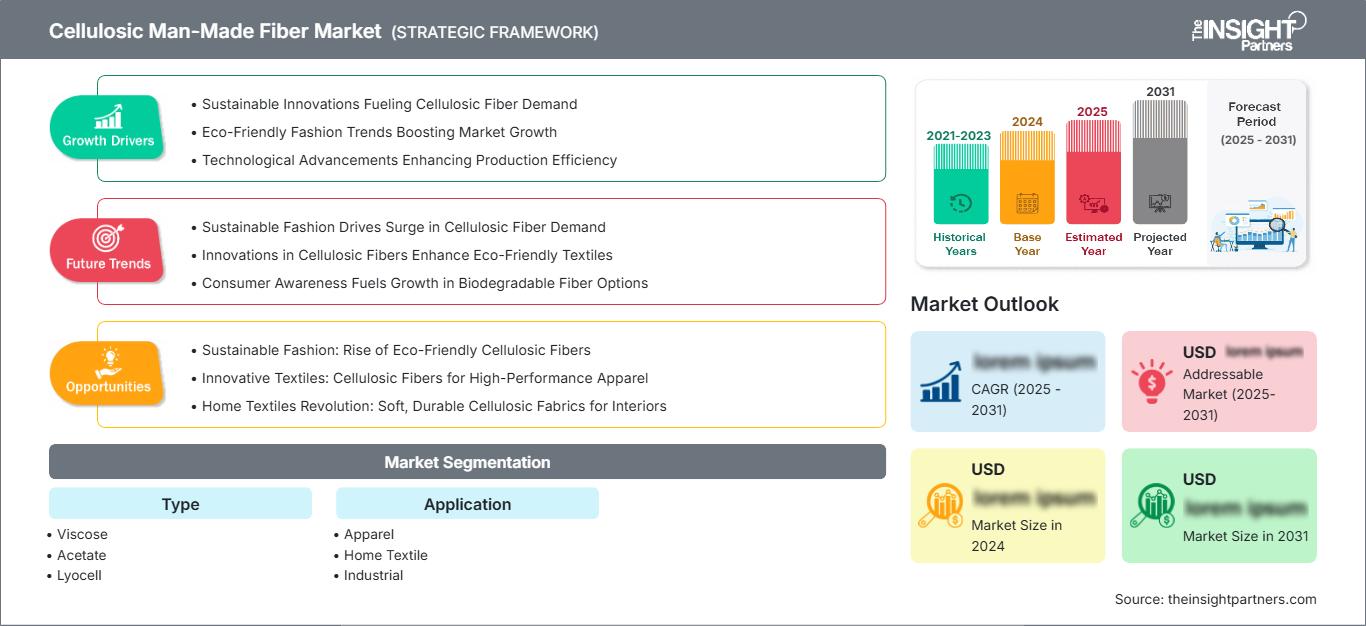
Cellulosic Man-Made Fiber Market: Strategic Insights
Regional Insights
North America Cellulosic Man-Made Fiber Market
The North America region held 22–26% market share of the global Cellulosic Man-Made Fiber Market in 2025, and the market is expected to grow at a CAGR of 3.0–3.8% from 2026 to 2034. The growth in the demand will be driven by the rising use of sustainable material fabrics in the fashion, automotive interiors, health care products, and other industrial applications.
Additionally, regulations that focus on decreasing the amount of plastic waste and improving the sustainability of products have encouraged the use of renewable cellulose-based man-made fibers in regional manufacturing supply chains. In addition, the region has strong research capability, well-developed chemical processing industry, and good cooperation between textile makers and end users.
U.S. Cellulosic Man-Made Fiber Market
United States constituted 72-76% of the North American Cellulosic Man-Made Fiber market share in 2025 and is estimated to experience a growth of CAGR between 3.1-3.9% over the forecast period. There is an ever-increasing demand for cellulose fibers from various sectors like garments, medical textiles, filtration media, automobile interiors, and home furnishings. The focus on sustainability and lower carbon footprints from large consumer brands has pushed local manufacturers to incorporate more cellulose-based fibers.
Research capabilities, manufacturing processes, and collaboration between fiber makers and textile firms will drive market growth further. The use of specialty textiles, innovation in technical fibers, and developments in circular economy are likely to improve the supply chain resiliency as well as enhance production and use in premium textile markets.
Europe Cellulosic Man-Made Fiber Market
Europe constituted 28-32% of the worldwide demand in 2025 and is expected to grow with a CAGR of 3.2-4.0% from 2026 to 2034. Germany dominates regional production and innovation via the use of state-of-the-art textile engineering and sustainability manufacturing efforts. The UK maintains increasing demand for sustainable materials used in apparel, while France, Italy, and Spain develop their consumption base with premium fashion, home textiles, and technical textiles manufacturing.
The European environmental policies promoting circular textiles, responsible forestry, and lower-carbon manufacturing will further fuel the investments in innovative cellulose fiber technology. Effective partnerships between fiber manufacturers, apparels companies, and research organizations expedite innovations in recycling and biodegradability of the textile material.
APAC Cellulosic Man-Made Fiber Market
The Asia Pacific region accounted for 39–43% of the global market in 2025 and is projected to grow with a CAGR of 3.8–4.6%. China is the leading manufacturing base in this region, while India, Japan, South Korea, and Australia are making increased investments in sustainable manufacturing and usage of fibers of high value.
Integrated textile supply chain, low-cost manufacturing processes, favorable industrial policies, and increasing domestic consumption of apparels continue to enhance the regional competitiveness.
Middle East & Africa Cellulosic Man-Made Fiber Market
The Middle East & Africa market is projected to register a CAGR of 2.8–3.6% during 2026–2034. Saudi Arabia and the UAE continue investing in downstream manufacturing diversification, while South Africa remains an important textile manufacturing and distribution center within the region.
Infrastructure development, expanding industrial diversification strategies, and increasing regional textile production create additional opportunities for cellulose-derived fibers. Growing awareness regarding sustainable materials and modernization of textile manufacturing facilities are expected to support gradual market expansion over the forecast period.
Segmentation Analysis
Type
The Type segment is projected to grow at a CAGR of 3.6–4.3% during 2026–2034. Product innovation, sustainability targets, and application-specific performance requirements continue shaping demand across different fiber types. Manufacturers are investing in cleaner production technologies, improved fiber characteristics, and closed-loop manufacturing processes to strengthen competitiveness. The Cellulosic Man-Made Fiber scope continues expanding as downstream industries increasingly adopt renewable and biodegradable fiber alternatives.
- Viscose: The largest fiber category owing to its widespread use in apparel, home textiles, and hygiene products. Strong manufacturing capacity, cost competitiveness, and versatile processing characteristics continue to support stable global demand across multiple textile value chains.
- Acetate: Widely utilized in premium apparel, linings, filtration media, and specialty textile applications due to its soft texture, dimensional stability, and aesthetic appeal. Demand remains concentrated in high-value consumer and industrial textile segments.
- Lyocell: Rapidly gaining market acceptance because of its closed-loop solvent recovery process, excellent moisture management, durability, and environmental profile. Premium apparel brands increasingly integrate lyocell into sustainable product portfolios to enhance product differentiation.
- Modal: Preferred for high-quality garments, intimate apparel, and home textile products because of its softness, color retention, and resistance to shrinkage. Growing demand for premium comfort textiles continues to support commercial adoption across global fashion markets.
Application
The Application segment is expected to register a CAGR of 3.5–4.2% during 2026–2034. Increasing consumer preference for sustainable textiles, expanding industrial applications, and continuous innovation in cellulose-derived fibers continue driving demand across multiple end-use sectors. Apparel manufacturers remain the largest consumers, while industrial applications increasingly benefit from performance-oriented fiber developments.
- Apparel: The dominant application owing to extensive utilization in casual wear, formal garments, sportswear, and fashion apparel. Sustainability commitments from global brands and increasing consumer awareness continue to strengthen long-term adoption of renewable cellulose fibers.
- Home Textile: Bedding, curtains, upholstery, towels, and decorative fabrics increasingly utilize cellulosic fibers because of their softness, breathability, and moisture absorption. Rising residential construction and premium home furnishing demand continue to support steady market expansion.
- Industrial: Industrial applications include filtration materials, medical textiles, automotive interiors, wipes, protective products, and specialty engineered fabrics. Manufacturers increasingly develop high-performance cellulose fibers that satisfy demanding durability, absorbency, and environmental compliance requirements.
Opportunity Snapshot
| Application | Revenue Contribution | Trend Tag | Adoption Stage |
|---|---|---|---|
| Apparel | High | Sustainable Fashion | Mature |
| Home Textile | Medium | Premium Comfort | Scaling |
| Industrial | Medium | Technical Fibers | Emerging |
Cellulosic Man-Made Fiber Market Growth Drivers and Impact Analysis
Growing Preference for Sustainable Textile Materials
Increasing awareness of environmental issues among consumers, retailers, and governmental authorities drives the growing need for sustainable fiber alternatives throughout global textile supply chains. More fashion companies set scientific sustainability goals while increasing their procurement of responsibly produced cellulose fibers that feature a smaller ecological impact. Legislative initiatives encouraging circular economy principles and certified forestry management add up to the successful long-term development of the industry. Wood pulp procurement, cleaner production techniques, and more transparent supply chain systems allow manufacturers to meet new demands from their customers. With sustainable procurement becoming a competitive advantage, fiber manufacturers continue developing products featuring better recyclability, biodegradability, and reduced carbon footprint.
Expansion of Circular Textile Manufacturing Infrastructure
Global textile manufacturers increasingly invest in recycling technologies, solvent recovery systems, resource-efficient production facilities, and closed-loop manufacturing processes to improve operational sustainability. Circular textile initiatives encourage greater recovery of cellulose-based raw materials while reducing waste generation and water consumption throughout production. Fiber manufacturers collaborate with apparel companies, chemical suppliers, and research organizations to commercialize innovative recycling solutions capable of producing high-quality regenerated fibers. These investments strengthen supply-chain resilience while improving compliance with increasingly stringent environmental regulations. Continued modernization of production infrastructure is expected to improve manufacturing efficiency and expand commercialization opportunities for advanced cellulose-based textile materials worldwide.
Increasing Adoption Across Technical and Industrial Textiles
Demand continues expanding beyond conventional apparel applications as engineered cellulose fibers demonstrate favorable absorbency, breathability, mechanical performance, and environmental characteristics. Automotive interiors, filtration products, medical textiles, hygiene materials, wipes, and specialty industrial fabrics increasingly incorporate regenerated cellulose fibers to satisfy evolving customer and regulatory requirements. Manufacturers continue developing customized fiber grades optimized for specific industrial applications requiring enhanced durability, processability, and functional performance. Ongoing product innovation, combined with broader industrial diversification, reduces dependence on traditional apparel demand while creating additional revenue opportunities across multiple high-value end-use industries.
Cellulosic Man-Made Fiber Market Future Trends
Expansion of Closed-Loop Fiber Manufacturing Technologies
Manufacturers continue investing in advanced solvent recovery systems and closed-loop production technologies to improve resource efficiency and reduce environmental impact. These innovations minimize chemical losses, lower water consumption, and support compliance with evolving environmental regulations across major textile-producing regions. As sustainability becomes a primary procurement criterion for global apparel brands, demand for fibers produced through environmentally responsible manufacturing processes is expected to increase. Cellulosic Man-Made Fiber Market trends indicate that companies adopting digital process monitoring, renewable energy integration, and circular manufacturing practices will strengthen their competitive position while improving production economics and product quality over the forecast period.
Digitalization and Supply Chain Traceability
The industry is witnessing greater adoption of digital platforms that improve supply chain transparency from certified wood pulp sourcing to finished textile products. Blockchain-enabled traceability, artificial intelligence-based production optimization, and digital quality management systems help manufacturers demonstrate responsible sourcing while enhancing operational efficiency. Increasing regulatory expectations regarding environmental disclosure and corporate sustainability reporting are encouraging investment in digital infrastructure. These developments allow fiber producers and apparel manufacturers to strengthen consumer confidence, reduce supply chain risks, and improve inventory management while supporting long-term commercialization of sustainable cellulose-based textile products.
Cellulosic Man-Made Fiber Market Opportunities
Expansion of Premium Sustainable Textile Applications
Premium apparel, luxury home furnishings, performance sportswear, and branded lifestyle products increasingly prioritize renewable and biodegradable materials as sustainability becomes a purchasing criterion. Global fashion companies continue introducing environmentally responsible collections that utilize advanced regenerated cellulose fibers with improved comfort, durability, and moisture management characteristics. Cellulosic Man-Made Fiber Market Forecasts indicate that continued investments in premium textile innovation, certified sustainable forestry, and recycled cellulose feedstocks will create attractive opportunities for manufacturers capable of supplying differentiated, high-value fiber products. Strategic partnerships between fiber producers and global apparel brands are expected to accelerate commercialization and strengthen long-term market competitiveness.
Investment in Next-Generation Regenerated Fiber Technologies
Growing research activities focused on recycled textile feedstocks, advanced cellulose dissolution technologies, bio-based chemical processing, and engineered specialty fibers are creating significant opportunities for long-term industry expansion. Manufacturers investing in innovative production platforms capable of improving fiber strength, dyeability, softness, and environmental performance can address evolving customer requirements across apparel, medical textiles, filtration, and industrial applications. Commercialization of advanced regenerated fibers supported by government sustainability initiatives and circular economy investments is expected to improve profitability while reducing dependence on virgin raw materials. Technology licensing, strategic acquisitions, and collaborative research partnerships will remain important avenues for market expansion.
Recent Developments
- June 2026: Grasim Industries Limited approved an investment of ₹3,094 crore to establish the second phase of its lyocell manufacturing facility at Harihar, Karnataka. The expansion will add 110,000 TPA of lyocell capacity through two production lines, with commissioning planned for 2028 and 2030, strengthening the company's position in sustainable cellulosic fibers.
- June 2025: Jilin Chemical Fiber Co., Ltd. announced the expansion of two next-generation man-made cellulosic fiber (MMCF) production lines in China to increase the supply of low-impact textile fibers. The investment supports the commercialization of next-generation cellulose feedstocks and aligns with the growing demand for sustainable textile materials from global apparel manufacturers.
Frequently Asked Questions

- Comprehensive Market Sizing and Forecast Analysis
- Detailed Segmentation Analysis
- In-Depth Market Dynamics Assessment
- Regional and Country-Level Insights
- Competitive Landscape and Company Benchmarking
- Strategic Business Intelligence
Recent Reports
Testimonials

The Insight Partners' SCADA System Market report is comprehensive, with valuable insights on current trends and future forecasts. The team was highly professional, responsive, and supportive throughout. We are very satisfied and highly recommend their services.
RAN KEDEM Partner, Reali Technologies LTDs
I requested a report on a very specific software market and the team produced the report in a few days. The information was very relevant and well presented. I then requested some changes and additions to the report. The team was again very responsive and I got the final report in less than a week.
JEAN-HERVE JENN Chairman, Future Analytica
We worked with The Insight Partners for an important market study and forecast. They gave us clear insights into opportunities and risks, which helped shape our plans. Their research was easy to use and based on solid data. It helped us make smart, confident decisions. We highly recommend them.
PIYUSH NAGPAL Sr. Vice President, High Beam Global
The Insight Partners delivered insightful, well-structured market research with strong domain expertise. Their team was professional and responsive throughout. The user-friendly website made accessing industry reports seamless. We highly recommend them for reliable, high-quality research services
YUKIHIKO ADACHI CEO, Deep Blue, LLC.
This is the first time I have purchased a market report from The Insight Partners.While I was unsure at first, I visited their web site and felt more comfortable to take the risk and purchase a market report.I am completely satisfied with the quality of the report and customer service. I had several questions and comments with the initial report, but after a couple of dialogs over email with their analyst I believe I have a report that I can use as input to our strategic planning process.Thank you so much for taking the extra time and making this a positive experience.I will definitely recommend your service to others and you will be my first call when we need further market data.
JOHN SUZUKI President and Chief Executive Officer, Board Director, BK Technologies
I wish to appreciate your support and the professionalism you displayed in the course of attending to my request for information regarding to infectious disease IVD market in Nigeria. I appreciate your patience, your guidance, and the fact that you were willing to offer a discount, which eventually made it possible for us to close a deal. I look forward to engaging The Insight Partners in the future, all thanks to the impression you have created in me as a result of this first encounter.
DR CHIJIOKE ONYIA MANAGING DIRECTOR, PineCrest Healthcare Ltd.Reason to Buy
- Informed Decision-Making
- Understanding Market Dynamics
- Competitive Analysis
- Identifying Emerging Markets
- Customer Insights
- Market Forecasts
- Risk Mitigation
- Boosting Operational Efficiency
- Strategic Planning
- Investment Justification
- Tracking Industry Innovations
- Aligning with Regulatory Trends





 Get Free Sample for