
Clostridium Botulinum Infection Treatment Market Size, Growth & Demand by 2034
Coverage: by Type (Antitoxin Therapy, Meticulous Airway Management, Mechanical Breathing Assistance); Application (Hospital, Clinic, Others), and Geography (North America, Europe, Asia Pacific, and South and Central America)
- Status : Data Released
- Report Code : TIPRE00008518
- Category : Life Sciences
- No. of Pages : 150
- Available Report Formats :


- Last update date : November 09, 2026


2025 Market Size
US$ 1.78 Bn
Base year value
2034 Forecast
US$ 3.16 Bn
Projected by 2034
CAGR 2026-2034
6.61 %
Growth rate
Addressable Market
US$ 22.36 Bn
(2026-2034)
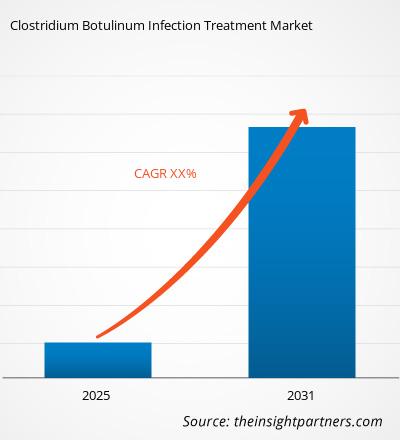
The Clostridium Botulinum Infection Treatment Market was valued at US$ 1.78 Billion in 2025 and is projected to reach US$ 3.16 Billion by 2034, registering a CAGR of 6.61% during 2026–2034. Expansion is supported by stronger public-health preparedness, strategic antitoxin procurement, improved clinical recognition, and wider availability of intensive respiratory support. Because antitoxin neutralizes circulating toxin but cannot reverse established paralysis, timely diagnosis and treatment access materially influence clinical resource utilization.
North America remains the principal commercial and preparedness hub, with the regional market expected to expand at approximately ~6% CAGR through 2034. The Clostridium Botulinum Infection Treatment Market size in the region is supported by centralized antitoxin distribution, government stockpiling, established poison-control networks, and advanced intensive-care capacity. Continued federal procurement of heptavalent botulism antitoxin also creates predictable institutional demand despite the disease’s low incidence.
Clostridium Botulinum Infection Treatment Market Assessment and Insights
Regional Outlook
- North America: ~43% of the global Clostridium Botulinum Infection Treatment Market share in 2025 | ~6% CAGR through 2034. Market position: North America leads through established emergency stockpiles, specialist consultation pathways, advanced critical-care infrastructure, and sustained government procurement of broad-spectrum antitoxin for civilian and biodefense preparedness.
- US: ~86% of North American market revenue in 2025 | ~6% CAGR through 2034. Market position: The US anchors regional demand through federal antitoxin distribution, advanced hospital intensive-care capacity, national preparedness contracts, and clinical protocols supporting treatment before laboratory confirmation.
- Europe: ~29% of the global market in 2025 | ~6% CAGR through 2034. Market position: Europe combines mature critical-care systems with coordinated outbreak surveillance. Germany, the UK, France, Italy, and Spain constitute major national demand centers, with Germany estimated to hold the leading country position.
- Asia Pacific: ~20% of the global market in 2025 | ~8% CAGR through 2034. Market position: Asia Pacific is the fastest-growing region as governments strengthen emergency medicine inventories, food-safety surveillance, intensive-care access, and cross-border mechanisms for obtaining scarce antitoxin supplies.
Segment Outlook
- Antitoxin Therapy: ~58% Share in 2025 | ~6% CAGR through 2034. Market position: Antitoxin therapy leads because early toxin neutralization is the disease-specific intervention used to prevent further neurological deterioration, while public-health agencies commonly manage procurement and emergency distribution.
- Mechanical Breathing Assistance: ~25% Share in 2025 | ~7% CAGR through 2034. Market position: Demand rises with recognition that progressive neuromuscular paralysis can cause respiratory failure and require prolonged ventilation, intensive monitoring, infection control, and rehabilitation-oriented hospital care.
Competitive Coverage
AbbVie Inc., AlphaVax, Inc., Cangene Corporation, Emergent BioSolutions Inc., Ipsen Pharma, Microbiotix, Inc., Molecular Targeting Technologies, Inc., Morphotek, Inc., Pfizer Inc., XOMA Corporation
Methodology
The Insight Partners follows Data Collection & Secondary Research, Primary Research, Data Analysis, and Data Triangulation & Final Review to validate market estimates and insights.
Source: The Insight Partners' analysis based on proprietary research, government publications, company annual reports, investor presentations, industry databases, and expert interviews.
Delivery has shifted from a predominantly reactive approach to a structured emergency pathway that involves immediate clinical assessment and rapid release of antitoxin along with airway and respiratory management. Antitoxin available nowadays is heptavalent antitoxin which covers toxin serotypes from A to G and infantile botulism associated with toxin type A or B can be managed using human botulism immune globulin. It is produced in a specialized manner because antitoxins have specific needs for biological sourcing, purification, potency testing, cold chain management, and government contracting.
Up until 2034, the investments will be geared toward regional stockpiling, quick release procedures from abroad, clinician training, and respiratory therapy in poorly-served regions. In March 2026, the emergency shipping of five antitoxin vials from the global stockpile to Vietnam underscores the problem of poor accessibility in nations that do not have their own stockpiles. The rare disease product regulation, biodefense purchase, and international emergencies cooperation may help with better accessibility, but low occurrence and economics of production will continue to hinder market growth of antitoxins.
Clostridium Botulinum Infection Treatment Market Report Scope
| Report Attribute | Details |
|---|---|
| Market size in 2025 | US$ 1.78 Billion |
| Market Size by 2034 | US$ 3.16 Billion |
| Global CAGR (2026 - 2034) | 6.61% |
| Historical Data | 2021-2024 |
| Forecast period | 2026-2034 |
Clostridium Botulinum Infection Treatment Market Analysis
Growth of the market for Clostridium Botulinum Infection Treatment stems from the severe clinical implications of delayed response instead of frequent occurrence. The hospital needs to be prepared for an outbreak of foodborne botulism, infant botulism, wound botulism, iatrogenic botulism, and potentially intentional botulism exposure. Anti-toxin is most effective when taken early and helps prevent further damage caused by the toxin, thus making vigilance and prompt availability key demand factors.
There are connections within the treatment network that consist of public health departments, manufacturers of biological agents, stockpiles at the country level, hospitals, poison control centers, ICUs, laboratories, and specialist logistics companies. This supply is different from typical drugs distribution because often in cases of suspicion governments get involved, and products need to be made available on emergency basis.
Concentration among the competitors is high. According to the Clostridium Botulinum Infection Treatment Market report, Emergent BioSolutions Inc. is strategically positioned via BAT, whereas Cangene Corporation has connections with the product history. Expertise in botulinum neurotoxin is provided by AbbVie Inc. and Ipsen Pharma; on the other hand, Pfizer Inc., XOMA Corporation, Microbiotix, Inc., Molecular Targeting Technologies, Inc., AlphaVax, Inc., and Morphotek, Inc. provide capabilities from related categories (biologics, antibody or infectious diseases) but not equivalent antitoxins.
Investment follows preparedness value more than regular demand. Government contracts, replacement of the stockpile, stability management, and manufacturing continuity make up strategic positioning factors. The changes made in the contract with Emergent in 2025 and 2026 illustrate the importance of procurement for ensuring manufacturing preparedness over an extended period of time. Those companies which have experience in manufacturing biologics, stable plasma or antibodies, and filling and finishing facilities are best positioned for partnerships or technology transfers.
● REPORT CUSTOMIZATION
Tailor This Report To Align With Your Specific Business Requirements
This report can be customized to align precisely with your business objectives, scope, and target markets. Customization options include tailored segmentation, geography, competitive analysis, and strategic insights to support informed decision-making.
Customize This Report →WHAT YOU CAN ADJUST
- ● Segmentations
- ● Geography
- ● Competitive Analysis
- ● Language Preferences
Clostridium Botulinum Infection Treatment Market: Strategic Insights

Regional Insights
North America Clostridium Botulinum Infection Treatment Market
North America accounted for an estimated ~43% of global revenue in 2025 and is projected to grow at approximately ~6% CAGR through 2034. Clostridium Botulinum Infection Treatment Market share is a function of well-developed emergency response systems, valuable government purchases, high-quality intensive care facility, and well-defined system to release antitoxin when the diagnosis is made by a doctor. The biodefense strategies of the US and Canada help ensure the supply.
There is an emphasis on consulting a specialist before the diagnosis is confirmed. Thus, the significance of clinician training, 24/7 public health service, neurological observation, and ventilator access becomes higher. Biologics manufacturing capabilities and emergency readiness of Canada play a role, but the US generates the largest commercial demand regionally. The future market prospects include Mexico with tertiary hospitals and food safety monitoring systems.
U.S. Clostridium Botulinum Infection Treatment Market
The US represented approximately ~86% of North American revenue in 2025 and is forecast to register about ~6% CAGR through 2034. This strategy is buttressed by the availability of national stocks of antitoxins, the emergency consultation process at the Centers for Disease Control and Prevention, poison-control systems, and ready availability of intensive care units. Antitoxins for those who are not infants can be coordinated by physicians using public health agencies, thus emphasizing institutional procurement rather than retail distribution.
Emergent BioSolutions Inc. provides heptavalent antitoxin on a preparedness contract while the California Department of Public Health provides BabyBIG for botulism among infants resulting from types A or B toxin. Hospital-based usage involves neurological monitoring, airway protection, mechanical ventilation, management of other complications, and rehabilitation. Funds for biodefense from the federal government facilitate stock replenishment and production independently of yearly incidence rates.
Europe Clostridium Botulinum Infection Treatment Market
Europe held an estimated ~29% of global revenue in 2025 and is anticipated to expand at roughly ~6% CAGR through 2034. Its Clostridium Botulinum Infection Treatment Market position is underpinned by universal or broad hospital access, mature intensive-care systems, coordinated food-safety regulation, and cross-border disease surveillance. Germany is estimated to be the leading country in Europe because of its hospital infrastructure, specialist infectious-disease capabilities, and central role in regional patient referrals.
The UK has a well-established public health response system and critical care expertise, and France has specialist hospitals and robust surveillance of foodborne diseases. Italy and Spain bring significant demand through their tertiary hospitals and regional emergency systems, especially where preserved food and tourists necessitate immediate investigations of potential clusters. The 2023 incident of iatrogenic botulism in Türkiye related to medical procedures produced confirmed cases in Germany, Austria, and Switzerland, underscoring the need for international notification and treatment cooperation.
European purchasing is fragmented relative to centralized US purchasing. Stockpiling policies, hospital pharmacy practices, and emergency imports vary from nation to nation. There is a chance for coordinated stockpiling, clinical guidelines, visibility on inventory, and purchase agreements that avoid expiring products or shortages. Growth will be moderate because incidence is low, but preparedness spending and critical care expenditures maintain market value.
APAC Clostridium Botulinum Infection Treatment Market
Asia Pacific represented approximately ~20% of global revenue in 2025 and is projected to record the fastest regional CAGR of ~8% through 2034. China is estimated to be the leading country in Asia Pacific, supported by its hospital scale, expanding intensive-care network, domestic biologics capacity, and large food-safety monitoring requirement.
Japan, South Korea, and Australia contribute mature emergency-care demand, while India offers expansion potential through tertiary hospital investment and public-health modernization. The 2026 emergency delivery of antitoxin to Vietnam highlighted limited local availability in parts of the region. Governments are consequently expected to prioritize reserve access, procurement cooperation, cold-chain logistics, and clinician preparedness.
Middle East & Africa Clostridium Botulinum Infection Treatment Market
The Middle East & Africa market is forecast to expand at approximately ~7% CAGR through 2034. The UAE is positioned as a leading country in the Middle East & Africa due to advanced tertiary hospitals, medical logistics connectivity, and emergency-care investment. Saudi Arabia is expanding critical-care infrastructure and centralized procurement, supporting future antitoxin and ventilation demand.
South Africa anchors much of Sub-Saharan Africa’s specialist treatment capability, while the Rest of MEA remains constrained by limited antitoxin inventories, uneven intensive-care access, and difficult cross-border logistics. Opportunity depends on regional reserve hubs, accelerated import authorization, ventilator capacity, clinician training, and stronger foodborne-disease surveillance rather than routine pharmaceutical promotion.
Segmentation Analysis
Type
Type defines the principal clinical resources required to arrest toxin progression and support patients through neuromuscular recovery. The Clostridium Botulinum Infection Treatment Market scope includes disease-specific neutralization, airway protection, and assisted ventilation, with adoption determined by severity, timing of presentation, respiratory involvement, and local treatment capacity. Antitoxin Therapy is expected to register approximately ~6% CAGR during 2026–2034 as stockpile investment and emergency-access programs expand.
- Antitoxin Therapy: Antitoxin therapy is the disease-specific intervention used to bind circulating toxin before additional nerve endings are affected. Demand is concentrated in government reserves, designated hospitals, and emergency distribution programs requiring rapid release and refrigerated logistics.
- Meticulous Airway Management: Meticulous airway management addresses bulbar weakness, secretion accumulation, swallowing impairment, and upper-airway compromise before complete respiratory failure develops. Its use depends on continuous assessment, experienced clinical teams, and immediate escalation capability.
- Mechanical Breathing Assistance: Mechanical breathing assistance supports patients whose respiratory muscles become significantly weakened or paralyzed. Resource intensity can remain high because neurological recovery may take weeks or months, increasing ventilator, intensive-care, nursing, and rehabilitation requirements.
Application
Application segmentation reflects where suspected cases can be recognized, stabilized, and treated. Hospitals dominate complex case management because they combine emergency medicine, neurology, infectious-disease consultation, intensive-care monitoring, pharmacy control, and ventilatory support. Clinics primarily contribute through early identification and referral. The Hospital sub-segment is projected to record approximately ~7% CAGR through 2034 as preparedness protocols and critical-care capacity expand.
- Hospital: Hospitals represent the primary treatment setting for confirmed or strongly suspected cases because antitoxin administration requires monitoring and severe disease may progress rapidly to respiratory failure, prolonged ventilation, secondary infection, and multidisciplinary rehabilitation.
- Clinic: Clinics have a frontline detection and referral role, particularly when patients first present with visual disturbance, dysphagia, weakness, or gastrointestinal symptoms. Their strategic value lies in avoiding diagnostic delay and initiating public-health notification.
Opportunity Snapshot
| Application | Revenue Contribution | Trend Tag | Adoption Stage |
| Hospital | High | ICU Readiness | Mature |
| Clinic | Low | Rapid Referral | Scaling |
Clostridium Botulinum Infection Treatment Market Growth Drivers and Impact Analysis
Expansion of National Antitoxin Stockpiles
Government stocking creates an assured demand structure in a setting where the case frequency is low and erratic. Governments need to have enough supplies of the drug in case of isolated food-borne cases, wound botulism cases, infant cases, outbreaks, and deliberate releases. Such a need makes it possible for there to be multi-year buying, potency testing, inventory turn-over, and proven manufacturing readiness. For example, a modification of a US contract in June 2025 added US$62.4 million in purchasing heptavalent botulism antitoxin supplies.
Need for Immediate Treatment Before Laboratory Confirmation
The urgency in the clinical setting itself creates the need for the availability of antitoxin and standardized emergency protocol. The public health guidelines advise that any case presenting symptoms should be managed based on clinical evidence, without having to wait for the laboratory tests to be conducted, which may take some days. Early management is required since antitoxin can prevent further toxin effects, although it cannot reverse the neurological damage caused by it. Thus, any delay will lead to more paralysis, dependence on ventilation, prolonged stay in the hospital, and need for rehabilitation.
Increasing Critical-Care Preparedness
Severe botulism can cause respiratory failure when neurotoxin-mediated paralysis affects breathing muscles or upper-airway function. Treatment therefore depends on more than antitoxin availability. Hospitals require serial neurological assessment, airway management, ventilators, intensive nursing, infection prevention, nutrition, and rehabilitation. Recovery may take weeks or months, creating substantial per-patient resource consumption even where incidence remains low. Expansion of critical-care capacity in Asia Pacific, the Middle East, and selected emerging economies consequently broadens the treatable patient base and increases institutional spending on respiratory support. Modern antitoxin and intensive care have reduced mortality substantially, reinforcing investment in integrated treatment readiness.
Clostridium Botulinum Infection Treatment Market Future Trends
Regionalization of Emergency Antitoxin Reserves
Clostridium Botulinum Infection Treatment Market trends will increasingly favor distributed regional reserves rather than dependence on a small number of distant national stockpiles. The 2026 transport of antitoxin from Geneva to Vietnam within 48 hours demonstrated effective international coordination but also exposed geographic access limitations. Future systems are likely to use regional inventory hubs, interoperable stock monitoring, predefined customs clearance, temperature-tracked logistics, and mutual-aid agreements. Such arrangements could shorten treatment delays while reducing the cost of maintaining complete national inventories in every small market. Manufacturers may gain through framework contracts covering replenishment, emergency deployment, stability monitoring, and training.
Development of More Targeted Antibody Platforms
Future research is expected to explore recombinant monoclonal and oligoclonal antibodies capable of neutralizing selected botulinum neurotoxin serotypes with consistent manufacturing and potentially lower dependence on equine plasma. Adoption will depend on breadth of serotype coverage, post-exposure effectiveness, safety, manufacturing scalability, and regulatory acceptance under rare-disease or medical-countermeasure pathways. Conventional heptavalent antitoxin will remain strategically important, but targeted platforms could create complementary products for defined exposure events. Companies with antibody discovery, toxin-binding assays, biological manufacturing, and government-development experience may pursue collaborations that spread the high cost and clinical uncertainty of development.
Clostridium Botulinum Infection Treatment Market Opportunities
Public-Private Preparedness Contracts in Underserved Regions
Clostridium Botulinum Infection Treatment Market Forecasts indicate a practical opportunity for suppliers, logistics companies, and governments to build shared preparedness programs in Asia Pacific, the Middle East, Africa, and Latin America. Investment priorities include minimum reserve inventories, accelerated import procedures, replacement schedules, hospital training, and guaranteed emergency transport. Shared regional stockpiles can make supply economically viable where individual national case volumes do not justify independent procurement. Vendors should structure contracts around readiness services rather than vial supply alone, incorporating temperature monitoring, shelf-life management, treatment protocols, and simulation exercises. The approach can improve access while creating predictable recurring revenue.
Integrated Hospital Readiness and Referral Networks
Hospitals and specialist service providers can develop integrated programs connecting emergency departments, neurology teams, intensive-care units, laboratories, pharmacies, and public-health authorities. Commercial opportunities include diagnostic decision support, clinician education, airway-monitoring protocols, ventilator readiness audits, and secure communication systems for emergency antitoxin requests. Clinics can be incorporated as referral nodes because early symptoms may resemble other neurological disorders. Investment in these networks reduces recognition delays and helps direct scarce antitoxin to appropriate patients. Partnerships between tertiary hospitals and regional public-health agencies can also improve case documentation, outbreak investigation, and future procurement planning.
Recent Developments
- May 2026: Emergent BioSolutions Inc. – The company received a contract modification valued at approximately US$64.5 million for BAT, its heptavalent botulism antitoxin, to support the US biodefense strategy. The award reinforced long-term government demand for maintaining countermeasure availability against toxin serotypes A through G and supported continued manufacturing and stockpile readiness.
- March 2026: World Health Organization – WHO coordinated the emergency delivery of five botulism antitoxin vials from its Geneva stockpile to Da Nang, Vietnam, for three critically ill pediatric patients. The shipment reached the treatment pathway within approximately 48 hours, demonstrating both the value of global reserves and the access limitations facing countries without domestic inventory.
- June 2025: Emergent BioSolutions Inc. – Emergent secured a US$62.4 million modification to an existing ten-year contract with the US Administration for Strategic Preparedness and Response. The agreement covered continued supply of BAT for symptomatic botulism following suspected or confirmed exposure to neurotoxin serotypes A through G in adult and pediatric patients.
Frequently Asked Questions

- Comprehensive Market Sizing and Forecast Analysis
- Detailed Segmentation Analysis
- In-Depth Market Dynamics Assessment
- Regional and Country-Level Insights
- Competitive Landscape and Company Benchmarking
- Strategic Business Intelligence
Recent Reports
Testimonials

The Insight Partners provided valuable market intelligence that supported our global go-to-market strategy. Their team was professional, responsive, and attentive to our feedback, providing thoughtful analysis and helpful methodological clarifications throughout the project.
Junmo Kim Chief Financial Officer (CFO), Enertech Co., Ltd.
The Insight Partners' SCADA System Market report is comprehensive, with valuable insights on current trends and future forecasts. The team was highly professional, responsive, and supportive throughout. We are very satisfied and highly recommend their services.
RAN KEDEM Partner, Reali Technologies LTDs
I requested a report on a very specific software market and the team produced the report in a few days. The information was very relevant and well presented. I then requested some changes and additions to the report. The team was again very responsive and I got the final report in less than a week.
JEAN-HERVE JENN Chairman, Future Analytica
We worked with The Insight Partners for an important market study and forecast. They gave us clear insights into opportunities and risks, which helped shape our plans. Their research was easy to use and based on solid data. It helped us make smart, confident decisions. We highly recommend them.
PIYUSH NAGPAL Sr. Vice President, High Beam Global
The Insight Partners delivered insightful, well-structured market research with strong domain expertise. Their team was professional and responsive throughout. The user-friendly website made accessing industry reports seamless. We highly recommend them for reliable, high-quality research services
YUKIHIKO ADACHI CEO, Deep Blue, LLC.
This is the first time I have purchased a market report from The Insight Partners.While I was unsure at first, I visited their web site and felt more comfortable to take the risk and purchase a market report.I am completely satisfied with the quality of the report and customer service. I had several questions and comments with the initial report, but after a couple of dialogs over email with their analyst I believe I have a report that I can use as input to our strategic planning process.Thank you so much for taking the extra time and making this a positive experience.I will definitely recommend your service to others and you will be my first call when we need further market data.
JOHN SUZUKI President and Chief Executive Officer, Board Director, BK Technologies
I wish to appreciate your support and the professionalism you displayed in the course of attending to my request for information regarding to infectious disease IVD market in Nigeria. I appreciate your patience, your guidance, and the fact that you were willing to offer a discount, which eventually made it possible for us to close a deal. I look forward to engaging The Insight Partners in the future, all thanks to the impression you have created in me as a result of this first encounter.
DR CHIJIOKE ONYIA MANAGING DIRECTOR, PineCrest Healthcare Ltd.Reason to Buy
- Informed Decision-Making
- Understanding Market Dynamics
- Competitive Analysis
- Identifying Emerging Markets
- Customer Insights
- Market Forecasts
- Risk Mitigation
- Boosting Operational Efficiency
- Strategic Planning
- Investment Justification
- Tracking Industry Innovations
- Aligning with Regulatory Trends





 Get Free Sample for