
Communicable Disease Treatment Market Growth, Share & Trends by 2034
Coverage: By Type (Vaccines, Therapeutic Drug); Transmition (Direct Contact, Indirect Contact); Infection Type (Bacterial Infection, Fungal Infection, Viral Infection) , and Geography (North America, Europe, Asia Pacific, and South and Central America)
- Status : Data Released
- Report Code : TIPRE00027321
- Category : Life Sciences
- No. of Pages : 150
- Available Report Formats :


- Last update date : October 30, 2026


2025 Market Size
US$ 37.04 Bn
Base year value
2034 Forecast
US$ 101.94 Bn
Projected by 2034
CAGR 2026-2034
11.91 %
Growth rate
Addressable Market
US$ 610.14 Bn
(2026-2034)
The Communicable Disease Treatment Market was valued at US$ 37.04 Billion in 2025 and is projected to reach US$ 101.94 Billion by 2034, registering a CAGR of 11.91% during 2026–2034. Expanding immunization programs, persistent infectious disease incidence, antimicrobial resistance, and investment in pathogen-specific therapies are strengthening demand. Growth also reflects broader diagnostic access, accelerated vaccine platforms, and coordinated public-health procurement across developed and emerging healthcare systems.
North America remains central to the Communicable Disease Treatment Market size, with the region expected to record an approximately ~11% CAGR through 2034. Established vaccination infrastructure, high treatment expenditure, routine adult immunization, and rapid adoption of newly approved anti-infective products support regional demand. Strong clinical-development capabilities and government preparedness programs also enable manufacturers to commercialize vaccines and therapeutic drugs across hospital, retail, and public-health channels.
Communicable Disease Treatment Market Assessment and Insights
Regional Outlook
- North America: ~39% of the global market in 2025 | ~11% CAGR through 2034. Market position: North America leads through substantial pharmaceutical expenditure, developed immunization networks, regulatory pathways for accelerated review, and broad access to branded vaccines, antivirals, antibiotics, and hospital-administered infectious disease therapies.
- US: ~83% of North American market revenue in 2025 | ~11% CAGR through 2034. Market position: The US anchors regional demand through extensive clinical research, public and private vaccine purchasing, large manufacturer operations, and sustained treatment requirements across respiratory, bacterial, and healthcare-associated infections.
- Europe: ~28% of the global market in 2025 | ~10% CAGR through 2034. Market position: Europe represents a mature treatment market supported by national immunization schedules, centralized procurement, surveillance systems, and strong demand in Germany, the UK, France, Italy, and Spain.
- Asia Pacific: ~25% of the global market in 2025 | ~14% CAGR through 2034. Market position: Asia Pacific is the fastest-growing region, reflecting expanding treatment access, vaccine manufacturing, urban healthcare investment, and infectious disease programs in China, India, Japan, South Korea, and Australia.
Segment Outlook
- Therapeutic Drugs: ~66% Share in 2025 | ~11% CAGR through 2034. Market position: Therapeutic drugs lead because diagnosed infections require immediate pharmacological intervention, while continued antimicrobial resistance encourages demand for differentiated antibiotics, antivirals, antifungals, combination regimens, and hospital-based therapies.
- Vaccines: ~34% Share in 2025 | ~14% CAGR through 2034. Market position: Vaccines exhibit the stronger growth outlook as governments broaden immunization schedules, manufacturers introduce multivalent platforms, and preventive procurement expands beyond childhood programs into maternal, adult, travel, and elderly populations.
Competitive Coverage
Bayer AG, Lupin Limited, Sanofi, GSK plc, Pfizer Inc., Johnson & Johnson, Sun Pharmaceutical Industries Limited, F. Hoffmann-La Roche Ltd, Novartis AG, Merck & Co., Inc.
Methodology
The Insight Partners follows Data Collection & Secondary Research, Primary Research, Data Analysis, and Data Triangulation & Final Review to validate market estimates and insights.
Source: The Insight Partners' analysis based on proprietary research, government publications, company annual reports, investor presentations, industry databases, and expert interviews.
Treatment strategies have moved from widely applicable anti-infectives to pathogen-targeted treatment options, combination treatments, multivalent vaccines, and product development platforms. Vaccine manufacturers are incorporating genomic surveillance, rapid diagnosis tests, real-world evidence, and adaptive designs into their portfolios more often. Manufacturing is changing due to technology transfer of vaccine manufacturing, regional fill-finish capabilities, and local active pharmaceutical ingredients manufacturing to reduce reliance on centralized global supply chains. On the other hand, resistance trends are promoting stewardship and development of solutions to hospital-acquired and difficult community-acquired pathogens.
Up to 2034, emerging health care systems are predicted to receive additional investment in manufacturing and commercialization through expansion of universal vaccination programs, disease surveillance, and local drug manufacturing capacity. Regulatory cooperation will avoid duplication of vaccine and anti-infectives evaluation, while public-private partnership could improve access in developing economies. Volume-based procurement strategies tied with affordable pricing are becoming increasingly critical for sustaining production. However, success will be driven by differentiation, pathogen coverage, manufacturing scale, payment and changing epidemiology.
Communicable Disease Treatment Market Report Scope
| Report Attribute | Details |
|---|---|
| Market size in 2025 | US$ 37.04 Billion |
| Market Size by 2034 | US$ 101.94 Billion |
| Global CAGR (2026 - 2034) | 11.91% |
| Historical Data | 2021-2024 |
| Forecast period | 2026-2034 |
Communicable Disease Treatment Market Analysis
Growth in the Communicable Disease Treatment Market is being driven by recurrent respiratory disease, microbial resistance, mobility in the population, and the increasing understanding that prevention and treatment have to work as a coherent continuum. Demand is coming from public health organizations, hospitals, clinics, pharmacies, and vaccination centers. Diagnostic laboratories affect product choice through pathogen identification and resistance testing, while distributors ensure the temperature-controlled delivery of vaccines and drugs. The economics of manufacturing are significantly different for biologically intricate vaccines versus synthetically manufactured drugs.
For vaccines, strategies will focus on redundancy of manufacture, regional stockpiling, and flexibility in capacity, which can be switched over to deal with epidemics. Manufacturers of vaccines will need to cope with antigen manufacture, adjuvants, sterile fill, and cold chain delivery. Drug manufacturers will face issues of source security of active ingredients, scale-up, portfolio turnover driven by resistance, and stewardship.
The market assessment for Communicable Disease Treatment shows a fragmented structure that comprises diversified pharmaceutical companies along with regional generic companies. Pfizer Inc., GSK plc, Sanofi, and Merck & Co., Inc. have robust vaccines in their portfolio, whereas Johnson & Johnson, F. Hoffmann-La Roche Ltd, Novartis AG, and Bayer AG play their part through infectious diseases R&D efforts and strong presence in the market. Lupin Limited and Sun Pharmaceutical Industries Limited bolster accessibility through cost-conscious pharma manufacturing along with geographical diversification of distribution.
Funds are being invested in multivalent vaccines, long-lasting vaccines, resistance-based antibiotics, antivirals, and technologies that accelerate development processes. Competitive positioning has shifted towards lifecycle management, evidence creation, bidding, cost advantage, and regional manufacturing partnerships. Companies offering prevention and treatment products are able to serve multiple procurement streams, while niche players can enter the market by focusing on neglected pathogens or infection-focused diseases.
● REPORT CUSTOMIZATION
Tailor This Report To Align With Your Specific Business Requirements
This report can be customized to align precisely with your business objectives, scope, and target markets. Customization options include tailored segmentation, geography, competitive analysis, and strategic insights to support informed decision-making.
Customize This Report →WHAT YOU CAN ADJUST
- ● Segmentations
- ● Geography
- ● Competitive Analysis
- ● Language Preferences
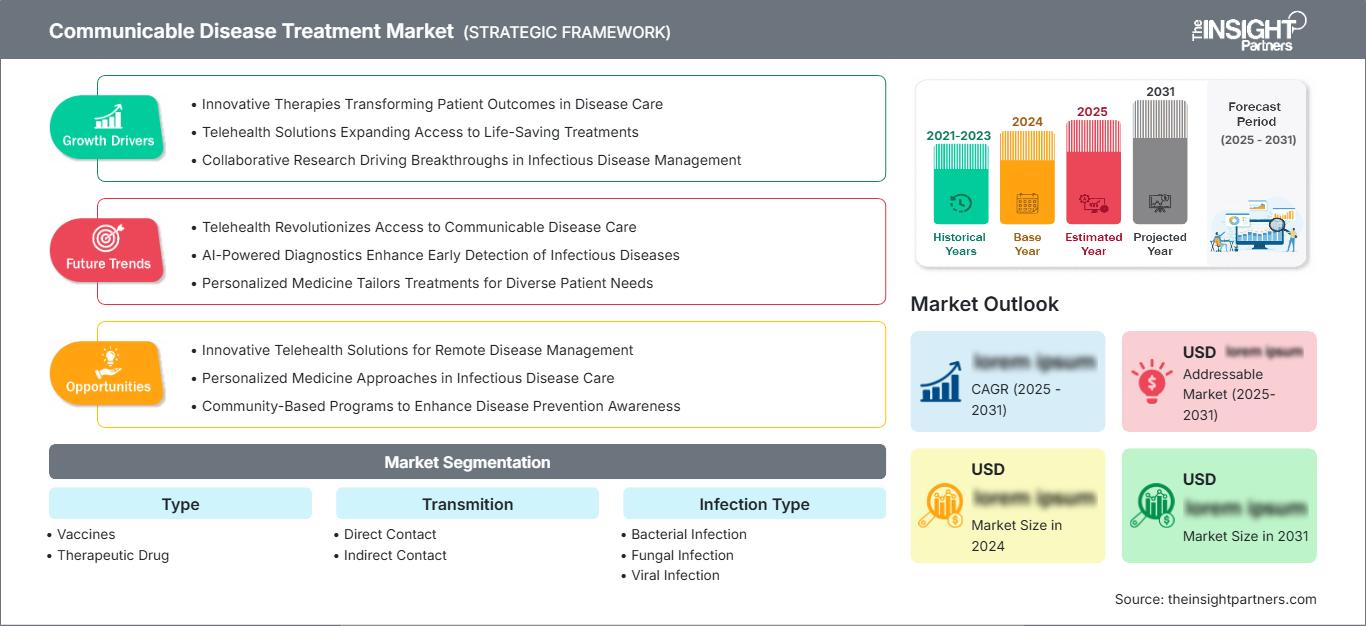
Communicable Disease Treatment Market: Strategic Insights
Regional Insights
North America Communicable Disease Treatment Market
North America is projected to advance at an approximately ~11% CAGR through 2034. The region benefits from established infectious disease surveillance, extensive vaccination delivery, high diagnostic utilization, and a large commercial market for advanced anti-infective therapies. The Communicable Disease Treatment Market share is reinforced by hospital access to branded medicines and organized procurement for seasonal and outbreak-related vaccination.
Moreover, growth will be fueled by clinical trial support and investments from manufacturers into pneumococcal, respiratory syncytial virus, influenza, meningococcal, and other pathogen-specific programs. Nonetheless, buying decisions will now take into account comparative effectiveness, vaccination guidelines, resistance trends, and health economics outcomes. Therefore, manufacturers need to show that their vaccines provide unique protection, convenient dosing, or better clinical outcomes.
U.S. Communicable Disease Treatment Market
The US accounts for approximately ~83% of North American revenue and is expected to expand at a ~11% CAGR through 2034. Large public and private purchasing channels, active infectious disease research, and broad hospital access sustain its regional leadership. Pfizer Inc., Merck & Co., Inc., GSK plc, Johnson & Johnson, and other multinational companies maintain substantial commercial, development, or manufacturing activities in the country.
Patterns of use are moving from acute care into immunization for adults, risk-based preventive medicine, and outpatient treatment of infectious diseases. Pharmacy-based vaccinations, physician advice, and patient information stored electronically could help to facilitate this continuity of care. Nonetheless, due to varying levels of coverage, payment systems, and rates of vaccine usage, there are pockets of inaccessibility which motivate companies and providers to adopt education.
Europe Communicable Disease Treatment Market
Europe represented approximately ~28% of global revenue in 2025 and is forecast to register a ~10% CAGR through 2034. National health care systems, disease surveillance programs, and well-defined vaccination programs help to create a predictable demand. Europe also has significant capabilities in terms of pharmaceutical research and production of biological drugs, but constant pressure on prices and proven efficacy of the products comes from reimbursement evaluations and competitive tendering for the products.
Germany is the dominant country in Europe because of the significant size of its insured population, high-level hospital infrastructure, and pharmaceutical industry. In the UK, centralized health care system purchasing and vaccine research programs as well as epidemiological surveillance are present. Domestic vaccine production capabilities and organized public health programs are characteristic of France; in Italy, regional health care infrastructure and aging population lead to high demand for vaccines.
In all such countries, growth is linked with adult vaccinations, management of respiratory diseases, travel prevention and treatment of drug-resistant diseases. In Europe, antimicrobial utilization policies have been increasingly aligned with stewardship and surveillance practices, impacting prescribing decisions and drug development. The ability to succeed in the market depends on obtaining national reimbursement, quality of manufacture, tendering opportunities, and lower hospitalization or transmission rates.
APAC Communicable Disease Treatment Market
Asia Pacific held approximately ~25% of global revenue in 2025 and is expected to record the fastest regional CAGR of ~14% through 2034. China is the leading country in Asia Pacific, reflecting its population scale, domestic biopharmaceutical capacity, and expanding access to vaccines and hospital therapies.
The involvement of India is reflected in the mass production of drugs and vaccines, while Japan provides an already developed market for distinct preventive and therapeutic drugs. South Korea has a combination of advanced biopharmaceutical manufacturing and investment in research, whereas Australia provides for both immunization and reimbursement systems. Growth factors for this region are localization, health care infrastructure development, communicable diseases surveillance, and government purchases.
Middle East & Africa Communicable Disease Treatment Market
The Middle East & Africa market is projected to grow at approximately ~12% through 2034. Saudi Arabia is presented as an emerging nation in the Middle East & Africa owing to its advancements in healthcare, procurement capabilities, and investments in its domestic pharmaceutical industry. The UAE assists in regional distribution and superior private healthcare systems, whereas South Africa has both local manufacturing capability and infectious disease treatment needs.
In the Rest of MEA, the development of the market relies on vaccination through donors, cold chain capabilities, diagnostics, and access to medicines at affordable prices. Financing from energy sources facilitates healthcare infrastructure investments in Gulf states, whereas restricted funding and ineffective distribution channels are some of the constraints in Africa.
Segmentation Analysis
Type
Type defines the balance between preventive intervention and active clinical management. The Communicable Disease Treatment Market scope includes products purchased through government immunization programs, institutional treatment protocols, retail pharmacies, and specialist care pathways. Adoption depends on disease burden, diagnosis rates, recommended schedules, product availability, and reimbursement. Vaccines are expected to register an approximately ~14% CAGR during 2026–2034 as preventive programs broaden across age groups and geographies.
- Vaccines: Vaccines reduce infection incidence and transmission before treatment becomes necessary. Demand is supported by routine immunization, outbreak preparedness, maternal and adult vaccination, travel requirements, and development of broader-valency products targeting multiple strains.
- Therapeutic Drugs: Therapeutic drugs remain essential for confirmed or suspected infections requiring immediate clinical management. Prescribing is influenced by pathogen identity, resistance profiles, disease severity, treatment duration, tolerability, and availability within hospital or community settings.
Transmission
Transmission-based segmentation helps healthcare systems align treatment demand with prevention, surveillance, and exposure-control strategies. The pathway of infection influences outbreak speed, patient identification, contact management, and purchasing urgency. Products addressing diseases spread through indirect contact are projected to post an approximately ~13% CAGR through 2034, supported by environmental persistence, contaminated surfaces or materials, and increased surveillance of healthcare-associated transmission.
- Direct Contact: Direct-contact transmission creates demand for rapidly accessible treatment, close-contact prophylaxis, and targeted vaccination. Household exposure, healthcare interactions, skin contact, and respiratory proximity can accelerate localized clusters and require timely intervention.
- Indirect Contact: Indirect-contact infections can spread through contaminated objects, food, water, vectors, or shared environments. Their management often requires coordinated pharmaceutical treatment, environmental controls, sanitation improvement, surveillance, and community-level prevention measures.
Infection Type
Infection type guides clinical selection, research priorities, resistance monitoring, and portfolio allocation. The category is strategically important because treatment mechanisms differ significantly by pathogen, and inappropriate therapy can delay recovery or contribute to resistance. Viral infection products are forecast to expand at approximately ~14% CAGR during 2026–2034, supported by vaccine innovation, respiratory disease preparedness, and development of targeted antiviral platforms.
- Bacterial Infection: Bacterial infection treatment remains a major clinical requirement across respiratory, gastrointestinal, bloodstream, urinary, and healthcare-associated conditions. Demand increasingly favors susceptibility-guided prescribing, new mechanisms, combination regimens, and therapies addressing resistant organisms.
- Fungal Infection: Fungal infection products serve vulnerable patients, including immunocompromised individuals and those receiving intensive hospital care. Limited treatment options, toxicity concerns, diagnostic delays, and emerging resistance create demand for safer and more targeted antifungal therapies.
- Viral Infection: Viral infection management encompasses preventive vaccines and therapies that suppress replication, reduce complications, or shorten illness. Demand is shaped by seasonal respiratory viruses, chronic viral conditions, emerging pathogens, and population-specific immunization recommendations.
Opportunity Snapshot
| Infection Type | Revenue Contribution | Trend Tag | Adoption Stage |
| Bacterial Infection | High | Resistance Targeting | Mature |
| Fungal Infection | Low | Novel Antifungals | Emerging |
| Viral Infection | High | Platform Vaccines | Scaling |
Communicable Disease Treatment Market Growth Drivers and Impact Analysis
Escalating Antimicrobial Resistance
There will be a need for differentiated therapies, susceptibility testing, and preventative vaccines due to rising antimicrobial resistance in the future years. One out of every six laboratory-confirmed cases of bacterial infection was resistant to antibiotics in 2023, but there is a dearth of therapies. Therefore, hospitals will have to have access to second line and reserve treatments in order to treat patients with serious infections since delays in providing effective treatment will increase complications. The above scenario provides incentives to develop innovative treatments, combinations, pathogens-specific drugs, and improved compliance formulations. Prevention is another area that will gain significance due to the fact that infections are reduced which means there is less consumption of antimicrobials, resulting in fewer chances of resistance development.
Expansion of Immunization Across Life Stages
Immunization programs are extending beyond pediatric schedules into maternal, adolescent, adult, elderly, and risk-based populations. This change expands the addressable market for influenza, pneumococcal, respiratory, meningococcal, and other vaccines. Multivalent products can simplify schedules, reduce administration visits, and improve coverage where healthcare-provider capacity is constrained. Public-health agencies increasingly evaluate vaccines through avoided hospitalization, productivity protection, and antimicrobial-use reduction. WHO analysis indicates that optimal use of existing vaccines could reduce antibiotic consumption and avert health and economic burdens associated with antimicrobial resistance. Commercial impact depends on recommendation inclusion, funding, reliable supply, and convenient administration. Manufacturers with age-specific evidence and scalable production are better positioned to serve both public tenders and private channels.
Improving Diagnosis and Pathogen Surveillance
Wider access to molecular diagnostics, sequencing, and resistance surveillance improves the ability to distinguish bacterial, fungal, and viral infections. Better identification supports appropriate product selection, reduces unnecessary antimicrobial use, and creates commercially clearer patient populations for targeted therapies. Surveillance also enables governments and manufacturers to monitor strain changes, update vaccines, and plan inventories before seasonal peaks. In hospital settings, faster results can shift demand from empirical broad-spectrum treatment toward narrower, evidence-based regimens. The resulting market impact favors therapies supported by companion diagnostics, robust pathogen coverage, and real-world effectiveness data. It also encourages closer collaboration among pharmaceutical companies, diagnostic laboratories, health agencies, and clinical networks throughout product development and post-market monitoring.
Communicable Disease Treatment Market Future Trends
Platform Technologies Will Shorten Product Adaptation Cycles
Communicable Disease Treatment Market trends will increasingly reflect flexible vaccine and therapeutic platforms that can be adapted as strains, variants, and resistance mechanisms evolve. Modular manufacturing, standardized delivery systems, and reusable clinical-development frameworks can shorten the interval between pathogen identification and candidate evaluation. Through 2034, companies are expected to prioritize platforms capable of supporting multiple infectious disease targets rather than isolated single-product pipelines. This approach can distribute development risk and improve manufacturing utilization. Regulatory preparedness, genomic surveillance, and validated correlates of protection will remain essential because platform speed does not remove the need for safety and effectiveness evidence. Successful deployment will depend on scalable raw materials, regional production, and advance procurement coordination.
Decentralized Prevention and Treatment Will Expand
Communicable disease management is likely to move further into pharmacies, community clinics, mobile health units, and digitally supported home-care pathways. Simplified vaccine schedules, oral therapies, long-acting products, and remote adherence tools can reduce dependence on specialist facilities. Decentralization is particularly relevant where hospital congestion, geography, or workforce shortages limit access. Companies will need packaging, stability, distribution, and training models suited to nonhospital settings. Digital records may also allow providers to identify missed immunizations, monitor treatment completion, and target high-risk populations. The shift could broaden commercial reach, but its effectiveness will depend on reimbursement, data interoperability, healthcare-worker authorization, and pharmacovigilance.
Communicable Disease Treatment Market Opportunities
Regional Manufacturing and Technology Transfer
The Communicable Disease Treatment Market Forecasts create an investment opportunity for vaccine production, sterile fill-finish facilities, active ingredient manufacturing, and quality-control laboratories in Asia, Africa, and the Middle East. Governments seeking supply security are supporting localization, while multinational manufacturers require partners capable of meeting international quality standards. Investors can target facilities designed for flexible production rather than single-product dependence. Technology-transfer arrangements may combine established platforms with local scale, regional distribution knowledge, and public procurement access. Commercial viability will depend on predictable demand, workforce capabilities, regulatory maturity, and long-term purchasing commitments. Partnerships covering training, validation, cold-chain management, and lifecycle upgrades can create more durable value than basic contract manufacturing.
Products for Drug-Resistant and Neglected Infections
Unmet need remains substantial for resistant bacterial infections, invasive fungal diseases, and pathogens concentrated in lower-income countries. Investment opportunities include novel mechanisms, optimized combinations, pediatric formulations, heat-stable vaccines, and affordable products suitable for decentralized delivery. Commercial models may combine milestone funding, advance market commitments, licensing, and tiered pricing to compensate for uncertain volumes. Companies should prioritize indications with measurable burden, diagnosable patient populations, and procurement pathways. Partnerships with governments, global-health organizations, and regional manufacturers can reduce development and access barriers. The strongest opportunities will align clinical differentiation with manufacturability, stewardship principles, and evidence showing fewer hospitalizations, shorter treatment courses, or reduced transmission.
Recent Developments
- October 2026: Pfizer Inc. – Pfizer announced that it would present data from 57 abstracts at IDWeek 2026, covering pneumococcal disease, respiratory syncytial virus, COVID-19, Lyme disease, and anti-infective therapies. The program included Phase 2 findings for its 25-valent pediatric pneumococcal conjugate vaccine candidate and updates supporting its ongoing Phase 3 development.
- August 2026: Sanofi – Sanofi announced European Union approval of MenQuadfi for use from six weeks of age against invasive meningococcal disease. The expanded age indication strengthens the company’s capacity to address infant vaccination requirements and supports broader age-based meningococcal prevention in European immunization pathways.
- June 2025: GSK plc – GSK licensed its altSonflex1-2-3 Shigella vaccine candidate to Bharat Biotech International Limited for continued development and potential distribution in lower-income markets. The candidate uses scalable Generalized Modules for Membrane Antigens technology and addresses a bacterial cause of childhood diarrheal disease associated with increasing antimicrobial resistance.
Frequently Asked Questions

- Comprehensive Market Sizing and Forecast Analysis
- Detailed Segmentation Analysis
- In-Depth Market Dynamics Assessment
- Regional and Country-Level Insights
- Competitive Landscape and Company Benchmarking
- Strategic Business Intelligence
Recent Reports
Testimonials

The Insight Partners provided valuable market intelligence that supported our global go-to-market strategy. Their team was professional, responsive, and attentive to our feedback, providing thoughtful analysis and helpful methodological clarifications throughout the project.
Junmo Kim Chief Financial Officer (CFO), Enertech Co., Ltd.
The Insight Partners' SCADA System Market report is comprehensive, with valuable insights on current trends and future forecasts. The team was highly professional, responsive, and supportive throughout. We are very satisfied and highly recommend their services.
RAN KEDEM Partner, Reali Technologies LTDs
I requested a report on a very specific software market and the team produced the report in a few days. The information was very relevant and well presented. I then requested some changes and additions to the report. The team was again very responsive and I got the final report in less than a week.
JEAN-HERVE JENN Chairman, Future Analytica
We worked with The Insight Partners for an important market study and forecast. They gave us clear insights into opportunities and risks, which helped shape our plans. Their research was easy to use and based on solid data. It helped us make smart, confident decisions. We highly recommend them.
PIYUSH NAGPAL Sr. Vice President, High Beam Global
The Insight Partners delivered insightful, well-structured market research with strong domain expertise. Their team was professional and responsive throughout. The user-friendly website made accessing industry reports seamless. We highly recommend them for reliable, high-quality research services
YUKIHIKO ADACHI CEO, Deep Blue, LLC.
This is the first time I have purchased a market report from The Insight Partners.While I was unsure at first, I visited their web site and felt more comfortable to take the risk and purchase a market report.I am completely satisfied with the quality of the report and customer service. I had several questions and comments with the initial report, but after a couple of dialogs over email with their analyst I believe I have a report that I can use as input to our strategic planning process.Thank you so much for taking the extra time and making this a positive experience.I will definitely recommend your service to others and you will be my first call when we need further market data.
JOHN SUZUKI President and Chief Executive Officer, Board Director, BK Technologies
I wish to appreciate your support and the professionalism you displayed in the course of attending to my request for information regarding to infectious disease IVD market in Nigeria. I appreciate your patience, your guidance, and the fact that you were willing to offer a discount, which eventually made it possible for us to close a deal. I look forward to engaging The Insight Partners in the future, all thanks to the impression you have created in me as a result of this first encounter.
DR CHIJIOKE ONYIA MANAGING DIRECTOR, PineCrest Healthcare Ltd.Reason to Buy
- Informed Decision-Making
- Understanding Market Dynamics
- Competitive Analysis
- Identifying Emerging Markets
- Customer Insights
- Market Forecasts
- Risk Mitigation
- Boosting Operational Efficiency
- Strategic Planning
- Investment Justification
- Tracking Industry Innovations
- Aligning with Regulatory Trends





 Get Free Sample for