
Construction Sealants Market Share, Demand & Growth by 2034
Coverage: by Type (Silicone, Polyurethane, Polysulfide, Others); Application (Glazing, Flooring and Joining Application, Sanitary and Kitchen Application, Others) , and Geography (North America, Europe, Asia Pacific, and South and Central America)
- Status : Data Released
- Report Code : TIPRE00005484
- Category : Chemicals and Materials
- No. of Pages : 150
- Available Report Formats :


- Last update date : September 01, 2026


2025 Market Size
US$ 11.19 Bn
Base year value
2034 Forecast
US$ 14.65 Bn
Projected by 2034
CAGR 2026-2034
3.04 %
Growth rate
Addressable Market
US$ 117.33 Bn
(2026-2034)
The global Construction Sealants market was valued at US$ 11.19 billion in 2025 and is expected to reach US$ 14.65 billion by 2034; it is estimated to record a CAGR of 3.04% during 2026-2034.
Construction Sealants Market Assessment and Insights
- North America: North America is estimated to account for a 29–33% Construction Sealants Market share in 2025 and grow at a 3.6–4.1% CAGR between 2026–2034, supported by renovation, commercial construction, energy-efficient building envelopes, and infrastructure maintenance.
- US: The US represents approximately 78–82% of North America's 2025 market, expanding at a 3.7–4.2% CAGR between 2026–2034, supported by building renovation and envelope-performance requirements.
- Europe: Europe is estimated at a 24–28% share in 2025 and is projected to grow at a 3.2–3.7% CAGR between 2026–2034, led by Germany, the UK, France, Italy, and Spain through renovation and energy-efficiency initiatives.
- Asia Pacific: Asia Pacific is estimated to hold a 31–35% share in 2025 and grow at a 4.0–4.5% CAGR between 2026–2034, led by China, India, Japan, South Korea, and Australia through urban construction and modernization.
- Largest Segment: Silicone is estimated to hold a 49–54% market share in 2025, with a 3.4–3.9% CAGR during 2026–2034, reflecting broad glazing and wet-area adoption.
- High Growth Segment: Polyurethane is estimated at a 24–29% market share in 2025, with a 3.9–4.4% CAGR during 2026–2034, supported by versatile bonding and sealing performance.
- Key companies analyzed in detail: 3M Company, BASF Corporation, Bostik India Private Limited, DuPont de Nemours, Inc., H.B. Fuller Company, Henkel AG & Co. KGaA, MAPEI S.p.A., Sika AG, Wacker Chemie AG, and Momentive Performance Materials Inc.
Source: The Insight Partners' analysis based on proprietary research, government publications, company annual reports, investor presentations, industry databases, and expert interviews.
Construction sealants have progressed from being mere gap fillers to being a well-engineered system with consideration for substrates, movement, curing, and exposure. While silicone sealants are aided by good weather resistance and longevity, polyurethane sealants are known to offer strong adhesion and mechanical properties. Increasingly, manufacturers are focused on lower emission rates, unique curing profiles, tooling ease, and product offerings that address specific applications like facades, floorings, bathrooms, and kitchens.
Looking ahead, there are more factors that will impact the Construction sealants market, such as energy efficiency of building envelopes, renovation projects, and sustainability demands. In Asia Pacific, new incremental demand will be seen through the construction and modernization of buildings, while energy performance and renovation will drive growth in Europe. Formulation enhancement, low emission chemistries, recyclable packaging, and user-friendliness will attract investments in the industry.
Construction Sealants Market Report Scope
| Report Attribute | Details |
|---|---|
| Market size in 2025 | US$ 11.19 Billion |
| Market Size by 2034 | US$ 14.65 Billion |
| Global CAGR (2026 - 2034) | 3.04% |
| Historical Data | 2021-2024 |
| Forecast period | 2026-2034 |
Construction Sealants Market Analysis
The growth of the construction sealants market will be closely related to the level of construction output, renovations, and increased demands for the performance properties of building joints. The value chain consists of silicone and polyurethane raw materials, formulation, packaging, distribution, contractors, facade specialists, glazing installers, flooring installers, and building owners. The choice of sealant is influenced by movement of the joint, substrates, exposure, curing conditions, longevity, and compatibility with adjacent materials.
The demand in the Construction sealants market is driven not only by new constructions but also by the demand for maintenance works. In the case of glazing, elastic materials that will allow thermal expansion are required, whereas in sanitary areas, moisture-proof and mold-proof seals are needed. Flooring installations demand good adhesion and flexibility of the material. Availability of raw materials will remain relevant since silicons, isocyanate polyurethane raw materials, additives, fillers, and pigments determine the cost-effectiveness of formulations.
Positioning is now becoming more about formulation, technical support, guidance in terms of application, and distribution. Sika AG, MAPEI S.p.A., and Henkel AG & Co. KGaA have diverse product lines in the field of construction chemicals, while Wacker Chemie AG has expertise in silicones. BASF Corporation, DuPont de Nemours, Inc., and H.B. Fuller Company have expertise in formulation and specialty materials.
There is growing investment in sustainable packaging and lower emission formulations. The development of the cartridge by Henkel is an example of how packaging is becoming a key point for differentiation, while MAPEI and Sika keep improving their portfolios of application specific sealants. Bostik India Private Limited offers regional capability in construction chemicals, while Momentive Performance Materials Inc. offers its expertise in silicones. 3M Company is still relevant because of its specialty sealing and bonding technologies.
● REPORT CUSTOMIZATION
Tailor This Report To Align With Your Specific Business Requirements
This report can be customized to align precisely with your business objectives, scope, and target markets. Customization options include tailored segmentation, geography, competitive analysis, and strategic insights to support informed decision-making.
Customize This Report →WHAT YOU CAN ADJUST
- ● Segmentations
- ● Geography
- ● Competitive Analysis
- ● Language Preferences
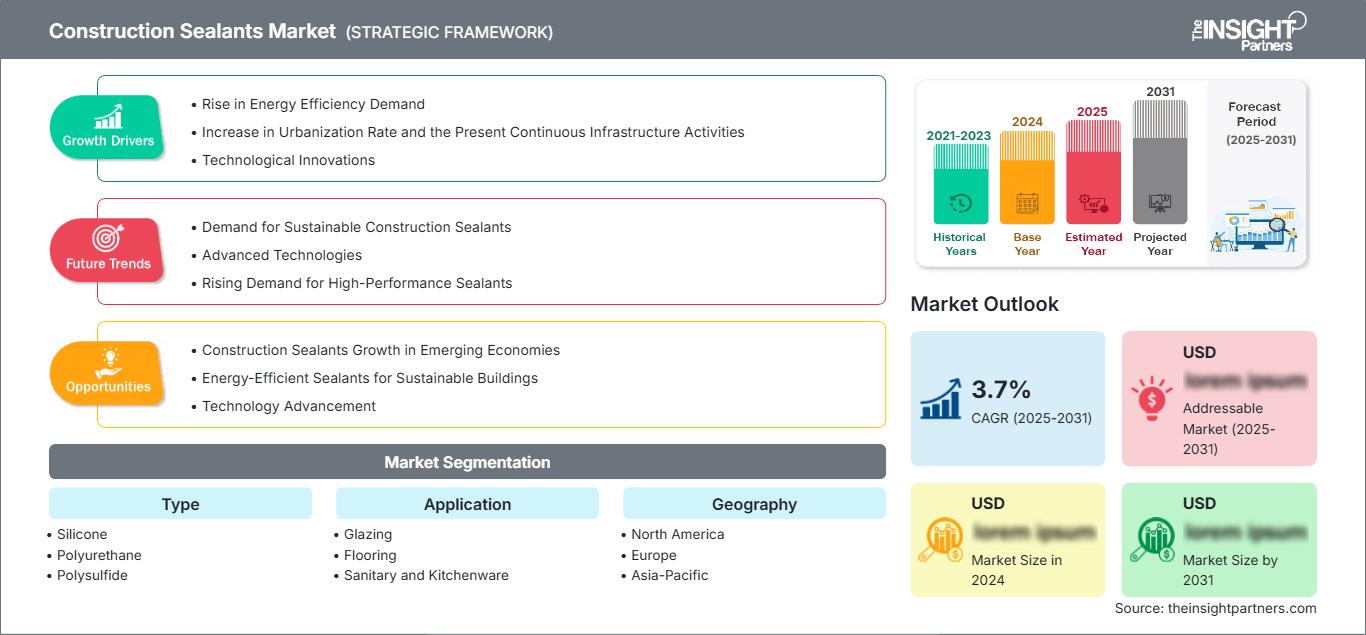
Construction Sealants Market: Strategic Insights
Regional Insights
North America Construction Sealants Market
North America is estimated to represent a 29–33% Construction sealants market in 2025 and expand at a 3.6–4.1% CAGR during 2026–2034. The US accounts for most regional demand, while Canada and Mexico provide additional consumption through commercial construction, residential renovation, infrastructure maintenance, and industrial building activity. Demand is particularly strong for silicone products used in glazing and weather-sealing applications.
The renovation of older buildings is helping with joint renewal and building envelope improvement. The aspect of energy efficiency is putting more emphasis on airtightness with regards to windows, facades, doors, and penetration. Flooring and sanitary uses create repeated need from renovations in both commercial and residential markets. The manufacturer gets advantages of well-established distribution system and installers, while approvals, substrates, emissions, and reliability remain important purchase considerations.
U.S. Construction Sealants Market Market
The U.S. represents approximately 78–82% of North America's 2025 Construction sealants market and is expected to grow at a 3.7–4.2% CAGR during 2026–2034. The market for renovations, residential remodeling, institutional building, and envelope construction provides diverse demand for the product category. Sealants find their increased use along with other systems such as insulation, glazing, façade, floor, and waterproofing systems in order to enhance the overall performance of buildings.
The following companies have adequate product portfolio and distribution infrastructure in the country to compete in the market: Sika AG, 3M Company, H.B. Fuller Company, Henkel AG & Co. KGaA, and MAPEI S.p.A. Glazing is still one of the most important applications since the window joints need to resist weather conditions and move with them. Sanitary and kitchen applications offer constant replacement demand, and flooring gains from commercial renovation.
Europe Construction Sealants Market
Europe is projected to have 24-28% of the Construction sealants market in 2025 and a CAGR of 3.2-3.7% till 2034, with Germany being a dominant market. The United Kingdom will be boosted by renovation and improvement of building envelope, whereas Germany will see a mix of construction activities and renovations of energy efficiency. France, Italy, and Spain will increase demand through residential renovations, commercial buildings, glazing, and wet area renovations.
Renovation needs and improved energy performance in the United Kingdom lead to a need for durable sealing in window, door, façade, and building penetration areas. Germany will be boosted by the high quality of engineering standards and the demand for construction chemicals that are specified technically. France, Italy, and Spain will create demand for residential renovations, commercial buildings, glazing, flooring, and sanitary installations. Sustainability criteria increasingly shape formulations and environmental performance of construction chemicals. Procurement in Europe thus shifts towards products that are durable, low-emission, efficient to apply, and environmentally performing.
APAC Construction Sealants Market
The APAC region is projected to account for 31-35% of the Construction sealants market share in 2025 and experience growth at a rate of 4.0-4.5% CAGR from 2026 to 2034 to emerge as the largest regional market in terms of value. China accounts for the largest share, followed by Japan, India, South Korea, and Australia.
China has an advantage of high construction activities, India gains from the urbanization process and infrastructure development, Japan has an emphasis on renovation and performance of building envelope, South Korea is known for advanced commercial construction, and Australia needs weatherproofing products.
Middle East & Africa Construction Sealants Market
Middle East & Africa is expected to expand at a 3.4–3.9% CAGR during 2026–2034, with Saudi Arabia representing a leading market. UAE construction, South African refurbishment, and major infrastructure programs contribute to demand, while the rest of MEA provides opportunities through commercial, residential, and industrial development.
Glazing, façades, floors, and sanitation works will benefit from the need for sealing in large urban construction in Saudi Arabia and UAE. South Africa, on the other hand, requires more maintenance. Extreme heat, UV rays, dirt, and temperatures differences make weather-resistant sealing materials essential, while high energy use in buildings motivates effective building sealing.
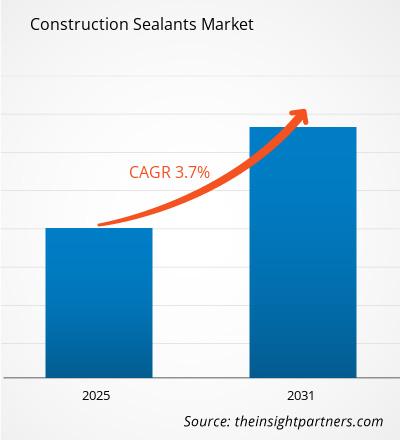
Segmentation Analysis
Type
The type segment is influenced by substrate compatibility, movement capability, environmental exposure, curing requirements, and application economics. Silicone remains the broadest category because of its weatherability and flexibility, while polyurethane offers strong adhesion and mechanical performance. The segment is expected to grow at a 3.5–4.0% CAGR during 2026–2034. The construction sealants market scope therefore spans chemistry choices determined by performance requirements rather than price alone.
- Silicone: Silicone maintains a strong position in glazing, façades, windows, and sanitary applications because of flexibility, ultraviolet resistance, weatherability, and long service performance. Its broad compatibility supports specification across diverse construction projects.
- Polyurethane: Polyurethane is strategically important where strong adhesion, abrasion resistance, and mechanical durability are required. It is widely suited to flooring joints and construction interfaces requiring robust movement accommodation and substrate bonding.
- Polysulfide: Polysulfide serves demanding joints where chemical resistance, durability, and low gas or vapor permeability are important. Its specialized performance supports selected glazing and construction applications where long-term sealing integrity is required.
Application
The application segment reflects different performance requirements across building interfaces. Glazing prioritizes weather resistance and movement accommodation, flooring emphasizes mechanical loading and adhesion, while sanitary and kitchenware applications require moisture and mold resistance. The application segment is forecast to expand at a 3.4–3.9% CAGR during 2026–2034, with renovation providing recurring demand.
- Glazing: Glazing remains strategically significant because sealants protect window and façade interfaces against water and air infiltration. Demand is supported by commercial construction, façade refurbishment, high-performance windows, and increasing attention to building-envelope efficiency.
- Flooring: Flooring applications require durable adhesion, flexibility, and resistance to repeated mechanical stresses. Commercial renovation and installation of resilient flooring systems support recurring demand, particularly where joints must withstand movement and cleaning exposure.
- Sanitary and Kitchenware: Sanitary and kitchenware applications depend on moisture resistance, adhesion, clean appearance, and resistance to biological growth. Renovation and replacement cycles generate recurring consumption across residential, hospitality, healthcare, and commercial properties.
Opportunity Snapshot
| Application | Revenue Contribution (High/Medium/Low) | Trend Tag | Adoption Stage |
| Glazing | High | Envelope Efficiency | Mature |
| Flooring | Medium | Joint Durability | Scaling |
| Sanitary and Kitchenware | Medium | Mold Resistance | Mature |
Construction Sealants Market Growth Drivers and Impact Analysis
Expansion of energy-efficient building envelopes
Growing efficiency mandates for building enclosures are raising the significance of airtightness and weather resistance to prevent uncontrolled movement of air and moisture, as well as allowing for thermal expansion and contraction. Thereby, new opportunities appear through specifying improved insulation and window assemblies, which need the application of sealants. Building enclosure policies in Europe are enhancing renovation standards, whereas North America projects are increasingly focusing on envelope performance in commercial renovations. Such trends are developing in Asia Pacific as well, as governments are concerned about energy consumption in buildings. It affects not only the amount of sealants, but also the increased technical demands, substrate evaluation, primers, and documentation of material compatibility on projects.
Growth in construction renovation and refurbishment
Renovation creates a sustainable demand base because dilapidated joints must be replaced irrespective of whether construction in general is booming. Commercial buildings, residences, hospitals, hotels, and other facilities need to reseal window joints, sanitation points, floor joints, and façade joints. Sealants will be attractive in maintenance due to their property of being applied selectively without major demolition work. Such a property makes sealants a good choice for cyclical demand in developed construction sectors, where renovations make up a big part of construction activity. In emerging markets, renovation is frequently coupled with modernization in order to improve the heat and moisture protection characteristics of buildings. The resulting effect is an increased customer base, including not only developers of new buildings, but also maintenance firms and applicators.
Increasing demand for durable materials in challenging environments
Buildings and infrastructure are exposed to ultraviolet radiation, temperature fluctuations, humidity, chemicals, and repeated joint movement. These conditions raise the cost of premature sealant failure because replacement can involve access equipment, traffic restrictions, water damage, or interior disruption. Consequently, project owners increasingly consider service life alongside purchase price when selecting formulations. Silicone benefits from weatherability in exposed joints, polyurethane provides strong mechanical characteristics, and polysulfide remains relevant where specialized resistance is required. Demand is particularly meaningful in coastal regions, high-rise façades, industrial buildings, and climates with large temperature variations. The resulting shift toward performance-based selection supports premium formulations and technical consultation. Suppliers that can demonstrate durability through testing, certifications, and documented application procedures are better positioned to influence specifications before products reach the procurement stage.
Construction Sealants Market Future Trends
Low-carbon formulations and sustainable packaging
Sustainability is expected to move beyond formulation chemistry toward the entire sealant product system. Manufacturers are likely to increase the use of lower-impact raw materials, renewable or recycled inputs where technically feasible, and packaging formats designed to reduce material consumption. Product carbon-footprint documentation may become increasingly relevant in green-building specifications and public procurement. Packaging innovation is particularly visible because cartridges can represent a meaningful share of post-use waste in high-volume applications. Henkel's 2025 cardboard cartridge initiative demonstrates how companies are addressing both convenience and material recovery. Future competition is therefore likely to involve formulation performance, packaging circularity, emissions profile, and documentation simultaneously. Suppliers able to substantiate environmental claims without compromising adhesion, curing, flexibility, and durability should gain stronger access to projects with sustainability-related procurement criteria.
Higher-performance sealants for prefabricated construction
Prefabrication and modular construction are expected to influence sealant requirements by shifting more assembly activity into controlled manufacturing environments. Factory-based production can demand predictable curing, automated dispensing, repeatable bead geometry, and compatibility with multiple substrates. Sealants used in prefabricated façades, windows, bathrooms, and modular rooms must often meet tighter cycle-time and quality requirements than conventional site applications. This creates opportunities for formulations optimized for rapid handling, consistent rheology, and automated application equipment. Suppliers may increasingly develop products around specific manufacturing processes rather than generic construction categories. Technical integration with equipment manufacturers and prefabricated-building producers can consequently become an important route to market. As modular construction expands, formulation suppliers that can provide stable processing windows and validated performance data may secure longer-term specification relationships with manufacturers.
Construction Sealants Market Opportunities
Regional formulation and application-service expansion
The construction sealants market Forecasts increasingly point toward opportunities in countries where urbanization, renovation, and commercial development are expanding simultaneously. Suppliers can improve competitiveness by establishing regional formulation, packaging, technical-service, and distribution capabilities instead of relying entirely on imported products. Local manufacturing can reduce logistics costs, shorten delivery times, and enable adaptation to regional substrates, climate conditions, and construction practices. India, Southeast Asia, the Middle East, and selected Latin American economies offer potential for this model because construction activity is accompanied by growing demand for technically specified materials. Application centers can complement manufacturing by training contractors and demonstrating products to architects and engineers. Investment should prioritize markets with established glazing, flooring, and sanitary installation ecosystems, because these channels can generate recurring demand after initial specification acceptance.
Integrated sealant systems for façade and wet-area projects
An attractive opportunity lies in moving from individual sealant products toward integrated systems combining primers, sealants, backer materials, surface treatments, and application guidance. Façade projects often involve multiple substrates and movement conditions, while wet-area installations require coordinated moisture protection and joint sealing. A systems approach allows suppliers to address compatibility risk and provide installers with standardized procedures. The approach can also strengthen customer relationships because technical support becomes part of the purchasing decision rather than an after-sales service. Companies with broad construction-chemicals portfolios are positioned to bundle products and engineering assistance, while specialist sealant manufacturers can partner with façade, flooring, and waterproofing contractors. Such models can improve specification influence and reduce price-only competition by shifting procurement toward verified system performance and installation reliability.
Recent Developments
- August 2026: H.B. Fuller Company (“H.B. Fuller” or “the Company”) (NYSE: FUL), the world’s largest pureplay adhesives company, confirmed receipt of an unsolicited proposal today from Ancora Holdings Group to acquire its Building Adhesives Solutions (“BAS”) business for between $1.1 billion and $1.2 billion in cash.
- May 2026: Euro Panel Products, known as Eurobond, incorporated Euro Sealant Private as a majority-owned subsidiary, marking its diversification from aluminium composite panels into the sealants market. The company said Euro Sealant will offer professional-grade silicone sealants for applications across glass, metal, brick, concrete, aluminium, composites and panel materials. The products are designed for sealing, waterproofing and structural bonding in modern construction.
Frequently Asked Questions

- Comprehensive Market Sizing and Forecast Analysis
- Detailed Segmentation Analysis
- In-Depth Market Dynamics Assessment
- Regional and Country-Level Insights
- Competitive Landscape and Company Benchmarking
- Strategic Business Intelligence
Recent Reports
Testimonials

The Insight Partners provided valuable market intelligence that supported our global go-to-market strategy. Their team was professional, responsive, and attentive to our feedback, providing thoughtful analysis and helpful methodological clarifications throughout the project.
Junmo Kim Chief Financial Officer (CFO), Enertech Co., Ltd.
The Insight Partners' SCADA System Market report is comprehensive, with valuable insights on current trends and future forecasts. The team was highly professional, responsive, and supportive throughout. We are very satisfied and highly recommend their services.
RAN KEDEM Partner, Reali Technologies LTDs
I requested a report on a very specific software market and the team produced the report in a few days. The information was very relevant and well presented. I then requested some changes and additions to the report. The team was again very responsive and I got the final report in less than a week.
JEAN-HERVE JENN Chairman, Future Analytica
We worked with The Insight Partners for an important market study and forecast. They gave us clear insights into opportunities and risks, which helped shape our plans. Their research was easy to use and based on solid data. It helped us make smart, confident decisions. We highly recommend them.
PIYUSH NAGPAL Sr. Vice President, High Beam Global
The Insight Partners delivered insightful, well-structured market research with strong domain expertise. Their team was professional and responsive throughout. The user-friendly website made accessing industry reports seamless. We highly recommend them for reliable, high-quality research services
YUKIHIKO ADACHI CEO, Deep Blue, LLC.
This is the first time I have purchased a market report from The Insight Partners.While I was unsure at first, I visited their web site and felt more comfortable to take the risk and purchase a market report.I am completely satisfied with the quality of the report and customer service. I had several questions and comments with the initial report, but after a couple of dialogs over email with their analyst I believe I have a report that I can use as input to our strategic planning process.Thank you so much for taking the extra time and making this a positive experience.I will definitely recommend your service to others and you will be my first call when we need further market data.
JOHN SUZUKI President and Chief Executive Officer, Board Director, BK Technologies
I wish to appreciate your support and the professionalism you displayed in the course of attending to my request for information regarding to infectious disease IVD market in Nigeria. I appreciate your patience, your guidance, and the fact that you were willing to offer a discount, which eventually made it possible for us to close a deal. I look forward to engaging The Insight Partners in the future, all thanks to the impression you have created in me as a result of this first encounter.
DR CHIJIOKE ONYIA MANAGING DIRECTOR, PineCrest Healthcare Ltd.Reason to Buy
- Informed Decision-Making
- Understanding Market Dynamics
- Competitive Analysis
- Identifying Emerging Markets
- Customer Insights
- Market Forecasts
- Risk Mitigation
- Boosting Operational Efficiency
- Strategic Planning
- Investment Justification
- Tracking Industry Innovations
- Aligning with Regulatory Trends





 Get Free Sample for