
CPAP Systems Market Demand, Share & Growth by 2034
Coverage: By Product ( Fixed Pressure CPAP Device, Auto Adjusting CPAP Device ); Application ( Hospitals, Home Care Settings, Others ) , and Geography (North America, Europe, Asia Pacific, and South and Central America)
- Status : Data Released
- Report Code : TIPRE00019598
- Category : Life Sciences
- No. of Pages : 150
- Available Report Formats :


- Last update date : August 05, 2026


2025 Market Size
US$ 4.38 Bn
Base year value
2034 Forecast
US$ 6.1 Bn
Projected by 2034
CAGR 2026-2034
3.75 %
Growth rate
Addressable Market
US$ 47.60 Bn
(2026-2034)
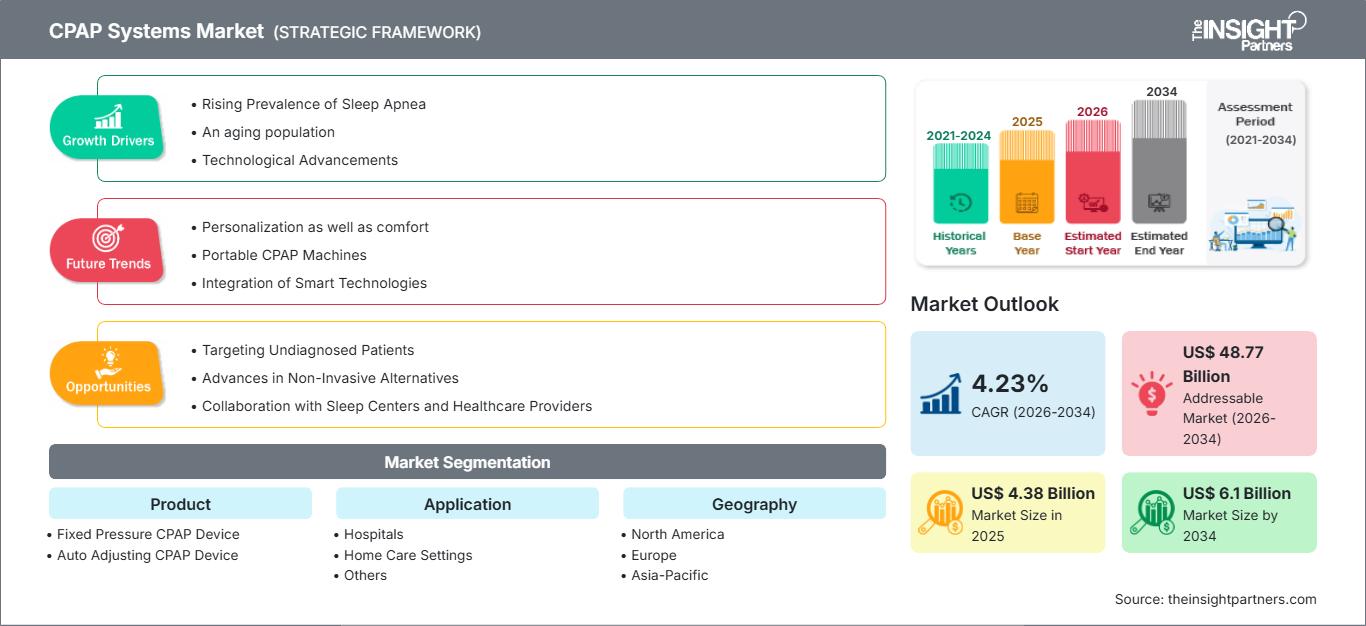
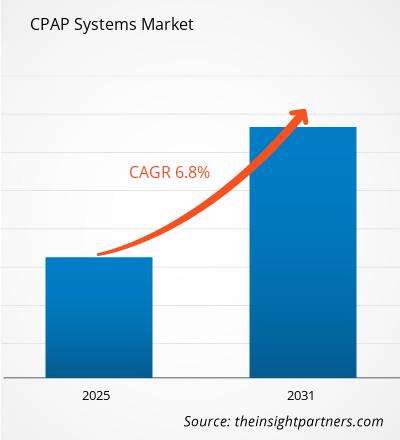
The global CPAP Systems market was valued at US$ 4.38 billion in 2025 and is expected to reach US$ 6.1 billion by 2034; it is estimated to record a CAGR of 3.75% during 2026-2034.
CPAP Systems Market Assessment and Insights
- North America: Accounted for 50–54% share in 2025 and is anticipated to expand at a CAGR of 4.0–4.8% during 2026–2034. Strong reimbursement policies, high obstructive sleep apnea diagnosis rates, and broad adoption of connected home respiratory care continue to support regional leadership.
- US: Represented 82–86% of the North American market in 2025 and is projected to grow at a CAGR of 4.1–4.9% during 2026–2034, supported by extensive home healthcare infrastructure, strong insurance coverage, and widespread adoption of cloud-connected CPAP therapy.
- Europe: Held 25–29% share in 2025 and is expected to register a CAGR of 3.8–4.5% during 2026–2034. Germany, the UK, France, Italy, and Spain continue driving demand through aging populations, expanding sleep disorder diagnostics, and modernization of respiratory care services.
- Asia Pacific: Captured 17–21% share in 2025 and is forecast to achieve the fastest regional expansion at a CAGR of 5.2–6.0% during 2026–2034. China, Japan, India, South Korea, and Australia continue investing in sleep medicine infrastructure and home respiratory care.
- Largest Segment: Fixed Pressure CPAP Device accounted for an estimated 58–62% market share in 2025 and is anticipated to expand at a CAGR of 3.8–4.4%, supported by established clinical guidelines, affordability, and extensive reimbursement availability.
- High Growth Segment: Auto-Adjusting CPAP Device represented 38–42% market share in 2025 and is projected to record a CAGR of 5.0–5.8%, driven by personalized pressure delivery, improved patient comfort, and increasing adoption of connected digital health platforms.
- Key companies analyzed in detail: ResMed, Koninklijke Philips N.V., DeVilbiss Healthcare LLC, Medtronic plc, KOIKE SANSO KOGYO CO., LTD., Shanghai Fosun Pharmaceutical (Group) Co., Ltd., BMC Medical Co., Ltd., Teijin Pharma Limited, APEX MEDICAL CORP., Phoenix Medical Systems Pvt. Ltd.
Source: The Insight Partners' analysis based on proprietary research, government publications, company annual reports, investor presentations, industry databases, and expert interviews.
Advancements in respiratory therapy technologies continue to reshape the CPAP Systems Market as manufacturers prioritize intelligent pressure algorithms, wireless connectivity, integrated humidification, and compact device architecture. Strategies now focus on robust supply chains, regional manufacturing, and software ecosystems that provide physician access from remote locations and therapy optimization. Collaboration between the manufacturers of these devices, the healthcare providers, sleep laboratories, and providers of digital health solutions has been improved through the shift towards connected health care platforms, resulting in better compliance and less burden on clinical follow-ups.
Future growth is projected to arise from the new health care systems, making investments in the diagnosis of sleep disorders, greater reimbursement of home respiratory treatments, and efforts by governments towards managing chronic diseases. Regulatory coordination in the major markets, higher involvement of telemedicine, and ongoing development of AI-driven respiratory monitoring platforms will fast-track the commercialization of advanced generation CPAP devices while generating business opportunities for those companies venturing into new markets in Asia Pacific, Latin America, and selected countries of the Middle East.
CPAP Systems Market Report Scope
| Report Attribute | Details |
|---|---|
| Market size in 2025 | US$ 4.38 Billion |
| Market Size by 2034 | US$ 6.1 Billion |
| Global CAGR (2026 - 2034) | 3.75% |
| Historical Data | 2021-2024 |
| Forecast period | 2026-2034 |
CPAP Systems Market Analysis
The increasing prevalence of obstructive sleep apnea, obesity, cardiovascular disorders, and aging populations continues to strengthen demand across the CPAP systems industry. Growing physician awareness regarding early diagnosis and long-term therapy compliance has encouraged healthcare providers to expand sleep testing capacity and prescribe continuous positive airway pressure therapy at earlier disease stages.
According to the CPAP Systems Market report, growth is further supported by expanding home healthcare services, digital patient monitoring, and favorable reimbursement policies in developed healthcare systems. Manufacturers are also enhancing supply chain resilience by regionalizing production, strengthening component sourcing, and integrating software platforms that enable remote therapy management and predictive maintenance for connected respiratory devices.
Based on the value chain concept, the following entities work together to expand the market: raw material suppliers, part makers, OEMs, distributors, sleep labs, hospitals, and home health care providers. The collaboration between device manufacturers and digital health technology providers has enhanced patient engagement using cloud-based monitoring of compliance and telemedicine solutions. Moreover, the investments being made in the healthcare facilities of emerging nations for diagnostic services and CPAP treatment have enabled the manufacturers to earn revenues from diverse geographies and ensure their after-sales network for the consumables.
Competitive intensity within the CPAP Systems Market continues to increase as established manufacturers invest in product differentiation through digital connectivity, quieter motor technologies, enhanced humidification, and lightweight portable systems. CPAP Systems Market trends indicate that companies, including ResMed, Koninklijke Philips N.V., DeVilbiss Healthcare LLC, BMC Medical Co., Ltd., Teijin Pharma Limited, and APEX MEDICAL CORP., continue emphasizing software-enabled ecosystems, physician connectivity, and personalized therapy algorithms to strengthen customer retention. Meanwhile, Shanghai Fosun Pharmaceutical (Group) Co., Ltd., KOIKE SANSO KOGYO CO., LTD., Phoenix Medical Systems Pvt. Ltd., and Medtronic plc continue expanding strategic collaborations, regional distribution capabilities, and manufacturing efficiencies to enhance competitive positioning across both developed and emerging healthcare markets.
Investments are becoming more focused on respiratory monitoring technology that is cloud-enabled, compliance analytics enabled by artificial intelligence technology, and advanced wearables for sleep diagnostics, in addition to CPAP therapy. There is also increased focus among healthcare organizations on the creation of integrated respiratory care pathways, including home monitoring, teleconsultations, and therapy devices. Such innovations will lead to increased adoption of subscription patient support services, recurring revenue from accessories and replacement parts, and data-driven respiratory care management.
● REPORT CUSTOMIZATION
Tailor This Report To Align With Your Specific Business Requirements
This report can be customized to align precisely with your business objectives, scope, and target markets. Customization options include tailored segmentation, geography, competitive analysis, and strategic insights to support informed decision-making.
Customize This Report →WHAT YOU CAN ADJUST
- ● Segmentations
- ● Geography
- ● Competitive Analysis
- ● Language Preferences
CPAP Systems Market: Strategic Insights
Regional Insights
North America CPAP Systems Market
North America accounted for an estimated 50–54% market share in 2025, maintaining its position as the leading regional market and advancing at a projected CAGR of 4.0–4.8% during 2026–2034. The CPAP Systems Market share in North America remains supported by high awareness of obstructive sleep apnea, favorable reimbursement policies, and widespread availability of accredited sleep laboratories. The use of strong healthcare spending, coupled with an increase in the adoption of home-based respiratory therapy, keeps encouraging the use of therapy across the United States and Canada.
Hospitals and healthcare facilities are constantly adopting connected CPAP devices with remote patient monitoring solutions to enhance patient compliance and lower admissions. The growth of telehealth solutions, increased levels of obesity, the aging population, and investments in healthcare IT infrastructure help boost demand in the region. Suppliers are developing solutions such as cloud-based monitoring and patient engagement applications that can help doctors optimize the therapy.
U.S. CPAP Systems Market
The United States represented approximately 82–86% of the North American market in 2025 and is projected to register a CAGR of 4.1–4.9% during 2026–2034. There is substantial coverage by insurance, superior diagnostic capabilities, and widespread awareness among physicians about sleep-disordered breathing in the country. High spending on healthcare, widespread use of connectivity-enabled respiratory devices, and consistent investments in home healthcare services further help to drive growth in the market.
Some of the major players, such as ResMed, Koninklijke Philips N.V., DeVilbiss Healthcare LLC, and Medtronic plc, have a significant commercial presence in the country via extensive distribution and direct healthcare partnerships. Remote compliance management, cloud-connected therapy management, and e-prescription systems are continuously gaining popularity to support treatment adherence along with operational efficiency.
Europe CPAP Systems Market
Europe accounted for approximately 25–29% of the global market in 2025 and is expected to expand at a CAGR of 3.8–4.5% through 2034. Germany remains the regional leader owing to its advanced respiratory care infrastructure, established reimbursement framework, and strong adoption of home respiratory therapy. Continuous investments in sleep medicine and chronic disease management support sustained market development across Western Europe.
The United Kingdom continues expanding diagnostic capacity through NHS-supported sleep services, while Germany benefits from extensive hospital infrastructure and strong physician adoption of advanced CPAP technologies. France, Italy, and Spain are steadily increasing utilization of home respiratory care programs, supported by aging populations, improved reimbursement mechanisms, and broader awareness of untreated sleep apnea. These developments continue to strengthen regional demand while encouraging manufacturers to introduce technologically advanced and patient-centric respiratory care solutions.
APAC CPAP Systems Market
Asia Pacific captured an estimated 17–21% market share in 2025 and is projected to record the highest regional CAGR of 5.2–6.0% during 2026–2034. China leads regional demand through expanding healthcare infrastructure and increasing diagnosis of sleep disorders, while Japan maintains high adoption of technologically advanced respiratory care devices.
India, South Korea, and Australia continue strengthening market expansion through rising healthcare expenditure, broader physician awareness, expanding home healthcare services, and supportive government initiatives promoting chronic disease management. Increasing private investments in sleep diagnostic centers further contribute to regional growth.
Middle East & Africa CPAP Systems Market
The Middle East & Africa region is expected to register a CAGR of 4.2–4.8% during 2026–2034, supported by improving respiratory care infrastructure and the gradual expansion of sleep medicine services. Saudi Arabia remains the leading market, followed by the UAE and South Africa, where healthcare modernization initiatives continue encouraging adoption of advanced respiratory therapy equipment.
Government investments in healthcare infrastructure, expanding private hospital networks, and increasing awareness regarding chronic respiratory disorders continue to support long-term demand. Growing availability of specialized sleep clinics and improving access to home respiratory care are expected to strengthen market penetration across the Rest of the Middle East & Africa during the forecast period.
Segmentation Analysis
Product
The Product segment is expected to expand at a CAGR of 4.2–4.8% during 2026–2034. The CPAP Systems Market scope continues to broaden as manufacturers develop quieter, digitally connected, and patient-friendly devices capable of improving therapy adherence. Continuous innovation in pressure adjustment algorithms, humidification systems, and wireless connectivity is expected to strengthen product adoption across hospitals and home healthcare environments.
- Fixed Pressure CPAP Device – This segment maintains the largest revenue contribution owing to its proven clinical effectiveness, cost efficiency, and widespread reimbursement support. Healthcare providers continue prescribing these systems for patients requiring stable therapeutic pressure during long-term treatment.
- Auto Adjusting CPAP Device – Growing patient preference for personalized therapy and improved comfort is driving increasing adoption of auto-adjusting devices. Advanced pressure sensing, automatic airflow regulation, and integrated digital monitoring support higher treatment adherence and long-term patient satisfaction.
Application
The Application segment is projected to register a CAGR of 4.3–4.9% during 2026–2034, supported by expanding diagnosis rates, rising demand for home-based respiratory therapy, and increasing investments in sleep disorder management. Healthcare providers continue adopting integrated respiratory care pathways to improve patient outcomes while reducing long-term treatment costs.
- Hospitals – Hospitals remain essential for initial diagnosis, treatment initiation, and management of patients with severe obstructive sleep apnea. Increasing investments in multidisciplinary sleep centers continue supporting sustained equipment demand.
- Home Care Settings – Home care settings represent the fastest-expanding application owing to increasing patient preference for convenient long-term therapy, improved reimbursement coverage, and growing availability of remote patient monitoring technologies.
- Others – Other healthcare environments, including specialty sleep laboratories and rehabilitation facilities, continue supporting diagnostic assessments, therapy optimization, and follow-up services for patients requiring specialized respiratory care.
Opportunity Snapshot
| Application | Revenue Contribution | Trend Tag | Adoption Stage |
| Hospitals | High | Clinical Adoption | Mature |
| Home Care Settings | High | Remote Monitoring | Scaling |
| Others | Medium | Sleep Diagnostics | Emerging |
CPAP Systems Market Growth Drivers and Impact Analysis
Rising prevalence of obstructive sleep apnea diagnosis
The rise in diagnosis of obstructive sleep apnea is another critical element impacting the use of respiratory therapy equipment worldwide. Awareness among doctors about the link between uncontrolled sleep apnea and cardiovascular problems has motivated earlier treatment and usage of ongoing therapy equipment. A growing number of sleep clinics, advancements in diagnostics, and the growing trend towards home sleep studies are helping to better identify patients. The increasing prevalence of obesity and aging populations has contributed to the need for better airway management solutions. Health care systems are promoting preventative care strategies that limit future complications, which is contributing to the use of CPAP devices in hospitals as well as home health care settings.
Expansion of home-based respiratory care models
Decentralization in the delivery of healthcare services is having a considerable impact on the uptake of respiratory therapies, as patients are increasingly seeking out treatments that allow for independent management of diseases. The development of infrastructure, platforms, and tools that enable remote monitoring of patients allows healthcare professionals to administer therapy in non-clinical settings. Wireless technologies allow healthcare practitioners to monitor compliance and adjust therapy, all without requiring frequent visits to hospitals. Not only does this lessen the strain on the healthcare system, but it also improves patient experience and adherence to therapy. In response, medical device companies are incorporating wireless technology, mobile applications, and cloud computing into their product lines.
Technological improvements in connected therapy devices
Innovation in technology and design of devices, as well as their software and patient monitoring technologies, presents opportunities for growth within the respiratory care market segments. Companies are now investing in the development of smaller devices with noise reduction technologies, automation of pressure regulation and more comfortable features in order to overcome compliance barriers. Artificial intelligence and data analytics are making it possible to create more personalized treatments by identifying usage patterns and the effectiveness of therapy. Connected healthcare is gaining popularity among providers because it offers solutions based on evidence and helps facilitate communications between patients and healthcare providers. Technological developments are fostering replacement demand from current users and attracting new patients.
CPAP Systems Market Future Trends
Integration of artificial intelligence in respiratory monitoring
The introduction of artificial intelligence will bring about a transformation in respiratory therapy by providing advanced analysis of patient behavior, effectiveness of treatment, and outcomes. The future of this technology involves incorporating prediction analytics to help detect difficulties in adhering to therapy and provide personalized solutions for improving the effectiveness of therapies. AI-based technologies can help doctors analyze the massive amounts of patient data and detect those trends that require medical interventions. The merging of connected devices, cloud computing, and AI algorithms will bring about the transformation of remote care services. The manufacturers of medical equipment are increasingly trying to use software technologies that will turn conventional devices into full-scale platforms for respiratory treatment.
Growth of personalized and portable respiratory solutions
Personalized experience and mobility are predicted to be key factors of future respiratory care technology development. Patients demonstrate more interest in portable and easy-to-travel devices that provide effective treatment without compromising the convenience of the therapy. Engineers create smaller designs, pressure adjustment technologies, and better batteries to facilitate the mobility of their products. The portability of devices will become an important trend among patients who want to receive continuous treatment during their travels or other everyday activities. Moreover, personalized devices adjusted to the specific breathing patterns of patients might increase the comfort of the treatment and patients' adherence to the therapy.
CPAP Systems Market Opportunities
Expansion across emerging healthcare markets
Emerging healthcare markets present significant opportunities as governments and private healthcare providers continue investing in diagnostic infrastructure and chronic disease management programs. Countries across the Asia Pacific, Latin America, and the Middle East are increasing healthcare expenditure, improving access to specialty clinics, and expanding awareness of sleep-related disorders. Companies can benefit by developing affordable solutions, strengthening local distribution networks, and establishing partnerships with healthcare institutions. The increasing availability of insurance coverage and government-supported healthcare initiatives may further improve patient access to respiratory therapy products. Strategic localization of manufacturing and service capabilities can help companies address regional requirements while supporting sustainable expansion. These opportunities are expected to contribute significantly to future market development as healthcare systems mature.
Development of digital healthcare ecosystems
Digital healthcare transformation creates opportunities for manufacturers to move beyond traditional device sales toward integrated respiratory care solutions. Connected platforms combining monitoring software, patient applications, and clinical analytics can support recurring revenue models while improving therapy management. Companies investing in interoperability, cybersecurity, and remote healthcare capabilities may strengthen relationships with healthcare providers and patients. The growing adoption of telemedicine provides opportunities to integrate respiratory therapy into broader chronic disease management platforms. Future CPAP Systems Market Forecasts indicate that companies focusing on digital innovation, patient engagement, and data-driven services are positioned to address evolving healthcare expectations. Strategic investments in software capabilities and ecosystem partnerships can improve treatment outcomes while creating differentiated competitive advantages.
Recent Developments
- March 2025: ResMed announced updates to its digital health ecosystem focused on improving remote patient monitoring capabilities and enhancing connected care solutions for sleep and respiratory patients. The company continued expanding software-enabled healthcare services designed to support clinicians and improve therapy management through integrated data platforms.
- January 2025: Koninklijke Philips N.V. highlighted continued advancements in connected care technologies through its respiratory solutions portfolio, emphasizing digital monitoring and patient support capabilities. The company continued strengthening healthcare partnerships focused on improving respiratory therapy management and remote care delivery.
- September 2024: BMC Medical Co., Ltd. expanded its respiratory care technology initiatives by strengthening product development activities focused on positive airway pressure devices and digital healthcare integration. The company continued targeting broader global access to respiratory solutions through innovation and international distribution channels.
Frequently Asked Questions

- Comprehensive Market Sizing and Forecast Analysis
- Detailed Segmentation Analysis
- In-Depth Market Dynamics Assessment
- Regional and Country-Level Insights
- Competitive Landscape and Company Benchmarking
- Strategic Business Intelligence
Recent Reports
Testimonials

The Insight Partners provided valuable market intelligence that supported our global go-to-market strategy. Their team was professional, responsive, and attentive to our feedback, providing thoughtful analysis and helpful methodological clarifications throughout the project.
Junmo Kim Chief Financial Officer (CFO), Enertech Co., Ltd.
The Insight Partners' SCADA System Market report is comprehensive, with valuable insights on current trends and future forecasts. The team was highly professional, responsive, and supportive throughout. We are very satisfied and highly recommend their services.
RAN KEDEM Partner, Reali Technologies LTDs
I requested a report on a very specific software market and the team produced the report in a few days. The information was very relevant and well presented. I then requested some changes and additions to the report. The team was again very responsive and I got the final report in less than a week.
JEAN-HERVE JENN Chairman, Future Analytica
We worked with The Insight Partners for an important market study and forecast. They gave us clear insights into opportunities and risks, which helped shape our plans. Their research was easy to use and based on solid data. It helped us make smart, confident decisions. We highly recommend them.
PIYUSH NAGPAL Sr. Vice President, High Beam Global
The Insight Partners delivered insightful, well-structured market research with strong domain expertise. Their team was professional and responsive throughout. The user-friendly website made accessing industry reports seamless. We highly recommend them for reliable, high-quality research services
YUKIHIKO ADACHI CEO, Deep Blue, LLC.
This is the first time I have purchased a market report from The Insight Partners.While I was unsure at first, I visited their web site and felt more comfortable to take the risk and purchase a market report.I am completely satisfied with the quality of the report and customer service. I had several questions and comments with the initial report, but after a couple of dialogs over email with their analyst I believe I have a report that I can use as input to our strategic planning process.Thank you so much for taking the extra time and making this a positive experience.I will definitely recommend your service to others and you will be my first call when we need further market data.
JOHN SUZUKI President and Chief Executive Officer, Board Director, BK Technologies
I wish to appreciate your support and the professionalism you displayed in the course of attending to my request for information regarding to infectious disease IVD market in Nigeria. I appreciate your patience, your guidance, and the fact that you were willing to offer a discount, which eventually made it possible for us to close a deal. I look forward to engaging The Insight Partners in the future, all thanks to the impression you have created in me as a result of this first encounter.
DR CHIJIOKE ONYIA MANAGING DIRECTOR, PineCrest Healthcare Ltd.Reason to Buy
- Informed Decision-Making
- Understanding Market Dynamics
- Competitive Analysis
- Identifying Emerging Markets
- Customer Insights
- Market Forecasts
- Risk Mitigation
- Boosting Operational Efficiency
- Strategic Planning
- Investment Justification
- Tracking Industry Innovations
- Aligning with Regulatory Trends





 Get Free Sample for