
Creatine kinase Market Growth, Trends & Forecast by 2034
Coverage: by Types (MM, BB, MB, MiMi); Application (Hospital, Laboratory, Others), and Geography (North America, Europe, Asia Pacific, and South and Central America)
- Status : Data Released
- Report Code : TIPRE00011085
- Category : Life Sciences
- No. of Pages : 150
- Available Report Formats :


- Last update date : August 05, 2026


2025 Market Size
US$ 396.63 Mn
Base year value
2034 Forecast
US$ 550.53 Mn
Projected by 2034
CAGR 2026-2034
4.18 %
Growth rate
Addressable Market
US$ 4,405.29 Mn
(2026-2034)
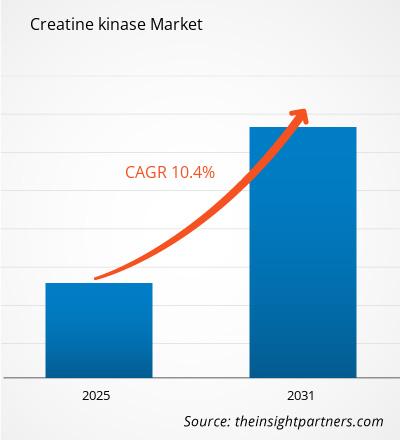
The Creatine Kinase Market has been valued at US$ 396.63 Million in 2025 and is expected to reach US$ 550.53 Million by 2034, registering a CAGR of 4.18% during 2026–2034. The market reflects increasing demand for biochemical diagnostic testing across hospitals and laboratories, supported by the expanding use of enzyme assays for cardiovascular, muscular, and neurological condition evaluations.
North America is projected to experience a steady CAGR range of 4.3–4.8% between 2026–2034, supported by advanced clinical laboratory infrastructure, high adoption of automated diagnostic platforms, and continuous investments in precision healthcare. The Creatine Kinase Market size in the region is influenced by rising diagnostic testing volumes, reimbursement support, and the presence of established healthcare technology providers.
Creatine kinase Market Assessment and Insights
- North America: The region is estimated to hold a 34–38% share in 2025 and is expected to grow at a CAGR of 4.3–4.8% during 2026–2034, driven by laboratory automation and cardiovascular diagnostics demand.
- US: The country represents a major regional contributor with a 25–29% share in 2025 and is projected to expand at a CAGR of 4.2–4.7% through 2034, supported by clinical testing adoption.
- Europe: Europe accounts for a 27–31% share in 2025 and is anticipated to register a CAGR of 3.8–4.4% during 2026–2034, with Germany, the UK, France, and Italy supporting diagnostic market development.
- Asia Pacific: Asia Pacific holds a 22–26% share in 2025 and is expected to achieve a CAGR of 4.8–5.4% between 2026–2034, led by China, Japan, India, and South Korea through healthcare expansion.
- Largest Segment: The Hospital application segment maintains a 55–60% market share in 2025 and is estimated to grow at a CAGR of 4.1–4.6%, supported by routine diagnostic workflows.
- High Growth Segment: The Laboratory application segment captures a 40–45% market share in 2025 and is projected to grow at a CAGR of 4.6–5.1%, supported by specialized testing demand.
- Key companies analyzed in detail: Abbott Laboratories, BBI Solutions, Beckman Coulter, DiaSys Diagnostic Systems GmbH, Diazyme Laboratories, Inc., LSI Medience, Randox Laboratories Ltd, Roche, Siemens Healthcare, Tosoh India Pvt. Ltd.
Source: The Insight Partners' analysis based on proprietary research, government publications, company annual reports, investor presentations, industry databases, and expert interviews.
Advancements in immunoassay and enzymatic testing technologies have reshaped the Creatine Kinase Market by improving analytical accuracy, reducing turnaround time, and enabling automated laboratory integration. Diagnostic manufacturers are increasingly focusing on reagent stability, platform compatibility, and workflow optimization to meet growing testing requirements. The shift from conventional manual procedures toward automated systems has influenced production strategies and encouraged partnerships between reagent developers and instrument manufacturers. The ecosystem includes raw material suppliers, assay developers, diagnostic equipment providers, hospitals, and reference laboratories. These changes have strengthened the role of standardized testing solutions in modern clinical environments.
Future expansion of the Creatine Kinase Market share is expected to be influenced by emerging healthcare systems, particularly in developing economies where laboratory capacity is improving. Diagnostic infrastructure development, regulatory harmonization, and disease surveillance programs will create market opportunities. The heightened emphasis on early diagnosis of cardiac and muscular diseases has compelled healthcare facilities to rely on credible enzyme test procedures. Health care public campaigns aimed at increasing access to diagnostics and quality assurance platforms have been driving this trend.
Creatine kinase Market Report Scope
| Report Attribute | Details |
|---|---|
| Market size in 2025 | US$ 396.63 Million |
| Market Size by 2034 | US$ 550.53 Million |
| Global CAGR (2026 - 2034) | 4.18% |
| Historical Data | 2021-2024 |
| Forecast period | 2026-2034 |
Creatine kinase Market Analysis
The Creatine Kinase Market report highlights that market growth is supported by increasing clinical requirements for accurate enzyme measurement in cardiovascular and skeletal muscle disorder assessment. The hospitals and laboratories constitute the key demand sources, whereas the diagnostic firms offer the reagents, instruments, and integrated diagnostic systems. The key players in the value chain include the suppliers of biochemical components, the manufacturers of assays, the manufacturers of instruments, the distributors, and healthcare establishments. With the increasing trend towards laboratory automation, the efficiencies have improved with increased testing volumes.
Diagnostic laboratories are still shaping demand trends owing to extended testing menus and the centralized testing concept. The key concerns of the manufacturers are the enhanced sensitivity of the tests, compatibility with automated instruments, and reliability of the assays. The supply side trends are driven by technological advancements, compliance regulations, and the availability of specialized biochemical reagents.
Competitive positioning within the Creatine Kinase Market analysis reflects the presence of global diagnostic companies developing integrated solutions for laboratory applications. Abbott Laboratories, Beckman Coulter, Roche, and Siemens Healthcare have maintained their strengths by having a broad range of diagnostic tests and well-established clinical ties. Specialized providers, including BBI Solutions, DiaSys Diagnostic Systems GmbH, and Diazyme Laboratories, Inc., help in the development of assays and specialized components for diagnostics.
Increasing investments are being made towards automation, development of new reagents, and platform interoperability. The competitive advantage has been secured by increasing product compatibility and the reliability of supplies. LSI Medience, Randox Laboratories Ltd, and Tosoh India Pvt. Ltd diversifies the market with specialized testing methods, while competitive advantage is derived from performance and regulatory approvals, as well as the ability to provide customer support.
● REPORT CUSTOMIZATION
Tailor This Report To Align With Your Specific Business Requirements
This report can be customized to align precisely with your business objectives, scope, and target markets. Customization options include tailored segmentation, geography, competitive analysis, and strategic insights to support informed decision-making.
Customize This Report →WHAT YOU CAN ADJUST
- ● Segmentations
- ● Geography
- ● Competitive Analysis
- ● Language Preferences
Creatine kinase Market: Strategic Insights
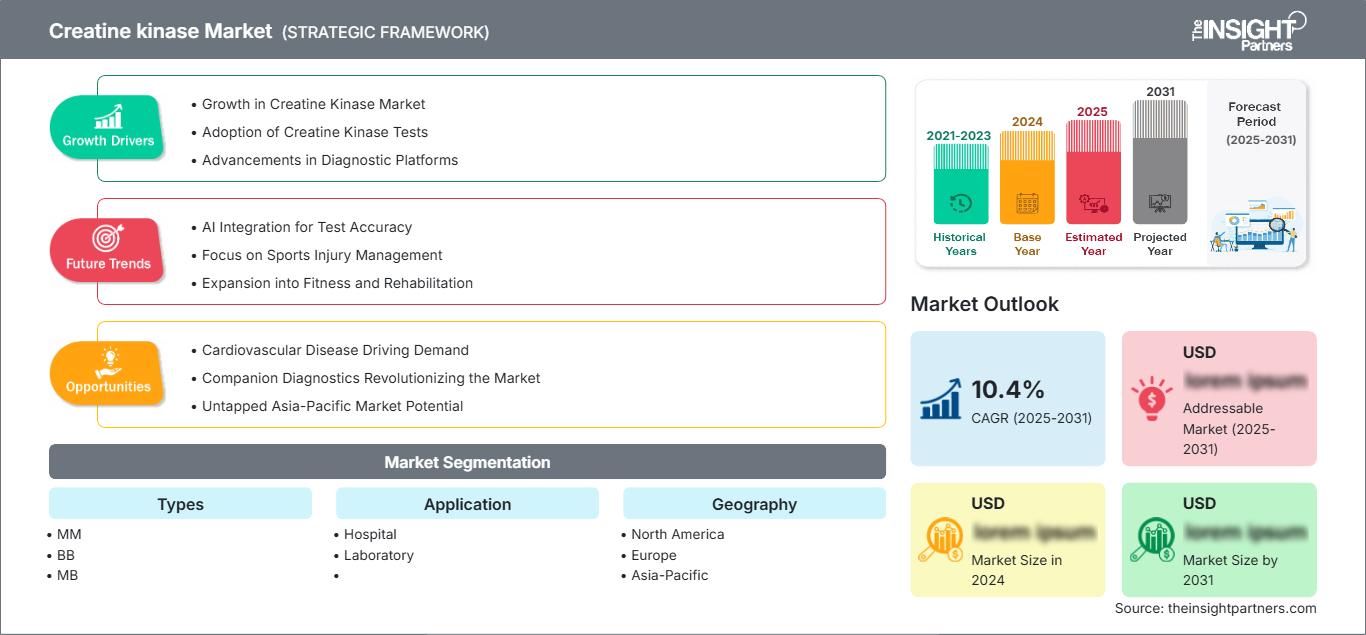
Regional Insights
North America Creatine Kinase Market
North America accounted for an estimated 34–38% share of the Creatine Kinase Market in 2025 and is projected to expand at a CAGR of 4.3–4.8% during 2026–2034. The region benefits from advanced diagnostic infrastructure, widespread laboratory automation, and established reimbursement frameworks supporting enzyme-based testing procedures. Key Creatine Kinase Market trends include increasing adoption of automated diagnostic platforms, integration of advanced laboratory information systems, growing emphasis on early disease detection, and expanding utilization of enzyme-based testing in cardiovascular and muscular disorder management.
Both the US and Canada stand as noteworthy participants because of the high healthcare costs, increased cardiovascular screening tests, and high acceptance of automated clinical chemistry analyzers. Availability of companies like Abbott Laboratories, Beckman Colter, Roche, and Siemens Healthcare provides supply chain advantages in the region. The hospitals and reference laboratories keep on upgrading themselves to the new technology for efficient and accurate testing. Awareness of early diagnosis and growth in outpatient diagnostics is forecasted to drive the market demand.
U.S. Creatine Kinase Market Market
The U.S. accounted for approximately 25–29% of the global market and represented around 72–76% of the North American market share in 2025. It is predicted that the country will achieve a CAGR growth rate of 4.2–4.7% during the years 2026-2034 due to advanced laboratory networks and increasing volumes of clinical tests.
The national market enjoys a solid healthcare system infrastructure, a well-developed diagnostic reimbursement framework, and a wide deployment of laboratory automation technologies. Among the companies operating in the field of medical diagnostics are Abbott Laboratories, Beckman Coulter, Roche and Siemens Healthcare, which have a strong application presence in the country through their diagnostic systems and reagents. An increasing need for effective cardiovascular and muscular disorders testing is shaping purchase behavior.
Europe Creatine Kinase Market Market
Europe held an estimated 27–31% share of the market in 2025 and is expected to register a CAGR of 3.8–4.4% from 2026–2034. Germany stays the leading regional player owing to its well-developed healthcare infrastructure, laboratory facilities, and use of innovative diagnostic equipment.
The UK market profits from having well-developed healthcare systems and rising demand for fast lab-testing processes. Germany keeps exhibiting high adoption rates of automated diagnostics, which is driven by the development of hospitals in the country. France, Italy, and Spain are working on increasing diagnostic capacity through investments in healthcare infrastructure and laboratories. The focus of European regulation on the quality and efficiency of diagnostics is driving the adoption of proper testing solutions.
APAC Creatine Kinase Market Market
Asia Pacific represented an estimated 22–26% share of the market in 2025 and is projected to grow at a CAGR of 4.8–5.4% during 2026–2034. China leads regional development through expanding healthcare infrastructure and increasing diagnostic capacity.
Japan, South Korea, India, and Australia contribute through laboratory modernization, rising healthcare accessibility, and growing awareness of early disease detection. Government initiatives supporting healthcare digitization and diagnostic improvements are strengthening market opportunities. Industrial expansion of domestic healthcare manufacturing and increasing demand for cost-efficient testing solutions are also influencing regional growth patterns.
Middle East & Africa Creatine Kinase Market Market
The Middle East & Africa region is expected to experience a CAGR of 3.7–4.3% during 2026–2034, supported by healthcare infrastructure development and increasing diagnostic service availability. Saudi Arabia and the UAE are leading contributors due to investments in advanced medical facilities.
South Africa and other MEA countries are gradually improving laboratory access through healthcare expansion programs. Infrastructure development, government healthcare initiatives, and investments linked to economic diversification strategies are supporting diagnostic adoption. Increasing hospital capacity and demand for reliable testing procedures are expected to strengthen regional opportunities over the forecast period.
Segmentation Analysis
Types
Types represent a critical segment of the market, with growth supported by diverse diagnostic requirements across clinical applications. The segment is expected to grow at a CAGR of 3.9–4.4% during 2026–2034. Different enzyme isoforms enable targeted analysis for cardiac, skeletal muscle, and neurological evaluations. Manufacturers continue improving assay performance and reagent formulations to enhance reliability across diagnostic platforms.
- MM: The MM type is widely used for evaluating skeletal muscle-related conditions and supports routine biochemical testing applications. Its established clinical relevance maintains consistent demand among hospitals and diagnostic laboratories requiring dependable enzyme measurements.
- BB: The BB type supports specialized diagnostic applications associated with neurological and tissue-related assessments. Demand remains focused on laboratories requiring specific biochemical markers for advanced clinical evaluations and research-oriented testing procedures.
- MB: The MB type maintains importance in cardiac-related diagnostic assessments by supporting enzyme analysis associated with myocardial conditions. Its application in clinical decision-making continues to influence adoption among healthcare providers.
- MiMi: The MiMi type contributes to specialized testing requirements where specific enzyme identification is needed. Its usage remains concentrated in targeted diagnostic environments and research applications requiring detailed biochemical analysis.
Application
Application represents a major segment within the market scope, with a CAGR of 4.2–4.7% during 2026–2034. The segment benefits from increasing diagnostic testing requirements, laboratory automation, and expanding healthcare access. Hospitals and laboratories continue adopting efficient testing systems to support faster clinical decisions and improve patient management. Rising demand for accurate biochemical analysis contributes to sustained market development.
- Hospital: Hospitals remain the leading application area due to high patient testing volumes and integrated diagnostic workflows. Clinical departments rely on enzyme testing to support disease evaluation, treatment monitoring, and routine healthcare assessments.
- Laboratory: Laboratories demonstrate increasing adoption through centralized testing models and automation capabilities. Their role in processing high-volume diagnostic samples supports demand for standardized reagents and compatible analytical platforms.
Opportunity Snapshot
| Application | Revenue Contribution | Trend Tag | Adoption Stage |
| Hospital | High | Clinical Testing | Mature |
| Laboratory | Medium | Automation Integration | Scaling |
Creatine kinase Market Growth Drivers and Impact Analysis
Rising Demand for Cardiovascular Diagnostic Testing
The increased occurrence is stimulating the market growth of biochemical test solutions utilized for evaluating these diseases. Physicians still tend to use enzymatic tests in their practice as part of the overall cardiovascular disease examination process. It affects the purchasing behavior of hospitals and laboratories that require effective testing tools. Automated machines and well-defined reagents make this process more accessible to the patients. Increased spending on disease management initiatives is driving further adoption. It affects manufacturers through motivating them to improve assay technology, increase production capacity and compatibility with the laboratory equipment.
Expansion of Automated Laboratory Infrastructure
The move towards automated diagnostics environments has greatly impacted market growth through efficiency in testing processes and less dependence on manual labor. Laboratories are moving towards adopting systems that can accommodate more samples in their tests with consistent results. This is helping in making reporting efficient, improving workflow management, and making quality control processes easier. This trend is opening up a chance for reagents manufacturers and technology vendors to develop products to match the trends. Scalability and efficiency in processes have been a priority of healthcare organizations in acquiring products.
Growing Focus on Early Disease Detection
The health care system is becoming more focused on early identification and detection of various disease conditions, thereby raising the need for the availability of biomarkers. Tests for creatine kinase help in identifying conditions related to muscles and the heart; hence, the test is applicable in the preventive and diagnostic approach in the healthcare sector. Awareness of the need for timely diagnosis among health care practitioners is leading to increased adoption of testing procedures for enzymes. Developing nations are enhancing the availability of diagnostics through investments in health care systems and laboratory facilities.
Creatine kinase Market Future Trends
Integration of Advanced Diagnostic Platforms
The Creatine Kinase Market trends are expected to evolve with increased integration of advanced diagnostic platforms that combine automation, data connectivity, and improved analytical capabilities. The future will see the emphasis of interoperability among analyzers, laboratory information systems, and digital healthcare infrastructure. It is expected that manufacturers will concentrate on producing solutions that allow for quicker processing, improved precision, and efficient workflows. The increasing use of artificial intelligence-enabled laboratory management systems will also have an impact on the testing environment as it will help in interpreting data and allocating resources.
Expansion of Point-of-Care Testing Capabilities
Expansion in point-of-care testing is likely to affect future diagnostic approaches as it will help make decisions quickly without the need to use the laboratory setting. The small portable testing kits can be used in emergency cases, outpatient cases and decentralized health care. Manufacturers are likely to produce systems that are smaller in size and yet reliable in their analysis, while at the same time simple to use. Greater effort in improving healthcare access in developing countries may help increase the adoption of such testing systems.
Creatine kinase Market Opportunities
Growth Potential in Emerging Healthcare Systems
The Creatine Kinase Market Forecasts indicate opportunities in emerging healthcare systems where diagnostic infrastructure is expanding through government initiatives and private investment. Countries across Asia Pacific, the Middle East, and Africa are increasing healthcare capacity, creating demand for dependable laboratory testing solutions. Market participants can benefit by developing cost-efficient products suitable for resource-diverse environments. Partnerships with local healthcare providers, distributors, and diagnostic networks may improve market access. Investments focused on affordable reagents, adaptable platforms, and training programs can support broader adoption. These opportunities are particularly relevant as healthcare systems prioritize early disease identification and improved diagnostic availability.
Development of Next-Generation Assay Technologies
Advancements in assay technologies create opportunities for companies to improve analytical performance, reduce testing complexity, and strengthen competitive positioning. Manufacturers can explore enhanced reagent formulations, improved stability, and compatibility with automated diagnostic platforms. Innovation focused on multiplex testing and integrated workflows may address evolving laboratory requirements. Strategic investments in research and development can support differentiation in an increasingly technology-driven environment. Companies that establish partnerships with healthcare institutions and diagnostic laboratories may accelerate the adoption of improved solutions. The opportunity landscape is shaped by demand for efficient testing methods that provide reliable results while supporting broader healthcare modernization initiatives.
Recent Developments
- January 2026: Abbott Laboratories announced continued expansion of its global diagnostics portfolio through advancements in laboratory testing solutions, focusing on improving clinical workflow efficiency and supporting healthcare providers with integrated diagnostic technologies. The company continues strengthening its position in clinical chemistry and diagnostic systems through innovation-driven product development and platform enhancement.
- June 2025: Roche introduced updates across its diagnostics ecosystem, emphasizing laboratory automation and digital integration capabilities. The company continued developing solutions designed to improve testing efficiency, analytical consistency, and healthcare decision-making. These initiatives reflect Roche’s ongoing investment in diagnostic technologies supporting hospitals and laboratory networks globally.
- March 2025: Randox Laboratories Ltd expanded its diagnostic technology initiatives by enhancing its clinical testing capabilities and supporting laboratory quality improvement programs. The company continued focusing on advanced diagnostic solutions, quality control materials, and testing innovations designed to support healthcare laboratories and clinical environments worldwide.
Frequently Asked Questions

- Comprehensive Market Sizing and Forecast Analysis
- Detailed Segmentation Analysis
- In-Depth Market Dynamics Assessment
- Regional and Country-Level Insights
- Competitive Landscape and Company Benchmarking
- Strategic Business Intelligence
Recent Reports
Testimonials

The Insight Partners' SCADA System Market report is comprehensive, with valuable insights on current trends and future forecasts. The team was highly professional, responsive, and supportive throughout. We are very satisfied and highly recommend their services.
RAN KEDEM Partner, Reali Technologies LTDs
I requested a report on a very specific software market and the team produced the report in a few days. The information was very relevant and well presented. I then requested some changes and additions to the report. The team was again very responsive and I got the final report in less than a week.
JEAN-HERVE JENN Chairman, Future Analytica
We worked with The Insight Partners for an important market study and forecast. They gave us clear insights into opportunities and risks, which helped shape our plans. Their research was easy to use and based on solid data. It helped us make smart, confident decisions. We highly recommend them.
PIYUSH NAGPAL Sr. Vice President, High Beam Global
The Insight Partners delivered insightful, well-structured market research with strong domain expertise. Their team was professional and responsive throughout. The user-friendly website made accessing industry reports seamless. We highly recommend them for reliable, high-quality research services
YUKIHIKO ADACHI CEO, Deep Blue, LLC.
This is the first time I have purchased a market report from The Insight Partners.While I was unsure at first, I visited their web site and felt more comfortable to take the risk and purchase a market report.I am completely satisfied with the quality of the report and customer service. I had several questions and comments with the initial report, but after a couple of dialogs over email with their analyst I believe I have a report that I can use as input to our strategic planning process.Thank you so much for taking the extra time and making this a positive experience.I will definitely recommend your service to others and you will be my first call when we need further market data.
JOHN SUZUKI President and Chief Executive Officer, Board Director, BK Technologies
I wish to appreciate your support and the professionalism you displayed in the course of attending to my request for information regarding to infectious disease IVD market in Nigeria. I appreciate your patience, your guidance, and the fact that you were willing to offer a discount, which eventually made it possible for us to close a deal. I look forward to engaging The Insight Partners in the future, all thanks to the impression you have created in me as a result of this first encounter.
DR CHIJIOKE ONYIA MANAGING DIRECTOR, PineCrest Healthcare Ltd.Reason to Buy
- Informed Decision-Making
- Understanding Market Dynamics
- Competitive Analysis
- Identifying Emerging Markets
- Customer Insights
- Market Forecasts
- Risk Mitigation
- Boosting Operational Efficiency
- Strategic Planning
- Investment Justification
- Tracking Industry Innovations
- Aligning with Regulatory Trends





 Get Free Sample for