
Defibrillation Electrodes and Pad Market Size, Growth & Trends by 2034
Coverage: By Product Type (Internal, External); Age Group (Pediatric, Adult); End User (Hospital, Clinic, Others), and Geography (North America, Europe, Asia Pacific, and South and Central America)
- Status : Data Released
- Report Code : TIPRE00015557
- Category : Life Sciences
- No. of Pages : 150
- Available Report Formats :


- Last update date : August 17, 2026


2025 Market Size
US$ 210.00 Mn
Base year value
2034 Forecast
US$ 350.00 Mn
Projected by 2034
CAGR 2026-2034
5.84 %
Growth rate
Addressable Market
US$ 2,537.26 Mn
(2026-2034)
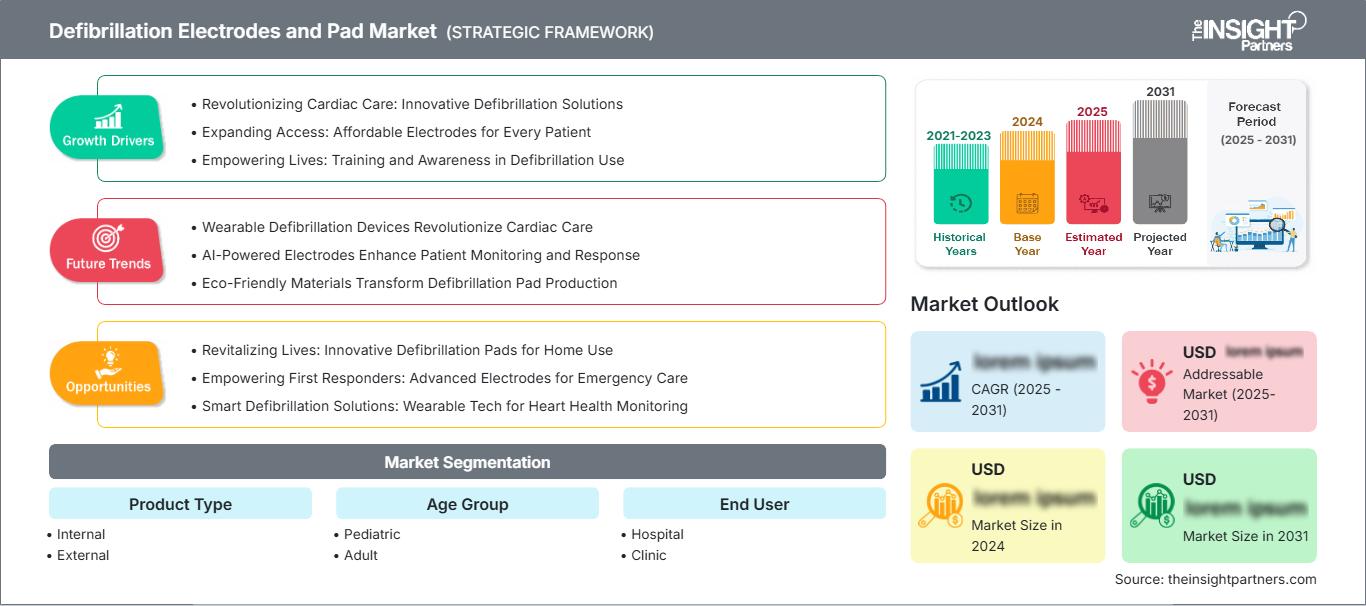
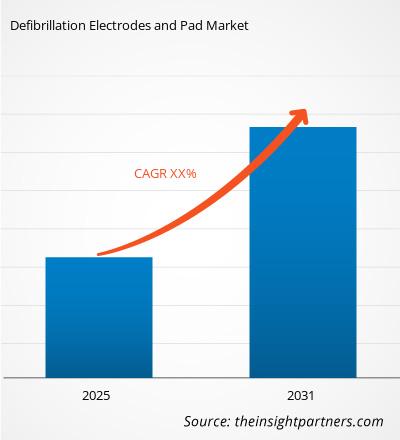
The Defibrillation Electrodes and Pad Market was valued at US$ 210.00 Million in 2025 and is projected to reach US$ 350.00 Million by 2034, registering a CAGR of 5.84% during 2026–2034. It includes both single-use and reusable electrode technologies that are employed for administering electrical therapy, for monitoring cardiac function, and for facilitating resuscitation processes. Factors driving the growth of the market include the number of facilities available for emergency care, the number of defibrillators installed, the need for replacements, reliability, and the installation of automated external defibrillators.
North America continues to be one of the leading markets, due to developed emergency medicine systems, the presence of resuscitation facilities in hospitals, and the implementation of public access defibrillation programs. The Defibrillation Electrodes and Pad Market size in the region is forecast to grow with a CAGR of 5.7–6.1% from 2026 to 2034.
Defibrillation Electrodes and Pad Market Assessment and Insights
- North America: North America is estimated to hold a 36–40% share in 2025 and grow at a CAGR of 5.7–6.1% between 2026–2034, supported by mature emergency-care infrastructure, installed defibrillator fleets, replacement demand, and established device-service networks.
- US: The US represents an estimated 82–86% share of North America in 2025 and is expected to grow at a CAGR of 5.6–6.0% during 2026–2034, supported by hospital procurement and AED deployment.
- Europe: Europe accounts for an estimated 28–32% share in 2025 and is projected to register a CAGR of 5.2–5.6% during 2026–2034, with Germany, the UK, France, Italy, and Spain supporting demand through hospital modernization and emergency-response infrastructure.
- Asia Pacific: Asia Pacific is estimated to represent a 19–23% share in 2025 and expand at a CAGR of 6.4–6.8% during 2026–2034, led by China, Japan, South Korea, India, and Australia.
- Largest Segment: External electrodes hold an estimated 76–80% market share in 2025 and are expected to grow at a CAGR of 5.9–6.2% during 2026–2034, supported by broad AED and emergency-monitor deployment.
- High Growth Segment: Pediatric electrodes represent an estimated 17–21% market share in 2025 and are projected to grow at a CAGR of 6.4–6.9% during 2026–2034 as pediatric readiness gains attention.
- Key companies analyzed in detail: Koninklijke Philips N.V., BIOTRONIK, Inc., Medtronic, Boston Scientific Corporation, Comepa Industries, Defibtech, LLC., HeartSine Technologies Ltd., Cardinal Health, Explore Medical Accessories LLP, ZOLL Medical Corporation.
Source: The Insight Partners' analysis based on proprietary research, government publications, company annual reports, investor presentations, industry databases, and expert interviews.
The market is no longer focused only on conductive pads but rather on electrodes, which include the following features: defibrillation, pacing, cardioversion, monitoring, CPR feedback, and preparedness. Manufacturing concerns include adhesive performance, gel performance, connector performance, shelf life, packaging performance, and specific to the platforms. The architectures are beginning to diverge based on adult and pediatric use.
Future growth will be enabled by fleet replacement, hospital refurbishment, public-access resuscitation programs, and ambulatory deployment. Manufacturers will focus their R&D efforts on extending the shelf life of materials used in production, integration of sensors, pediatric applications, and connectivity of readiness functionality. Accessory regulatory compliance will be a key driver for manufacturers since electrode performance is critical for therapy delivery.
Defibrillation Electrodes and Pad Market Report Scope
| Report Attribute | Details |
|---|---|
| Market size in 2025 | US$ 210.00 Million |
| Market Size by 2034 | US$ 350.00 Million |
| Global CAGR (2026 - 2034) | 5.84% |
| Historical Data | 2021-2024 |
| Forecast period | 2026-2034 |
Defibrillation Electrodes and Pad Market Analysis
Demand will be directly proportional to the number of defibrillator units employed, emergency preparedness, and replacements. The market growth of Defibrillation Electrodes & Pads is driven by the need for reliable consumables from hospitals, clinics, emergency medical services, and AED programs. Disposability of electrodes and their expiry period require purchasing them on a regular basis, along with the pediatric need for special electrodes.
The value chain consists of the conductive material, adhesive, substrate, cable, connector, sensor, packaging, sterilization when needed, assembly, quality control, regulatory approval, distribution, and after-sales services. The supply is dependent on the availability of special materials and the compatibility of connectors. The manufacturer needs to provide consistent electrical performance and adhesion of the electrodes, as well as the storage life cycle. The reliability of distribution is especially important, since pads are critical accessories.
The Defibrillation Electrodes and Pad Market Report suggests competition among diversified manufacturers of cardiovascular devices and accessory specialists. The companies that have established ecosystems of cardiac devices are Koninklijke Philips N.V., Medtronic, Boston Scientific Corporation, BIOTRONIK, and ZOLL Medical Corporation, whereas Defibtech, LLC., and HeartSine Technologies Ltd. have a strong emphasis on AED systems and accessories. Companies like Comepa Industries and Explore Medical Accessories LLP specialize in accessories and electrodes.
Positioning becomes increasingly dependent on interoperability, readiness features, integration with clinical workflow, and consistent availability. ZOLL Medical Corporation has a unique product line of multifunction electrodes capable of CPR, while Philips supplies multifunction adult and pediatric pads, which are interoperable with some families of devices. Areas of investment should cover material design, connector design, pediatric models, QA processes, and inventory. Distributors with diversified device lines can increase accessories sales.
● REPORT CUSTOMIZATION
Tailor This Report To Align With Your Specific Business Requirements
This report can be customized to align precisely with your business objectives, scope, and target markets. Customization options include tailored segmentation, geography, competitive analysis, and strategic insights to support informed decision-making.
Customize This Report →WHAT YOU CAN ADJUST
- ● Segmentations
- ● Geography
- ● Competitive Analysis
- ● Language Preferences
Defibrillation Electrodes and Pad Market: Strategic Insights
Regional Insights
North America Defibrillation Electrodes and Pad Market
North America is expected to have a Defibrillation Electrodes and Pad Market share of 36–40% by 2025, with a forecasted CAGR growth of 5.7–6.1% until 2034. The region is well-equipped with mature emergency medicine systems, hospitals, defibrillators, and repeated buying of electrodes due to their disposable nature. Moreover, the need for adult and child readiness within emergency departments and critical care units drives demand.
The US is the dominant regional market, whereas Canada is also responsible through hospitals' procurement activities and emergency response infrastructures. Buyers are now evaluating compatibility, shelf-life period, adhesive efficacy, CPR performance, and customer service, along with cost. Fleet management programs can generate repeat buying as electrodes should be kept within valid shelf-life periods. Therefore, regional market players should be able to maintain wide distribution and regulatory compliance, among others.
U.S. Defibrillation Electrodes and Pad Market
The US accounts for an estimated 82–86% share of North America in 2025 and is expected to register a CAGR of 5.6–6.0% during 2026–2034. Demand is supported by hospitals, emergency medical services, ambulatory facilities, and public-access AED installations. Replacement cycles remain important because electrode pads are generally single-use and have defined shelf lives.
ZOLL Medical Corporation, Koninklijke Philips N.V., Medtronic, Defibtech, LLC., and HeartSine Technologies Ltd. have all staked out their places in the defibrillation ecosystems. Trending application needs are towards multifunctional electrodes that can monitor, pace, cardiovert, or give feedback on CPR alongside defibrillation. Pediatric versions continue to play a key strategic role in hospitals, schools, and emergency settings where preparation for children is needed.
Europe Defibrillation Electrodes and Pad Market
The Europe region is expected to hold 28% to 32% of the market share in 2025 and grow at a CAGR of 5.2% to 5.6% until 2034. Germany has been identified as the dominant nation owing to its developed hospital infrastructure and medical device manufacturing. The UK, France, Italy, and Spain contribute to the growth through the modernization of emergency care facilities and AEDs.
The UK has an established emergency response environment and awareness regarding public access defibrillators that results in a steady demand for compatible consumable products. Germany’s demand arises from its advanced hospital system and the expertise that the country has in terms of medical equipment and the purchasing process. The demand in France comes from the hospitals and emergency centers, while the demand in Italy and Spain arises from their regional healthcare organizations and specialty hospitals.
APAC Defibrillation Electrodes and Pad Market
APAC is estimated to hold a 19–23% share in 2025 and is forecast to register the fastest regional CAGR of 6.4–6.8% through 2034. China leads, followed by Japan, South Korea, India, and Australia. Hospital expansion and growing emergency-care capabilities support increased defibrillator deployment.
Additional momentum is also created by industrial manufacturing capability, health care infrastructure upgrading, and awareness programs. Japan and Australia can be considered relatively mature markets with regard to emergency care services, but there are more opportunities for expansion in the markets of China and India. South Korea participates in the implementation of innovative technology in hospitals.
Middle East & Africa Defibrillation Electrodes and Pad Market
The Middle East and Africa represent a smaller portion of global demand but provide developing opportunities. The region is expected to grow at a CAGR of 4.8–5.3% during 2026–2034, with Saudi Arabia leading through hospital modernization and investment in advanced emergency-care infrastructure.
The UAE adds extra demand from private and tertiary care hospitals. The rest of MEA presents a mixed landscape because emergency facilities have different needs for specialists. Therefore, product distribution, good packaging, products that are stable at different temperatures, and technical services are essential. Infrastructure investment will eventually increase the availability of defibrillation devices and consumables.
Segmentation Analysis
Product Type
The Product Type segment in the Defibrillation Electrodes and Pad Market is expected to grow at a CAGR of 5.7–6.1% during 2026–2034. Product selection depends on the clinical setting, defibrillator architecture, electrode placement, sterility requirements, patient category, and intended use. External systems dominate because they support AEDs and manual defibrillators across emergency and hospital environments, while internal products remain important for selected surgical procedures.
- Internal: Internal electrodes serve controlled clinical procedures where direct cardiac access permits defibrillation through specialized paddles or electrodes. Their demand is tied to cardiac surgery, operating-room procedures, sterilization requirements, and specialized clinical workflows.
- External: External electrodes constitute the principal product category because adhesive pads can support rapid emergency application without surgical access. Their strategic importance reflects AED deployment, hospital resuscitation, replacement cycles, and multifunction capabilities.
Age Group
Age Group is projected to expand at a CAGR of 5.8–6.2% during 2026–2034. Adult products represent the broadest addressable base, while pediatric solutions provide specialized demand requiring appropriate energy delivery, electrode dimensions, and placement. Hospitals and emergency services increasingly consider age-specific readiness when managing defibrillator fleets.
- Pediatric: Pediatric electrodes address children requiring defibrillation and must accommodate age-specific energy and placement considerations. Their strategic importance is increasing as hospitals, emergency services, and public-access programs strengthen readiness for pediatric cardiac emergencies.
- Adult: Adult electrodes serve the largest patient population and are widely used across hospitals, emergency medical services, clinics, and AED programs. Demand is sustained by broad device compatibility, recurring replacement requirements, and multifunction clinical applications.
End User
End User is expected to grow at a CAGR of 5.6–6.0% during 2026–2034. Hospitals remain the primary procurement environment because they maintain extensive defibrillator fleets and emergency-care infrastructure. Clinics represent an expanding opportunity as outpatient and ambulatory services adopt emergency preparedness protocols and require compact, dependable equipment.
- Hospital: Hospitals represent the principal end-user category because emergency departments, operating rooms, intensive-care units, and cardiac services require immediate access to defibrillation equipment. Consumable replacement and fleet standardization support recurring electrode demand.
- Clinic: Clinics provide a growing addressable setting as outpatient providers strengthen emergency preparedness. Demand is influenced by compact AED deployment, staff training, maintenance requirements, and the need for readily available replacement pads.
Opportunity Snapshot
| End User | Revenue Contribution (High/Medium/Low) | Trend Tag (MAX 2 words) | Adoption Stage |
|---|---|---|---|
| Hospital | High | Fleet Readiness | Mature |
| Clinic | Medium | AED Deployment | Scaling |
Defibrillation Electrodes and Pad Market Growth Drivers and Impact Analysis
Expansion of AED Deployment and Emergency Preparedness
Increased use of automated external defibrillators brings about a direct need for electrode pads that can work with these units. Many organizations such as hospitals, companies, public places, transportation centers, schools, and community centers see the presence of AEDs as part of being prepared for any situation. Each device brings about a recurring need for accessories because electrode pads have an expiry date and are replaced after each use. Manufacturers can benefit from a more stable flow of revenue compared to selling equipment once only. It becomes especially true when several AEDs are used by an organization and are managed by the same program. Products that simplify testing and make replacement and expiration dates more obvious become in high demand.
Growing Emphasis on Multifunction Resuscitation Electrodes
There is a growing expectation for the electrodes to offer more than just being used to give the defibrillation shock. There are some of the products that help in offering the features such as ECG monitoring, cardioversion, pacing, or CPR feedback. Such types of products tend to simplify the workflow of emergencies by decreasing the amount of accessories needed during the process. In this way, there is the creation of value proposition through operational efficiency rather than replacing the electrode. There might be a preference for such products in hospitals where it is possible to standardize the accessories during several emergencies and reduce the preparation time. The motivation for the manufactures is to incorporate sensors, pathways, connectors, and CPR feedback in one unit designed for a single patient use.
Replacement Demand From Installed Defibrillator Fleets
The already installed base of defibrillators results in regular demands for electrodes that do not depend on the sale of any additional units. Electrodes have to be replaced after their clinical usage and periodically depending on expiry date, integrity of the package or manufacturer’s recommendations. Thus, there is always some amount of stock in the fleet even if no device was ever used yet. Such a feature gives an advantage to manufacturers and distributors in creating a steady market for their products and makes forecasting, storage and final mile delivery more critical. Any supply disruption may impact the level of readiness of emergency response units. Procurement staffs will pay more attention to supplier diversity and inventory visibility. Manufacturers which manage to distribute and manufacture their products across the whole geographical area may find their advantage in replacement cycles.
Defibrillation Electrodes and Pad Market Future Trends
Sensor-Integrated Electrode Platforms
The Defibrillation Electrodes and Pad Market trends are likely to increasingly feature electrodes with embedded sensing and feedback capabilities. Future products may combine electrical therapy with real-time assessment of contact quality, compression performance, impedance, or other treatment parameters. Integration can help clinicians and rescuers receive immediate information about electrode placement and resuscitation quality without relying on separate accessories. Such functionality may improve workflow consistency while generating additional product differentiation. Manufacturers are likely to prioritize low-profile sensors, reliable conductive interfaces, and software compatibility with next-generation defibrillators. Development will require careful validation because added electronics must not compromise adhesion, conductivity, sterility, shelf life, or ease of application. Regulatory pathways may also become more complex as electrodes increasingly combine therapeutic delivery with monitoring and decision-support functions.
Longer-Life and Readiness-Focused Materials
Future electrode development is expected to prioritize longer shelf life, improved adhesive stability, and packaging that protects conductive performance during extended storage. These characteristics are particularly relevant for AED fleets where devices may remain unused for long periods before an emergency occurs. Manufacturers may adopt improved gels, moisture barriers, substrates, and packaging configurations to preserve performance throughout the validated storage period. Readiness-focused designs could also incorporate clearer expiration indicators or compatibility identification, reducing the risk of deploying an unsuitable accessory. The commercial implication is a shift toward lifecycle value rather than simple unit price. Hospitals and public-access operators can benefit from fewer premature replacements, while suppliers can differentiate through documented storage performance and reliability. Product development will remain closely linked to quality systems and post-market surveillance.
Defibrillation Electrodes and Pad Market Opportunities
Expansion of Pediatric Readiness Programs
The Defibrillation Electrodes and Pad Market Forecasts point to a specialized opportunity in pediatric readiness across hospitals, emergency services, schools, and public facilities. Pediatric electrodes require designs that address different patient dimensions, placement requirements, and energy-delivery considerations. Manufacturers can target this opportunity through dedicated pediatric products, dual adult-child configurations, training support, and clearer readiness systems. Procurement programs can also bundle pediatric accessories with AED fleet management to ensure that appropriate products are available when required. The opportunity is particularly relevant to facilities serving mixed-age populations, where adult-only configurations may leave a preparedness gap. Suppliers should prioritize regulatory compliance, clinical usability, packaging integrity, and clear labeling. Partnerships with emergency-response organizations and healthcare networks could accelerate adoption while supporting standardized pediatric preparedness practices.
Connected Fleet Management and Consumable Tracking
Connected fleet management provides an investment opportunity by linking AED status, electrode expiration, inventory levels, and maintenance schedules through centralized digital systems. Such platforms can reduce manual inspection requirements and help organizations identify expired or missing accessories before an emergency occurs. Manufacturers can build recurring service models around fleet visibility while improving consumable replenishment forecasting. Integration with hospital asset-management systems may further streamline procurement and reduce stockout risk. The opportunity extends beyond large hospitals because distributed public-access AED networks can also benefit from centralized readiness monitoring. Successful commercialization will require interoperability, cybersecurity, simple user interfaces, and reliable data synchronization. Suppliers that combine electrode products with digital readiness services may establish stronger customer relationships and increase recurring revenue beyond conventional consumable sales.
Recent Developments
- June 2026: ZOLL Medical Corporation faced an ongoing supply issue affecting multiple OneStep defibrillation pad product codes in the UK. NHS Supply Chain reported intermittent availability linked to a raw-material shortage and identified alternative products for several affected codes. The notice underscores the importance of material sourcing, inventory resilience, and continuity planning for emergency-use electrode products.
- February 2026: BIOTRONIK, Inc. announced the European launch of its Acticor Sky and Rivacor Sky ICD and CRT-D families after CE marking. The systems incorporate conduction-system pacing capabilities and expand the company's cardiac rhythm portfolio. Although focused on implanted defibrillation therapy rather than external pads, the development strengthens BIOTRONIK's broader defibrillation technology platform and demonstrates continued investment in next-generation cardiac rhythm systems.
- October 2025: HeartSine Technologies Ltd. issued a field safety notice covering specified adult and pediatric Pad-Pak accessories for the samaritan PAD. Post-market surveillance identified cases where improper insertion or bent locator pins could prevent correct connection, potentially delaying therapy. The action highlights the importance of accessory-device interface reliability and post-market monitoring for integrated AED consumable systems.
Frequently Asked Questions

- Comprehensive Market Sizing and Forecast Analysis
- Detailed Segmentation Analysis
- In-Depth Market Dynamics Assessment
- Regional and Country-Level Insights
- Competitive Landscape and Company Benchmarking
- Strategic Business Intelligence
Recent Reports
Testimonials

The Insight Partners' SCADA System Market report is comprehensive, with valuable insights on current trends and future forecasts. The team was highly professional, responsive, and supportive throughout. We are very satisfied and highly recommend their services.
RAN KEDEM Partner, Reali Technologies LTDs
I requested a report on a very specific software market and the team produced the report in a few days. The information was very relevant and well presented. I then requested some changes and additions to the report. The team was again very responsive and I got the final report in less than a week.
JEAN-HERVE JENN Chairman, Future Analytica
We worked with The Insight Partners for an important market study and forecast. They gave us clear insights into opportunities and risks, which helped shape our plans. Their research was easy to use and based on solid data. It helped us make smart, confident decisions. We highly recommend them.
PIYUSH NAGPAL Sr. Vice President, High Beam Global
The Insight Partners delivered insightful, well-structured market research with strong domain expertise. Their team was professional and responsive throughout. The user-friendly website made accessing industry reports seamless. We highly recommend them for reliable, high-quality research services
YUKIHIKO ADACHI CEO, Deep Blue, LLC.
This is the first time I have purchased a market report from The Insight Partners.While I was unsure at first, I visited their web site and felt more comfortable to take the risk and purchase a market report.I am completely satisfied with the quality of the report and customer service. I had several questions and comments with the initial report, but after a couple of dialogs over email with their analyst I believe I have a report that I can use as input to our strategic planning process.Thank you so much for taking the extra time and making this a positive experience.I will definitely recommend your service to others and you will be my first call when we need further market data.
JOHN SUZUKI President and Chief Executive Officer, Board Director, BK Technologies
I wish to appreciate your support and the professionalism you displayed in the course of attending to my request for information regarding to infectious disease IVD market in Nigeria. I appreciate your patience, your guidance, and the fact that you were willing to offer a discount, which eventually made it possible for us to close a deal. I look forward to engaging The Insight Partners in the future, all thanks to the impression you have created in me as a result of this first encounter.
DR CHIJIOKE ONYIA MANAGING DIRECTOR, PineCrest Healthcare Ltd.Reason to Buy
- Informed Decision-Making
- Understanding Market Dynamics
- Competitive Analysis
- Identifying Emerging Markets
- Customer Insights
- Market Forecasts
- Risk Mitigation
- Boosting Operational Efficiency
- Strategic Planning
- Investment Justification
- Tracking Industry Innovations
- Aligning with Regulatory Trends





 Get Free Sample for