
Dental Polishing Brush Market Trends, Share & Demand by 2034
Coverage: By Type (Flat Head Brush, Pointed Brush, Others); Application (Dental Hospital, General Hospital), and Geography (North America, Europe, Asia Pacific, and South and Central America)
- Status : Data Released
- Report Code : TIPRE00018939
- Category : Life Sciences
- No. of Pages : 150
- Available Report Formats :


- Last update date : September 07, 2026


2025 Market Size
US$ 559.39 Mn
Base year value
2034 Forecast
US$ 1,182 Mn
Projected by 2034
CAGR 2026-2034
8.67 %
Growth rate
Addressable Market
US$ 7,806.68 Mn
(2026-2034)
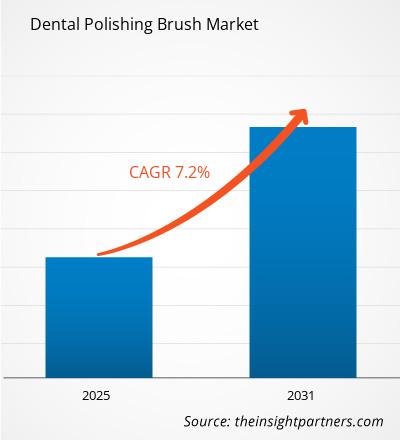
The Dental Polishing Brush Market was valued at US$ 559.39 Million in 2025 and is projected to reach US$ 1,182 Million by 2034, registering a CAGR of 8.67% during 2026–2034. The market consists of brush forms for professional dental polishing, as well as other preventive treatment, where the market demand depends on the usage of the dental services, ergonomics, material compatibility, and procurement practices within the dental care and general hospitals.
The North American Dental Polishing Brush Market Size is anticipated to stay one of the structurally significant markets due to the already existing workflow of preventive dentistry, high usage of dental services, and wide availability of professional dental hygiene products. The regional market is predicted to have the CAGR of 7.8%–8.4% through 2034.
Dental Polishing Brush Market Assessment and Insights
- North America: North America is projected to hold a 32–36% share in 2025 and expand at a 7.8–8.4% CAGR between 2026–2034, supported by mature dental infrastructure and recurring preventive procedures.
- US: The US is estimated to represent 78–82% of North America's 2025 market and grow at a 7.7–8.3% CAGR between 2026–2034, reflecting high procedural volumes.
- Europe: Europe is estimated at a 25–29% share in 2025 and a 7.5–8.1% CAGR between 2026–2034, led by Germany, the UK, France, Italy, and Spain, where established dental practices support replacement demand.
- Asia Pacific: Asia Pacific is estimated at a 21–25% share in 2025 and a 9.3–10.1% CAGR between 2026–2034, led by China, Japan, South Korea, and India, with expanding clinical capacity.
- Largest Segment: Flat Head Brush is estimated to command a 48–53% market share in 2025 and grow at a 8.1–8.6% CAGR through 2034, reflecting broad procedural utility.
- High Growth Segment: Pointed Brush is estimated at a 19–24% market share in 2025 and a 9.4–10.2% CAGR through 2034, supported by access-oriented polishing requirements.
- Key companies analyzed in detail: SYNDENT TOOLS CO., LTD, BOEN HEALTHCARE CO., LTD, Kerr Corporation, Renfert GmbH, Cosmedent, Centrix, Zhengzhou Linker Medical Equipment Co., Ltd., Dental Sky, Perfection Plus Ltd., and Dentsply Sirona Inc.
Source: The Insight Partners' analysis based on proprietary research, government publications, company annual reports, investor presentations, industry databases, and expert interviews.
There are several developments within the Dental Polishing Brush market. The market is moving from mere bristle accessories into being more procedure specific due to such elements as accessibility, bristle density, shaft flexibility, paste retention, and control. The distinction in the market is increasing due to geometry and materials. Disposables in prophy systems and brushes are increasing in popularity. Automation in manufacturing and standardization of shafts will enable producers to do repetitive orders without dimensional loss.
In the future, the growth of the Dental Polishing Brush Market will be supported by the increasing dental services in developing nations, a focus on preventive care, and the cost-efficient purchase of disposables. Attention to infection prevention and device reprocessing will support demand for well-defined disposables and sterilizable devices. The Asia-Pacific region will see relatively quick adoption due to developments in dental facilities and private practices.
Dental Polishing Brush Market Report Scope
| Report Attribute | Details |
|---|---|
| Market size in 2025 | US$ 559.39 Million |
| Market Size by 2034 | US$ 1,182 Million |
| Global CAGR (2026 - 2034) | 8.67% |
| Historical Data | 2021-2024 |
| Forecast period | 2026-2034 |
Dental Polishing Brush Market Analysis
The demand will be driven by standard professional cleaning, stain removal, tooth polishing, and finishing processes. Brush making companies, filaments, polymer suppliers, distributors, hospitals, dentists, and purchasers comprise the supply chain. Selection of products will be based on the compatibility with the handpiece, the geometry of the tool, surface of application, paste, and the desired polishing strength. According to the WHO, more than 3.5 billion people suffer from oral disease in the world, thus indicating a wide service base for preventive dental care.
The supply environment remains fragmented due to brushes being simple tools that still need to have standard dimensions, bristle holding, packaging, and quality control. Companies will compete on unit economics, breadth of product line, regional coverage, and private label manufacturing. Dental hospitals differ from general hospitals in terms of the volume of purchasing and procedures performed.
In the industry, there is competition between international dental portfolios and specialized manufacturers that are concerned about polishing and laboratory devices. Dentsply Sirona Inc. gets an advantage due to the wide preventive portfolio, and Kerr Corporation has the advantage due to its position in the Envista dental group. Renfert GmbH provides special polishing solutions; SYNDENT TOOLS CO., LTD, BOEN HEALTHCARE CO., LTD, Centrix, and Perfection Plus Ltd. are involved in the competition through their specialized offerings and distribution.
In terms of investments, more attention is paid to ergonomic product design, consistency in material application, digitization of the procurement process, and efficient production rather than radical change in the brush concept itself. The firms that make the competitor layer in this area are Cosmedent, Dental Sky, and Zhengzhou Linker Medical Equipment Co., Ltd. The strategy depends on product reliability, wide range of brush configurations, and other factors.
● REPORT CUSTOMIZATION
Tailor This Report To Align With Your Specific Business Requirements
This report can be customized to align precisely with your business objectives, scope, and target markets. Customization options include tailored segmentation, geography, competitive analysis, and strategic insights to support informed decision-making.
Customize This Report →WHAT YOU CAN ADJUST
- ● Segmentations
- ● Geography
- ● Competitive Analysis
- ● Language Preferences
Dental Polishing Brush Market: Strategic Insights
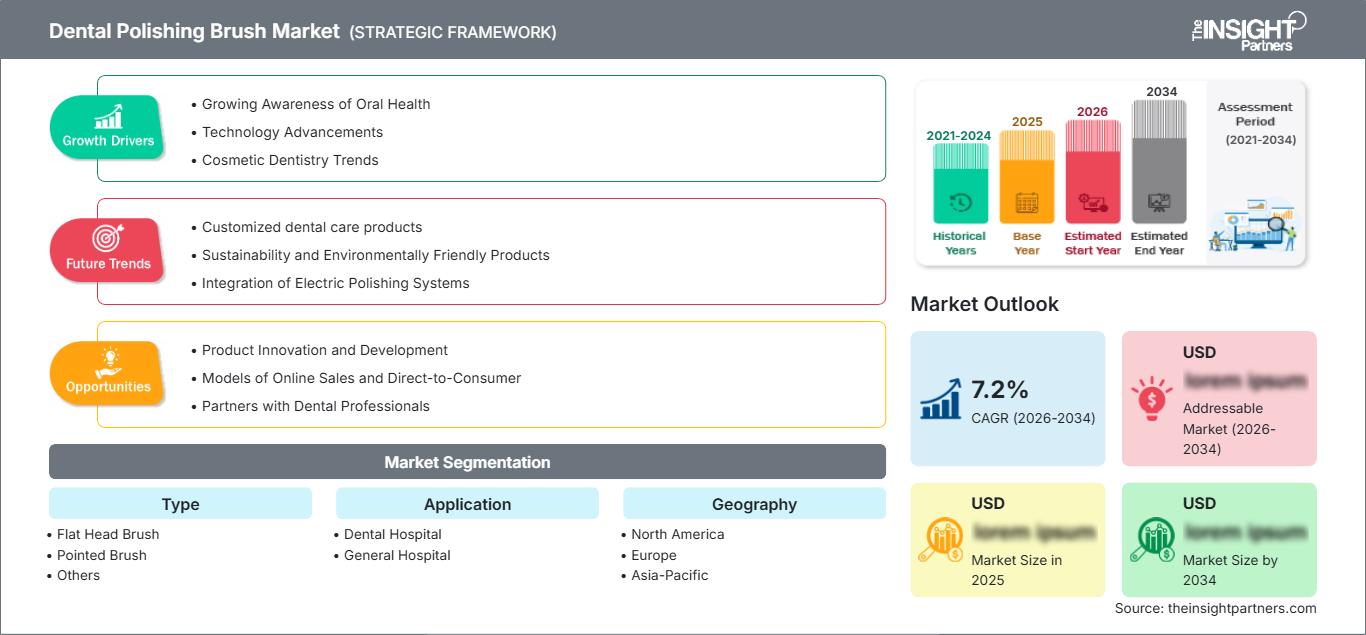
Regional Insights
North America Dental Polishing Brush Market
It is predicted that North America will hold 32% - 36% of the 2025 Dental Polishing Brush Market Share and grow at a CAGR of 7.8% - 8.4% from 2025 to 2034. The area has mature dental practices, established protocols for prevention of disease, and high consumer awareness on professional polishing. This is replacement-based demand due to the nature of procedure-based products and the trend toward standard packs with assured replenishment systems. The United States will continue to be the primary contributor of demand in the region, with Canada being another market owing to dental coverage expansion and preventive services becoming policy issues.
The competition in the region is advantageous to firms able to offer comprehensive products along with existing relationships with distributors. Accessories for interproximal or orthodontic applications and ergonomics can contribute towards a premium positioning strategy. There is also the encouragement of purchasing standards from dental service organizations. It is estimated that regional CAGR will remain within the 7.8% - 8.4% range and growth will be driven primarily by usage rates and replacement.
U.S. Dental Polishing Brush Market
It is expected that the United States will be the largest market in North America with an estimate of 78–82% in 2025, growing at 7.7–8.3% CAGR by 2034. This is because of its significant number of installed dental practice bases, the adoption of professional hygiene practices, and good supplier infrastructures. There is a need for brushes of varied geometries and stiffness due to preventive treatments, cosmetic maintenance, orthodontics, and restorations performed on patients. Increasingly, dental practitioners prefer high-performance, efficiency, and predictability in terms of replacement of these products.
This country has a wide range of companies, such as multinational, specialists, and distributors. Dentsply Sirona Inc., Kerr Corporation, Centrix, Cosmedent, and Perfection Plus Ltd. represent different competition strategies. These include preventive portfolios, specialty products, and professional distribution. Demand is mainly in the application sectors of dental hospitals and professional dentistry applications, but general hospitals can also be part of the demand due to their oral care departments and special units. Its CAGR and market share is maintained at 7.7–8.3%.
Europe Dental Polishing Brush Market
The Europe Dental Polishing Brush Market is projected to account for a 25–29% share in 2025 and have a CAGR of 7.5–8.1% through 2034. Germany will maintain its position as the largest country due to its advanced dental manufacturing and laboratory facilities along with professional purchasing systems. The UK, France, Italy, and Spain will create considerable complementary demand with their well-established networks of dental services and preventive care.
In the UK and Germany, developed clinical infrastructure will facilitate ongoing purchases and the preference for standardized products. Germany will also gain from the presence of a developed dental technologies segment, while the UK will benefit from professional hygiene demand and growing focus on effective procurement. France, Italy, and Spain will generate their demand through the development of both private and state-owned dental sector, driven by practice modernization and replacement needs.
APAC Dental Polishing Brush Market
APAC is projected to be worth 21–25% of the 2025 market and to grow at a CAGR of 9.3–10.1% through 2034. China will dominate regional revenues, and Japan, South Korea, India, and Australia will also be contributing through advanced or growing dental facilities. Industrial capacity and local production will facilitate competitive supply economics, while investments in healthcare infrastructure will help increase product availability.
China and India present especially good growth opportunities due to their large populations, growing private dental facilities, and professional awareness. Japan, South Korea, and Australia present more mature markets focused on quality and clinical consistency. Regional policy initiatives favoring oral health and healthcare access will help sustain the growth for years to come. The faster APAC CAGR growth will be driven by expansion and adoption and not an innovative product.
Middle East & Africa Dental Polishing Brush Market
MEA is predicted to register a CAGR of 6.8-7.6% up until 2034, where Saudi Arabia and the UAE are the prominent Gulf countries and South Africa the notable sub-Saharan country. Professional consumption is being aided by private healthcare investment, upgrading hospitals and establishing dental specialist facilities.
The presence of healthcare infrastructure expenditure and increasing private sector provision gives Saudi Arabia and the UAE an advantage while South Africa has a relatively well-developed ecosystem for dental supplies. The Rest of MEA is more fragmented due to differences in access, affluence and specialization capabilities. Investment in the energy sector and infrastructure in Gulf economies help in healthcare facility construction.
Segmentation Analysis
Type
Type segment in the Dental Polishing Brush Market remains a central purchasing consideration because brush geometry determines contact area, maneuverability, paste retention, and access. Flat Head Brush is expected to remain the largest format, while Pointed Brush should record comparatively faster expansion as clinicians seek greater precision around narrow or difficult-to-reach surfaces. The overall type segment is expected to expand at an 8.3–8.8% CAGR during 2026–2034.
- Flat Head Brush: Broad contact coverage supports routine polishing and efficient treatment of accessible tooth surfaces. Its established workflow compatibility makes it strategically important for high-volume procedures and standardized procurement.
- Pointed Brush: Narrow geometry supports targeted access around grooves, margins, orthodontic components, and interproximal areas. Demand is increasingly linked to precision-oriented procedures where maneuverability matters.
Application
Application segmentation in the Dental Polishing Brush Market reflects the organization and intensity of clinical purchasing. Dental hospitals generally generate more specialized and procedure-focused demand, while general hospitals purchase according to oral-care departments, specialty units, and broader institutional requirements. The application segment is expected to grow at an 8.6–9.1% CAGR during 2026–2034 as hospital procurement becomes more standardized.
- Dental Hospital: Dedicated dental facilities require diverse polishing accessories for preventive, restorative, orthodontic, and maintenance procedures. Consistent replenishment and product compatibility make institutional procurement strategically significant.
- General Hospital: General hospitals use polishing brushes within selected oral-health and specialty services. Demand is more application-specific, but broader hospital modernization can improve availability and standardized purchasing.
Opportunity Snapshot
| Application | Revenue Contribution (High/Medium/Low) | Trend Tag (MAX 2 words) | Adoption Stage (Emerging/Scaling/Mature) |
|---|---|---|---|
| Dental Hospital | High | Preventive Workflow | Mature |
| General Hospital | Medium | Institutional Care | Scaling |
Dental Polishing Brush Market Growth Drivers and Impact Analysis
Expansion of Preventive Oral-Care Utilization
The growing emphasis on prevention is expanding the number of procedures in which polishing accessories are used as part of professional hygiene workflows. WHO identifies oral diseases as affecting approximately 3.5 billion people, creating a substantial global service requirement. For manufacturers, the implication is not simply higher unit volume but broader demand across public hospitals, private dental facilities, and developing healthcare systems. Preventive programs can also create more predictable recurring consumption because brushes are replenished according to procedure throughput. Suppliers that align product packs with high-frequency workflows can improve inventory efficiency for buyers. In emerging markets, professional training and expansion of dental facilities can convert unmet need into actual accessory demand. This driver therefore supports both volume expansion and wider geographic penetration, while favoring suppliers with dependable distribution and consistent product specifications.
Greater Emphasis on Procedure Efficiency and Ergonomics
Clinical productivity is becoming increasingly important as dental facilities seek to manage appointment capacity without compromising treatment quality. Brush geometry, shaft design, bristle density, and paste retention can influence operator control and accessibility during polishing. Products that improve visibility or reduce unnecessary repositioning can create practical workflow benefits, particularly in high-volume practices. This shifts competition toward measurable usability rather than simple price comparisons. Manufacturers can respond through geometry optimization, balanced materials, and configurations tailored to specific procedural requirements. The impact is also visible in institutional procurement, where buyers increasingly assess total procedural efficiency rather than unit price alone. Over time, ergonomic differentiation may support premiumization within selected applications, particularly where clinicians perform repetitive polishing procedures. Suppliers with engineering capabilities and strong feedback loops from dental professionals are therefore positioned to capture value from this operational shift.
Rising Standardization of Hospital Consumable Procurement
Hospital networks and multi-location dental organizations increasingly seek standardized consumables to simplify purchasing, training, inventory control, and quality assurance. Polishing brushes are well suited to this trend because specifications can be defined by geometry, compatibility, packaging, and intended application. Standardized procurement can favor manufacturers capable of maintaining consistent dimensions and dependable supply across regions. It can also increase the importance of distributor relationships, because purchasing teams often prefer consolidated suppliers that can support several accessory categories. For smaller manufacturers, the trend creates both a challenge and an opportunity: scale is valuable, but specialist products can still succeed when differentiated specifications solve a defined clinical problem. Over the forecast period, purchasing consolidation is expected to influence competitive positioning by rewarding reliable fulfillment, documentation, product breadth, and responsive customization alongside conventional pricing considerations.
Dental Polishing Brush Market Future Trends
Shift Toward Procedure-Specific Brush Geometry
Future product development in the Dental Polishing Brush Market Trends is likely to move further toward geometry tailored to specific clinical tasks rather than universal brush designs. Manufacturers can differentiate through tapered profiles, controlled bristle density, specialized shaft dimensions, and configurations intended for difficult anatomical access. This approach may improve clinician control while reducing the need to switch between multiple accessory types during a procedure. Digital design and automated production should make small geometry adjustments more commercially viable, allowing suppliers to develop differentiated products without completely restructuring manufacturing lines. Over time, purchasing decisions may become more application-specific, particularly among sophisticated dental organizations that track procedural efficiency. The resulting market structure could include broader portfolios of narrowly defined products, with clinical education and distributor support becoming increasingly important for demonstrating appropriate use.
Integration of Consumables With Digital Procurement Systems
Digital procurement is expected to become more deeply integrated with inventory management, automated replenishment, and institutional purchasing workflows. Dental facilities can increasingly use consumption records to anticipate replacement requirements and reduce stockouts of frequently used accessories. For polishing brush suppliers, this creates opportunities to improve customer retention through predictable replenishment programs and standardized product identifiers. Digital catalogs can also make it easier for clinicians and procurement teams to compare specifications, pack sizes, compatibility, and application guidance. The trend may favor manufacturers that maintain accurate product data across distributors and online channels. Over the longer term, purchasing analytics could provide suppliers with better visibility into regional demand patterns and product substitution behavior. This would support more responsive production planning and reduce inventory inefficiencies across the supply chain.
Dental Polishing Brush Market Opportunities
Localized Manufacturing and Regional Supply Expansion
Manufacturers in the Dental Polishing Brush Market Forecast have an opportunity to establish or expand regional production and distribution capabilities in Asia Pacific and other developing markets where dental infrastructure is expanding. Localized manufacturing can reduce logistics complexity, improve lead times, and enable product configurations suited to regional procurement practices. China and India are particularly relevant because of their manufacturing ecosystems and growing healthcare capacity. Strategic partnerships with dental distributors, hospital procurement groups, and professional education organizations can accelerate market access without requiring extensive direct infrastructure. Suppliers can also use regional production to offer competitive pack sizes and pricing while maintaining consistent quality controls. The strongest opportunity lies in combining manufacturing efficiency with regulatory readiness and reliable distribution rather than competing solely on price. Such strategies could help specialist companies broaden their geographic footprint while protecting margins through shorter supply chains.
Premium Precision Products for Specialized Procedures
Premiumization provides an opportunity for suppliers to target procedures where access, finish quality, patient comfort, or operator control has greater value than basic unit economics. Pointed and specialized brush configurations can be positioned around orthodontic components, narrow surfaces, restoration maintenance, and other precision-oriented applications. Manufacturers can strengthen this opportunity by validating product performance, improving packaging, and providing clear clinical guidance. Premium products may also benefit from bundling with compatible pastes, angles, or other preventive accessories, creating a broader workflow proposition. The opportunity is particularly relevant in mature markets where dental professionals are more willing to pay for measurable procedural benefits. For investors and suppliers, the strategic priority should be differentiation that can be demonstrated clinically, supported commercially, and protected through consistent manufacturing rather than superficial product variation.
Recent Developments
- October 2025: Ivoclar Vivadent AG introduced updated OptraGloss PRO extraoral polishing materials emphasizing faster high-gloss finishing across oxide ceramics, glass ceramics, PMMA, composites, zirconium oxide, and lithium disilicate. The portfolio uses coordinated shapes for different restoration surfaces and targets workflow efficiency in restorative and laboratory polishing applications.
- June 2025: COLTENE Holding AG issued revised instructions for KENDA HP Polishers, detailing product composition, application, cleaning, inspection, and sterilization procedures. The documentation specifies silicone or synthetic rubber polishing matrices with abrasive materials and reinforces controlled reprocessing requirements for applicable dental polishing instruments.
- March 2025: Dentsply Sirona Inc. published an updated Nupro polishing portfolio emphasizing multiple prophy-angle configurations, including tapered brushes and pointed tips, alongside designs intended to improve interproximal cleaning, orthodontic access, splatter control, and clinician ergonomics. The portfolio demonstrates continued product differentiation around access and procedure-specific polishing requirements.
Frequently Asked Questions

- Comprehensive Market Sizing and Forecast Analysis
- Detailed Segmentation Analysis
- In-Depth Market Dynamics Assessment
- Regional and Country-Level Insights
- Competitive Landscape and Company Benchmarking
- Strategic Business Intelligence
Recent Reports
Testimonials

The Insight Partners' SCADA System Market report is comprehensive, with valuable insights on current trends and future forecasts. The team was highly professional, responsive, and supportive throughout. We are very satisfied and highly recommend their services.
RAN KEDEM Partner, Reali Technologies LTDs
I requested a report on a very specific software market and the team produced the report in a few days. The information was very relevant and well presented. I then requested some changes and additions to the report. The team was again very responsive and I got the final report in less than a week.
JEAN-HERVE JENN Chairman, Future Analytica
We worked with The Insight Partners for an important market study and forecast. They gave us clear insights into opportunities and risks, which helped shape our plans. Their research was easy to use and based on solid data. It helped us make smart, confident decisions. We highly recommend them.
PIYUSH NAGPAL Sr. Vice President, High Beam Global
The Insight Partners delivered insightful, well-structured market research with strong domain expertise. Their team was professional and responsive throughout. The user-friendly website made accessing industry reports seamless. We highly recommend them for reliable, high-quality research services
YUKIHIKO ADACHI CEO, Deep Blue, LLC.
This is the first time I have purchased a market report from The Insight Partners.While I was unsure at first, I visited their web site and felt more comfortable to take the risk and purchase a market report.I am completely satisfied with the quality of the report and customer service. I had several questions and comments with the initial report, but after a couple of dialogs over email with their analyst I believe I have a report that I can use as input to our strategic planning process.Thank you so much for taking the extra time and making this a positive experience.I will definitely recommend your service to others and you will be my first call when we need further market data.
JOHN SUZUKI President and Chief Executive Officer, Board Director, BK Technologies
I wish to appreciate your support and the professionalism you displayed in the course of attending to my request for information regarding to infectious disease IVD market in Nigeria. I appreciate your patience, your guidance, and the fact that you were willing to offer a discount, which eventually made it possible for us to close a deal. I look forward to engaging The Insight Partners in the future, all thanks to the impression you have created in me as a result of this first encounter.
DR CHIJIOKE ONYIA MANAGING DIRECTOR, PineCrest Healthcare Ltd.Reason to Buy
- Informed Decision-Making
- Understanding Market Dynamics
- Competitive Analysis
- Identifying Emerging Markets
- Customer Insights
- Market Forecasts
- Risk Mitigation
- Boosting Operational Efficiency
- Strategic Planning
- Investment Justification
- Tracking Industry Innovations
- Aligning with Regulatory Trends





 Get Free Sample for