
Dental Preventive Supplies Market Growth, Share & Trends by 2034
Coverage: By Product Type (Toothpastes, Mouthwash, Dental Sealants, Fluorides Prophylactic pastes and powder, Dental Desensitizers, Antimicrobial Varnish, Dental Floss, Others); Distribution Channel (Consumer stores, Retail pharmacies, E- commerce), and Geography (North America, Europe, Asia Pacific, and South and Central America)
- Status : Data Released
- Report Code : TIPRE00018101
- Category : Life Sciences
- No. of Pages : 150
- Available Report Formats :


- Last update date : September 08, 2026


2025 Market Size
US$ 6.53 Bn
Base year value
2034 Forecast
US$ 9.08 Bn
Projected by 2034
CAGR 2026-2034
3.73 %
Growth rate
Addressable Market
US$ 70.90 Bn
(2026-2034)
The Dental Preventive Supplies Market was valued at US$ 6.53 Billion in 2025 and is projected to reach US$ 9.08 Billion by 2034, registering a CAGR of 3.73% during 2026–2034. The market includes consumer and professional-use products that help to prevent caries, plaque formation, gingival diseases, sensitivity, and other avoidable oral problems. The market growth is driven by enhanced preventive dentistry programs, rising awareness about oral health, repeated use of products, and focus on early prevention.
The geography of North America is structurally significant, as the Dental Preventive Supplies Market Size in this region will be backed by well-established dental infrastructure, usage of preventive services, and availability of professional as well as consumer products. It is projected that the market in the region will grow at a CAGR of 3.1%–3.6% from 2026 to 2034.
Dental Preventive Supplies Market Assessment and Insights
- North America: North America is expected to account for a 31–35% share in 2025 and expand at a CAGR of 3.1–3.6% between 2026–2034, supported by established preventive dentistry infrastructure and recurring consumer oral-care purchases.
- US: The US represents 78–82% of North America's 2025 value and is projected to grow at a CAGR of 3.0–3.5% during 2026–2034, led by professional prevention and specialized home care.
- Europe: Europe is estimated to hold a 24–28% share in 2025 and grow at 3.0–3.5% CAGR through 2034, with Germany, the UK, France, Italy, and Spain providing substantial demand through preventive dental programs and mature retail channels.
- Asia Pacific: Asia Pacific is estimated at a 25–29% share in 2025 and is forecast to grow at 4.5–5.1% CAGR, led by China, Japan, South Korea, India, and Australia as oral-health awareness and organized distribution improve.
- Largest Segment: Toothpastes represent a 48–52% market share in 2025 and are expected to expand at a 3.6–4.0% CAGR through 2034, reflecting frequent household use and broad preventive applications.
- High Growth Segment: E-commerce represents a 10–14% share in 2025 and is projected to grow at a 6.5–7.2% CAGR, benefiting from convenience, assortment, subscriptions, and direct consumer engagement.
- Key companies analyzed in detail: Aixin Medical Equipment, CLEMDE Dental, DentalEZ, Inc., Dentalfarm, EUROCEM, IP Division Technische Produkte GmbH, SCHULER-DENTAL, SILFRADENT SRL, Sirio Dental S.R.L., Wassermann Dental-Machinen, STERIS Corporation, Colgate-Palmolive Company, Dentsply Sirona, Haleon plc, Henry Schein, Inc., and Johnson & Johnson.
Source: The Insight Partners' analysis based on proprietary research, government publications, company annual reports, investor presentations, industry databases, and expert interviews.
The development of technology is making preventive products more functional, sensory-friendly, and based on clinical formulations. Toothpaste, for instance, is now developed in relation to issues like sensitivity, enamel preservation, gum care, and whitening apart from caries prevention. Professional products are becoming more standardized too, while packaging, formulations, production and supply of such products are being optimized. This development is leading to differentiation of products in mature categories without changing the repeatable pattern of demand.
Over the forecast period, the investments are expected to be made in localized production, digital marketing infrastructure, evidence-based formulations, and customized preventive products for different risk groups. The emerging economies present immense scope due to better preventive awareness and availability in small cities. The regulatory interest in product claims, ingredient safety, packaging and clinical evidence is likely to drive the suppliers to develop their products through stronger clinical proof and affordable pricing.
Dental Preventive Supplies Market Report Scope
| Report Attribute | Details |
|---|---|
| Market size in 2025 | US$ 6.53 Billion |
| Market Size by 2034 | US$ 9.08 Billion |
| Global CAGR (2026 - 2034) | 3.73% |
| Historical Data | 2021-2024 |
| Forecast period | 2026-2034 |
Dental Preventive Supplies Market Analysis
Demand is driven by the repetitive nature of oral hygiene and the enormous preventable disease burden. WHO estimates that oral diseases affect nearly 3.7 billion individuals, but fluoride toothpaste with 1,000 to 1,500 ppm of fluoride is recommended for disease prevention. Hence, growth in the Dental Preventive Supplies Market depends on the use of daily care products, professionally applied fluoride, sealants, desensitizers, and periodontal care products.
The value chain includes the suppliers of active ingredients, formulators, dental materials manufacturers, contract manufacturers, distributors, pharmacies, consumer retailers, dental clinics, and e-commerce platforms. The supply chain dynamics become more focused on the scalability of formulations and localized manufacturing. The manufacturer needs to manage the cost of ingredients, compliance regulations, packaging, shelf-life, and margins within distribution channels. Efficient distribution plays an important role in low-income markets.
The level of competitiveness is influenced by factors such as brand awareness, clinical evidence, professional advice, the spread of distribution channels, and formulation diversity. Colgate-Palmolive Company and Haleon plc feature strong customer oral care portfolios, while Dentsply Sirona and Henry Schein, Inc. cover broader distribution networks for the dental industry as a whole. On the other hand, DentalEZ, Inc., Ivoclar Vivadent AG, and specialized suppliers operate using professional connections and specific products.
Current trends in strategic positioning involve premiumization, evidence-based marketing arguments, regional customization, and diversification of distribution channels. There are increasing investments in products to address issues such as sensitivity, gingival problems, tooth protection, and high-risk groups, along with the expansion of the online sales network. Manufacturing investments are being made geographically selectively in some instances, especially in Asia. The conclusion from the Dental Preventive Supplies Market Report can thus be drawn.
● REPORT CUSTOMIZATION
Tailor This Report To Align With Your Specific Business Requirements
This report can be customized to align precisely with your business objectives, scope, and target markets. Customization options include tailored segmentation, geography, competitive analysis, and strategic insights to support informed decision-making.
Customize This Report →WHAT YOU CAN ADJUST
- ● Segmentations
- ● Geography
- ● Competitive Analysis
- ● Language Preferences
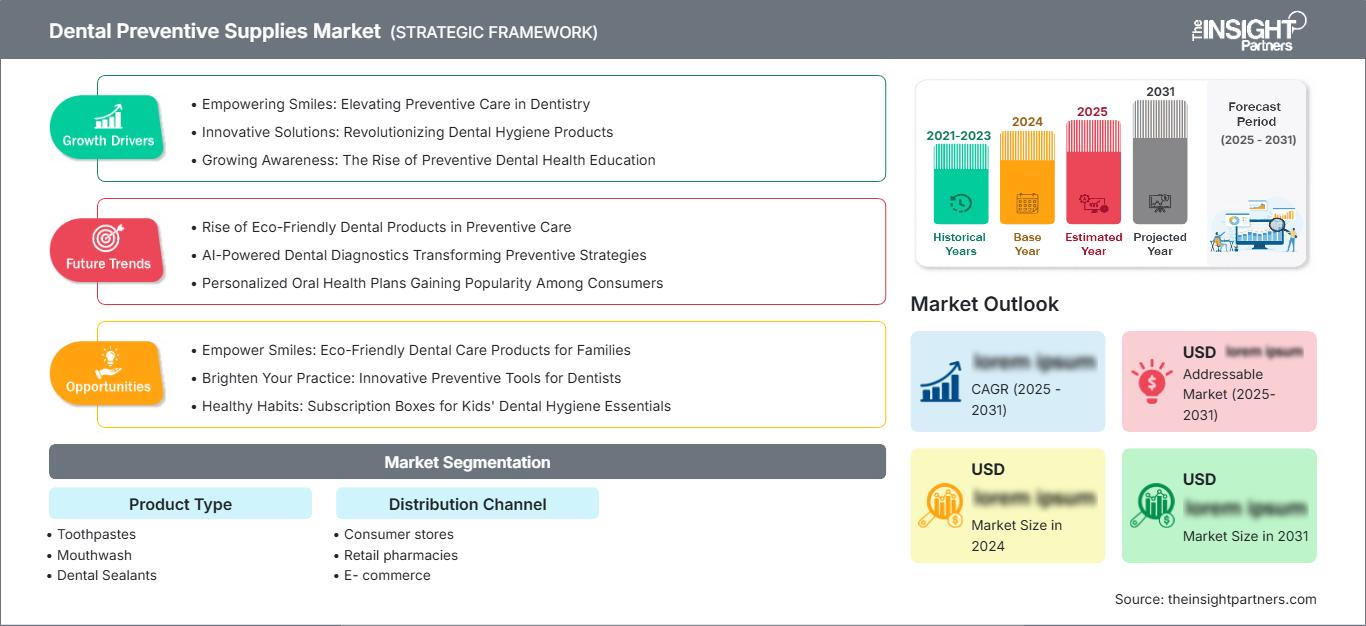
Dental Preventive Supplies Market: Strategic Insights
Regional Insights
North America Dental Preventive Supplies Market
North America was estimated to account for 31-35% of the Dental Preventive Supplies Market in 2025 and is projected to experience a CAGR of 3.1-3.6% till 2034. There are factors that favor the development of this region such as a well-established dental industry, preventive reimbursements, increased consumer awareness and the widespread availability of fluoride toothpaste, mouthwashes, flosses, sealants and professional products.
The selection of product choice varies from person-specific prevention such as sensitivity, enamel, periodontal and caries prevention. Professionals guide consumer purchases and there are a variety of distribution channels such as pharmacies, hypermarkets, specialty retailers and e-commerce. The developed infrastructure constrains volume growth, but frequent purchases and premium formulations drive value gains. Regulatory environment and insurance coverage affect professional product usage.
U.S. Dental Preventive Supplies Market
The United States represents 78–82% of North America's total value of 2025 and is expected to grow at a CAGR of 3.0–3.5%. Drivers for demand include existing dental network, preventive check-ups, care with insurance, and wide availability of consumers. Such corporations as Colgate-Palmolive Company, Dentsply Sirona, Henry Schein, Inc., and Johnson & Johnson hold substantial market share.
Trends in applications are moving towards risk-oriented prevention, mainly targeting children, elderly people, sensitive patients, and those with periodontal conditions. Professional fluoride varnishes and sealants add up to everyday toothpaste, mouthwashes, and flossing. E-commerce is also used for marketing and repurchasing, but pharmacies and mass merchandisers retain key positions for regular products.
Europe Dental Preventive Supplies Market
Europe is a market share of 24–28%, and the projected CAGR is 3.0–3.5%. Germany is one of the key markets because of well-developed dental infrastructure and professional product penetration. The UK and France represent the presence of well-established preventive care system, while Italy and Spain contribute to the market because of the growth of the consumer awareness and use of dental services. In Germany, there is the organized market of professional dentistry and pharmacies, as well as the demand for special preventive products. The UK focuses on the education of preventive oral health and consumer access. France, Italy, and Spain reveal the potential for professional prevention, specialties, and digital retail development.
APAC Dental Preventive Supplies Market
The share of APAC was estimated to be 25–29% in 2025 and forecasted to increase at a CAGR of 4.5-5.1%, with demand in China driving the region. APAC benefits from increasing professional services, consumer awareness, and distribution in countries such as Japan, South Korea, India, and Australia.
In terms of drivers for market penetration, industrialization, domestic manufacturing, enhanced pharmacy infrastructure, and public health measures play a role. There are large opportunities for growth in India and China owing to urban consumers' preference for specialty oral care products and online shopping, whereas Japan and Australia have relatively matured markets with preventive procedures.
Middle East & Africa Dental Preventive Supplies Market
MEA/Africa demand is forecasted to grow with a CAGR of 4.2%–4.8%. Demand in MEA/Africa will be driven mainly by Saudi Arabia in terms of business prospects, followed by the UAE and South Africa. The other regions of MEA continue to be fragmented due to disparities in access, cost, and professional presence.
Investments in healthcare infrastructure, urbanization, clinic expansion, and growing awareness help in adoption of preventive products. Investments in energy-rich countries in the Gulf region will help investments in the healthcare sector, but in other African countries, the distribution infrastructure and affordability of products is needed.
Segmentation Analysis
Product Type
Product Type is projected to expand at a CAGR of 3.6–4.0% during 2026–2034. Toothpastes remain the dominant recurring-use category, while specialized products address increasingly differentiated preventive needs. Professional fluoride materials, desensitizers, varnishes, and sealants benefit from risk-based dentistry. The Dental Preventive Supplies Market scope across product types is therefore broad, combining high-frequency consumer products with lower-frequency professional interventions.
- Toothpastes: Toothpastes maintain the strongest market position because of daily consumption, high household penetration, and broad preventive functionality spanning fluoride protection, sensitivity control, enamel care, and periodontal support.
- Mouthwash: Mouthwash demand is supported by consumers seeking adjunctive plaque and gingival control, with alcohol-free, therapeutic, and targeted formulations strengthening differentiation across retail and professional recommendations.
- Dental Sealants: Dental sealants occupy an important professional-prevention position, particularly for children and adolescents, because they physically protect vulnerable pits and fissures from caries development.
- Fluorides Prophylactic pastes and powder: These products remain important within professional prophylaxis, supporting enamel protection and standardized cleaning procedures in dental practices and institutional care settings.
- Dental Desensitizers: Desensitizers address growing demand for targeted management of dentinal sensitivity, providing dentists with chairside options that complement specialized home-use toothpaste and mouthrinse products.
- Antimicrobial Varnish: Antimicrobial varnish serves professional prevention by enabling localized treatment and prolonged contact, particularly where clinicians prioritize targeted microbial or caries-risk management.
- Dental Floss: Dental floss remains a foundational interdental-care product, with demand influenced by preventive education, periodontal awareness, and consumer preference for complete daily oral-hygiene routines.
Distribution Channel
Distribution Channel segment in the Dental Preventive Supplies Market is projected to grow at a CAGR of 5.7–6.2% during 2026–2034. Channel performance increasingly depends on convenience, product availability, consumer education, and purchasing frequency. E-commerce is gaining strategic importance because specialized products can be searched, compared, reordered, and delivered directly. Consumer stores and retail pharmacies remain essential for routine purchases and immediate availability across established markets.
- Consumer stores: Consumer stores provide extensive access to high-frequency preventive products, particularly toothpaste, mouthwash, and floss, while shelf visibility and promotional activity strongly influence purchasing behavior.
- Retail pharmacies: Retail pharmacies are strategically important for trusted, condition-specific products, combining convenient access with pharmacist guidance and stronger visibility for therapeutic oral-care formulations.
- E-commerce: E-commerce is the fastest-developing channel, enabling broader assortments, subscription purchasing, targeted recommendations, and direct manufacturer-to-consumer engagement for specialized preventive products.
Opportunity Snapshot
| Distribution Channel | Revenue Contribution (High/Medium/Low) | Trend Tag (MAX 2 words) | Adoption Stage |
|---|---|---|---|
| Consumer stores | High | Shelf Visibility | Mature |
| Retail pharmacies | Medium | Clinical Guidance | Mature |
| E-commerce | Medium | Digital Reorder | Scaling |
Dental Preventive Supplies Market Growth Drivers and Impact Analysis
Rising Burden of Preventable Oral Disease
The global prevalence of oral disease creates a durable requirement for preventive products across both household and professional settings. WHO reports that oral diseases affect nearly 3.7 billion people, while untreated dental caries in permanent teeth remains the most common health condition identified in the Global Burden of Disease 2021. This burden increases the economic rationale for prevention because routine hygiene products and early interventions can reduce progression toward more expensive restorative procedures. The impact is particularly relevant in markets where dental access remains uneven. Manufacturers can respond by offering affordable fluoride toothpaste, preventive rinses, sealants, and professional products suitable for high-risk populations. Demand therefore benefits from prevention-oriented health policies, consumer education, and clinical efforts to identify risk before disease becomes advanced.
Expansion of Preventive and Risk-Based Dentistry
Dental practice is increasingly moving from generalized treatment toward individualized risk assessment and prevention. Clinical guidance supports fluoride applications and sealants for patients with elevated caries risk, creating demand for products that can be incorporated into structured preventive protocols. This shift changes purchasing behavior because dental practices require products with predictable handling, evidence-supported claims, and consistent supply. It also creates opportunities for manufacturers to develop differentiated professional products for pediatric patients, older adults, sensitivity sufferers, and individuals with periodontal risk. The commercial impact extends beyond dental clinics because professional recommendations frequently influence subsequent household purchases. Suppliers able to connect professional formulations with consumer products can improve product continuity across the prevention pathway. As prevention becomes more integrated with routine care, recurring utilization can provide greater stability than procedure-dependent dental-material categories.
Growing Consumer Focus on Functional Oral Care
Consumers increasingly view oral care as part of broader preventive health management rather than a basic hygiene activity. Functional benefits such as sensitivity relief, enamel strengthening, gum care, whitening, antimicrobial protection, and targeted fluoride delivery allow manufacturers to differentiate products within mature categories. This creates opportunities for premium formulations while preserving demand for mass-market products. The commercial effect is especially visible among consumers willing to pay for specialized solutions supported by professional recommendations or recognizable clinical evidence. Product innovation can therefore increase value per purchase without requiring major increases in consumption frequency. Packaging, flavor, convenience, and digital education also influence adoption. As consumers become more informed, suppliers must balance scientific credibility with accessible communication, making formulation quality, substantiation, and brand trust increasingly important competitive variables.
Dental Preventive Supplies Market Future Trends
Personalized Preventive Oral-Care Regimens
Future product development in the Dental Preventive Supplies Market Trends is likely to move toward more personalized preventive regimens based on age, sensitivity, caries risk, periodontal status, lifestyle, and prior treatment history. Digital dental records, consumer questionnaires, connected health platforms, and artificial-intelligence-enabled recommendations could help align products with individual needs. Manufacturers may increasingly develop coordinated portfolios in which toothpaste, mouthwash, floss, and professional interventions address complementary risk factors rather than operating as isolated products. Personalized packaging and subscription models could further improve adherence by simplifying repeat purchasing. The trend will also encourage greater use of evidence-backed claims because consumers and professionals will expect recommendations to correspond with measurable needs. Over time, preventive oral care may become more integrated with broader wellness platforms, increasing opportunities for suppliers that can combine clinical science, consumer data, digital engagement, and convenient product delivery.
Sustainable Formulation and Packaging Architectures
Environmental considerations are likely to influence product design throughout the forecast period, particularly for high-volume toothpaste, mouthwash, floss, and packaging formats. Manufacturers are expected to reduce material intensity, increase recyclable content, improve dispensing efficiency, and evaluate lower-impact formulation inputs without compromising safety or clinical performance. Sustainable development will increasingly involve the complete product lifecycle, including sourcing, manufacturing, transportation, packaging, and disposal. Retailers and consumers may favor products with clearer environmental information, while regulators can increase scrutiny of sustainability claims. The challenge is maintaining affordability because preventive products must remain accessible to broad populations. Suppliers that redesign packaging while protecting product stability and usability may gain procurement advantages. Sustainable innovation could therefore become a differentiating factor alongside clinical efficacy, especially in mature markets with strong environmental expectations.
Dental Preventive Supplies Market Opportunities
Localized Manufacturing in High-Potential Emerging Markets
Investment opportunities are strongest where rising awareness intersects with limited local availability and expanding consumer purchasing power. India, China, Southeast Asia, the Middle East, and selected African markets provide opportunities for localized production, regional packaging, and distribution partnerships. Local manufacturing can reduce logistics costs, improve supply reliability, shorten replenishment cycles, and support affordable product formats. Investors should prioritize facilities capable of producing multiple oral-care categories rather than single-product lines, allowing capacity to follow changing demand. Partnerships with pharmacies, dental networks, schools, and digital retailers can broaden market access. Product localization should consider flavor preferences, pack sizes, pricing structures, regulatory requirements, and local disease-prevention priorities. The Dental Preventive Supplies Market Forecast therefore points toward flexible regional manufacturing models that combine scale efficiency with market-specific product and channel strategies.
Digital Direct-to-Consumer Preventive Care Platforms
Digital commerce creates an opportunity to connect preventive products with education, replenishment, professional recommendations, and consumer engagement. Suppliers can develop subscription services for frequently consumed products while using digital content to explain differences among fluoride, sensitivity, gum-care, and interdental products. Data generated through repeat purchasing can inform inventory planning and product development, although privacy and consent requirements must be addressed carefully. Retailers and manufacturers can also use search behavior to identify unmet needs and optimize assortment by geography. The strongest models will likely combine online convenience with professional credibility rather than treating e-commerce as a simple transactional channel. This approach can increase retention, improve product adherence, and make specialized preventive products more accessible outside major urban centers. It also gives smaller manufacturers an avenue to reach niche consumers without building extensive physical distribution networks.
Recent Developments
- July 2026: Colgate-Palmolive Company reported second-quarter 2026 results, highlighting continued global leadership in toothpaste and ongoing investment in oral-health innovation and consumer engagement. The company reported a 41.3% global toothpaste market share year to date and continued expansion across more than 200 countries and territories, reinforcing the strategic importance of oral care within its consumer portfolio.
- June 2026: Haleon plc announced approximately £175 million of investment in a new oral-health manufacturing site in Madhya Pradesh, India, alongside expanded rural distribution. The facility is intended to strengthen local production and support wider Asian supply, while smaller-format Sensodyne products and expanded distribution aim to improve access in underserved Indian communities.
- February 2025: Henry Schein, Inc. highlighted its participation in the Give Kids A Smile program, which expected nearly 325,500 children to receive care during 2025. The initiative demonstrates continued industry involvement in preventive oral-health education and access, particularly among underserved pediatric populations, while reinforcing the role of professional distribution networks in supporting community-based prevention.
Frequently Asked Questions

- Comprehensive Market Sizing and Forecast Analysis
- Detailed Segmentation Analysis
- In-Depth Market Dynamics Assessment
- Regional and Country-Level Insights
- Competitive Landscape and Company Benchmarking
- Strategic Business Intelligence
Recent Reports
Testimonials

The Insight Partners provided valuable market intelligence that supported our global go-to-market strategy. Their team was professional, responsive, and attentive to our feedback, providing thoughtful analysis and helpful methodological clarifications throughout the project.
Junmo Kim Chief Financial Officer (CFO), Enertech Co., Ltd.
The Insight Partners' SCADA System Market report is comprehensive, with valuable insights on current trends and future forecasts. The team was highly professional, responsive, and supportive throughout. We are very satisfied and highly recommend their services.
RAN KEDEM Partner, Reali Technologies LTDs
I requested a report on a very specific software market and the team produced the report in a few days. The information was very relevant and well presented. I then requested some changes and additions to the report. The team was again very responsive and I got the final report in less than a week.
JEAN-HERVE JENN Chairman, Future Analytica
We worked with The Insight Partners for an important market study and forecast. They gave us clear insights into opportunities and risks, which helped shape our plans. Their research was easy to use and based on solid data. It helped us make smart, confident decisions. We highly recommend them.
PIYUSH NAGPAL Sr. Vice President, High Beam Global
The Insight Partners delivered insightful, well-structured market research with strong domain expertise. Their team was professional and responsive throughout. The user-friendly website made accessing industry reports seamless. We highly recommend them for reliable, high-quality research services
YUKIHIKO ADACHI CEO, Deep Blue, LLC.
This is the first time I have purchased a market report from The Insight Partners.While I was unsure at first, I visited their web site and felt more comfortable to take the risk and purchase a market report.I am completely satisfied with the quality of the report and customer service. I had several questions and comments with the initial report, but after a couple of dialogs over email with their analyst I believe I have a report that I can use as input to our strategic planning process.Thank you so much for taking the extra time and making this a positive experience.I will definitely recommend your service to others and you will be my first call when we need further market data.
JOHN SUZUKI President and Chief Executive Officer, Board Director, BK Technologies
I wish to appreciate your support and the professionalism you displayed in the course of attending to my request for information regarding to infectious disease IVD market in Nigeria. I appreciate your patience, your guidance, and the fact that you were willing to offer a discount, which eventually made it possible for us to close a deal. I look forward to engaging The Insight Partners in the future, all thanks to the impression you have created in me as a result of this first encounter.
DR CHIJIOKE ONYIA MANAGING DIRECTOR, PineCrest Healthcare Ltd.Reason to Buy
- Informed Decision-Making
- Understanding Market Dynamics
- Competitive Analysis
- Identifying Emerging Markets
- Customer Insights
- Market Forecasts
- Risk Mitigation
- Boosting Operational Efficiency
- Strategic Planning
- Investment Justification
- Tracking Industry Innovations
- Aligning with Regulatory Trends





 Get Free Sample for