
Desloratadine Market Trends, Size & Forecast by 2034
Coverage: By Product Type (Injection, Freeze-dried Powder); End User (Hospitals, Clinics, Others); and Geography , and Geography (North America, Europe, Asia Pacific, and South and Central America)
- Status : Data Released
- Report Code : TIPRE00021198
- Category : Life Sciences
- No. of Pages : 150
- Available Report Formats :


- Last update date : July 09, 2026


2025 Market Size
US$ 4.84 Bn
Base year value
2034 Forecast
US$ 7.25 Bn
Projected by 2034
CAGR 2026-2034
4.61 %
Growth rate
Addressable Market
US$ 54.94 Bn
(2026-2034)
The Desloratadine Market is valued at US$ 4.84 billion in 2025 and is projected to reach US$ 7.25 billion by 2034, advancing at a CAGR of 4.61% during 2026–2034. Key drivers for the industry include the persistence of the burden of allergic rhinitis, chronic urticaria, and seasonal allergies globally. Diagnoses, increased availability of antihistaminics, and growing pharmacy chains continue to fuel the market dynamics.
North America is a major contributor to the market's revenue, and the region is estimated to see a CAGR of about 4.3% by 2034. North America has high incidences of allergies, strong reimbursement schemes in the healthcare sector, and second-generation antihistamines. Awareness about nonsedating antihistamines in the region has further propelled its growth.
Desloratadine Market Assessment and Insights
- North America: North America accounted for 34–38% desloratadine market share in 2025 and is projected to expand at a CAGR of 4.3%–4.8% during 2026–2034. Growth is driven by high allergy diagnosis rates, advanced treatment accessibility, and expanding outpatient allergy management services, which continue to support regional market leadership.
- U.S.: The U.S. represented 75–79% of the North American market in 2025 and is anticipated to register a CAGR of 4.4%–4.9% during 2026–2034, supported by high prescription volumes, broad healthcare coverage, and consistent demand for desloratadine-based therapies.
- Europe: Europe accounted for 26–30% of the desloratadine market size in 2025 and is projected to register a CAGR of 4.0%–4.5% from 2026–2034. Germany, the United Kingdom, and France continue as the key regional markets, driven by established allergy treatment pathways and sophisticated healthcare infrastructure.
- Asia Pacific: Asia Pacific accounted for 24–28% market share in 2025 and is forecast to expand at a CAGR of 5.2%–5.8% during 2026–2034. China, India, and Japan drive regional growth through rising healthcare expenditure, increasing allergy prevalence, and improving access to allergy treatment.
- Largest Segment – Injection: The injection segment represented the largest market share and is expected to grow at a CAGR of 4.2%–4.7% during 2026–2034, driven by its preference in hospital-based treatment settings requiring controlled administration and rapid clinical response.
- High Growth Segment – Freeze-dried Powder: The freeze-dried powder segment is projected to register the fastest growth with a CAGR of 5.0%–5.6% during 2026–2034, supported by improved product stability, storage advantages, and expanding utilization in specialty care settings.
- Largest End User – Hospitals: The hospitals segment accounted for the largest end-user category and is anticipated to expand at a CAGR of 4.4%–4.9% during 2026–2034, supporting the desloratadine market forecast, driven by high patient volumes and established allergy management programs.
- High Growth End User – Clinics: The clinics segment is projected to register the fastest growth with a CAGR of 4.9%–5.5% during 2026–2034, supported by decentralized healthcare delivery and expanding outpatient allergy care services.
- Key companies analyzed in detail: Abbott Laboratories; Apollo Pharmaceuticals Pvt. Ltd.; GlaxoSmithKline plc; Mayne Pharma Group Limited; Viatris Inc.; Pfizer Inc.; Organon & Co. (successor to Schering-Plough product portfolio assets); Takeda Pharmaceutical Company Limited; and Teva Pharmaceutical Industries Ltd.
Source: The Insight Partners' analysis based on proprietary research, government publications, company annual reports, investor presentations, industry databases, and expert interviews.
The market has evolved alongside broader developments in allergy care, with medical professionals seeking antihistamines which are not sedative in nature and can last for long durations. The demand trends have been impacted due to changes in the environment, urbanization, and increased exposure to allergens. The companies producing pharmaceuticals have concentrated on continuity in supply, accessibility, and regulatory compliance within the healthcare industry.
In the future, there will be growth in desloratadine owing to higher spending on healthcare, improved diagnostics, and increased knowledge about chronic allergies. This market will continue to see an increase in activity due to existing pharmaceutical companies along with the expansion into new healthcare facilities.
Desloratadine Market Report Scope
| Report Attribute | Details |
|---|---|
| Market size in 2025 | US$ 4.84 Billion |
| Market Size by 2034 | US$ 7.25 Billion |
| Global CAGR (2026 - 2034) | 4.61% |
| Historical Data | 2021-2024 |
| Forecast period | 2026-2034 |
Desloratadine Market Analysis
The growing incidence of allergic disorders remains a primary force influencing desloratadine demand. Increasing air pollution levels, climate variability, and urban living conditions contribute to higher exposure to environmental allergens, creating sustained demand for antihistamine therapies. Desloratadine's favorable safety profile and minimal sedative effects support its continued adoption among both adult and pediatric populations.
The market ecosystem involves active pharmaceutical ingredient suppliers, formulation manufacturers, contract manufacturing organizations, distributors, healthcare institutions, and retail pharmacy networks. Efficient supply chain coordination is becoming increasingly important as healthcare systems seek reliable access to allergy medications while maintaining cost efficiency.
Further, the Desloratadine market report is characterized by the presence of multinational pharmaceutical companies and established generic drug manufacturers. Companies including Abbott Laboratories, Apollo Pharmaceuticals, GlaxoSmithKline Plc, Mayne Pharma Inc, Mylan N V, Pfizer Inc, Schering Plough Corporation, Takeda Pharmaceutical Company Ltd, and Teva Pharmaceutical Industry Ltd maintain influence through manufacturing expertise, distribution capabilities, and established market relationships.
Investment activity increasingly focuses on production optimization, regulatory compliance, and geographic expansion. Market participants are strengthening regional supply networks while exploring opportunities in high-growth healthcare markets. Strategic positioning increasingly depends on manufacturing reliability, pricing competitiveness, and the ability to meet evolving healthcare procurement requirements.
● REPORT CUSTOMIZATION
Tailor This Report To Align With Your Specific Business Requirements
This report can be customized to align precisely with your business objectives, scope, and target markets. Customization options include tailored segmentation, geography, competitive analysis, and strategic insights to support informed decision-making.
Customize This Report →WHAT YOU CAN ADJUST
- ● Segmentations
- ● Geography
- ● Competitive Analysis
- ● Language Preferences
Desloratadine Market: Strategic Insights
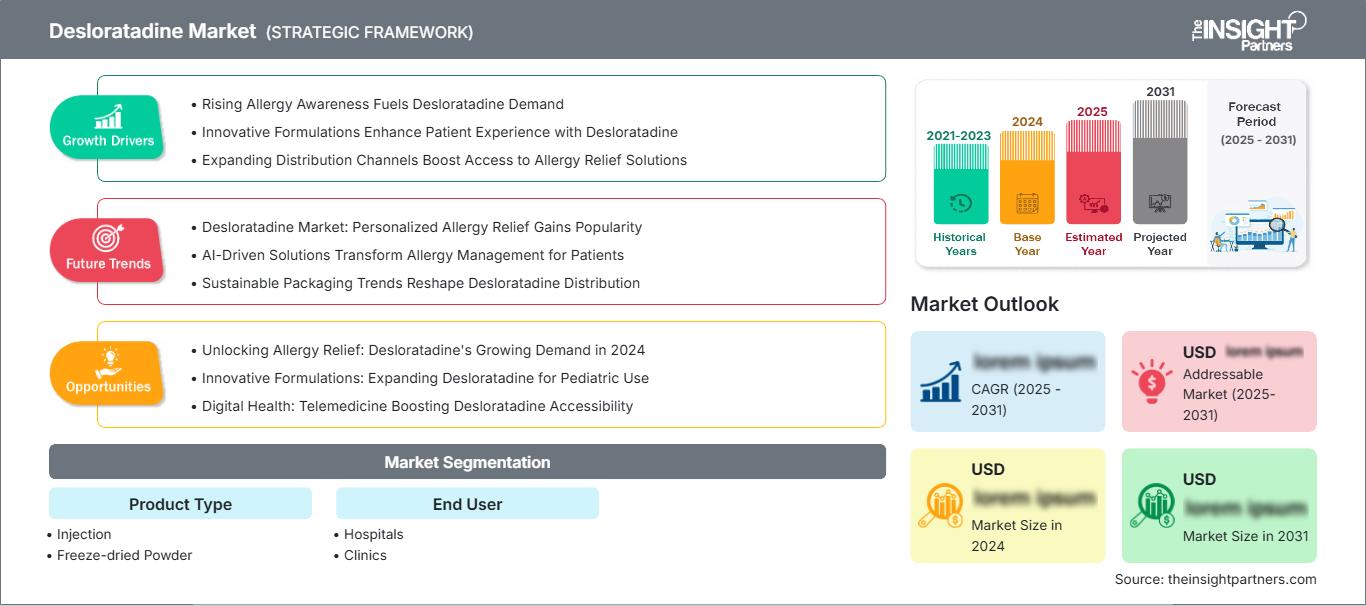
Regional Insights
North America Desloratadine Market
North America accounts for the largest share of the Desloratadine market and is projected to expand at a CAGR of approximately 4.3% through 2034. The region benefits from advanced healthcare infrastructure, widespread allergy awareness programs, and strong physician familiarity with second-generation antihistamines. Seasonal allergies and chronic urticaria continue to generate substantial prescription and over-the-counter demand.
Healthcare providers increasingly emphasize long-term symptom management using therapies that minimize drowsiness and support patient adherence. Growing environmental allergen exposure, combined with aging populations and higher healthcare utilization rates, contributes to sustained consumption across hospitals, clinics, and retail pharmacy channels.
U.S. Desloratadine Market
The U.S. represents an estimated 75–80% share of the North American desloratadine market and is expected to grow at a CAGR near 4.4% through 2034. The country's large patient population affected by allergic rhinitis, chronic hives, and seasonal allergies provides a stable demand base. Strong insurance coverage and extensive pharmacy networks support product accessibility across multiple care settings.
Major pharmaceutical firms operate major business and distribution units in the USA. The growing adoption of strategies for allergy management, telemedicine consultation services, and preventive care is ensuring steady demand for drugs. The need for prescriptions in hospitals and ambulatory centers is especially important owing to high patient inflows and existing care pathways.
Europe Desloratadine Market
Europe accounts for approximately 25–30% of global desloratadine market revenue and is projected to register a CAGR of around 4.2% through 2034. The region benefits from mature healthcare systems, strong regulatory oversight, and increasing prevalence of respiratory and allergic disorders. Consistent access to generic antihistamines supports widespread utilization across public and private healthcare settings.
The United Kingdom remains on course, with sustained demand driven by rising rates of seasonal allergies and high healthcare awareness. The adoption of evidence-based allergy management approaches plays a key role in ensuring steady growth, with healthcare providers showing interest in treatments that are highly tolerable.
Germany maintains a leading position in the European market due to its well-developed pharmaceutical industry and reimbursement framework. Demand for antihistamines persists in hospital and outpatient settings, helping Germany maintain its market leadership.
France, Italy, and Spain together offer promising growth potential. Increasing diagnosis rates, expanding healthcare availability, and greater knowledge of allergy management will lead to better utilization of these products. Growth is also driven by improved healthcare reforms and increased patient interest in preventive medicine.
APAC Desloratadine Market
Asia-Pacific is anticipated to be the fastest-growing regional desloratadine market, recording a CAGR of approximately 5.4% through 2034. The region currently accounts for an estimated 20–25% share of global revenue and benefits from rapid healthcare expansion, growing urban populations, and increasing allergy prevalence associated with environmental changes.
China is the dominant force in the region due to its large patient population, increasing production capability, and healthcare reform. Increased access to healthcare facilities and greater awareness of allergies are adding more fuel to the fire.
Some of the major growth drivers are Japan, South Korea, India, and Australia. Increased healthcare spending, improved diagnostics, and supportive policies toward pharmaceuticals are contributing to market growth. Also, investments in manufacturing and distribution capabilities add more value to product accessibility.
Middle East & Africa Desloratadine Market
The Middle East & Africa market is projected to grow at a CAGR of approximately 4.7% through 2034. Healthcare modernization initiatives, increasing investments in pharmaceutical supply chains, and rising awareness of allergic disorders are supporting market development across the region.
Saudi Arabia is the key country market owing to large-scale investments in healthcare, growing medical procurement, and hospital infrastructure expansion. The national healthcare transformation initiatives ensure better access to allergy treatment medications.
The UAE, South Africa, and the rest of the MEA region are showing steady growth due to the development of healthcare infrastructure and greater availability of medicines. Growing urbanization, environment-related factors, and enhanced healthcare service delivery result in higher demand for antihistamine therapies across public and private healthcare facilities.
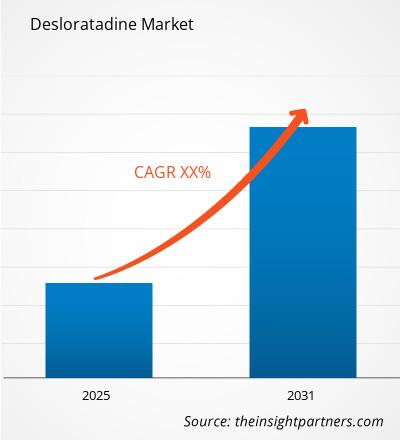
Segmentation Analysis
Product Type
- Injection: Utilized primarily in controlled clinical environments where rapid therapeutic intervention is required. Demand is supported by hospital-based treatment protocols, emergency allergy management requirements, and institutional procurement practices.
- Freeze-dried Powder: Favored for enhanced stability, storage flexibility, and extended shelf life. Pharmaceutical providers increasingly adopt freeze-dried formulations to improve transportation efficiency and maintain product integrity across diverse distribution networks.
End User
- Hospitals: Represent the dominant end-user segment due to high patient volumes, structured treatment pathways, centralized procurement systems, and the availability of specialized healthcare professionals managing allergy-related conditions.
- Clinics: Growth is supported by expanding outpatient treatment services, increasing allergy diagnosis rates, and patient preference for accessible healthcare facilities offering timely symptom management and follow-up care.
Opportunity Snapshot
| End User | Revenue Contribution | Trend Tag | Adoption Stage |
| Hospitals | High | Acute Care | Mature |
| Clinics | Medium | Outpatient Care | Scaling |
Desloratadine Market Growth Drivers and Impact Analysis
Rising Global Burden of Allergic Disorders
The increasing prevalence of allergic rhinitis, urticaria, and environmental allergy-related conditions is a major growth driver for the Desloratadine market. Urbanization, changing climatic conditions, pollution exposure, and lifestyle factors have contributed to a growing patient population requiring effective symptom management. Healthcare providers are increasingly diagnosing allergy-related disorders at earlier stages, enabling more consistent treatment utilization.
It has a significant impact on the market because managing allergies often requires repeated or long-term treatment. The fact that desloratadine has non-sedative properties makes it ideal for people who need symptom relief without affecting their daily activities. Increased awareness programs and accessibility to healthcare services have also contributed to this increase in treatment. With the increasing importance of prevention and chronic illness management in healthcare systems, the demand for antihistamine therapies continues to strengthen across hospitals, clinics, and community healthcare settings.
Expansion of Healthcare Infrastructure in Emerging Economies
Healthcare infrastructure development across Asia-Pacific, the Middle East, and parts of Latin America is creating favorable conditions for market expansion. Governments are investing in hospitals, clinics, pharmaceutical procurement systems, and healthcare accessibility programs that increase patient access to allergy treatments. Growing insurance coverage and healthcare affordability are also contributing to broader pharmaceutical utilization.
The trend is directly influencing market trends by expanding the pool of potential patients. Improved diagnostics enable earlier detection of allergic conditions, while enhanced distribution ensures that medication reaches previously underserved areas. Pharmaceutical companies benefit from broader distribution networks and a growing patient population to treat. Antihistamines are increasingly becoming a core component of standard therapy programs.
Growing Preference for Second-Generation Antihistamines
In recent times, healthcare providers have favored second-generation antihistamines over others since they provide effective symptom relief and minimize the sedating properties of older drugs. Patients tend to choose treatments that will enable them to work effectively, drive safely, and live normally despite their ailments.
In terms of the market, the implication of this trend is not limited to prescriptions only. Drug firms would get an advantage due to increased drug adherence and re-utilization rate. As such, clinics and hospitals have begun suggesting that patients make use of second-generation antihistamines due to their efficiency and safety. This would ensure a stable demand for pharmaceutical companies to increase production and market share across different geographic regions.
Desloratadine Market Future Trends
Integration of Digital Allergy Management Ecosystems
Digital healthcare platforms are becoming increasingly important in allergy management. Telemedicine consultations, electronic prescribing systems, remote patient monitoring tools, and mobile symptom-tracking applications are transforming how allergic conditions are diagnosed and managed. These technologies enable more frequent patient engagement and support improved treatment adherence.
In the future, integration between digital health systems and the pharmaceutical pathway is predicted to become more prevalent. Patients will depend on data-driven approaches to treat episodic allergy symptoms, which presents potential to improve treatment efficacy in the healthcare space. This shift may support more consistent use of antihistamines, along with an impact on the patient experience for a number of patient groups.
Expansion of Specialized Allergy Care Pathways
New specialized allergy and immunology service lines are gaining traction across healthcare systems in response to patient needs, and integrated multi-disciplinary models with allergists, PCPs, pharmacists, and respiratory clinicians have taken hold across key healthcare markets.
The Desloratadine market trends will also be driven by specialty treatment pathway development, and in addition, it is anticipated that increased accuracy of diagnosis and improved education will lead to a higher rate of initiation of treatment and will also help to maintain treatment adherence long-term. As such, the market for long-approved antihistamines, including Desloratadine, remains solid in light of biologic advancements.
Desloratadine Market Opportunities
Untapped Potential in Emerging Healthcare Markets
Many developing economies continue to experience underdiagnosis and undertreatment of allergic disorders despite growing disease prevalence. Expanding healthcare infrastructure, increasing pharmaceutical accessibility, and rising public awareness create substantial opportunities for market participants seeking geographic expansion.
Companies that establish strong local partnerships, effective pricing, and better distribution can gain from the increasing demand. Regional production and robust supply chains can help enhance market penetration. Firms that are able to customize their offerings according to changing healthcare requirements can take advantage of growth opportunities within the rapidly expanding healthcare systems.
Expansion Through Institutional Healthcare Procurement
Procurement by institutions is another promising area where Desloratadine manufacturers and distributors could benefit. Hospitals and healthcare systems, along with governments' procurement programs, are more and more looking for reliable pharmaceutical companies able to deliver their products continuously and in accordance with regulations.
By improving efficiency and quality of manufacture and developing procurement relationships, companies will have an opportunity to conclude long-term contracts, which may be quite profitable for them. Thus, investments in production and regulatory capacities might be profitable and provide a competitive advantage while supporting broader market expansion.
Recent Developments
- October 2025: Cadila Pharmaceuticals, one of India’s leading research-driven pharmaceutical companies, has launched Dlorfast-M-Tablets, a new fixed-dose combination therapy containing Desloratadine (5 mg) and Montelukast (10 mg).
- September, 2025: Novartis announced U.S. FDA approval of Rhapsido (remibrutinib) for chronic spontaneous urticaria in patients who remain symptomatic despite H1 antihistamine treatment. The approval highlights continued innovation in allergy and urticaria management, influencing treatment pathways where antihistamines such as desloratadine remain foundational first-line therapies.
- May, 2025: The U.S. FDA issued a safety communication requiring warnings regarding severe itching after discontinuation of long-term cetirizine or levocetirizine use. The update increased attention toward antihistamine safety profiles and prescribing practices across allergy treatment markets, influencing clinical discussions surrounding long-term allergy management.
Frequently Asked Questions

- Comprehensive Market Sizing and Forecast Analysis
- Detailed Segmentation Analysis
- In-Depth Market Dynamics Assessment
- Regional and Country-Level Insights
- Competitive Landscape and Company Benchmarking
- Strategic Business Intelligence
Recent Reports
Testimonials

The Insight Partners' SCADA System Market report is comprehensive, with valuable insights on current trends and future forecasts. The team was highly professional, responsive, and supportive throughout. We are very satisfied and highly recommend their services.
RAN KEDEM Partner, Reali Technologies LTDs
I requested a report on a very specific software market and the team produced the report in a few days. The information was very relevant and well presented. I then requested some changes and additions to the report. The team was again very responsive and I got the final report in less than a week.
JEAN-HERVE JENN Chairman, Future Analytica
We worked with The Insight Partners for an important market study and forecast. They gave us clear insights into opportunities and risks, which helped shape our plans. Their research was easy to use and based on solid data. It helped us make smart, confident decisions. We highly recommend them.
PIYUSH NAGPAL Sr. Vice President, High Beam Global
The Insight Partners delivered insightful, well-structured market research with strong domain expertise. Their team was professional and responsive throughout. The user-friendly website made accessing industry reports seamless. We highly recommend them for reliable, high-quality research services
YUKIHIKO ADACHI CEO, Deep Blue, LLC.
This is the first time I have purchased a market report from The Insight Partners.While I was unsure at first, I visited their web site and felt more comfortable to take the risk and purchase a market report.I am completely satisfied with the quality of the report and customer service. I had several questions and comments with the initial report, but after a couple of dialogs over email with their analyst I believe I have a report that I can use as input to our strategic planning process.Thank you so much for taking the extra time and making this a positive experience.I will definitely recommend your service to others and you will be my first call when we need further market data.
JOHN SUZUKI President and Chief Executive Officer, Board Director, BK Technologies
I wish to appreciate your support and the professionalism you displayed in the course of attending to my request for information regarding to infectious disease IVD market in Nigeria. I appreciate your patience, your guidance, and the fact that you were willing to offer a discount, which eventually made it possible for us to close a deal. I look forward to engaging The Insight Partners in the future, all thanks to the impression you have created in me as a result of this first encounter.
DR CHIJIOKE ONYIA MANAGING DIRECTOR, PineCrest Healthcare Ltd.Reason to Buy
- Informed Decision-Making
- Understanding Market Dynamics
- Competitive Analysis
- Identifying Emerging Markets
- Customer Insights
- Market Forecasts
- Risk Mitigation
- Boosting Operational Efficiency
- Strategic Planning
- Investment Justification
- Tracking Industry Innovations
- Aligning with Regulatory Trends





 Get Free Sample for