
Diphenhydramine Market Size, Share & Trends by 2034
Diphenhydramine Market Size and Forecasts (2021 - 2034), Global and Regional Share, Trends, and Growth Opportunity Analysis Report Coverage : by Dosage Forms (Tablets, Injection, Powder, Syrups); Application (Allergies, Insomnia, Cold, Nausea, Other Applications); Distribution Channel (Hospital Pharmacies, Retail Pharmacies, Online Pharmacies); and Geography (North America, Europe, Asia Pacific, and South and Central America)
- Status : Data Released
- Report Code : TIPRE00040844
- Category : Life Sciences
- No. of Pages : 150
- Available Report Formats :


- Last update date : July 08, 2026


2025 Market Size
US$ 1.03 Bn
Base year value
2034 Forecast
US$ 1.22 Bn
Projected by 2034
CAGR 2026-2034
1.90 %
Growth rate
Addressable Market
US$ 10.20 Bn
(2026-2034)
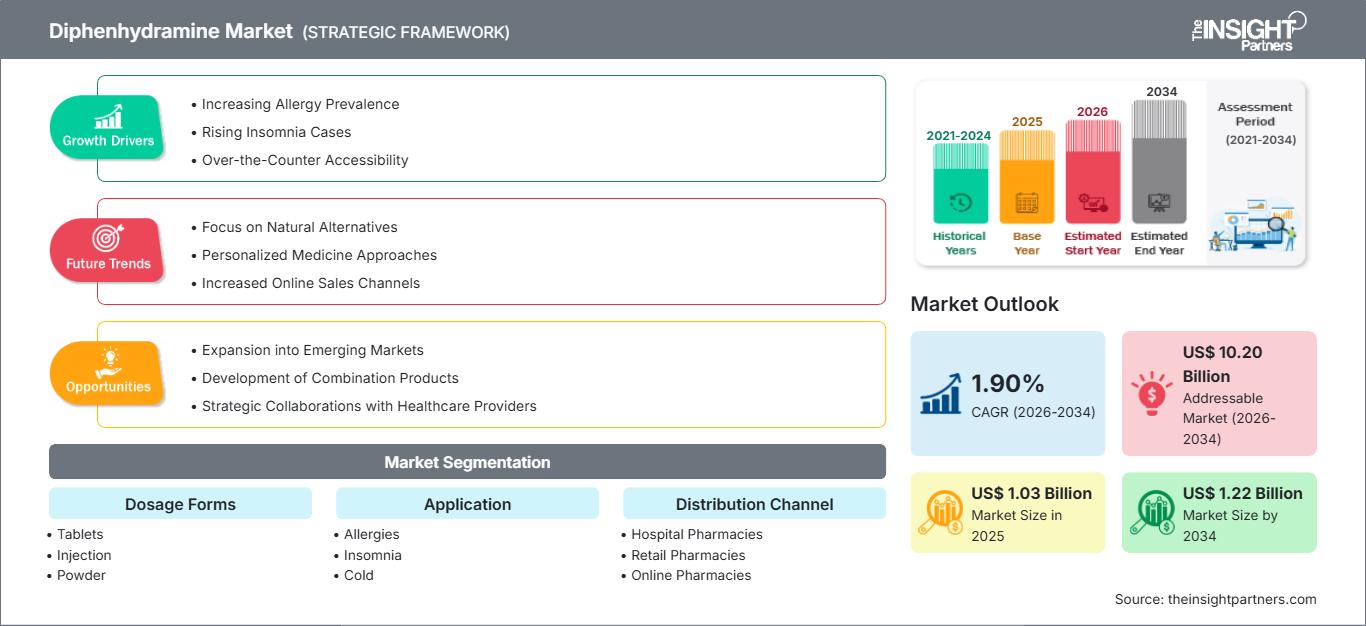
The global diphenhydramine market size was valued at US$ 1.03 Billion in 2025 and will be worth US$ 1.22 Billion in 2034, growing at a CAGR of 1.90% during 2026-2034. Factors driving the growth of the market include the usage of diphenhydramine in various indications such as allergic conditions, insomnia, colds, and for antiemetics. The continued presence of diphenhydramine on the market is ensured by its wide availability, effectiveness, and the presence of OTC formulations available in multiple health systems.
North America is the leading regional market and will grow at a CAGR of approximately 1.7% until 2034. It is driven by a high rate of seasonal allergies, widespread practice of self-medication, and high penetrance of retail pharmacies. High consumer awareness of first generation antihistamines coupled with consistent demand for sleep aid and cold medicines ensures market stability.
Diphenhydramine Market Assessment and Insights
- North America: North America accounted for 37–41% share in 2025 and is anticipated to expand at a CAGR of 1.7%–2.1% during 2026–2034. Widespread over-the-counter availability, sustained demand for allergy treatments, and increasing use of nighttime sleep relief medications continue to support regional market leadership.
- U.S.: The U.S. represented 82–86% of the North American market in 2025 and is projected to register a CAGR of 1.8%–2.2% during 2026–2034, supported by strong retail pharmacy networks, high consumer awareness, and continued demand for over-the-counter antihistamine products.
- Europe: Europe held 25–29% market share in 2025 and is expected to grow at a CAGR of 1.5%–1.9% during 2026–2034. Germany, the United Kingdom, and France remain the leading regional markets due to established pharmaceutical distribution networks and consistent seasonal allergy treatment demand.
- Asia Pacific: Asia Pacific accounted for 22–26% share in 2025 and is forecast to expand at a CAGR of 2.3%–2.7% during 2026–2034. China, Japan, and India continue to drive regional growth through expanding healthcare access, increasing self-medication practices, and broader retail pharmacy penetration.
- Largest Segment: Dosage Form – Tablets represented the largest market segment and is expected to record a CAGR of 1.8%–2.2% during 2026–2034, reflecting convenient administration, broad consumer familiarity, and widespread over-the-counter availability.
- High Growth Segment: Distribution Channel – Online Pharmacies is projected to grow at a CAGR of 3.2%–3.6% during 2026–2034, driven by increasing digital healthcare adoption, convenient home delivery services, and improving e-pharmacy regulations.
- Key companies analyzed in detail: Fresenius Kabi AG; Atom Pharma; PAI Pharma, Inc.; Bayer AG; Pfizer Inc.; Johnson & Johnson; S. S. Pharmachem; Remedy Labs LLC; Amar Healthcare; and Wanbury Limited.
Source: The Insight Partners' analysis based on proprietary research, government publications, company annual reports, investor presentations, industry databases, and expert interviews.
Diphenhydramine is now a drug type that has evolved from being a category of an allergy drug to a wider therapeutic range for different healthcare needs of consumers. Product offerings have been expanded using tablet, syrup, injection and combination types. Rising consumer choice for self-care remedies has bolstered the prospects of existing brands and generics among both developed and developing healthcare markets.
Market prospects remain underpinned by steady demand rather than robust expansion. Continued utilization in hospital settings for emergency allergic reactions, sustained over-the-counter availability, and widening access through online pharmacy channels are expected to support revenue stability. However, stricter regulatory oversight on appropriate antihistamine usage, along with rising awareness and preference for second-generation alternatives, may restrain future volume growth within the diphenhydramine market forecast.
Diphenhydramine Market Report Scope
| Report Attribute | Details |
|---|---|
| Market size in 2025 | US$ 1.03 Billion |
| Market Size by 2034 | US$ 1.22 Billion |
| Global CAGR (2026 - 2034) | 1.90% |
| Historical Data | 2021-2024 |
| Forecast period | 2026-2034 |
Diphenhydramine Market Analysis
Patterns in demand for the diphenhydramine market can be attributed to the increasing prevalence of allergic diseases, respiratory disorders, insomnia and motion-induced sicknesses. Demand cycle for season allergies still prevails, and patients often look for products that are easy to obtain and offer immediate symptoms relief. Affordable generics also play an important role in the popularity of the market among both developed and developing countries' health care industries.
Value chain includes active pharmaceutical ingredient providers, product formulators, contract manufacturers, wholesalers, pharmacies, hospitals and digital health care players. Differentiation occurs not through any innovations related to drug development but through more convenient dosage, improved packaging and easier access channels.
The diphenhydramine market is subject to competition from multinational pharmaceutical corporations and local generics producers. These include such companies as Fresenius Kabi AG, Bayer AG, Pfizer Inc., Johnson & Johnson, PAI Pharma, Inc., Wanbury Limited, Amar Healthcare, Remedy Labs LLC, S. S. Pharmachem, and Atom Pharma.
Investments are increasingly directed toward optimizing manufacturing processes, ensuring compliance with regulatory frameworks, strengthening distribution and logistics networks, and expanding digital pharmacy capabilities. Market participants are prioritizing operational efficiency and portfolio management over extensive research and development activities, reflecting the mature nature of the industry as captured in the Diphenhydramine Market Report.
● REPORT CUSTOMIZATION
Tailor This Report To Align With Your Specific Business Requirements
This report can be customized to align precisely with your business objectives, scope, and target markets. Customization options include tailored segmentation, geography, competitive analysis, and strategic insights to support informed decision-making.
Customize This Report →WHAT YOU CAN ADJUST
- ● Segmentations
- ● Geography
- ● Competitive Analysis
- ● Language Preferences
Diphenhydramine Market: Strategic Insights
Regional Insights
North America Diphenhydramine Market
North America accounts for the largest global diphenhydramine market share and is expected to record a CAGR of approximately 1.7% through 2034. The region benefits from extensive OTC medicine usage, high allergy prevalence, and established healthcare infrastructure. Consumers frequently utilize diphenhydramine-based products for allergy relief, sleep assistance, and cold symptom management, supporting consistent market demand.
Efficiency in distribution constitutes one such structural strength. Pharmacy retail chains, hospitals, and online pharmacies ensure broad availability of the product. The producers keep capitalizing on consumer familiarity with antihistamine products while ensuring compliance with regulatory standards. An efficient remuneration system for injectables is another source of market strength.
US Diphenhydramine Market
The U.S. accounts for approximately 75–80% of the North American diphenhydramine market share and is projected to grow at a CAGR of near 1.8% during the forecast period. High diagnosis rates for allergic conditions, substantial OTC medication consumption, and a strong culture of self-care support sustained demand. Seasonal fluctuations associated with pollen exposure create recurring purchasing cycles across retail channels.
The presence of major players in the pharmaceutical industry and the stiff competition from generics ensure ample product availability. The most common use of the product is for allergies, even though its use in treating insomnia still generates significant revenue. The growing importance of online pharmacies cannot be overlooked.
Europe Diphenhydramine Market
Europe contributes approximately 25–30% of global diphenhydramine market revenue and is expected to advance at a CAGR of around 1.6% through 2034. Demand is supported by aging populations, seasonal allergy prevalence, and well-established pharmacy networks. Regulatory oversight remains comparatively stringent, encouraging manufacturers to focus on quality standards and pharmacovigilance practices.
The UK continues to be significant because of the high levels of OTC medication consumption and the consumers' understanding on how to manage their allergies. The demand for antihistamines and sleep aids remains stable, providing sustainability, and healthcare Internet platforms continue to increase access to consumer health products.
Germany, the most developed European country in pharmaceutical production, has a well-established healthcare system that supports increased demand for consumer health products due to high healthcare expenditures, robust distribution networks, and growing interest in self-medication for mild allergies and respiratory symptoms.
France, Italy, and Spain together generate considerable regional sales volumes. The regions benefit from the presence of pharmacies, growing awareness of allergies, and the continued use of OTC treatment products. The market growth in the region is modest but stable.
Asia Pacific Diphenhydramine Market
Asia Pacific accounts for roughly 20–25% of global revenues and represents the fastest-growing regional market, with an estimated CAGR exceeding 2.5%. Rising healthcare access, expanding pharmaceutical manufacturing capabilities, and growing awareness of allergy treatment options are supporting regional development.
China leads the regional market due to its large patient population, expanding pharmaceutical production capacity, and increasing healthcare spending. Continued urbanization and greater exposure to environmental allergens contribute to demand growth for antihistamine medications.
Japan, South Korea, India, and Australia collectively strengthen regional performance. Japan benefits from high healthcare utilization, while South Korea supports demand through advanced retail healthcare channels. India's expanding pharmaceutical industry and improving healthcare access create favorable conditions for market expansion. Australia contributes through widespread allergy awareness and established pharmacy networks. Government initiatives supporting pharmaceutical manufacturing and healthcare accessibility further support regional growth.
Middle East & Africa Diphenhydramine Market
The Middle East & Africa diphenhydramine market is projected to expand at a CAGR of approximately 2.1% through 2034. Growing healthcare investments, improving pharmaceutical distribution systems, and rising awareness of allergy management contribute to market development. Demand remains concentrated in urban healthcare centers where access to pharmaceutical products is strongest.
Saudi Arabia leads the regional market due to healthcare modernization initiatives, expanding pharmaceutical procurement, and increasing focus on respiratory and allergy care. Government-led healthcare transformation programs continue to improve medication accessibility across the country.
The UAE, South Africa, and the Rest of MEA are witnessing gradual growth supported by healthcare infrastructure development and increasing private healthcare participation. Improved pharmacy penetration and expanding digital healthcare ecosystems are enhancing access to antihistamine products. Ongoing investments in healthcare facilities and pharmaceutical supply chains continue to create favorable market conditions.
Segmentation Analysis
Dosage Forms
- Tablets remain the most widely utilized dosage form due to convenience, affordability, long shelf life, and extensive availability through retail and online pharmacy channels across both developed and emerging healthcare markets.
- Injection formulations maintain importance in hospital and emergency care settings where rapid intervention is required for severe allergic reactions and acute clinical situations requiring immediate therapeutic action.
- Powder formulations support pharmaceutical manufacturing flexibility and specialized compounding requirements, particularly in markets emphasizing customized dosage preparation and institutional healthcare procurement.
- Syrups are widely preferred for pediatric and geriatric populations because of ease of administration, dose flexibility, and suitability for patients experiencing swallowing difficulties.
Application
- Allergies represent the largest application segment in the diphenhydramine market due to the widespread prevalence of allergic rhinitis, seasonal allergies, skin reactions, and environmental sensitivities requiring symptomatic relief.
- Insomnia continues to generate notable demand as consumers seek accessible non-prescription sleep-support products offering short-term relief from occasional sleep disturbances.
- Cold applications benefit from the incorporation of diphenhydramine into multi-symptom formulations targeting congestion, sneezing, runny nose, and nighttime symptom management.
- Nausea applications remain relevant in motion sickness management and specific clinical settings where antihistamine properties contribute to symptom control.
Distribution Channel
- Hospital Pharmacies serve critical care and prescription-based requirements, particularly for injectable formulations utilized in emergency medicine and inpatient treatment environments.
- Retail Pharmacies dominate distribution due to extensive consumer accessibility, pharmacist guidance, and strong OTC product visibility across urban and rural healthcare markets.
- Online Pharmacies are expanding steadily as digital healthcare adoption increases, offering convenience, broader product selection, and home-delivery services for recurring medication purchases.
Opportunity Snapshot
| Application | Revenue Contribution | Trend Tag | Adoption Stage |
| Allergies | High | Seasonal Relief | Mature |
| Insomnia | Medium | Sleep Support | Mature |
| Cold | Medium | Combination Care | Scaling |
| Nausea | Low | Motion Relief | Mature |
| Other Applications | Low | Specialty Use | Emerging |
Diphenhydramine Market Growth Drivers and Impact Analysis
Rising Global Burden of Allergic Disorders
The rising incidence of allergic rhinitis, environmental allergies, skin hypersensitive diseases, and seasonal allergies is one of the significant growth factors for the diphenhydramine market. The rising instances of allergies are because of the urbanization, pollution, climatic variations, and lifestyle changes in the developing and developed countries. Many consumers tend to buy easily available antihistamines for getting immediate relief from symptoms, which drives the market demand for diphenhydramine products.
The effect can be seen in various sales channels, including retail pharmacies, hospitals, and even online stores. The manufacturers are benefitted by the recurrent purchase patterns in terms of seasons. Although there has been a rise in the use of second generation antihistamines, diphenhydramine continues to retain a solid market share owing to its cost-effectiveness, recognized treatment approach, and availability.
Expansion of Self-Medication and Consumer Healthcare
Global healthcare systems are promoting responsible self-care practices for everyday ailments, providing good conditions for OTC drugs. The drug diphenhydramine is benefiting from this approach as individuals use it for their allergies, colds, and insomnia without the need for any significant medical help. Health consciousness and accessibility of pharmacy consultation facilities add more impetus to this adoption process.
The subsequent market effects include increased retail performance, diversification of product line, as well as investment in consumer-oriented packaging and online marketing. The continued positioning of diphenhydramine in self-care product lines helps expand the market base for it. As healthcare systems opt for cost-effective solutions for dealing with trivial ailments, it is likely that consumer healthcare trends will remain an important source of market support.
Growth of Digital and Online Pharmacy Ecosystems
E-commerce and digital health care have changed the way pharmaceuticals are distributed. Online pharmacies offer customers convenient shopping opportunities, good prices, and even home delivery of purchases. The products containing diphenhydramine are especially suited for online sales due to consumer awareness and repeat purchases.
More and more companies start to cooperate with digital health care sites to promote their services and facilitate customer contacts. Good online visibility will help the manufacturers reach more consumers and increase brand recognition. With development of digital health care industry around the globe, online distribution is supposed to become an important contributor to revenue generation for the companies in the diphenhydramine market.
Diphenhydramine Market Future Trends
Greater Focus on Multi-Symptom Consumer Health Products
The incorporation of diphenhydramine in combination formulations addressing multiple symptoms is gaining traction among manufacturers, driven by consumer preference for single products targeting allergies, colds, nasal congestion, and sleep disturbances simultaneously. These developments enable companies to differentiate their portfolios in a therapeutic segment characterized by limited innovation intensity.
Future innovation is expected to emphasize enhanced consumer convenience through diversified dosage formats and more appealing packaging designs. This approach allows manufacturers to broaden their product portfolios without relying solely on standalone antihistamine innovation, reflecting a key Diphenhydramine Market Trend.
Increasing Regulatory Attention on Appropriate Antihistamine Usage
The authorities are becoming more concerned with medicine safety, patients’ education, and proper application of first-generation antihistamines. The rising awareness concerning the effects of sedation and age differences has affected how medications are prescribed and consumers advised in various health care settings.
It is anticipated that this will lead to increased focus on labeling, improved pharmacist engagement, and education efforts. Firms able to comply with regulatory changes and be accessible are poised to improve their position in the diphenhydramine market. The process of regulation development could also facilitate innovation in dosages and patient-support tools.
Diphenhydramine Market Opportunities
Expansion Across Emerging Healthcare Markets
Emerging markets provide numerous possibilities for producers looking for sustained volume growth. The growing spending on healthcare, better distribution systems, and greater availability of OTC drugs are forming a positive environment that is conducive to antihistamine usage. In many developing countries, there remains a high prevalence of allergies along with increased awareness about symptom treatment options among the population.
Producers that will choose localization strategy, obtain necessary regulatory approvals, and build a distribution network are likely to be successful in penetrating this market segment. Producers that will manage to provide quality products at an affordable price are likely to take advantage of increasing access to healthcare.
Development of Omnichannel Distribution Strategies
The merging of physical pharmacies, hospitals, and digital health care platforms can provide chances for new forms of commercialization that are more closely intertwined. People are expecting easy access to health care products through many purchasing channels, which makes it necessary for companies to be adaptable when it comes to their distribution processes.
Companies that implement the use of digital marketing techniques, e-commerce partnerships, and data-based inventory management can help themselves reach out to a bigger audience and maintain customers. Additionally, such practices will give companies a better visibility and stability in the diphenhydramine market.
Recent Developments
- March 2026, Avenacy, a specialty injectable pharmaceutical developer, formally launched Diphenhydramine Hydrochloride Injection, USP across the US commercial market. Aimed directly at the institutional hospital and acute care market, Avenacy positioned the 26th product in its sterile injectable catalog to target an estimated $17.2 million slice of the U.S. hospital demand. To combat systemic medical administration errors, the firm integrated its signature, highly differentiated visual packaging and labeling to streamline critical care selections.
- March 2026, Johnson & Johnson expanded its over-the-counter (OTC) antihistamine and allergy-relief portfolio containing active diphenhydramine formulations. As noted in market tracking data for consumer healthcare entities, the corporate scaling effort responds to seasonal consumer shifts. The expansion prioritized faster-dissolving delivery methods intended to isolate rapid-acting therapeutic relief while minimizing prolonged, residual drowsiness.
- February 2026, Sanofi enhanced its OTC allergy and sleep-aid line by rolling out new diphenhydramine-based formats. Designed to boost patient compliance and cater to populations facing pill-swallowing difficulties (dysphagia), Sanofi deployed advanced delivery formats including liquid gel caps and fast-dissolving oral tablets. The product rollout directly shores up its consumer allergy market share in highly fragmented urban delivery networks.
Frequently Asked Questions

- Comprehensive Market Sizing and Forecast Analysis
- Detailed Segmentation Analysis
- In-Depth Market Dynamics Assessment
- Regional and Country-Level Insights
- Competitive Landscape and Company Benchmarking
- Strategic Business Intelligence
Recent Reports
Testimonials

The Insight Partners provided valuable market intelligence that supported our global go-to-market strategy. Their team was professional, responsive, and attentive to our feedback, providing thoughtful analysis and helpful methodological clarifications throughout the project.
Junmo Kim Chief Financial Officer (CFO), Enertech Co., Ltd.
The Insight Partners' SCADA System Market report is comprehensive, with valuable insights on current trends and future forecasts. The team was highly professional, responsive, and supportive throughout. We are very satisfied and highly recommend their services.
RAN KEDEM Partner, Reali Technologies LTDs
I requested a report on a very specific software market and the team produced the report in a few days. The information was very relevant and well presented. I then requested some changes and additions to the report. The team was again very responsive and I got the final report in less than a week.
JEAN-HERVE JENN Chairman, Future Analytica
We worked with The Insight Partners for an important market study and forecast. They gave us clear insights into opportunities and risks, which helped shape our plans. Their research was easy to use and based on solid data. It helped us make smart, confident decisions. We highly recommend them.
PIYUSH NAGPAL Sr. Vice President, High Beam Global
The Insight Partners delivered insightful, well-structured market research with strong domain expertise. Their team was professional and responsive throughout. The user-friendly website made accessing industry reports seamless. We highly recommend them for reliable, high-quality research services
YUKIHIKO ADACHI CEO, Deep Blue, LLC.
This is the first time I have purchased a market report from The Insight Partners.While I was unsure at first, I visited their web site and felt more comfortable to take the risk and purchase a market report.I am completely satisfied with the quality of the report and customer service. I had several questions and comments with the initial report, but after a couple of dialogs over email with their analyst I believe I have a report that I can use as input to our strategic planning process.Thank you so much for taking the extra time and making this a positive experience.I will definitely recommend your service to others and you will be my first call when we need further market data.
JOHN SUZUKI President and Chief Executive Officer, Board Director, BK Technologies
I wish to appreciate your support and the professionalism you displayed in the course of attending to my request for information regarding to infectious disease IVD market in Nigeria. I appreciate your patience, your guidance, and the fact that you were willing to offer a discount, which eventually made it possible for us to close a deal. I look forward to engaging The Insight Partners in the future, all thanks to the impression you have created in me as a result of this first encounter.
DR CHIJIOKE ONYIA MANAGING DIRECTOR, PineCrest Healthcare Ltd.Reason to Buy
- Informed Decision-Making
- Understanding Market Dynamics
- Competitive Analysis
- Identifying Emerging Markets
- Customer Insights
- Market Forecasts
- Risk Mitigation
- Boosting Operational Efficiency
- Strategic Planning
- Investment Justification
- Tracking Industry Innovations
- Aligning with Regulatory Trends





 Get Free Sample for