
Drug Addiction Treatment Market Size, Growth & Demand by 2034
Coverage: By Drug Type (Tobacco/Nicotine and Vaping, Alcohol, Marijuana, Synthetic Cannabinoids, Prescription and Over-the-Counter Medications, Others); Treatment (Detoxification, Counseling and behavioral therapies, Rehabilitation programs. Self-help groups, Medications); End-User (Hospital and Clinics. Residential treatment centers (non-hospital), Others), and Geography (North America, Europe, Asia Pacific, and South and Central America)
- Status : Data Released
- Report Code : TIPRE00018319
- Category : Life Sciences
- No. of Pages : 150
- Available Report Formats :


- Last update date : July 06, 2026


2025 Market Size
US$ 22.19 Bn
Base year value
2034 Forecast
US$ 40.21 Bn
Projected by 2034
CAGR 2026-2034
6.83 %
Growth rate
Addressable Market
US$ 281.95 Bn
(2026-2034)
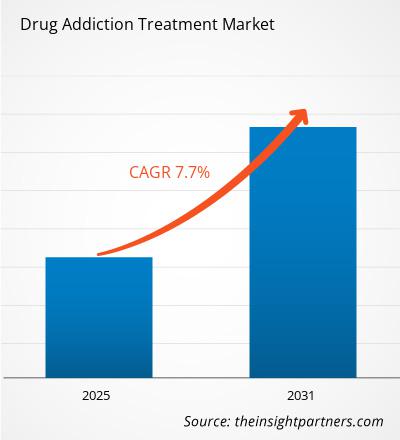
The drug addiction treatment market was valued at US$ 22.19 billion in 2025 and is expected to reach US$ 40.21 billion by 2034, registering a CAGR of 6.83% during 2026–2034. The market is shaped by rising substance abuse prevalence, increasing treatment accessibility, advancements in medication-assisted treatment, and expanding healthcare infrastructure supporting addiction recovery programs across multiple regions.
North America is expected to maintain a strong position in the drug addiction treatment market, supported by increasing adoption of evidence-based therapies, improved insurance coverage, and government-led initiatives addressing substance use disorders. The region is projected to witness a CAGR range of 7.0–7.5% during 2026–2034, driven by advanced healthcare systems and continued investment in addiction care delivery models.
Drug Addiction Treatment Market Assessment and Insights
- North America: Holds 42–46% share in 2025, growing at a CAGR of 7.0–7.5% during 2026–2034, driven by expanding opioid treatment programs, increasing adoption of integrated behavioral healthcare, and growing investment in addiction treatment services.
- US: Accounts for 82–86% of the North American drug addiction treatment market in 2025, expanding at a 7.2–7.7% CAGR due to broader access to medication-assisted treatment, supportive reimbursement policies, and increasing demand for comprehensive addiction care.
- Europe: Represents 24–28% share in 2025, growing at a 6.0–6.5% CAGR, led by the UK, Germany, and France through structured rehabilitation networks, established addiction treatment programs, and supportive public healthcare systems.
- Asia Pacific: Holds 18–22% drug addiction treatment market share in 2025, expanding at a 7.5–8.0% CAGR, led by China, Japan, and India with healthcare modernization, supportive government policies, and increasing awareness of substance use disorder treatment.
- Largest Segment: Medications hold the largest market share in 2025, growing at a 7.0–7.5% CAGR due to increasing preference for pharmacological approaches to addiction management and expanding use of medication-assisted treatment.
- High Growth Segment: Rehabilitation Programs are projected to register the fastest growth at a CAGR of 7.5–8.0% during 2026–2034, driven by rising demand for long-term recovery services, relapse prevention programs, and integrated behavioral health support.
- Key companies analyzed in detail: Pfizer; Indivior PLC; Novartis AG; Alkermes plc; Cipla Limited; Viatris Inc.; Dr. Reddy’s Laboratories Ltd.; Glenmark Pharmaceuticals Ltd.; PLIVA Hrvatska d.o.o.; Johnson & Johnson; Teva Pharmaceutical Industries Ltd.; AbbVie Inc.
Source: The Insight Partners' analysis based on proprietary research, government publications, company annual reports, investor presentations, industry databases, and expert interviews.
There have been changes in the drug addiction treatment market size with a shift from traditional rehabilitation-based methods to the integration of treatment ecosystem incorporating drugs, counseling, monitoring, and personal recovery plans. Innovation in extended-release drug delivery technologies, behavioral therapy systems, and patient-centric care models has affected the delivery system structures. Health professionals have focused on the continuity of care as well as coordination among detoxification, outpatient, and rehabilitation networks.
The drug addiction treatment market growth in the future will be driven by new health markets, increased investment in public and private organizations, and stricter regulations regarding addiction as a chronic illness. The adoption of telehealth-based counseling, remote monitoring, and community-driven recovery programs is expected to enhance treatment accessibility, particularly in underserved and resource-constrained regions. The Drug Addiction Treatment Market Forecast suggests that ongoing pharmaceutical innovation and the expansion of treatment reimbursement policies will continue to influence market dynamics, supporting broader access to care and driving industry growth through 2034.
Drug Addiction Treatment Market Report Scope
| Report Attribute | Details |
|---|---|
| Market size in 2025 | US$ 22.19 Billion |
| Market Size by 2034 | US$ 40.21 Billion |
| Global CAGR (2026 - 2034) | 6.83% |
| Historical Data | 2021-2024 |
| Forecast period | 2026-2034 |
Drug Addiction Treatment Market Analysis
There is an ongoing increase in the demand for drug addiction treatment services because of increasing awareness about substance abuse, health-care costs, and changing trends towards medical treatment of patients. The value chain consists of pharmaceutical firms, clinics, hospitals, behavioral health care agencies, rehabilitation facilities, and community agencies. The value-added activities cover drug manufacturing, treatment delivery, monitoring of patients' conditions, and aftercare services.
The factors determining the supply include pharmaceutical innovations, licensing and approvals of new drugs, production capacity, and availability of qualified health-care professionals. Medication-assisted therapy is still an important element, whereas counseling and rehabilitation help promote better recovery results.
The competitive landscape of the drug addiction treatment industry comprises pharmaceutical companies and healthcare organizations focused on treatment innovation, portfolio expansion, and geographic market penetration. Major participants, including Pfizer, Indivior PLC, Novartis AG, Alkermes plc, Cipla Limited, Viatris Inc., Dr. Reddy’s Laboratories Ltd., Glenmark Pharmaceuticals Ltd., PLIVA Hrvatska d.o.o., Johnson & Johnson, Teva Pharmaceutical Industries Ltd., and AbbVie Inc., contribute to the market through the development of addiction treatment medications and the delivery of healthcare services. The Drug Addiction Treatment Market Report highlights that these companies are actively strengthening their market presence through ongoing innovation, strategic investments, and expanded access to evidence-based treatment solutions.
Investment activity within the industry is increasingly centered on long-acting therapies, addiction treatment medications, digital health technologies, and expansion into emerging markets. The Drug Addiction Treatment Market Trends indicate that companies are strengthening their competitive position by navigating regulatory requirements effectively, improving treatment accessibility, generating robust clinical evidence, and building strong partnerships with healthcare systems to enhance patient outcomes and market reach.
● REPORT CUSTOMIZATION
Tailor This Report To Align With Your Specific Business Requirements
This report can be customized to align precisely with your business objectives, scope, and target markets. Customization options include tailored segmentation, geography, competitive analysis, and strategic insights to support informed decision-making.
Customize This Report →WHAT YOU CAN ADJUST
- ● Segmentations
- ● Geography
- ● Competitive Analysis
- ● Language Preferences
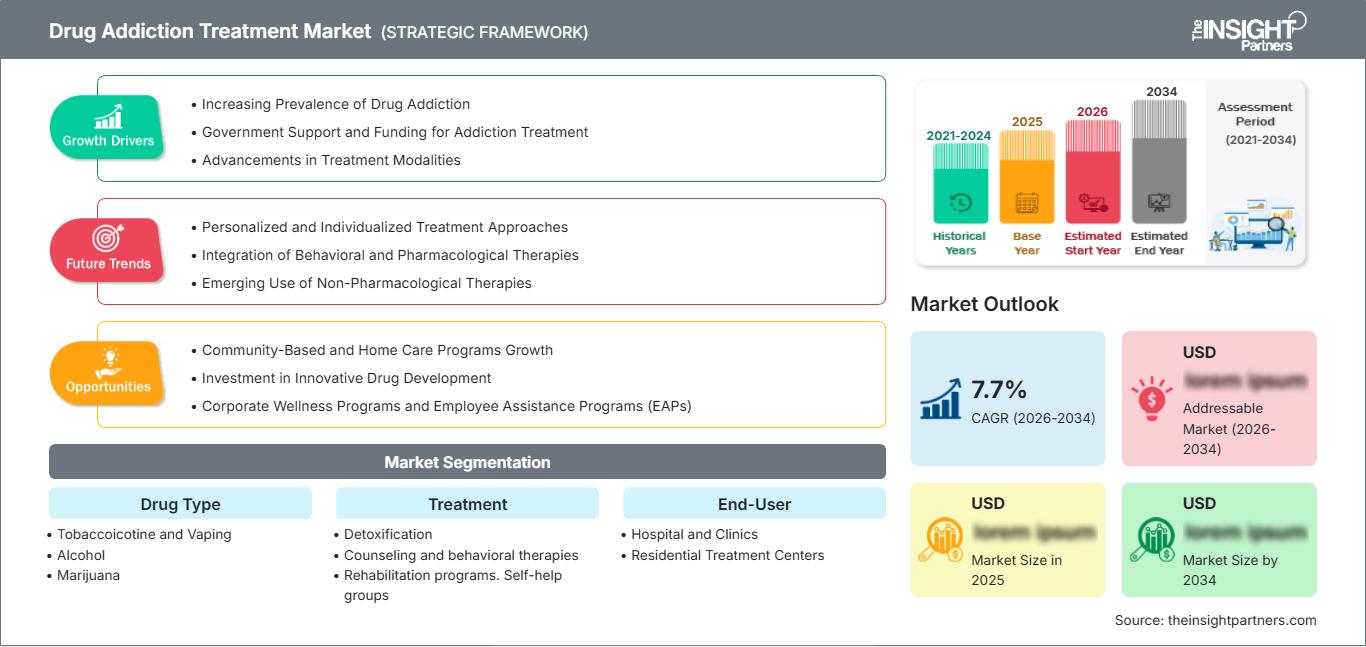
Drug Addiction Treatment Market: Strategic Insights
Regional Insights
North America Drug addiction treatment market
North America accounted for a 42–46% drug addiction treatment market share in 2025 and is projected to expand at a CAGR of 7.0–7.5% during 2026–2034. The region benefits from advanced healthcare infrastructure, higher treatment awareness, and strong adoption of medication-assisted therapies.
The market is bolstered by investments being made in addiction treatment, improvements in insurance and integration of behavioral health into general practice. The United States continues to be the leader as a result of extensive treatment facilities and advancements in medication development.
U.S. Drug addiction treatment market Market
The U.S. accounted for approximately 82–86% of the North American drug addiction treatment market in 2025 and is expected to register a CAGR of 7.2–7.7% through 2034. Strong healthcare infrastructure and rising demand for opioid use disorder treatments support market expansion.
Big corporations such as Indivior PLC, Pfizer, Alkermes plc, AbbVie Inc., and Johnson & Johnson have representation through their addiction treatment drugs and healthcare services. The applications being applied include outpatient treatment, digital support in recovering, and medication.
Europe Drug addiction treatment market Market
Europe represented around 24–28% of the global drug addiction treatment market in 2025 and is expected to grow at a CAGR of 6.0–6.5%. The UK represents a leading country due to established addiction care systems and public health programs.
In the UK, the market is driven by well-developed rehabilitation services, government projects, and increased access to evidence-based treatment models. The emphasis on early intervention and community-based recovery programs remains relevant for demand.
In Germany, development occurs through integration into the healthcare system, the availability of clinical treatment, and the development of addiction management services. France, Italy, and Spain are growing thanks to better healthcare coordination and awareness about substance use disorders.
APAC Drug addiction treatment market Market
APAC accounted for approximately 18–22% share of the drug addiction treatment market in 2025 and is forecast to grow at a CAGR of 7.5–8.0% during 2026–2034. China represents a leading market due to healthcare expansion and rising addiction management initiatives.
China, Japan, South Korea, India, and Australia are experiencing growing instances of programs that utilize treatment plans based on advancements in healthcare and policies. Japan and South Korea use structured medical treatments, while India is developing its treatment through infrastructure improvements in the healthcare sector.
Industrialization, government healthcare initiatives, and investment in rehabilitation centers are boosting regional development. The country of Australia enjoys sophisticated treatment systems, whereas the emerging Asian economies offer great prospects in the sector.
Middle East & Africa Drug addiction treatment market Market
The Middle East & Africa drug addiction treatment market is estimated to expand at a CAGR of 5.5–6.0% during 2026–2034. Saudi Arabia represents a leading market due to increasing healthcare investments and structured addiction recovery initiatives.
The UAE market is developing through healthcare infrastructure expansion and adoption of specialized treatment centers. South Africa contributes through established rehabilitation networks and growing awareness of addiction management.
The Rest of MEA region is influenced by healthcare modernization, infrastructure development, and public health initiatives. Energy-sector economic diversification in several countries is supporting broader healthcare investments, including behavioral health and addiction treatment services.
Segmentation Analysis
Drug Type
The drug type segment of the drug addiction treatment market is expected to register a CAGR range of 6.5–7.0% during 2026–2034, supported by increasing demand for targeted therapies addressing diverse substance dependencies. Rising diagnosis rates, broader treatment accessibility, and improved clinical understanding of addiction categories continue to influence product development and treatment adoption.
- Tobacco/Nicotine and Vaping: Increasing awareness regarding nicotine dependence and rising adoption of cessation therapies are supporting demand for structured treatment programs, including counseling, medications, and behavioral interventions across healthcare systems.
- Alcohol: Alcohol addiction treatment demand is supported by growing recognition of alcohol use disorder as a medical condition and increasing adoption of detoxification, counseling, and rehabilitation-based recovery approaches.
- Marijuana: Expanding research on cannabis-related dependency and increasing monitoring of substance use patterns are contributing to demand for behavioral therapies and specialized addiction management programs.
- Synthetic Cannabinoids: Growing concerns regarding synthetic substance abuse are driving healthcare provider focus on emergency intervention, counseling support, and specialized treatment pathways for affected individuals.
- Prescription and Over-the-Counter Medications: Increasing misuse of prescription drugs is creating demand for medication-assisted treatment, monitoring solutions, and integrated recovery programs addressing pharmaceutical dependency.
Treatment
The treatment segment is expected to experience a CAGR range of 6.8–7.3% from 2026–2034, driven by increasing preference for comprehensive addiction management models. Healthcare providers are combining medical interventions, behavioral support, and long-term recovery strategies to improve patient outcomes.
- Detoxification: Detoxification remains a critical initial treatment stage, supported by increasing availability of medically supervised programs designed to manage withdrawal symptoms and stabilize patients during recovery.
- Counseling and behavioral therapies: Growing recognition of psychological factors in addiction is increasing demand for cognitive therapies, behavioral interventions, and personalized counseling approaches integrated into treatment plans.
- Rehabilitation programs: Rehabilitation programs are expanding due to demand for structured recovery environments, relapse prevention strategies, and long-term support systems for individuals managing substance dependency.
- Self-help groups: Self-help groups continue gaining relevance through community-based recovery models, peer support networks, and accessible platforms that complement clinical addiction treatment services.
- Medications: Medications represent a major treatment category with growth supported by increasing adoption of medication-assisted therapies, improved treatment guidelines, and pharmaceutical innovation.
End-User
The end-user segment is projected to grow at a CAGR range of 6.7–7.2% during 2026–2034, supported by rising demand for specialized treatment environments and coordinated addiction care delivery. Hospitals, clinics, and residential facilities are expanding services to address increasing treatment requirements.
- Hospitals and Clinics: Hospitals and clinics are strengthening addiction treatment capabilities through integrated healthcare services, outpatient programs, medication management, and coordinated behavioral health support.
- Residential Treatment Centers: Residential treatment centers are gaining importance due to demand for immersive recovery programs, structured environments, continuous monitoring, and comprehensive rehabilitation services.
Opportunity Snapshot
| Segment Name | Revenue Contribution (High/Medium/Low) | Trend Tag (MAX 2 words, specific) | Adoption Stage (Emerging/Scaling/Mature) |
| Hospital and Clinics | High | Integrated Care | Mature |
| Residential Treatment Centers | Medium | Recovery Programs | Scaling |
Drug Addiction Treatment Market Growth Drivers and Impact Analysis
Increasing Prevalence of Substance Use Disorders
The burden of substance use disorders globally is greatly affecting the demand for addiction treatment services. With more exposure to substances that can become addictive, changes in how individuals consume such substances, and better diagnosis rates, healthcare institutions are finding ways to increase their capacity in the provision of such services. This driver presents an opportunity for pharmaceutical companies, rehabilitation facilities, and healthcare institutions to provide easy access to treatment.
Expansion of Medication-Assisted Treatment Approaches
Medication-assisted treatment becoming more widely accepted has made a profound change in the way addictions can be treated through a combination of drug therapy and counseling. The increasing use of medications in managing addictions, minimizing withdrawal symptoms, and improving the treatment outcome has affected pharmaceutical industry research, regulation, and accessibility. Market impacts include higher demand for specialized treatments, increased use of sustained release medications, and cooperation between drug producers and healthcare institutions.
Improving Healthcare Infrastructure and Treatment Access
Expansion of healthcare infrastructure and improved availability of addiction treatment services are supporting market growth across developed and emerging economies. Governments and healthcare organizations are increasing their focus on specialized clinics, rehabilitation centers, and community-based treatment programs. This development is improving patient access, particularly in regions where addiction services were previously limited. The market impact includes increased demand for trained professionals, expansion of treatment networks, and stronger adoption of coordinated care models connecting medical, psychological, and social recovery services.
Drug Addiction Treatment Market Future Trends
Digital Health Integration in Addiction Recovery
Digital healthcare technologies are expected to become increasingly important in addiction treatment through remote counseling, patient monitoring platforms, and technology-enabled recovery support. These solutions can improve continuity of care by helping healthcare providers track patient progress beyond traditional treatment environments. Future adoption is likely to increase as healthcare systems seek scalable approaches for managing addiction populations. Integration of digital tools with clinical programs may support personalized treatment pathways, improve engagement, and create new opportunities for technology providers entering the addiction care ecosystem.
Personalized Addiction Treatment Models
Personalized treatment strategies are emerging as healthcare providers seek more effective approaches based on patient-specific conditions, behavioral patterns, and recovery requirements. Advances in clinical assessment, data analysis, and treatment planning are expected to support customized interventions. Future market development will likely involve greater use of patient-centered approaches combining medication, behavioral therapy, and social support. This trend may influence research priorities, healthcare delivery structures, and investment decisions as stakeholders focus on improving long-term recovery outcomes.
Drug Addiction Treatment Market Opportunities
Expansion into Emerging Healthcare Markets
Emerging economies present significant opportunities for drug addiction treatment providers due to improving healthcare infrastructure, increasing awareness, and rising demand for specialized medical services. Companies can strengthen market presence by developing affordable treatment solutions, partnering with local healthcare organizations, and expanding rehabilitation networks. Growth opportunities are particularly relevant in regions where addiction treatment availability remains limited. Strategic investments in training, distribution channels, and localized healthcare programs can support broader access while creating sustainable market expansion opportunities.
Innovation in Long-Acting Addiction Therapies
Long-term drug innovation provides an excellent chance for pharmaceutical firms that wish to increase the effectiveness of the treatment process. New drug forms and innovative delivery systems may help solve problems of treatment continuity and compliance. Those firms that invest in clinical trials, approvals, and partnerships with healthcare organizations will gain a competitive advantage. This chance will contribute to scientific cooperation and the development of novel therapeutic solutions within the changing field of addiction management.
Recent Developments
- February 2025: Indivior PLC announced that the U.S. FDA approved important label updates for SUBLOCADE® (buprenorphine extended-release) Injection, including a rapid initiation protocol that enables eligible patients to begin treatment within one hour of a single transmucosal buprenorphine dose. The update also added alternative injection sites, improving treatment flexibility and supporting faster access to medication-assisted treatment for moderate-to-severe opioid use disorder.
- April 2024: Awakn Life Sciences launched its licensing partnership with Rivus Wellness and Research Institute in Oklahoma to expand access to Awakn Kare, the company's proprietary ketamine-assisted therapy protocol for Alcohol Use Disorder (AUD). Under the agreement, Awakn provides its treatment protocol, practitioner training, and ongoing support, while Rivus delivers the treatment in the U.S. market. The collaboration expands commercialization of evidence-based addiction treatment and strengthens Awakn's North American footprint.
- September 2024: Bradford Health Services acquired Lakeview Health, a U.S. provider specializing in substance use disorder and behavioral health treatment. The acquisition expands Bradford's nationwide addiction treatment network by integrating Lakeview's gender-specific substance use disorder programs and specialized recovery services, enhancing access to comprehensive, patient-centered addiction care across multiple treatment settings.
Frequently Asked Questions

- Comprehensive Market Sizing and Forecast Analysis
- Detailed Segmentation Analysis
- In-Depth Market Dynamics Assessment
- Regional and Country-Level Insights
- Competitive Landscape and Company Benchmarking
- Strategic Business Intelligence
Recent Reports
Testimonials

The Insight Partners provided valuable market intelligence that supported our global go-to-market strategy. Their team was professional, responsive, and attentive to our feedback, providing thoughtful analysis and helpful methodological clarifications throughout the project.
Junmo Kim Chief Financial Officer (CFO), Enertech Co., Ltd.
The Insight Partners' SCADA System Market report is comprehensive, with valuable insights on current trends and future forecasts. The team was highly professional, responsive, and supportive throughout. We are very satisfied and highly recommend their services.
RAN KEDEM Partner, Reali Technologies LTDs
I requested a report on a very specific software market and the team produced the report in a few days. The information was very relevant and well presented. I then requested some changes and additions to the report. The team was again very responsive and I got the final report in less than a week.
JEAN-HERVE JENN Chairman, Future Analytica
We worked with The Insight Partners for an important market study and forecast. They gave us clear insights into opportunities and risks, which helped shape our plans. Their research was easy to use and based on solid data. It helped us make smart, confident decisions. We highly recommend them.
PIYUSH NAGPAL Sr. Vice President, High Beam Global
The Insight Partners delivered insightful, well-structured market research with strong domain expertise. Their team was professional and responsive throughout. The user-friendly website made accessing industry reports seamless. We highly recommend them for reliable, high-quality research services
YUKIHIKO ADACHI CEO, Deep Blue, LLC.
This is the first time I have purchased a market report from The Insight Partners.While I was unsure at first, I visited their web site and felt more comfortable to take the risk and purchase a market report.I am completely satisfied with the quality of the report and customer service. I had several questions and comments with the initial report, but after a couple of dialogs over email with their analyst I believe I have a report that I can use as input to our strategic planning process.Thank you so much for taking the extra time and making this a positive experience.I will definitely recommend your service to others and you will be my first call when we need further market data.
JOHN SUZUKI President and Chief Executive Officer, Board Director, BK Technologies
I wish to appreciate your support and the professionalism you displayed in the course of attending to my request for information regarding to infectious disease IVD market in Nigeria. I appreciate your patience, your guidance, and the fact that you were willing to offer a discount, which eventually made it possible for us to close a deal. I look forward to engaging The Insight Partners in the future, all thanks to the impression you have created in me as a result of this first encounter.
DR CHIJIOKE ONYIA MANAGING DIRECTOR, PineCrest Healthcare Ltd.Reason to Buy
- Informed Decision-Making
- Understanding Market Dynamics
- Competitive Analysis
- Identifying Emerging Markets
- Customer Insights
- Market Forecasts
- Risk Mitigation
- Boosting Operational Efficiency
- Strategic Planning
- Investment Justification
- Tracking Industry Innovations
- Aligning with Regulatory Trends





 Get Free Sample for