
Drug Eluting Balloon for Peripheral Artery Disease Market Trends, Size & Growth by 2034
Coverage: By Drug Coating Technology (Paccocath, Endurocoat, Freepac, Lutonix, Stellarex); End-Users (Hospitals, Ambulatory Surgery Centers, Catheterization Laboratories, Others), and Geography (North America, Europe, Asia Pacific, and South and Central America)
- Status : Data Released
- Report Code : TIPRE00008457
- Category : Life Sciences
- No. of Pages : 150
- Available Report Formats :


- Last update date : July 06, 2026


2025 Market Size
US$ 360.68 Mn
Base year value
2034 Forecast
US$ 556.52 Mn
Projected by 2034
CAGR 2026-2034
4.94 %
Growth rate
Addressable Market
US$ 4,163.23 Mn
(2026-2034)
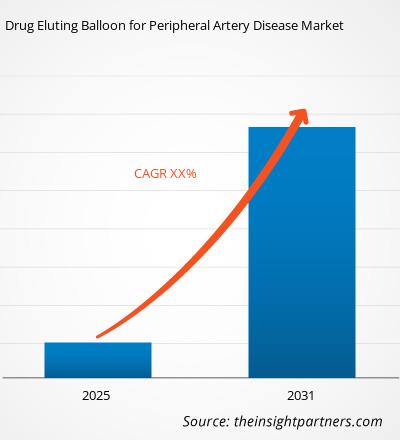
The drug eluting balloon for peripheral artery disease market was valued at US$ 360.68 million in 2025 and is projected to reach US$ 556.52 million by 2034, registering a CAGR of 4.94% during 2026–2034. The drug eluting balloon for peripheral artery disease market expansion is supported by the increasing clinical preference for minimally invasive vascular interventions, continuous advancements in drug-coated balloon technologies, and growing awareness of effective treatment options for peripheral artery disease across developed and emerging healthcare systems.
North America is expected to remain the leading regional market, advancing at an estimated CAGR of 4.5–5.2% during the forecast period. The high prevalence of peripheral artery disease, favorable reimbursement structures, widespread adoption of endovascular procedures, and continuous investments by healthcare providers in advanced vascular treatment technologies primarily support growth. Strong physician expertise and early technology adoption fuel the expansion of the Drug Eluting Balloon for Peripheral Artery Disease market size.
Drug Eluting Balloon for Peripheral Artery Disease Market Assessment and Insights
- North America: Holds 39–43% share in 2025, growing at a CAGR of 4.5–5.2% during 2026–2034, driven by expanding endovascular procedures, favorable reimbursement policies, and increasing adoption of advanced vascular intervention technologies.
- US: Accounts for 82–86% of North America’s Drug Eluting Balloon for Peripheral Artery Disease market in 2025, expanding at a 4.6–5.3% CAGR due to rising volumes of minimally invasive vascular procedures, strong healthcare infrastructure, and broad reimbursement support.
- Europe: Represents 27–31% share in 2025, growing at a 4.2–4.9% CAGR, led by Germany, the UK, and France through advanced vascular care infrastructure, experienced interventional specialists, and consistent adoption of innovative balloon technologies.
- Asia Pacific: Holds 21–25% share in 2025, expanding at a 5.6–6.3% CAGR, led by China, Japan, and India, with increasing healthcare investments, improving diagnosis rates, and expanding access to minimally invasive vascular treatments.
- Largest Segment: Hospitals hold the largest Drug Eluting Balloon for Peripheral Artery Disease market share in 2025, growing at a 4.8–5.4% CAGR due to high patient volumes, multidisciplinary vascular care teams, and comprehensive imaging infrastructure.
- High Growth Segment: Stellarex Drug Coating Technology is projected to register the fastest growth at a CAGR of 5.7–6.4% during 2026–2034, driven by continued product innovation, durable clinical outcomes, and increasing physician confidence in drug-coated balloon technologies.
- Key companies analyzed in detail: Medtronic plc; Koninklijke Philips N.V.; Becton, Dickinson and Company; Cook Medical LLC; Bayer AG; Eurocor Tech GmbH; Cardionovum GmbH; Boston Scientific Corporation; Abbott Laboratories; Terumo Corporation.
Source: The Insight Partners' analysis based on proprietary research, government publications, company annual reports, investor presentations, industry databases, and expert interviews.
The drug eluting balloon for peripheral artery disease market has shifted from traditional angioplasty procedures to drug-coated balloons which help to prevent restenosis while offering future treatment opportunities. Advances in coating composition, drug delivery, and catheter design have contributed to increased physician acceptance. Manufacturers are focusing more on the optimization of production and quality assurance to ensure the consistency of their products while meeting new regulatory trends and supporting their clinical experience for endovascular treatments.
Further drug eluting balloon for peripheral artery disease market growth is expected to depend on the broader adoption of these therapies across emerging healthcare systems, the expansion of treatment indications, and sustained investments in vascular technology innovations. Regulatory alignment, favorable reimbursement policy developments, and increasing physician training programs are anticipated to enhance the accessibility of these procedures. The Drug Eluting Balloon for Peripheral Artery Disease Market Forecast suggests that manufacturers may further strengthen their market position through strategic collaborations, geographic expansion, and the development of advanced drug-coating technologies that improve clinical outcomes and product differentiation.
Drug Eluting Balloon for Peripheral Artery Disease Market Report Scope
| Report Attribute | Details |
|---|---|
| Market size in 2025 | US$ 360.68 Million |
| Market Size by 2034 | US$ 556.52 Million |
| Global CAGR (2026 - 2034) | 4.94% |
| Historical Data | 2021-2024 |
| Forecast period | 2026-2034 |
Drug Eluting Balloon for Peripheral Artery Disease Market Analysis
The rising cases of peripheral artery disease, aging demographics, and high levels of diabetes and cardiovascular disease prevalence have driven the demand for drug-coated balloons. Minimally invasive approaches, which reduce hospitalizations and speed up patient recovery, are becoming more favored by physicians. The value chain has developed as a result of cooperation between pharmaceutical companies, medical device makers, coating technology experts, healthcare professionals, and distributors in order to facilitate commercialization of new generation products.
Production trends are getting better owing to automation, regulatory compliance, and intelligent sourcing of specialized catheter materials. Companies are working on scalable production capacity development and strengthening their supply chains in light of rising procedure volumes in mature and developing healthcare markets.
Competition is marked by constant innovations, growing clinical data, and distinctive product ranges. Medtronic plc, Boston Scientific Corporation, Abbott Laboratories, and Terumo Corporation enjoy highly competitive standing due to well-developed global distribution channels, a diversified vascular portfolio, and continued investments in R&D activities. Specialized manufacturers are constantly introducing innovative coating technologies to improve clinical performance and product distinction.
Investments are increasingly focused on clinical trials, physician training programs, manufacturing capacity expansion, and the commercialization of products across multiple regions. Leading companies, including Bayer AG, Cook Medical LLC, Becton, Dickinson and Company, Eurocor Tech GmbH, Cardionovum GmbH, and Koninklijke Philips N.V., continue to strengthen their market presence through strategic collaborations and the development of new healthcare partnerships. The Drug Eluting Balloon for Peripheral Artery Disease Market Report highlights that competition within the industry is largely driven by clinical performance, regulatory approvals, and the ability to provide comprehensive support to interventional vascular specialists.
● REPORT CUSTOMIZATION
Tailor This Report To Align With Your Specific Business Requirements
This report can be customized to align precisely with your business objectives, scope, and target markets. Customization options include tailored segmentation, geography, competitive analysis, and strategic insights to support informed decision-making.
Customize This Report →WHAT YOU CAN ADJUST
- ● Segmentations
- ● Geography
- ● Competitive Analysis
- ● Language Preferences
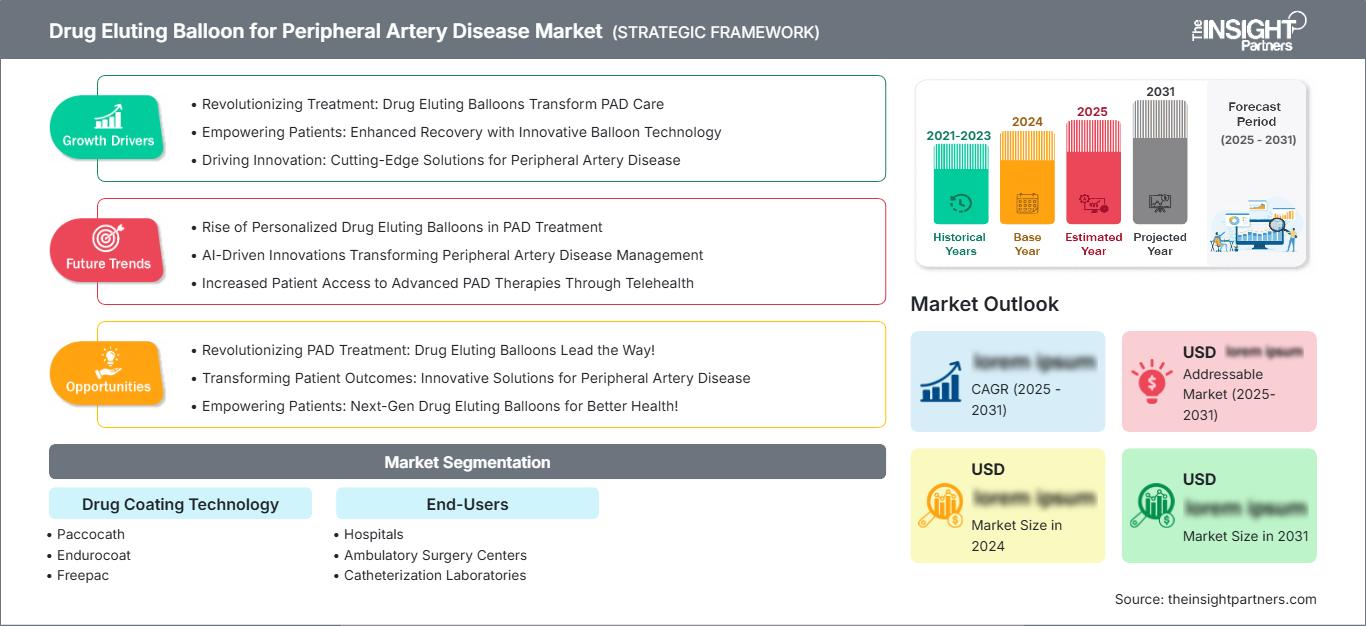
Drug Eluting Balloon for Peripheral Artery Disease Market: Strategic Insights
Regional Insights
North America Drug Eluting Balloon for Peripheral Artery Disease Market
North America accounted for 39–43% of the global drug eluting balloon for peripheral artery disease market share in 2025 and is projected to register a CAGR of 4.5–5.2% during 2026–2034. Strong healthcare infrastructure, favorable reimbursement policies, and high procedural volumes continue to support regional leadership.
Healthcare providers increasingly adopt drug eluting balloons to reduce restenosis while minimizing repeat interventions. Continued investments in vascular centers, growing awareness of peripheral artery disease, and widespread physician expertise further strengthen long-term regional market expansion.
U.S. Drug Eluting Balloon for Peripheral Artery Disease Market
The U.S. contributes approximately 82–86% of North America’s drug eluting balloon for peripheral artery disease market revenue and is anticipated to expand at a CAGR of 4.6–5.3% through 2034. The country benefits from a mature healthcare system and extensive adoption of minimally invasive vascular procedures.
The presence of leading manufacturers, skilled interventionists, and the continual launch of new products indicates demand that will remain strong in the future. More applications of drug-eluting balloons in femoropopliteal and below-the-knee procedures will further drive market penetration.
Europe Drug Eluting Balloon for Peripheral Artery Disease Market
Europe represented approximately 27–31% of the global drug eluting balloon for peripheral artery disease market in 2025 and is expected to record a CAGR of 4.2–4.9% through the forecast period. Germany remains the largest regional contributor due to its advanced vascular treatment infrastructure and extensive clinical adoption.
The United Kingdom has been further consolidating its market strength by increasing investment in minimally invasive heart treatments, peripheral artery disease diagnosis, and advanced endovascular treatments. The partnership between hospitals and medical devices suppliers is increasing the use of new technology.
In Germany, highly specialized vascular centers, high-level reimbursements, and involvement in clinical research regarding new drug-coated balloon technologies have been advantageous for the German market. A high level of knowledge among physicians enables the consistent application of such technologies.
France, Italy, and Spain collectively contribute significant regional demand through the modernization of hospital infrastructure, increasing availability of catheter-based therapies, and broader physician training programs. Expanding elderly populations and rising cardiovascular disease prevalence continue to support steady drug eluting balloon for peripheral artery disease market growth across Southern Europe.
APAC Drug Eluting Balloon for Peripheral Artery Disease Market
Asia Pacific accounted for an estimated 21–25% of global revenue in 2025 and is forecast to register the fastest regional CAGR of 5.6–6.3%. China remains the largest contributor, supported by healthcare modernization and expanding interventional cardiology capacity.
Japan is increasingly embracing modern vascular technologies due to clinical standards and an aging population. South Korea is benefiting from technologically advanced hospitals and favorable innovations that encourage the adoption of minimally invasive procedures.
There are rising demands in India due to increased health spending, greater awareness of peripheral artery disease, and the expansion of tertiary care facilities. Australia’s contribution lies in its advanced reimbursement system, vascular centers, and continual investments in quality endovascular procedures.
Middle East & Africa Drug Eluting Balloon for Peripheral Artery Disease Market
The Middle East & Africa market is projected to grow at a CAGR of 4.0–4.7% during the forecast period. Healthcare modernization initiatives and increasing investment in cardiovascular treatment infrastructure continue to improve access to advanced vascular intervention technologies.
Saudi Arabia leads regional demand through expanding specialty hospitals and national healthcare transformation initiatives. The UAE benefits from growing medical technology adoption and increasing private healthcare investment focused on minimally invasive cardiovascular procedures.
South Africa maintains an important position through established tertiary healthcare facilities and increasing awareness of peripheral artery disease. The remaining MEA countries are gradually improving vascular treatment capabilities through infrastructure expansion, physician training, and greater availability of advanced medical devices.
Segmentation Analysis
Drug Coating Technology
Drug coating technology remains a key differentiator in the drug eluting balloon for the peripheral artery disease market as manufacturers focus on improving drug transfer efficiency, coating stability, and long-term clinical outcomes. Continuous innovation in coating formulations is expected to support technological advancement throughout the forecast period. Among these technologies, Stellarex is projected to record the highest CAGR of 5.7–6.4% during 2026–2034, supported by favorable clinical performance and expanding physician adoption.
- Paccocath: Widely recognized for efficient paclitaxel delivery and durable coating characteristics, this technology supports consistent therapeutic outcomes while maintaining strong clinical acceptance across peripheral vascular interventions.
- Endurocoat: Designed to enhance coating durability and controlled drug transfer, Endurocoat supports improved procedural performance and is increasingly evaluated for use in complex vascular lesions requiring effective restenosis prevention.
- Freepac: This coating technology focuses on optimized drug bioavailability and enhanced balloon surface characteristics, helping physicians achieve effective lesion treatment while supporting continued technological advancement within endovascular therapy.
- Lutonix: Established clinical experience and broad physician familiarity contribute to sustained utilization. Ongoing product refinements continue to improve deliverability, coating performance, and procedural efficiency across peripheral artery disease treatment.
- Stellarex: Strong clinical evidence, effective drug retention, and consistent therapeutic outcomes support increasing adoption. Continuous technological refinement positions this coating technology among the fastest-growing segments in the market.
End-Users
Hospitals remain the dominant end-user category owing to comprehensive vascular care capabilities, multidisciplinary clinical teams, and advanced imaging infrastructure. Rising peripheral artery disease cases continue to support procedural volumes across major healthcare institutions.
- Hospitals: High patient admissions, availability of hybrid operating rooms, experienced vascular specialists, and access to advanced diagnostic imaging enable hospitals to maintain the largest revenue contribution in the market.
- Ambulatory Surgery Centers: Increasing preference for outpatient vascular procedures, reduced treatment costs, shorter recovery periods, and operational efficiency continue driving the adoption of drug eluting balloon technologies within ambulatory surgical settings.
- Catheterization Laboratories: Specialized catheterization laboratories continue expanding procedural capacity through advanced imaging systems, skilled intervention teams, and growing utilization of minimally invasive vascular therapies for peripheral artery disease management.
Opportunity Snapshot
| Segment Name | Revenue Contribution | Trend Tag | Adoption Stage |
| Hospitals | High | Hybrid Cath Labs | Mature |
| Ambulatory Surgery Centers | Medium | Outpatient PAD | Scaling |
| Catheterization Laboratories | Medium | Image Guidance | Scaling |
Drug Eluting Balloon for Peripheral Artery Disease Market Growth Drivers and Impact Analysis
Increasing Burden of Peripheral Artery Disease and Aging Population
The increasing number of cases of peripheral artery disease (PAD) constitutes one of the most compelling drivers of the growing global demand for drug eluting balloons. The aging population and the rising number of patients with diabetes, obesity, high blood pressure, and vascular diseases related to smoking have greatly increased the number of patients who require minimally invasive interventions on their vessels. Doctors prefer using drug eluting balloons as they help to minimize restenosis while allowing further medical intervention as opposed to the use of implants. As hospitals focus more on evidence-based treatments that provide better patient results and eliminate the need for repeated procedures, drug eluting balloon manufacturers are working hard on expanding commercial opportunities.
Technological Advancements in Drug-Coated Balloon Platforms
Advancements in balloon catheter design, drug coating composition, and drug delivery mechanisms are increasing clinicians’ trust in the use of drug eluting balloon treatments. Companies are improving their coatings with better drug delivery efficiency and reduced particulate loss. The companies are also improving the flexibility of the catheters and ability of crossing difficult lesions. Technological advancements are providing opportunities to physicians to perform procedures on challenging vascular lesions with good safety records. Innovations in products are motivating healthcare organizations to use more advanced drug eluting balloons as compared to angioplasty balloons and hence providing lucrative financial opportunities for existing and upcoming manufacturers.
Growing Preference for Minimally Invasive Endovascular Procedures
Worldwide, the health care systems are evolving towards adopting a minimally invasive approach of treatment, reducing hospital stays, procedure risks, and recovery times. The use of drug-eluting balloons supports these goals by providing an efficient means of treatment without having to place an implanted device into the vessel. The use of such equipment by physicians is becoming more common for femoral popliteal and below knee procedures because of the good preservation of vessels in the long run. Investments in the catheterization laboratories, hybrid operating rooms, and vascular centers make procedures more accessible to patients.
Drug Eluting Balloon for Peripheral Artery Disease Market Future Trends
Expansion of Next-Generation Drug Coating Technologies
There have been more and more studies conducted about the next-generation coating technology, which improves the adhesion, controlled delivery, and sustainability of the drugs used. In addition, besides improving the delivery of the drug paclitaxel, studies include developing a stable coating as well as reducing the losses associated with the drug through navigation. Future products will be developed with an increased focus on standardizing the procedure, improvement in healing of the vessels, and efficiency of treating lesions. Clinical data that proves the efficacy of such coating technologies may impact the purchasing decisions made by physicians.
Broader Adoption Across Emerging Healthcare Markets
Emerging economies are expected to become increasingly important contributors to future market growth as healthcare infrastructure, reimbursement frameworks, and physician training continue improving. Governments are investing in specialized cardiovascular centers while hospitals expand access to advanced endovascular procedures. Growing awareness of peripheral artery disease and earlier diagnosis are expected to increase procedural demand across Asia Pacific, Latin America, and selected Middle Eastern countries. Manufacturers are responding through localized distribution partnerships, regional manufacturing investments, and expanded educational programs for clinicians. These initiatives will improve market accessibility while creating sustainable long-term revenue opportunities beyond traditional mature healthcare markets.
Drug Eluting Balloon for Peripheral Artery Disease Market Opportunities
Expansion Through Strategic Clinical Collaborations
Manufacturers have significant opportunities to strengthen their market position through partnerships with hospitals, research institutions, and vascular specialist organizations. Collaborative clinical studies generate real-world evidence that supports broader physician confidence, reimbursement discussions, and regulatory approvals. Joint physician training initiatives also accelerate technology adoption by improving procedural expertise and demonstrating long-term clinical benefits. Companies capable of building comprehensive clinical ecosystems around their products can differentiate themselves beyond device performance alone. Such collaborations are expected to increase market penetration, enhance customer loyalty, and support sustained commercial expansion across multiple geographic regions.
Investment in Emerging Markets and Local Manufacturing
Developing regional manufacturing capabilities and localized supply chains presents substantial opportunities for market participants seeking long-term growth. Local production can improve supply reliability, reduce procurement costs, and simplify compliance with regional regulatory requirements. Establishing stronger commercial networks in rapidly developing healthcare markets also enables companies to respond more effectively to growing procedural demand. Governments encouraging domestic medical device manufacturing through investment incentives create additional advantages for global manufacturers. Organizations that combine localized production with physician education, distributor partnerships, and post-market clinical support are likely to secure stronger competitive positions throughout the forecast period.
Recent Developments
- June, 2026: Advanced NanoTherapies, Inc. (ANT), a clinical-stage medtech company dedicated to improving outcomes for patients with coronary and peripheral artery disease, announced the closing of an oversubscribed Series B financing totaling more than $31 million. The round was co-led by an undisclosed strategic investor and S3 Ventures, with participation from the T45 Fund and new and existing investors.
- August 2025: Cook Medical received FDA approval to initiate a pivotal IDE clinical trial for its Advance Evero 18 everolimus-coated balloon, targeting femoropopliteal peripheral artery disease and marking progress toward non-paclitaxel DCB alternatives.
- May, 2025: Boston Scientific Corporation introduced the 200 cm RANGER drug-coated balloon, enabling radial-access treatment of peripheral artery disease in the legs, improving procedural flexibility and enhancing minimally invasive treatment options.
Frequently Asked Questions

- Comprehensive Market Sizing and Forecast Analysis
- Detailed Segmentation Analysis
- In-Depth Market Dynamics Assessment
- Regional and Country-Level Insights
- Competitive Landscape and Company Benchmarking
- Strategic Business Intelligence
Recent Reports
Testimonials

The Insight Partners' SCADA System Market report is comprehensive, with valuable insights on current trends and future forecasts. The team was highly professional, responsive, and supportive throughout. We are very satisfied and highly recommend their services.
RAN KEDEM Partner, Reali Technologies LTDs
I requested a report on a very specific software market and the team produced the report in a few days. The information was very relevant and well presented. I then requested some changes and additions to the report. The team was again very responsive and I got the final report in less than a week.
JEAN-HERVE JENN Chairman, Future Analytica
We worked with The Insight Partners for an important market study and forecast. They gave us clear insights into opportunities and risks, which helped shape our plans. Their research was easy to use and based on solid data. It helped us make smart, confident decisions. We highly recommend them.
PIYUSH NAGPAL Sr. Vice President, High Beam Global
The Insight Partners delivered insightful, well-structured market research with strong domain expertise. Their team was professional and responsive throughout. The user-friendly website made accessing industry reports seamless. We highly recommend them for reliable, high-quality research services
YUKIHIKO ADACHI CEO, Deep Blue, LLC.
This is the first time I have purchased a market report from The Insight Partners.While I was unsure at first, I visited their web site and felt more comfortable to take the risk and purchase a market report.I am completely satisfied with the quality of the report and customer service. I had several questions and comments with the initial report, but after a couple of dialogs over email with their analyst I believe I have a report that I can use as input to our strategic planning process.Thank you so much for taking the extra time and making this a positive experience.I will definitely recommend your service to others and you will be my first call when we need further market data.
JOHN SUZUKI President and Chief Executive Officer, Board Director, BK Technologies
I wish to appreciate your support and the professionalism you displayed in the course of attending to my request for information regarding to infectious disease IVD market in Nigeria. I appreciate your patience, your guidance, and the fact that you were willing to offer a discount, which eventually made it possible for us to close a deal. I look forward to engaging The Insight Partners in the future, all thanks to the impression you have created in me as a result of this first encounter.
DR CHIJIOKE ONYIA MANAGING DIRECTOR, PineCrest Healthcare Ltd.Reason to Buy
- Informed Decision-Making
- Understanding Market Dynamics
- Competitive Analysis
- Identifying Emerging Markets
- Customer Insights
- Market Forecasts
- Risk Mitigation
- Boosting Operational Efficiency
- Strategic Planning
- Investment Justification
- Tracking Industry Innovations
- Aligning with Regulatory Trends





 Get Free Sample for