
Drug-Loaded Oral Thin Films Market Demand, Trends & Forecast by 2034
Coverage: by Drug Type (Antiulcer, Antiasthamatics, Antitussives, Antihistamines, Expectorants, NSAID'S, Others); Distribution Channel (Hospital pharmacy, Retail pharmacy, E-commerce), and Geography (North America, Europe, Asia Pacific, and South and Central America)
- Status : Data Released
- Report Code : TIPRE00013501
- Category : Life Sciences
- No. of Pages : 150
- Available Report Formats :


- Last update date : July 03, 2026


2025 Market Size
US$ 1.41 Bn
Base year value
2034 Forecast
US$ 3.96 Bn
Projected by 2034
CAGR 2026-2034
12.16 %
Growth rate
Addressable Market
US$ 23.53 Bn
(2026-2034)
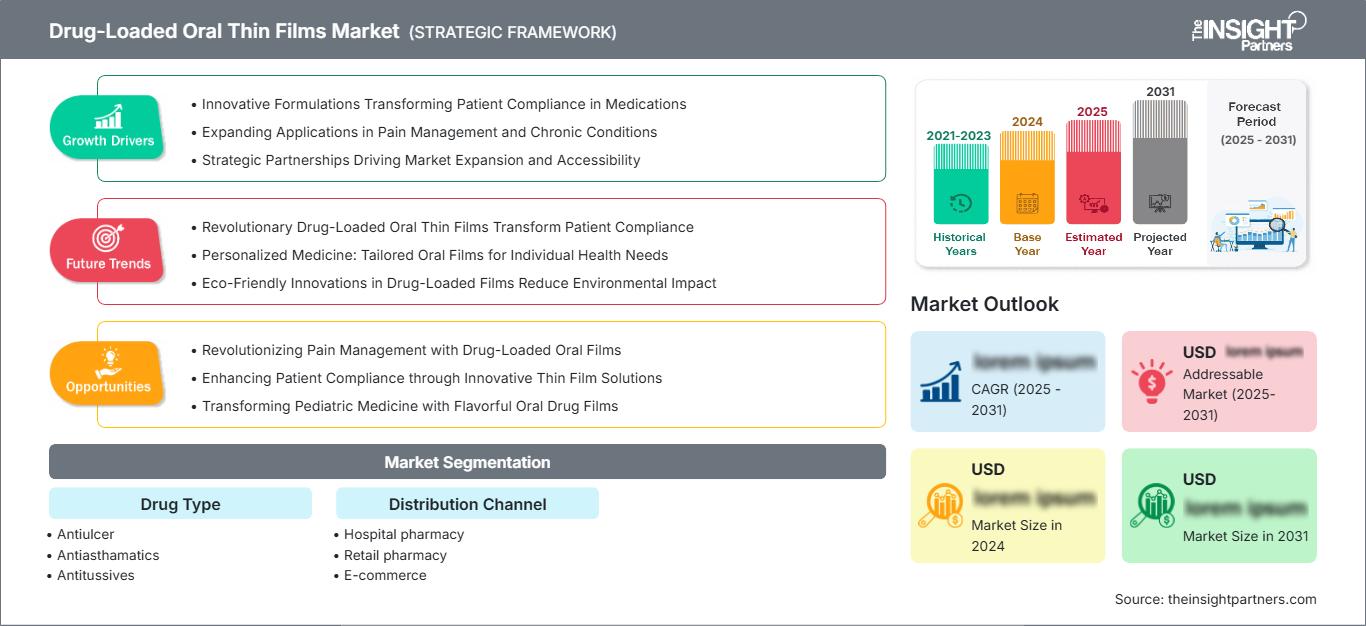
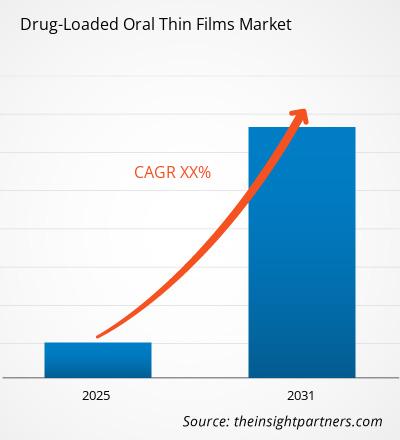
The drug-loaded oral thin films market was valued at US$ 1.41 Billion in 2025 and is projected to reach US$ 3.96 Billion by 2034, expanding at a CAGR of 12.16% during 2026–2034. Market expansion is supported by increasing preference for patient-friendly oral drug delivery systems, growing demand for rapid-onset pharmaceutical formulations, and continued innovation in film-forming technologies that improve dosage accuracy, portability, and patient adherence across multiple therapeutic categories.
North America is expected to remain the leading regional market, registering an estimated CAGR of 11.8–12.4% during the forecast period. Growth is driven by widespread adoption of advanced drug delivery technologies, strong pharmaceutical research capabilities, increasing prescriptions for patient-centric dosage forms, and expanding regulatory acceptance of innovative oral film formulations for chronic and acute therapeutic applications.
Drug-Loaded Oral Thin Films Market Assessment and Insights
- North America: Holds 36–40% share in 2025, growing at a CAGR of 11.8–12.4% during 2026–2034, driven by strong pharmaceutical innovation, favorable reimbursement frameworks, and expanding research in oral drug delivery technologies.
- US: Accounts for 82–86% of the North American market in 2025, expanding at a 11.9–12.5% CAGR due to increasing commercialization of advanced oral drug delivery systems, robust pharmaceutical R&D, and supportive healthcare reimbursement policies.
- Europe: Represents 27–31% share in 2025, growing at a 11.2–11.8% CAGR, led by Germany, the UK, and France through advanced pharmaceutical manufacturing, regulatory alignment, and continued investments in innovative drug delivery technologies.
- Asia Pacific: Holds 24–28% share in 2025, expanding at a 13.2–13.8% CAGR, led by China, Japan, and India with expanding pharmaceutical production, increasing healthcare investments, and growing demand for advanced therapeutic formulations.
- Largest Segment: Hospital Pharmacy holds the largest market share in 2025, growing at a 11.6–12.2% CAGR due to extensive prescription dispensing, broad availability of specialty medicines, and increasing hospital-based pharmaceutical services.
- High Growth Segment: E-commerce is projected to register the fastest growth at a CAGR of 14.1–14.8% during 2026–2034, driven by the rapid expansion of digital pharmacies, improving patient access, and increasing online pharmaceutical purchases.
- Key companies analyzed in detail: tesa Labtec GmbH; Onxeo SA; MonoSol Rx, LLC; Hughes Medical Corporation; Paladin Labs Inc.; ZIM Laboratories Limited; Indivior PLC; Aquestive Therapeutics, Inc.; Sumitomo Pharma Co., Ltd.; IntelGenx Technologies Corp.; Pfizer Inc.; Novartis AG; AbbVie Inc.; NAL Pharmaceuticals Ltd.
Source: The Insight Partners' analysis based on proprietary research, government publications, company annual reports, investor presentations, industry databases, and expert interviews.
Recent breakthroughs in the field of polymer science, coating techniques, and manufacturing techniques that take into consideration solvents are responsible for making drug loaded oral thin films into economically viable dosage forms within a wide range of therapeutic applications. It is becoming common practice among pharmaceutical companies to optimize their efforts toward enhancing the uniformity of the films, increase their drug loading ability, masking their taste, and achieving stability in their packaging through automated manufacturing lines with increased productivity and consistency.
The future growth in the market will emerge from the fast developing healthcare systems of the regions including Asia Pacific, Latin America, and certain economies of the Middle East. The growing investment in specialty drugs and the availability of regulatory incentives for innovative drug delivery systems will make it possible for new products to be launched.
Drug-Loaded Oral Thin Films Market Report Scope
| Report Attribute | Details |
|---|---|
| Market size in 2025 | US$ 1.41 Billion |
| Market Size by 2034 | US$ 3.96 Billion |
| Global CAGR (2026 - 2034) | 12.16% |
| Historical Data | 2021-2024 |
| Forecast period | 2026-2034 |
Drug-Loaded Oral Thin Films Market Analysis
With increased demand for easy-to-use drug delivery technology for oral drugs, there have been several changes in the way drugs are formulated. This is because of the numerous benefits associated with oral thin films, such as easy disintegration, accurate dose, better compliance, and no need for use of water during administration of these drugs. They are therefore especially useful in case of pediatric, geriatric, and dysphagic patients. There has also been an increase in respiratory conditions, digestive system diseases, allergies, and chronic pain which necessitates the need to use this drug formulation method. In addition, there has been research in high-drug-load formulation that is able to accommodate active pharmaceutical ingredients.
The value chain within the industry includes polymer producers, active pharmaceutical ingredient producers, formulation experts, contract development firms, equipment suppliers, packaging companies, regulatory bodies, healthcare providers, and pharmacy distribution chains. There have been continuous advancements in solvent casting, hot-melt extrusion, drying techniques, and multilayer film formation technology to ensure improved efficiency and flexibility in formulation processes.
Competitive rivalry is now driven by innovation in formulations, creation of intellectual property, licensing and product differentiation instead of mere advantages in scale of manufacturing. Large pharmaceutical firms are competing with specialists in drug delivery technology who can provide proprietary oral film formulation. Such companies as Aquestive Therapeutics, Inc., IntelGenx Technologies Corp., ZIM Laboratories Limited, and tesa Labtec GmbH are continuously improving technological expertise through formulation innovation. Meanwhile, diversified pharmaceutical firms are exploring the use of oral thin films as a lifecycle management technique for existing product lines.
The increasing emphasis of strategic investments in advanced manufacturing automation, bioavailability boosting technologies and new polymers, that support complex drug formulations, is evident. Firms such as Pfizer Inc., Novartis AG, AbbVie Inc., Indivior PLC, Sumitomo Pharma Co., Ltd., MonoSol Rx, LLC, Onxeo SA, Paladin Labs Inc., NAL Pharmaceuticals Ltd., and Hughes Medical Corporation are continuously considering collaborative development approaches, licensing and commercialization partnerships to improve their competitive position and respond to the changing preferences of patients for fast-acting drugs.
● REPORT CUSTOMIZATION
Tailor This Report To Align With Your Specific Business Requirements
This report can be customized to align precisely with your business objectives, scope, and target markets. Customization options include tailored segmentation, geography, competitive analysis, and strategic insights to support informed decision-making.
Customize This Report →WHAT YOU CAN ADJUST
- ● Segmentations
- ● Geography
- ● Competitive Analysis
- ● Language Preferences
Drug-Loaded Oral Thin Films Market: Strategic Insights
Regional Insights
North America Drug-Loaded Oral Thin Films Market
North America accounted for 36–40% of the global drug-loaded oral thin films market in 2025 and is projected to register a CAGR of 11.8–12.4% during 2026–2034. Robust pharmaceutical innovation, increasing acceptance of patient-centric drug delivery systems, and favorable regulatory pathways continue to support regional expansion.
Growing adoption of orally dissolving formulations for pediatric and geriatric care, together with sustained investments in specialty pharmaceuticals, strengthens demand. Advanced manufacturing capabilities and established healthcare infrastructure further enable the commercialization of innovative oral thin film products.
U.S. Drug-Loaded Oral Thin Films Market
The U.S. represented 82–86% of the North American market in 2025 and is expected to record a CAGR of 11.9–12.5% through 2034. High pharmaceutical research expenditure and extensive adoption of innovative dosage forms continue to support market leadership.
The presence of major technology developers and pharmaceutical manufacturers encourages continuous product innovation. Increasing utilization of oral thin films for addiction treatment, allergy management, pain relief, and chronic disease therapies is expanding commercial opportunities while improving patient adherence across healthcare settings.
Europe Drug-Loaded Oral Thin Films Market
Europe captured 27–31% of the global market in 2025 and is anticipated to expand at a CAGR of 11.2–11.8% during the forecast period. Strong pharmaceutical manufacturing capabilities and harmonized regulatory standards support sustained commercialization across the region.
The United Kingdom continues to strengthen pharmaceutical innovation through investments in advanced formulation technologies, contract development services, and academic-industry collaborations. Growing emphasis on patient-friendly dosage forms supports increasing demand across hospital and retail pharmacy channels.
Germany remains the largest European market owing to its established pharmaceutical manufacturing base, strong research ecosystem, and continuous investments in advanced drug delivery technologies. Manufacturers increasingly focus on precision formulation, scalable production, and export-oriented commercialization strategies.
France, Italy, and Spain collectively contribute to regional expansion through improving healthcare investments, growing specialty pharmaceutical demand, and expanding adoption of innovative oral dosage technologies. Rising awareness regarding patient compliance further supports market penetration across therapeutic categories.
APAC Drug-Loaded Oral Thin Films Market
Asia Pacific accounted for 24–28% of the global market in 2025 and is forecast to register the fastest regional CAGR of 13.2–13.8% through 2034. Expanding pharmaceutical manufacturing capacity and rising healthcare expenditure continue to support rapid market development.
China leads regional production through large-scale pharmaceutical manufacturing investments and continuous modernization initiatives. Japan maintains technological leadership in advanced drug delivery research, while South Korea strengthens pharmaceutical innovation through biotechnology expansion.
India continues to emerge as a major formulation and contract manufacturing hub supported by cost-efficient production capabilities. Australia contributes through a strong clinical research infrastructure, favorable regulatory standards, and increasing adoption of innovative patient-centric pharmaceutical formulations.
Middle East & Africa Drug-Loaded Oral Thin Films Market
The Middle East & Africa market is expected to record a CAGR of 10.4–11.0% during 2026–2034. Increasing healthcare modernization, pharmaceutical localization initiatives, and expanding medicine accessibility continue supporting gradual adoption of innovative oral drug delivery technologies.
Saudi Arabia leads regional demand through pharmaceutical manufacturing investments and healthcare transformation initiatives. The United Arab Emirates strengthens specialty pharmaceutical distribution, while South Africa remains an important healthcare market supported by improving pharmaceutical infrastructure.
The Rest of the Middle East & Africa is gradually expanding through government healthcare investments, rising pharmaceutical imports, and improved healthcare access. Continued infrastructure development and regulatory improvements are expected to create additional commercialization opportunities during the forecast period.
Segmentation Analysis
Drug Type
Drug type remains the foundation of product development within the drug-loaded oral thin films market as manufacturers continue optimizing formulations for diverse therapeutic requirements. Expanding pharmaceutical research across multiple disease categories is expected to support this segment at a CAGR of 12.0–12.6% during 2026–2034, while encouraging innovation in formulation performance and patient compliance.
- Antiulcer: The growing incidence of gastrointestinal disorders and demand for rapid symptom management encourage the development of orally dissolving formulations that improve convenience, treatment adherence, and patient comfort without requiring water.
- Antiasthamatics: Increasing prevalence of respiratory disorders supports wider adoption of oral thin films offering faster administration, improved portability, and greater convenience for patients requiring routine respiratory therapies.
- Antitussives: Rising demand for convenient cough management products promotes the development of thin-film dosage forms capable of improving patient compliance while providing rapid dissolution and accurate drug delivery.
- Antihistamines: Expanding allergy prevalence and increasing preference for quick-dissolving formulations support commercial growth, particularly among pediatric and geriatric patients seeking convenient medication administration.
- Expectorants: Product innovation focuses on enhancing ease of administration while improving treatment compliance among patients managing respiratory congestion through rapidly dissolving pharmaceutical formulations.
- NSAIDs: Increasing utilization for pain management and inflammatory conditions encourages manufacturers to develop oral thin films capable of delivering precise dosing with improved patient convenience and portability.
Distribution Channel
Hospital pharmacies continue to represent the primary distribution pathway due to high prescription volumes, specialist consultations, and availability of innovative pharmaceutical products. The segment is projected to expand at a CAGR of 11.6–12.2% throughout the forecast period.
- Hospital pharmacy: Strong physician prescribing patterns, specialty medicine availability, and comprehensive patient management continue supporting dominant revenue contribution across institutional healthcare settings.
- Retail pharmacy: Extensive consumer accessibility, expanding pharmacy networks, and increasing awareness of innovative oral dosage forms sustain healthy market demand across community healthcare channels.
- E-commerce: Rapid digital pharmacy expansion, convenient medicine delivery, growing consumer confidence in online pharmaceutical purchasing, and broader geographic reach position this as the fastest-growing distribution channel.
Opportunity Snapshot
| Distribution Channel | Revenue Contribution | Trend Tag | Adoption Stage |
| Hospital pharmacy | High | Specialty Care | Mature |
| Retail pharmacy | Medium | Community Access | Scaling |
| E-commerce | Medium | Digital Pharmacy | Emerging |
Drug-Loaded Oral Thin Films Market Growth Drivers and Impact Analysis
Growing Demand for Patient-Centric Drug Delivery Systems
In recent times, healthcare professionals have been favoring drug delivery systems that promote adherence to medication and decrease delivery difficulties in patients with diverse characteristics. Drug-filled oral thin films are characterized by their fast dissolution process, which does not need any additional water. Thus, such formulations are particularly beneficial for pediatric, elderly, and dysphagic patients. The small volume, easy to carry and precise dosage make oral thin films more convenient to use in hospitals and clinics. Manufacturers of pharmaceutical products react on this trend by developing pipelines in those therapeutic areas where the medication compliance is crucial for the successful treatment outcome.
Advancements in Film Formulation and Manufacturing Technologies
Advancements in polymer science, solvent casting, hot melt extrusion, multilayer technology, and coating processes have greatly increased the performance capabilities of drug-loaded oral thin films. Taste masking, mechanical stability, higher loading efficiency, and increased stability are some of the attributes that allow for the development of increasingly sophisticated pharmaceutical products. Manufacturing automation and digital monitoring help increase production consistency and facilitate commercial scale manufacturing of such products. All these advancements help minimize production variability and increase regulatory compliance as well as speeding up the commercialization process. As the formulation technology advances, pharmaceutical companies get more freedom to develop oral thin films for various therapeutic areas.
Increasing Prevalence of Chronic and Lifestyle-Related Disorders
The global rise in chronic diseases, respiratory disorders, gastrointestinal conditions, allergies, and pain-related illnesses continues to expand the need for convenient medication delivery systems. Many patients require long-term pharmacotherapy where ease of administration directly influences adherence and treatment continuity. Drug-loaded oral thin films address these needs by offering fast dissolution, portability, and simplified dosing that minimizes administration barriers. Healthcare providers increasingly recognize these advantages for patients requiring frequent medication, particularly among aging populations. Consequently, pharmaceutical companies are investing in broader therapeutic portfolios utilizing oral thin film technology to improve patient outcomes while addressing evolving clinical requirements across both developed and emerging healthcare markets.
Drug-Loaded Oral Thin Films Market Future Trends
Expansion of High-Potency and Complex Molecule Formulations
Manufacturers are increasingly focusing on incorporating higher drug loads and more complex active pharmaceutical ingredients into oral thin films without compromising film integrity or patient comfort. Advances in polymer engineering and controlled-release technologies are making these formulations commercially feasible across specialty therapeutic areas. Future development is expected to include biologically active compounds, combination therapies, and precision dosing approaches designed for personalized medicine. Continued innovation in formulation science will broaden the clinical applicability of oral thin films while enabling pharmaceutical companies to extend product life cycles through differentiated drug delivery technologies capable of supporting enhanced therapeutic performance.
Digital Integration Across Pharmaceutical Distribution Channels
Digital transformation within pharmaceutical distribution is expected to reshape market expansion over the coming decade. Online pharmacy platforms, electronic prescribing systems, telemedicine services, and integrated patient management applications are increasing accessibility to innovative dosage forms, including oral thin films. Pharmaceutical manufacturers are also investing in digital patient engagement tools that improve medication adherence and treatment monitoring. As healthcare systems increasingly embrace connected care models, digital distribution ecosystems will strengthen market penetration, improve supply chain visibility, and accelerate the commercialization of patient-centric oral thin-film products in both developed and emerging markets.
Drug-Loaded Oral Thin Films Market Opportunities
Increasing Commercialization Across Emerging Pharmaceutical Markets
Rapid improvements in healthcare infrastructure, pharmaceutical manufacturing capacity, and regulatory modernization across emerging economies present significant commercial opportunities for oral thin film developers. Rising healthcare expenditures and increasing access to prescription medicines create favorable conditions for introducing innovative drug delivery technologies. Strategic partnerships with regional manufacturers and distributors can accelerate market entry while addressing local regulatory requirements. Companies investing early in localized production, physician education, and distribution networks are positioned to capture long-term demand as healthcare systems continue transitioning toward advanced, patient-friendly pharmaceutical formulations across expanding therapeutic applications.
Strategic Partnerships for Platform-Based Drug Delivery Innovation
Collaborative development models between pharmaceutical companies, formulation technology providers, and contract development organizations offer substantial opportunities to accelerate innovation. Licensing proprietary oral thin film technologies enables faster commercialization while reducing development timelines and technical risks. Companies can leverage platform-based formulation expertise to expand existing drug portfolios into differentiated dosage forms that improve patient convenience and product competitiveness. Growing interest in lifecycle management strategies further supports investment in collaborative innovation, creating opportunities for technology developers to establish long-term partnerships with global pharmaceutical manufacturers seeking efficient routes to market differentiation.
Recent Developments
- June, 2025: Aquestive Therapeutics, Inc. announced that the U.S. Food and Drug Administration (FDA) has accepted the Company’s New Drug Application (NDA) for Anaphylm in the treatment of Type 1 allergic reactions, including anaphylaxis, and has assigned a Prescription Drug User Fee Act (PDUFA) target action date of January 31, 2026. The FDA reiterated that it may decide to conduct an Advisory Committee meeting for the approval of Anaphylm.
- April, 2025: ZIM Laboratories Limited entered a strategic collaboration with Globalpharma Co. (L.L.C.) to commercialize its oral thin film (OTF) products across the Gulf Cooperation Council (GCC) region. The partnership expands access to ZIM's proprietary oral thin film technologies in the Middle East and strengthens its international commercialization strategy.
- January, 2025: ZIM Laboratories Limited (ZIM LABS) and Neuraxpharm Group (Neuraxpharm) announced that the Committee for Medicinal Products for Human Use (CHMP) has granted Marketing Authorization (MA) to Neuraxpharm for "Buprenorphine Sublingual Film" in Europe, co – developed by ZIM LABS using its patented oral thin-film technology.
Frequently Asked Questions

- Comprehensive Market Sizing and Forecast Analysis
- Detailed Segmentation Analysis
- In-Depth Market Dynamics Assessment
- Regional and Country-Level Insights
- Competitive Landscape and Company Benchmarking
- Strategic Business Intelligence
Recent Reports
Testimonials

The Insight Partners' SCADA System Market report is comprehensive, with valuable insights on current trends and future forecasts. The team was highly professional, responsive, and supportive throughout. We are very satisfied and highly recommend their services.
RAN KEDEM Partner, Reali Technologies LTDs
I requested a report on a very specific software market and the team produced the report in a few days. The information was very relevant and well presented. I then requested some changes and additions to the report. The team was again very responsive and I got the final report in less than a week.
JEAN-HERVE JENN Chairman, Future Analytica
We worked with The Insight Partners for an important market study and forecast. They gave us clear insights into opportunities and risks, which helped shape our plans. Their research was easy to use and based on solid data. It helped us make smart, confident decisions. We highly recommend them.
PIYUSH NAGPAL Sr. Vice President, High Beam Global
The Insight Partners delivered insightful, well-structured market research with strong domain expertise. Their team was professional and responsive throughout. The user-friendly website made accessing industry reports seamless. We highly recommend them for reliable, high-quality research services
YUKIHIKO ADACHI CEO, Deep Blue, LLC.
This is the first time I have purchased a market report from The Insight Partners.While I was unsure at first, I visited their web site and felt more comfortable to take the risk and purchase a market report.I am completely satisfied with the quality of the report and customer service. I had several questions and comments with the initial report, but after a couple of dialogs over email with their analyst I believe I have a report that I can use as input to our strategic planning process.Thank you so much for taking the extra time and making this a positive experience.I will definitely recommend your service to others and you will be my first call when we need further market data.
JOHN SUZUKI President and Chief Executive Officer, Board Director, BK Technologies
I wish to appreciate your support and the professionalism you displayed in the course of attending to my request for information regarding to infectious disease IVD market in Nigeria. I appreciate your patience, your guidance, and the fact that you were willing to offer a discount, which eventually made it possible for us to close a deal. I look forward to engaging The Insight Partners in the future, all thanks to the impression you have created in me as a result of this first encounter.
DR CHIJIOKE ONYIA MANAGING DIRECTOR, PineCrest Healthcare Ltd.Reason to Buy
- Informed Decision-Making
- Understanding Market Dynamics
- Competitive Analysis
- Identifying Emerging Markets
- Customer Insights
- Market Forecasts
- Risk Mitigation
- Boosting Operational Efficiency
- Strategic Planning
- Investment Justification
- Tracking Industry Innovations
- Aligning with Regulatory Trends





 Get Free Sample for