
Dry Eye Disease Diagnostic Devices Market Trends, Size & Forecast by 2034
Coverage: Device Type (Anterior Segment OCT (AS-OCT), Meibography Device, Corneal Topographer, Osmolarity testing Device, Ocular Surface Thermographer, Interferometer, Flurophotometer, Others); Disease (Evaporative Dry Eye Syndrome, Aqueous Dry Eye Syndrome); End User (Hospitals, Diagnostic Centers, Ophthalmology Centers/Clinic, Others) and Geography (North America, Europe, Asia-Pacific, Middle East and Africa, South and Central America)
- Status : Data Released
- Report Code : TIPRE00029991
- Category : Life Sciences
- No. of Pages : 150
- Available Report Formats :


- Last update date : July 03, 2026


2025 Market Size
US$ 2.75 Bn
Base year value
2034 Forecast
US$ 5.16 Bn
Projected by 2034
CAGR 2026-2034
7.23 %
Growth rate
Addressable Market
US$ 35.66 Bn
(2026-2034)
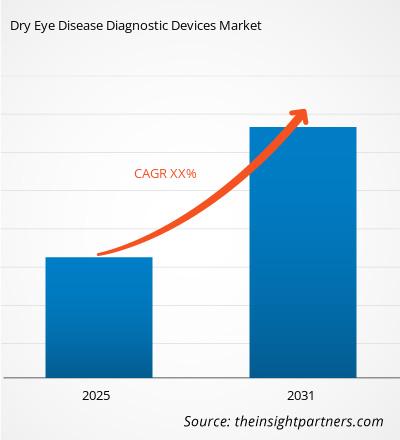
Dry eye disease diagnostic devices market was valued at US$ 2.75 Billion in 2025 and is projected to reach US$ 5.16 Billion by 2034, registering a CAGR of 7.23% during 2026–2034. Rising prevalence of dry eye disease, increasing adoption of advanced ophthalmic diagnostic technologies, and growing awareness of early disease detection continue to support market expansion. Continuous innovation in non-invasive ocular imaging and tear film assessment devices is further strengthening diagnostic accuracy across hospitals, ophthalmology clinics, and specialized diagnostic centers.
North America is expected to remain the leading regional market throughout the forecast period, advancing at an estimated CAGR of 6.8–7.3%. The region benefits from a well-established ophthalmic care ecosystem, an increasing geriatric population, and high adoption of advanced ocular imaging technologies. Expanding investments in eye care infrastructure, favorable reimbursement for diagnostic procedures, and the growing incidence of digital eye strain are supporting continued demand for innovative dry eye disease diagnostic devices.
Dry Eye Disease Diagnostic Devices Market Assessment and Insights
- North America: North America accounted for 39–43% share in 2025 and is anticipated to register a CAGR of 6.8–7.3% during 2026–2034. Advanced ophthalmic care infrastructure, high diagnostic awareness, and increasing adoption of premium ocular imaging technologies continue to support regional market leadership.
- U.S.: The U.S. represented 79–83% of the North American market in 2025 and is projected to grow at a CAGR of 6.9–7.4% during 2026–2034, supported by widespread ophthalmology practices, favorable reimbursement, and continuous technological innovation.
- Europe: Europe captured 27–31% market share in 2025 and is expected to expand at a CAGR of 6.7–7.2% during 2026–2034. Germany, the UK, and France remain key contributors due to robust ophthalmic care systems and growing adoption of advanced diagnostic platforms.
- Asia Pacific: Asia Pacific held 22–26% share in 2025 and is forecast to register a CAGR of 8.2–8.8% during 2026–2034. China, Japan, India, and South Korea continue investing in eye care infrastructure and expanding access to advanced ophthalmic diagnostics.
- Largest Segment: End User – Hospitals accounted for 44–48% market share in 2025 and is projected to grow at a CAGR of 7.0–7.5% during 2026–2034, driven by increasing patient volumes and comprehensive ophthalmic diagnostic capabilities.
- High Growth Segment: Device Type – Anterior Segment OCT represented 19–23% market share in 2025 and is anticipated to record a CAGR of 8.4–9.0% during 2026–2034, owing to its high-resolution imaging and expanding clinical applications.
- Key companies analyzed in detail: Johnson & Johnson, OCULUS Optikgeräte GmbH, Carl Zeiss Meditec AG, TearLab Corporation, Optovue, Inc., Topcon Corporation, Lumibird Medical (Quantel Medical SAS), I-MED Pharma Inc., Box Medical Solutions Inc., NIDEK Co., Ltd.
Source: The Insight Partners' analysis based on proprietary research, government publications, company annual reports, investor presentations, industry databases, and expert interviews.
Continuous advancements in technology used for ophthalmic imaging have shifted the dry eye disease diagnostic devices market from subjective traditional clinical evaluation procedures to quantitative objective and non-invasive diagnostic solutions. Innovators are developing highly sophisticated devices that combine high-quality imaging, tear film analysis automation, and artificial intelligence for more accurate diagnostics. Current production trends focus on the development of smaller size devices with the integration of software applications and regulatory approval to enable standardization of diagnostics and improved patient experience at hospitals, clinics, and diagnostic facilities.
Future growth potential in this industry will come from the increase in ophthalmology infrastructure in Asia Pacific, the Middle East, and Latin America, as well as the investments into digitization of the health care industry and precision ophthalmology. The implementation of artificial intelligence, cloud-based diagnostics solutions, and teleophthalmology will drive further adoption of innovative ocular diagnostic equipment. This will result in increased dry eye disease diagnostic devices market scope and business opportunities.
Dry Eye Disease Diagnostic Devices Market Report Scope
| Report Attribute | Details |
|---|---|
| Market size in 2025 | US$ 2.75 Billion |
| Market Size by 2034 | US$ 5.16 Billion |
| Global CAGR (2026 - 2034) | 7.23% |
| Historical Data | 2021-2024 |
| Forecast period | 2026-2034 |
Dry Eye Disease Diagnostic Devices Market Analysis
The rising instances of dry eye disease due to aging population, extended exposure to digital screens, autoimmune diseases, and pollution of environment are contributing to the growing need for diagnostic devices around the globe. The need for sophisticated diagnostic devices that can help in accurately assessing the parameters such as tear film stability, meibomian gland dysfunction, ocular surface integrity, and corneal morphology is becoming critical for ophthalmologists to provide personalized treatment to patients. Standardization of the process of diagnostics is being emphasized by healthcare professionals to ensure improved clinical results with less variation in diagnostic techniques.
The value chain comprises the component suppliers, optical system manufacturer, software developer, diagnostic device manufacturer, distributor, healthcare provider, and maintenance service providers. The supply chain has become more resilient due to localization manufacturing, supplier diversification, and automation of the manufacturing process of optical components. Regular investments in software, imaging technology, and regulatory compliance have made the product reliable and have facilitated the commercialization process. These developments contribute to the dry eye disease diagnostic devices market analysis by enhancing accuracy, efficiency, and reliability.
There are intense competitions among the players who continue innovating and expanding. Johnson & Johnson, Carl Zeiss Meditec AG, and Topcon Corporation are continuing their investment in advanced ophthalmic imaging technology, whereas OCULUS Optikgeräte GmbH and NIDEK Co., Ltd are making their product portfolio strong through dedicated diagnostic platform. TearLab Corporation, Optovue, Inc., Lumibird Medical (Quantel Medical SAS), I-MED Pharma Inc., and Box Medical Solutions Inc. are making efforts to enhance the capability of products.
The investment in such devices is increasingly being concentrated towards intelligent diagnostics based on artificial intelligence, connectivity through cloud, automation of image processing, and combined systems for ocular surface assessment. The business establishments are increasing their collaboration with academic institutes that deal with research in the field of ophthalmology, and at the same time are working towards expanding their business in developing countries. Their products' design and development revolve around making the diagnostics more precise, reducing examination time, and making the device easily integrable with electronic health record systems.
● REPORT CUSTOMIZATION
Tailor This Report To Align With Your Specific Business Requirements
This report can be customized to align precisely with your business objectives, scope, and target markets. Customization options include tailored segmentation, geography, competitive analysis, and strategic insights to support informed decision-making.
Customize This Report →WHAT YOU CAN ADJUST
- ● Segmentations
- ● Geography
- ● Competitive Analysis
- ● Language Preferences
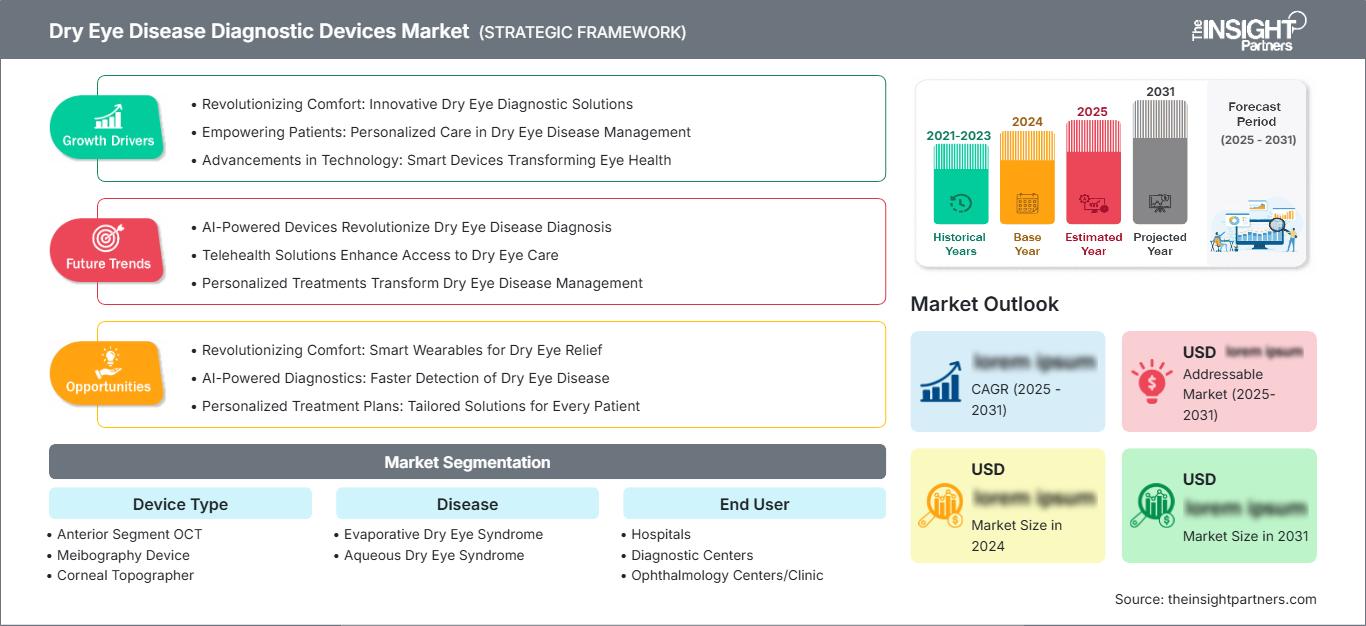
Dry Eye Disease Diagnostic Devices Market: Strategic Insights
Regional Insights
North America Dry Eye Disease Diagnostic Devices Market
North America accounted for 39–43% of the global market in 2025 and is projected to expand at a CAGR of 6.8–7.3% during 2026–2034. The region benefits from advanced ophthalmic healthcare infrastructure, widespread availability of specialized eye care services, and strong adoption of innovative diagnostic technologies. Rising prevalence of dry eye disease among the aging population, increasing digital device usage, and growing awareness regarding early diagnosis continue to support demand for sophisticated ocular diagnostic systems. Favorable reimbursement policies and continuous investments in ophthalmic research further strengthen market expansion.
The presence of leading ophthalmic device manufacturers, well-established distribution networks, and extensive clinical research activities continues to reinforce regional leadership. Hospitals and ophthalmology centers are increasingly adopting integrated diagnostic platforms capable of assessing multiple ocular surface parameters during a single examination. Continuous technological innovation, coupled with increasing adoption of artificial intelligence-assisted imaging and digital healthcare solutions, is expected to sustain North America's dominant market position throughout the forecast period.
U.S. Dry Eye Disease Diagnostic Devices Market
The U.S. accounted for 79–83% of the North American market in 2025 and is expected to register a CAGR of 6.9–7.4% during 2026–2034. Strong healthcare expenditure, broad access to specialized ophthalmology services, and increasing patient awareness regarding chronic ocular disorders continue driving market demand. Healthcare providers are increasingly utilizing objective diagnostic technologies to improve disease characterization and personalize treatment strategies for patients with evaporative and aqueous dry eye disease.
The country also benefits from the presence of major ophthalmic technology developers, extensive clinical trial activity, and favorable regulatory pathways supporting innovation. Hospitals, diagnostic centers, and ophthalmology clinics continue investing in advanced imaging systems that enhance workflow efficiency and diagnostic accuracy. Growing adoption of integrated software platforms and artificial intelligence-enabled image analysis further supports long-term market development.
Europe Dry Eye Disease Diagnostic Devices Market
Europe represented 27–31% of the global market in 2025 and is forecast to grow at a CAGR of 6.7–7.2% during 2026–2034. Germany remains the largest regional market due to its advanced ophthalmic equipment manufacturing industry, high healthcare expenditure, and widespread adoption of precision diagnostic technologies. Continued investments in eye care innovation and hospital modernization are supporting increased utilization of advanced dry eye diagnostic devices.
The United Kingdom continues experiencing steady market expansion through increasing awareness of ocular surface disorders, greater adoption of digital ophthalmology, and growing investment in specialist eye care services. Expanding collaboration between academic institutions and healthcare providers is improving access to advanced diagnostic technologies while encouraging clinical research into dry eye disease management.
France, Italy, and Spain collectively contribute significantly to regional growth through expanding ophthalmology networks, modernization of diagnostic infrastructure, and increasing patient access to specialized eye care. Rising demand for early disease detection and standardized diagnostic protocols continues supporting adoption of non-invasive ocular imaging technologies. These countries are also benefiting from increasing public healthcare investments and broader implementation of digital diagnostic solutions.
APAC Dry Eye Disease Diagnostic Devices Market
Asia Pacific accounted for 22–26% of the global market in 2025 and is projected to record the highest regional CAGR of 8.2–8.8% during 2026–2034. China leads regional demand through expanding ophthalmology infrastructure, increasing healthcare investment, and rapid adoption of advanced diagnostic technologies.
Japan and South Korea continue to strengthen regional development through technological innovation, high-quality ophthalmic care, and increasing utilization of precision diagnostic equipment across hospitals and specialty eye clinics.
India and Australia are witnessing robust adoption supported by rising awareness of ocular disorders, expanding eye care programs, and government initiatives promoting healthcare modernization. Growing investments in ophthalmology services continue to create favorable opportunities for device manufacturers.
Middle East & Africa Dry Eye Disease Diagnostic Devices Market
The Middle East & Africa market is anticipated to expand at a CAGR of 6.3–6.8% during 2026–2034, supported by improving healthcare infrastructure, increasing ophthalmology investments, and greater awareness of chronic eye diseases. Saudi Arabia remains the leading regional market through continued healthcare transformation and expansion of specialized ophthalmic services.
The United Arab Emirates is experiencing growing adoption of advanced diagnostic technologies through investments in modern healthcare facilities and increasing demand for premium ophthalmology services. Expansion of private healthcare providers further contributes to market development.
South Africa and the Rest of the Middle East & Africa continue improving access to ophthalmic diagnostics through healthcare infrastructure development and increasing public investment in specialized eye care services. Continued modernization is expected to support long-term market expansion.
Segmentation Analysis
Device Type
The Device Type segment is projected to grow at a CAGR of 7.4–7.9% during 2026–2034, driven by continuous technological innovation, increasing demand for objective ocular surface assessment, and broader adoption of non-invasive diagnostic solutions. Manufacturers are integrating artificial intelligence, automated image analysis, and enhanced software capabilities into ophthalmic diagnostic systems to improve clinical efficiency and diagnostic precision. Anterior Segment OCT remains the fastest-growing sub-segment, accounting for 19–23% market share in 2025 and expanding at a CAGR of 8.4–9.0% during 2026–2034.
- Anterior Segment OCT: Provides high-resolution cross-sectional imaging of the cornea and tear meniscus, supporting accurate assessment of ocular surface abnormalities and enabling comprehensive evaluation during routine ophthalmic examinations.
- Meibography Device: Increasingly adopted for visualization of meibomian gland morphology, helping clinicians identify gland dysfunction associated with evaporative dry eye while supporting individualized treatment planning.
- Corneal Topographer: Offers detailed mapping of corneal curvature and surface characteristics, assisting ophthalmologists in evaluating ocular surface irregularities and improving overall diagnostic confidence.
- Osmolarity Testing Device: Measures tear osmolarity to provide an objective indicator of tear film instability, supporting standardized diagnosis and disease severity assessment across clinical settings.
- Ocular Surface Thermographer: Enables non-invasive evaluation of ocular surface temperature variations associated with tear film dysfunction, supporting early disease detection and monitoring of therapeutic response.
- Interferometer: Assesses tear film lipid layer thickness and stability, allowing clinicians to evaluate meibomian gland function and optimize management strategies for evaporative dry eye disease.
- Flurophotometer: Used to quantify corneal permeability and evaluate ocular surface health, supporting advanced clinical research and comprehensive assessment of tear film dynamics.
Disease
The Disease segment is expected to register a CAGR of 7.1–7.6% during 2026–2034 as growing awareness of dry eye subtypes encourages more precise diagnostic evaluation and personalized treatment planning. Advanced diagnostic devices are increasingly utilized to differentiate disease mechanisms, enabling clinicians to select targeted therapeutic approaches while improving long-term patient outcomes.
- Evaporative Dry Eye Syndrome: Represents the most frequently diagnosed form of dry eye disease, driving strong demand for meibography, interferometry, and tear film assessment technologies that support comprehensive evaluation of meibomian gland dysfunction.
- Aqueous Dry Eye Syndrome: Continues generating demand for tear osmolarity testing, anterior segment imaging, and ocular surface evaluation technologies that assist clinicians in identifying tear production deficiencies and monitoring treatment effectiveness.
End User
The End User segment is projected to expand at a CAGR of 7.2–7.7% during 2026–2034, owing to increasing patient volumes, expanding ophthalmology infrastructure, and growing utilization of advanced diagnostic technologies across healthcare facilities. Hospitals remain the largest end-user segment, accounting for 44–48% market share in 2025 and registering a CAGR of 7.0–7.5% during 2026–2034 because of comprehensive ophthalmic diagnostic capabilities and multidisciplinary eye care services.
- Hospitals: Continue leading demand through integrated ophthalmology departments, high patient throughput, access to advanced imaging technologies, and increasing adoption of standardized dry eye diagnostic protocols.
- Diagnostic Centers: Growing utilization of specialized ocular diagnostic equipment and efficient outpatient services continues to support demand from patients requiring rapid and comprehensive eye examinations.
- Ophthalmology Centers/Clinic: Specialized eye clinics increasingly invest in advanced diagnostic platforms to improve disease detection, streamline patient management, and provide personalized treatment planning using objective ocular surface assessments.
Opportunity Snapshot
| Segment Name | Revenue Contribution | Trend Tag | Adoption Stage |
| Hospitals | High | Integrated Imaging | Mature |
| Diagnostic Centers | Medium | Rapid Screening | Scaling |
| Ophthalmology Centers/Clinic | High | AI Diagnostics | Scaling |
Dry Eye Disease Diagnostic Devices Market Growth Drivers and Impact Analysis
Increasing prevalence of dry eye disease and aging population
Rising burden of dry eye disease across the globe due to aging population, exposure to electronic screens, autoimmune disorders, contact lens usage, and environmental pollution is expected to boost the demand for advanced diagnostic devices. In accordance with the leading international ophthalmology organizations and World Health Organization (WHO), visual health has emerged as a major public health issue with increasing number of aged population across the globe. Early diagnosis of the diseases has gained importance among healthcare professionals in order to prevent the progression of the disease. This trend has resulted in the deployment of objective diagnostic tools to assess the stability of tear film and abnormal ocular surface. These trends will continue to drive the dry eye disease diagnostic devices market in the coming years.
Growing adoption of non-invasive ophthalmic diagnostic technologies
Contemporary ophthalmology is moving from subjective clinical evaluation to non-invasive diagnostic technologies with reproducible results and little discomfort for patients. Anterior Segment Optical Coherence Tomography (OCT), meibography, tear osmolarity analysis, interferometry, and ocular surface thermography allow doctors to assess the severity of disease in an accurate way and develop personal treatment plans. Advancements in imaging precision, software optimization, and artificial intelligence analysis contribute to better diagnoses and faster workflows. Modern hospitals and specialized eye clinics prefer integrated diagnostic platforms that allow the assessment of multiple ocular parameters during one exam. The above-mentioned technological development facilitates dry eye disease diagnostic device market analysis.
Expansion of ophthalmic healthcare infrastructure worldwide
Healthcare organizations and private practitioners are making further investments in dedicated ophthalmology services, diagnostic technologies, and IT infrastructure for the growing need for vision care. Developing countries are developing their eye care programs through improvements in hospital infrastructure, better access to specialist centers, and health campaigns targeting visual impairment that could have been prevented. Organizations are continuously involved in eye health programs that target chronic diseases. Device manufacturers are responding to this trend by developing distribution channels, forging alliances, and developing diagnostic solutions that are portable and appropriate for use in different healthcare settings. This will increase the size of the dry eye disease diagnostic devices market and make a good environment for equipment adoption.
Dry Eye Disease Diagnostic Devices Market Future Trends
Artificial intelligence integration in ocular diagnostics
AI is predicted to be one of the key elements of future-generation diagnostics platforms. The producers of the devices are integrating machine learning tools into their products which will allow them to automatically analyze the features such as meibomian glands, tear films, corneal imaging, and other ocular surface parameters. Remote consultation and continuous monitoring of patients will be provided by cloud-based software platforms. Due to the growing number of approvals for medical devices with AI assistance, the implementation of such tools is expected to grow rapidly.
Development of multimodal diagnostic platforms
There has been a growing need for integrated diagnostic systems that can effectively combine various diagnostic tools into one system. Companies have begun to introduce their systems with anterior segment OCT, meibography, interferometry, tear osmolarity analysis, and ocular surface imaging incorporated in one workflow. The use of multimodal devices allows doctors to save on diagnostic time, enhance the ease of conducting examinations, and provides valuable information on disease diagnosis. It is anticipated that the trend of consolidation of diagnostic systems will make operations more efficient and eliminate the need for redundant equipment.
Dry Eye Disease Diagnostic Devices Market Opportunities
Expansion across emerging ophthalmology markets
The rapid development of healthcare infrastructure in Asia Pacific, the Middle East, Latin America, and some African regions provides a lot of opportunities for producers of high-quality ophthalmic diagnostic equipment. Governments invest in the provision of eye care, develop hospitals, and build programs for avoiding blindness. Higher income levels and increasing awareness among patients lead to higher interest in special eye examinations. The manufacturers who will manage to develop partnerships in the region, develop service networks, and produce affordable diagnostics equipment which corresponds to the needs of local healthcare systems will be able to win more customers. This situation is likely to boost the market share of dry eye disease diagnostic devices.
Innovation in portable and connected diagnostic solutions
The increasing demand for decentralized eye care services has opened up new possibilities for portable, lightweight, and connected ophthalmic diagnostic devices. The use of smaller instruments that can be used for community screening programs, satellite eye clinics, and teleophthalmology programs has become more appealing, especially in areas where specialized doctors are not easily available. The incorporation of these devices into cloud-based patient management and electronic health record systems increases the efficiency of workflow, as well as helps in providing coordinated care. Companies working on developing portable imaging systems, wireless connectivity, and software compatibility can gain an edge in their product offerings through these changes.
Recent Developments
- September 2025: Topcon Healthcare, Inc., introduced the TERA Dry Eye Imager, a multimodal platform purpose-built to detect, grade, and manage dry eye disease. TERA pairs robotic automation with high-resolution imaging to standardize capture and speed exams. The system integrates corneal topography, pupillometry, and a dedicated dry eye suite with validated clinical grading scales. It assesses both signs and symptoms at the point of care and turns results into clear, actionable guidance for treatment and follow-up.
- May 2025: ZEISS Vision Care introduced the ZEISS VISUREF 1000, a multifunctional ophthalmic diagnostic device featuring automated non-invasive dry eye assessment, meibomian gland analysis, corneal topography, wavefront refraction, and integrated ocular health screening. The platform expands comprehensive eye examination capabilities while improving workflow efficiency for eye care professionals.
- July 2024: Bausch + Lomb Corporation acquired Trukera Medical, a developer of the ScoutPro Osmolarity System, a point-of-care device that measures tear osmolarity—one of the most important objective biomarkers for dry eye disease. The acquisition expands Bausch + Lomb's dry eye diagnostic portfolio and strengthens its position in ocular surface disease management...
Frequently Asked Questions

- Comprehensive Market Sizing and Forecast Analysis
- Detailed Segmentation Analysis
- In-Depth Market Dynamics Assessment
- Regional and Country-Level Insights
- Competitive Landscape and Company Benchmarking
- Strategic Business Intelligence
Recent Reports
Testimonials

The Insight Partners' SCADA System Market report is comprehensive, with valuable insights on current trends and future forecasts. The team was highly professional, responsive, and supportive throughout. We are very satisfied and highly recommend their services.
RAN KEDEM Partner, Reali Technologies LTDs
I requested a report on a very specific software market and the team produced the report in a few days. The information was very relevant and well presented. I then requested some changes and additions to the report. The team was again very responsive and I got the final report in less than a week.
JEAN-HERVE JENN Chairman, Future Analytica
We worked with The Insight Partners for an important market study and forecast. They gave us clear insights into opportunities and risks, which helped shape our plans. Their research was easy to use and based on solid data. It helped us make smart, confident decisions. We highly recommend them.
PIYUSH NAGPAL Sr. Vice President, High Beam Global
The Insight Partners delivered insightful, well-structured market research with strong domain expertise. Their team was professional and responsive throughout. The user-friendly website made accessing industry reports seamless. We highly recommend them for reliable, high-quality research services
YUKIHIKO ADACHI CEO, Deep Blue, LLC.
This is the first time I have purchased a market report from The Insight Partners.While I was unsure at first, I visited their web site and felt more comfortable to take the risk and purchase a market report.I am completely satisfied with the quality of the report and customer service. I had several questions and comments with the initial report, but after a couple of dialogs over email with their analyst I believe I have a report that I can use as input to our strategic planning process.Thank you so much for taking the extra time and making this a positive experience.I will definitely recommend your service to others and you will be my first call when we need further market data.
JOHN SUZUKI President and Chief Executive Officer, Board Director, BK Technologies
I wish to appreciate your support and the professionalism you displayed in the course of attending to my request for information regarding to infectious disease IVD market in Nigeria. I appreciate your patience, your guidance, and the fact that you were willing to offer a discount, which eventually made it possible for us to close a deal. I look forward to engaging The Insight Partners in the future, all thanks to the impression you have created in me as a result of this first encounter.
DR CHIJIOKE ONYIA MANAGING DIRECTOR, PineCrest Healthcare Ltd.Reason to Buy
- Informed Decision-Making
- Understanding Market Dynamics
- Competitive Analysis
- Identifying Emerging Markets
- Customer Insights
- Market Forecasts
- Risk Mitigation
- Boosting Operational Efficiency
- Strategic Planning
- Investment Justification
- Tracking Industry Innovations
- Aligning with Regulatory Trends





 Get Free Sample for