
Dry Eye Disease Market Share, Demand & Growth by 2034
Dry Eye Disease Market Size and Forecasts (2021–2034), Global and Regional Share, Trends, and Growth Opportunity Analysis Report Coverage : by Treatment Type (Medications, Medical Devices, Surgical Interventions); Disease Type (Aqueous Deficient Dry Eye Disease, Evaporative Dry Eye Disease); Distribution Channel (Hospitals and Clinics, Retail Pharmacies, Online Pharmacies); and Geography (North America, Europe, Asia Pacific, and South and Central America)
- Status : Data Released
- Report Code : TIPRE00040020
- Category : Life Sciences
- No. of Pages : 150
- Available Report Formats :


- Last update date : July 03, 2026


2025 Market Size
US$ 6.84 Bn
Base year value
2034 Forecast
US$ 11.29 Bn
Projected by 2034
CAGR 2026-2034
5.73 %
Growth rate
Addressable Market
US$ 82.18 Bn
(2026-2034)
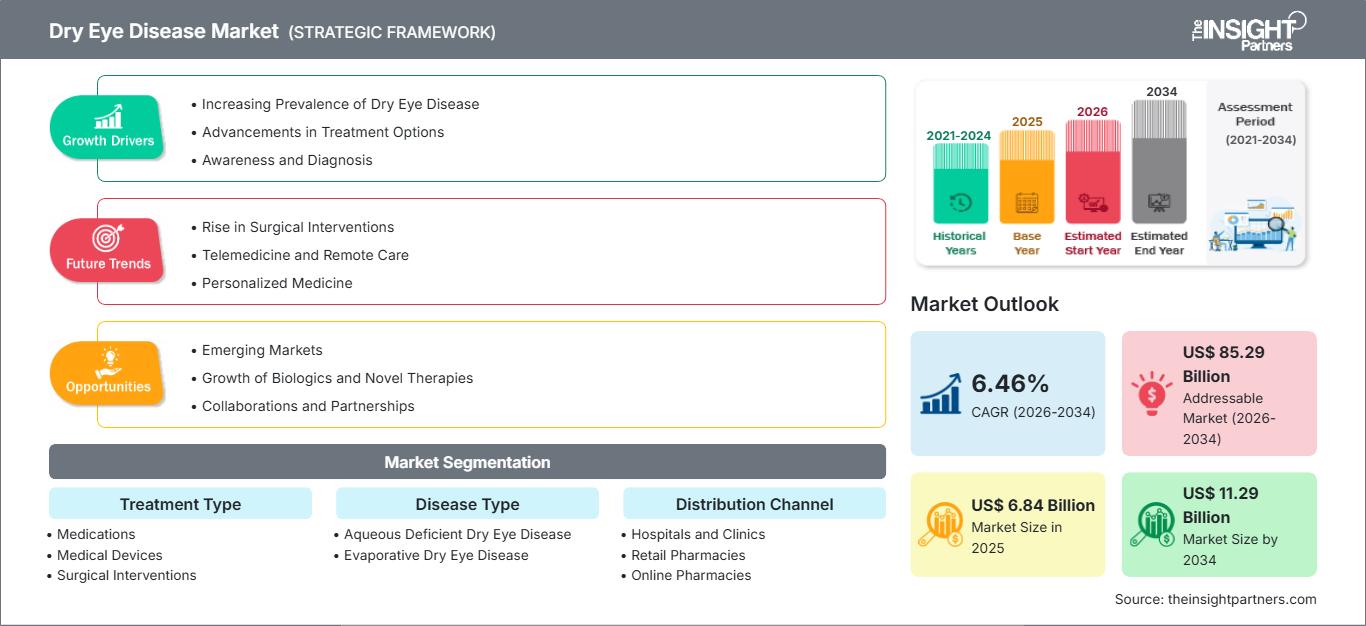
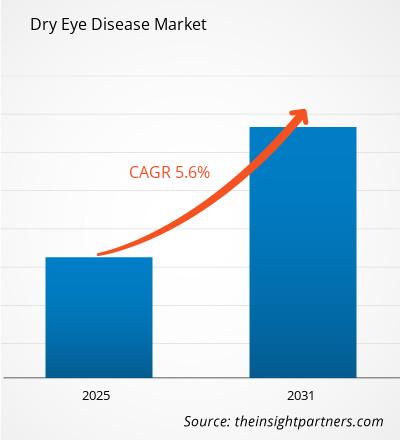
The Dry Eye Disease market was valued at US$ 6.84 billion in 2025 and is expected to reach US$ 11.29 billion by 2034; it is estimated to record a CAGR of 5.73% during 2026-2034.
Dry Eye Disease Market Assessment and Insights
- North America: North America accounted for 40–44% share in 2025 and is projected to grow at a CAGR of 6.1–6.6% during 2026–2034. Strong healthcare infrastructure, high treatment awareness, and broad commercialization of innovative ophthalmic therapies continue to support regional leadership.
- U.S.: The U.S. represented 80–84% of the North American market in 2025 and is anticipated to register a CAGR of 6.2–6.7% during 2026–2034, supported by extensive ophthalmology services, high prescription rates, and active pharmaceutical innovation.
- Europe: Europe captured 26–30% market share in 2025 and is expected to expand at a CAGR of 6.0–6.5% during 2026–2034. Germany, the UK, and France remain major contributors because of advanced healthcare systems and increasing access to ophthalmic treatments.
- Asia Pacific: Asia Pacific held 21–25% share in 2025 and is forecast to record a CAGR of 7.4–8.0% during 2026–2034. China, Japan, India, and South Korea continue to strengthen regional demand through expanding ophthalmology infrastructure and increasing patient awareness.
- Largest Segment: Treatment Type – Medications accounted for 62–66% market share in 2025 and are expected to grow at a CAGR of 6.4–6.9% during 2026–2034, supported by continued innovation in anti-inflammatory and immunomodulatory therapies.
- High Growth Segment: Distribution Channel – Online Pharmacies represented 14–18% market share in 2025 and is anticipated to register a CAGR of 8.5–9.1% during 2026–2034, driven by increasing digital healthcare adoption and expanding access to prescription medications.
- Key companies analyzed in detail: AbbVie Inc., Novartis AG, Santen Pharmaceutical Co., Ltd., Johnson & Johnson, Ocular Therapeutix, Inc., EyePoint Pharmaceuticals, Inc., Regeneron Pharmaceuticals, Inc., Bausch + Lomb Corporation, Amgen Inc., Tarsus Pharmaceuticals, Inc.
Source: The Insight Partners' analysis based on proprietary research, government publications, company annual reports, investor presentations, industry databases, and expert interviews.
Advances in pharmaceutical research and ophthalmic drug delivery technologies have significantly transformed the dry eye disease market by improving therapeutic effectiveness and patient adherence. Manufacturers are increasingly developing preservative-free formulations, sustained-release drug delivery platforms, biologics, and targeted anti-inflammatory therapies that address underlying disease mechanisms rather than only symptom relief. Production strategies now emphasize quality manufacturing, regulatory compliance, and scalable commercialization to meet increasing global demand while supporting broader access to innovative ophthalmic treatments across healthcare systems.
Future expansion is expected to be driven by increasing healthcare investment across emerging economies, wider availability of specialty ophthalmology services, and continued regulatory support for innovative ophthalmic therapeutics. Growing adoption of digital health platforms, teleophthalmology, and personalized treatment approaches is expected to improve patient access and long-term disease management. These developments continue expanding the dry eye disease market scope, creating new commercial opportunities while reinforcing sustainable industry growth across global healthcare markets.
Dry Eye Disease Market Report Scope
| Report Attribute | Details |
|---|---|
| Market size in 2025 | US$ 6.84 Billion |
| Market Size by 2034 | US$ 11.29 Billion |
| Global CAGR (2026 - 2034) | 5.73% |
| Historical Data | 2021-2024 |
| Forecast period | 2026-2034 |
Dry Eye Disease Market Analysis
The increase in the incidence of dry eye syndrome because of aging populations, increased usage of technology, autoimmune diseases, changes in hormones, and pollution keeps boosting the global demand for dry eye syndrome treatments. Growing awareness among professionals and patients is leading to early detection and better compliance. Doctors are using evidence-based treatment methods by combining pharmaceutical drugs, medical devices, and minimal intervention procedures to enhance the outcomes of their patients. All these factors play an important role in contributing to the continued growth of the dry eye syndrome market while increasing accessibility in both developed and developing health care systems.
The market ecosystem includes pharmaceutical companies, medical devices companies, raw materials providers, contract manufacturing organizations, distributors, hospitals, specialized ophthalmology clinics, pharmacies, and online pharmacies. The steady improvement in pharmaceutical manufacturing process, diversification of the supply chains, and regulatory alignment has been helping to improve the availability of the products. Increasing investments in R&D are aiding the innovations in the field of prescription medications and ocular drug delivery technologies.
Competition remains strong as leading pharmaceutical companies continue investing in novel therapeutics, lifecycle management strategies, and strategic partnerships. AbbVie Inc., Novartis AG, Santen Pharmaceutical Co., Ltd., and Bausch + Lomb Corporation continue strengthening their ophthalmology portfolios through product innovation and geographic expansion. Johnson & Johnson, Regeneron Pharmaceuticals, Inc., Ocular Therapeutix, Inc., EyePoint Pharmaceuticals, Inc., Amgen Inc., and Tarsus Pharmaceuticals, Inc. are also expanding research pipelines focused on targeted therapies, sustained-release drug delivery, and inflammatory pathway modulation.
Investment activity increasingly targets biologics, gene-based ophthalmic therapies, extended-release formulations, and digital patient monitoring solutions that improve treatment adherence and clinical outcomes. Companies are strengthening collaborations with research institutions and specialty ophthalmology centers to accelerate product development and regulatory approvals. Continuous innovation across prescription therapeutics, advanced drug delivery technologies, and patient-centric treatment models is supporting the dry eye disease market size, positioning manufacturers to address growing global demand while maintaining competitive differentiation.
● REPORT CUSTOMIZATION
Tailor This Report To Align With Your Specific Business Requirements
This report can be customized to align precisely with your business objectives, scope, and target markets. Customization options include tailored segmentation, geography, competitive analysis, and strategic insights to support informed decision-making.
Customize This Report →WHAT YOU CAN ADJUST
- ● Segmentations
- ● Geography
- ● Competitive Analysis
- ● Language Preferences
Dry Eye Disease Market: Strategic Insights
Regional Insights
North America Dry Eye Disease Market
North America accounted for 40–44% of the global market in 2025 and is expected to register a CAGR of 6.1–6.6% during 2026–2034. The region benefits from advanced ophthalmic healthcare infrastructure, strong reimbursement frameworks, and high awareness regarding chronic ocular surface disorders. Rising prevalence of dry eye disease among the aging population, increasing digital screen exposure, and widespread access to ophthalmologists continue to support treatment demand. Growing adoption of prescription anti-inflammatory therapies and sustained-release drug delivery systems further strengthens regional market expansion.
The market is also supported by a robust pharmaceutical innovation ecosystem, extensive clinical research activity, and the presence of leading ophthalmology companies. Hospitals and specialty eye clinics continue to adopt comprehensive treatment protocols that integrate prescription medications, medical devices, and minimally invasive procedures. Increasing patient preference for preservative-free formulations and personalized treatment strategies is expected to sustain North America's market leadership throughout the forecast period.
U.S. Dry Eye Disease Market
The U.S. represented 80–84% of the North American market in 2025 and is projected to grow at a CAGR of 6.2–6.7% during 2026–2034. High diagnosis rates, favorable reimbursement policies, and widespread availability of innovative prescription therapies continue to support market expansion. Increasing awareness of ocular surface disease among healthcare professionals has encouraged earlier diagnosis and greater adoption of evidence-based treatment pathways across hospitals, ophthalmology clinics, and ambulatory care settings.
The country also benefits from the presence of major pharmaceutical companies, extensive clinical trial activity, and continuous regulatory approvals for innovative ophthalmic therapies. Expansion of specialty pharmacy services and increasing utilization of digital healthcare platforms continue to improve patient access to advanced treatment options. Growing investment in ophthalmology research further strengthens long-term market development.
Europe Dry Eye Disease Market
Europe accounted for 26–30% of the global market in 2025 and is anticipated to expand at a CAGR of 6.0–6.5% during 2026–2034. Germany remains the leading regional market owing to its advanced healthcare infrastructure, strong ophthalmology research capabilities, and broad access to innovative therapies. Increasing adoption of prescription treatments and expanding specialist eye care services continue to support sustained market growth.
The United Kingdom continues witnessing stable market expansion through increasing awareness of chronic ocular disorders, improved access to ophthalmologists, and growing utilization of prescription therapies. Continued healthcare investment and strong collaboration between research institutions and healthcare providers are supporting innovation in disease management while improving treatment accessibility.
France, Italy, and Spain collectively contribute significantly to regional growth through the modernization of ophthalmic healthcare services, increasing patient awareness, and expanding the availability of advanced therapies. Rising emphasis on early diagnosis, preventive eye care, and integrated treatment approaches continues to support pharmaceutical demand. These countries also benefit from ongoing investment in specialty healthcare services and clinical research.
APAC Dry Eye Disease Market
Asia Pacific held 21–25% of the global market in 2025 and is expected to record the highest regional CAGR of 7.4–8.0% during 2026–2034. China leads regional demand through expanding healthcare infrastructure, increasing ophthalmology services, and rising awareness of ocular surface disorders.
Japan and South Korea continue to strengthen market growth through advanced ophthalmic care, increasing adoption of innovative prescription therapies, and continuous pharmaceutical research focused on chronic eye diseases.
India and Australia are experiencing growing treatment demand supported by expanding healthcare access, increasing digital device usage, and government initiatives promoting early diagnosis and management of chronic ophthalmic conditions.
Middle East & Africa Dry Eye Disease Market
The Middle East & Africa market is projected to register a CAGR of 5.8–6.3% during 2026–2034, supported by improving healthcare infrastructure, increasing ophthalmology investments, and growing awareness of chronic eye disorders. Saudi Arabia remains the leading regional market due to expanding specialist healthcare services and ongoing healthcare transformation initiatives.
The United Arab Emirates continues strengthening adoption of advanced ophthalmic therapies through increasing investment in private healthcare facilities and specialized eye care centers. Rising healthcare expenditure is improving patient access to innovative treatment options.
South Africa and the Rest of the Middle East & Africa continue expanding ophthalmology services through healthcare modernization and greater investment in specialist clinical infrastructure. Continued improvements in healthcare accessibility are expected to support long-term treatment adoption across the region.
Segmentation Analysis
Treatment Type
The Treatment Type segment is projected to expand at a CAGR of 6.5–7.0% during 2026–2034, supported by continuous innovation in pharmaceutical therapies, sustained-release drug delivery systems, and minimally invasive treatment options. Growing clinical emphasis on disease-modifying therapies rather than symptomatic relief continues to encourage investment in advanced treatment approaches. Medications remain the largest sub-segment, accounting for 62–66% market share in 2025 and expanding at a CAGR of 6.4–6.9% during 2026–2034.
- Medications: Prescription anti-inflammatory agents, immunomodulators, lubricating eye drops, and preservative-free formulations remain the primary treatment option, supported by strong clinical evidence and widespread physician adoption for long-term disease management.
- Medical Devices: Therapeutic devices supporting tear film stabilization, meibomian gland dysfunction treatment, and ocular surface rehabilitation are increasingly utilized alongside pharmacological therapies to improve patient outcomes and symptom control.
- Surgical Interventions: Surgical procedures, including punctal occlusion and other specialized interventions, are generally reserved for patients with severe disease who demonstrate inadequate response to conventional pharmacological and device-based therapies.
Disease Type
The Disease Type segment is anticipated to register a CAGR of 6.3–6.8% during 2026–2034 as increasing diagnostic accuracy enables clinicians to differentiate disease mechanisms and personalize treatment strategies. Growing awareness regarding disease subtypes and expanding availability of targeted therapies continue to improve clinical outcomes across both patient populations.
- Aqueous Deficient Dry Eye Disease: Treatment focuses on improving tear production and controlling ocular surface inflammation through prescription medications, lubricants, and advanced therapeutic interventions tailored to underlying lacrimal gland dysfunction.
- Evaporative Dry Eye Disease: Represents the most commonly diagnosed disease subtype, with treatment strategies emphasizing meibomian gland management, tear film stabilization, anti-inflammatory therapy, and adjunctive medical device utilization.
Distribution Channel
The Distribution Channel segment is expected to grow at a CAGR of 6.8–7.3% during 2026–2034, driven by increasing patient access to ophthalmic therapies through multiple healthcare delivery channels and growing adoption of digital pharmaceutical services. Online pharmacies represent the fastest-growing sub-segment, accounting for 14–18% market share in 2025 while registering a CAGR of 8.5–9.1% during 2026–2034.
- Hospitals and Clinics: Continue serving as the primary treatment channel through specialist ophthalmology consultations, comprehensive disease diagnosis, prescription management, and long-term monitoring of chronic ocular surface disorders.
- Retail Pharmacies: Maintain an important role by providing convenient access to prescription medications, artificial tears, and supportive ophthalmic products while facilitating pharmacist-led patient counseling and treatment adherence.
- Online Pharmacies: Experience rapid expansion through increasing digital healthcare adoption, convenient home delivery, competitive pricing, and broader patient access to prescription ophthalmic therapies and follow-up care services.
Opportunity Snapshot
| Segment Name | Revenue Contribution | Trend Tag | Adoption Stage |
| Hospitals and Clinics | High | Specialty Care | Mature |
| Retail Pharmacies | Medium | Prescription Access | Mature |
| Online Pharmacies | High | Digital Dispensing | Scaling |
Dry Eye Disease Market Growth Drivers and Impact Analysis
Increasing prevalence of chronic ocular surface disorders
Dry eye disease incidence rates have been increasing due to factors such as population aging, exposure to digital screens for extended periods, pollution in the environment, hormonal imbalances, autoimmune diseases, and high contact lens usage. As per the recommendations from various international healthcare organizations, visual impairments and eye health have gained importance in healthcare due to the increasing longevity in the world. Healthcare practitioners are encouraging early diagnosis and disease management in order to avoid the progression of the condition and improving patients’ quality of life. It has positively influenced the demand for prescription drugs, additional devices, and ophthalmology services.
Advances in targeted ophthalmic therapeutics
The continuous innovations being introduced into the field of ophthalmic drugs have changed the way diseases are managed as these drugs focus on tackling the inflammatory pathways that cause chronic dry eye disease. Some of the innovations being made by the pharmaceutical companies include immunomodulators, biologicals, sustained release products, preservative free drugs, and new drug delivery mechanisms to enhance drug efficacy and patient compliance. There are continuous innovations in the clinic in developing new treatments for patients suffering from moderate to severe disease. Regulatory approvals of new ophthalmic drugs have enhanced treatment accessibility in global healthcare markets. All these innovations help to enhance the market analysis of dry eye disease.
Expansion of ophthalmology infrastructure and specialized care
Continued investments in the form of special ophthalmology clinics, hospital upgrades, and comprehensive eye care are being made by governments and private healthcare service providers to deal with the growing cases of chronic eye diseases. Emerging nations are increasing access to specialist healthcare services through the establishment of new hospitals, eye institutes, and the use of teleophthalmology services to reach out to patients. International organizations are supporting programs to reduce the instances of avoidable blindness and develop ophthalmic health care facilities. Manufacturers and drug companies are making such arrangements through partnerships, education, and increased business activity in high growth markets.
Dry Eye Disease Market Future Trends
Personalized treatment strategies supported by precision medicine
The future of dry eye disease management will depend on precision medicine strategies that take into consideration disease subtype, inflammation biomarkers, tear film analysis, and patient’s clinical profile. The progress in diagnostic tools and molecular science enables ophthalmologists to choose targeted treatments that increase efficiency and avoid unneeded changes in the course of therapy. The pharmaceutical industry focuses on developing biomarker-driven clinical trials and companion diagnostics to ensure the effectiveness of personalized treatment options. The mentioned tendency will lead to better treatment results and increased use of prescription drugs in ophthalmology.
Digital healthcare integration in ophthalmology
Digital health technology is set to be more incorporated in the management of chronic conditions such as diabetes using teleophthalmology, e-prescriptions, remote patient monitoring, and clinical decision support using artificial intelligence. Patients are increasingly getting better through digital consultation tools, medication compliance applications, and virtual follow-up programs. Health care professionals have been incorporating digital technology with traditional ophthalmology to make patient management easier and increase clinical efficiency. Further investment in connected health care infrastructure will not only support disease management but also emerging trends in the dry eye disease market space.
Dry Eye Disease Market Opportunities
Commercial expansion in emerging pharmaceutical markets
The fast pace of development of the healthcare system in Asia Pacific, Latin America, Middle East, and certain African nations provides major business prospects for pharmaceutical companies working on the creation of new therapies for the ophthalmic area. There is an increasing focus on healthcare coverage and expansion of investment into specialist eye healthcare, along with better access to medications for chronic ailments through prescriptions. Growing disposable income levels, as well as increased awareness among consumers about eye health issues, make people more willing to visit doctors. Those firms that create partnerships for production in the region and offer inexpensive treatment options will be able to succeed.
Development of sustained-release and combination therapies
There are several significant opportunities for companies producing next-generation drug delivery systems that can decrease the frequency of dose administration and increase its efficacy at the same time. Sustained-release implants, long-lasting topicals, combination products, and bioabsorbable delivery systems have the ability to improve patient compliance and therapy outcomes. In addition, current pharmaceutical R&D is investigating biologics and regenerative medicine technologies that focus on addressing the mechanism of the disease and not merely its symptoms. Companies with differentiated treatment platforms backed up by solid clinical trials and regulatory approvals will enhance their competitive advantage as well as enlarge the market size of dry eye disease.
Recent Developments
- June 2026: Hengrui Pharma, a global pharmaceutical company focused on scientific and technological innovation, and Novaliq GmbH ("Novaliq"), a biopharmaceutical company focusing on first- and best-in-class ocular therapeutics based on its unique EyeSol water-free platform technology, announce that the China National Medical Products Administration (NMPA) has approved Heng Yi (0.1% cyclosporine ophthalmic solution) for the treatment of patients with dry eye disease, aiming to increase tear secretion in patients with reduced tear production and improve the signs of the disease.
- May 2025: Alcon, the global leader in eye care dedicated to helping people see brilliantly, announced that the U.S. Food and Drug Administration (FDA) has approved TRYPTYR (acoltremon ophthalmic solution) 0.003%, formerly known as AR-15512, for the treatment of signs and symptoms of Dry Eye Disease (DED). TRYPTYR is a first-in-class TRPM8 receptor agonist (neuromodulator) that stimulates corneal sensory nerves to increase natural tear production rapidly.
- March 2025: Bausch + Lomb Corporation announced publication of Phase 4 clinical data demonstrating that MIEBO® (perfluorohexyloctane ophthalmic solution) provided patient-reported symptom relief within minutes after initial administration, with sustained improvement during the first two weeks of treatment. The findings reinforce the product's role in managing evaporative dry eye disease by directly targeting tear evaporation.
Frequently Asked Questions

- Comprehensive Market Sizing and Forecast Analysis
- Detailed Segmentation Analysis
- In-Depth Market Dynamics Assessment
- Regional and Country-Level Insights
- Competitive Landscape and Company Benchmarking
- Strategic Business Intelligence
Recent Reports
Testimonials

The Insight Partners provided valuable market intelligence that supported our global go-to-market strategy. Their team was professional, responsive, and attentive to our feedback, providing thoughtful analysis and helpful methodological clarifications throughout the project.
Junmo Kim Chief Financial Officer (CFO), Enertech Co., Ltd.
The Insight Partners' SCADA System Market report is comprehensive, with valuable insights on current trends and future forecasts. The team was highly professional, responsive, and supportive throughout. We are very satisfied and highly recommend their services.
RAN KEDEM Partner, Reali Technologies LTDs
I requested a report on a very specific software market and the team produced the report in a few days. The information was very relevant and well presented. I then requested some changes and additions to the report. The team was again very responsive and I got the final report in less than a week.
JEAN-HERVE JENN Chairman, Future Analytica
We worked with The Insight Partners for an important market study and forecast. They gave us clear insights into opportunities and risks, which helped shape our plans. Their research was easy to use and based on solid data. It helped us make smart, confident decisions. We highly recommend them.
PIYUSH NAGPAL Sr. Vice President, High Beam Global
The Insight Partners delivered insightful, well-structured market research with strong domain expertise. Their team was professional and responsive throughout. The user-friendly website made accessing industry reports seamless. We highly recommend them for reliable, high-quality research services
YUKIHIKO ADACHI CEO, Deep Blue, LLC.
This is the first time I have purchased a market report from The Insight Partners.While I was unsure at first, I visited their web site and felt more comfortable to take the risk and purchase a market report.I am completely satisfied with the quality of the report and customer service. I had several questions and comments with the initial report, but after a couple of dialogs over email with their analyst I believe I have a report that I can use as input to our strategic planning process.Thank you so much for taking the extra time and making this a positive experience.I will definitely recommend your service to others and you will be my first call when we need further market data.
JOHN SUZUKI President and Chief Executive Officer, Board Director, BK Technologies
I wish to appreciate your support and the professionalism you displayed in the course of attending to my request for information regarding to infectious disease IVD market in Nigeria. I appreciate your patience, your guidance, and the fact that you were willing to offer a discount, which eventually made it possible for us to close a deal. I look forward to engaging The Insight Partners in the future, all thanks to the impression you have created in me as a result of this first encounter.
DR CHIJIOKE ONYIA MANAGING DIRECTOR, PineCrest Healthcare Ltd.Reason to Buy
- Informed Decision-Making
- Understanding Market Dynamics
- Competitive Analysis
- Identifying Emerging Markets
- Customer Insights
- Market Forecasts
- Risk Mitigation
- Boosting Operational Efficiency
- Strategic Planning
- Investment Justification
- Tracking Industry Innovations
- Aligning with Regulatory Trends





 Get Free Sample for