
Ectoparasiticides Market Demand, Share & Growth by 2034
Coverage: By Product Type (Pour-Ons and Spot-Ons, Sprays, Dips, Oral Tablets, Others); Animal Type (Livestock, Companion Animals); End-User (Veterinary Clinics, Farms, R & D Facilities) , and Geography (North America, Europe, Asia Pacific, and South and Central America)
- Status : Data Released
- Report Code : TIPRE00008461
- Category : Life Sciences
- No. of Pages : 150
- Available Report Formats :


- Last update date : July 15, 2026


2025 Market Size
US$ 11.49 Bn
Base year value
2034 Forecast
US$ 19.41 Bn
Projected by 2034
CAGR 2026-2034
6.00 %
Growth rate
Addressable Market
US$ 139.96 Bn
(2026-2034)
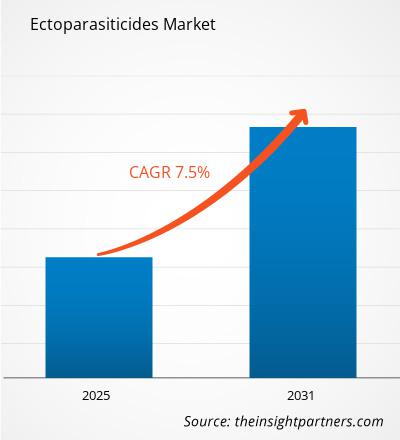
The Ectoparasiticides Market was valued at US$ 11.49 Billion in 2025 and is projected to reach US$ 19.41 Billion by 2034, growing at a CAGR of 6.00% during 2026–2034. The market expansion is influenced by rising parasite control requirements across livestock and companion animals, increasing veterinary healthcare awareness, and continued development of advanced formulations such as oral tablets, pour-ons, spot-ons, and targeted topical solutions.
North America is expected to maintain steady market expansion during the forecast period, supported by high companion animal ownership, established veterinary infrastructure, and increasing adoption of preventive parasite management programs. The region is likely to witness a CAGR range of 5–7% between 2026 and 2034, driven by product innovation, regulatory approvals, and increasing demand for integrated animal health solutions.
Ectoparasiticides Market Assessment and Insights
- North America: North America accounted for a significant position in the Ectoparasiticides Market with a share range of 32–36% in 2025 and is expected to expand at a CAGR range of 5–7% during 2026–2034. Strong veterinary networks, companion animal healthcare spending, and livestock protection programs support regional growth.
- US: The US represented a major portion of the North American market with a share range of 75–80% of North America in 2025 and is projected to grow at a CAGR range of 5–7% during 2026–2034. Demand is supported by advanced veterinary services and preventive parasite care adoption.
- Europe: Europe held a market share range of 26–30% in 2025 and is anticipated to grow at a CAGR range of 5–6% during 2026–2034. Countries including Germany, the UK, France, Italy, and Spain contribute significantly due to livestock production systems and companion animal healthcare penetration.
- Asia Pacific: Asia Pacific accounted for a share range of 22–26% in 2025 and is expected to record a CAGR range of 7–9% during 2026–2034. China, India, Japan, South Korea, and Australia are key markets supported by livestock expansion and improving veterinary access.
- Largest Segment: Companion Animals represented the largest animal type segment with a market share range of 55–60% in 2025 and is expected to grow at a CAGR range of 6–8% during 2026–2034 due to preventive pet healthcare adoption.
- High Growth Segment: Oral Tablets represented a rapidly expanding product type segment with a market share range of 18–22% in 2025 and is projected to grow at a CAGR range of 7–9% during 2026–2034 due to convenience and compliance benefits.
- Key companies analyzed in detail: Elanco Animal Health Incorporated, Boehringer Ingelheim International GmbH, Zoetis Inc., Ceva Santé Animale S.A., Virbac S.A., Vetoquinol S.A., Merck & Co., Inc., Phibro Animal Health Corporation, Zagro Asia Limited, Dechra Pharmaceuticals PLC.
Source: The Insight Partners' analysis based on proprietary research, government publications, company annual reports, investor presentations, industry databases, and expert interviews.
Ectoparasiticides Market Development is based on the constant transitions from basic topical treatments towards innovative prevention and combinations. In particular, more and more emphasis is put on the need for long-lasting protection, better safety profiles for animals, and species-specific solutions. Moreover, new product development has moved from basic sprays and dips towards oral and precise drug delivery systems which are indicative of changes in veterinary practices. Supply chain integration is also taking place as companies develop their expertise in formulation, regulatory and distribution. Increased parasite resistance has led to innovations in active ingredients and treatment methods thus fostering demand for unique solutions in the livestock and companion animals segments.
Market development in the future will be driven by growing veterinary markets, increased expenses on pets' healthcare, and regulation supportive of more secure animal health products. R&D, digital veterinary services and preventive medicine are expected to be the trends driving market development. The most evident growth opportunities are seen in the developing countries where livestock productivity and food security programs drive the demand for parasiticide solutions.
Ectoparasiticides Market Report Scope
| Report Attribute | Details |
|---|---|
| Market size in 2025 | US$ 11.49 Billion |
| Market Size by 2034 | US$ 19.41 Billion |
| Global CAGR (2026 - 2034) | 6.00% |
| Historical Data | 2021-2024 |
| Forecast period | 2026-2034 |
Ectoparasiticides Market Analysis
Ectoparasiticides Market growth factors are rising awareness of health problems associated with parasites in animals and their economic burden on livestock production. Preventive treatment regimens are being used more by farmers and veterinarians to prevent disease transmission, improve animal performance, and protect investments. The value chain participants include raw material suppliers, pharmaceutical companies, veterinary distribution networks, clinics, farms, and pet owners. Supply trends depend on regulatory clearance, availability of raw materials, formulation processes, and the growing need for species-specific medicines. Companion animal care contributes to the demands, along with livestock use that contributes to usage volumes.
This industry environment is also shaped by changes in consumer attitudes about animal well-being and food safety. Increasingly, veterinary clinics are recommending preventive parasite management instead of relying on reactive treatment measures; this has helped to bolster demand for effective formulations. Online veterinary and animal health care distributors continue to diversify. Manufacturers are working to strike a balance between innovation and cost savings in order to provide greater access in developed and developing countries. The competitive landscape is dominated by global and regional manufacturers.
The competitive landscape of the Ectoparasiticides Market is characterized by product innovation, portfolio expansion, and strategic investments in animal health research. Companies including Elanco Animal Health Incorporated, Boehringer Ingelheim International GmbH, Zoetis Inc., Ceva Santé Animale S.A., Virbac S.A., Vetoquinol S.A., Merck & Co., Inc., Phibro Animal Health Corporation, Zagro Asia Limited, and Dechra Pharmaceuticals PLC are focusing on strengthening their parasiticide offerings across livestock and companion animal categories.
Strategic positioning within the market is influenced by regulatory expertise, brand recognition, veterinary relationships, and geographic reach. Leading participants are investing in next-generation formulations, lifecycle management of existing products, and broader distribution networks. Recent competitive activity demonstrates increasing focus on improving parasite coverage, extending treatment duration, and developing solutions aligned with veterinary prescribing trends. Companies with diversified portfolios across vaccines, therapeutics, and parasiticides maintain competitive advantages through integrated animal health platforms.
● REPORT CUSTOMIZATION
Tailor This Report To Align With Your Specific Business Requirements
This report can be customized to align precisely with your business objectives, scope, and target markets. Customization options include tailored segmentation, geography, competitive analysis, and strategic insights to support informed decision-making.
Customize This Report →WHAT YOU CAN ADJUST
- ● Segmentations
- ● Geography
- ● Competitive Analysis
- ● Language Preferences
Ectoparasiticides Market: Strategic Insights
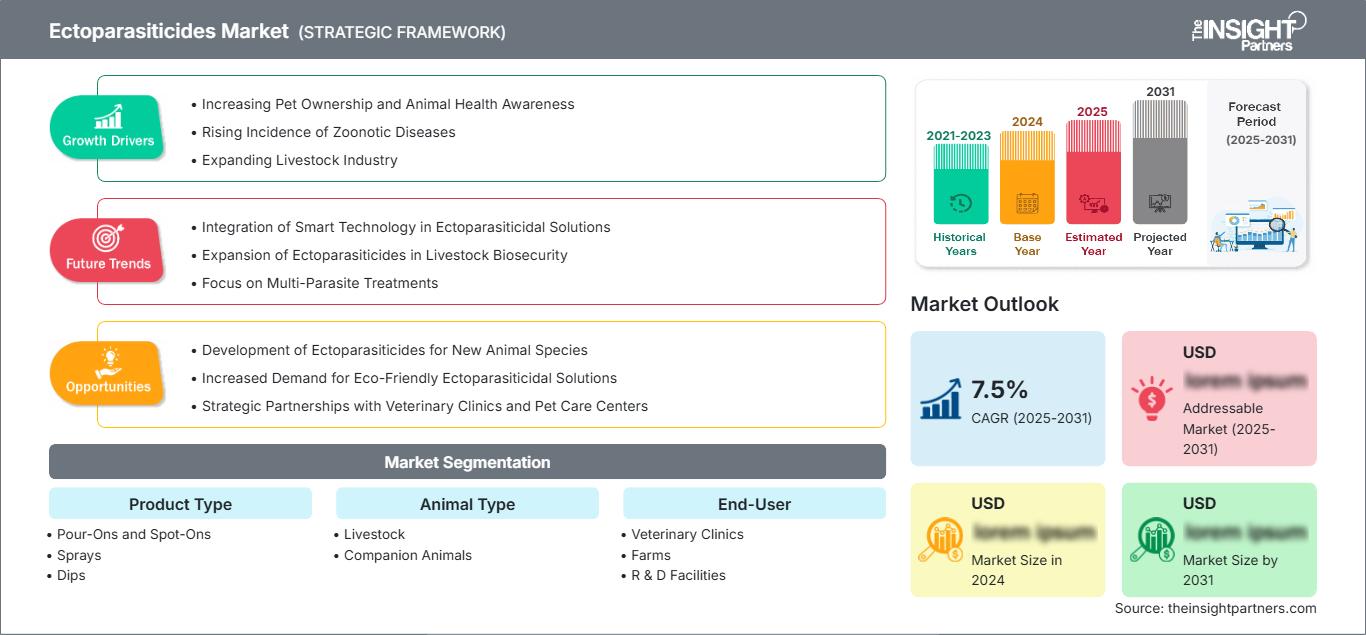
Regional Insights
North America Ectoparasiticides Market
North America held a share range of 32–36% in 2025 and is expected to expand at a CAGR range of 5–7% during 2026–2034. The regional market is supported by developed veterinary infrastructure, strong companion animal healthcare expenditure, and high adoption of preventive parasite management solutions across households, farms, and veterinary facilities.
The US and Canada represent important contributors due to advanced animal healthcare systems and strong presence of global animal health companies. Increasing demand for convenient formulations, including oral tablets and spot-on treatments, is influencing product innovation. Regulatory emphasis on animal welfare, food safety, and sustainable livestock production continues to support adoption of modern ectoparasiticides across the region.
U.S. Ectoparasiticides Market
The U.S. accounted for a share range of 75–80% of the North American market in 2025 and is projected to grow at a CAGR range of 5–7% during 2026–2034. The country benefits from high pet ownership, advanced veterinary service networks, and strong demand for preventive healthcare products.
Companies such as Elanco Animal Health Incorporated, Zoetis Inc., Merck & Co., Inc., and Boehringer Ingelheim International GmbH maintain significant market presence through diversified animal health portfolios. Increasing application of digital veterinary platforms, prescription-based parasite control programs, and premium companion animal treatments is supporting market development. Livestock producers also continue adopting effective ectoparasite control programs to improve animal productivity.
Europe Ectoparasiticides Market
Europe represented a share range of 26–30% in 2025 and is anticipated to register a CAGR range of 5–6% during 2026–2034. The region remains a mature market due to established veterinary systems, livestock production standards, and increasing focus on animal welfare regulations. Germany is among the leading countries due to its developed livestock industry and strong veterinary pharmaceutical presence.
The UK market benefits from increasing companion animal healthcare awareness and demand for preventive parasite solutions. Regulatory frameworks supporting responsible veterinary medicine use are influencing product development and adoption patterns. France continues to demonstrate demand through livestock farming activities and increasing investments in animal health management.
Italy and Spain contribute through extensive agricultural activities, livestock populations, and growing veterinary healthcare access. European manufacturers and international companies are focusing on improving product efficacy and addressing parasite resistance challenges. The region’s market expansion is supported by continued innovation in delivery mechanisms and increasing acceptance of advanced treatment options.
APAC Ectoparasiticides Market
APAC accounted for a share range of 22–26% in 2025 and is expected to grow at a CAGR range of 7–9% during 2026–2034. China represents a leading country due to expanding livestock production, rising veterinary awareness, and increasing animal healthcare investments.
Japan, South Korea, India, and Australia are supporting regional growth through improving veterinary infrastructure and rising adoption of preventive animal health practices. Industrial livestock expansion, food security initiatives, and policy support for animal disease management are encouraging demand for ectoparasiticides across farming and companion animal segments.
Middle East & Africa Ectoparasiticides Market
The Middle East & Africa market is projected to grow at a CAGR range of 5–7% during 2026–2034, supported by increasing livestock healthcare requirements and improving veterinary access. Saudi Arabia and the UAE are important markets due to investments in agricultural modernization and animal production systems.
South Africa contributes significantly through established livestock industries and veterinary networks. The Rest of MEA region is influenced by infrastructure development, food security initiatives, and increasing awareness of parasite prevention. Energy-supported economic development in several countries is enabling investments in agriculture and animal healthcare infrastructure.
Segmentation Analysis
Product Type
The Product Type segment is expected to grow at a CAGR range of 6–8% during 2026–2034. Market demand is influenced by increasing preference for effective, convenient, and species-specific parasite management solutions. Manufacturers are developing improved formulations with longer protection periods, enhanced safety characteristics, and easier administration methods to support both veterinary and farm applications.
- Pour-Ons and Spot-Ons: These products maintain strong adoption due to convenient application methods and suitability for livestock and companion animals. Their targeted delivery approach supports routine parasite control programs.
- Sprays: Sprays remain important for external parasite management due to flexibility across animal types. Demand continues from farms and veterinary settings requiring direct application solutions.
- Dips: Dips are widely used in livestock management, particularly in large-scale farming environments where herd-level parasite control remains essential for productivity and animal health.
- Oral Tablets: Oral tablets are gaining attention due to ease of administration, improved compliance, and growing preference among companion animal owners seeking convenient parasite prevention options.
Animal Type
The Animal Type segment is projected to grow at a CAGR range of 6–8% during 2026–2034. Increasing animal healthcare awareness, rising livestock productivity requirements, and growing companion animal ownership are shaping demand. Preventive healthcare approaches are encouraging adoption across both commercial farming and household pet care environments.
- Livestock: Livestock applications remain essential due to the economic impact of parasite infestations on productivity, animal health, and food supply chains. Farmers increasingly adopt preventive treatment strategies.
- Companion Animals: Companion animals represent a major demand area due to increasing pet ownership, veterinary consultation frequency, and rising consumer spending on preventive healthcare products.
End-User
The End-User segment is expected to expand at a CAGR range of 6–8% during 2026–2034. Growth is supported by increasing professional veterinary involvement, farm-level disease prevention programs, and expanding research activities focused on animal health solutions. Different end users require specialized products based on application environment and treatment objectives.
- Veterinary Clinics: Veterinary clinics play an important role through diagnosis-based recommendations, prescription practices, and increasing adoption of preventive parasite management protocols.
- Farms: Farms represent a significant user group due to large animal populations and the need to maintain productivity through effective parasite prevention programs.
- R & D Facilities: Research facilities support innovation through formulation development, efficacy testing, and evaluation of emerging parasite control technologies.
Opportunity Snapshot
| End User | Revenue Contribution | Trend Tag | Adoption Stage |
| Veterinary Clinics | High | Preventive Care | Mature |
| Farms | High | Herd Protection | Mature |
| R & D Facilities | Low | Product Innovation | Emerging |
Ectoparasiticides Market Growth Drivers and Impact Analysis
Rising Preventive Animal Healthcare Adoption
Growing awareness about preventive animal healthcare is significantly influencing demand for ectoparasiticides across veterinary and farming environments. Animal owners and producers increasingly recognize that parasite prevention reduces treatment costs, improves productivity, and supports animal welfare outcomes. Veterinary professionals are encouraging routine parasite control schedules rather than reactive interventions after infestations occur. This shift is creating consistent demand for products with reliable efficacy and convenient administration methods. The impact is visible across companion animal and livestock segments, where preventive programs are becoming integrated into broader healthcare management strategies. Manufacturers are responding by developing differentiated formulations that improve compliance, extend protection duration, and address changing parasite challenges.
Expansion of Livestock Production Systems
Expansion of livestock production systems is creating additional demand for effective parasite management solutions. Growing requirements for meat, dairy, and animal-based products are encouraging farmers to improve animal health practices and reduce productivity losses caused by infestations. Commercial farms are increasingly adopting structured parasite control programs to maintain herd performance and meet quality standards. This trend is particularly important in emerging markets where agricultural modernization is accelerating. Ectoparasiticides support production efficiency by helping manage external parasites that affect animal growth and health. Companies are developing scalable solutions suitable for different farming conditions, strengthening adoption across small, medium, and large-scale agricultural operations.
Innovation in Delivery Technologies and Formulations
Advancements in formulation technologies are influencing product development strategies within the animal healthcare sector. Manufacturers are focusing on improving bioavailability, extending treatment duration, and creating easier administration formats. Innovations such as oral tablets and advanced topical systems are improving user convenience and treatment adherence among animal owners and veterinary professionals. These developments are expanding the application potential of ectoparasiticides beyond traditional methods. Research investments are also addressing parasite resistance concerns through improved active ingredient combinations and targeted solutions. The impact of these innovations is creating opportunities for companies to differentiate products and strengthen competitive positioning in global animal health markets.
Ectoparasiticides Market Future Trends
Development of Precision Parasite Management Solutions
The future of the Ectoparasiticides Market is expected to be shaped by precision-based parasite management approaches that combine veterinary expertise, diagnostic tools, and targeted treatment strategies. Increasing focus on responsible medicine use is encouraging companies to develop products designed for specific parasite profiles, animal categories, and regional conditions. Digital monitoring systems and data-driven veterinary platforms may improve treatment timing and effectiveness by enabling more informed decisions. Manufacturers are expected to invest in solutions that minimize unnecessary applications while maintaining animal protection. This trend aligns with broader animal health industry movement toward sustainable practices, improved treatment outcomes, and enhanced monitoring of parasite resistance patterns across different environments.
Integration of Sustainable Animal Health Practices
Sustainability considerations are expected to influence future product development, manufacturing processes, and regulatory strategies within the animal healthcare industry. Companies are increasingly evaluating environmentally responsible formulations, improved safety profiles, and solutions that support efficient livestock production. Demand for sustainable animal health practices is likely to increase as producers focus on balancing productivity with responsible resource management. Future innovation may include products designed to reduce environmental impact while maintaining effective parasite control. Regulatory agencies and industry stakeholders are expected to encourage greater transparency in product composition, usage recommendations, and lifecycle management. These developments will influence investment priorities and competitive strategies among global ectoparasiticide manufacturers.
Ectoparasiticides Market Opportunities
Expansion Across Emerging Veterinary Healthcare Markets
There is great potential in emerging markets due to the development of veterinary infrastructure, increased livestock production, and greater awareness of animal health management. Nations in the Asia-Pacific and Latin American regions, as well as some parts of the Middle East and Africa, have been focusing on increasing agricultural productivity and preventing diseases. This is driving demand for easy-to-use parasitic-infection-control products. The companies can capitalize on growth potential by developing region-specific marketing strategies, collaborating with veterinary organizations, and developing low-cost formulations to meet local demand. Growth opportunities are also supported by increasing companion animal adoption in urban areas, where demand for preventive healthcare products is expanding. Strategic market entry and localized innovation can support long-term growth potential.
Strategic Partnerships and Product Portfolio Expansion
Strategic alliances and portfolio diversification are potential avenues for firms seeking to differentiate themselves in the Ectoparasiticides Market. Strategic alliances between drug firms, veterinary associations, and distribution firms will help to increase market penetration. Firms will be able to increase their competitiveness by incorporating parasiticide products alongside other animal health products, such as vaccines, therapies, and diagnostics. Research and development investments will also be vital to overcoming parasite resistance and developing new products. Expansion into untapped markets, improvement of digital marketing channels, and enhanced educational programs for farmers will also contribute to commercial success. Businesses that align innovation with changing veterinary requirements are positioned to capture evolving market demand.
Recent Developments
- March 2026: The U.S. Food and Drug Administration recently added Prazi-Med (praziquantel powder for immersion) to The Index of Legally Marketed Unapproved New Animal Drugs for Minor Species. Prazi-Med is for the treatment of internal parasites (flukes and tapeworms) and external parasites (flukes) susceptible to praziquantel in ornamental finfish (except Callichthyidae and Clariidae catfish), including those commonly kept in home aquariums and outdoor hobby ponds. This is the first indexed praziquantel product for use in fish.
- February 2026: Boehringer Ingelheim, a global leader in animal health, announced that the U.S. Food and Drug Administration (FDA) has issued Emergency Use Authorizations (EUA) for the use of NexGard® (afoxolaner) Chewables for the treatment of infestations caused by New World screwworm (NWS) in dogs and puppies, and NexGard COMBO (esafoxolaner, eprinomectin, and praziquantel topical solution) for the treatment of infestations caused by NWS in cats and kittens.
- December 2025: the U.S. Food and Drug Administration conditionally approved Exzolt Cattle-CA1 (fluralaner) topical solution for the prevention and treatment of New World screwworm (NWS) larval infestations, and the treatment and control of cattle fever tick in beef cattle 2 months of age and older and replacement dairy heifers less than 20 months of age.
Frequently Asked Questions

- Comprehensive Market Sizing and Forecast Analysis
- Detailed Segmentation Analysis
- In-Depth Market Dynamics Assessment
- Regional and Country-Level Insights
- Competitive Landscape and Company Benchmarking
- Strategic Business Intelligence
Recent Reports
Testimonials

The Insight Partners provided valuable market intelligence that supported our global go-to-market strategy. Their team was professional, responsive, and attentive to our feedback, providing thoughtful analysis and helpful methodological clarifications throughout the project.
Junmo Kim Chief Financial Officer (CFO), Enertech Co., Ltd.
The Insight Partners' SCADA System Market report is comprehensive, with valuable insights on current trends and future forecasts. The team was highly professional, responsive, and supportive throughout. We are very satisfied and highly recommend their services.
RAN KEDEM Partner, Reali Technologies LTDs
I requested a report on a very specific software market and the team produced the report in a few days. The information was very relevant and well presented. I then requested some changes and additions to the report. The team was again very responsive and I got the final report in less than a week.
JEAN-HERVE JENN Chairman, Future Analytica
We worked with The Insight Partners for an important market study and forecast. They gave us clear insights into opportunities and risks, which helped shape our plans. Their research was easy to use and based on solid data. It helped us make smart, confident decisions. We highly recommend them.
PIYUSH NAGPAL Sr. Vice President, High Beam Global
The Insight Partners delivered insightful, well-structured market research with strong domain expertise. Their team was professional and responsive throughout. The user-friendly website made accessing industry reports seamless. We highly recommend them for reliable, high-quality research services
YUKIHIKO ADACHI CEO, Deep Blue, LLC.
This is the first time I have purchased a market report from The Insight Partners.While I was unsure at first, I visited their web site and felt more comfortable to take the risk and purchase a market report.I am completely satisfied with the quality of the report and customer service. I had several questions and comments with the initial report, but after a couple of dialogs over email with their analyst I believe I have a report that I can use as input to our strategic planning process.Thank you so much for taking the extra time and making this a positive experience.I will definitely recommend your service to others and you will be my first call when we need further market data.
JOHN SUZUKI President and Chief Executive Officer, Board Director, BK Technologies
I wish to appreciate your support and the professionalism you displayed in the course of attending to my request for information regarding to infectious disease IVD market in Nigeria. I appreciate your patience, your guidance, and the fact that you were willing to offer a discount, which eventually made it possible for us to close a deal. I look forward to engaging The Insight Partners in the future, all thanks to the impression you have created in me as a result of this first encounter.
DR CHIJIOKE ONYIA MANAGING DIRECTOR, PineCrest Healthcare Ltd.Reason to Buy
- Informed Decision-Making
- Understanding Market Dynamics
- Competitive Analysis
- Identifying Emerging Markets
- Customer Insights
- Market Forecasts
- Risk Mitigation
- Boosting Operational Efficiency
- Strategic Planning
- Investment Justification
- Tracking Industry Innovations
- Aligning with Regulatory Trends





 Get Free Sample for