
Electromyography Market Size, Growth & Trends by 2034
Coverage: By Type (Trolley-Mounted, Portable, Others); Application (Clinical/Biomedical, Diagnostics, Monitor) , and Geography (North America, Europe, Asia Pacific, and South and Central America)
- Status : Data Released
- Report Code : TIPRE00021653
- Category : Life Sciences
- No. of Pages : 150
- Available Report Formats :


- Last update date : July 03, 2026


2025 Market Size
US$ 1,078.25 Mn
Base year value
2034 Forecast
US$ 1,854.01 Mn
Projected by 2034
CAGR 2026-2034
6.21 %
Growth rate
Addressable Market
US$ 13,274.88 Mn
(2026-2034)
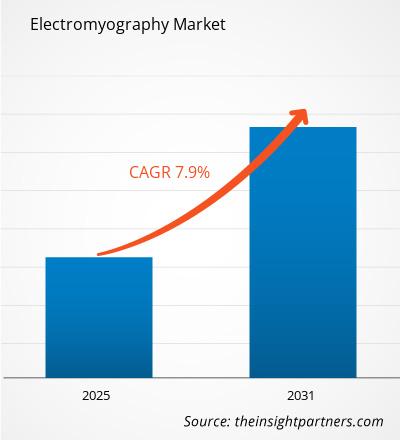
The Electromyography Market was valued at US$ 1,078.25 Million in 2025 and is projected to reach US$ 1,854.01 Million by 2034, registering a CAGR of 6.21% during 2026–2034. Market expansion is supported by growing utilization of electrophysiological diagnostics for neuromuscular disorders, continuous improvements in signal acquisition technologies, and broader adoption of portable diagnostic systems across hospitals, specialty clinics, rehabilitation centers, and academic research institutions worldwide.
North America is expected to maintain its leadership throughout the forecast period, advancing at an estimated CAGR of 5.8–6.2% between 2026 and 2034. Strong reimbursement frameworks, widespread availability of specialized neurological care, and consistent investments in diagnostic infrastructure continue to strengthen regional demand. Increasing adoption of portable electromyography platforms and integration of digital data management capabilities further reinforce long-term market expansion across healthcare providers.
Electromyography Market Assessment and Insights
- North America: Holds 38–42% share in 2025, growing at a CAGR of 5.8–6.2% during 2026–2034, driven by rising neurological disease diagnosis, expanding outpatient neurophysiology laboratories, and sustained demand for equipment replacement.
- US: Accounts for 84–88% of the North American market in 2025, expanding at a 5.9–6.3% CAGR due to advanced neurological care infrastructure, increasing neurodiagnostic procedures, and growing adoption of modern neurophysiology equipment.
- Europe: Represents 27–31% share in 2025, growing at a 5.7–6.1% CAGR, led by Germany, the UK, and France through established neurological care infrastructure, expanding clinical research activities, and continued investments in diagnostic technologies.
- Asia Pacific: Holds 23–27% share in 2025, expanding at a 7.1–7.5% CAGR, led by China, Japan, and India with healthcare modernization, increasing diagnostic capacity, and expanding investments in neurological services.
- Largest Segment: Clinical/Biomedical Application holds the largest market share in 2025, growing at a 5.9–6.3% CAGR due to extensive utilization across hospitals and neurophysiology laboratories, supporting sustained procedural volumes and equipment replacement.
- High Growth Segment: Portable Type is projected to register the fastest growth at a CAGR of 7.3–7.7% during 2026–2034, driven by increasing preference for decentralized diagnostics and point-of-care neurological assessment across multiple healthcare settings.
- Key companies analyzed in detail: Bioresearch, Inc.; BTS Bioengineering S.p.A.; Clarity Medical Pvt. Ltd.; Compumedics Limited; DEYMED Diagnostic s.r.o.; Mayo Clinic; Drägerwerk AG & Co. KGaA; EB Neuro S.p.A.; EMS Biomedical Ltd.; Natus Medical Incorporated.
Source: The Insight Partners' analysis based on proprietary research, government publications, company annual reports, investor presentations, industry databases, and expert interviews.
Systems of electromyography have evolved from the traditional lab diagnostic systems to digital systems, which can now provide more accurate signals, automated wave form analysis, and better interoperability with the hospital information system. Electrode technology, algorithms, and user-friendly interfaces have ensured more accurate diagnosis while simplifying the whole process. In parallel with this, the manufacturers are striving to increase their manufacturing flexibility by way of modular design, component standardization, and increased geographic distribution of the product.
Market growth in future will be contingent upon infrastructure development in emerging markets, positive changes in reimbursement policies, and adoption of digital neurology. Adoption of artificial intelligence enabled diagnosis, cloud computing, and specialist consultations remotely is expected to streamline the entire process. The regulatory environment and government investment in neurological health programs will stimulate the commercialization of next generation electromyography systems.
Electromyography Market Report Scope
| Report Attribute | Details |
|---|---|
| Market size in 2025 | US$ 1,078.25 Million |
| Market Size by 2034 | US$ 1,854.01 Million |
| Global CAGR (2026 - 2034) | 6.21% |
| Historical Data | 2021-2024 |
| Forecast period | 2026-2034 |
Electromyography Market Analysis
There is an increase in the number of patients suffering from neuromuscular disorders, peripheral nerve damage, spinal disorders, and age-related diseases that have increased the demand for electromyography tests. There is a need for accuracy in muscle and nerve functional assessments for diagnosis and planning for treatment. Innovations in technology have helped to ensure good quality signals, shortening of test duration, and workflow improvement. This has encouraged hospitals and specialized neurology clinics to upgrade their outdated systems into digitized systems.
The ecosystem of the market consists of component makers, electrode makers, software companies, original equipment makers, distributors, health care providers, rehabilitation centers, and universities. Supply chains are increasingly becoming focused on digitized electronics, high precision sensors, software integration, and regulatory compliance due to changing clinical needs. The market has seen diversification of suppliers and localization of manufacture that ensures availability of equipment in various regional health care systems.
Competition continues to be driven by constant product innovation, software distinction, regulation approval, and geographical expansion efforts. The firms are developing advanced visualization software, artificial intelligence-enabled analytics, wireless technology, and neurodiagnostics platform to improve their competitive edge. Quality service, clinical assistance, and maintenance capability are now becoming critical differentiating factors along with technical performance.
Leading players, such as Natus Medical Incorporated, Compumedics Limited, DEYMED Diagnostic s.r.o., BTS Bioengineering S.p.A., EB Neuro S.p.A., Drägerwerk AG & Co. KGaA, EMS Biomedical Ltd., Bioresearch, Inc., Clarity Medical Pvt. Ltd., and Mayo Clinic, are continuing their efforts in researching, developing and establishing regional distribution networks. Their strategic investments are now more focused on the development of portable electromyography machines and efficient software architecture to meet the changing needs of clinical research.
● REPORT CUSTOMIZATION
Tailor This Report To Align With Your Specific Business Requirements
This report can be customized to align precisely with your business objectives, scope, and target markets. Customization options include tailored segmentation, geography, competitive analysis, and strategic insights to support informed decision-making.
Customize This Report →WHAT YOU CAN ADJUST
- ● Segmentations
- ● Geography
- ● Competitive Analysis
- ● Language Preferences
Electromyography Market: Strategic Insights

Regional Insights
North America Electromyography Market
North America accounted for 38–42% of the global electromyography market in 2025 and is anticipated to register a CAGR of 5.8–6.2% during 2026–2034. Advanced neurological care infrastructure, favorable reimbursement mechanisms, and widespread adoption of digital neurodiagnostic technologies continue to sustain regional leadership.
Healthcare providers are steadily replacing legacy electromyography systems with compact digital platforms featuring enhanced software integration and higher diagnostic precision. Growing demand for outpatient neurological testing, rehabilitation services, and early diagnosis of neuromuscular disorders further strengthens long-term equipment procurement across hospitals and specialty clinics.
U.S. Electromyography Market
The United States represents 84–88% of North American electromyography revenue and is forecast to expand at a CAGR of 5.9–6.3% through 2034. High procedure volumes, extensive neurological specialty networks, and consistent investments in diagnostic modernization continue supporting market growth.
Leading manufacturers maintain strong commercial operations throughout the country, while healthcare facilities increasingly adopt portable electromyography platforms for outpatient diagnostics. Growing utilization across neurology, orthopedics, rehabilitation medicine, sports injury assessment, and clinical research further supports replacement demand for technologically advanced systems.
Europe Electromyography Market
Europe captured 27–31% of global revenue in 2025 and is projected to record a CAGR of 5.7–6.1% through the forecast period. Strong public healthcare systems and established neurological diagnostic pathways continue supporting stable market expansion across the region.
Germany remains the largest national market owing to advanced hospital infrastructure, high adoption of neurophysiology equipment, and continued investments in clinical research. The country's emphasis on digital healthcare modernization and specialized neurological centers encourages sustained procurement of high-performance electromyography platforms.
The United Kingdom benefits from increasing neurological disease awareness, expanding outpatient diagnostic services, and modernization of hospital equipment. France, Italy, and Spain continue experiencing steady demand as healthcare providers invest in advanced diagnostic technologies, rehabilitation programs, and improved access to neurophysiology services, collectively supporting regional market development.
APAC Electromyography Market
Asia Pacific accounted for 23–27% of the global electromyography market in 2025 and is expected to achieve the fastest regional expansion with a CAGR of 7.1–7.5% during 2026–2034. Healthcare infrastructure upgrades and increasing neurological disease diagnosis remain fundamental growth contributors.
China leads regional revenue generation through continuous investments in hospital modernization, domestic medical technology manufacturing, and expanding neurological care capacity. Japan maintains strong demand through advanced healthcare delivery and aging demographics, while South Korea continues emphasizing digital diagnostics and research innovation.
India is emerging as a high-potential market because of expanding specialty hospitals, improving healthcare accessibility, and increasing investments in diagnostic capabilities. Australia supports regional growth through advanced clinical practices, research institutions, and favorable adoption of technologically sophisticated neurodiagnostic equipment.
Middle East & Africa Electromyography Market
The Middle East & Africa market is projected to expand at a CAGR of 5.3–5.7% during 2026–2034. Ongoing healthcare modernization programs and increasing investments in specialized diagnostic infrastructure continue improving market prospects throughout the region.
Saudi Arabia leads regional adoption through significant healthcare transformation initiatives and investments in tertiary care hospitals. The United Arab Emirates continues expanding neurological diagnostic capabilities while strengthening digital healthcare infrastructure to improve patient outcomes.
South Africa maintains steady demand supported by established tertiary healthcare institutions and growing awareness of neurological disorders. The remaining Middle East and African countries are gradually improving diagnostic accessibility through infrastructure investments, international partnerships, and broader healthcare capacity expansion.
Segmentation Analysis
Type
The Portable segment is expected to register the highest growth during the forecast period, advancing at a CAGR of 7.3–7.7% between 2026 and 2034. Increasing preference for flexible diagnostic workflows, decentralized neurological assessment, and compact system deployment across outpatient settings continues to strengthen adoption.
- Trolley-Mounted: Widely utilized in hospitals and dedicated neurophysiology laboratories because of comprehensive functionality, multi-channel capabilities, advanced software integration, and suitability for high-volume neurological diagnostic procedures requiring detailed signal acquisition.
- Portable: Compact systems are increasingly adopted across outpatient clinics, rehabilitation facilities, emergency care settings, and community healthcare environments where mobility, operational flexibility, and rapid neurological assessment improve clinical efficiency.
Application
The Clinical/Biomedical application segment continues to account for the largest revenue contribution, expanding at a CAGR of 5.9–6.3% during the forecast period. Extensive clinical utilization and increasing neurological testing volumes continue supporting sustained market demand.
- Clinical/Biomedical: Primary demand originates from hospitals, neurology departments, rehabilitation centers, and academic medical institutions conducting routine neuromuscular evaluations, treatment planning, and electrophysiological research.
- Diagnostics: Growing emphasis on early disease identification, peripheral nerve assessment, and evidence-based neurological evaluation continues encouraging adoption across specialized diagnostic laboratories and multidisciplinary healthcare facilities.
- Monitor: Continuous monitoring applications are expanding in critical care, rehabilitation, and intraoperative environments where real-time muscle activity assessment supports improved patient management and therapeutic decision-making.
Opportunity Snapshot
| Application Segment | Revenue Contribution | Trend Tag | Adoption Stage |
| Clinical/Biomedical | High | Neurodiagnostics | Mature |
| Diagnostics | High | Early Detection | Scaling |
| Monitor | Medium | Real-Time Monitoring | Emerging |
Electromyography Market Growth Drivers and Impact Analysis
The rise in the cases of neuromuscular disorders, peripheral neuropathy, spinal ailments, motor neuron disorders, and nerve compression syndromes is driving the requirement for EMG testing procedures. Demographic aging, sedentary habits, work injuries, and increased life expectancy among individuals suffering from chronic neurological illnesses is leading to an increase in the number of people undergoing the tests. Hospitals and specialized neurology clinics are continuing their investments in latest electromyography systems to provide accurate diagnosis and shorten the time required for treatment. The development is reinforcing the cycles of equipment upgrades, encouraging purchase of versatile diagnostic devices, and extending services at rehabilitation clinics and outpatient facilities for neurophysiology testing.
Innovations in digital signal processing, electrodes, software algorithms, wireless capabilities, and automation of waveform analysis are revolutionizing EMG diagnostics. Today's devices offer better signal quality, faster testing procedures, easy-to-use interfaces, and integration with electronic health records. Artificial intelligence-driven analysis and cloud storage of data are being introduced by manufacturers of electromyography testing machines to boost clinical efficiency. Such developments help in reducing operational complexities and achieving better standardization of results. As a result, the healthcare organizations are increasingly upgrading their older analog devices to new digital systems.
Modern healthcare delivery is becoming more focused on conducting neurological tests within outpatient clinics, ambulatory care centers, and rehabilitation centers in order to enhance accessibility and to optimize healthcare expenditures. With portable electromyography systems, doctors can conduct high-quality neurological assessments without compromising the clinical efficiency of their work. Growing spending on community healthcare infrastructure and specialized diagnostics centers is contributing to increased adoption of these devices. Moreover, such trends contribute to increased access of patients to neurophysiological testing and generate financial incentives for companies developing portable electromyography solutions.
Electromyography Market Future Trends
In the future, artificial intelligence is anticipated to play a more prominent role in electromyography systems in terms of waveform analysis, automation of the results reporting process, and interpretation standardization. Machine learning techniques can make the work of clinicians easier by automating the analysis of the data, thereby making diagnosis uniform in different health institutions. As the regulations are being accepted and validated, the software with artificial intelligence will be considered a competitive advantage for the companies manufacturing the devices. The future product development will focus on decision support, rather than on replacing the diagnostic procedures performed by the clinicians, making the process more efficient.
At present, the health institutions are implementing connected electromyography devices that allow them to securely store, share, and analyze the diagnostic information from several locations at once. Cloud-based platforms make the processes of managing and sharing the data easier. In addition, remote access to the test results will contribute to the implementation of tele-neurology practices and consultations in remote areas. As the hospitals are increasingly spending their budgets on creating digital healthcare ecosystem, the manufacturers will be focused on ensuring cybersecurity and software platform integration with the hospital information systems.
Electromyography Market Opportunities
Rapid healthcare infrastructure development throughout Asia Pacific, Latin America, the Middle East, and selected African countries presents substantial opportunities for electromyography manufacturers. Governments are increasing investments in specialty hospitals, neurological care programs, and advanced diagnostic technologies to improve healthcare accessibility. Rising awareness of neuromuscular disorders and expanding medical insurance coverage further strengthen long-term market potential. Companies establishing regional manufacturing partnerships, localized distribution networks, clinical training initiatives, and responsive after-sales support are likely to strengthen competitive positioning while capturing demand from healthcare systems transitioning toward advanced neurodiagnostic capabilities.
Manufacturers have significant opportunities to develop integrated diagnostic systems combining electromyography with complementary neurophysiological technologies such as nerve conduction studies, electroencephalography, and evoked potential testing. Multi-modal platforms improve clinical workflow efficiency by enabling comprehensive neurological assessment within a single diagnostic environment while reducing equipment redundancy. Healthcare providers increasingly prefer consolidated solutions that simplify training requirements, optimize space utilization, and improve operational efficiency. Continued investment in modular hardware architectures and scalable software ecosystems is expected to support differentiated product portfolios and strengthen long-term customer relationships across hospitals, research institutions, and specialty diagnostic centers.
Recent Developments
- January 2026: Natus Medical Incorporated launched the latest version of its Natus Elite EMG Software, introducing Augmented Visual Electromyograph (AVEMG) technology. The software applies proprietary algorithms to provide more objective routine needle electromyography assessment, enhances tremor analysis, improves neuromuscular ultrasound integration, and streamlines neurophysiology workflows for clinicians and researchers.
- May 2025: Natus Medical Incorporated announced seamless integration of its InVisus Pro Neuromuscular Ultrasound (NMUS) system with Natus Elite EMG software. The update enables clinicians to review neuromuscular ultrasound and nerve conduction studies within a unified workflow, generate consolidated reports, and improve diagnostic confidence during electrodiagnostic evaluations.
- September 2025: Delsys highlighted the commercial rollout and global expansion of its Trigno Centro wireless EMG platform during its 2024 year-in-review announcement. The company reported expanded international deployment of the next-generation EMG system, offering increased wireless range, higher sensor capacity, and improved data handling for advanced electromyography research and clinical applications.
Frequently Asked Questions

- Comprehensive Market Sizing and Forecast Analysis
- Detailed Segmentation Analysis
- In-Depth Market Dynamics Assessment
- Regional and Country-Level Insights
- Competitive Landscape and Company Benchmarking
- Strategic Business Intelligence
Recent Reports
Testimonials

The Insight Partners' SCADA System Market report is comprehensive, with valuable insights on current trends and future forecasts. The team was highly professional, responsive, and supportive throughout. We are very satisfied and highly recommend their services.
RAN KEDEM Partner, Reali Technologies LTDs
I requested a report on a very specific software market and the team produced the report in a few days. The information was very relevant and well presented. I then requested some changes and additions to the report. The team was again very responsive and I got the final report in less than a week.
JEAN-HERVE JENN Chairman, Future Analytica
We worked with The Insight Partners for an important market study and forecast. They gave us clear insights into opportunities and risks, which helped shape our plans. Their research was easy to use and based on solid data. It helped us make smart, confident decisions. We highly recommend them.
PIYUSH NAGPAL Sr. Vice President, High Beam Global
The Insight Partners delivered insightful, well-structured market research with strong domain expertise. Their team was professional and responsive throughout. The user-friendly website made accessing industry reports seamless. We highly recommend them for reliable, high-quality research services
YUKIHIKO ADACHI CEO, Deep Blue, LLC.
This is the first time I have purchased a market report from The Insight Partners.While I was unsure at first, I visited their web site and felt more comfortable to take the risk and purchase a market report.I am completely satisfied with the quality of the report and customer service. I had several questions and comments with the initial report, but after a couple of dialogs over email with their analyst I believe I have a report that I can use as input to our strategic planning process.Thank you so much for taking the extra time and making this a positive experience.I will definitely recommend your service to others and you will be my first call when we need further market data.
JOHN SUZUKI President and Chief Executive Officer, Board Director, BK Technologies
I wish to appreciate your support and the professionalism you displayed in the course of attending to my request for information regarding to infectious disease IVD market in Nigeria. I appreciate your patience, your guidance, and the fact that you were willing to offer a discount, which eventually made it possible for us to close a deal. I look forward to engaging The Insight Partners in the future, all thanks to the impression you have created in me as a result of this first encounter.
DR CHIJIOKE ONYIA MANAGING DIRECTOR, PineCrest Healthcare Ltd.Reason to Buy
- Informed Decision-Making
- Understanding Market Dynamics
- Competitive Analysis
- Identifying Emerging Markets
- Customer Insights
- Market Forecasts
- Risk Mitigation
- Boosting Operational Efficiency
- Strategic Planning
- Investment Justification
- Tracking Industry Innovations
- Aligning with Regulatory Trends





 Get Free Sample for