
Endometrial Ablation Devices Market Trends, Size & Growth by 2034
Coverage: by Device Type (Hysteroscopy devices, Thermal balloon ablators, Radiofrequency endometrial ablation devices, Hydrothermal ablators, Electrical ablators, Cryoablation devices, Microwave endometrial ablators, Others); End User (Ambulatory Surgery Center, Clinic, Hospital), and Geography (North America, Europe, Asia Pacific, and South and Central America)
- Status : Data Released
- Report Code : TIPRE00009782
- Category : Life Sciences
- No. of Pages : 150
- Available Report Formats :


- Last update date : July 08, 2026


2025 Market Size
US$ 1.33 Bn
Base year value
2034 Forecast
US$ 2.13 Bn
Projected by 2034
CAGR 2026-2034
5.32 %
Growth rate
Addressable Market
US$ 15.65 Bn
(2026-2034)
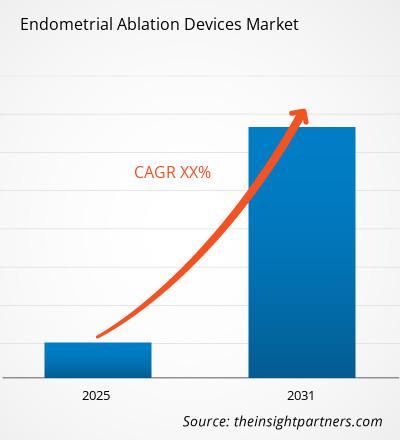
The endometrial ablation devices market size was valued at US$ 1.33 Billion in 2025 and is projected to reach US$ 2.13 Billion by 2034, registering a CAGR of 5.32% during 2026–2034. The market continues to expand as healthcare providers increasingly adopt minimally invasive gynecological procedures to manage abnormal uterine bleeding, reduce dependence on hysterectomy, and improve patient recovery outcomes. Continuous technological refinement, improved procedural safety, and broader access to outpatient treatment settings are further supporting long-term market development.
According to the endometrial ablation devices market report, North America is expected to maintain its leadership throughout the forecast period, advancing at an estimated CAGR of 5.0–5.5% between 2026 and 2034. Growth is supported by widespread adoption of minimally invasive gynecological procedures, favorable reimbursement frameworks, high awareness regarding abnormal uterine bleeding treatment, and continuous investments in women's healthcare infrastructure. Increasing availability of advanced radiofrequency and thermal ablation systems across hospitals and ambulatory surgery centers further strengthens regional demand.
Endometrial Ablation Devices Market Assessment and Insights
- North America: North America remains the leading regional market owing to advanced healthcare infrastructure, high procedural volumes, favorable reimbursement policies, and rapid adoption of minimally invasive gynecological technologies. Endometrial ablation devices market share in 2025: 38–42%; CAGR between 2026–2034: 5.0–5.5%.
- U.S.: The United States dominates regional revenue through strong clinical adoption, broad physician expertise, and continued innovation in women's health technologies. Share of North America in 2025: 82–86%; CAGR between 2026–2034: 5.1–5.6%.
- Europe: Europe represents the second-largest regional market, led by Germany, the UK, France, Italy, and Spain. Increasing preference for outpatient gynecological procedures and supportive healthcare systems continue driving demand. Share in 2025: 27–31%; CAGR between 2026–2034: 4.8–5.3%.
- Asia Pacific: Asia Pacific is witnessing accelerating adoption due to expanding healthcare infrastructure, growing women's health awareness, and increasing healthcare expenditure across China, Japan, India, South Korea, and Australia. Share in 2025: 21–25%; CAGR between 2026–2034: 6.2–6.8%.
- Largest Segment – Radiofrequency Endometrial Ablation Devices: Radiofrequency systems account for the largest revenue contribution because of shorter treatment duration, high clinical effectiveness, and broad physician acceptance. Market share in 2025: 33–37%; CAGR between 2026–2034: 5.4–5.9%.
- High Growth Segment – Ambulatory Surgery Center: Ambulatory surgery centers continue expanding rapidly as healthcare systems prioritize cost-efficient outpatient procedures with faster patient recovery. Market share in 2025: 24–28%; CAGR between 2026–2034: 6.3–6.9%.
- Key companies analyzed in detail: AEGEA Medical, Inc., Boston Scientific Corporation, CooperSurgical, Inc., Ethicon US, LLC, Hologic, Inc., Idoman Teoranta, Medtronic plc, Minerva Surgical, Inc., Olympus Corporation, Omnitech Systems, Inc.
Source: The Insight Partners' analysis based on proprietary research, government publications, company annual reports, investor presentations, industry databases, and expert interviews.
There has been considerable development in the endometrial ablation devices market due to the use of minimally invasive procedures in the treatment of abnormal uterine bleeding. Technological advancement has led to the development of simple procedure methods, shortened treatment duration, safety and consistent procedures. The developers have continuously worked on incorporating advanced delivery systems, disposables and user-friendly systems in order to enhance efficiency during treatment. All these changes have helped in the overall development of the endometrial ablation devices market.
The endometrial ablation devices market is expected to be driven by continued investment in the health sector, provision of specialized services in gynecology, and regulation that favors medical devices. Emerging nations within Asia Pacific and some selected Latin American countries will provide ample room for expansion since there have been many efforts towards improvement of their health sectors. There will be more physician training and health modernization efforts leading to an expanded scope for the market.
Endometrial Ablation Devices Market Report Scope
| Report Attribute | Details |
|---|---|
| Market size in 2025 | US$ 1.33 Billion |
| Market Size by 2034 | US$ 2.13 Billion |
| Global CAGR (2026 - 2034) | 5.32% |
| Historical Data | 2021-2024 |
| Forecast period | 2026-2034 |
Endometrial Ablation Devices Market Analysis
Abnormal uterine bleeding remains one of the most common gynecological conditions that women experience in their reproductive and perimenopausal phases of life. Thus, there remains a persistent need for minimally invasive methods to address this problem. Devices used for endometrial ablation reduce the duration of hospital stays, risks involved in treatment, and fast recovery time after hysterectomy. The increasing popularity of clinicians to use these devices, favorable treatment guidelines recommending endometrial ablation devices, and the rising inclination of patients to choose uterus sparing treatments will fuel the usage of endometrial ablation devices and help increase the size of the endometrial ablation devices market. Increased investments in women's health services would also help maintain high demand for endometrial ablation devices in the long run.
Market players include device manufacturers, component suppliers, healthcare institutions, ambulatory surgical centers, regulators, distributors, and clinicians. Innovations in radiofrequency, thermal balloon, hydrothermal, microwave, cryoablation, and hysteroscopic endometrial ablation technologies have enabled more options for clinicians. Digital workflow efficiency, ergonomic design, and disposability of instruments have helped improve the efficiency of the procedure and reduce infection rates. As healthcare systems increasingly emphasize outpatient treatment pathways and cost optimization, the endometrial ablation devices market analysis indicates sustained opportunities for manufacturers capable of delivering clinically validated, user-friendly, and economically efficient solutions.
Competition in the endometrial ablation devices market revolves around consistent innovation, expansion, and collaboration for improvement of the product line in the area of women's health care. Hologic, Inc. has a well-established competitive advantage based on its existing NovaSure portfolio, and CooperSurgical, Inc. keeps growing its portfolio of gynecological devices. Boston Scientific Corporation benefits from the strength of its global distribution channels, while Medtronic plc is taking advantage of its vast experience in medical technology innovation. There is an increasing emphasis on physician education, product enhancement, and FDA approval.
Strategic investments continue to prioritize research and development, manufacturing modernization, and expansion into high-growth healthcare markets across Asia Pacific and parts of Latin America. Companies including Olympus Corporation, Ethicon US, LLC, Minerva Surgical, Inc., AEGEA Medical, Inc., Idoman Teoranta, and Omnitech Systems, Inc. are pursuing differentiated technologies that improve treatment precision and patient comfort. Industry participants are also emphasizing partnerships with hospitals and ambulatory surgery centers to accelerate adoption of minimally invasive procedures. Collectively, these initiatives are expected to increase the endometrial ablation devices market share of technologically advanced products while supporting sustainable competitive positioning over the forecast period.
● REPORT CUSTOMIZATION
Tailor This Report To Align With Your Specific Business Requirements
This report can be customized to align precisely with your business objectives, scope, and target markets. Customization options include tailored segmentation, geography, competitive analysis, and strategic insights to support informed decision-making.
Customize This Report →WHAT YOU CAN ADJUST
- ● Segmentations
- ● Geography
- ● Competitive Analysis
- ● Language Preferences
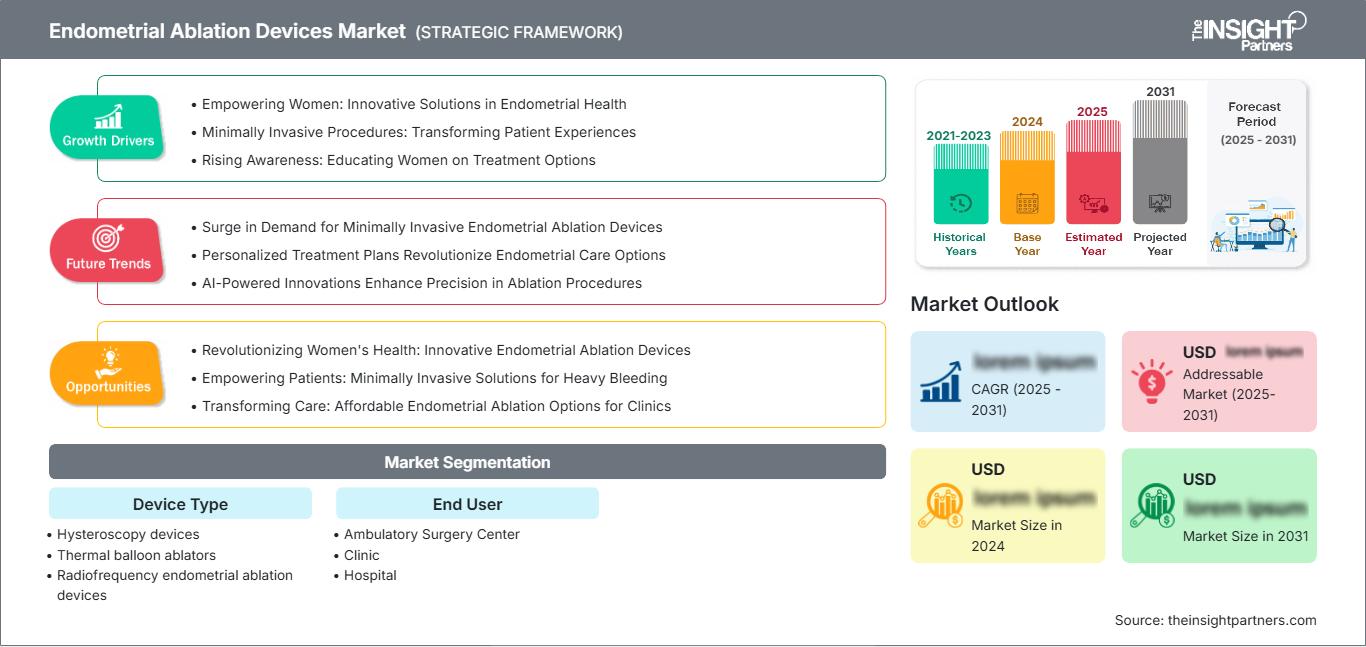
Endometrial Ablation Devices Market: Strategic Insights
Regional Insights
North America Endometrial Ablation Devices Market
North America accounted for 38–42% of the global market in 2025 and is projected to expand at a CAGR of 5.0–5.5% during 2026–2034. Regional leadership is supported by high awareness of abnormal uterine bleeding management, strong reimbursement systems, widespread availability of minimally invasive gynecological procedures, and continuous investments in women's healthcare infrastructure. Hospitals and ambulatory surgery centers increasingly favor endometrial ablation over conventional surgical interventions because of shorter recovery periods, reduced hospitalization costs, and improved patient satisfaction.
The region also benefits from the presence of leading manufacturers, advanced clinical training programs, and rapid commercialization of innovative technologies. Rising adoption of radiofrequency and thermal balloon systems, together with expanding outpatient treatment capacity, continues to reinforce market growth. The endometrial ablation devices market forecast indicates that increasing healthcare expenditure and favorable regulatory pathways for medical devices are expected to sustain North America's leadership in the market while encouraging continuous product innovation.
U.S. Endometrial Ablation Devices Market
The United States represented 82–86% of the North American market in 2025 and is expected to register a CAGR of 5.1–5.6% between 2026 and 2034. High procedure volumes, extensive insurance coverage, and strong physician adoption of minimally invasive gynecological technologies continue to support steady market expansion. Growing patient preference for uterus-preserving treatment options has further increased utilization across hospitals and ambulatory surgery centers.
Major manufacturers including Hologic, Inc., Boston Scientific Corporation, CooperSurgical, Inc., and Medtronic plc maintain significant commercial operations and physician training initiatives across the country. Continuous clinical research, rapid technology adoption, and favorable reimbursement policies contribute to sustained innovation. Expanding use of outpatient facilities and increasing emphasis on value-based healthcare delivery are expected to further strengthen the U.S. endometrial ablation devices market over the coming years.
Europe Endometrial Ablation Devices Market
Europe captured 27–31% of the global market in 2025 and is anticipated to grow at a CAGR of 4.8–5.3% during 2026–2034. Germany remains the leading national market due to advanced hospital infrastructure, high adoption of minimally invasive gynecological procedures, and favorable reimbursement mechanisms supporting innovative medical technologies.
The United Kingdom continues experiencing stable demand as the healthcare system increasingly emphasizes minimally invasive women's health procedures performed in outpatient settings. Growing physician awareness, standardized treatment protocols, and expanding access to advanced ablation technologies are supporting procedural volumes while improving treatment efficiency across both public and private healthcare facilities.
France, Italy, and Spain collectively contribute a significant share of regional demand through continuous modernization of gynecological care services and increasing investments in hospital infrastructure. Notable endometrial ablation devices market trends include rising awareness of alternative treatments to hysterectomy, expanding specialist training programs, and greater availability of advanced endometrial ablation systems.
APAC Endometrial Ablation Devices Market
Asia Pacific accounted for 21–25% of the global endometrial ablation devices market in 2025 and is forecast to expand at a CAGR of 6.2–6.8% during 2026–2034. China leads regional demand through expanding hospital infrastructure and increasing investment in women's healthcare services.
Japan and South Korea continue adopting advanced minimally invasive technologies supported by mature healthcare systems and high clinical standards. Rising utilization of outpatient gynecological procedures further supports endometrial ablation devices market expansion.
India and Australia are witnessing increasing demand owing to improving healthcare accessibility, expanding private hospital networks, and greater awareness of minimally invasive treatment options. Government healthcare modernization initiatives continue encouraging adoption across the region.
Segmentation Analysis
Device Type
The Device Type segment is expected to register a CAGR of 5.4–5.9% during 2026–2034. Continuous technological advancements, increasing physician preference for minimally invasive procedures, and improved clinical outcomes are driving demand across all device categories. Healthcare providers are increasingly selecting technologies that reduce procedure duration, improve patient comfort, and support outpatient treatment. Product innovation, favorable clinical evidence, and expanding training programs are expected to sustain adoption across hospitals, clinics, and ambulatory surgery centers throughout the forecast period.
- Hysteroscopy devices: These devices enable direct visualization of the uterine cavity, improving procedural precision and diagnostic accuracy. They remain widely used in complex clinical cases where visualization supports effective treatment planning and enhanced patient safety.
- Thermal balloon ablators: Thermal balloon systems are valued for their simple operating procedures, consistent treatment outcomes, and suitability for outpatient settings. Their ease of use supports adoption in community hospitals and specialty gynecology clinics.
- Radiofrequency endometrial ablation devices: This sub-segment represents the largest contributor within the device category because of shorter treatment duration, reliable clinical performance, and broad physician acceptance across developed healthcare markets.
- Hydrothermal ablators: Hydrothermal technologies provide uniform treatment of the endometrial lining using heated saline, making them suitable for patients with varying uterine anatomies and supporting consistent therapeutic outcomes.
- Electrical ablators: Electrical ablation systems continue serving selected clinical applications where controlled energy delivery and procedural flexibility are important. Ongoing technological improvements are enhancing treatment precision and operational efficiency.
- Cryoablation devices: Cryoablation technologies utilize controlled freezing to destroy endometrial tissue while minimizing thermal injury to surrounding structures. Increasing interest in tissue-preserving approaches supports gradual adoption.
- Microwave endometrial ablators: Microwave systems deliver rapid and uniform tissue destruction through electromagnetic energy. Their procedural efficiency and effectiveness continue supporting demand in healthcare facilities seeking high patient throughput.
End User
The End User segment is projected to grow at a CAGR of 5.7–6.2% during 2026–2034. Rising adoption of minimally invasive gynecological procedures, improvements in outpatient surgical capabilities, and increasing emphasis on cost-effective healthcare delivery are driving demand across all healthcare settings. Growing investments in women's health services and expanding access to specialized gynecological care continue strengthening utilization across hospitals, clinics, and ambulatory surgery centers worldwide.
- Ambulatory Surgery Center: Ambulatory surgery centers represent the fastest-growing end-user category due to shorter patient stays, lower treatment costs, efficient resource utilization, and increasing preference for same-day minimally invasive gynecological procedures.
- Clinic: Clinics continue expanding procedural volumes through improved accessibility, specialist-led care, and growing patient preference for convenient treatment options. Enhanced diagnostic capabilities further strengthen their role in early intervention and follow-up care.
- Hospital: Hospitals remain the largest end-user owing to comprehensive surgical infrastructure, multidisciplinary clinical expertise, and the ability to manage complex gynecological cases requiring advanced procedural support and post-treatment monitoring.
Opportunity Snapshot
| Segment Name | Revenue Contribution | Trend Tag | Adoption Stage |
| Ambulatory Surgery Center | High | Same-Day Care | Scaling |
| Clinic | Medium | Office Procedures | Scaling |
| Hospital | High | Advanced Gynecology | Mature |
Endometrial Ablation Devices Market Growth Drivers and Impact Analysis
Increasing Prevalence of Abnormal Uterine Bleeding and Preference for Minimally Invasive Treatment
The condition of abnormal uterine bleeding is widespread among women and accounts for one of the most common causes of gynecologic consultations. Due to the growing tendency for clinical recommendations favoring minimally invasive treatment methods prior to hysterectomy for eligible cases, the demand for endometrial ablation equipment keeps increasing. With patients becoming more aware of such advantages as shorter period of recovery, fewer complications, and possibility of avoiding removing the uterus, the demand for procedures performed with endometrial ablation techniques grows rapidly. Moreover, healthcare professionals are seeking to broaden outpatient services in order to optimize health system resources and minimize costs. The need for advanced devices for performing endometrial ablations will keep increasing in the near future.
Advancements in Energy-Based Ablation Technologies and Clinical Efficiency
Innovations within radiofrequency, thermal balloon, hydrothermal, microwave, electrical, and cryoablation technology have considerably raised treatment accuracy, physicians’ confidence, and patient results. Contemporary solutions offer simplified procedures, disposable treatment units, improved safety features, and shorter treatment times, allowing the use of such solutions in an outpatient setting. Device makers are also prioritizing ergonomics and treatment processes that ensure consistency in performance with minimal operator influence. Technological advancements will also favor medical facilities looking to improve their efficiency and reduce operation expenses. Further development and approvals for new solutions will drive healthcare providers to switch from older solutions to newer technology platforms, creating a highly competitive environment and ensuring sustained market growth over the forecast period.
Expansion of Women's Healthcare Infrastructure Across Emerging Economies
Healthcare governments and institutions, along with private health service providers, are increasingly investing in facilities meant for women's healthcare across Asia Pacific, Middle East, and certain countries in Latin America. The increased expansion of gynecology facilities, enhanced diagnosis services, and access to minimally invasive surgery equipment are creating a favorable environment for market growth. The efforts toward training the doctors and educating them about the alternative methods of treating abnormal uterine bleeding are likely to create awareness that will lead to more interventions. Higher expenditure in healthcare and insurance services are also likely to increase the access of patients to gynecological services. These developments are likely to create new business opportunities for manufacturers globally.
Endometrial Ablation Devices Market Future Trends
Integration of Advanced Energy Platforms with Digital Workflow Solutions
The upcoming wave of endometrial ablation platforms is anticipated to integrate intelligent digital technologies in order to enhance the planning process, the treatment process, and even the standardization of work flow. More manufacturers are now focusing on creating more intuitive interfaces, automatic energy control, guidance of procedures, and digital documentation in order to make the clinical decision-making process easier and decrease variability in the treatment process. The hospitals and ambulatory surgical centers are emphasizing on those technological innovations that enhance efficiency of their operations, shorten the time spent during the procedures and help them in integrating electronic medical records. Digital endometrial ablation platforms are likely to serve as one of the key competitive advantages when it comes to modernization of the operating environment.
Growing Shift Toward Office-Based and Outpatient Gynecological Procedures
Healthcare systems worldwide are increasingly transitioning appropriate gynecological procedures from inpatient hospitals to ambulatory surgery centers and specialized outpatient clinics. Endometrial ablation technologies are well positioned to benefit from this shift because they enable minimally invasive treatment with shorter recovery periods and lower overall healthcare costs. Continued improvements in device portability, simplified operating procedures, and enhanced safety profiles are making office-based treatment increasingly practical for eligible patients. Healthcare providers are also responding to growing patient demand for convenient, same-day procedures that minimize disruption to daily activities. This long-term transition toward outpatient care is expected to reshape purchasing strategies, encourage development of compact treatment systems, and support sustained demand for innovative endometrial ablation devices across global healthcare markets.
Endometrial Ablation Devices Market Opportunities
Expanding Access to Women's Healthcare in Emerging Markets
Expanding healthcare infrastructure across emerging economies presents a significant opportunity for manufacturers of endometrial ablation devices. Countries in Asia Pacific, the Middle East, and parts of Latin America are investing in hospital modernization, specialty gynecology services, and minimally invasive surgical capabilities to improve women's healthcare outcomes. Growing awareness of abnormal uterine bleeding, increasing healthcare expenditure, and broader insurance coverage are enabling more patients to access advanced treatment options. Companies that establish local distribution partnerships, physician training programs, and region-specific commercialization strategies are well positioned to capture long-term demand. Investment in affordable and easy-to-use technologies will further strengthen market penetration, particularly in healthcare facilities transitioning from conventional surgical procedures to minimally invasive alternatives.
Development of Next-Generation Disposable and Smart Ablation Systems
Innovation in disposable components, intelligent energy delivery systems, and digitally integrated treatment platforms offers substantial commercial opportunities for industry participants. Healthcare providers increasingly seek technologies that improve procedural consistency, reduce infection risks, and enhance workflow efficiency while supporting outpatient care. Manufacturers investing in smart device platforms with automated treatment controls, real-time monitoring, and electronic health record compatibility can strengthen product differentiation and physician adoption. In addition, continued research into ergonomic device design and patient-centered treatment solutions is expected to improve clinical outcomes and operational efficiency. Strategic collaborations with hospitals, ambulatory surgery centers, and academic medical institutions will accelerate technology validation and create sustainable revenue opportunities throughout the forecast period.
Recent Developments
- In January 2026, Axora Medical officially purchased all operational and business assets of Minerva Surgical, Inc., a prominent developer of minimally invasive gynecologic technologies. Through this asset acquisition, Axora Medical takes over the direct manufacturing, distribution, and clinical training infrastructure for Minerva’s core AUB portfolio, which includes the well-established Minerva ES Endometrial Ablation System and the Genesys HTA thermal ablation framework.
- In October 2025, Hologic, Inc. highlighted continued investments in its GYN Surgical business during its investor communications, emphasizing sustained commercialization of minimally invasive women's health technologies, physician education initiatives, and expansion of its global women's health portfolio to support long-term procedural growth.
- In August 2024, Minerva Surgical announced a dedicated product extension for its Symphion Tissue Removal System by introducing a specialized Fluid Deficit Readout feature. While primarily a uterine tissue resection platform, this software and feature extension addresses critical fluid monitoring protocols essential for safely executing intra-uterine procedures, directly mitigating risks associated with systemic fluid absorption.
Frequently Asked Questions

- Comprehensive Market Sizing and Forecast Analysis
- Detailed Segmentation Analysis
- In-Depth Market Dynamics Assessment
- Regional and Country-Level Insights
- Competitive Landscape and Company Benchmarking
- Strategic Business Intelligence
Recent Reports
Testimonials

The Insight Partners' SCADA System Market report is comprehensive, with valuable insights on current trends and future forecasts. The team was highly professional, responsive, and supportive throughout. We are very satisfied and highly recommend their services.
RAN KEDEM Partner, Reali Technologies LTDs
I requested a report on a very specific software market and the team produced the report in a few days. The information was very relevant and well presented. I then requested some changes and additions to the report. The team was again very responsive and I got the final report in less than a week.
JEAN-HERVE JENN Chairman, Future Analytica
We worked with The Insight Partners for an important market study and forecast. They gave us clear insights into opportunities and risks, which helped shape our plans. Their research was easy to use and based on solid data. It helped us make smart, confident decisions. We highly recommend them.
PIYUSH NAGPAL Sr. Vice President, High Beam Global
The Insight Partners delivered insightful, well-structured market research with strong domain expertise. Their team was professional and responsive throughout. The user-friendly website made accessing industry reports seamless. We highly recommend them for reliable, high-quality research services
YUKIHIKO ADACHI CEO, Deep Blue, LLC.
This is the first time I have purchased a market report from The Insight Partners.While I was unsure at first, I visited their web site and felt more comfortable to take the risk and purchase a market report.I am completely satisfied with the quality of the report and customer service. I had several questions and comments with the initial report, but after a couple of dialogs over email with their analyst I believe I have a report that I can use as input to our strategic planning process.Thank you so much for taking the extra time and making this a positive experience.I will definitely recommend your service to others and you will be my first call when we need further market data.
JOHN SUZUKI President and Chief Executive Officer, Board Director, BK Technologies
I wish to appreciate your support and the professionalism you displayed in the course of attending to my request for information regarding to infectious disease IVD market in Nigeria. I appreciate your patience, your guidance, and the fact that you were willing to offer a discount, which eventually made it possible for us to close a deal. I look forward to engaging The Insight Partners in the future, all thanks to the impression you have created in me as a result of this first encounter.
DR CHIJIOKE ONYIA MANAGING DIRECTOR, PineCrest Healthcare Ltd.Reason to Buy
- Informed Decision-Making
- Understanding Market Dynamics
- Competitive Analysis
- Identifying Emerging Markets
- Customer Insights
- Market Forecasts
- Risk Mitigation
- Boosting Operational Efficiency
- Strategic Planning
- Investment Justification
- Tracking Industry Innovations
- Aligning with Regulatory Trends





 Get Free Sample for