
Endometrial Ablation Market Size, Share & Trends by 2034
Coverage: By Device Type (Hysteroscopy Devices, Thermal Balloon Ablators, Radiofrequency Endometrial Ablation Devices, Hydrothermal Ablators, Electrical Ablators, Others); End User (Ambulatory Surgical Centers, Hospitals, Clinics), and Geography (North America, Europe, Asia Pacific, and South and Central America)
- Status : Data Released
- Report Code : TIPRE00018795
- Category : Life Sciences
- No. of Pages : 150
- Available Report Formats :


- Last update date : July 03, 2026


2025 Market Size
US$ 1.32 Bn
Base year value
2034 Forecast
US$ 2.19 Bn
Projected by 2034
CAGR 2026-2034
5.79 %
Growth rate
Addressable Market
US$ 15.91 Bn
(2026-2034)
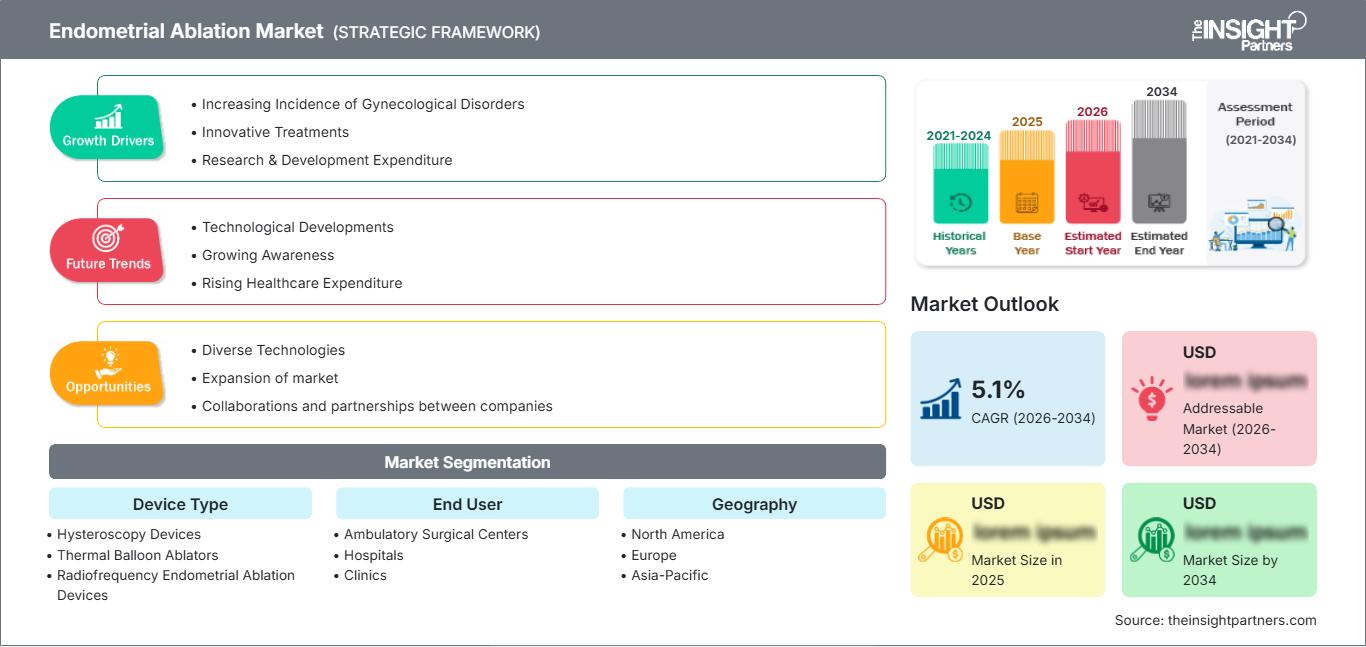
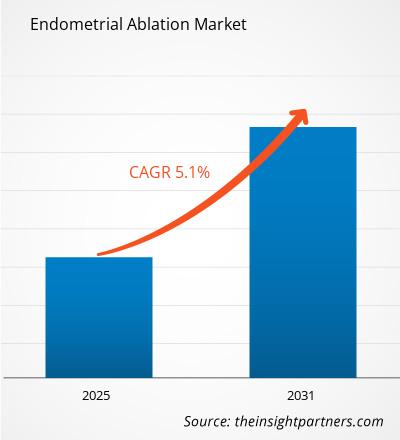
The global endometrial ablation market was valued at US$ 1.32 Billion in 2025 and is projected to reach US$ 2.19 Billion by 2034, registering a CAGR of 5.79% during 2026–2034. The market is supported by increasing adoption of minimally invasive gynecological procedures, rising awareness of treatment options for abnormal uterine bleeding, and continuous technological advancements in second-generation ablation systems. Improvements in outpatient care infrastructure and favorable clinical outcomes are further strengthening long-term market expansion.
North America remains the leading regional market owing to its advanced healthcare infrastructure, widespread availability of minimally invasive gynecological procedures, and high awareness among women regarding treatment alternatives to hysterectomy. The regional market is expected to expand at a CAGR of 5.3–5.8% during the forecast period, supported by favorable reimbursement frameworks, continuous innovation in ablation technologies, and increasing procedural volumes across ambulatory surgery centers and hospitals.
Endometrial Ablation Market Assessment and Insights
- North America: North America accounted for 39–43% share in 2025 and is projected to register a CAGR of 5.3–5.8% during 2026–2034. Strong reimbursement systems, growing adoption of office-based gynecological procedures, and continuous product innovation continue to reinforce regional leadership.
- US: The US represented 81–85% of the North American market in 2025 and is anticipated to grow at a CAGR of 5.4–5.9% during 2026–2034, supported by increasing minimally invasive procedure volumes and strong presence of leading medical device manufacturers.
- Europe: Europe held 26–30% share in 2025 and is expected to expand at a CAGR of 5.0–5.5% during 2026–2034. Germany, the UK, and France remain key contributors owing to established gynecological care pathways, favorable healthcare expenditure, and adoption of advanced endometrial ablation technologies.
- Asia Pacific: Asia Pacific accounted for 21–25% share in 2025 and is forecast to register the fastest regional CAGR of 6.5–7.1% during 2026–2034. China, Japan, India, South Korea, and Australia are driving regional demand through expanding healthcare infrastructure, improving women's health awareness, and increasing access to minimally invasive treatments.
- Largest Segment: Radiofrequency endometrial ablation devices accounted for 34–38% market share in 2025 and are expected to grow at a CAGR of 6.1–6.6% during 2026–2034, supported by high procedural efficiency, predictable clinical outcomes, and shorter recovery times.
- High Growth Segment: Ambulatory Surgery Center represented 30–34% market share in 2025 and is projected to record a CAGR of 6.7–7.3% during 2026–2034, driven by increasing preference for cost-effective outpatient procedures and rapid patient recovery.
- Key companies analyzed in detail: AEGEA Medical, Inc., Boston Scientific Corporation, CooperSurgical, Inc., Ethicon US, LLC, Hologic, Inc., Idoman Teoranta, Medtronic plc, Minerva Surgical, Inc., Olympus Corporation, and Omnitech Systems, Inc.
Source: The Insight Partners' analysis based on proprietary research, government publications, company annual reports, investor presentations, industry databases, and expert interviews.
Developments in endometrial ablation have changed the face of abnormal uterine bleeding treatments through improvements in safety, accuracy, and recovery. Progress from first generation hysteroscopic techniques to second generation non-hysteroscopic procedures has made the processes simpler and reduced operation time and general anesthesia requirement. Integration of radiofrequency, hydrothermal, cryoablation, and thermal balloon has given healthcare professionals the ability to provide more outpatient treatment options. All these changes are helping the endometrial ablation market growth while manufacturers concentrate on user friendly and procedural consistent solutions.
The endometrial ablation market outlook is good as more and more healthcare providers expand their minimally invasive women’s health services in both developed and developing markets. Investments in surgical facility development, medical education, and gynecology equipment innovations will create more commercialization opportunities. Regulatory environment, growth in healthcare spending, and increased understanding of hysterectomy alternatives will further increase the endometrial ablation market scope. All these factors are likely to support endometrial ablation market innovations, help to enlarge endometrial ablation market size, increase endometrial ablation market share, drive endometrial ablation market trends, and ensure endometrial ablation market analysis.
Endometrial Ablation Market Report Scope
| Report Attribute | Details |
|---|---|
| Market size in 2025 | US$ 1.32 Billion |
| Market Size by 2034 | US$ 2.19 Billion |
| Global CAGR (2026 - 2034) | 5.79% |
| Historical Data | 2021-2024 |
| Forecast period | 2026-2034 |
Endometrial Ablation Market Analysis
As the rate of occurrence of AUB in women of reproductive and perimenopausal age continues to increase, more women will seek endometrial ablation as a means to manage their symptoms. Clinical guidelines now encourage women who have finished having children to opt for minimally invasive surgical procedures rather than hysterectomies. As awareness of these procedures increases and the recovery time shortens and the cost of staying in the hospital declines, the number of patients seeking these procedures will keep rising. Technological advancements in imaging guidance, disposable devices, and training programs for physicians have been contributing to procedure success rates and market expansion.
The value chain includes device producers, component makers, sterilization service providers, distributors, healthcare facilities, and facilities providing post-procedural care. Device manufacturers have continued to invest in research to ensure that there is more precision in delivering energy to the patient and ease of device handling by the physician. Good reimbursement policies in developed healthcare systems and increasing access to women's health services in developing nations have been boosting procedure volumes. Outpatient procedures becoming priorities in healthcare facilities, purchases of advanced endometrial ablation systems will continue to rise.
The competition in the market is based on technological innovations, approvals, partnerships, geographical expansion, and product line enhancement. The companies Hologic, Inc., Boston Scientific Corporation, CooperSurgical, Inc., Medtronic plc, Olympus Corporation, Ethicon US, LLC, Minerva Surgical, Inc., AEGEA Medical, Inc., Idoman Teoranta, and Omnitech Systems, Inc. keep their competitive advantage through stressing effectiveness, physicians’ training, and minimal invasiveness of procedures performed. The differentiation of products is based on the effectiveness of the procedures, disposable design of the devices, safety of the patients, and easy adaptation to outpatient clinical environment.
Investment activity is increasingly directed toward women's health technologies, outpatient surgical infrastructure, and digital healthcare integration. Companies are expanding manufacturing capabilities while strengthening distribution partnerships to improve access across high-growth regions. Regulatory emphasis on patient safety and evidence-based clinical performance continues to encourage innovation in next-generation ablation platforms. Growing interest from hospitals and ambulatory surgery centers in cost-efficient technologies is expected to support long-term procurement activity, while mergers, licensing agreements, and collaborative research initiatives are likely to enhance competitive positioning across global markets.
● REPORT CUSTOMIZATION
Tailor This Report To Align With Your Specific Business Requirements
This report can be customized to align precisely with your business objectives, scope, and target markets. Customization options include tailored segmentation, geography, competitive analysis, and strategic insights to support informed decision-making.
Customize This Report →WHAT YOU CAN ADJUST
- ● Segmentations
- ● Geography
- ● Competitive Analysis
- ● Language Preferences
Endometrial Ablation Market: Strategic Insights
Regional Insights
North America Endometrial Ablation Market
North America accounted for 39–43% of the global market in 2025 and is projected to expand at a CAGR of 5.3–5.8% during 2026–2034. The region benefits from advanced healthcare infrastructure, widespread availability of minimally invasive gynecological procedures, and favorable reimbursement policies. High awareness of abnormal uterine bleeding treatment options, combined with increasing physician preference for second-generation endometrial ablation devices, continues to support market expansion across hospitals and ambulatory surgery centers.
The presence of established medical device manufacturers, continuous technological innovation, and strong clinical adoption further reinforce regional leadership. Increasing outpatient procedural volumes, rising healthcare expenditure, and supportive professional guidelines encouraging minimally invasive interventions are expected to sustain long-term demand. Continuous investments in women's healthcare services and physician training programs will further strengthen procedural adoption throughout the forecast period.
U.S. Endometrial Ablation Market
The United States represented 81–85% of the North American market in 2025 and is anticipated to register a CAGR of 5.4–5.9% during 2026–2034. High diagnosis rates of abnormal uterine bleeding, broad insurance coverage for eligible procedures, and widespread availability of advanced gynecological technologies continue to support national market leadership. Major manufacturers maintain extensive commercial operations and physician education initiatives across the country.
Growing adoption of office-based procedures and ambulatory surgery centers has increased demand for radiofrequency, thermal balloon, and cryoablation technologies. Continuous investments in women's health services, favorable regulatory oversight, and expanding clinical evidence supporting minimally invasive treatment alternatives are expected to sustain procedural growth while strengthening the United States' dominant contribution to the regional market.
Europe Endometrial Ablation Market
Europe held 26–30% of the global market in 2025 and is projected to grow at a CAGR of 5.0–5.5% during 2026–2034. Well-established public healthcare systems, increasing utilization of minimally invasive gynecological procedures, and expanding access to advanced medical technologies continue to support regional market development. Germany remains the leading national market due to high procedural adoption and strong hospital infrastructure.
The United Kingdom continues to experience stable demand owing to structured clinical care pathways, increasing awareness of alternatives to hysterectomy, and ongoing investments in women's healthcare services. National healthcare initiatives promoting minimally invasive procedures are expected to support sustained utilization across hospitals and specialized gynecology centers.
France, Italy, and Spain collectively contribute significantly to regional growth through expanding outpatient surgical capabilities and modernization of hospital infrastructure. Increasing physician training, improving access to advanced ablation technologies, and growing patient preference for shorter recovery periods continue to strengthen procedural volumes across these healthcare systems.
APAC Endometrial Ablation Market
Asia Pacific accounted for 21–25% of the global market in 2025 and is forecast to register the fastest regional CAGR of 6.5–7.1% during 2026–2034. China remains the leading regional market, supported by expanding hospital capacity and growing investments in women's healthcare.
Japan and South Korea continue to adopt advanced minimally invasive gynecological technologies through technologically sophisticated healthcare systems and high procedural standards.
India and Australia are witnessing increasing demand driven by expanding private healthcare networks, improving patient awareness, favorable government healthcare initiatives, and greater availability of specialized gynecological services across urban healthcare facilities.
Middle East & Africa Endometrial Ablation Market
The Middle East & Africa market is expected to register a CAGR of 5.8–6.3% during 2026–2034. Saudi Arabia remains the largest contributor owing to healthcare modernization initiatives and increasing investments in specialized women's health services.
The United Arab Emirates continues expanding access to advanced minimally invasive procedures through growing private healthcare investments and medical technology adoption.
South Africa and the Rest of the Middle East & Africa are gradually increasing procedure volumes through healthcare infrastructure improvements, physician training, and enhanced access to modern gynecological treatment technologies, supporting long-term regional market development.
Segmentation Analysis
Device Type
The Device Type segment is projected to expand at a CAGR of 5.9–6.4% during 2026–2034. Continuous technological advancements, growing physician preference for minimally invasive procedures, and increasing demand for shorter treatment durations are supporting adoption across healthcare facilities. Manufacturers are focusing on improving procedural efficiency, patient safety, and ease of use through next-generation energy delivery systems. The availability of multiple ablation technologies enables clinicians to select treatment approaches based on patient anatomy, clinical requirements, and institutional capabilities, supporting sustained demand throughout the forecast period.
- Hysteroscopy devices: These devices remain essential for direct visualization during selected procedures and complex clinical cases. Their continued use in specialized gynecology centers supports diagnostic accuracy and procedural precision despite the growing adoption of second-generation non-hysteroscopic systems.
- Thermal balloon ablators: Thermal balloon systems are widely utilized because of their relatively simple operation, consistent treatment outcomes, and suitability for outpatient settings. They remain an attractive option for healthcare providers seeking standardized treatment protocols.
- Radiofrequency endometrial ablation devices: This sub-segment represents the largest share of the device market due to rapid treatment cycles, predictable tissue destruction, strong clinical evidence, and broad physician acceptance across hospitals and ambulatory surgery centers.
- Hydrothermal ablators: Hydrothermal systems are preferred in selected patient populations where controlled heated fluid circulation provides effective endometrial destruction. Their clinical versatility supports continued utilization in specialized gynecological practices.
- Electrical ablators: Electrical ablation devices continue to serve healthcare providers requiring reliable energy delivery and procedural consistency. Ongoing technological refinements are improving treatment efficiency while minimizing procedural complexity.
- Cryoablation devices: Cryoablation technologies are gaining attention because of controlled tissue destruction, reduced postoperative discomfort, and favorable patient tolerance. Increasing physician familiarity is expected to support broader clinical adoption over time.
- Microwave endometrial ablators: Microwave-based systems provide rapid energy transfer and efficient endometrial treatment in selected clinical settings. Continued technological improvements and expanding physician expertise are expected to sustain demand in appropriate patient populations.
End User
The End User segment is anticipated to register a CAGR of 6.1–6.6% during 2026–2034. Increasing preference for minimally invasive outpatient procedures, improved reimbursement policies, and growing investments in women's healthcare infrastructure are driving demand across all healthcare settings. Healthcare providers continue expanding procedural capabilities to reduce hospitalization, improve patient convenience, and optimize clinical resource utilization, supporting long-term market growth.
- Ambulatory Surgery Center: Ambulatory surgery centers are experiencing strong adoption due to lower procedural costs, shorter patient recovery periods, efficient scheduling, and increasing physician preference for performing minimally invasive gynecological procedures in outpatient environments.
- Clinic: Clinics continue expanding their role in women's healthcare by offering consultation, diagnosis, and selected minimally invasive procedures. Growing accessibility and patient convenience contribute to rising procedural referrals and treatment volumes.
- Hospital: Hospitals remain essential providers for complex gynecological interventions, multidisciplinary patient management, and advanced surgical capabilities. Their comprehensive infrastructure and availability of specialized medical professionals continue supporting substantial procedure volumes.
Opportunity Snapshot
| Segment Name | Revenue Contribution | Trend Tag | Adoption Stage |
| Ambulatory Surgery Center | High | Outpatient Care | Scaling |
| Clinic | Medium | Office Procedures | Scaling |
| Hospital | High | Advanced Gynecology | Mature |
Endometrial Ablation Market Growth Drivers and Impact Analysis
Increasing Prevalence of Abnormal Uterine Bleeding and Preference for Minimally Invasive Treatment
Abnormal uterine bleeding continues to be one of the commonest gynecological disorders that affect women in their reproductive and perimenopausal years, leading to high demand for treatment options. The majority of women prefer methods that allow them to retain the uterus while avoiding the lengthy recovery time needed following hysterectomy. Endometrial ablation has become a popular treatment modality due to the relatively shorter operating times, shortened stay at hospitals, and fast recovery time. Growing clinical practice guidelines favoring minimally invasive procedures, along with increasing awareness among physicians and patients, are set to drive procedure uptake in both matured and developing health care economies.
Continuous Technological Advancements in Endometrial Ablation Devices
Manufacturers are developing next generation endometrial ablation devices that will increase the accuracy and efficiency of the treatment process and ensure safety for patients. Radiofrequency, cryoablation, hydrothermal, and thermal balloon devices have undergone significant improvements that allow medical practitioners to carry out procedures more consistently and with fewer complications. Use of disposable parts, easy-to-use interfaces, and automatic control features will help in gaining more confidence on the part of physicians and decrease the variability of the procedures. Such developments will also facilitate the wider use of endometrial ablation devices in outpatient settings where efficiency and standardization of procedures are crucial.
Expansion of Ambulatory Surgical Infrastructure and Women's Healthcare Investment
Healthcare providers globally are making substantial investments in ambulatory surgery centers and special women's health clinics to make minimally invasive surgeries more accessible and to reduce the costs associated with such treatments. The ambulatory centers provide efficiency, fewer hospital stays, and convenience as opposed to conventional inpatient hospitals. Healthcare providers, both governmental and private, are making greater investments in women's health programs, diagnostics, and gynecology specialties. In light of the growing recognition of outpatient procedures in terms of reimbursement models, healthcare providers will be purchasing advanced technologies of endometrial ablation sooner than anticipated.
Endometrial Ablation Market Future Trends
Integration of Smart Energy Delivery and Digital Procedure Monitoring
Next-generation endometrial ablation systems will have the capability of managing intelligence of energy delivery and procedure monitoring. The use of digital interface that will be able to monitor the parameters of treatment in procedures will help eliminate inconsistencies and deliver consistent clinical results. Medical device manufacturers will be developing products that will be using software for improving workflows and documenting data as well as connecting devices. With increased adoption of medical devices that are digitally enabled in hospitals and ambulatory care centers, next-generation endometrial ablation systems that will have smart procedure functionality are likely to be a competitive advantage.
Growing Shift Toward Office-Based Gynecological Procedures
Healthcare systems are increasingly encouraging office-based and outpatient gynecological interventions to improve patient access while reducing overall healthcare expenditure. Advances in anesthesia techniques, compact device designs, and simplified procedural workflows enable physicians to perform selected endometrial ablation procedures outside conventional operating rooms. This transition enhances patient convenience, shortens waiting times, and improves healthcare resource utilization. Device manufacturers are responding by developing portable, user-friendly systems designed specifically for ambulatory and office environments. The continued expansion of outpatient care models is expected to reshape procurement strategies and stimulate demand for efficient endometrial ablation technologies during the coming decade.
Endometrial Ablation Market Opportunities
Expansion into Emerging Healthcare Markets Through Local Partnerships
Emerging economies across Asia Pacific, Latin America, and parts of the Middle East are experiencing substantial improvements in healthcare infrastructure, women's health awareness, and access to minimally invasive surgical procedures. Manufacturers can capitalize on these developments by establishing regional manufacturing capabilities, distributor partnerships, physician education initiatives, and localized service networks. Collaborations with hospitals, ambulatory surgery centers, and national healthcare organizations can accelerate product adoption while improving clinical expertise. Companies that adapt product portfolios to local reimbursement environments and healthcare delivery models will be well positioned to expand market penetration and generate sustainable long-term revenue growth in underserved regions.
Development of Next-Generation Personalized Ablation Technologies
Opportunities exist for manufacturers to develop personalized endometrial ablation platforms capable of adapting treatment parameters to individual patient anatomy and clinical characteristics. Integration of advanced imaging guidance, artificial intelligence-assisted treatment planning, and automated energy optimization could improve procedural precision while reducing complications. Investment in clinical evidence generation, physician training, and patient outcome studies will further strengthen market acceptance. Companies introducing innovative technologies that enhance procedural safety, reduce treatment variability, and improve long-term patient satisfaction are expected to gain competitive advantages as healthcare providers increasingly prioritize personalized and evidence-based women's health solutions.
Recent Developments
- In December 2025: Hologic, Inc. received U.S. FDA approval for a manufacturing process supplement for the NovaSure Model 10 RF Controller, including the qualification of a new LCD screen supplier. The approval supports manufacturing continuity for one of the company's flagship endometrial ablation platforms while maintaining regulatory compliance and product quality standards.
- In January 2026, Axora Medical officially announced the strategic acquisition of all operational and technology assets of Minerva Surgical, Inc. Moving forward under the Axora corporate structure, the deal encompasses the manufacturing, product distribution, and clinical training infrastructure for Minerva’s global endometrial ablation (GEA) devices, including the Minerva ES Endometrial Ablation System and the Genesys HTA thermal framework.
- In April 2025: Minerva Surgical, Inc. (FDA applicant listed as Axora Medical, Inc.) received U.S. FDA approval for a PMA supplement to the Minerva Endometrial Ablation System, supporting continued commercialization and regulatory advancement of the platform used for the treatment of abnormal uterine bleeding in women who have completed childbearing.
Frequently Asked Questions

- Comprehensive Market Sizing and Forecast Analysis
- Detailed Segmentation Analysis
- In-Depth Market Dynamics Assessment
- Regional and Country-Level Insights
- Competitive Landscape and Company Benchmarking
- Strategic Business Intelligence
Recent Reports
Testimonials

The Insight Partners provided valuable market intelligence that supported our global go-to-market strategy. Their team was professional, responsive, and attentive to our feedback, providing thoughtful analysis and helpful methodological clarifications throughout the project.
Junmo Kim Chief Financial Officer (CFO), Enertech Co., Ltd.
The Insight Partners' SCADA System Market report is comprehensive, with valuable insights on current trends and future forecasts. The team was highly professional, responsive, and supportive throughout. We are very satisfied and highly recommend their services.
RAN KEDEM Partner, Reali Technologies LTDs
I requested a report on a very specific software market and the team produced the report in a few days. The information was very relevant and well presented. I then requested some changes and additions to the report. The team was again very responsive and I got the final report in less than a week.
JEAN-HERVE JENN Chairman, Future Analytica
We worked with The Insight Partners for an important market study and forecast. They gave us clear insights into opportunities and risks, which helped shape our plans. Their research was easy to use and based on solid data. It helped us make smart, confident decisions. We highly recommend them.
PIYUSH NAGPAL Sr. Vice President, High Beam Global
The Insight Partners delivered insightful, well-structured market research with strong domain expertise. Their team was professional and responsive throughout. The user-friendly website made accessing industry reports seamless. We highly recommend them for reliable, high-quality research services
YUKIHIKO ADACHI CEO, Deep Blue, LLC.
This is the first time I have purchased a market report from The Insight Partners.While I was unsure at first, I visited their web site and felt more comfortable to take the risk and purchase a market report.I am completely satisfied with the quality of the report and customer service. I had several questions and comments with the initial report, but after a couple of dialogs over email with their analyst I believe I have a report that I can use as input to our strategic planning process.Thank you so much for taking the extra time and making this a positive experience.I will definitely recommend your service to others and you will be my first call when we need further market data.
JOHN SUZUKI President and Chief Executive Officer, Board Director, BK Technologies
I wish to appreciate your support and the professionalism you displayed in the course of attending to my request for information regarding to infectious disease IVD market in Nigeria. I appreciate your patience, your guidance, and the fact that you were willing to offer a discount, which eventually made it possible for us to close a deal. I look forward to engaging The Insight Partners in the future, all thanks to the impression you have created in me as a result of this first encounter.
DR CHIJIOKE ONYIA MANAGING DIRECTOR, PineCrest Healthcare Ltd.Reason to Buy
- Informed Decision-Making
- Understanding Market Dynamics
- Competitive Analysis
- Identifying Emerging Markets
- Customer Insights
- Market Forecasts
- Risk Mitigation
- Boosting Operational Efficiency
- Strategic Planning
- Investment Justification
- Tracking Industry Innovations
- Aligning with Regulatory Trends





 Get Free Sample for