Enterobacteriaceae Infection Drug Market Size & Overview
The enterobacteriaceae infection drug market was valued at US$ 5.13 Billion in 2025 and is projected to reach US$ 8.11 Billion by 2034, expanding at a 5.2% CAGR from 2026 to 2034. Growth is supported by the rising burden of antimicrobial resistance, persistent hospital-acquired infections, increasing demand for effective therapies against resistant Gram-negative pathogens, and continued development of antibiotics addressing treatment gaps associated with complicated urinary tract and bloodstream infections.
North America is expected to remain a major contributor to the enterobacteriaceae infection drug market through 2034, supported by established hospital infrastructure, antimicrobial stewardship programs, advanced microbiological testing, and strong pharmaceutical development capabilities. The region is expected to expand at a ~5% CAGR through 2034 as healthcare providers increasingly prioritize targeted treatment for multidrug-resistant Enterobacterales and pharmaceutical companies pursue therapies with differentiated activity against resistant organisms.
The enterobacteriaceae infection drug market is shaped by demand from hospitals treating urinary tract, bloodstream, intra-abdominal, and other serious bacterial infections. Higher rates of resistance raise the need for susceptibility-driven therapy and may drive doctors to choose new or protected beta-lactams when conventional drugs are not appropriate. The supply chain covers drug synthesis, drug formulation and production, regulatory approval, procurement by hospitals, specialty distribution, pharmacies, and prescribing. Microbiology labs play a vital role in the supply chain since resistance profiling becomes critical in drug selection, especially in case of carbapenem-resistant strains. Supply considerations include the economics of antibiotic research and development, production considerations, regulations, and preservation of antibiotics through stewardship. Generic antibiotics that are already approved are used in order to provide availability and competition, while differentiating products must be able to prove their clinical and economic benefits in order to be included in the formulary. In terms of the supply sources, they will be comprised of big pharmaceutical firms alongside other companies that specialize in the development of antibiotics for resistant Gram-negative bacteria.
Competition in the enterobacteriaceae infection drug market spans established antibiotic portfolios, newer beta-lactamase inhibitor combinations, carbapenem-based therapies, and pipeline programs seeking improved administration or resistance coverage. The anti-infective portfolio of Pfizer Inc. has been considerable, whereas Melinta Therapeutics, Inc. has launched VABOMERE, a combination of meropenem-vaborbactam that addresses resistant Gram-negative pathogens. Spero Therapeutics has progressed tebipenem pivoxil as an oral carbapenem alternative for complicated urinary tract infections, exemplifying the value in shifting selected drug candidates into oral formulation where possible. Investments have become oriented towards targeting particular mechanisms of resistance rather than increasing the broad spectrum of activity of the antibiotics. Companies such as Genentech, Inc., Novartis AG, Sequoia Sciences, Inc., and Phico Therapeutics Ltd. make up the competitive set in addition to those mentioned above, contributing to a competitive arena of antimicrobial discovery and differentiation. Small specialty firms can strategically add value through clinical development, licensing, or partnering, whereas existing firms have the ability to add expertise in regulatory affairs, manufacturing, and marketing.
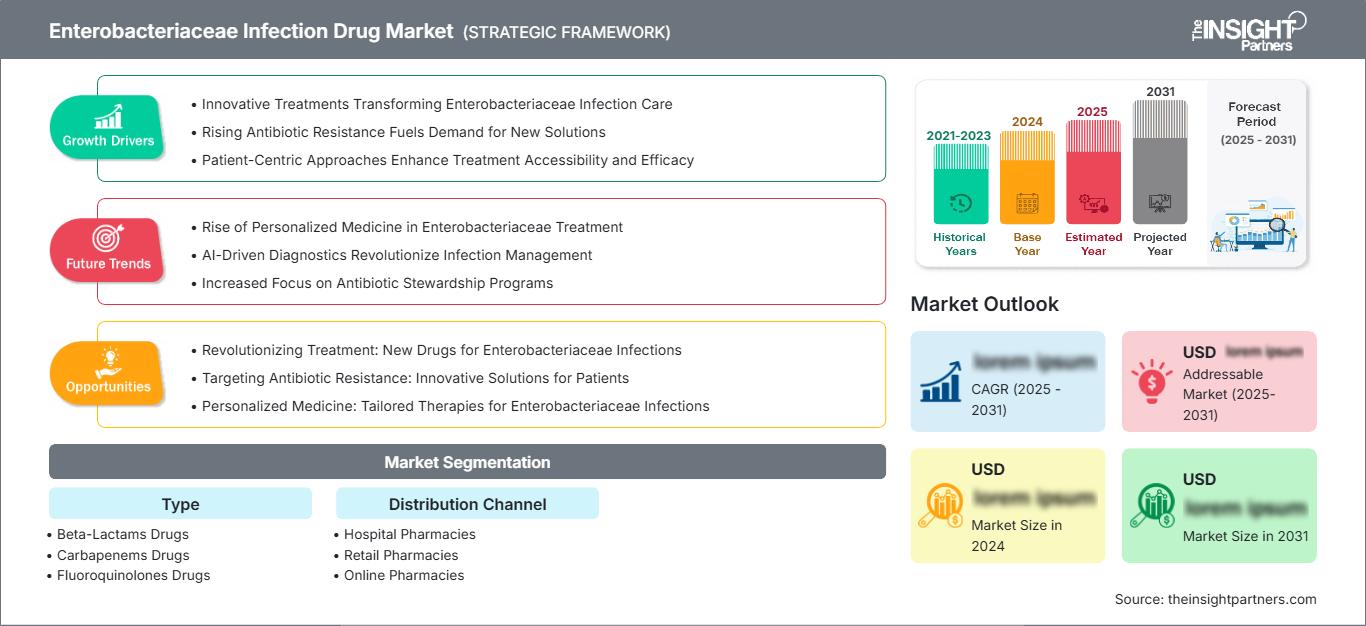
Enterobacteriaceae Infection Drug Market Assessment and Insights
Regional Outlook
- North America: ~39% of the global market in 2025 | ~5% CAGR through 2034. Market position: North America holds the largest regional position, supported by high-value hospital treatment, established antimicrobial stewardship, sophisticated diagnostics, and sustained demand for therapies addressing resistant Enterobacterales infections.
- US: ~82% of North American market revenue in 2025 | ~5% CAGR through 2034. Market position: The US represents the leading country within North America because of its large acute-care system, extensive antibiotic utilization, established regulatory pathways, and concentrated pharmaceutical development focused on resistant bacterial infections.
- Europe: ~31% of the global market in 2025 | ~4% CAGR through 2034. Market position: Europe represents a mature regional market, with Germany leading Europe through strong hospital capacity and pharmaceutical infrastructure, while the UK, France, Italy, and Spain contribute through coordinated antimicrobial surveillance and treatment programs.
- Asia Pacific: ~21% of the global market in 2025 | ~7% CAGR through 2034. Market position: Asia Pacific is the fastest-growing region, led by China through its large patient population and expanding healthcare capacity, with Japan, South Korea, India, and Australia contributing through broader access and antimicrobial-resistance initiatives.
Segment Outlook
- Beta-Lactams Drugs: ~52% Share in 2025 | ~5% CAGR through 2034. Market position: Beta-Lactams Drugs lead because of their broad clinical use across bacterial infections and established role in hospital treatment. Their importance is reinforced by continued formulation development and efforts to overcome resistance through inhibitor combinations.
- Online Pharmacies: ~8% Share in 2025 | ~10% CAGR through 2034. Market position: Online Pharmacies represent the fastest-growing segment because digital prescription fulfillment is expanding access, particularly for follow-up treatment and non-emergency therapy, while electronic prescribing and home delivery improve convenience.
Competitive Coverage
Genentech, Inc., Allergan, Novartis AG, Pfizer Inc., Nymox Pharmaceutical Corporation, Sequoia Sciences, Inc., Phico Therapeutics Ltd., Melinta Therapeutics, Inc., Spero Therapeutics, Cipla USA, Inc.
Methodology
The Insight Partners follows Data Collection & Secondary Research, Primary Research, Data Analysis, and Data Triangulation & Final Review to validate market estimates and insights.
Source: The Insight Partners' analysis based on proprietary research, government publications, company annual reports, investor presentations, industry databases, and expert interviews.
Enterobacteriaceae Infection Drug Market Trends
Greater integration of resistance-guided prescribing
Future treatment pathways are likely to integrate microbiological and genomic information more closely with antibiotic selection. European surveillance programs are expanding genomic characterization of carbapenem-resistant Enterobacterales to identify resistance mechanisms, transmission patterns, and high-risk lineages. ECDC's CRE25 program illustrates the movement toward more structured genomic surveillance across participating countries. As these capabilities become more accessible, prescribing can become more precisely aligned with resistance phenotype and genotype. This shift may favor therapies with clearly defined activity against particular resistance mechanisms rather than indiscriminate broad-spectrum products. Pharmaceutical companies will increasingly need clinical evidence connecting diagnostic information with treatment outcomes, while healthcare systems may use surveillance data to guide formulary decisions and procurement.
Shift toward more convenient treatment pathways
Convenience is expected to become a stronger differentiator where clinical circumstances permit movement from intravenous to oral therapy. The approval of oral tebipenem pivoxil in the US in 2026 demonstrates the commercial and clinical relevance of developing carbapenem-class treatment that can be administered outside an intravenous setting. Spero Therapeutics reported that the FDA approved Utebzi for adults with complicated urinary tract infections, including pyelonephritis. Over time, similar innovation could support earlier hospital discharge and reduce administration burden for selected patients. The trend does not eliminate the role of intravenous treatment in severe infections, but it creates a differentiated pathway for products that combine appropriate antibacterial activity with simpler administration.
Enterobacteriaceae Infection Drug Market Growth Factors
Escalation of antimicrobial resistance in Enterobacterales
Increasing resistance among Enterobacterales is expanding the clinical need for drugs capable of treating infections when commonly used antibiotics become ineffective. WHO's 2024 priority-pathogen framework classifies third-generation cephalosporin-resistant and carbapenem-resistant Enterobacterales as critical priorities, reinforcing the need for new treatment options and targeted research. Resistance can increase hospitalization complexity, narrow empirical treatment choices, and raise the value of therapies with activity against specific resistance mechanisms. For pharmaceutical companies, this creates opportunities to differentiate products through beta-lactamase inhibition, improved resistance coverage, or alternative mechanisms. For healthcare providers, the impact is more selective prescribing, greater reliance on susceptibility testing, and stronger antimicrobial stewardship requirements.
Growing burden of difficult-to-treat hospital infections
Enterobacterales are important causes of healthcare-associated urinary tract, bloodstream, respiratory, and intra-abdominal infections, creating recurring demand for effective antibacterial treatment. CDC surveillance identifies E. coli, Klebsiella, and Enterobacter as important Enterobacterales associated with healthcare infections and monitors carbapenem resistance because treatment becomes substantially more difficult when these organisms acquire resistance. Hospitals therefore require dependable access to established antibiotics while increasingly incorporating newer therapies for resistant cases. This demand supports market expansion through continued treatment volumes, replacement of ineffective regimens, and development of products designed for resistant infections. The strongest commercial opportunities are likely to arise where clinical severity, resistance prevalence, and treatment limitations intersect.
Expansion of targeted therapies for resistant infections
Drug development is increasingly focused on restoring or preserving antibacterial activity against specific resistance mechanisms. Beta-lactamase inhibitor combinations illustrate this approach by pairing established antibacterial agents with inhibitors capable of neutralizing selected resistance enzymes. Pfizer's aztreonam-avibactam program, for example, targets serious infections involving metallo-beta-lactamase-producing Gram-negative bacteria, while Melinta Therapeutics, Inc. commercializes meropenem-vaborbactam for susceptible complicated urinary tract infections. Such approaches can create differentiated value without requiring every therapy to replace broad antibiotic classes. The market impact includes stronger competition around resistance coverage, increased demand for diagnostic confirmation, and greater emphasis on demonstrating clinical usefulness in precisely defined patient populations.
Enterobacteriaceae Infection Drug Market Opportunities
Development of oral options for serious Gram-negative infections
The expansion of oral treatment options represents a strategic opportunity for companies capable of maintaining sufficient antibacterial activity while meeting safety and pharmacokinetic requirements. Complicated urinary tract infections provide a particularly relevant development pathway because many patients initially require hospital-based care but may benefit from oral treatment when clinically appropriate. The successful development and 2026 US approval of tebipenem pivoxil demonstrates that an oral carbapenem can address an identifiable treatment gap. Future opportunities extend beyond a single molecule and may involve optimized formulations, oral step-down strategies, and targeted therapies for resistance-defined populations. Investors and developers can therefore prioritize assets that combine differentiated activity with measurable reductions in treatment burden.
Expansion of resistance-focused partnerships and regional access
Strategic partnerships can accelerate the development and commercialization of therapies targeting resistant Enterobacterales by combining specialist discovery capabilities with established regulatory, manufacturing, and commercial infrastructure. Smaller companies may generate value through focused antibiotic programs while larger pharmaceutical organizations provide global development expertise and market access. Regional licensing can also help extend advanced treatments into countries where resistance burdens are substantial but local development resources are limited. Pfizer's continuing work around aztreonam-avibactam and Spero Therapeutics' collaboration structure for tebipenem illustrate how partnerships can support development and commercialization of differentiated anti-infective assets.
Segmentation Analysis
Type
The Type segment of the enterobacteriaceae infection drug market is the central therapeutic classification of the market and determines how treatment portfolios address different bacterial resistance profiles and clinical requirements. Beta-lactam-based therapies remain particularly important because of their extensive hospital use and ability to serve as foundations for combination approaches. The Type segment is expected to remain anchored by established prescribing patterns while shifting toward more resistance-aware treatment. Beta-Lactams Drugs are expected to record a ~5% CAGR through 2034 as protected formulations and targeted therapies gain importance.
- Beta-Lactams Drugs: This sub-segment benefits from broad clinical familiarity, established manufacturing capacity, and extensive use in serious bacterial infections. Demand increasingly favors products that can preserve activity against beta-lactamase-producing organisms and support susceptibility-guided treatment.
- Carbapenems Drugs: Carbapenems remain important for severe infections requiring broad Gram-negative coverage. Their strategic role is changing as resistance increases, encouraging more selective use and demand for combinations or alternatives that retain activity against carbapenem-resistant organisms.
- Fluoroquinolones Drugs: Fluoroquinolones retain relevance in selected infections because of established oral and intravenous formulations. Their position is moderated by resistance concerns and stewardship requirements, which increasingly influence prescribing according to susceptibility results and infection severity.
Distribution Channel
Distribution Channel determines how anti-infective products reach healthcare providers and patients, with channel importance varying according to treatment severity and administration requirements in the Enterobacteriaceae Infection Drug Market. Hospital-based procurement remains central because serious Enterobacterales infections frequently require supervised therapy and microbiological monitoring. Retail and digital channels become more relevant when patients transition to outpatient treatment. Online Pharmacies are expected to record a ~10% CAGR through 2034 as electronic prescribing, home delivery, and digital healthcare adoption broaden access for appropriate outpatient prescriptions.
- Hospital Pharmacies: Hospital Pharmacies represent the principal channel for severe and complicated infections because treatment frequently involves intravenous administration, specialist prescribing, microbiological testing, and close monitoring of clinical response.
- Retail Pharmacies: Retail Pharmacies support outpatient treatment and continuation of oral antibiotic therapy after hospital discharge. Their role depends strongly on prescription volume, reimbursement, physician prescribing patterns, and stewardship controls.
- Online Pharmacies: Online Pharmacies are gaining relevance as electronic prescriptions and home-delivery services expand. The channel is particularly suited to appropriate outpatient therapies where patients do not require direct administration or continuous clinical supervision.
Opportunity Snapshot
| Distribution Channel | Revenue Contribution | Trend Tag | Adoption Stage |
| Hospital Pharmacies | High | Hospital Treatment | Mature |
| Retail Pharmacies | Medium | Outpatient Therapy | Mature |
| Online Pharmacies | Low | Digital Fulfillment | Scaling |
Regional Insights
North America enterobacteriaceae infection drug market
North America is estimated to account for ~39% of the global market in 2025 and is expected to expand at a ~5% CAGR through 2034. The region benefits from extensive acute-care infrastructure, high adoption of microbiological diagnostics, and established antimicrobial stewardship practices. The US represents the central demand base, while Canada contributes through hospital procurement and public healthcare systems. Treatment demand is concentrated in serious infections where resistance can increase length of hospitalization and narrow therapeutic choices. These factors support the substantial Enterobacteriaceae Infection Drug Market size in North America and reinforce the region's importance as a key revenue-generating market throughout the forecast period.
The competitive environment of the region comprises multinational pharmaceutical firms alongside dedicated producers of antibiotics. The growing focus on carbapenem-resistant Enterobacterales and extended-spectrum beta-lactamase-producing microorganisms ensures the need for innovative drugs. There is an increased interest of hospitals in susceptibility-directed therapy that can facilitate the use of new products when they show better efficacy against drug-resistant microorganisms. The development of new products in oral and intravenous forms is projected to expand the therapy path.
U.S. enterobacteriaceae infection drug market
The US represents approximately ~82% of North American market revenue in 2025 and is expected to record a ~5% CAGR through 2034. Its position reflects a large hospital and outpatient healthcare system, advanced diagnostic capabilities, high pharmaceutical spending, and established pathways for developing and approving therapies for serious bacterial infections. Demand is particularly relevant in complicated urinary tract, bloodstream, intra-abdominal, and healthcare-associated infections where resistance can constrain treatment selection. These factors reinforce the importance of the US within the Enterobacteriaceae Infection Drug Market report, highlighting its role as the region's primary demand center and a key contributor to global market growth through the forecast period.
Supporting US adoption of the drug are pharmaceutical companies such as Pfizer Inc., Melinta Therapeutics, Inc., Spero Therapeutics, and Genentech, Inc., together with niche developers and generic manufacturers. The prevailing trend in treatment is that there is a need to identify resistance organisms fast and choose agents according to their susceptibility. There may be an opportunity for oral treatments depending on the clinical condition that allows discharge and de-escalation of therapy, whereas intravenous treatments will continue to play a critical role in hospitalized cases.
Europe enterobacteriaceae infection drug market
Europe accounts for ~31% of the global market in 2025 and is projected to expand at a ~4% CAGR through 2034. Germany is the leading country in Europe, supported by substantial hospital infrastructure, pharmaceutical capabilities, and demand for advanced anti-infective therapies. The UK maintains strong antimicrobial stewardship and surveillance systems, while France combines extensive hospital treatment capacity with national resistance-control programs. Italy and Spain represent important markets where resistant Gram-negative infections remain a significant clinical concern. These factors are expected to shape the Enterobacteriaceae Infection Drug Market forecast, with Europe maintaining a significant role in the adoption and utilization of advanced therapies for resistant bacterial infections through 2034.
Germany's position is reinforced by its large healthcare system and established pharmaceutical distribution network. The UK market places particular emphasis on responsible antibiotic use, supporting selective uptake of advanced therapies rather than indiscriminate volume expansion. France provides a sizeable hospital-based treatment base, while Italy and Spain face continuing pressure from resistant organisms and healthcare-associated infections. Across the region, the enterobacteriaceae infection drug market is increasingly shaped by genomic surveillance, resistance monitoring, hospital infection prevention, and targeted access to newer antimicrobials.
Changes to the epidemiology of carbapenem-resistant Enterobacterales are also shaping European demand. In 2025, the ECDC observed that the occurrence of carbapenem-resistant Klebsiella pneumoniae bloodstream infections had risen in 23 EU Member States, whereas in 2026, its genomic surveillance efforts revealed that there were changes to carbapenemase profiles. Both of these events have strengthened the clinical case for differentiation in the field of anti-infectives.
APAC enterobacteriaceae infection drug market
Asia Pacific represents ~21% of the global market in 2025 and is expected to record a ~7% CAGR through 2034, making it the fastest-growing region. China is the leading country in Asia Pacific because of its large patient population, expanding healthcare infrastructure, and growing investment in hospital services. Japan and South Korea contribute through mature healthcare systems, while India provides substantial volume potential as diagnostic and treatment access expands. These developments reflect key Enterobacteriaceae Infection Drug Market trends, with the region benefiting from improving diagnostic access, expanding hospital infrastructure, increasing antimicrobial-resistance awareness, and broader availability of advanced anti-infective therapies.
Large clinical base and hospitals in China, coupled with long-term growth potential through improved access to more advanced therapies in India, represent key strengths. The presence of well-established regulatory and clinical environments in Japan and South Korea, along with the contribution made by antimicrobial stewardship and surveillance in Australia, is another key strength. Resistance management policies, increased capabilities in microbiology, and improved antibiotic selection are the key trends that are driving the regional market.
Middle East & Africa enterobacteriaceae infection drug market
Middle East & Africa enterobacteriaceae infection drug market is expected to expand at a ~6% CAGR through 2034. Saudi Arabia is a leading country in the Middle East & Africa market where evidence supports strong demand, supported by investment in tertiary healthcare, hospital modernization, and infectious-disease capabilities. The UAE also contributes through private healthcare development and advanced hospital infrastructure, while South Africa represents an important African treatment market.
Demand varies significantly across the region because healthcare access, diagnostic infrastructure, and antibiotic availability differ between countries. Saudi Arabia and the UAE have comparatively developed tertiary-care systems, while South Africa provides a major regional center for infectious-disease treatment. Infrastructure investment, medical tourism, hospital expansion, and greater awareness of antimicrobial resistance can support demand for effective therapies. However, procurement constraints and uneven laboratory capacity can limit rapid uptake of advanced antibiotics in lower-resource settings.
Enterobacteriaceae Infection Drug Market Report Scope
| Report Attribute | Details |
|---|---|
| Market size in 2025 | US$ 5.13 Billion |
| Market Size by 2034 | US$ 8.11 Billion |
| Global CAGR (2026 - 2034) | 5.21% |
| Historical Data | 2021-2024 |
| Forecast period | 2026-2034 |
| Segments Covered | Type, Distribution Channel |
| Region scope | North America, Europe, Asia-Pacific, South and Central America, Middle East and Africa |
Frequently Asked Questions

Recent Reports






