Eosinophilic Esophagitis Drug Market Size & Overview
The eosinophilic esophagitis drug market was valued at US$ 230.62 Million in 2025 and is projected to reach US$ 506.88 Million by 2034, expanding at a 9.14% CAGR from 2026 to 2034. Growth is supported by increasing diagnosis of chronic esophageal inflammation, greater recognition of disease progression, broader use of pharmacological maintenance therapy, and expansion of targeted treatment options. Treatment innovation is also shifting clinical practice toward therapies that address both inflammatory activity and longer-term structural consequences.
North America remains an important demand center, supported by established gastroenterology infrastructure, high diagnostic awareness, increasing biopsy utilization, and comparatively broad access to specialty medicines. The eosinophilic esophagitis drug market in the region is modeled to expand at approximately ~9% CAGR through 2034, with growth reinforced by increasing recognition of eosinophilic esophagitis as a chronic condition requiring sustained management rather than episodic symptom control.
The factors that affect the demand include the fact that the disorder is chronic in nature, has recurring symptoms, there is the possibility of food impaction and that the inflammation must be controlled prior to any remodeling. The value chain includes drug discovery, active pharmaceutical ingredient manufacturing, special formulation, obtaining regulatory approvals, specialty distribution, gastroenterologists prescribing the drugs and long-term management of the condition. The widening of diagnostic scope automatically adds to the addressable market since more patients with unexplained dysphagia become candidates for specific disease management.These factors contribute to the expanding Eosinophilic Esophagitis Drug Market size and support long-term growth prospects across both adult and pediatric patient populations. There is now an increasing bias in the supply chain towards differentiated products compared to non-differentiated gastrointestinal medicines. Manufacturers are battling it out in the local esophageal medication delivery arena, ease of administration, efficacy in maintenance therapy, and appropriateness for those patients who do not react to initial therapy well. Additionally, the growing knowledge in regard to inflammatory processes has been adding significant strategic importance to biologics and specialty formulations. This means that manufacturers with experience in regulatory affairs and gastroenterology channel marketing have greater strengths than primary care distributors alone.
The competitiveness of the market environment is determined by the actions of already well-established firms, as well as specialized developers that choose various therapeutic options. Regeneron and Sanofi have managed to create a stronger segment with the help of dupilumab, whereas Dr. Falk Pharma has gained considerable competitive advantages in the field of budesonide's topical application. Another developer, Ellodi Pharmaceuticals, is making efforts in the promotion of its product, a fluticasone-based therapy for targeting the esophagus targeting. In terms of investment, focus is shifting more towards treatments that have a proven ability to show histological improvement along with alleviation of symptoms. For strategic positioning, it becomes essential for companies to be clinically differentiated, have a regulatory presence, intellectual property in formulation, and the capacity to provide treatment over extended durations. Companies having wide-ranging immuno-therapy portfolios will have an advantage in terms of their existing commercial capabilities while specialized biotechnology firms will be able to compete via formulation differentiation and clinical programs.
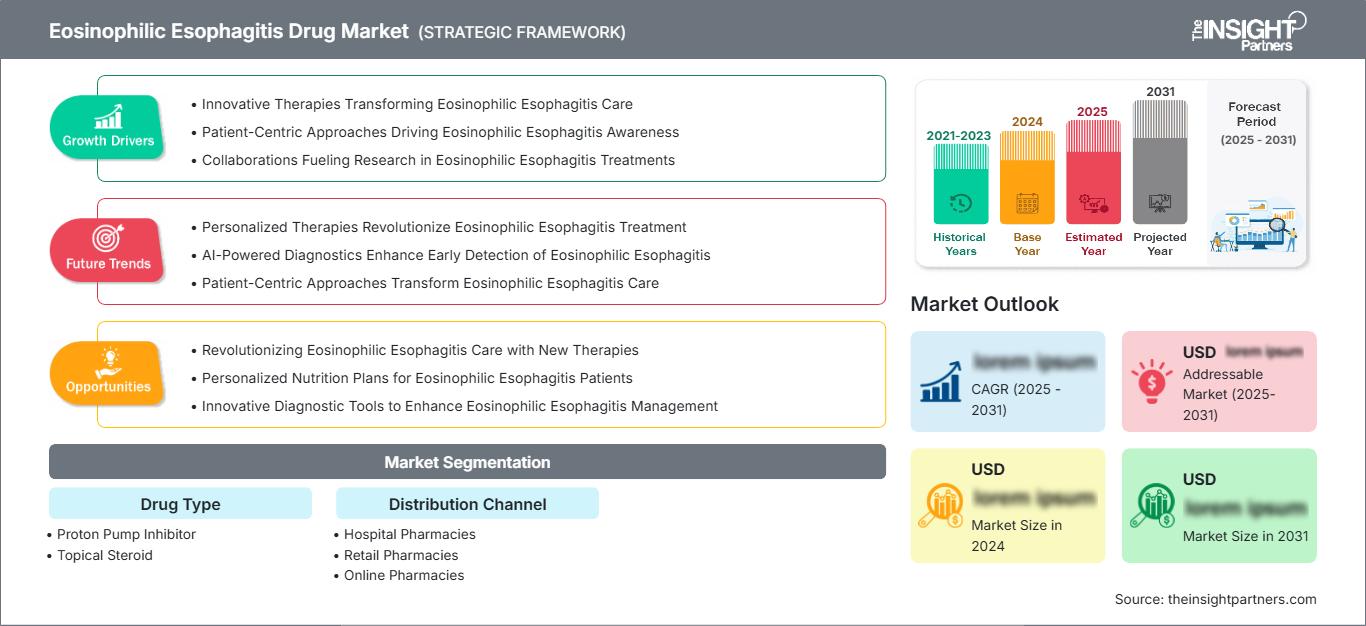
Eosinophilic Esophagitis Drug Market Assessment and Insights
Regional Outlook
- North America: ~48% of the global market in 2025 | ~9% CAGR through 2034. Market position: North America holds the leading regional position because of comparatively high diagnosis rates, established specialist care, extensive endoscopy capacity, and early access to advanced pharmacological treatments. Expanding pediatric diagnosis further supports demand.
- US: ~85% of North American market revenue in 2025 | ~9% CAGR through 2034. Market position: The US dominates North American demand through a large diagnosed population, specialist gastroenterology networks, established reimbursement pathways, and broad clinical adoption of prescription therapies for persistent inflammatory disease.
- Europe: ~25% of the global market in 2025 | ~8% CAGR through 2034. Market position: Europe represents a mature treatment market, with Germany, the UK, and France among the leading countries in Europe. Established gastroenterology services and availability of topical corticosteroid formulations support sustained demand.
- Asia Pacific: ~18% of the global market in 2025 | ~11% CAGR through 2034. Market position: Asia Pacific is the fastest-growing region as diagnostic recognition expands from a relatively lower base. Japan, China, South Korea, India, and Australia are supported by improving specialist capacity and increasing awareness of eosinophilic gastrointestinal disease.
Segment Outlook
- Proton Pump Inhibitor: ~62% Share in 2025 | ~9% CAGR through 2034. Market position: Proton pump inhibitors retain the largest position because of established prescribing familiarity, accessibility, oral administration, and their role in initial pharmacological management. Their established clinical use gives this segment a broad patient base.
- Topical Steroid: ~38% Share in 2025 | ~11% CAGR through 2034. Market position: Topical steroids represent the high-growth segment as clinicians increasingly prioritize localized anti-inflammatory delivery and sustained histological disease control. Formulation improvements and pediatric treatment expansion are strengthening their competitive relevance.
Competitive Coverage
Boston Scientific Corporation, AstraZeneca, GSK, Adare Pharmaceuticals, DBV Technologies, Dr. Falk Pharma GmbH, Quorum Innovations, Takeda Pharmaceuticals, Calypso Biotech, Celgene, Regeneron Pharmaceuticals, Sanofi, Ellodi Pharmaceuticals, EsoCap, Eupraxia Pharmaceuticals
Methodology
The Insight Partners follows Data Collection & Secondary Research, Primary Research, Data Analysis, and Data Triangulation & Final Review to validate market estimates and insights.
Source: The Insight Partners' analysis based on proprietary research, government publications, company annual reports, investor presentations, industry databases, and expert interviews.
Eosinophilic Esophagitis Drug Market Trends
Shift Toward Biomarker-Guided and Personalized Treatment
Future treatment pathways are likely to place greater emphasis on identifying which patients are most likely to respond to specific pharmacological mechanisms. Research into inflammatory pathways, tissue characteristics, disease severity, and treatment response is creating opportunities for more individualized management. Rather than applying a uniform sequence to every patient, clinicians may increasingly consider disease phenotype, coexisting allergic conditions, previous treatment response, and histological activity when selecting therapy. More refined monitoring could also help determine whether patients require treatment escalation or maintenance adjustment. This trend would favor pharmaceutical products supported by strong responder data and clearly differentiated clinical outcomes. It may also encourage collaboration between drug developers and diagnostic companies, particularly where biomarkers can reduce uncertainty around treatment selection and improve long-term disease management.
Greater Emphasis on Convenient Long-Term Formulations
Treatment convenience is likely to become a stronger competitive differentiator as eosinophilic esophagitis is managed as a chronic disease requiring sustained control. Patients may increasingly favor formulations that reduce administration complexity, improve adherence, and fit routine daily activities. Oral disintegrating technologies, age-specific formulations, and delivery systems designed to maximize esophageal exposure can therefore gain importance. Convenience is particularly relevant for children and patients requiring prolonged therapy because poor adherence can undermine clinical outcomes even when a medicine is pharmacologically effective. Developers are likely to compete on dosing frequency, administration instructions, tolerability, storage requirements, and patient experience. These considerations could influence prescribing decisions alongside traditional measures such as histological response and symptom improvement.
Eosinophilic Esophagitis Drug Market Growth Factors
Rising Diagnosis of Chronic Eosinophilic Esophageal Disease
Greater clinical recognition of eosinophilic esophagitis is expanding the treated population and improving the conversion of undiagnosed dysphagia into disease-specific therapy in the Eosinophilic Esophagitis Drug Market. The condition is increasingly recognized as a chronic inflammatory disorder rather than an isolated swallowing complaint, encouraging clinicians to investigate persistent symptoms through endoscopic assessment and biopsy. Rising prevalence estimates in major healthcare markets reinforce the importance of earlier diagnosis. For pharmaceutical suppliers, a larger diagnosed population increases the addressable base for both established and advanced therapies. The impact is particularly significant in regions where historical underdiagnosis has limited prescription volumes. As awareness grows among gastroenterologists, allergists, pediatricians, and primary-care physicians, the market can benefit from earlier treatment initiation and a greater proportion of patients receiving continued pharmacological management.
Expansion of Targeted and Localized Treatment Options
Therapeutic innovation is moving treatment beyond generalized symptom control toward localized anti-inflammatory delivery and targeted modulation of type 2 inflammatory pathways. This transition creates additional demand because patients and physicians increasingly differentiate between short-term symptom relief and sustained control of the underlying disease process. Localized steroid formulations can provide direct esophageal exposure, while biologic approaches offer another option for selected patients with persistent or moderate-to-severe disease. The commercial impact extends across product development, manufacturing, specialty distribution, and clinical services. Companies able to demonstrate meaningful histological and symptomatic outcomes can strengthen their position in specialist prescribing. As more differentiated products reach patients, competition is likely to shift toward treatment sequencing, durability, convenience, safety, and suitability for different patient populations.
Growing Pediatric Treatment and Age-Specific Care Requirements
Expansion of diagnosis and treatment among children is creating a distinct source of market demand because pediatric eosinophilic esophagitis can interfere with feeding, swallowing, nutrition, and normal development. Regulatory availability of therapies for younger patients is therefore widening the addressable population while encouraging pharmaceutical companies to develop age-appropriate formulations and dosing strategies. Pediatric treatment also supports longer potential therapy duration, increasing the importance of adherence and tolerability. The commercial effect extends beyond drug sales because pediatric management involves specialist consultations, diagnostic procedures, monitoring, and caregiver support. Companies that provide convenient administration and formulations suitable for younger patients can improve treatment uptake. This driver should remain important through 2034 as pediatric gastroenterology services expand and awareness of chronic allergic gastrointestinal disorders increases.
Eosinophilic Esophagitis Drug Market Opportunities
Expansion Into Underdiagnosed Asia Pacific Patient Populations
Asia Pacific presents a significant opportunity for pharmaceutical companies because disease recognition remains less mature than in North America and several European markets. Expansion can be supported by partnerships with gastroenterology centers, physician education, diagnostic capacity building, and localized regulatory strategies. China and India offer particularly substantial patient populations, while Japan and Australia provide comparatively advanced specialist ecosystems that can support clinical adoption. Commercial strategies should account for differences in reimbursement, healthcare financing, and access to endoscopy. Companies with established regional distribution networks can use those capabilities to accelerate availability once regulatory requirements are met. The opportunity is strongest for therapies that combine demonstrable clinical value with manageable administration and pricing structures appropriate to diverse healthcare systems.
Specialty Formulation Platforms for Pediatric and Maintenance Therapy
Pediatric and long-term treatment requirements create opportunities for differentiated formulation platforms that improve administration, adherence, and patient acceptance. Specialty pharmaceutical developers can target oral disintegrating systems, suspensions, age-adjusted dosing, and formulations designed for prolonged local exposure. Such products may compete effectively even where the underlying active ingredient is established because delivery characteristics can materially affect patient experience and prescribing suitability. Maintenance therapy is another commercial opportunity because chronic disease management requires treatment strategies that remain practical beyond initial induction. Companies with formulation expertise can therefore build value through intellectual property and product differentiation rather than relying solely on novel molecular mechanisms. Partnerships with established commercial organizations may provide a route to wider geographic expansion and specialist-market penetration.
Segmentation Analysis
Drug Type
Drug Type is the central therapeutic dimension of the Eosinophilic Esophagitis Drug Market because treatment selection depends on inflammatory burden, prior response, symptom severity, formulation characteristics, and physician preference. Established medicines continue to provide the broadest treatment foundation, while specialized anti-inflammatory delivery systems are gaining strategic importance. The Proton Pump Inhibitor segment is supported by longstanding prescribing familiarity and broad accessibility, while the Topical Steroid segment is positioned for faster expansion as localized esophageal therapy becomes more established. Within the category, Proton Pump Inhibitor demand is modeled at approximately ~9% CAGR through 2034.
- Proton Pump Inhibitor: This sub-segment benefits from familiar oral administration, widespread availability, and established use in patients requiring acid suppression and anti-inflammatory benefit. Its accessibility supports continued use across primary and specialist care settings.
- Topical Steroid: Localized corticosteroid delivery is increasingly important for patients requiring direct control of esophageal inflammation. Formulation innovation is improving administration convenience and supporting broader adoption in maintenance-oriented treatment pathways.
Distribution Channel
Distribution Channel influences treatment accessibility, refill behavior, physician dispensing patterns, and patient convenience in the Eosinophilic Esophagitis Drug Market. Specialty and institutional purchasing remain important for complex therapies, while retail access supports recurring prescriptions for established oral medicines. Digital ordering is becoming more relevant as chronic disease management increasingly incorporates home-based medication fulfillment. Channel performance will vary by product type and reimbursement structure, with established therapies relying on broad pharmacy networks and newer specialty medicines requiring more coordinated distribution. Online Pharmacies are expected to expand at approximately ~12% CAGR through 2034 as prescription fulfillment becomes increasingly integrated with digital healthcare services.
- Hospital Pharmacies: Hospital pharmacies remain important for specialist initiation, complex patient management, and therapies requiring close clinical supervision. Their strategic role is strongest where diagnosis and treatment decisions are concentrated within tertiary gastroenterology centers.
- Retail Pharmacies: Retail pharmacies provide broad geographic accessibility and are well suited to recurring prescriptions for established oral therapies. Their importance increases as treatment moves from specialist initiation toward longer-term community-based management.
- Online Pharmacies: Digital pharmacy services can simplify prescription refills and improve convenience for patients requiring prolonged treatment. Adoption is supported by expanding e-commerce infrastructure, telehealth integration, and growing acceptance of home delivery for chronic therapies.
Opportunity Snapshot
| Distribution Channel | Revenue Contribution | Trend Tag | Adoption Stage |
| Hospital Pharmacies | High | Specialist Care | Mature |
| Retail Pharmacies | High | Broad Access | Mature |
| Online Pharmacies | Medium | Digital Fulfillment | Scaling |
Regional Insights
North America eosinophilic esophagitis drug market
North America accounted for an estimated ~48% of the global eosinophilic esophagitis drug market demand in 2025 and is expected to expand at approximately ~9% CAGR through 2034. The region enjoys strong gastroenterology networks, high levels of awareness about the condition, well-established diagnostic practices using endoscopy and an extensive supply of prescription medications. In this region, the United States is the primary center of demand, while Canada contributes through its specialist gastroenterology facilities and rising awareness of eosinophilic gastrointestinal disorders.
The region is also seeing the positive impact of extending treatments to pediatrics as well as focusing on disease management. There is now a distinction between persistent inflammatory disease and reflux-like disease, allowing for proper treatment. There is also good access to advanced specialty distribution and reimbursement systems, which enable the use of higher value-added drugs. All this makes North America a leading region, even with mature disease management.
U.S. eosinophilic esophagitis drug market
The US represented approximately ~85% of the North American eosinophilic esophagitis drug market revenue in 2025 and is modeled to grow at ~9% CAGR through 2034. This positioning is due to having a high number of diagnosed patients, expertise in gastroenterology, endoscopy capabilities, and an ecosystem of specialty pharmaceuticals. Awareness about eosinophilic esophagitis among adults and children has been on the rise, leading to the expansion of the target population undergoing pharmacological treatment.
The product adoption includes the use of the traditional acid suppression method, the use of topical corticosteroids, and biologics targeting this condition. In the US market, the targeted therapies have received a boost from Regeneron and Sanofi, while specialized firms like Ellodi Pharmaceuticals aim at differentiating their offerings through formulation. The demand becomes particularly important in cases where there is dysphagia or inflammation.
Europe eosinophilic esophagitis drug market
Europe represented approximately ~25% of the global market in 2025 and is projected to grow at ~8% CAGR through 2034. Germany is the leading country in Europe, supported by established gastroenterology services, specialist prescribing, and the availability of locally acting corticosteroid treatments. The UK and France also represent important treatment centers, while Italy and Spain contribute by expanding diagnosis and specialist management. These factors support Europe’s prominent position in the Eosinophilic Esophagitis Drug Market report, with the region expected to remain a key center for diagnosis, treatment adoption, and therapeutic innovation throughout the forecast period.
Germany has a well-developed pharmaceuticals and gastroenterology market, and the UK has developed expertise in targeted topical treatments. The French market receives support from a broad specialist network as well as increased knowledge about chronic inflammatory gastrointestinal diseases. Treatment capacity in Italy and Spain is being developed as the need to manage eosinophilic esophagitis becomes more apparent. Expansion of regulatory approval for pediatrics across Europe is especially significant due to the broadening of the target population and the need for pediatric-specific formulations.
The European region's growth forecast remains inferior to that of the Asia Pacific due to the relatively mature status of disease diagnosis and treatment availability. Nonetheless, growing awareness of disease progression, greater availability of specialty drugs, and investment in local formulations will ensure further growth of the market. Reimbursement systems, national treatment protocols, and availability of medicines will continue to drive differences in individual markets within Europe.
APAC eosinophilic esophagitis drug market
APAC accounted for approximately ~18% of global revenue in 2025 and is expected to grow at ~11% CAGR through 2034, making it the fastest-growing region. Japan is the leading country in Asia Pacific because of its advanced healthcare infrastructure and established specialist care. China, South Korea, India, and Australia provide additional growth opportunities as diagnostic awareness increases. These factors are expected to support the Eosinophilic Esophagitis Drug Market forecast, with Asia Pacific emerging as a key growth region driven by improving diagnosis rates, expanding specialist care, and increasing treatment adoption through 2034.
The region's expansion is supported by increasing use of endoscopic examination, greater awareness of allergic gastrointestinal disease, and broader specialist access. Japan and Australia have comparatively developed gastroenterology systems, while China and India offer substantial patient pools with significant scope for improved diagnosis. South Korea contributes through technologically advanced healthcare services. Regulatory modernization, specialist education, and greater availability of prescription therapies should gradually reduce diagnosis and treatment gaps across the region.
Middle East & Africa eosinophilic esophagitis drug market
Middle East & Africa is expected to record approximately ~8% CAGR through 2034. Saudi Arabia is the leading country in the Middle East & Africa region where evidence supports stronger specialist capacity, while the UAE benefits from advanced private healthcare infrastructure and access to imported specialty medicines. South Africa represents the principal sub-Saharan treatment market. These developments reflect key Eosinophilic Esophagitis Drug Market trends, including expanding specialist care networks, improving diagnostic awareness, greater access to specialty therapies, and ongoing healthcare infrastructure development across the region.
Growth is supported by investment in tertiary hospitals, increasing specialist capacity, and improved access to diagnostic endoscopy. In Gulf countries, healthcare infrastructure investment and medical tourism are strengthening access to specialized gastrointestinal services. South Africa provides a regional hub for advanced care, although affordability and uneven specialist distribution remain constraints. Expansion of private healthcare networks and pharmaceutical distribution infrastructure should gradually improve access to EoE therapies across the region.
Eosinophilic Esophagitis Drug Market Report Scope
| Report Attribute | Details |
|---|---|
| Market size in 2025 | US$ 230.62 Million |
| Market Size by 2034 | US$ 506.88 Million |
| Global CAGR (2026 - 2034) | 9.14% |
| Historical Data | 2021-2024 |
| Forecast period | 2026-2034 |
| Segments Covered | Drug Type, Distribution Channel |
| Region scope | North America, Europe, Asia-Pacific, South and Central America, Middle East and Africa |
Frequently Asked Questions

Recent Reports






