
Femtech Market Size, Growth & Trends by 2034
Coverage: By Type (Devices, Software, Services); Application (Reproductive Health, Pregnancy and Nursing Care, Pelvic and Uterine Healthcare, General Healthcare and Wellness); End User (Hospitals and Fertility Clinics, Diagnostic Centers, Homecare Settings, Others), and Geography (North America, Europe, Asia Pacific, and South and Central America)
- Status : Data Released
- Report Code : TIPRE00019264
- Category : Life Sciences
- No. of Pages : 150
- Available Report Formats :


- Last update date : March 23, 2026


2025 Market Size
US$ 42.28 Bn
Base year value
2034 Forecast
US$ 125.11 Bn
Projected by 2034
CAGR 2026-2034
12.8 %
Growth rate
Addressable Market
US$ 728.99 Bn
(2026-2034)
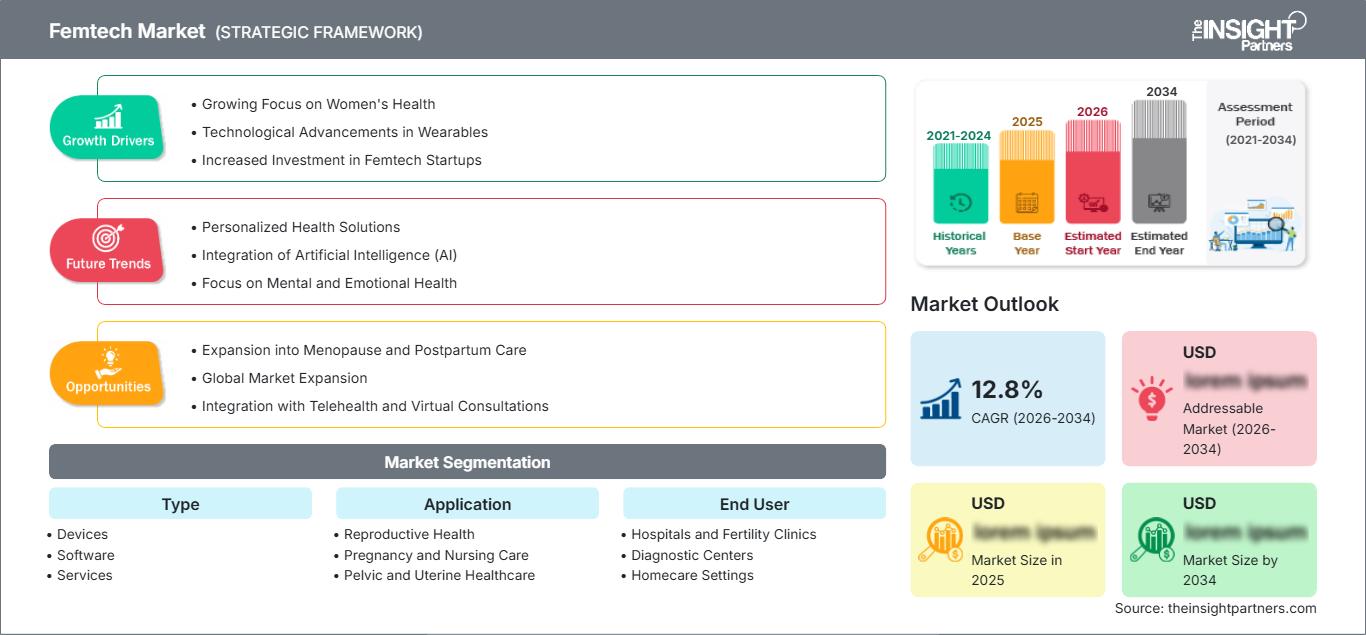
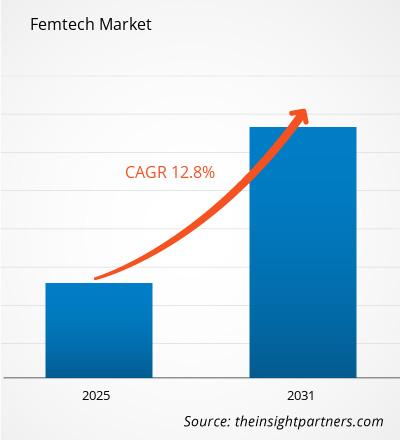
The global Femtech Market size is projected to reach US$ 125.11 billion by 2034 from US$ 42.28 billion in 2025. The market is anticipated to register a CAGR of 12.80% during the forecast period 2026–2034
Key market dynamics include a heightening global focus on personalized women's healthcare, rising investment in female-focused health technologies, and the rapid integration of artificial intelligence in diagnostic and monitoring tools. Additionally, the market is expected to benefit from the growing de-stigmatization of women's health issues, the expansion of digital health infrastructure in emerging economies, and the increasing inclusion of femtech solutions in corporate wellness programs and employer-sponsored health benefits.
Femtech Market Analysis
The femtech market analysis shows a strategic shift toward clinical-grade digital therapeutics and integrated hardware-software ecosystems. Procurement trends indicate the market is moving beyond basic menstrual tracking toward specialized segments such as menopause management, oncological screening, and chronic pelvic health. Strategic opportunities are emerging in the B2B sector, where telehealth platforms and fertility benefits providers are partnering with large corporations to offer comprehensive family-forming and maternal care. The analysis also notes that market expansion is increasingly reliant on data privacy integrity and regulatory clearances, as consumers and clinicians demand validated, evidence-based solutions. Competitive differentiation now hinges on deep-tech innovations, such as AI-driven predictive analytics for pregnancy complications and non-invasive diagnostic wearables, which allow brands to secure premium market positioning and long-term user retention.
Femtech Market Overview
The femtech market is transitioning from a niche segment of digital health to a central pillar of the global healthcare economy. While historically focused on basic reproductive tracking and hygiene products, the market is expanding into complex areas like endocrinology, cardiovascular health, and geriatric care tailored for women. Both high-growth tech startups and established pharmaceutical giants are part of this market, leveraging advanced biosensing and machine learning to close the gender health gap. Health-conscious users are increasingly seeking discreet, accessible, and personalized tools that offer a holistic view of their biological lifecycle. North America remains the primary hub for innovation and investment, but Asia-Pacific region is witnessing rapid adoption driven by mobile-first healthcare delivery and a massive, underserved female population. For instance, the market in the US represents the most mature femtech ecosystem globally, characterized by a high concentration of venture capital and a robust startup landscape. The market benefits from high smartphone penetration and the mainstreaming of telehealth. Increasingly, US employers are integrating these digital solutions into standard benefits packages to support maternal and reproductive health.
Market Assessment and Insights
- Global market for Femtech was valued at US$ 42.28 Billion in 2025
- Annual market size is expected to reach US$ 125.11 Billion by 2034
- Total addressable market (TAM) during 2026-2034 is projected to reach approximately US$ 728.99 Billion
- Market is anticipated to register a CAGR of 12.8% during the forecast period
- The United States represents a key market, supported by Growing Focus on Women's Health, Technological Advancements in Wearables, Increased Investment in Femtech Startups, as well as evolving industry dynamics
- Market analysis covers North America, Europe, Asia-Pacific, South and Central America, Middle East and Africa, with growth evaluated across the forecast period
- Market opportunities such as Expansion into Menopause and Postpartum Care, Global Market Expansion, Integration with Telehealth and Virtual Consultations are expected to influence market dynamics and addressable market
- Report profiles industry participants, including Athena Feminine Technologies, Inc., NUVO Inc., Sera Prognostics, Inc., HeraMED, iSono Health, Inc., Babyscripts, Chiaro Technology Ltd and Elvie, Lattice Medical, Thinx, Inc., Minerva Surgical, Inc., while analyzing competitive strategies and innovation developments
-
Source: The Insight Partners' analysis based on proprietary research, government publications, company annual reports, investor presentations, industry databases, and expert interviews.
● REPORT CUSTOMIZATION
Tailor This Report To Align With Your Specific Business Requirements
This report can be customized to align precisely with your business objectives, scope, and target markets. Customization options include tailored segmentation, geography, competitive analysis, and strategic insights to support informed decision-making.
Customize This Report →WHAT YOU CAN ADJUST
- ● Segmentations
- ● Geography
- ● Competitive Analysis
- ● Language Preferences
Femtech Market: Strategic Insights
-
Get Top Key Market Trends of this report.This FREE sample will include data analysis, ranging from market trends to estimates and forecasts.
Femtech Market Drivers and Opportunities
Market Drivers:
- Rising Demand for Personalized Healthcare: There is a significant global shift toward precision medicine, where women seek health solutions tailored to their specific hormonal profiles and life stages, driving the adoption of AI-enabled diagnostic tools.
- Technological Advancements in Wearables and AI: The evolution of sophisticated sensors capable of tracking basal body temperature, heart rate variability, and hormonal fluctuations has enhanced the accuracy of fertility and wellness monitoring.
- Increased Corporate and Government Support: Rising awareness of maternal mortality and the economic impact of women's health is leading to more supportive government policies and the inclusion of femtech in institutional healthcare frameworks.
Market Opportunities:
- Expansion into Menopause and Midlife Health: Often referred to as the Menopause Gold Rush, there is a massive untapped opportunity for digital platforms and therapeutics that manage perimenopause and post-menopause symptoms.
- Integration with Corporate Wellness Programs: Forming strategic partnerships with HR departments to provide fertility, pregnancy, and mental health support as employee benefits offers a high-margin growth corridor.
- Growth in Remote Patient Monitoring: Advancements in telehealth allow femtech providers to offer specialized care in rural or underserved regions, particularly for high-risk pregnancy and postpartum recovery.
Femtech Market Report Segmentation Analysis
The Femtech Market share is analyzed across various segments to provide a clearer understanding of its structure, growth potential, and emerging trends. Below is the standard segmentation approach used in most industry reports:
By Type:
- Devices: Includes wearable health trackers, smart breast pumps, and connected diagnostic kits. The demand for real-time data and non-invasive monitoring drives this segment.
- Software: Encompasses mobile applications for period tracking, fertility prediction, and mental health support. It represents the most accessible entry point for the consumer market.
- Services: Covers telehealth consultations, subscription-based wellness programs, and digital clinics focusing on specialized women's health services.
By Application:
- Reproductive Health: Focuses on contraception, fertility tracking, and menstrual health, serving as a primary driver of user engagement.
- Pregnancy and Nursing Care: Covers prenatal monitoring, lactation support, and postpartum recovery solutions for expectant and new mothers.
- Pelvic and Uterine Healthcare: Addresses specialized conditions such as endometriosis, PCOS, and pelvic floor strengthening through targeted devices and therapy.
- General Healthcare and Wellness: Includes broad segments like menopause management, mental health, breast cancer screening, and nutritional support.
By End User:
- Hospitals and Fertility Clinics: Primary settings for clinical-grade femtech implementation and advanced reproductive treatments.
- Diagnostic Centers: Utilizing femtech for early-to-market screening and laboratory-integrated testing.
- Homecare Settings: A rapidly expanding segment driven by the direct-to-consumer (DTC) model and the rise of at-home testing and monitoring.
- Others: Includes corporate health programs and research institutions.
By Geography:
- North America
- Europe
- Asia Pacific
- South & Central America
- Middle East & Africa
Femtech Market Report Scope
| Report Attribute | Details |
|---|---|
| Market size in 2025 | US$ 42.28 Billion |
| Market Size by 2034 | US$ 125.11 Billion |
| Global CAGR (2026 - 2034) | 12.8% |
| Historical Data | 2021-2024 |
| Forecast period | 2026-2034 |
| Segments Covered |
By Type
|
| Regions and Countries Covered |
North America
|
| Market leaders and key company profiles |
|
Femtech Market Players Density: Understanding Its Impact on Business Dynamics
The Femtech Market is growing rapidly, driven by increasing end-user demand due to factors such as evolving consumer preferences, technological advancements, and greater awareness of the product's benefits. As demand rises, businesses are expanding their offerings, innovating to meet consumer needs, and capitalizing on emerging trends, which further fuels market growth.
Femtech Market Share Analysis by Geography
Asia-Pacific is expected to grow fastest in the coming years due to a rapid increase in female labor force participation and the widespread adoption of mobile-first healthcare. Emerging markets in South & Central America, the Middle East, and Africa also present significant untapped opportunities, where mobile health platforms are overcoming traditional barriers to maternal and reproductive care.
The femtech market is undergoing a significant transformation, moving from basic menstrual tracking apps to a holistic, clinical-grade digital health ecosystem. Growth is driven by the de-stigmatization of women's health issues, a surge in venture capital funding for female-led startups, and the integration of AI for personalized diagnostic insights. Below is a summary of market share and trends by region:
North America
- Market Share: Holds the largest global share, anchored by a mature venture capital ecosystem and high digital health literacy.
- Key Drivers:
- Widespread integration of femtech into employer-sponsored health benefit packages.
- High concentration of industry leaders and unicorns focusing on clinical-grade wearables.
- Strong regulatory support from the FDA for digital therapeutics and at-home diagnostic kits.
- Trends: A shift toward Whole-Woman care platforms that integrate mental health, fertility, and primary care. There is also a significant rise in AI-driven predictive analytics for high-risk pregnancies and early breast cancer detection.
Europe
- Market Share: Holds a substantial share, characterized by high standards for data privacy and a robust focus on regulated medical devices.
- Key Drivers:
- Strong government initiatives and public healthcare funding (e.g., Horizon Europe) for women's health innovation.
- Rising demand for sustainable and non-hormonal reproductive health solutions.
- Favorable reimbursement landscapes for digital health applications in countries like Germany and France.
- Trends: Increasing focus on Menopause-Tech, with platforms offering 24/7 telehealth and AI-based symptom management. There is also a notable growth in European Green Femtech, prioritizing eco-friendly and biodegradable hygiene products.
Asia-Pacific
- Market Share: The fastest-growing region, driven by the digital transformation of healthcare in massive markets like China, India, and Japan.
- Key Drivers:
- Rapidly expanding middle class with a high preference for Westernized premium wellness brands.
- Government-supported Smart City initiatives are improving digital infrastructure for rural maternal care.
- Significant rise in female entrepreneurship and localized innovation tailored to regional health taboos.
- Trends: Heavy reliance on mobile-first Super Apps that combine health tracking with social commerce and community support. There is also a surge in demand for affordable, at-home fertility and PCOS testing kits.
South and Central America
- Market Share: An emerging market with a burgeoning startup scene in Brazil, Argentina, and Peru.
- Key Drivers:
- Increasing smartphone penetration facilitates access to reproductive health education and tracking.
- Modernization of the private healthcare sector to include digital prenatal and postnatal support.
- Rising awareness of chronic gynecological conditions such as endometriosis and fibroids.
- Trends: Growth of Boutique Femtech brands focusing on localized content and culturally sensitive family planning tools. Partnerships between local insurers and digital health platforms are also gaining momentum.
Middle East and Africa
- Market Share: A developing market with a strategic focus on improving maternal mortality rates and health accessibility.
- Key Drivers:
- Strategic investments in Smart Healthcare by countries like the UAE and Saudi Arabia.
- High demand for discreet, remote consultations for sensitive topics such as sexual wellness and fertility.
- Growing adoption of SMS-based health alerts and low-bandwidth telehealth in sub-Saharan Africa.
- Trends: Formalization of the Informal Health market through digital platforms that connect midwives and clinics. There is a focused trend toward high-nutrient supplements and digital tools for pediatric and maternal nutrition.
High Market Density and Competition
Competition is intensifying due to the presence of established leaders such as Athena Feminine Technologies, Inc., and NUVO Inc. The market landscape is diverse, featuring a mix of B2C app developers, B2B virtual clinics, and hardware innovators that are professionalizing the sector.
This competitive environment pushes vendors to differentiate through:
- Clinical Validation: Companies are increasingly seeking FDA/CE clearances to prove efficacy and gain trust from healthcare providers.
- Ecosystem Integration: Moving toward hardware-enabled software where devices like smart rings or thermometers sync seamlessly with AI-driven apps.
- Holistic Lifecycle Support: Expanding product offerings to cover a woman's health journey from menarche to menopause, ensuring long-term customer lifetime value.
Opportunities and Strategic Moves
- Strategic Partnerships: Collaborating with pharmaceutical companies and health insurers to integrate digital monitoring with traditional clinical treatments.
- AI Personalization: Leveraging large datasets to offer predictive insights into hormonal health, allowing for proactive rather than reactive care.
Major Companies operating in the Femtech Market are:
- Athena Feminine Technologies, Inc.
- NUVO Inc.
- Sera Prognostics, Inc.
- HeraMED
- iSono Health, Inc.
- Babyscripts
- Chiaro Technology Ltd and Elvie
- Lattice Medical
- Thinx, Inc.
- Minerva Surgical, Inc.
Disclaimer: The companies listed above are not ranked in any particular order.
Femtech Market News and Recent Developments
- In July 2025, Flo Health, the leading women's health application used by over 420 million people worldwide, announced the launch of Flo for Perimenopause. This new in-app offering provided personalized guidance and support for women who were in, entering, or curious about the perimenopausal transition. The feature utilized educational content backed by rigorous research and was created in collaboration with a team of over 100 medical experts. With the introduction of this specialized tool, the company successfully expanded its Femtech footprint by redefining how women navigate one of the most misunderstood and underserved stages of life.
- In June 2024, HeraMED, a listed medtech company specializing in maternity care, announced the soft launch of HeraCARE within Telstra Health's Smart Connected Care ecosystem. The deployment was carried out through targeted GP clinics, marking a significant step in the company's effort to integrate advanced Femtech solutions into institutional healthcare networks for improved prenatal and postnatal monitoring.
Femtech Market Report Coverage and Deliverables
The Femtech Market Size and Forecast (2021–2034) report provides a detailed analysis of the market covering below areas:
- Femtech Market size and forecast at global, regional, and country levels for all the key market segments covered under the scope
- Femtech Market trends, as well as market dynamics such as drivers, restraints, and key opportunities
- Detailed PEST and SWOT analysis
- Femtech Market analysis covering key market trends, global and regional framework, major players, regulations, and recent market developments
- Industry landscape and competition analysis covering market concentration, heat map analysis, prominent players, and recent developments in the Femtech Market.
- Detailed company profiles
Frequently Asked Questions

- Comprehensive Market Sizing and Forecast Analysis
- Detailed Segmentation Analysis
- In-Depth Market Dynamics Assessment
- Regional and Country-Level Insights
- Competitive Landscape and Company Benchmarking
- Strategic Business Intelligence
Recent Reports
Testimonials

The Insight Partners' SCADA System Market report is comprehensive, with valuable insights on current trends and future forecasts. The team was highly professional, responsive, and supportive throughout. We are very satisfied and highly recommend their services.
RAN KEDEM Partner, Reali Technologies LTDs
I requested a report on a very specific software market and the team produced the report in a few days. The information was very relevant and well presented. I then requested some changes and additions to the report. The team was again very responsive and I got the final report in less than a week.
JEAN-HERVE JENN Chairman, Future Analytica
We worked with The Insight Partners for an important market study and forecast. They gave us clear insights into opportunities and risks, which helped shape our plans. Their research was easy to use and based on solid data. It helped us make smart, confident decisions. We highly recommend them.
PIYUSH NAGPAL Sr. Vice President, High Beam Global
The Insight Partners delivered insightful, well-structured market research with strong domain expertise. Their team was professional and responsive throughout. The user-friendly website made accessing industry reports seamless. We highly recommend them for reliable, high-quality research services
YUKIHIKO ADACHI CEO, Deep Blue, LLC.
This is the first time I have purchased a market report from The Insight Partners.While I was unsure at first, I visited their web site and felt more comfortable to take the risk and purchase a market report.I am completely satisfied with the quality of the report and customer service. I had several questions and comments with the initial report, but after a couple of dialogs over email with their analyst I believe I have a report that I can use as input to our strategic planning process.Thank you so much for taking the extra time and making this a positive experience.I will definitely recommend your service to others and you will be my first call when we need further market data.
JOHN SUZUKI President and Chief Executive Officer, Board Director, BK Technologies
I wish to appreciate your support and the professionalism you displayed in the course of attending to my request for information regarding to infectious disease IVD market in Nigeria. I appreciate your patience, your guidance, and the fact that you were willing to offer a discount, which eventually made it possible for us to close a deal. I look forward to engaging The Insight Partners in the future, all thanks to the impression you have created in me as a result of this first encounter.
DR CHIJIOKE ONYIA MANAGING DIRECTOR, PineCrest Healthcare Ltd.Reason to Buy
- Informed Decision-Making
- Understanding Market Dynamics
- Competitive Analysis
- Identifying Emerging Markets
- Customer Insights
- Market Forecasts
- Risk Mitigation
- Boosting Operational Efficiency
- Strategic Planning
- Investment Justification
- Tracking Industry Innovations
- Aligning with Regulatory Trends





 Get Free Sample for