Fractional Ablative Skin Resurfacing Devices Market Size & Overview
The Fractional Ablative Skin Resurfacing Devices Market was valued at US$ 1.31 Billion in 2025 and is projected to reach US$ 2.56 Billion by 2034, registering a 7.72% CAGR during 2026–2034. Rising demand for minimally invasive aesthetic procedures, increasing prevalence of acne scarring and age-related skin conditions, and continued innovation in laser-based dermatology platforms are supporting market expansion. Clinical preference for treatments offering precision, shorter recovery periods, and improved patient outcomes continues to strengthen adoption across healthcare and cosmetic settings.
Across North America, the market benefits from advanced dermatology infrastructure, high procedural awareness, and strong spending on aesthetic treatments. The Fractional Ablative Skin Resurfacing Devices Market size in the region is supported by growing utilization of laser-based scar revision and skin rejuvenation procedures. North America is expected to advance at ~7% CAGR through 2034, supported by rapid technology upgrades, expanding outpatient dermatology services, and favorable patient acceptance of energy-based cosmetic procedures.
The Fractional Ablative Skin Resurfacing Devices Market growth is being spurred by rising demand for minimally invasive cosmetic procedures that can produce tangible clinical results within a shorter period of time compared to traditional resurfacing techniques. Rising incidences of acne scars, photoaging, fine lines, pigmentation abnormalities, and scar correction due to other procedures are contributing to the rising number of patients. Social media impact, increasing aesthetic awareness, and accessibility of cosmetic dermatology services are also driving demand. The industry ecosystem includes laser component suppliers, device manufacturers, distributors, dermatology clinics, hospitals, medical spas, and service providers. Supply-side dynamics are shaped by technological differentiation, physician training programs, maintenance support capabilities, and regulatory compliance requirements. Premium devices with enhanced safety features and customizable treatment parameters continue to gain preference among providers seeking operational flexibility and patient retention advantages.
The Fractional Ablative Skin Resurfacing Devices Market analysis indicates moderate competitive concentration characterized by continuous innovation and product portfolio expansion. Companies are focusing on improved energy delivery systems, integrated user interfaces, and expanded clinical indications to strengthen competitive positioning. Strategic partnerships with aesthetic clinics and physician networks also remain important commercialization approaches. Market participants such as Lumenis, Alma Lasers, Cynosure, Cutera, Lutronic Corporation, and Sciton continue investing in clinical validation, practitioner education, and international expansion strategies. Competitive differentiation increasingly depends on treatment efficacy, safety performance, device versatility, and service quality. Investment activity is particularly strong in digital treatment planning, platform upgrades, and technologies that improve procedural predictability while supporting broader clinical adoption.
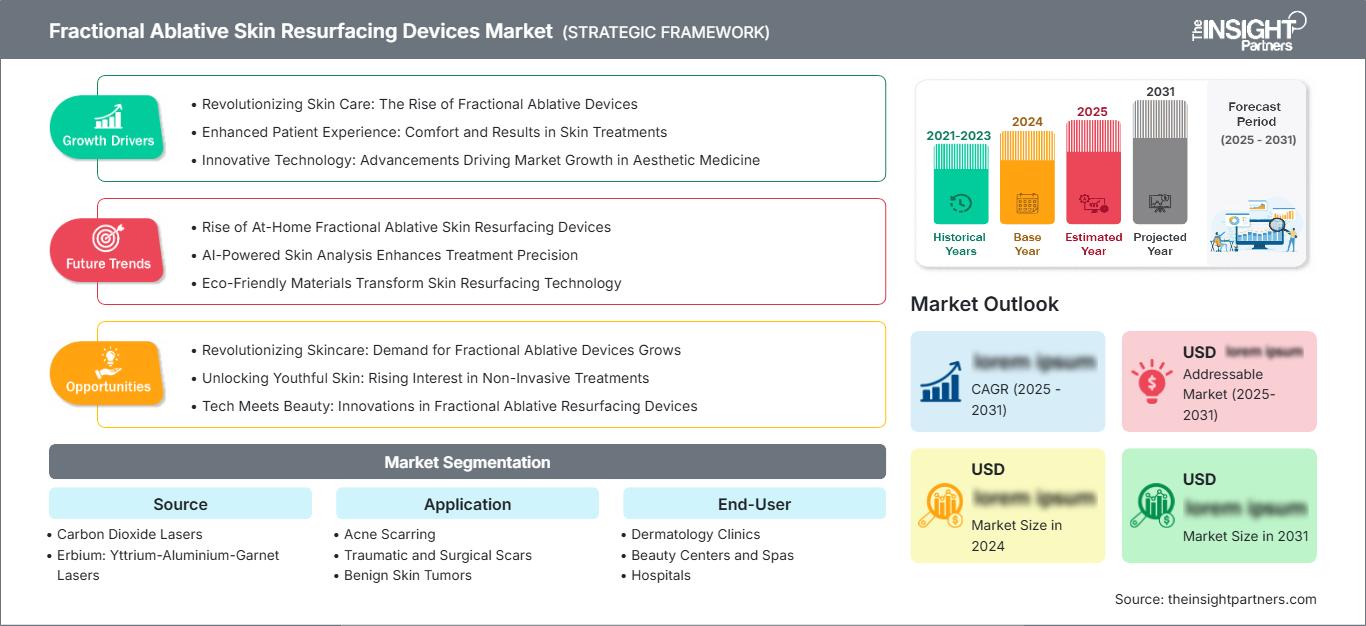
Fractional Ablative Skin Resurfacing Devices Market Assessment and Insights
Regional Outlook
- North America: ~39% of the global market in 2025 | ~7% CAGR through 2034. Market position: Leading regional market driven by high aesthetic procedure volumes, strong physician adoption of advanced laser systems, favorable reimbursement for certain dermatological indications, and continuous product innovation.
- US: ~84% of North American market revenue in 2025 | ~7% CAGR through 2034. Market position: Dominant country within North America due to extensive dermatology clinic networks, strong consumer spending on cosmetic procedures, and early adoption of advanced fractional laser technologies.
- Europe: ~29% of the global market in 2025 | ~7% CAGR through 2034. Market position: Mature market supported by established dermatology practices. Germany remains the leading country in Europe, followed by the UK, France, Italy, and Spain.
- Asia Pacific: ~24% of the global market in 2025 | ~9% CAGR through 2034. Market position: Fastest-growing regional market driven by expanding medical aesthetics sectors, rising disposable income, and growing treatment awareness across China, South Korea, Japan, and India.
Segment Outlook
- Application: ~46% Share in 2025 | ~8% CAGR through 2034. Market position: The segment leads because treatment demand is directly tied to scar management, wrinkle reduction, and skin rejuvenation procedures that generate recurring device utilization.
- Beauty Centers and Spas: ~28% Share in 2025 | ~9% CAGR through 2034. Market position: Growth is supported by increasing consumer preference for non-hospital aesthetic procedures, wider availability of cosmetic treatment packages, and growing wellness industry investments.
Competitive Coverage
Lumenis Ltd., Alma Lasers Ltd., Cynosure LLC, Cutera Inc., Syneron Medical Ltd., Lutronic Corporation, Sciton Inc., Candela Corporation, Fotona d.o.o., Lynton Lasers Ltd.
Methodology
The Insight Partners follows Data Collection & Secondary Research, Primary Research, Data Analysis, and Data Triangulation & Final Review to validate market estimates and insights.
Source: The Insight Partners' analysis based on proprietary research, government publications, company annual reports, investor presentations, industry databases, and expert interviews.
Fractional Ablative Skin Resurfacing Devices Market Trends
AI-Enabled Treatment Planning and Personalized Laser Parameters
Artificial intelligence and advanced imaging technologies are expected to play a growing role in treatment planning and procedural optimization. Future platforms are likely to integrate skin analysis tools, predictive treatment algorithms, and automated parameter recommendations that improve procedural consistency across providers. The Fractional Ablative Skin Resurfacing Devices Market trends show that there is rising interest in customized therapy that is based on the patient's skin type, age, treatment goals, and recovery preferences. With advances in digital dermatology technology, it will become easier to deliver more accurate treatment while minimizing complications and variability. The use of software-based processes could even boost clinic productivity and patient engagement through simulations and outcome analysis.
Expansion of Multi-Application Aesthetic Platforms
Future device development is expected to focus on multifunctional platforms capable of treating numerous dermatological indications through a single system. There is an increased need for devices that can provide the benefits of scar revision, wrinkle reduction, pigmentation, lesion, and skin rejuvenation treatment without having to purchase several individual devices. There is thus a development in modular devices, improved energy delivery systems, and increased clinical applications. Increased efficiency and value for money will promote the use of such platforms. These Fractional Ablative Skin Resurfacing Devices Market trends will improve procurement decisions for providers that require technologies that will enable them to adapt to changes in patient preferences and treatment programs.
Fractional Ablative Skin Resurfacing Devices Market Growth Factors
Rising Demand for Minimally Invasive Aesthetic Procedures
Consumers are increasingly favoring treatments that deliver visible cosmetic improvements without lengthy recovery periods or invasive surgery. The fractional ablative lasers live up to these expectations by offering controlled skin resurfacing without damaging other tissue components. Dermatological clinics and beauty spas are responding to this development by introducing more treatment options to address scars, wrinkles, pigmentation, and aging skin. Patient compliance has improved owing to reduced discomfort, less downtime, and repeatable procedures. The increasing importance of social networking sites, along with rising concerns about one’s appearance, is adding to the rise in the demand for such procedures. Utilization rates are set to improve with ongoing education of patients about the advantages of these procedures.
Technological Innovation Enhancing Clinical Outcomes
Manufacturers continue introducing advanced devices featuring improved energy control, customizable treatment settings, integrated cooling systems, and user-friendly digital interfaces. Such innovations help ensure greater accuracy while minimizing risks and shortening the recovery process. Improved safety profiles are helping to widen the list of patients who can benefit from the procedure, along with boosting the confidence of the doctors in recommending laser resurfacing treatment. Device flexibility is also becoming better, allowing for tackling different skin conditions using a single device. Investments in research and development are assisting in making the products better and differentiated. As improvements become more quantifiable, providers are now ready to invest in premium devices.
Expansion of Aesthetic Dermatology Infrastructure
The rise in the number of clinics specializing in dermatology, cosmetic treatments, and med spas worldwide is laying the groundwork for market development. Hospitals are equipping themselves with sophisticated energy-based devices to attract customers seeking reliable aesthetic treatments. An increase in physician training and certification is making sure of that. Emerging Fractional Ablative Skin Resurfacing Devices Markets are witnessing increased private investment in cosmetic healthcare infrastructure, improving access to advanced skin resurfacing treatments. As networks expand and people begin realizing the available options, procedures have begun gaining popularity with different categories of patients. This has resulted in sustainable demand for advanced skin resurfacing procedures.
Fractional Ablative Skin Resurfacing Devices Market Opportunities
Expansion Across Emerging Medical Aesthetics Markets
There are plenty of opportunities in emerging economies for firms looking to expand geographically and grow revenues in the coming years. Various countries in the Asia-Pacific region, the Middle East, and certain Latin American nations are experiencing increases in disposable income, individual healthcare spending, and consumer awareness of cosmetic dermatology treatments. Physician groups are continually upgrading their laser technology as demand for laser treatments rises among younger and middle-aged individuals. There is also a provision of training programs for physicians and standards for aesthetic treatments on an international level. The Fractional Ablative Skin Resurfacing Devices Market Forecasts indicate particularly strong momentum within rapidly developing aesthetic treatment ecosystems.
Premium Service Expansion Through Non-Hospital Channels
Advanced technology for resurfacing procedures is becoming more commonly distributed through beauty centers, medical spas, and niche aesthetic practices. Consumer demand for convenient and customized services in a health-focused environment is prompting those that operate outside of hospitals to develop their procedural skills. This is providing manufacturers of such devices with a business opportunity to sell to private aesthetic practitioners. Companies offering training, clinical support, and integrated digital workflow solutions may achieve greater penetration in the Fractional Ablative Skin Resurfacing Devices Market within this segment. Continued growth of outpatient cosmetic care models is expected to generate favorable demand conditions for advanced laser platforms and recurring service-based revenue opportunities.
Segmentation Analysis
Source
The Source segment represents the technological foundation of treatment performance, influencing efficacy, recovery time, treatment depth, and clinical outcomes. Device selection often depends on physician preference, patient skin type considerations, and intended dermatological application. Technological advancements are improving energy precision, thermal control, and treatment customization capabilities. Within this segment, demand for advanced carbon dioxide laser platforms remains particularly strong, with Carbon Dioxide Lasers expected to record ~8% CAGR through 2034 due to their broad clinical applicability and established effectiveness in resurfacing procedures. The Fractional Ablative Skin Resurfacing Devices Market scope continues to expand as providers seek versatile platforms suitable for multiple treatment indications.
- Carbon Dioxide Lasers deliver deep tissue remodeling and are extensively used for wrinkle reduction, scar treatment, and skin texture improvement. Their established clinical record and ability to generate significant visible results contribute to continued preference among dermatology specialists.
- Erbium: Yttrium-Aluminium-Garnet Lasers are preferred for procedures requiring precise ablation with reduced thermal damage. Their suitability for patients seeking shorter recovery periods supports adoption in clinics emphasizing minimally invasive aesthetic treatments.
Application
Application remains the largest main segment because device utilization is ultimately driven by therapeutic and cosmetic treatment volumes. Growing consumer interest in appearance enhancement, combined with increasing incidence of dermatological conditions requiring intervention, continues supporting procedure demand. Providers are expanding service offerings to address a wider range of skin concerns while improving patient outcomes and procedural efficiency. Within this segment, Fine Lines Or Wrinkles treatments are projected to grow at ~8% CAGR through 2034 as aging demographics increasingly seek non-surgical skin rejuvenation solutions.
- Acne Scarring remains a major procedural category due to the long-term cosmetic impact of acne-related skin damage and strong patient demand for visible improvement.
- Traumatic and Surgical Scars treatments are gaining acceptance as patients increasingly seek aesthetic correction solutions that improve skin appearance and confidence following injury or surgery.
- Benign Skin Tumors represent an important clinical application where laser precision assists practitioners in achieving targeted tissue removal with minimal surrounding damage.
- Warts continue generating procedural demand due to recurrence concerns and patient preference for effective treatment alternatives to conventional removal methods.
- Fine Lines Or Wrinkles constitute a significant aesthetic application supported by aging populations, preventive skincare trends, and increasing acceptance of cosmetic enhancement procedures.
- Xanthelasma treatments benefit from demand for cosmetic correction of cholesterol-related eyelid lesions that may negatively affect facial appearance.
- Rhinophyma procedures rely on advanced ablative technologies capable of contouring affected tissue and improving both functional and cosmetic outcomes.
End-User
The End-User segment reflects where procedures are delivered and how patients access treatment services. Growth is supported by wider availability of aesthetic care facilities, increasing physician specialization, and rising demand for outpatient cosmetic procedures. Healthcare providers continue investing in advanced laser systems that enhance treatment efficiency and expand service portfolios. Among end users, Beauty Centers and Spas are expected to record ~9% CAGR through 2034 owing to increasing consumer preference for convenient, wellness-focused aesthetic treatment environments.
- Dermatology Clinics remain central to market demand because of specialist expertise, established patient trust, and ability to manage both medical and cosmetic dermatological conditions.
- Beauty Centers and Spas are expanding their role through investment in aesthetic technologies and growing consumer interest in non-hospital cosmetic treatment options.
- Hospitals maintain relevance for complex dermatological cases requiring multidisciplinary support, advanced infrastructure, and comprehensive patient management capabilities.
Opportunity Snapshot
| Application | Revenue Contribution | Trend Tag | Adoption Stage |
| Acne Scarring | High | Scar Revision | Mature |
| Traumatic and Surgical Scars | Medium | Tissue Repair | Scaling |
| Benign Skin Tumors | Medium | Precision Ablation | Mature |
| Warts | Low | Lesion Removal | Mature |
| Fine Lines Or Wrinkles | High | Anti Aging | Scaling |
| Xanthelasma | Low | Cosmetic Correction | Emerging |
| Rhinophyma | Low | Facial Contouring | Emerging |
Regional Insights
North America Fractional Ablative Skin Resurfacing Devices Market
North America accounted for ~39% of global revenue in 2025 and remains the largest regional contributor. A well-developed cosmetic dermatology ecosystem, strong physician adoption of advanced laser platforms, and favorable consumer spending patterns support sustained demand. The region also benefits from extensive clinical expertise and widespread awareness regarding scar revision, wrinkle reduction, and skin rejuvenation procedures.
The market is anticipated to grow at roughly ~7% CAGR through 2034. Growth is supported by increasing procedural volumes, rising demand for minimally invasive aesthetic treatments, and ongoing product innovation. The region also holds a significant Fractional Ablative Skin Resurfacing Devices Market share due to the presence of leading manufacturers, advanced healthcare infrastructure, and strong penetration across dermatology clinics and cosmetic treatment centers.
U.S. Fractional Ablative Skin Resurfacing Devices Market
The U.S. represented ~84% of North American market revenue in 2025, making it the dominant national market within the region. High consumer awareness, strong aesthetic procedure spending, and widespread availability of qualified dermatology professionals contribute to market leadership. The country also benefits from early adoption of advanced laser technologies and continuous introduction of upgraded resurfacing platforms.
The U.S. Fractional Ablative Skin Resurfacing Devices Market is projected to expand at ~7% CAGR through 2034. Presence of manufacturers including Cutera, Sciton, Candela, and major distribution networks strengthens commercialization capabilities. Growing utilization of fractional laser procedures for acne scars, surgical scars, wrinkles, and skin texture improvement continues supporting procedural demand across clinics, outpatient facilities, and specialized aesthetic centers.
Europe Fractional Ablative Skin Resurfacing Devices Market
Europe accounted for nearly ~29% of global revenue in 2025 and represents a mature regional market characterized by established aesthetic medicine practices and strong clinical standards. Germany is the leading country in Europe due to its advanced dermatology infrastructure, extensive physician network, and strong adoption of innovative cosmetic treatment technologies. The UK and France also contribute significantly through growing demand for non-surgical aesthetic solutions.
Italy and Spain continue experiencing increasing use of laser-based skin rejuvenation procedures supported by expanding medical aesthetics industries. Regulatory compliance requirements across the region encourage adoption of clinically validated and technologically advanced systems. European providers increasingly favor platforms capable of addressing multiple dermatological indications while maintaining high safety standards.
The European Fractional Ablative Skin Resurfacing Devices Market is expected to advance at ~7% CAGR through 2034. Long-term growth is supported by aging demographics, increasing interest in preventive aesthetic care, and ongoing investment in dermatology and cosmetic treatment facilities. Adoption of premium laser technologies across both medical and aesthetic practice settings is expected to remain a central growth contributor.
APAC Fractional Ablative Skin Resurfacing Devices Market
Asia Pacific represented roughly ~24% of global revenue in 2025 and is the fastest-growing regional market. China is the leading country in Asia Pacific owing to rapid expansion of the medical aesthetics sector, increasing clinic investments, and rising consumer demand for appearance-enhancing procedures. South Korea and Japan maintain strong positions due to widespread acceptance of cosmetic dermatology treatments.
Regional growth is forecast at ~9% CAGR through 2034. India and Australia are also contributing to expansion through improved healthcare access and increasing awareness of advanced aesthetic technologies. Favorable demographic trends, growing disposable incomes, and supportive investments in cosmetic healthcare infrastructure continue driving market development.
Middle East & Africa Fractional Ablative Skin Resurfacing Devices Market
The Middle East & Africa market remains smaller but demonstrates improving Fractional Ablative Skin Resurfacing Devices Market growth prospects. The UAE and Saudi Arabia are key demand centers supported by expanding aesthetic medicine sectors, growing medical tourism activity, and increasing availability of advanced cosmetic treatment facilities. Premium cosmetic procedures continue gaining popularity among affluent consumer groups.
The region is expected to expand at ~8% CAGR through 2034. South Africa remains an important market in the African region owing to its established private healthcare infrastructure. Continued investment in specialty dermatology services and rising awareness regarding minimally invasive aesthetic procedures are expected to support long-term growth.
Fractional Ablative Skin Resurfacing Devices Market Report Scope
| Report Attribute | Details |
|---|---|
| Market size in 2025 | US$ 1.31 Billion |
| Market Size by 2034 | US$ 2.56 Billion |
| Global CAGR (2026 - 2034) | 7.72% |
| Historical Data | 2021-2024 |
| Forecast period | 2026-2034 |
| Segments Covered | Source, Application, End-User |
| Region scope | North America, Europe, Asia-Pacific, South and Central America, Middle East and Africa |
Frequently Asked Questions

Recent Reports






