
Gastrointestinal Cancer Drugs Market Trends, Demand & Growth by 2034
Coverage: By Therapy (Immunotherapy, Chemotherapy, Targeted Therapy, Hormone Therapy, Adjuvant Chemotherapy, Radiation Therapy, Others); Application (Oncology, Radiology, Others); End User (Hospitals, Specialized Cancer Treatment Centers, Clinics, Ambulatory Surgical Centers) , and Geography (North America, Europe, Asia Pacific, and South and Central America)
- Status : Data Released
- Report Code : TIPRE00020036
- Category : Life Sciences
- No. of Pages : 150
- Available Report Formats :


- Last update date : November 18, 2026


2025 Market Size
US$ 22.13 Bn
Base year value
2034 Forecast
US$ 32.08 Bn
Projected by 2034
CAGR 2026-2034
4.21 %
Growth rate
Addressable Market
US$ 246.17 Bn
(2026-2034)
The gastrointestinal cancer drugs market was valued at US$ 22.13 Billion in 2025 and is projected to reach US$ 32.08 Billion by 2034, registering a CAGR of 4.21% during 2026–2034. Market expansion is supported by rising incidence of colorectal, gastric, pancreatic, esophageal, and liver cancers, increasing adoption of precision oncology, broader utilization of immunotherapeutic agents, and continual regulatory approvals for targeted treatment regimens. Improvements in diagnostic pathways and biomarker-driven treatment selection are further strengthening demand across major healthcare systems.
Within North America, market momentum remains supported by advanced oncology infrastructure, high treatment accessibility, and strong pharmaceutical innovation. The gastrointestinal cancer drugs market size in the region continues to benefit from growing use of immunotherapy combinations and personalized medicine approaches. North America is expected to record a CAGR of ~4% through 2034, aided by extensive clinical trial activity, favorable reimbursement frameworks, and rapid integration of novel biologics into routine cancer management.
Gastrointestinal Cancer Drugs Market Assessment and Insights
Regional Outlook
- North America: ~38% of the global market in 2025 | ~4% CAGR through 2034. Market position: The region maintains the leading position due to strong oncology spending, large treated patient populations, extensive drug availability, and a mature ecosystem supporting advanced gastrointestinal cancer therapies.
- US: ~82% of North American market revenue in 2025 | ~4% CAGR through 2034. Market position: The US dominates regional demand through substantial pharmaceutical innovation, broad clinical trial participation, and widespread adoption of premium biologics and targeted therapies.
- Europe: ~29% of the global market in 2025 | ~4% CAGR through 2034. Market position: Europe represents a mature treatment environment led by Germany, France, and the UK, supported by structured cancer screening initiatives and expanding precision oncology programs.
- Asia Pacific: ~25% of the global market in 2025 | ~6% CAGR through 2034. Market position: Asia Pacific is the fastest-growing region, driven by China, Japan, India, and South Korea through increasing cancer incidence, healthcare investments, and treatment accessibility.
Segment Outlook
- Therapy: ~67% Share in 2025 | ~5% CAGR through 2034. Market position: Therapy remains the largest segment because drugs constitute the primary treatment modality across gastrointestinal cancers, with immunotherapy and targeted therapy increasingly complementing conventional chemotherapy.
- Application: ~33% Share in 2025 | ~6% CAGR through 2034. Market position: Growth is supported by expanding oncology care programs, earlier diagnosis rates, advanced imaging integration, and rising demand for comprehensive cancer management pathways.
Competitive Coverage
Amgen Inc., Bristol Myers Squibb Company, F. Hoffmann-La Roche Ltd, Eli Lilly and Company, Johnson & Johnson, GSK plc, Celgene Corporation, Pfizer Inc., Sanofi, Novartis AG
Methodology
The Insight Partners follows Data Collection & Secondary Research, Primary Research, Data Analysis, and Data Triangulation & Final Review to validate market estimates and insights.
Source: The Insight Partners' analysis based on proprietary research, government publications, company annual reports, investor presentations, industry databases, and expert interviews.
Progress in molecular oncology has reshaped treatment approaches across gastrointestinal malignancies. Growing understanding of tumor biology has accelerated development of immune checkpoint inhibitors, targeted therapies, and biomarker-based treatment pathways. Pharmaceutical manufacturers continue expanding clinical pipelines targeting specific genetic mutations and immune response mechanisms. Enhanced diagnostic precision has improved patient stratification, enabling healthcare providers to align therapies with disease characteristics and improve treatment outcomes.
Looking ahead, the industry is expected to benefit from wider adoption across emerging economies, increasing public oncology funding, and stronger cancer awareness initiatives. Strategic investments in biologics manufacturing, precision medicine infrastructure, and companion diagnostics are likely to improve access to advanced treatment options. Regulatory agencies are also streamlining pathways for oncology innovations, encouraging commercialization of next-generation gastrointestinal cancer therapies.
Gastrointestinal Cancer Drugs Market Report Scope
| Report Attribute | Details |
|---|---|
| Market size in 2025 | US$ 22.13 Billion |
| Market Size by 2034 | US$ 32.08 Billion |
| Global CAGR (2026 - 2034) | 4.21% |
| Historical Data | 2021-2024 |
| Forecast period | 2026-2034 |
Gastrointestinal Cancer Drugs Market Analysis
The gastrointestinal cancer drugs market growth is primarily influenced by increasing prevalence of colorectal and gastric cancers, rising healthcare expenditure, and expanded screening programs. Growing awareness regarding early intervention is increasing diagnosis rates, leading to higher treatment volumes across healthcare settings. Pharmaceutical innovation has shifted demand toward targeted agents capable of delivering improved efficacy and safety profiles compared with conventional treatment approaches.
The value chain encompasses research institutions, biotechnology firms, pharmaceutical manufacturers, distributors, healthcare providers, and specialty oncology centers. Expanding biomarker testing capabilities continue to strengthen demand for precision therapeutics. Supply-side dynamics are supported by robust clinical research pipelines, strategic collaborations, and continuous investment in biologics production capacity.
The gastrointestinal cancer drugs market analysis highlights intense competition among established pharmaceutical companies focused on portfolio expansion, label extensions, and combination therapy development. Major participants are strengthening market positions through partnerships, acquisitions, and extensive clinical development programs. Differentiation increasingly depends on response rates, survival outcomes, safety profiles, and biomarker-specific treatment effectiveness.
Companies such as F. Hoffmann-La Roche Ltd, Bristol Myers Squibb Company, Amgen Inc., Eli Lilly and Company, Novartis AG, Pfizer Inc., and Sanofi continue investing heavily in advanced oncology platforms. Competitive intensity is expected to remain elevated as organizations pursue immunotherapy innovations, targeted therapies, and precision medicine opportunities across multiple gastrointestinal cancer indications.
● REPORT CUSTOMIZATION
Tailor This Report To Align With Your Specific Business Requirements
This report can be customized to align precisely with your business objectives, scope, and target markets. Customization options include tailored segmentation, geography, competitive analysis, and strategic insights to support informed decision-making.
Customize This Report →WHAT YOU CAN ADJUST
- ● Segmentations
- ● Geography
- ● Competitive Analysis
- ● Language Preferences
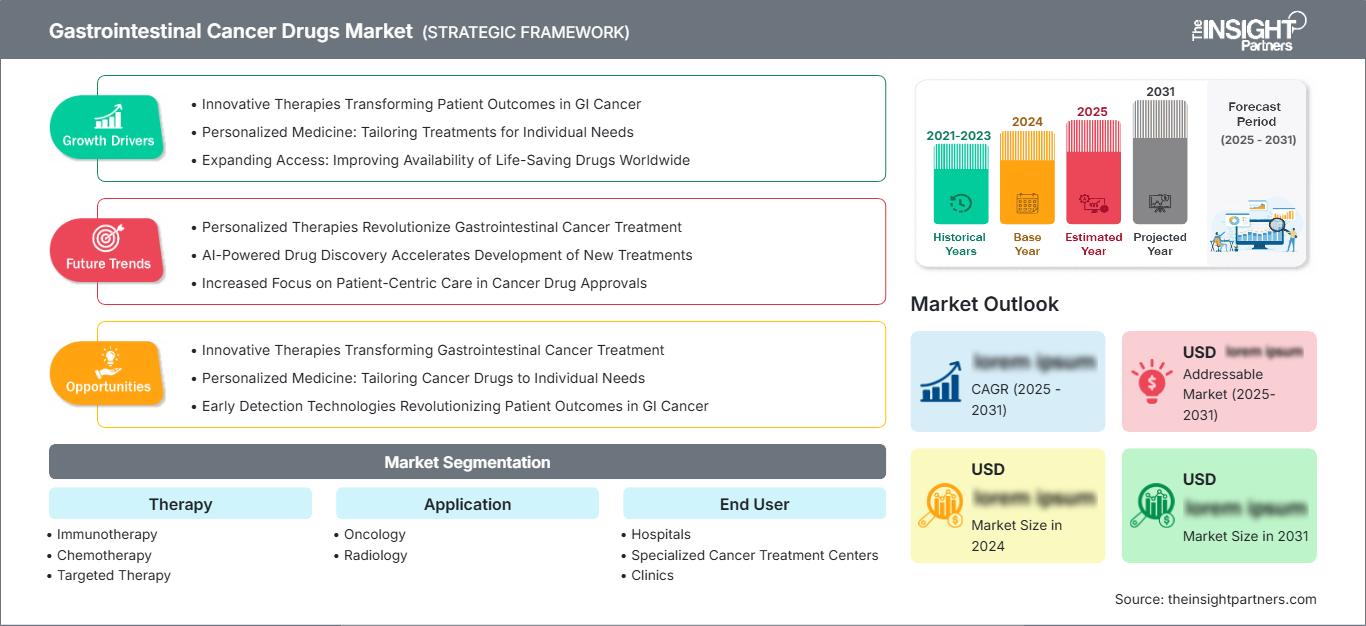
Gastrointestinal Cancer Drugs Market: Strategic Insights
Regional Insights
North America gastrointestinal cancer drugs market
North America accounts for the largest portion of global revenue, supported by advanced healthcare infrastructure, strong reimbursement systems, and significant oncology research activity. The region benefits from extensive availability of innovative therapeutics and a large network of specialized cancer treatment centers. Pharmaceutical manufacturers prioritize North America for clinical development and early commercialization of novel gastrointestinal oncology drugs.
Ongoing adoption of biomarker-directed treatment strategies continues to strengthen regional demand. High utilization of immunotherapy and targeted medicines across major cancer indications supports sustained market expansion. Supported by these structural advantages, the regional market is projected to advance at a CAGR of ~4% through 2034. The gastrointestinal cancer drugs market share leadership of North America is reinforced by continued innovation and strong treatment accessibility.
U.S. gastrointestinal cancer drugs market
The United States represents the dominant contributor within North America, accounting for ~82% of regional revenue in 2025. Large patient populations, strong oncology spending, and extensive pharmaceutical innovation create favorable conditions for market expansion. Major manufacturers maintain substantial commercial operations and research investments throughout the country.
Clinical trial activity remains among the highest globally, enabling faster adoption of emerging therapies. Hospitals and specialized oncology centers increasingly integrate targeted therapies and immunotherapies into routine treatment protocols. These factors support a projected CAGR of ~4% through 2034 and reinforce the country's position as the leading market within North America.
Europe gastrointestinal cancer drugs market
Europe gastrointestinal cancer drugs market represents ~29% of global revenue in 2025 and continues to demonstrate stable expansion supported by comprehensive public healthcare systems, organized cancer care pathways, and increasing precision medicine adoption. The region has achieved significant progress in screening and early diagnosis, particularly for colorectal cancers. As a result, demand for innovative therapies remains strong across major European healthcare markets.
Germany is the leading country in Europe due to advanced oncology infrastructure, substantial healthcare expenditure, and strong pharmaceutical adoption. France and the United Kingdom also contribute significantly through expanding access to advanced cancer treatment programs. Italy and Spain continue strengthening oncology capabilities through investments in specialist treatment facilities and research initiatives.
The region is expected to record a CAGR of ~4% through 2034. Expansion will be supported by wider use of personalized treatment approaches, increasing clinical trial activity, and continued integration of biomarker-guided medicine into standard oncology practice.
APAC gastrointestinal cancer drugs market
Asia Pacific accounts for ~25% of global revenue and represents the fastest-growing regional market. Rising cancer incidence, expanding healthcare coverage, and improving treatment accessibility continue driving demand. Governments across several countries are prioritizing oncology care through investments in hospital infrastructure and advanced treatment programs.
China is the leading country in Asia Pacific because of its large patient pool and expanding pharmaceutical sector. Japan, South Korea, India, and Australia are also increasing adoption of innovative cancer therapies. Supported by policy initiatives and healthcare modernization, the regional market is projected to grow at a CAGR of ~6% through 2034.
Middle East & Africa gastrointestinal cancer drugs market
The Middle East & Africa gastrointestinal cancer drugs market remains comparatively smaller yet demonstrates improving long-term potential. Healthcare modernization programs, increasing awareness of cancer management, and gradual expansion of specialty treatment centers are supporting demand. Governments are investing in advanced healthcare infrastructure to improve access to oncology services.
Saudi Arabia is a leading country in the Middle East & Africa region due to healthcare transformation initiatives and expanding cancer treatment capabilities. The UAE and South Africa are also strengthening oncology capacities through investments in specialized facilities and advanced therapeutics. The regional market is anticipated to expand at a CAGR of ~5% through 2034.
Segmentation Analysis
Therapy
Therapy is the most important segment of the industry, since drug use is an integral part of gastrointestinal cancer treatment, irrespective of disease stage. The decision regarding treatment choice is becoming contingent on tumor profile, biomarker status, disease pattern, and patient-related factors. The growing use of immunotherapy is redefining clinical practice, and leading therapeutic strategies continue to drive widespread adoption. The use of immunotherapy will post a CAGR of ~5% through 2034.
- Immunotherapy: Growing acceptance of checkpoint inhibitors and immune-modulating treatments is improving treatment outcomes across multiple gastrointestinal cancer indications while supporting durable response rates in selected patient groups.
- Chemotherapy: Despite innovation in newer modalities, chemotherapy remains a core treatment option because of its broad applicability and integration within combination therapy regimens.
- Targeted Therapy: Increasing identification of genetic mutations and molecular biomarkers is driving adoption of targeted treatments designed to improve clinical precision and patient outcomes.
- Hormone Therapy: Utilization remains limited but relevant for select gastrointestinal cancer conditions where hormonal pathways play a role in disease progression or treatment response.
- Adjuvant Chemotherapy: Frequently employed following surgical intervention to reduce recurrence risk and improve long-term disease management outcomes.
- Radiation Therapy: Continues supporting multimodal treatment strategies, particularly where localized tumor control and symptom management are important clinical objectives.
Application
Application-based demand is linked to the broader clinical environment that facilitates the management of GI cancers. The oncology market will continue to be the primary area of use, as it is where diagnoses, treatment plans, and treatment monitoring occur. Healthcare professionals are focusing more on comprehensive diagnostic and treatment routes. Utilization in the oncology market is expected to grow at a ~6% CAGR through 2034 due to expanding patient volumes and increasing treatment complexity.
- Oncology: Represents the core application area owing to direct involvement in disease diagnosis, treatment administration, patient monitoring, and long-term care management.
- Radiology: Supports treatment planning, disease assessment, progression monitoring, and response evaluation through advanced imaging technologies and diagnostic workflows.
End User
End-user demand is driven by the complexity of treatment, the need for patient management, the availability of infrastructure, and the presence of oncology experts. Service providers are still upgrading their cancer treatment facilities to cater to an increasing number of patients and to meet the increasing sophistication of treatment methods. Specialized Cancer Treatment Centers are projected to grow at a CAGR of ~6% through 2034, owing to their expertise and advanced treatment facilities. The market size for gastrointestinal cancer drugs is expected to expand with infrastructure improvements.
- Hospitals: Account for substantial treatment volume due to comprehensive care capabilities, multidisciplinary teams, and access to advanced oncology resources.
- Specialized Cancer Treatment Centers: Focus on dedicated cancer management programs, precision medicine implementation, and advanced therapeutic administration.
- Clinics: Provide accessible treatment delivery and follow-up care, supporting continuity of patient management across multiple care pathways.
- Ambulatory Surgical Centers: Contribute through procedural support, outpatient interventions, and efficient care delivery models for selected treatment requirements.
Opportunity Snapshot
| Application | Revenue Contribution | Trend Tag | Adoption Stage |
| Oncology | High | Precision Oncology | Mature |
| Radiology | Medium | Molecular Imaging | Scaling |
Gastrointestinal Cancer Drugs Market Growth Drivers and Impact Analysis
Rising Global Burden of Gastrointestinal Malignancies
The increasing incidence of colorectal, gastric, liver, pancreatic, and esophageal cancers remains a primary growth driver for the market. Aging populations, lifestyle changes, dietary risk factors, obesity, and tobacco consumption continue to contribute to higher diagnosis rates across developed and developing healthcare systems. Previous screening campaigns have not only identified patients who can be treated but also increased the number of patients eligible for treatment. Healthcare professionals have also begun investing in improved treatment protocols to help patients live longer. The increase in patient numbers has created a high demand for innovative treatments that offer greater efficacy and better tolerability. These factors create an excellent environment for pharmaceutical companies that specialize in targeted treatments, immunotherapies, and combination regimens tailored to specific gastrointestinal cancer subtypes.
Expansion of Precision Oncology and Biomarker Testing
The incorporation of molecular diagnostics into the treatment of cancer patients has revolutionized treatment decision-making. Increasing use of biomarker-based testing enables clinicians to determine which patients are likely to benefit from targeted drugs and immunotherapies. It makes it possible to increase treatment efficacy while minimizing the use of treatments that may not be applicable to some patients. Clinical trials by pharmaceutical companies are being conducted using biomarkers, enabling the development of treatments for gastrointestinal cancers. The availability of genetic tests in hospital settings and dedicated cancer centers has made patient stratification more rapid and efficient, thereby increasing the use of precision medicines. All of these factors have been contributing to enhanced prospects for the commercialization of advanced oncology drugs.
Continuous Regulatory Approvals and Clinical Innovation
The regulatory authorities continue to grant approvals for new indications, therapies, and therapy combinations in gastrointestinal cancer. Immunotherapy and antibody therapies, along with advances in targeted medicine, are expanding the therapeutic options for the early and late stages of the disease. Pharmaceutical firms continue to conduct research on novel treatments and combinations. The achievements seen in clinical practice have prompted health professionals to integrate innovative treatments into their practice. Improved collaboration between biotech firms, universities, and multinational pharmaceutical firms is contributing to the creation of new products. This is all adding up to better access to treatments, greater treatment diversity, and continuous market growth.
Gastrointestinal Cancer Drugs Market Future Trends
Expansion of Combination Immunotherapy Approaches
Future development is expected to focus heavily on combination treatment strategies involving checkpoint inhibitors, targeted therapies, chemotherapy, and novel biologics. As is becoming clear from evidence gathered through clinical trials, multifaceted methods can improve treatment outcomes for specific patient groups. Gastrointestinal cancer drugs market trends indicate an increased focus on improving treatment protocols and combinations to achieve better survival outcomes and disease management. Companies are focusing their investment on developing drugs that can work by counteracting resistance mechanisms and extending treatment responses. As supporting clinical data expands, combination-based protocols are expected to become increasingly integrated into treatment guidelines through 2034.
Growing Role of Artificial Intelligence in Oncology Development
AI technology will play an important role in future innovation in therapy due to the rapid pace of drug discovery and development, predictive analytics, and clinical trial optimization. With the help of innovative data platforms, scientists can discover new therapeutic targets and improve patient selection processes. Additionally, healthcare facilities are taking advantage of AI-based solutions to plan therapy and monitor patients. It is anticipated that digital transformation will allow for shorter development times and personalized therapy paths. These capabilities are expected to support innovation across the gastrointestinal oncology landscape and contribute to ongoing industry transformation.
Gastrointestinal Cancer Drugs Market Opportunities
Emerging Market Expansion Across Asia and Middle Eastern Healthcare Systems
Significant opportunities are available in the development of healthcare markets where cancer diagnoses are rising and where access to cutting-edge treatments is still limited. In the APAC region and certain ME nations, government initiatives aim to develop oncology services by improving reimbursement policies and establishing specialized treatment centers. Pharmaceutical companies can capitalize on this opportunity through localization, partnerships, and increased distribution. As a vast patient population remains untouched, the region holds great potential for future earnings. These aspects ensure the promising gastrointestinal cancer drugs market Forecast.
Development of Next-Generation Targeted and Biomarker-Driven Therapies
The evolving knowledge of tumor genetics is presenting new possibilities for companies working towards highly targeted therapies. There is a trend toward developing novel molecular targets with the potential to meet the clinical needs of patients with GI cancers. There are investment prospects within companion diagnostics, precision medicine platforms, and targeted therapies. Companies that can demonstrate superior efficacy and distinctive safety profiles, along with biomarker compatibility, will gain an edge over their competitors. Precision oncology development is poised to generate premium therapy segments.
Frequently Asked Questions

- Comprehensive Market Sizing and Forecast Analysis
- Detailed Segmentation Analysis
- In-Depth Market Dynamics Assessment
- Regional and Country-Level Insights
- Competitive Landscape and Company Benchmarking
- Strategic Business Intelligence
Recent Reports
Testimonials

The Insight Partners provided valuable market intelligence that supported our global go-to-market strategy. Their team was professional, responsive, and attentive to our feedback, providing thoughtful analysis and helpful methodological clarifications throughout the project.
Junmo Kim Chief Financial Officer (CFO), Enertech Co., Ltd.
The Insight Partners' SCADA System Market report is comprehensive, with valuable insights on current trends and future forecasts. The team was highly professional, responsive, and supportive throughout. We are very satisfied and highly recommend their services.
RAN KEDEM Partner, Reali Technologies LTDs
I requested a report on a very specific software market and the team produced the report in a few days. The information was very relevant and well presented. I then requested some changes and additions to the report. The team was again very responsive and I got the final report in less than a week.
JEAN-HERVE JENN Chairman, Future Analytica
We worked with The Insight Partners for an important market study and forecast. They gave us clear insights into opportunities and risks, which helped shape our plans. Their research was easy to use and based on solid data. It helped us make smart, confident decisions. We highly recommend them.
PIYUSH NAGPAL Sr. Vice President, High Beam Global
The Insight Partners delivered insightful, well-structured market research with strong domain expertise. Their team was professional and responsive throughout. The user-friendly website made accessing industry reports seamless. We highly recommend them for reliable, high-quality research services
YUKIHIKO ADACHI CEO, Deep Blue, LLC.
This is the first time I have purchased a market report from The Insight Partners.While I was unsure at first, I visited their web site and felt more comfortable to take the risk and purchase a market report.I am completely satisfied with the quality of the report and customer service. I had several questions and comments with the initial report, but after a couple of dialogs over email with their analyst I believe I have a report that I can use as input to our strategic planning process.Thank you so much for taking the extra time and making this a positive experience.I will definitely recommend your service to others and you will be my first call when we need further market data.
JOHN SUZUKI President and Chief Executive Officer, Board Director, BK Technologies
I wish to appreciate your support and the professionalism you displayed in the course of attending to my request for information regarding to infectious disease IVD market in Nigeria. I appreciate your patience, your guidance, and the fact that you were willing to offer a discount, which eventually made it possible for us to close a deal. I look forward to engaging The Insight Partners in the future, all thanks to the impression you have created in me as a result of this first encounter.
DR CHIJIOKE ONYIA MANAGING DIRECTOR, PineCrest Healthcare Ltd.Reason to Buy
- Informed Decision-Making
- Understanding Market Dynamics
- Competitive Analysis
- Identifying Emerging Markets
- Customer Insights
- Market Forecasts
- Risk Mitigation
- Boosting Operational Efficiency
- Strategic Planning
- Investment Justification
- Tracking Industry Innovations
- Aligning with Regulatory Trends





 Get Free Sample for