
Livestock Farm Equipment Market Demand, Share & Growth by 2034
Coverage: by Product Type (Milking Equipment, Cleaning Equipment, Egg Handling Equipment, Feed Equipment, Housing Equipment, Livestock Handling, Others); End User (Poultry Farm, Dairy Farm, Swine Farm, Others), and Geography (North America, Europe, Asia Pacific, and South and Central America)
- Status : Data Released
- Report Code : TIPRE00013827
- Category : Manufacturing and Construction
- No. of Pages : 150
- Available Report Formats :


- Last update date : July 16, 2026


2025 Market Size
US$ 17.43 Bn
Base year value
2034 Forecast
US$ 24.35 Bn
Projected by 2034
CAGR 2026-2034
3.78 %
Growth rate
Addressable Market
US$ 189.71 Bn
(2026-2034)
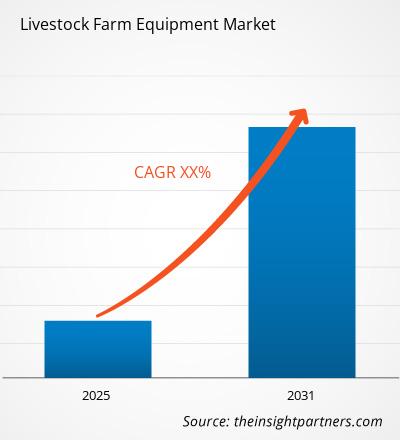
Livestock Farm Equipment Market is expected to be US$ 17.43 Billion in 2025 and will further grow to reach US$ 24.35 Billion by 2034 at a CAGR of 3.78% from 2026 to 2034. This market growth can be attributed to the significant investments in the equipment that is used for milking, cleaning, eggs, feeding, housing, and livestock.
In North America, the Livestock Farm Equipment Market size is driven by a CAGR of 3.4-3.8% due to the concerns about labor shortages, traceability, and farm consolidation in agriculture. The adoption is most notable in dairy automation, poultry egg handling, and bio-secure housing since integrated solutions require minimal human labor, enable herd monitoring, and provide predictable results on commercial farms.
Livestock Farm Equipment Market Assessment and Insights
- North America accounted for 28–31% share in 2025 and is expected to grow at 3.4–3.8% CAGR between 2026–2034, driven by dairy automation and large poultry units.
- US represented 72–76% of North America in 2025 and is projected to expand at 3.5–3.9% CAGR between 2026–2034.
- Europe held 24–27% share in 2025 and should grow at 3.1–3.5% CAGR, led by Germany, France, the UK, Italy, and Spain.
- Asia Pacific captured 30–33% share in 2025 and is forecast to grow at 4.2–4.6% CAGR, supported by China, India, Japan, South Korea, and Australia.
- Largest Segment Dairy Farm held 42–45% market share in 2025, growing at 3.6–4.0% CAGR between 2026–2034 as milking and feeding systems scale.
- High Growth Segment Feed Equipment held 17–20% share in 2025, growing at 4.4–4.8% CAGR between 2026–2034 on precision rationing demand.
- Key companies analyzed in detail: Afimilk Ltd., Allflex Livestock Intelligence, Bob-White Systems, Cal Tag, Inc., HID Global Corporation, Murray Farmcare Ltd., Omnia Technologies, Pearson International LLC, Real-Tuff Livestock Equipment, Zhengzhou Yinglian Machinery Co., Ltd.
Source: The Insight Partners' analysis based on proprietary research, government publications, company annual reports, investor presentations, industry databases, and expert interviews.
Equipment procurement has evolved from standalone hardware into intelligent operating platforms that enable animal identification, feeding, milking, washing, and sheltering. The market is currently driven by the need for measurable efficiency improvements in labor productivity, animal welfare, and biosecurity standards among producers. Large farms are looking at automation and instrumentation systems while mid-sized farms are upgrading through modularity without having to redesign their barns.
Capital investment over the coming decade is expected to flow into Asia Pacific, Latin America, and select areas in the Middle East where protein demand, cold chain development, and modern farming practices are growing. Manure management, animal traceability, and antimicrobial stewardship requirements are other factors favoring data-enabled equipment that enhances sanitation and decision-making on the farm.
Livestock Farm Equipment Market Report Scope
| Report Attribute | Details |
|---|---|
| Market size in 2025 | US$ 17.43 Billion |
| Market Size by 2034 | US$ 24.35 Billion |
| Global CAGR (2026 - 2034) | 3.78% |
| Historical Data | 2021-2024 |
| Forecast period | 2026-2034 |
Livestock Farm Equipment Market Analysis
The livestock farm equipment market growth is affected by labor shortage in farms, high consumption of animal protein, and requirement to ensure standardization of quality of produce. Lifecycle costing, water conservation, and data recording have become more important than just the price when considering the feed system, milking parlor, and cleaning system equipment.
The ecosystem consists of equipment manufacturers, RFID and sensor makers, barn constructors, dealers, veterinarians, integrators, and farm management software companies. The supply side still gets influenced by the cost of steel, electronics, and regional distribution of dealers. Farmers prefer equipment manufacturers who offer both robust mechanical equipment and service since equipment downtime impacts the yield of milk, eggs, and animal welfare performance.
Positioning in the Livestock Farm Equipment Market analysis is spread across various technology players as well as specialist fabricators of the equipment. The positioning by Afimilk Ltd. and Allflex Livestock Intelligence focuses on use of information technology in cattle and dairy farming, whereas that of Pearson International LLC, Real-Tuff Livestock Equipment and Murray Farmcare Ltd. focuses on durable handling, housing and mechanized farm infrastructures.
Investment is now moving towards retrofittable equipment, tagging, sorting and low maintenance cleaning systems. HID Global Corporation and Cal Tag, Inc. provide for traceability requirements whereas Bob-White Systems, Omnia Technologies and Zhengzhou Yinglian Machinery Co., Ltd. provide for specialized requirements in small dairy, poultry processing and farm mechanization.
● REPORT CUSTOMIZATION
Tailor This Report To Align With Your Specific Business Requirements
This report can be customized to align precisely with your business objectives, scope, and target markets. Customization options include tailored segmentation, geography, competitive analysis, and strategic insights to support informed decision-making.
Customize This Report →WHAT YOU CAN ADJUST
- ● Segmentations
- ● Geography
- ● Competitive Analysis
- ● Language Preferences
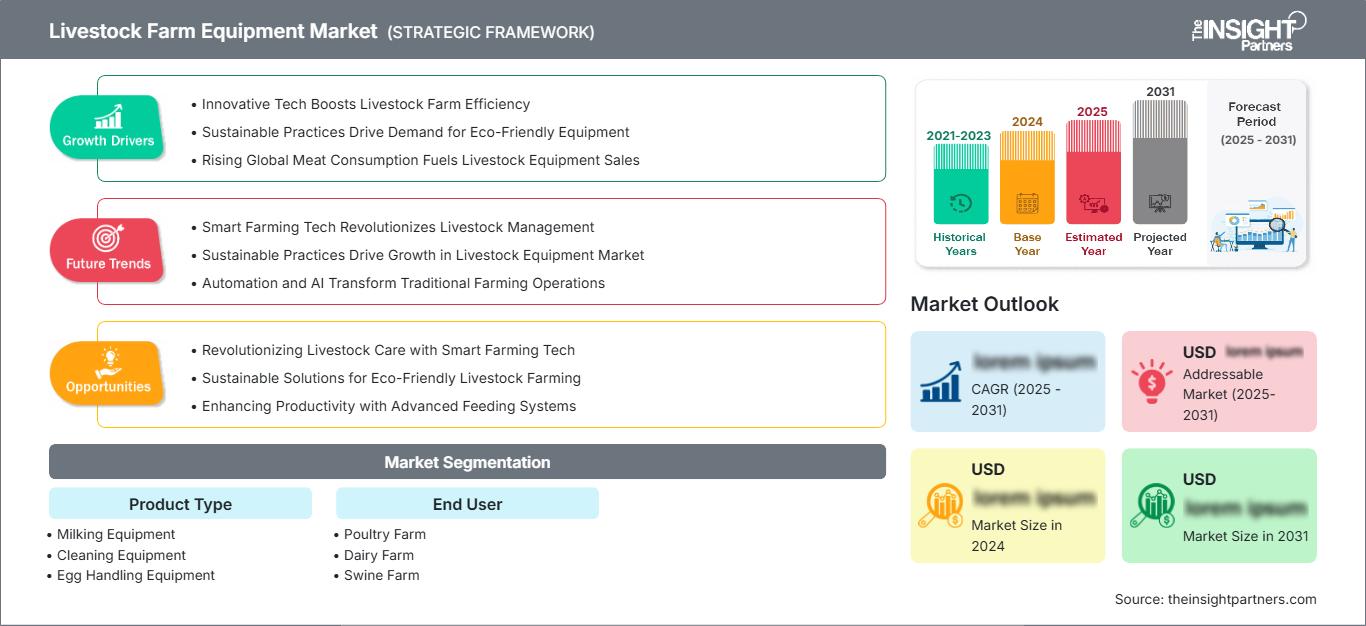
Livestock Farm Equipment Market: Strategic Insights
Regional Insights
North America Livestock Farm Equipment Market
North America Livestock Farm Equipment market share was valued at 28–31% in 2025 and estimated to grow at 3.4–3.8% CAGR during 2034. Presence of large herd sizes in dairies, integrated broiler operations, and presence of good farm management practices will facilitate quick paybacks from automation solutions for milking, feeding, and waste removal.
Scarcity of labor continues to be a key motivator for adoption of equipment solutions. The need to track processes and minimize animal movements through better equipment is getting increasingly relevant as there is rising pressure from processors and retailers to document all procedures.
U.S. Livestock Farm Equipment Market
The U.S. represented 72–76% of North America in 2025 and is projected to grow at 3.5–3.9% CAGR during 2026–2034. Adoption is concentrated in dairy states, poultry belts, and swine-producing regions where scale enables investment in automated feeding, egg handling, ventilation, and livestock handling systems.
Afimilk Ltd., Allflex Livestock Intelligence, HID Global Corporation, and Cal Tag, Inc. benefit from demand for identification, monitoring, and herd intelligence. Pearson International LLC and Real-Tuff Livestock Equipment support cattle handling upgrades, while poultry and dairy operators increasingly favor equipment that improves worker safety and throughput consistency.
Europe Livestock Farm Equipment Market
Share for Europe is estimated at 24–27% for 2025 with growth forecasted at 3.1–3.5% CAGR. The leading European country for market demand is Germany due to stringent welfare requirements, waste management, and traceability regulations for milk producers, pig and poultry breeders that foster investments in automation of feeding process, temperature control, and sanitation.
Labor scarcity and farm consolidations drive the UK market demand for systems related to handling, milking, and housing. There is selective investment in dairy farming and poultry production in France, Italy, and Spain due to considerations of biosecurity, energy efficiency, and animal welfare compliance.
APAC Livestock Farm Equipment Market
APAC had market shares of 30-33% in 2025 and has projected growth rates of 4.2-4.6% CAGR, the highest growth range among all regions. The China region drives the market due to poultry and swine modernization efforts, while India benefits from the dairy sector that drives demand for cost-effective milking and feeding solutions.
The Japanese, South Korean, and Australian regions are focused on automating operations due to old-age farmers and need for better animal monitoring. Policies related to food security, livestock clusters, and development of cold chain infrastructure drive producers to modernize housing, eggs, and feeding facilities in organized farming operations.
Middle East & Africa Livestock Farm Equipment Market
Middle East & Africa is projected to grow by 3.7-4.1% CAGR till 2034, with investment coming from Saudi Arabia. Food security policies and capital from agribusiness investors help build dairy farms, poultry integrations, and climate control accommodation needs.
UAE plans investments into facilities for livestock production in controlled environment, whereas South Africa invests in equipment purchase for dairy, poultry and mixed farm operations. RoMEA demand will be driven by projects that have access to infrastructure, feed supplies and finance for commercial farms.
Segmentation Analysis
Product Type
Product Type is projected to grow at 3.8–4.2% CAGR during 2026–2034, reflecting replacement demand and automation-led upgrades. The market scope across products is widening as farms combine feeding, housing, handling, and hygiene systems into integrated operating environments that improve labor planning and animal productivity.
- Milking Equipment remains central to dairy modernization as producers seek consistent milk extraction, hygiene control, and herd-level productivity data across medium and large farms.
- Cleaning Equipment supports sanitation, manure removal, and disease prevention, making it strategically important for farms facing tighter biosecurity and environmental compliance expectations.
- Egg Handling Equipment gains relevance in integrated poultry operations where sorting, conveying, and packing efficiency directly influence throughput, breakage reduction, and labor productivity.
- Feed Equipment is the high growth product area as precision rationing, automated delivery, and feed waste reduction become priorities across dairy, poultry, and swine farms.
- Housing Equipment supports ventilation, animal comfort, space optimization, and welfare compliance, particularly where climate variability and stocking density affect farm performance.
- Livestock Handling equipment improves animal movement, worker safety, weighing, sorting, and treatment workflows, making it essential for cattle, dairy, and mixed livestock enterprises.
End User
End User is forecast to grow at 3.5–3.9% CAGR from 2026–2034 as commercial producers prioritize predictable output, labor efficiency, and animal welfare. Dairy farms remain the largest end-user base, while poultry and swine farms increasingly invest in automated handling, cleaning, feeding, and housing systems suited to higher stocking densities.
- Poultry Farm demand centers on egg handling, feeding, housing, and sanitation systems that help integrated operators raise throughput while maintaining biosecurity and flock consistency.
- Dairy Farm remains the largest end-user segment as milking automation, cow identification, feed management, and cleaning systems improve productivity and reduce dependence on manual labor.
- Swine Farm adoption is led by automated feeding, climate-controlled housing, and cleaning equipment that support herd health, waste management, and standardized production cycles.
Opportunity Snapshot
| Segment Name | Revenue Contribution | Trend Tag | Adoption Stage |
| Poultry Farm | High | Egg Automation | Scaling |
| Dairy Farm | High | Robotic Milking | Mature |
| Swine Farm | Medium | Smart Feeding | Scaling |
Livestock Farm Equipment Market Growth Drivers and Impact Analysis
Automation Addresses Persistent Farm Labor Constraints
Labor shortage is among the most practical motivators in the market, since all kinds of livestock farming involve repetitive activities every day, independent of weather conditions or labor availability. Machinery such as automatic milkers, feeders, egg handlers, and cleaners ensures that the farm does not face labor shortages and that all procedures become more consistent. Farms which have several barns, big herds, or poultry in particular will be most affected since delays in routines will immediately reflect on production. Providers of machinery which offer reliable maintenance and operator training acquire an edge since efficiency is measured by operational hours.
Animal Welfare and Biosecurity Standards Raise Equipment Needs
Requirements for animal welfare and biosecurity are forcing farmers to make investments in housing, ventilation, cleaning, and handling systems that minimize stress and prevent the spread of diseases. The growing pressure for record keeping from retailers, processors, and regulators means that equipment able to create standardized procedures becomes even more important. Cleaning systems decrease the chances of contamination with pathogens, whereas improved handling equipment minimizes animal and worker injuries.
Protein Demand Expands Commercial Livestock Infrastructure
Increased consumption of milk, eggs, poultry, and pork is leading to investments in livestock farms with bigger sizes. Since the farms are moving away from subsistence practices towards commercial ones, there will be a need for equipment that ensures that there is consistency in terms of feeding and housing the livestock, and in processing of their produce. The market stands to gain from the need by processors for consistency in supply volumes and quality of the producers they contract. This impact is being seen in the Asia Pacific and emerging Middle Eastern regions.
Livestock Farm Equipment Market Future Trends
Connected Barns Become Operating Platforms
Livestock Farm Equipment Market trends indicate a move towards farm equipment being utilized as an interconnected production system rather than a standalone mechanical device. Future purchases will be driven by the need to ensure interoperability whereby farms will be looking for equipment that allows them to integrate their data with other systems. This trend will be favorable to manufacturers who are able to blend hardware with analytics and cybersecurity capabilities. Farms, on the other hand, will have more information at an early stage about feed efficiency, disease risks, and equipment performance.
Low-Resource Equipment Designs Gain Strategic Value
Equipment designs are expected to be developed with an emphasis on reduced water usage, low energy usage, and reduced maintenance needs. Livestock farms based in areas experiencing shortages of water or energy will consider factors such as cleaning, ventilation, and feed dispensing on the basis of efficiency as well as performance. Firms offering equipment with control mechanisms that are compatible with solar power, low-energy motors, and easily accessible spare parts are likely to serve established markets as well as emerging ones.
Livestock Farm Equipment Market Opportunities
Retrofit Packages for Mid-Sized Farms
A very lucrative option exists in the form of mid-sized farms which cannot afford to invest in new facilities but require both automation and compliance changes. Retrofit systems providing solutions for feeding, milking assistance, cleaning, and animal handling that are compatible with current barn structures can help suppliers win a foothold in the market. Installation disruption will have to be minimized while suppliers prove themselves on the basis of labor savings and enhanced efficiency.
Integrated Traceability and Identification Systems
The ability to trace will create an investment opportunity for businesses by creating ties between the identification hardware system and other information such as handling, health, and productivity of the animals. The dairy, swine, and poultry industry are all becoming more dependent on verifiable information regarding the products for the processor, disease control, and exporting their products. This business opportunity is favorable due to the fact that it is possible to use the identification system as the first step in digitizing the farm.
Recent Developments
- February 2026: The 2026 National Farm Machinery Show featured a bevy of new products launched onto the market by farm machinery brands both big and small. Among them is Brock Grain Systems’ PaddleFlo 1500 Paddle Sweep, which reduces manual cleanup of grain bins, and numerous new tires for all kinds of vehicles, like Titan's first steel-belted skid steer tire for high-puncture environments.
- June 2025: The University of Nebraska hosted the third U.S. Precision Livestock Farming Conference (USPLF) on June 2-5, 2025. The conference brought together more than 180 precision livestock industry professionals, including engineers, veterinarians, researchers, entrepreneurs, farmers, policymakers and industry associations working to apply technology to improve livestock farming in the U.S. and worldwide.
- January 2026: Future Ag Inc. thrilled about the advancements coming in 2025. This year, three standout products are set to revolutionize the way we farm: the Steiger Series tractors, the KIOTI RX7340 Utility Tractor, and the Case IH FieldOps Apps. Let’s explore why these innovations are creating buzz.
Frequently Asked Questions

- Comprehensive Market Sizing and Forecast Analysis
- Detailed Segmentation Analysis
- In-Depth Market Dynamics Assessment
- Regional and Country-Level Insights
- Competitive Landscape and Company Benchmarking
- Strategic Business Intelligence
Recent Reports
Testimonials

The Insight Partners' SCADA System Market report is comprehensive, with valuable insights on current trends and future forecasts. The team was highly professional, responsive, and supportive throughout. We are very satisfied and highly recommend their services.
RAN KEDEM Partner, Reali Technologies LTDs
I requested a report on a very specific software market and the team produced the report in a few days. The information was very relevant and well presented. I then requested some changes and additions to the report. The team was again very responsive and I got the final report in less than a week.
JEAN-HERVE JENN Chairman, Future Analytica
We worked with The Insight Partners for an important market study and forecast. They gave us clear insights into opportunities and risks, which helped shape our plans. Their research was easy to use and based on solid data. It helped us make smart, confident decisions. We highly recommend them.
PIYUSH NAGPAL Sr. Vice President, High Beam Global
The Insight Partners delivered insightful, well-structured market research with strong domain expertise. Their team was professional and responsive throughout. The user-friendly website made accessing industry reports seamless. We highly recommend them for reliable, high-quality research services
YUKIHIKO ADACHI CEO, Deep Blue, LLC.
This is the first time I have purchased a market report from The Insight Partners.While I was unsure at first, I visited their web site and felt more comfortable to take the risk and purchase a market report.I am completely satisfied with the quality of the report and customer service. I had several questions and comments with the initial report, but after a couple of dialogs over email with their analyst I believe I have a report that I can use as input to our strategic planning process.Thank you so much for taking the extra time and making this a positive experience.I will definitely recommend your service to others and you will be my first call when we need further market data.
JOHN SUZUKI President and Chief Executive Officer, Board Director, BK Technologies
I wish to appreciate your support and the professionalism you displayed in the course of attending to my request for information regarding to infectious disease IVD market in Nigeria. I appreciate your patience, your guidance, and the fact that you were willing to offer a discount, which eventually made it possible for us to close a deal. I look forward to engaging The Insight Partners in the future, all thanks to the impression you have created in me as a result of this first encounter.
DR CHIJIOKE ONYIA MANAGING DIRECTOR, PineCrest Healthcare Ltd.Reason to Buy
- Informed Decision-Making
- Understanding Market Dynamics
- Competitive Analysis
- Identifying Emerging Markets
- Customer Insights
- Market Forecasts
- Risk Mitigation
- Boosting Operational Efficiency
- Strategic Planning
- Investment Justification
- Tracking Industry Innovations
- Aligning with Regulatory Trends





 Get Free Sample for