
Metal Casing Market Growth, Size & Forecast by 2034
Coverage: By Product (Stamping and MIM, Die casting, Extrusion); Application (Mobile phones, Tablet, Wearable devices, Movable power sources, Others.), and Geography (North America, Europe, Asia Pacific, and South and Central America)
- Status : Data Released
- Report Code : TIPRE00016540
- Category : Chemicals and Materials
- No. of Pages : 150
- Available Report Formats :


- Last update date : July 21, 2026


2025 Market Size
US$ 15.67 Bn
Base year value
2034 Forecast
US$ 28.18 Bn
Projected by 2034
CAGR 2026-2034
6.74 %
Growth rate
Addressable Market
US$ 198.19 Bn
(2026-2034)
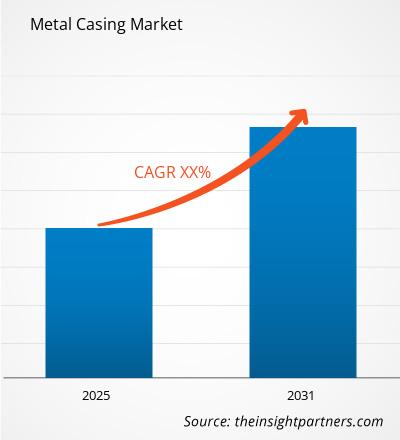
The metal casing market was valued at US$ 15.67 Billion in 2025 and is projected to reach US$ 28.18 Billion by 2034, expanding at a CAGR of 6.74% during 2026–2034. The market is supported by growing demand for premium consumer electronics, increasing adoption of metal housings in portable devices, and continuous advancements in precision manufacturing technologies. Manufacturers are focusing on lightweight, durable, and aesthetically refined enclosures that enhance device protection, thermal management, and product differentiation across multiple electronics categories.
Across North America, demand is being supported by investments in advanced electronics manufacturing, reshoring initiatives, and increasing deployment of premium consumer devices. The metal casing market size in the region continues to benefit from the rising penetration of wearables and portable power products. Regional growth is estimated at 5.8–6.4% between 2026–2034, supported by precision engineering capabilities, growing demand for durable electronic housings, and increasing emphasis on product sustainability through recyclable metal materials.
Metal Casing Market Assessment and Insights
- North America: Accounted for 20–24% share in 2025 and is anticipated to grow at a CAGR of 5.8–6.4% during 2026–2034. Demand is driven by premium electronics adoption, advanced manufacturing infrastructure, and increasing deployment of wearable and portable electronic devices.
- US: Represented 74–78% of North American demand in 2025 and is projected to expand at a CAGR of 5.9–6.5% during 2026–2034. Strong consumer electronics spending and localized production investments continue to support market expansion.
- Europe: Held 22–26% share in 2025 and is expected to record a CAGR of 5.5–6.1% during 2026–2034. Germany, the UK, and France remain leading markets due to established electronics, automotive electronics, and industrial device manufacturing capabilities.
- Asia Pacific: Captured 44–48% share in 2025 and is forecast to grow at a CAGR of 7.6–8.2% during 2026–2034. China, Japan, South Korea, and India continue to dominate regional demand owing to large-scale electronics production ecosystems.
- Largest Segment: Mobile phones accounted for a 42–46% market share in 2025 and are projected to expand at a CAGR of 6.3–6.9% during 2026–2034, supported by sustained shipments of premium smartphones.
- High Growth Segment: Wearable devices represented 12–16% market share in 2025 and are anticipated to grow at a CAGR of 8.8–9.4% during 2026–2034 due to increasing adoption of smartwatches, fitness trackers, and health-monitoring devices.
- Key companies analyzed in detail: BYD Electronic (International) Company Limited, Catcher Technology Co., Ltd., Dynacast International Inc., EWPT, Foxconn Technology Co., Ltd., Ju Teng International Holdings Limited, PEGATRON Corporation, Tongda Group Holdings Limited, Victory Precision Industrial Co., Ltd., Waffer Technology Corporation.
Source: The Insight Partners' analysis based on proprietary research, government publications, company annual reports, investor presentations, industry databases, and expert interviews.
The rising consumer preference for high-end electronic products has turned the need for casing manufacturing into a necessity that is highly important for product differentiation. With the use of technologies such as precision die casting, metal injection molding, and advanced extrusion, it is possible to manufacture lighter and stronger casings without compromising their strength.
The future development of the market will be driven by the emergence of new manufacturing centers in Southeast Asia and India, where governments will continue to encourage electronics manufacturing using various incentives. Such measures will help the producers improve the performance of their supply chains and create casings that will meet new requirements.
Metal Casing Market Report Scope
| Report Attribute | Details |
|---|---|
| Market size in 2025 | US$ 15.67 Billion |
| Market Size by 2034 | US$ 28.18 Billion |
| Global CAGR (2026 - 2034) | 6.74% |
| Historical Data | 2021-2024 |
| Forecast period | 2026-2034 |
Metal Casing Market Analysis
Rising shipments of premium smartphones, tablets, smartwatches, and portable electronic devices continue to support demand across the global value chain. Consumer preference for durable, lightweight, and aesthetically appealing products has encouraged manufacturers to shift from plastic-based enclosures toward advanced metal casings. The metal casing market growth trajectory is also influenced by increasing demand for improved heat dissipation, electromagnetic shielding, and structural strength in compact electronic devices. As device manufacturers pursue thinner form factors while maintaining durability, advanced metal processing technologies are becoming increasingly important.
The value chain encompasses raw material suppliers, metal processors, component fabricators, device assemblers, and original equipment manufacturers. Aluminum remains the preferred material due to its lightweight characteristics and recyclability, while magnesium and specialty alloys are increasingly utilized for premium applications. Supply dynamics are influenced by fluctuations in metal prices, manufacturing capacity expansion across Asia Pacific, and investments in automated production systems that improve yield rates and production consistency.
Competitive intensity remains high as manufacturers focus on technological differentiation, operational efficiency, and customer proximity. The metal casing market analysis indicates that leading companies are investing in precision manufacturing capabilities, automation, and advanced surface finishing technologies to strengthen relationships with major consumer electronics brands. Strategic collaborations between casing suppliers and device manufacturers are becoming increasingly important as product development cycles shorten and customization requirements increase.
Leading players like BYD Electronic (International) Company Limited, Catcher Technology Co., Ltd., Foxconn Technology Co., Ltd., PEGATRON Corporation, and Ju Teng International Holdings Limited are ramping up their capacity to meet rising demands from consumer electronics companies. While this is being done by leading manufacturers, other players like Dynacast International Inc., Waffer Technology Corporation, Tongda Group Holdings Limited, and Victory Precision Industrial Co., Ltd. are focusing on superior manufacturing technology and engineering to win better projects. Smart manufacturing and digital quality control systems are expected to boost competitiveness in the coming years.
● REPORT CUSTOMIZATION
Tailor This Report To Align With Your Specific Business Requirements
This report can be customized to align precisely with your business objectives, scope, and target markets. Customization options include tailored segmentation, geography, competitive analysis, and strategic insights to support informed decision-making.
Customize This Report →WHAT YOU CAN ADJUST
- ● Segmentations
- ● Geography
- ● Competitive Analysis
- ● Language Preferences
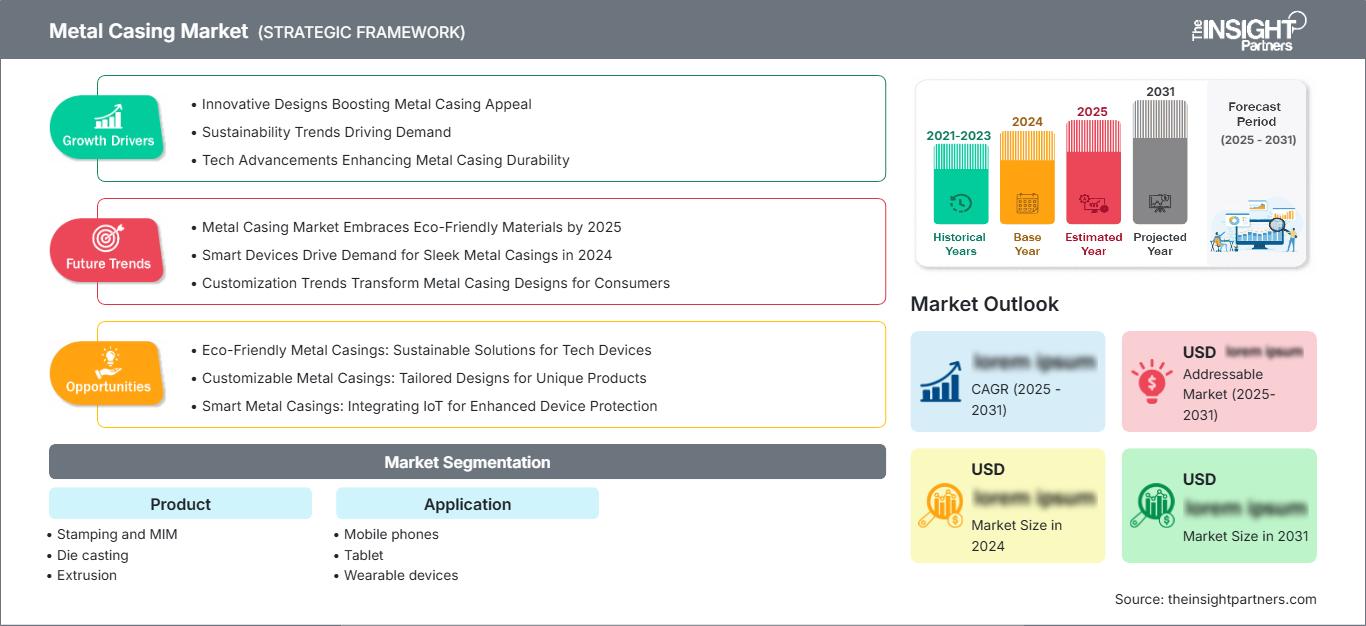
Metal Casing Market: Strategic Insights
Regional Insights
North America Metal Casing Market
North America accounted for 20–24% of the global market in 2025 and is projected to register a CAGR of 5.8–6.4% during 2026–2034. Demand is primarily supported by strong consumption of premium electronics, increasing adoption of wearable technologies, and growing investments in domestic manufacturing capabilities. The region benefits from advanced engineering expertise, robust research and development activity, and the presence of leading technology companies that require high-quality enclosure solutions.
The region's metal casing market share remains supported by increasing demand for durable and recyclable materials in consumer electronics production. Growing emphasis on supply-chain resilience has encouraged manufacturers to diversify sourcing and establish regional production capabilities. Rising adoption of artificial intelligence-enabled devices, connected consumer products, and portable power solutions is expected to sustain demand for precision-engineered metal enclosures throughout the forecast period.
U.S. Metal Casing Market
The United States represented 74–78% of North American demand in 2025 and is forecast to expand at a CAGR of 5.9–6.5% during 2026–2034, according to the Metal Casing Market forecast. High consumer spending on premium electronics, increasing penetration of wearable technologies, and strong innovation activity continue to support market development. The country's advanced manufacturing infrastructure enables integration of automated production technologies that improve precision and operational efficiency.
Several global electronics brands maintain extensive design, development, and assembly operations within the country, creating demand for high-performance casing solutions. Application trends increasingly favor lightweight aluminum and advanced alloy materials that enhance durability while supporting premium aesthetics. Growth is also supported by increasing demand for portable medical devices, industrial handheld equipment, and next-generation communication technologies that require sophisticated enclosure designs.
Europe Metal Casing Market
Europe held 22–26% of the global market in 2025 and is anticipated to record a CAGR of 5.5–6.1% during 2026–2034, according to the Metal Casing Market report. Germany remains the leading regional market due to its strong industrial electronics ecosystem and advanced manufacturing base. The United Kingdom benefits from growing demand for premium consumer electronics and technology-focused product development activities.
France, Italy, and Spain collectively contribute significant demand through consumer electronics distribution networks, industrial device manufacturing, and growing wearable technology adoption. Regional sustainability objectives are encouraging the use of recyclable metal materials and energy-efficient production processes. Continued investment in advanced manufacturing technologies and digital industrialization initiatives is expected to strengthen long-term market prospects across Europe.
APAC Metal Casing Market
Asia Pacific accounted for 44–48% of global demand in 2025 and is expected to grow at a CAGR of 7.6–8.2% during 2026–2034 in the Metal Casing Market. China remains the dominant market owing to its extensive electronics manufacturing ecosystem, while Japan and South Korea continue contributing through advanced technology production and premium device development.
India and Southeast Asian countries are emerging as attractive manufacturing destinations due to supportive government policies and growing electronics assembly activities. Expanding production capacities, improving supply-chain integration, and increasing investments in advanced manufacturing technologies continue to strengthen regional competitiveness and support long-term growth.
Middle East & Africa Metal Casing Market
The Middle East & Africa region is projected to grow at a CAGR of 5.0–5.6% during 2026–2034 in the Metal Casing Market. Market expansion is supported by increasing consumer electronics consumption, digital transformation initiatives, and rising adoption of connected devices across commercial and residential sectors.
Saudi Arabia and the UAE lead regional demand owing to strong purchasing power and growing investments in technology infrastructure. South Africa remains an important market due to expanding electronics distribution networks and industrial applications. Increasing urbanization and digital connectivity are expected to create additional opportunities for metal casing manufacturers in the region.
Segmentation Analysis
Product
The Product segment is projected to expand at a CAGR of 6.8–7.4% during 2026–2034. Product innovation remains a key competitive factor as manufacturers seek to balance lightweight construction, structural durability, and production efficiency. The metal casing market scope continues to broaden with advancements in precision manufacturing technologies that enable complex geometries, thinner walls, and improved thermal performance for next-generation electronic devices.
- Stamping and MIM – Extensively used in manufacturing intricate and precise parts to aid the development of light-weight devices without compromising on dimensions and scalability in production.
- Die Casting – Most suitable for casting durable and high-quality cases, especially where advanced consumer electronics require good strength and performance in heat dissipation.
- Extrusion – Helpful in producing light-weight, homogeneous, and customized profiles for cases, especially for portable electronics and industrial applications.
Application
The Application segment is expected to register a CAGR of 7.1–7.7% during 2026–2034. Growing adoption of smart devices, connected technologies, and portable electronics continues to expand application opportunities. Manufacturers are increasingly developing customized enclosure solutions tailored to specific performance requirements, aesthetic expectations, and device form factors.
- Mobile Phones – The largest application area, driven by ongoing demand for premium smartphones that require durable, lightweight, and visually appealing metal enclosures with enhanced thermal management capabilities.
- Tablet – Demand is supported by continued utilization in education, enterprise, healthcare, and professional environments where durability and premium design remain important purchasing considerations.
- Wearable Devices – Increasing adoption of smartwatches and fitness trackers is generating demand for compact, lightweight, and aesthetically refined casing solutions capable of supporting advanced functionalities.
- Movable Power Sources – Growing use of portable energy storage products and power banks supports demand for durable casings that provide protection, heat management, and enhanced product reliability.
Opportunity Snapshot
| Application | Revenue Contribution | Trend Tag | Adoption Stage |
| Mobile Phones | High | Premium Design | Mature |
| Tablet | Medium | Enterprise Mobility | Mature |
| Wearable Devices | Medium | Health Tracking | Scaling |
| Movable Power Sources | Medium | Portable Energy | Scaling |
Metal Casing Market Growth Drivers and Impact Analysis
Increasing Demand for Premium Consumer Electronics
Due to increased consumer preference towards premium smartphones, tablets, laptops, and other wearables, the demand for metal casing continues to increase. Metal body devices have become synonymous with premium qualities and strength, leading to more usage of aluminum and alloy casing by manufacturers. Top brand names in the electronics industry are adopting premium casing solutions in order to distinguish their products from those in extremely competitive markets. Through innovative processes like die-casting and metal injection molding, manufacturers are able to develop more robust and slim casing that improves user experience. Due to rising global disposable income levels and an active replacement cycle in developed and developing countries, the future outlook of premium electronic products is bright.
Growing Need for Thermal Management and Device Protection
Electronic devices have become more powerful and smaller at the same time. As a result, there is an ever-increasing requirement for efficient thermal management and adequate protection. Metal cases offer better thermal conductivity than traditional plastic cases, assisting companies in enhancing their products' quality and effectiveness. Modern smartphones, wearable electronic gadgets, and portable power sources include highly efficient processors, batteries, and connectivity features, which add to the production of heat when they work. Metal cases can keep temperature under control and protect critical electronic components from mechanical damage. Thermal efficiency, in combination with the lightweight feature of metal cases, is beneficial for next-generation consumer and industrial electronics.
Expansion of Global Electronics Manufacturing Ecosystems
The fast growth of electronics manufacturing in the Asia Pacific region, especially in China, India, Vietnam, and other emerging manufacturing hubs, is providing a good environment for the suppliers of casings. There have been government initiatives aimed at improving local manufacturing abilities and attracting foreign investments into the electronics manufacturing sector. As original equipment manufacturers look for ways to diversify their supply chain, the demand for high-quality casings is increasing. Automation and advanced technologies have made it possible for manufacturers to reach higher levels of production and quality.
Metal Casing Market Future Trends
Integration of Sustainable and Recyclable Materials
Sustainability considerations are increasingly influencing product development decisions across the electronics industry. One of the most significant metal casing market trends involves the growing use of recyclable aluminum and low-carbon manufacturing processes. Energy efficiency in manufacturing, the use of recyclable materials, and recycling processes are some of the ways in which manufacturers are working to be sustainable. Sustainability standards from regulators and increasing consumer knowledge about sustainability issues are likely to promote the usage of sustainable solutions for casings. In time, sustainability could become a competitive advantage in this industry.
Greater Adoption of Smart Manufacturing Technologies
Technological changes in manufacturing will revolutionize production capabilities across the entire value chain. The use of artificial intelligence, machine vision inspection systems, predictive maintenance systems, and digital twins is becoming common practice in the factories that produce casing. This technology allows for greater consistency in quality, less material wastage, and higher efficiency. Smart factory technology allows manufacturers to reduce time-to-market through more efficient production processes without sacrificing high standards of precision. With increased competition and more complex products, digital manufacturing capabilities will be a key selection criterion for suppliers.
Metal Casing Market Opportunities
Expansion of Wearable Device Manufacturing Ecosystems
The wearable technology segment presents significant opportunities for casing manufacturers seeking higher-value applications. Smartwatches, health-monitoring devices, and fitness trackers require compact, lightweight, and aesthetically sophisticated metal enclosures. Growing consumer interest in health monitoring and connected lifestyles continues to increase product adoption globally. As manufacturers introduce more advanced wearable devices with premium positioning, demand for precision-engineered casings is expected to accelerate. Furthermore, miniaturization trends create opportunities for suppliers with expertise in advanced machining, finishing, and material processing technologies capable of meeting increasingly stringent design requirements.
Localization of Electronics Supply Chains
Regional diversification of manufacturing operations is creating new investment opportunities across emerging electronics production hubs. Companies are increasingly establishing facilities closer to assembly operations to improve responsiveness and reduce logistics risks. Metal Casing Forecasts indicate that suppliers capable of expanding manufacturing footprints in India, Southeast Asia, and selected North American markets may benefit from changing supply-chain strategies. Investments in automated production systems, sustainable manufacturing practices, and engineering capabilities can help suppliers secure long-term contracts with global electronics brands. Localization strategies are expected to strengthen supply resilience while creating opportunities for regional market expansion.
Recent Developments
- June 2025: Foxconn announced plans to establish a dedicated manufacturing unit in Oragadam, Tamil Nadu, for producing iPhone metal enclosures. This marks Foxconn's entry into iPhone casing production in India and supports Apple's ongoing supply chain diversification strategy.
- February 2025: Catcher Technology received AS9100 aerospace quality management certification and officially entered the aerospace precision metal processing sector. The company is leveraging its expertise in high-precision aluminum and magnesium alloy casing manufacturing to diversify beyond consumer electronics.
Frequently Asked Questions

- Comprehensive Market Sizing and Forecast Analysis
- Detailed Segmentation Analysis
- In-Depth Market Dynamics Assessment
- Regional and Country-Level Insights
- Competitive Landscape and Company Benchmarking
- Strategic Business Intelligence
Recent Reports
Testimonials

The Insight Partners provided valuable market intelligence that supported our global go-to-market strategy. Their team was professional, responsive, and attentive to our feedback, providing thoughtful analysis and helpful methodological clarifications throughout the project.
Junmo Kim Chief Financial Officer (CFO), Enertech Co., Ltd.
The Insight Partners' SCADA System Market report is comprehensive, with valuable insights on current trends and future forecasts. The team was highly professional, responsive, and supportive throughout. We are very satisfied and highly recommend their services.
RAN KEDEM Partner, Reali Technologies LTDs
I requested a report on a very specific software market and the team produced the report in a few days. The information was very relevant and well presented. I then requested some changes and additions to the report. The team was again very responsive and I got the final report in less than a week.
JEAN-HERVE JENN Chairman, Future Analytica
We worked with The Insight Partners for an important market study and forecast. They gave us clear insights into opportunities and risks, which helped shape our plans. Their research was easy to use and based on solid data. It helped us make smart, confident decisions. We highly recommend them.
PIYUSH NAGPAL Sr. Vice President, High Beam Global
The Insight Partners delivered insightful, well-structured market research with strong domain expertise. Their team was professional and responsive throughout. The user-friendly website made accessing industry reports seamless. We highly recommend them for reliable, high-quality research services
YUKIHIKO ADACHI CEO, Deep Blue, LLC.
This is the first time I have purchased a market report from The Insight Partners.While I was unsure at first, I visited their web site and felt more comfortable to take the risk and purchase a market report.I am completely satisfied with the quality of the report and customer service. I had several questions and comments with the initial report, but after a couple of dialogs over email with their analyst I believe I have a report that I can use as input to our strategic planning process.Thank you so much for taking the extra time and making this a positive experience.I will definitely recommend your service to others and you will be my first call when we need further market data.
JOHN SUZUKI President and Chief Executive Officer, Board Director, BK Technologies
I wish to appreciate your support and the professionalism you displayed in the course of attending to my request for information regarding to infectious disease IVD market in Nigeria. I appreciate your patience, your guidance, and the fact that you were willing to offer a discount, which eventually made it possible for us to close a deal. I look forward to engaging The Insight Partners in the future, all thanks to the impression you have created in me as a result of this first encounter.
DR CHIJIOKE ONYIA MANAGING DIRECTOR, PineCrest Healthcare Ltd.Reason to Buy
- Informed Decision-Making
- Understanding Market Dynamics
- Competitive Analysis
- Identifying Emerging Markets
- Customer Insights
- Market Forecasts
- Risk Mitigation
- Boosting Operational Efficiency
- Strategic Planning
- Investment Justification
- Tracking Industry Innovations
- Aligning with Regulatory Trends





 Get Free Sample for