
Mixed Reality in Gaming Market Demand, Trends & Forecast by 2034
Coverage: By Component (Hardware, Software); Devices (Smart Glasses, Headset, Handheld); Technology (Augmented Reality, Virtual Reality); Application (Personal, Amusement Park, Travel, Sports, Other) , and Geography (North America, Europe, Asia Pacific, and South and Central America)
- Status : Data Released
- Report Code : TIPTE100000733
- Category : Electronics and Semiconductor
- No. of Pages : 150
- Available Report Formats :


- Last update date : October 15, 2026


2025 Market Size
US$ 5.23 Bn
Base year value
2034 Forecast
US$ 19.2 Bn
Projected by 2034
CAGR 2026-2034
15.54 %
Growth rate
Addressable Market
US$ 103.80 Bn
(2026-2034)
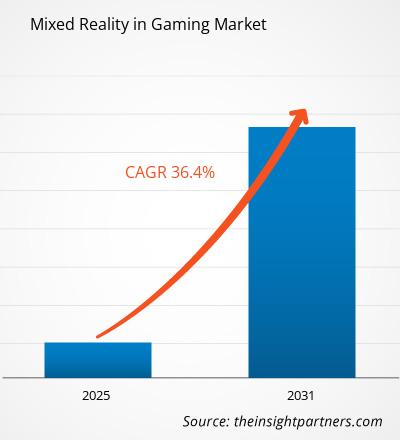
The mixed reality in gaming market is valued at US$ 5.23 Billion in 2025 and is projected to reach US$ 19.2 Billion by 2034, expanding at a CAGR of 15.54% during 2026–2034. The increasing convergence of immersive computing, interactive entertainment, and advanced visualization technologies is transforming digital gaming experiences. Continuous innovation in mixed reality hardware and software platforms, together with growing consumer demand for immersive gameplay, is expected to sustain long-term industry expansion across multiple gaming environments.
North America continues to represent one of the most technologically advanced markets, supported by robust investments in immersive entertainment ecosystems and strong consumer spending on premium gaming devices. The mixed reality in gaming market size across the region is expected to expand at a CAGR of 14.5–15.5% during 2026–2034. Rising adoption of spatial computing devices, expanding developer ecosystems, and continuous innovation by leading technology companies are strengthening regional demand for mixed reality gaming solutions.
Mixed Reality in Gaming Market Assessment and Insights
- North America: North America accounted for an estimated 37–41% share in 2025 and is anticipated to grow at a CAGR of 14.5–15.5% during 2026–2034. Strong technology infrastructure, widespread gaming adoption, and continuous investments in extended reality ecosystems continue to support regional market leadership.
- U.S.: The U.S. represented approximately 83–87% of the North American market in 2025 and is projected to register a CAGR of 14.8–15.8% through 2034, supported by high consumer spending, advanced gaming platforms, and the presence of leading technology innovators.
- Europe: Europe held approximately 24–28% market share in 2025 and is expected to expand at a CAGR of 14.0–15.0% during 2026–2034. Germany, the UK, France, Italy, and Spain continue driving regional demand through growing investments in immersive entertainment technologies and digital gaming infrastructure.
- Asia Pacific: Asia Pacific accounted for an estimated 27–31% share in 2025 and is forecast to achieve the fastest expansion with a CAGR of 16.5–17.5% between 2026 and 2034. China, Japan, South Korea, India, and Australia are accelerating adoption through increasing gaming populations, technological innovation, and expanding investments in immersive content.
- Largest Segment: Hardware dominated the market with an estimated 58–62% market share in 2025 and is anticipated to expand at a CAGR of 15.0–16.0%, supported by increasing demand for advanced head-mounted displays, sensors, and motion-tracking technologies.
- High Growth Segment: Wireless devices accounted for approximately 42–46% market share in 2025 and are expected to register the highest CAGR of 16.8–17.8%, driven by mobility, lower latency, improved connectivity, and enhanced user experience.
- Key companies analyzed in detail: Canon Inc.; Daqri; Magic Leap, Inc.; Six Flags Entertainment Corporation; Microsoft Corporation; I-Boson Innovations; Meta Platforms, Inc.; Seiko Epson Corporation; Samsung Electronics Co., Ltd.; Ubisoft Entertainment SA.
Source: The Insight Partners' analysis based on proprietary research, government publications, company annual reports, investor presentations, industry databases, and expert interviews.
Rapid advances in spatial computing, artificial intelligence, graphics processing, and wearable technologies have reshaped the development landscape for immersive gaming platforms. Continuous improvements in lightweight headsets, real-time rendering engines, gesture recognition, and cloud computing are enabling richer interactive experiences while reducing hardware limitations. Content developers are increasingly collaborating with hardware manufacturers to deliver optimized gameplay across multiple platforms. These technological advancements continue to strengthen mixed reality in gaming market, encouraging broader adoption among both casual and professional gamers worldwide.
Future growth would be enabled by investments in 5G connectivity, edge computing, cloud gaming, and advanced semiconductor technologies. The emerging economies of Asia-Pacific, the Middle East, and Latin America regions are predicted to experience more adoption as their digital infrastructures evolve and more gamers get into the communities. Digital innovations being encouraged by governments, venture capital funding, and the growing world of esports are predicted to provide conducive environments for immersive gaming technologies.
Mixed Reality in Gaming Market Report Scope
| Report Attribute | Details |
|---|---|
| Market size in 2025 | US$ 5.23 Billion |
| Market Size by 2034 | US$ 19.2 Billion |
| Global CAGR (2026 - 2034) | 15.54% |
| Historical Data | 2021-2024 |
| Forecast period | 2026-2034 |
Mixed Reality in Gaming Market Analysis
The continued rise in demand from consumers for very immersive and interactive forms of entertainment is causing competition in the gaming industry to take new turns. Hardware vendors, software companies, game producers, chipmakers, and cloud services are all collaborating with the aim of improving the visual experience of users, lowering latency and improving user engagement. The convergence of digital and physical environments is opening up new avenues for more engaging and responsive gaming.
Technology is key to the rapid development of the market. Artificial intelligence, spatial mapping, motion tracking, graphics processing, and cloud computing enable more immersive games and more interactive multiplayer experiences in interconnected environments. The continued advancements in processing and display technologies are allowing developers to create more sophisticated mixed reality apps and enhancing performance.
The mixed reality in gaming market analysis highlights the increasing commercialization of advanced mixed reality devices across residential entertainment, esports, and location-based gaming experiences. The increasing attention towards interactive entertainment systems is compelling the gaming companies to focus on creating a rich content ecosystem and exploring various avenues for monetization. The expansion of developer platforms, increased accessibility of hardware, and adoption of immersive technology are anticipated to contribute positively to the long-term value chain of the market.
The rivalry within the market is expected to intensify in the coming years due to increasing investment of technology companies and immersive computing solution providers in product innovation and development of their ecosystem. Some of the major players contributing positively towards the competitive landscape of the market include Microsoft Corporation, Meta Platforms, Inc., Magic Leap, Inc., Samsung Electronics Co., Ltd., Canon Inc., Seiko Epson Corporation, Ubisoft Entertainment SA, Daqri, I-Boson Innovations, and Six Flags Entertainment Corporation.
● REPORT CUSTOMIZATION
Tailor This Report To Align With Your Specific Business Requirements
This report can be customized to align precisely with your business objectives, scope, and target markets. Customization options include tailored segmentation, geography, competitive analysis, and strategic insights to support informed decision-making.
Customize This Report →WHAT YOU CAN ADJUST
- ● Segmentations
- ● Geography
- ● Competitive Analysis
- ● Language Preferences
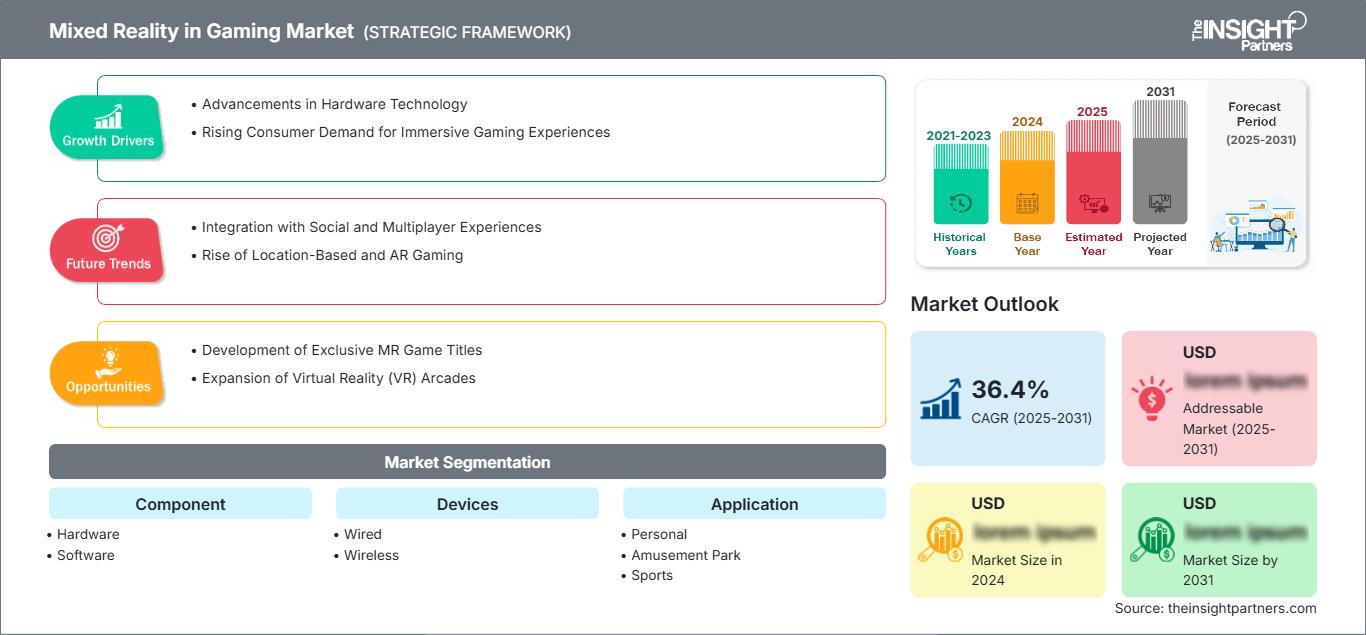
Mixed Reality in Gaming Market: Strategic Insights
Regional Insights
North America Mixed Reality in Gaming Market
North America accounted for an estimated 37–41% market share in 2025 and is projected to expand at a CAGR of 14.5–15.5% during 2026–2034. Adoption of cutting-edge technology for gaming, availability of broadband Internet, and heavy consumer expenditure on immersive entertainment help the region maintain its leading position. Technology companies are working on creating advanced headsets, spatial computing, and cloud-based gaming solutions to create more compelling MR experiences. There is an existing developer community and demand for premium gaming content for both residential and commercial entertainment venues in the region.
The use of AI, edge computing, and real-time graphics processing makes games more realistic and minimizes delays. Development of the esports scene, location-based entertainment venues, as well as investments in immersive education and training applications, bring new revenue streams for the market players. The availability of venture capital funding and collaboration between game publishers, hardware makers, and software developers contribute to further market development in North America.
U.S. Mixed Reality in Gaming Market
The United States represented approximately 83–87% of the North American Mixed Reality in Gaming Market in 2025 and is expected to register a CAGR of 14.8–15.8% during 2026–2034. The country remains a global innovation hub due to the presence of leading technology companies, established gaming studios, semiconductor manufacturers, and cloud infrastructure providers. Rising consumer demand for immersive entertainment, increasing adoption of premium gaming devices, and expanding investments in extended reality platforms continue to support industry expansion.
The mixed reality in gaming market share remains highest in the U.S., driven by continuous product launches, strategic acquisitions, and developer investments in immersive game content. The growing popularity of esports tournaments, subscription-based gaming services, and mixed reality experiences in theme parks and entertainment centers further strengthens commercial adoption. Increasing integration with artificial intelligence and cloud computing is expected to enhance user engagement and platform scalability throughout the forecast period.
Europe Mixed Reality in Gaming Market
Europe accounted for approximately 24–28% market share in 2025 and is anticipated to expand at a CAGR of 14.0–15.0% during 2026–2034. With Germany leading regional adoption due to its robust digital technology industry, advanced manufacturing processes, and investment in immersive software development, the United Kingdom is continuing to build demand via gaming studios, e-sports tournaments, and interactive entertainment technologies.
France, Italy, and Spain have recorded increased adoption in the region owing to the implementation of digital transformation strategies by the government, increasing consumer expenditure in gaming hardware, and developer networks. Collaboration among technology firms, educational facilities, and entertainment entities is driving innovation. Improvements in cloud technology, high-speed Internet, and immersive content creation will aid sustainable growth in the market.
APAC Mixed Reality in Gaming Market
Asia Pacific represented an estimated 27–31% market share in 2025 and is forecast to record the highest regional CAGR of 16.5–17.5% during 2026–2034. China remains the largest regional market owing to its extensive gaming ecosystem, while Japan and South Korea continue leading innovation in immersive entertainment technologies.
India and Australia are experiencing rapid adoption driven by expanding smartphone penetration, growing esports communities, and investments in digital infrastructure. Increasing availability of affordable mixed reality devices, government support for digital innovation, and a large gaming population continue to create favorable conditions for long-term regional expansion.
Middle East & Africa Mixed Reality in Gaming Market
The Middle East & Africa market is expected to grow at a CAGR of 13.0–14.0% during 2026–2034, supported by rising investments in digital entertainment infrastructure and expanding gaming communities. Saudi Arabia and the United Arab Emirates are investing significantly in esports, smart entertainment destinations, and immersive technology adoption, while South Africa continues to strengthen its digital gaming ecosystem.
Growing youth populations, improving internet connectivity, and increasing private-sector investment in gaming platforms are supporting market development across the region. Expansion of mixed reality attractions in entertainment venues, shopping malls, and tourism destinations is expected to create new commercial opportunities throughout the forecast period.
Segmentation Analysis
Component
The Component segment is anticipated to register a CAGR of 15.2–16.2% during 2026–2034. Continuous advancements in display technology, processing capabilities, motion sensing, and software development are improving mixed reality experiences across gaming environments. The mixed reality in gaming market scope continues to expand as hardware manufacturers and software developers collaborate to deliver immersive, low-latency, and highly interactive gaming ecosystems that support both consumer and commercial applications.
- Hardware: Hardware remains the leading sub-segment due to growing demand for head-mounted displays, depth sensors, cameras, controllers, and advanced processors that enable immersive gaming with superior graphics, tracking accuracy, and user interaction.
- Software: Software continues to gain momentum through advancements in game engines, artificial intelligence, spatial mapping, cloud rendering, and development platforms that improve gameplay realism, content creation, and cross-platform compatibility.
Devices
The Devices segment is projected to expand at a CAGR of 15.8–16.8% during 2026–2034. Improvements in wireless connectivity, battery technology, lightweight designs, and real-time rendering capabilities are encouraging wider adoption across consumer and commercial gaming environments. Manufacturers continue introducing ergonomically optimized devices that enhance mobility, reduce latency, and improve user comfort during extended gaming sessions.
- Wired: Wired devices continue serving professional gaming environments where consistent performance, minimal latency, and uninterrupted data transmission remain essential for competitive gameplay and high-performance mixed reality experiences.
- Wireless: Wireless devices are witnessing strong adoption because they provide greater freedom of movement, enhanced immersion, improved portability, and seamless connectivity with cloud-based gaming platforms and advanced entertainment ecosystems.
Application
The Application segment is expected to record a CAGR of 15.5–16.5% during 2026–2034. Growing demand for immersive entertainment, interactive experiences, and digital engagement across consumer and commercial environments continues to support adoption. Expanding investments in location-based entertainment, esports, and advanced gaming platforms are expected to strengthen long-term market opportunities.
- Personal: Personal gaming remains the dominant application owing to increasing consumer spending on immersive gaming devices, expanding online multiplayer experiences, and rising adoption of premium mixed reality hardware among enthusiasts.
- Amusement Park: Theme parks are increasingly deploying mixed reality attractions to enhance visitor engagement through interactive rides, immersive storytelling, and location-based entertainment experiences that differentiate premium attractions.
- Sports: Sports organizations are utilizing mixed reality technologies for interactive fan engagement, esports simulations, athlete training environments, and immersive broadcasting experiences that improve audience participation.
- Other: Other applications include gaming arcades, educational gaming centers, museums, simulation facilities, and commercial entertainment venues that integrate mixed reality technologies to deliver interactive digital experiences.
Opportunity Snapshot
| Application | Revenue Contribution | Trend Tag | Adoption Stage |
| Personal | High | Home Gaming | Mature |
| Amusement Park | Medium | Immersive Rides | Scaling |
| Sports | Medium | Esports XR | Emerging |
| Other | Low | Interactive Venues | Emerging |
Mixed Reality in Gaming Market Growth Drivers and Impact Analysis
Rapid Advancement of Spatial Computing Technologies
Innovations that have been occurring continuously in spatial computing technology are drastically changing the gaming experience of users in the immersive environment. Innovations in mixed reality headsets, depth sensors, eye tracking systems, hand gesture recognition, and environmental maps created by the use of artificial intelligence make it possible for gamers to participate in an immersive game experience with realism. Semiconductor companies have also developed new chips that can be used to render complex virtual environments in real-time with reduced latency and less energy consumption, thus making the experience of users more comfortable during gaming.
Expansion of 5G and Cloud Gaming Infrastructure
The rollout of 5G networks and cloud gaming systems is lowering some of the technical constraints that have been encountered in the field of immersive gaming. Increased connectivity facilitates real-time rendering and synchronization of players within a multiplayer game, as well as streamlining of graphics-rich material without depending entirely on the computing power of the local device alone. Cloud computing reduces the constraint brought about by hardware requirements because it makes it possible to run gaming tasks remotely. Companies engaged in the business of telecommunication and gaming continue to invest in digital infrastructures.
Growing Investment in Esports and Location-Based Entertainment
The continued growth in investments into esports facilities, gaming zones, interactive entertainment centers, and immersive theme parks has generated significant demand for mixed reality technology. Entertainment firms are incorporating digital overlays, interactive environments, and multi-user experiences to enhance customer engagement and create new revenue streams. Gaming communities are also seeking to leverage mixed reality solutions for their training, broadcasting, and fan engagement. The cooperation among technology firms, game developers, and entertainment firms is hastening the development of advanced gaming platforms. Such investments are anticipated to grow the market potential as well as foster innovation.
Mixed Reality in Gaming Market Future Trends
Artificial Intelligence Enhancing Personalized Immersive Experiences
Artificial intelligence is becoming an integral component of next-generation mixed reality gaming platforms by enabling adaptive gameplay, intelligent virtual characters, and real-time environmental interaction. Mixed reality in gaming market trends indicate increasing adoption of AI-powered rendering, predictive player behavior analysis, automated content generation, and personalized gaming environments. Developers are integrating machine learning algorithms to create dynamic storylines, responsive opponents, and customized experiences based on individual gaming preferences. Combined with spatial computing and cloud technologies, artificial intelligence is expected to significantly improve realism, user engagement, and long-term player retention across consumer and commercial gaming ecosystems.
Cross-Platform Mixed Reality Ecosystems
Gamers can now use interoperable gaming ecosystems that will allow gamers to access immersive games through multiple devices, such as consoles, personal computers, cellphones, and even specialized mixed reality headsets. The use of standardized development systems, cloud computing technology, and unified digital identities has improved cross-platform compatibility and simplified the development process. These gaming ecosystems promote the use of immersive games across different devices and encourage collaborations between hardware producers, game developers, and publishers.
Mixed Reality in Gaming Market Opportunities
Expansion of Premium Location-Based Gaming Experiences
Entertainment operators are investing in premium mixed reality attractions that combine physical environments with immersive digital content. Theme parks, gaming centers, shopping complexes, and tourism destinations increasingly seek differentiated experiences that encourage longer visitor engagement and higher revenue generation. Mixed reality in gaming market forecasts indicate that strategic partnerships between hardware manufacturers, content developers, and entertainment companies will accelerate the commercialization of immersive attractions. Businesses capable of delivering scalable, interactive, and continuously updated experiences are expected to benefit from increasing consumer demand for location-based digital entertainment and experiential gaming.
Enterprise Collaboration with Game Developers
Technology companies have opportunities to collaborate with gaming studios to develop advanced software platforms, cloud infrastructure, artificial intelligence tools, and immersive hardware solutions. Such partnerships improve content quality while accelerating innovation in gameplay mechanics and user interaction. Investments in developer ecosystems, software development kits, and creator platforms enable broader content availability and encourage independent developers to participate in mixed reality innovation. These collaborations are expected to strengthen competitive differentiation, improve ecosystem scalability, and create sustainable long-term revenue opportunities across the immersive gaming industry.
Frequently Asked Questions

- Comprehensive Market Sizing and Forecast Analysis
- Detailed Segmentation Analysis
- In-Depth Market Dynamics Assessment
- Regional and Country-Level Insights
- Competitive Landscape and Company Benchmarking
- Strategic Business Intelligence
Recent Reports
Testimonials

The Insight Partners provided valuable market intelligence that supported our global go-to-market strategy. Their team was professional, responsive, and attentive to our feedback, providing thoughtful analysis and helpful methodological clarifications throughout the project.
Junmo Kim Chief Financial Officer (CFO), Enertech Co., Ltd.
The Insight Partners' SCADA System Market report is comprehensive, with valuable insights on current trends and future forecasts. The team was highly professional, responsive, and supportive throughout. We are very satisfied and highly recommend their services.
RAN KEDEM Partner, Reali Technologies LTDs
I requested a report on a very specific software market and the team produced the report in a few days. The information was very relevant and well presented. I then requested some changes and additions to the report. The team was again very responsive and I got the final report in less than a week.
JEAN-HERVE JENN Chairman, Future Analytica
We worked with The Insight Partners for an important market study and forecast. They gave us clear insights into opportunities and risks, which helped shape our plans. Their research was easy to use and based on solid data. It helped us make smart, confident decisions. We highly recommend them.
PIYUSH NAGPAL Sr. Vice President, High Beam Global
The Insight Partners delivered insightful, well-structured market research with strong domain expertise. Their team was professional and responsive throughout. The user-friendly website made accessing industry reports seamless. We highly recommend them for reliable, high-quality research services
YUKIHIKO ADACHI CEO, Deep Blue, LLC.
This is the first time I have purchased a market report from The Insight Partners.While I was unsure at first, I visited their web site and felt more comfortable to take the risk and purchase a market report.I am completely satisfied with the quality of the report and customer service. I had several questions and comments with the initial report, but after a couple of dialogs over email with their analyst I believe I have a report that I can use as input to our strategic planning process.Thank you so much for taking the extra time and making this a positive experience.I will definitely recommend your service to others and you will be my first call when we need further market data.
JOHN SUZUKI President and Chief Executive Officer, Board Director, BK Technologies
I wish to appreciate your support and the professionalism you displayed in the course of attending to my request for information regarding to infectious disease IVD market in Nigeria. I appreciate your patience, your guidance, and the fact that you were willing to offer a discount, which eventually made it possible for us to close a deal. I look forward to engaging The Insight Partners in the future, all thanks to the impression you have created in me as a result of this first encounter.
DR CHIJIOKE ONYIA MANAGING DIRECTOR, PineCrest Healthcare Ltd.Reason to Buy
- Informed Decision-Making
- Understanding Market Dynamics
- Competitive Analysis
- Identifying Emerging Markets
- Customer Insights
- Market Forecasts
- Risk Mitigation
- Boosting Operational Efficiency
- Strategic Planning
- Investment Justification
- Tracking Industry Innovations
- Aligning with Regulatory Trends





 Get Free Sample for