
Monoclonal Antibodies Market Future Trends and Growth Outlook (2026-2034)
Coverage: By Source (Human, Humanized, Chimeric, and Murine), Production Method (In-Vitro and In-Vivo), Indication (Cancer, Autoimmune Diseases, Infectious Diseases, Inflammatory Diseases, Microbial Diseases, and Others), Application (Therapeutic Applications, Diagnostic Applications, and Research Applications), and End-User (Hospitals, Others, and Research Institutes)
- Status : Data Released
- Report Code : TIPRE00026641
- Category : Life Sciences
- No. of Pages : 150
- Available Report Formats :


- Last update date : December 29, 2025


2025 Market Size
US$ 171.66 Bn
Base year value
2034 Forecast
US$ 457.80 Bn
Projected by 2034
CAGR 2026-2034
11.51 %
Growth rate
Addressable Market
US$ 2,770.29 Bn
(2026-2034)
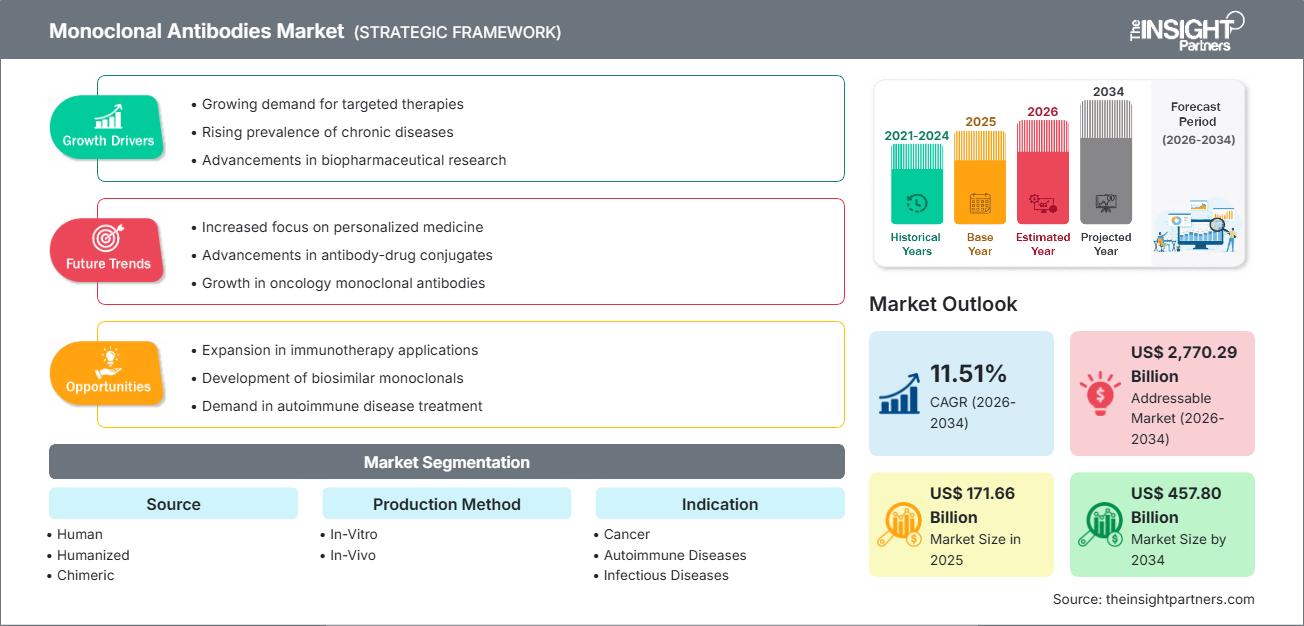
The monoclonal antibodies market size is expected to reach US$ 457.80 billion by 2034 from US$ 171.66 billion in 2025. The market is anticipated to register a CAGR of 11.51% during 2026–2034.
Monoclonal Antibodies Market Analysis
The monoclonal antibodies market is expanding quickly, driven by increasing prevalence of chronic diseases, advancements in biotechnology, and growing demand for targeted therapies. Technologies such as hybridoma technology, phage display, and recombinant DNA technology are increasingly being used for drug discovery, diagnostics, and therapeutic applications in oncology, autoimmune diseases, and infectious diseases. Pharmaceutical and biotechnology companies are increasingly leveraging mAbs to improve treatment outcomes, reduce side effects, and develop novel therapeutic approaches. The monoclonal antibodies market is expected to grow rapidly with the rise of personalized medicine, biosimilar development, and greater use of mAbs for emerging infectious diseases.
Monoclonal Antibodies Market Overview
The implementation of monoclonal antibodies in healthcare helps in increasing the efficacy and specificity of treatments. Monoclonal antibodies provide targeted action against specific disease markers, predict patient response, offer diagnostic tools, detect disease trends, and much more. At present, every major pharmaceutical company is involved in mAb research and development. mAb therapies are used to analyze disease mechanisms and target specific antigens to deliver personalized treatment to patients. The concept of targeted therapy is widely used here. Companies need to keep patients engaged with effective treatments and spend more on R&D.
Market Assessment and Insights
- Global market for Monoclonal Antibodies was valued at US$ 171.66 Billion in 2025
- Annual market size is expected to reach US$ 457.80 Billion by 2034
- Total addressable market (TAM) during 2026-2034 is projected to reach approximately US$ 2,770.29 Billion
- Market is anticipated to register a CAGR of 11.51% during the forecast period
- The United States represents a key market, supported by Growing demand for targeted therapies, Rising prevalence of chronic diseases, Advancements in biopharmaceutical research, as well as evolving industry dynamics
- Market analysis covers North America, Europe, Asia-Pacific, South and Central America, Middle East and Africa, with growth evaluated across the forecast period
- Market opportunities such as Expansion in immunotherapy applications, Development of biosimilar monoclonals, Demand in autoimmune disease treatment are expected to influence market dynamics and addressable market
- Report profiles industry participants, including Novartis AG, Pfizer Inc., GlaxoSmithKline plc, Amgen, Inc, Daiichi Sankyo Company, Limited, F. Hoffmann-La Roche AG, AstraZeneca, Elli Lilly and Company, Bayer AG, Bristol-Myers Squibb Company, while analyzing competitive strategies and innovation developments
-
Source: The Insight Partners' analysis based on proprietary research, government publications, company annual reports, investor presentations, industry databases, and expert interviews.
● REPORT CUSTOMIZATION
Tailor This Report To Align With Your Specific Business Requirements
This report can be customized to align precisely with your business objectives, scope, and target markets. Customization options include tailored segmentation, geography, competitive analysis, and strategic insights to support informed decision-making.
Customize This Report →WHAT YOU CAN ADJUST
- ● Segmentations
- ● Geography
- ● Competitive Analysis
- ● Language Preferences
Monoclonal Antibodies Market: Strategic Insights
-
Get Top Key Market Trends of this report.This FREE sample will include data analysis, ranging from market trends to estimates and forecasts.
Monoclonal Antibodies Market Drivers and Opportunities
Market Drivers:
- Growing Prevalence of Chronic Diseases: The increasing incidence of cancer, autoimmune disorders, and inflammatory diseases worldwide is driving the demand for effective and targeted therapeutic options like monoclonal antibodies.
- Advancements in Protein Engineering and Biotechnology: Continuous innovation in antibody engineering, humanization techniques, and expression systems is leading to the development of more potent, safer, and novel mAb constructs with improved pharmacokinetics.
- Rising Investment in R&D: Significant investments by pharmaceutical companies and governmental bodies in research and development for new therapeutic antibodies are accelerating drug discovery and market growth.
- Real-world Clinical Success & Patient Demand: The proven efficacy and improved safety profiles of monoclonal antibodies in treating various conditions have led to widespread clinical adoption and high patient demand, further boosting market expansion.
Market Opportunities:
- Biosimilar Development: The expiration of patents for several blockbuster monoclonal antibodies presents a significant opportunity for biosimilar manufacturers to enter the market with more affordable alternatives, increasing patient access and market volume.
- Emerging Therapeutic Areas: Expansion into new therapeutic areas such as neurological disorders, rare diseases, and infectious diseases (e.g., COVID-19 antibodies) offers significant growth potential for mAb development.
- Personalized Medicine Approaches: Integrating monoclonal antibodies with companion diagnostics and biomarker-driven strategies allows for highly personalized treatments, improving patient outcomes and expanding market niches.
Monoclonal Antibodies Market Report Segmentation Analysis
The Monoclonal Antibodies market share is analyzed across various segments to provide a clearer understanding of its structure, growth potential, and emerging trends. Below is the standard segmentation approach used in most industry reports:
By Source:
- Human
- Humanized
- Chimeric
- Murine
By Production Method:
- In-Vitro
- In-Vivo
By Indication:
- Cancer
- Autoimmune Diseases
- Infectious Diseases
- Inflammatory Diseases
- Microbial Diseases
By Application:
- Therapeutic Applications
- Diagnostic Applications
- Research Applications
By Geography:
- North America
- Europe
- Asia-Pacific
- South & Central America
- Middle East & Africa
Monoclonal Antibodies Market Report Scope
| Report Attribute | Details |
|---|---|
| Market size in 2025 | US$ 171.66 Billion |
| Market Size by 2034 | US$ 457.80 Billion |
| Global CAGR (2026 - 2034) | 11.51% |
| Historical Data | 2021-2024 |
| Forecast period | 2026-2034 |
| Segments Covered |
By Source
|
| Regions and Countries Covered |
North America
|
| Market leaders and key company profiles |
|
Monoclonal Antibodies Market Players Density: Understanding Its Impact on Business Dynamics
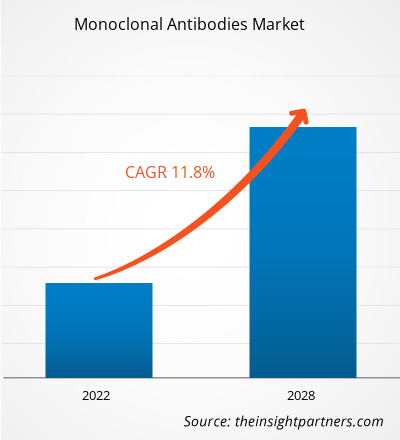
The Monoclonal Antibodies Market is growing rapidly, driven by increasing end-user demand due to factors such as evolving consumer preferences, technological advancements, and greater awareness of the product's benefits. As demand rises, businesses are expanding their offerings, innovating to meet consumer needs, and capitalizing on emerging trends, which further fuels market growth.
Monoclonal Antibodies Market Share Analysis by Geography
North America dominated the monoclonal antibodies market. The dominance of this region is gaining traction due to robust healthcare infrastructure, high R&D spending, and the presence of major pharmaceutical companies. Along with this, the U.S. government is actively supporting biotechnological advancements and drug development. Emerging markets in South & Central America, the Middle East, and Africa also have many untapped opportunities for monoclonal antibody providers to expand.
The monoclonal antibodies market shows a different growth trajectory in each region due to factors such as advanced healthcare systems, regulatory frameworks, disease prevalence, and investment in biopharmaceutical research. Below is a summary of market share and trends by region:
1. North America
- Market Share: Holds the highest market share, driven by robust R&D infrastructure, high adoption of advanced therapies, and significant healthcare expenditure.
- Key Drivers:
- High prevalence of chronic diseases like cancer and autoimmune disorders.
- Presence of leading biopharmaceutical companies and research institutions.
- Supportive regulatory environment for drug development.
- Trends: Focus on novel drug delivery systems, personalized medicine, and biosimilar approvals.
2. Europe
- Market Share: Significant market share, influenced by favorable reimbursement policies and increasing awareness of mAb therapies.
- Key Drivers:
- Aging population and rising incidence of chronic diseases.
- Government initiatives supporting pharmaceutical innovation.
- Growing adoption of biosimilars due to cost-effectiveness.
- Trends: Emphasis on real-world evidence for drug effectiveness and expansion of therapeutic indications for existing mAbs.
3. Asia Pacific
- Market Share: The fastest-growing regional market driven by improving healthcare infrastructure, rising disposable incomes, and increasing patient awareness in countries like China, India, and Japan.
- Key Drivers:
- Large patient pool and increasing prevalence of chronic diseases.
- Growing investment in healthcare and biopharmaceutical R&D.
- Expansion of domestic manufacturing capabilities for mAbs and biosimilars.
- Trends: Rapid adoption of biosimilars, focus on local drug development, and increased access to advanced therapies.
4. South and Central America
- Market Share: Emerging region with growing adoption of advanced therapies due to improving healthcare access and economic growth.
- Key Drivers:
- Increasing healthcare spending and modernization of healthcare systems.
- Rising prevalence of chronic and infectious diseases.
- Efforts to expand access to innovative treatments.
- Trends: Development of local production capabilities, expansion of biosimilar markets, and international collaborations for drug access.
5. Middle East and Africa
- Market Share: Emerging market with strong growth potential, led by healthcare reforms and increasing investment in the pharmaceutical sector in countries like the UAE, Saudi Arabia, and South Africa.
- Key Drivers:
- Government initiatives to enhance healthcare services and infrastructure.
- Rising awareness and demand for advanced therapeutic options.
- Strategic partnerships between local and international pharmaceutical companies.
- Trends: Focus on developing local biopharmaceutical industries, increasing adoption of targeted therapies, and addressing unmet medical needs.
Monoclonal Antibodies Market Players Density: Understanding Its Impact on Business Dynamics
The monoclonal antibodies market is witnessing intensified competition due to the presence of major global pharmaceutical and biotechnology companies alongside emerging niche players and specialized startups. Companies are actively innovating to strengthen their market position and meet the growing demand for targeted and effective treatments across various diseases.
The competitive landscape is driving vendors to differentiate through:
- Organizations are adopting advanced protein engineering techniques to develop novel mAb constructs with improved efficacy, reduced immunogenicity, and enhanced safety profiles.
- Solutions now include combination therapies that integrate mAbs with other drugs, increasing therapeutic effectiveness and addressing complex disease mechanisms.
- With stringent regulatory requirements for drug approval and patient safety, organizations are even more focused on robust clinical trials and post-market surveillance to ensure compliance and build trust with healthcare providers and patients.
Opportunities and Strategic Moves
- Pharmaceutical companies are leveraging R&D to deliver highly specific and potent mAb therapies for previously untreatable conditions, opening new revenue streams through superior clinical outcomes and patent protection.
- Through strategic partnerships, mergers, and acquisitions, companies are building diverse pipelines, expanding geographic reach, and integrating new technologies for drug discovery and development, leading to meaningful investments in next-generation mAb therapies.
- Large players are either acquiring or collaborating with smaller biotech startups to bring in innovative platforms and specialized expertise in areas such as bispecific antibodies, antibody-drug conjugates (ADCs), and gene editing technologies.
Major Companies Operating in the Monoclonal Antibodies Market Are:
- Novartis AG
- Pfizer Inc.
- GlaxoSmithKline plc
- Amgen, Inc
- Daiichi Sankyo Company, Limited
- F. Hoffmann-La Roche AG
- AstraZeneca
- Elli Lilly and Company
- Bayer AG
Disclaimer: The companies listed above are not ranked in any particular order.
Monoclonal Antibodies Market News and Recent Developments
- For instance, on November 19, 2025, Novartis today presented new ianalumab data in Sjögren’s disease, the second most prevalent rheumatic autoimmune disease, at a late-breaker presentation during the American College of Rheumatology Convergence congress.
- On September 09, 2025, Novartis announced that it has agreed to acquire Tourmaline Bio, Inc., a New York-based, publicly traded clinical-stage biopharmaceutical company focused on developing pacibekitug, an anti-IL-6 mAb, as a treatment option for atherosclerotic cardiovascular disease. Pacibekitug complements Novartis’ cardiovascular strategy by targeting IL-6, a key upstream cytokine that promotes systemic inflammation, thus addressing a critical unmet need. With Phase 21 trials already well advanced, Novartis will acquire a Phase 3-ready asset that will complement its existing cardiovascular disease portfolio.
- On September 07, 2025, Ifinatamab deruxtecan is a specifically engineered, potential first-in-class B7-H3 directed DXd antibody drug conjugate (ADC) discovered by Daiichi Sankyo and being jointly developed by Daiichi Sankyo and Merck & Co., Inc., Rahway, N.J., USA, known as MSD outside of the United States and Canada.
Monoclonal Antibodies Market Report Coverage and Deliverables
The "Monoclonal Antibodies Market Size and Forecast (2021–2034)" report provides a detailed analysis of the market covering below areas:
- Monoclonal Antibodies Market size and forecast at global, regional, and country levels for all the key market segments covered under the scope
- Monoclonal Antibodies Market trends, as well as market dynamics such as drivers, restraints, and key opportunities
- Detailed PEST and SWOT analysis
- Monoclonal Antibodies Market analysis covering key market trends, global and regional framework, major players, regulations, and recent market developments
- Industry landscape and competition analysis covering market concentration, heat map analysis, prominent players, and recent developments in the Monoclonal Antibodies Market. Detailed company profiles
Frequently Asked Questions

- Comprehensive Market Sizing and Forecast Analysis
- Detailed Segmentation Analysis
- In-Depth Market Dynamics Assessment
- Regional and Country-Level Insights
- Competitive Landscape and Company Benchmarking
- Strategic Business Intelligence
Recent Reports
Testimonials

The Insight Partners' SCADA System Market report is comprehensive, with valuable insights on current trends and future forecasts. The team was highly professional, responsive, and supportive throughout. We are very satisfied and highly recommend their services.
RAN KEDEM Partner, Reali Technologies LTDs
I requested a report on a very specific software market and the team produced the report in a few days. The information was very relevant and well presented. I then requested some changes and additions to the report. The team was again very responsive and I got the final report in less than a week.
JEAN-HERVE JENN Chairman, Future Analytica
We worked with The Insight Partners for an important market study and forecast. They gave us clear insights into opportunities and risks, which helped shape our plans. Their research was easy to use and based on solid data. It helped us make smart, confident decisions. We highly recommend them.
PIYUSH NAGPAL Sr. Vice President, High Beam Global
The Insight Partners delivered insightful, well-structured market research with strong domain expertise. Their team was professional and responsive throughout. The user-friendly website made accessing industry reports seamless. We highly recommend them for reliable, high-quality research services
YUKIHIKO ADACHI CEO, Deep Blue, LLC.
This is the first time I have purchased a market report from The Insight Partners.While I was unsure at first, I visited their web site and felt more comfortable to take the risk and purchase a market report.I am completely satisfied with the quality of the report and customer service. I had several questions and comments with the initial report, but after a couple of dialogs over email with their analyst I believe I have a report that I can use as input to our strategic planning process.Thank you so much for taking the extra time and making this a positive experience.I will definitely recommend your service to others and you will be my first call when we need further market data.
JOHN SUZUKI President and Chief Executive Officer, Board Director, BK Technologies
I wish to appreciate your support and the professionalism you displayed in the course of attending to my request for information regarding to infectious disease IVD market in Nigeria. I appreciate your patience, your guidance, and the fact that you were willing to offer a discount, which eventually made it possible for us to close a deal. I look forward to engaging The Insight Partners in the future, all thanks to the impression you have created in me as a result of this first encounter.
DR CHIJIOKE ONYIA MANAGING DIRECTOR, PineCrest Healthcare Ltd.Reason to Buy
- Informed Decision-Making
- Understanding Market Dynamics
- Competitive Analysis
- Identifying Emerging Markets
- Customer Insights
- Market Forecasts
- Risk Mitigation
- Boosting Operational Efficiency
- Strategic Planning
- Investment Justification
- Tracking Industry Innovations
- Aligning with Regulatory Trends





 Get Free Sample for