
Pelletizer Market Demand, Trends & Forecast by 2034
Coverage: By Type (Strand Palletizing System, Underwater Palletizing System); Application (Petrochemical Industry, Plastic recycling industry, Others) , and Geography (North America, Europe, Asia Pacific, and South and Central America)
- Status : Data Released
- Report Code : TIPRE00021337
- Category : Manufacturing and Construction
- No. of Pages : 150
- Available Report Formats :


- Last update date : August 06, 2026


2025 Market Size
US$ 5.05 Bn
Base year value
2034 Forecast
US$ 10.77 Bn
Projected by 2034
CAGR 2026-2034
8.79 %
Growth rate
Addressable Market
US$ 70.91 Bn
(2026-2034)
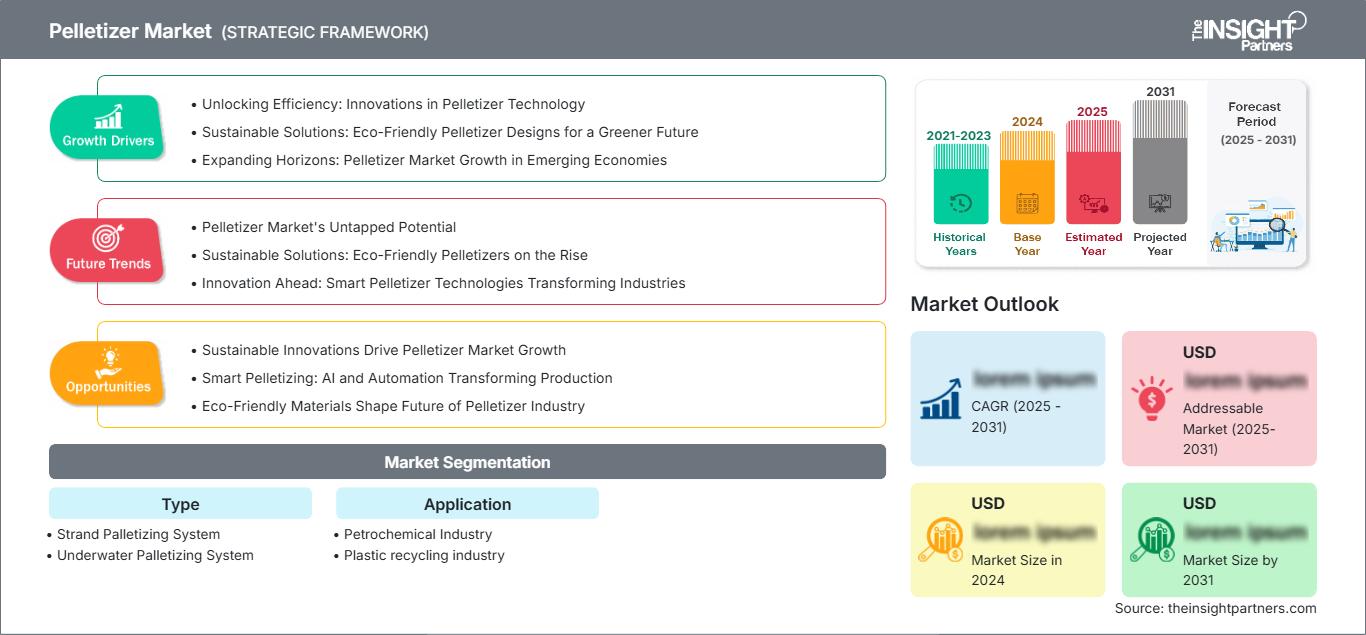
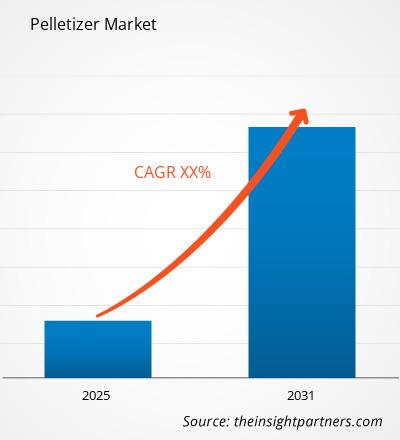
The Pelletizer Market is projected to grow from US$ 5.05 Billion in 2025 to US$ 10.77 Billion by 2034, registering a CAGR of 8.79% during 2026–2034. Demand is tied to polymer compounding, recycling, and petrochemical pellet production, where consistent pellet geometry supports higher downstream processing efficiency. Equipment modernization is also rising as processors seek lower dust generation, reduced strand breaks, and stable throughput across diverse resin grades.
Across North America, replacement demand is expected to support an estimated 8.1–8.6% CAGR as polymer processors upgrade aging lines and recyclers add higher-capacity systems. The Pelletizer Market size in the region is influenced by resin capacity additions, post-consumer recycled-content targets, and reshoring of compounding operations. U.S. investments in packaging, automotive lightweighting, and specialty plastics are creating a steady pipeline for strand and underwater pelletizing systems.
Pelletizer Market Assessment and Insights
- North America accounted for 28–31% share in 2025 and is projected to grow at an 8.1–8.6% CAGR during 2026–2034, supported by recycling mandates, petrochemical integration, and high automation adoption.
- US represented 72–76% of North America in 2025 and is expected to expand at an 8.2–8.7% CAGR, led by compounding and recycled resin demand.
- Europe held 24–27% share in 2025 and is forecast to grow at a 7.6–8.2% CAGR, with Germany, the UK, France, Italy, and Spain driving sustainable polymer processing.
- Asia Pacific captured 33–36% share in 2025 and is projected to grow at a 9.4–10.1% CAGR, led by China, India, Japan, and South Korea manufacturing expansion.
- Largest Segment Underwater Palletizing System held 56–60% market share in 2025 and is expected to grow at an 8.6–9.1% CAGR, reflecting high-volume petrochemical adoption.
- High Growth Segment Plastic recycling industry held 34–38% market share in 2025 and is projected to grow at a 9.5–10.2% CAGR as recycled polymer quality requirements rise.
- Key companies analyzed in detail: Coperion GmbH, CROWN Machine uwp, Inc., ECON GmbH, Farrel Pomini, MAAG Group, Margo Industries, Nanjing Chuangbo Machinery Co., Ltd., Nanjing Cowin Extrusion Machinery Co., Ltd., Nanjing Juli Chemical Machinery Co., Ltd., and Nordson Corporation.
Source: The Insight Partners' analysis based on proprietary research, government publications, company annual reports, investor presentations, industry databases, and expert interviews.
Pelletizing machines have evolved from relatively mechanical cutting lines to sophisticated systems featuring filtration of the melt, automated blade control, temperature control loops, and digital sensing. In other words, today processors look at the pelletizing machinery in the context of a comprehensive extrusion system rather than a separate machine. In this sense, the demand drivers for pelletizing machinery are material variability, resin viscosity control, human resources presence, and quality assurance considerations in petrochemical and recycling plants requiring consistent pellets for injection molding, extrusion, and compounding operations.
In the future, demand will be driven by developments in Asia Pacific, the Gulf, and North America regions that are experiencing development of both new polymer production capacity and circular economy infrastructure at the same time. The Pelletizer Market also benefits from modular systems that allow producers to scale throughput, switch polymers faster, and improve uptime without rebuilding complete extrusion plants.
Pelletizer Market Report Scope
| Report Attribute | Details |
|---|---|
| Market size in 2025 | US$ 5.05 Billion |
| Market Size by 2034 | US$ 10.77 Billion |
| Global CAGR (2026 - 2034) | 8.79% |
| Historical Data | 2021-2024 |
| Forecast period | 2026-2034 |
Pelletizer Market Analysis
The main demand pull comes from polymer producers, compounders, and recyclers that need uniform pellet size to reduce feeding variation in downstream equipment. Pelletizer Market growth is reinforced by packaging resin consumption, engineering plastics for mobility, and recycled polyolefin use. Processors increasingly prioritize pellet quality, water management, and automation because inconsistent pellets create scrap, dosing errors, and lower finished-part performance.
The value chain covers extruder suppliers, manufacturers of die plates, cutting systems, dryers, software controls, and services. Supply conditions are favorable to suppliers who have aftermarket networks in place, since knives, die plates, and wear parts need regular replacement. More and more, faster installation times and remote diagnostics have become key distinguishing factors, particularly for facilities working with a range of polymers or reclaimed materials of fluctuating contamination levels.
Competitive positioning revolves around product line and regional presence. Coperion GmbH, MAAG Group, ECON GmbH, Nordson Corporation, Farrel Pomini, and CROWN Machine uwp, Inc. compete based on underwater processing equipment, extrusion expertise, and integration solutions. The market review has also shown that there are increasing signs of importance of Nanjing Chuangbo Machinery Co., Ltd., Nanjing Cowin Extrusion Machinery Co., Ltd., and Nanjing Juli Chemical Machinery Co., Ltd. in cost-effective Asian projects.
The trends in investment reveal that consumers tend to move away from machines with minimum capital cost towards lifecycle purchasing. Manufacturers consider energy consumption, pellet homogeneity, parts availability, and loop performance in choosing a project. Margo Industries, among others, focuses on special applications, while major manufacturers increase automation and make their equipment more compact in order to protect their margins.
● REPORT CUSTOMIZATION
Tailor This Report To Align With Your Specific Business Requirements
This report can be customized to align precisely with your business objectives, scope, and target markets. Customization options include tailored segmentation, geography, competitive analysis, and strategic insights to support informed decision-making.
Customize This Report →WHAT YOU CAN ADJUST
- ● Segmentations
- ● Geography
- ● Competitive Analysis
- ● Language Preferences
Pelletizer Market: Strategic Insights
Regional Insights
North America Pelletizer Market
North America held 28–31% share in 2025 and is expected to grow at an 8.1–8.6% CAGR through 2034. The Pelletizer Market share in the region is supported by resin producers, packaging converters, and recyclers upgrading lines for consistent pellet geometry. U.S. Gulf Coast petrochemical assets and Canadian recycling investments are creating demand for high-throughput systems.
Factors contributing to structural drivers comprise recycled content legislation, industrial automation, and updating of older strand lines. The purchasers prefer machines that offer easy access to die plates, steady water flow and predictive maintenance. Service availability is important since pelletizing machine breakdown can affect production from compounding, making parts availability and commissioning an essential factor in purchases.
U.S. Pelletizer Market
The U.S. Plastic Pelletizer Market accounted for 72–76% of North America in 2025 and is projected to expand at an 8.2–8.7% CAGR. Demand is driven by polyethylene, polypropylene, resin compounding, and recycling of plastics. Local converters utilize pelletizers to ensure uniformity of feedstocks for packaging, automotive, electrical, and consumer products applications. Increased investments in circular economy projects and recycled resin manufacturing have also increased the demand for modern pelletizers with improved capacity and quality control features.
Companies have extensive coverage through Coperion GmbH, Nordson Corporation, Farrel Pomini, CROWN Machine UWP, Inc., and MAAG Group distribution networks. Trends in application areas include underwater pelletizers for larger volume petrochemical facilities, while strand pelletizers are used in flexible compounding units. Recyclers are now specifying filtration capability, low dust generation, and automation in dealing with mixed resin feedstocks. Demand for efficient, environmentally friendly, and high-performance pelletizers for the production of quality pellets from virgin or recycled polymers is on the rise.
Europe Pelletizer Market
Europe represented 24–27% of the Plastic Pelletizer Market share in 2025 and is forecast to grow at a 7.6–8.2% CAGR. Germany leads regional demand through machinery expertise, specialty polymers, and recycling equipment investment. The UK is developing recycled content packaging legislation, increasing the need for systems that can pelletize post-consumer material while ensuring consistency and efficient production.
France, Italy, and Spain add value through packaging, auto parts, and circular economy solutions. The Europeans have their key focuses on energy efficiency, enclosed water circuits, soundproofing, and process repeatability documentation. More emphasis by authorities on plastics recycling and usage of recycled material is also pushing companies to invest in state-of-the-art pelletizing technology. Proximity of suppliers is the strength of MAAG Group, Coperion GmbH, and ECON GmbH; meanwhile, imports from Asian companies are still relevant.
APAC Pelletizer Market
APAC held 33–36% of the Plastic Pelletizer Market share in 2025 and is projected to grow at a 9.4–10.1% CAGR, making it the fastest-expanding region. The dominance of China is due to the big petrochemical sector of the country. As for India, the demand comes from the use of packaging, recycling, and compounding.
Recycling policies, local machinery manufacture, and industrial capacities are still being encouraged within the region. Australia provides smaller amounts of demand through investments into recycling facilities and specialty polymer compounding.
The increasing amount of plastic consumption, the development of circular economy initiatives, and the development of polymer production capacity are all raising the demand for pelletizing machines. The suppliers in the region, such as Nanjing Chuangbo Machinery Co., Ltd., Nanjing Cowin Extrusion Machinery Co., Ltd., and Nanjing Juli Chemical Machinery Co., Ltd., operate at lower prices, offer customized solutions, and provide good local customer support.
Middle East & Africa Pelletizer Market
Middle East & Africa is expected to grow at a 7.1–7.8% CAGR as petrochemical diversification and recycling infrastructure progress. Saudi Arabia leads through polymer capacity and downstream conversion, while the UAE supports plastics processing and trade-linked manufacturing. South Africa remains the main sub-Saharan demand center.
Energy-linked industrial strategies favor pelletizers that integrate with resin production and compounding facilities. Rest of MEA demand is project-based, often tied to packaging and pipe extrusion. Buyers prioritize robust machines, remote support, and easy maintenance because technical-service availability can vary across industrial zones.
Segmentation Analysis
Type
Type is projected to grow at an 8.3–8.9% CAGR during 2026–2034, reflecting adoption of both strand and underwater designs. The market scope by type is shaped by resin viscosity, throughput needs, operating cost, and maintenance capability. Underwater systems suit continuous high-volume lines, while strand systems remain relevant where flexibility, lower initial cost, and simpler operation are decisive.
- Strand Palletizing System remains important for compounders requiring operational flexibility, easier maintenance, and cost-efficient processing across smaller production campaigns, especially where material changes are frequent.
- Underwater Palletizing System leads high-throughput production because it delivers uniform pellets, lower dust, and better thermal control for polyolefins, engineering plastics, and demanding petrochemical applications.
Application
Application is expected to grow at an 8.8–9.4% CAGR during 2026–2034 as petrochemical producers and recyclers invest in consistent pellet output. Demand varies by feedstock purity, polymer grade, and plant scale. Petrochemical applications need uninterrupted production, while recycling applications emphasize filtration, contaminant tolerance, and pellet quality that can satisfy converters using recycled resin.
- Petrochemical Industry remains the largest application because integrated resin producers require reliable pelletizers for continuous polyolefin, specialty polymer, and compound production at commercial scale.
- Plastic recycling industry is the fastest-growing application as recyclers seek cleaner pellets, higher melt stability, and equipment capable of handling variable post-consumer and post-industrial inputs.
Opportunity Snapshot
| Application | Revenue Contribution | Trend Tag | Adoption Stage |
| Petrochemical Industry | High | Resin Scale | Mature |
| Plastic recycling industry | Medium | Clean Pellets | Scaling |
Pelletizer Market Growth Drivers and Impact Analysis
Rising recycled resin quality requirements
Recycling companies have been shifting from using low-grade regrinds to pellets that can be used in the supply chain of packaging, automotive, and durables. This change is leading to a higher requirement for pellet machines that keep constant cut length, minimal fines, and consistency in moisture content regardless of the input material variation. It makes sense from an operations point of view as high-quality pellets will generate more sales and minimize conversion loss. Machines that feature filtration system, automatic blade pressure, and drying capacity will help recyclers turn varied wastes into consistent feedstock.
Expansion of petrochemical and compounding capacity
For new and larger resin facilities, the demand is for continuous and uninterrupted pelletization operations at commercial capacity levels. Pellet consistency is essential for polyolefin, elastomer, and engineered polymer producers to safeguard their downstream logistics, packaging, and processing efficiency. This is particularly true in situations where petrochemical complexes expand their capacities with the addition of compounding and specialty grades adjacent to the resins facility. From a machinery provider standpoint, the effect is an increased number of units sold and supported through underwater pelletizing systems and spare parts.
Automation-led reduction in operating variability
Labor limitations and more stringent quality requirements are pushing plants towards pelletizers that have sensors, recipes, and predictive maintenance capabilities. Automation eliminates the need for human intervention when changing grades, changing knives, and starting up, resulting in higher productivity. The effect on the market goes further than labor savings since consistent pellet shape ensures better feeding and fewer processing problems. Companies that provide connected controls will be able to diagnose remotely and benchmark performance, which is important for multiple-plant companies. It is an important factor for replacement sales in mature markets and automation sales in new production centers.
Pelletizer Market Future Trends
Integrated pelletizing and melt filtration platforms
Future procurement will increasingly favor pelletizing platforms supplied with filtration, drying, water treatment, and control modules as one engineered package. This trend reduces integration risk for plants handling recycled or specialty polymers, where melt contamination and moisture variation can undermine pellet quality. Pelletizer Market trends will therefore move toward turnkey process cells that combine mechanical reliability with digital quality monitoring. Suppliers that can validate performance before installation will gain stronger positions with converters, recyclers, and resin producers. The shift also supports aftermarket revenue because integrated packages create recurring demand for filters, cutters, sensors, and process optimization services.
Compact systems for decentralized recycling plants
Decentralized recycling capacity is expected to create demand for compact pelletizers that fit smaller plants near waste collection and conversion centers. These systems must balance lower footprint with acceptable throughput, easy cleaning, and resilience to mixed input streams. Modular design will matter because recyclers may scale gradually as supply contracts mature. Suppliers can differentiate through fast installation, simplified maintenance, and controls that help operators with limited technical staff. This trend broadens the addressable customer base beyond large resin producers and supports regional circular-economy models.
Pelletizer Market Opportunities
Lifecycle service contracts for high-utilization plants
Equipment suppliers have a clear opportunity to convert installed-base growth into recurring service revenue. High-utilization pelletizing lines require replacement knives, die plates, seals, screens, and dryers, making planned maintenance essential for production continuity. Vendors can package remote monitoring, spare-parts forecasting, and operator training into contracts that reduce unplanned downtime. This approach is attractive for petrochemical plants and recyclers because pelletizer failure can stop an entire extrusion line. Service-led models also strengthen customer retention and provide suppliers with operating data that supports future product improvements.
Application-specific systems for recycled plastics
Recycling customers need pelletizers configured for difficult feedstocks rather than standard resin lines. Suppliers can target this opportunity by offering packages for polyethylene film, polypropylene rigid waste, PET flakes, and mixed industrial scrap. Each package can include appropriate filtration, cutter geometry, dryer sizing, and control recipes. The commercial value lies in helping recyclers produce pellets that meet converter specifications with fewer rejected batches. As more brands seek recycled material, suppliers that understand application constraints can move from equipment vendors to process partners.
Recent Developments
- April 2026: Coperion GmbH announced optimization of its Eccentric Pelletizer EGR, emphasizing improved quality and lower energy use for pelletizing operations. The update reflects vendor focus on lifecycle efficiency, process stability, and operating-cost reduction for plastics producers.
- June 2026: MAAG has introduced M²-USG generation, a system designed to deliver enhanced process stability, higher throughput and consistently superior pellet quality. The design improvements combined with advanced sensor integration enable customers to achieve reliable production and improved operational efficiency. MAAG systems are engineered to produce uniform, cylindrical pellets with minimal fines.
- August 2025: MAAG Group will present an expanded portfolio of integrated system solutions for pelletizing, extrusion, filtration, recycling, and measurement and controls at K Show in Duesseldorf. The company plans to unveil product developments aimed at process stability, throughput and consistent pellet quality across virgin polymer, recycling and compounding applications.
Frequently Asked Questions

- Comprehensive Market Sizing and Forecast Analysis
- Detailed Segmentation Analysis
- In-Depth Market Dynamics Assessment
- Regional and Country-Level Insights
- Competitive Landscape and Company Benchmarking
- Strategic Business Intelligence
Recent Reports
Testimonials

The Insight Partners' SCADA System Market report is comprehensive, with valuable insights on current trends and future forecasts. The team was highly professional, responsive, and supportive throughout. We are very satisfied and highly recommend their services.
RAN KEDEM Partner, Reali Technologies LTDs
I requested a report on a very specific software market and the team produced the report in a few days. The information was very relevant and well presented. I then requested some changes and additions to the report. The team was again very responsive and I got the final report in less than a week.
JEAN-HERVE JENN Chairman, Future Analytica
We worked with The Insight Partners for an important market study and forecast. They gave us clear insights into opportunities and risks, which helped shape our plans. Their research was easy to use and based on solid data. It helped us make smart, confident decisions. We highly recommend them.
PIYUSH NAGPAL Sr. Vice President, High Beam Global
The Insight Partners delivered insightful, well-structured market research with strong domain expertise. Their team was professional and responsive throughout. The user-friendly website made accessing industry reports seamless. We highly recommend them for reliable, high-quality research services
YUKIHIKO ADACHI CEO, Deep Blue, LLC.
This is the first time I have purchased a market report from The Insight Partners.While I was unsure at first, I visited their web site and felt more comfortable to take the risk and purchase a market report.I am completely satisfied with the quality of the report and customer service. I had several questions and comments with the initial report, but after a couple of dialogs over email with their analyst I believe I have a report that I can use as input to our strategic planning process.Thank you so much for taking the extra time and making this a positive experience.I will definitely recommend your service to others and you will be my first call when we need further market data.
JOHN SUZUKI President and Chief Executive Officer, Board Director, BK Technologies
I wish to appreciate your support and the professionalism you displayed in the course of attending to my request for information regarding to infectious disease IVD market in Nigeria. I appreciate your patience, your guidance, and the fact that you were willing to offer a discount, which eventually made it possible for us to close a deal. I look forward to engaging The Insight Partners in the future, all thanks to the impression you have created in me as a result of this first encounter.
DR CHIJIOKE ONYIA MANAGING DIRECTOR, PineCrest Healthcare Ltd.Reason to Buy
- Informed Decision-Making
- Understanding Market Dynamics
- Competitive Analysis
- Identifying Emerging Markets
- Customer Insights
- Market Forecasts
- Risk Mitigation
- Boosting Operational Efficiency
- Strategic Planning
- Investment Justification
- Tracking Industry Innovations
- Aligning with Regulatory Trends





 Get Free Sample for