
Pet Wearable Market Size, Share & Demand by 2034
Coverage: by Technology (RFID, GPS, Sensors, Bluetooth), By Product (Smart Collar, Smart Vest, Smart Harness, Smart Camera); Application (Diagnosis & Treatment, Identification & Tracking, Fitness Monitoring, Behavior Monitoring); End-Use (Household, Commercial) , and Geography (North America, Europe, Asia Pacific, and South and Central America)
- Status : Data Released
- Report Code : TIPTE00002191
- Category : Electronics and Semiconductor
- No. of Pages : 150
- Available Report Formats :


- Last update date : October 13, 2026


2025 Market Size
US$ 3.45 Bn
Base year value
2034 Forecast
US$ 13.08 Bn
Projected by 2034
CAGR 2026-2034
15.94 %
Growth rate
Addressable Market
US$ 69.89 Bn
(2026-2034)
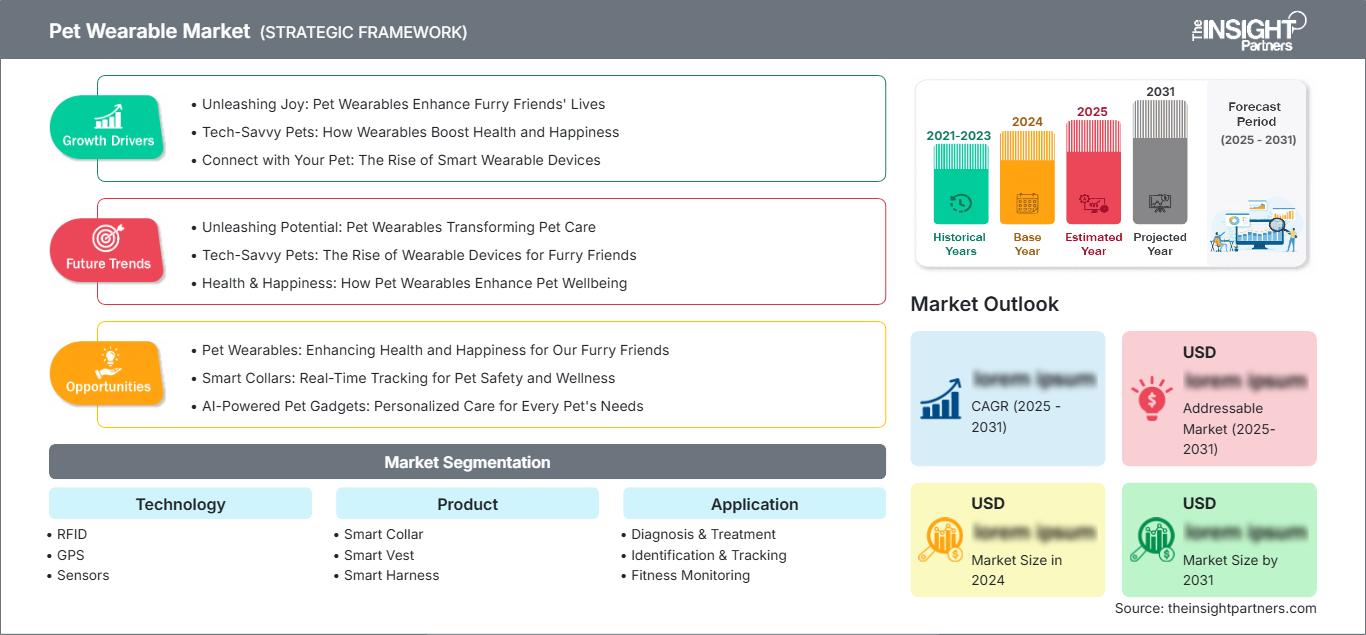
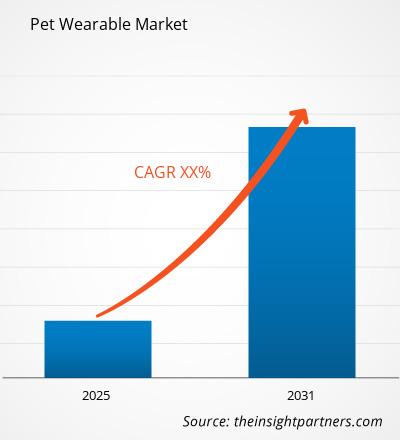
The pet wearable market is witnessing rapid expansion as connected pet care solutions become an integral part of companion animal health management and safety. The market was valued at US$ 3.45 Billion in 2025 and is projected to reach US$ 13.08 Billion by 2034, registering a CAGR of 15.94% during 2026–2034. Rising pet ownership, increasing spending on preventive healthcare, and growing adoption of IoT-enabled monitoring devices continue to accelerate market development.
Across North America, increasing consumer awareness regarding pet wellness and higher adoption of digital veterinary technologies continue to strengthen demand. The pet wearable market size is supported by expanding subscriptions for GPS tracking, activity monitoring, and health analytics solutions. The regional market is expected to grow at a CAGR of 15.1%–15.9% during 2026–2034, driven by premium pet care expenditure, advanced connectivity infrastructure, and increasing integration of AI-powered health monitoring.
Pet Wearable Market Assessment and Insights
- North America: Accounted for 37%–40% share in 2025 and is expected to register a CAGR of 15.1%–15.9% during 2026–2034. High pet ownership, strong veterinary infrastructure, and increasing adoption of connected pet care devices continue supporting regional market expansion.
- U.S.: Represented 78%–82% of the North American market in 2025 and is projected to grow at a CAGR of 15.2%–16.0% during 2026–2034, supported by increasing expenditure on premium pet healthcare and connected monitoring technologies.
- Europe: Held 24%–27% share in 2025 and is forecast to expand at a CAGR of 14.6%–15.4% during 2026–2034. Germany, the United Kingdom, and France remain major contributors through rising companion animal adoption and digital veterinary services.
- Asia Pacific: Accounted for 25%–28% share in 2025 and is anticipated to register the fastest regional growth with a CAGR of 17.2%–18.0% during 2026–2034. China, Japan, South Korea, and Australia are leading adoption through growing disposable income and expanding pet care ecosystems.
- Largest Segment: Smart Collar accounted for 41%–45% market share in 2025 and is projected to grow at a CAGR of 16.0%–16.8% during 2026–2034, driven by widespread demand for GPS tracking, activity monitoring, and health management features.
- High Growth Segment: Diagnosis & Treatment represented 17%–20% market share in 2025 and is expected to expand at a CAGR of 18.1%–18.9% during 2026–2034, supported by AI-enabled health monitoring and remote veterinary care.
- Key companies analyzed in detail: FitBark, Inc.; Voyce; Binatone Global; Xiaomi Corporation; Garmin Ltd.; Felcana Ltd.; KYON AG; Loc8tor Ltd.; PetPace LLC; Tractive GmbH.
Source: The Insight Partners' analysis based on proprietary research, government publications, company annual reports, investor presentations, industry databases, and expert interviews.
Development in the field of miniaturized sensors, wireless connectivity, cloud-based computing, and artificial intelligence has led to tremendous changes in wearable tech industry for pets in the last ten years. Modern producers offer multifunctional wearables capable of detecting activity, location, vital statistics, quality of sleep, and behavior using mobile apps. The innovations in the wearable tech industry have moved away from simple identification devices to smart health-monitoring systems for pet owners and veterinarians. In addition, development in terms of battery optimization, waterproof material, and weight reduction has made pet wearable devices more user-friendly.
Future growth in the industry will likely result from the increasing digitalization of veterinary practices, pet insurances, and preventive animal healthcare measures. The rise of pet ownership and increasing disposable income in emerging economies is conducive to the development of premium wearable devices. Investing in AI-driven analytics and telemedicine services, as well as pet ecosystems will contribute to further commercialization of the market and partnerships between technologists and veterinary clinics.
Pet Wearable Market Report Scope
| Report Attribute | Details |
|---|---|
| Market size in 2025 | US$ 3.45 Billion |
| Market Size by 2034 | US$ 13.08 Billion |
| Global CAGR (2026 - 2034) | 15.94% |
| Historical Data | 2021-2024 |
| Forecast period | 2026-2034 |
Pet Wearable Market Analysis
The pet wearable market growth is mainly attributed to the increased consciousness about preventative health care of pets and the growing inclination of consumers toward investing in connected tracking devices. Pet owners are looking for products that would continuously monitor their pets' physical activities, location, heart rate, sleep habits, and behavior changes for better well-being of their pets. Increasing acceptance of companion animals along with the growing need for remote health monitoring and early diagnosis of diseases continues to fuel the growth in developed and developing economies.
The business environment in this market is being shaped through collaboration between the manufacturers of wearable devices, veterinary health care providers, software firms in cloud computing, mobile applications, and telecom service providers. Development in GPS, biometrics, Bluetooth, and artificial intelligence has made possible the creation of multi-function wearables capable of providing personalized health data and aiding preventative veterinary health care. Recurring subscription-based digital services are also contributing towards revenues and customer engagement.
The Pet Wearable Market analysis reveals that competition is shifting towards AI-based analytics, accurate devices, subscription models, and veterinary healthcare solutions. The companies make investments into cloud-based monitoring systems, predictive health analytics tools, and improvements in battery technology in order to achieve competitive advantage. Innovation in the development of products becomes crucial due to the competition among the manufacturers to offer integrated pet wellness solutions rather than only trackers.
Among leading companies such as FitBark, Inc., Garmin Ltd., Tractive GmbH, Xiaomi Corporation, PetPace LLC, Binatone Global, Felcana Ltd., KYON AG, Loc8tor Ltd., and Voyce, the expansion of product portfolios through intelligent sensors, mobile apps, and cloud-based health monitoring solutions continues. The strategies for making investment become more oriented on artificial intelligence, machine learning, subscription models, and veterinary collaboration in order to enhance customer retention.
● REPORT CUSTOMIZATION
Tailor This Report To Align With Your Specific Business Requirements
This report can be customized to align precisely with your business objectives, scope, and target markets. Customization options include tailored segmentation, geography, competitive analysis, and strategic insights to support informed decision-making.
Customize This Report →WHAT YOU CAN ADJUST
- ● Segmentations
- ● Geography
- ● Competitive Analysis
- ● Language Preferences
Pet Wearable Market: Strategic Insights
Regional Insights
North America Pet Wearable Market
North America accounted for 37%–40% of the pet wearable market share in 2025 and is projected to expand at a CAGR of 15.1%–15.9% during 2026–2034. Increasing pet adoption, investment in animal health care, and widespread use of IoT enabled technologies in the region remain key drivers behind the growth of the market. Owners prefer to use wearable devices to track the health condition, level of activity, and the real-time position of their pets, and vet clinics are starting to implement digital health tracking tools into prevention programs. Good availability of broadband Internet and widespread use of smartphones facilitate adoption of cloud-enabled pet tracking solutions.
Attractive pet insurance ecosystem and increasing awareness of preventive animal healthcare solutions make the region attractive in terms of growth opportunities for the market. The development of retail via online channels, the development of wellness subscription plans, and the implementation of AI-powered analysis in wearables create further growth opportunities. Innovation in technologies and vet solutions should ensure adoption of products among both private and business end users.
U.S. Pet Wearable Market
The U.S. represented 78%–82% of the North American market in 2025 and is anticipated to register a CAGR of 15.2%–16.0% through 2034. Rising expenditure on premium pet products, widespread use of connected consumer electronics, and increasing demand for remote veterinary monitoring continue supporting strong domestic demand. Consumers are increasingly adopting wearable technologies to improve pet safety, monitor chronic health conditions, and receive real-time wellness notifications through smartphone applications.
The country also houses many of the leading companies developing technologies for pets, offering veterinary services, and startups offering digital health services, which are continuously investing in monitoring systems empowered by artificial intelligence. The growing popularity of telehealth services among companion pets, along with the increasing use of subscription-based wellness systems and advanced wearables, will support future market growth and drive innovation.
Europe Pet Wearable Market
Europe accounted for 24%–27% of the global market in 2025 and is expected to grow at a CAGR of 14.6%–15.4% during 2026–2034. Germany dominates the regional market due to high pet ownership rates, advanced veterinary facilities, and increased adoption of connected healthcare devices. UK remains to experience high adoption rates due to premium pet healthcare spending and digital veterinary care, while France is fostering growth through increased awareness of companion animal healthcare.
Germany will continue to develop smart pet healthcare technology that will be incorporated in veterinary practices and wellness digital services. UK will continue experiencing high adoption rates due to increased penetration of online retailers and subscription services for pet monitoring services. France, Italy, and Spain will continue developing their markets through increased pet humanization, disposable incomes, and increased adoption of GPS-based safety devices.
APAC Pet Wearable Market
Asia Pacific accounted for 25%–28% of the global market in 2025 and is forecast to register the highest regional CAGR of 17.2%–18.0% during 2026–2034. China, Japan, South Korea, and Australia continue driving demand through increasing pet ownership, rapid urbanization, and expanding consumer spending on premium pet care technologies.
India is emerging as a promising market owing to growing awareness of pet wellness and increasing adoption of digital consumer products. Government support for digital innovation, combined with expanding e-commerce platforms and veterinary healthcare infrastructure, is expected to sustain robust regional growth.
Middle East & Africa Pet Wearable Market
The Middle East & Africa market is projected to grow at a CAGR of 13.4%–14.2% during 2026–2034, supported by increasing pet adoption, expanding veterinary services, and rising investment in digital consumer technologies. Saudi Arabia and the United Arab Emirates are witnessing growing demand for premium pet care products among urban households.
South Africa continues adopting connected pet monitoring devices through expanding veterinary healthcare services and specialty pet retailers. Across the remaining regional markets, improving internet connectivity, higher disposable income, and increasing awareness regarding preventive animal healthcare are expected to encourage broader adoption during the forecast period.
Segmentation Analysis
Technology
The Technology segment is expected to register a CAGR of 15.7%–16.5% during 2026–2034. The pet wearable market scope continues to expand as manufacturers integrate multiple wireless communication technologies and intelligent sensors into compact wearable devices. Advancements in connectivity, battery optimization, and cloud computing are enabling continuous health monitoring, precise location tracking, and behavioral analysis for companion animals across household and commercial environments.
- RFID technology remains widely utilized for permanent pet identification, veterinary record management, shelter operations, and ownership verification due to its reliability, affordability, and compatibility with existing animal identification systems.
- GPS technology enables real-time location tracking, geofencing, route history, and recovery assistance, making it highly valuable for pet owners seeking improved outdoor safety and security.
- Sensors support continuous monitoring of activity levels, body temperature, heart rate, sleep quality, and behavioral changes, enabling preventive healthcare and early detection of potential medical conditions.
- Bluetooth technology facilitates short-range connectivity between wearable devices and smartphones, improving data synchronization, battery efficiency, and user convenience for everyday monitoring applications.
Product
The Product segment is projected to grow at a CAGR of 16.1%–16.9% during 2026–2034. Product innovation continues emphasizing multifunctionality, lightweight materials, ergonomic design, and enhanced durability. Manufacturers increasingly combine health monitoring, GPS tracking, and behavioral analytics into integrated wearable platforms to improve user value and long-term engagement.
- Smart Collar combines GPS tracking, health monitoring, activity measurement, and smartphone connectivity, making it the most widely adopted wearable solution across companion animal applications.
- Smart Vest supports advanced physiological monitoring and rehabilitation programs while providing greater sensor coverage for veterinary diagnostics and professional animal care.
- Smart Harness offers improved comfort and stability for active pets while integrating location tracking, movement analysis, and training assistance within a durable wearable platform.
- Smart Camera enables owners to remotely monitor pet activities, communicate through two-way audio, and collect behavioral insights using AI-powered video analytics.
Application
The Application segment is anticipated to expand at a CAGR of 16.3%–17.1% during 2026–2034. Increasing emphasis on preventive healthcare, behavioral assessment, and real-time monitoring continues driving adoption across veterinary clinics and household environments. Connected wearable devices are enabling more informed decision-making through continuous collection of physiological and behavioral data.
- Diagnosis & Treatment supports early disease detection, chronic condition management, recovery monitoring, and remote veterinary consultations through continuous collection of health-related data.
- Identification & Tracking improves pet safety by enabling real-time location monitoring, geofencing, recovery assistance, and secure digital identification for companion animals.
- Fitness Monitoring allows owners to evaluate exercise levels, calorie expenditure, sleep quality, and daily activity patterns, encouraging healthier lifestyles for companion animals.
- Behavior Monitoring utilizes sensor data and artificial intelligence to identify stress, anxiety, excessive barking, inactivity, and other behavioral patterns requiring attention.
End-Use
The End-Use segment is forecast to grow at a CAGR of 15.5%–16.3% during 2026–2034. Rising consumer awareness, growing adoption of companion animals, and increasing digitalization of veterinary care continue supporting demand across both residential and commercial settings. End users increasingly value wearable technologies that improve safety, health management, and long-term pet wellness.
- Household represents the dominant end-use category as pet owners increasingly adopt connected wearable devices for location tracking, health monitoring, fitness management, and behavioral insights.
- Commercial includes veterinary hospitals, animal shelters, pet boarding facilities, breeding centers, research organizations, and professional training institutions utilizing wearable technologies for monitoring, identification, and health management.
Opportunity Snapshot
| Application | Revenue Contribution | Trend Tag | Adoption Stage |
|---|---|---|---|
| Diagnosis & Treatment | High | AI Health | Scaling |
| Identification & Tracking | High | Live Tracking | Mature |
| Fitness Monitoring | Medium | Wellness Analytics | Scaling |
| Behavior Monitoring | Medium | Behavior AI | Emerging |
Pet Wearable Market Growth Drivers and Impact Analysis
Increasing Humanization of Pets and Preventive Healthcare Adoption
Companion animals are becoming considered part of the family unit, which helps the owner consider investing in innovative healthcare technology for their well-being. The wearable device monitors the activities, heartbeat, sleeping patterns, and behavior of the animal to detect any problems that might be developing at an early stage. It is becoming important with escalating veterinary expenditures because early diagnosis would prove to be a feasible strategy to avoid high costs in treatment. Increased awareness about chronic conditions of companion animals and access to online veterinary practices will help the intelligent pet wearables find more acceptance in both developed and emerging countries in the forecast period.
Advancements in IoT, Artificial Intelligence, and Sensor Technologies
Rapid innovation in IoT connectivity, artificial intelligence, cloud computing, and miniaturized biosensors is significantly improving the capabilities of pet wearable devices. Modern products can analyze health indicators, detect behavioral abnormalities, provide GPS tracking, and generate personalized wellness recommendations through mobile applications. AI-powered algorithms help identify changes in movement patterns, temperature, and activity levels, enabling proactive veterinary intervention. Continuous improvements in battery efficiency, wireless communication, and data analytics are enhancing product performance while making wearable devices more reliable and user-friendly. These technological developments continue expanding commercial opportunities across consumer and professional pet care applications.
Growth of Digital Veterinary Services and Connected Pet Ecosystems
The expansion of telemedicine, digital veterinary consultations, and cloud-based pet health platforms is creating strong demand for connected monitoring devices. Wearable technologies provide veterinarians with continuous physiological and behavioral data that improve diagnostic accuracy and long-term treatment planning. Integration with electronic medical records and subscription-based wellness services enables seamless communication between pet owners and healthcare providers. Increasing collaboration among veterinary clinics, technology developers, insurance companies, and wearable manufacturers is accelerating ecosystem development. As connected pet healthcare becomes more established, wearable technologies are expected to play a central role in preventive care, chronic disease management, and personalized treatment strategies.
Pet Wearable Market Future Trends
Artificial Intelligence Enables Predictive Pet Health Monitoring
Artificial intelligence is becoming a defining technology across connected pet healthcare solutions. The pet wearable market trends indicate increasing adoption of predictive analytics capable of identifying early signs of illness, stress, reduced mobility, and abnormal behavioral patterns. Advanced algorithms continuously evaluate data collected from multiple sensors to generate personalized wellness recommendations and health alerts. Future wearable devices are expected to integrate veterinary databases, cloud analytics, and machine learning models that improve diagnostic accuracy while supporting remote consultations. These capabilities will strengthen preventive care and enhance long-term pet health management.
Subscription-Based Digital Pet Care Platforms Expand Revenue Models
Manufacturers are increasingly complementing hardware sales with recurring subscription services that provide cloud storage, health reports, GPS history, wellness recommendations, and veterinary support. These digital ecosystems encourage long-term customer engagement while creating predictable revenue streams. Integration with mobile applications, telehealth platforms, and smart home ecosystems is expected to improve user experience and strengthen product differentiation. Continued investment in software innovation will accelerate the transition from standalone wearable devices to comprehensive connected pet care platforms.
Pet Wearable Market Opportunities
Expansion into Emerging Pet Care Markets
Rapid urbanization, rising disposable income, and increasing pet ownership across Asia Pacific, Latin America, and parts of the Middle East are creating substantial growth opportunities. The pet wearable market Forecasts indicate that growing awareness of pet wellness and expanding availability of digital veterinary services will accelerate demand for connected wearable technologies. Companies establishing regional distribution networks, localized mobile applications, and affordable subscription services will be well positioned to capture emerging consumer demand. Strategic partnerships with veterinary hospitals and pet retailers can further improve market penetration and customer engagement.
Integration with Veterinary Healthcare and Insurance Services
Wearable technologies are increasingly becoming valuable tools for veterinary clinics and pet insurance providers seeking continuous health monitoring capabilities. Real-time physiological data enables more accurate diagnosis, personalized treatment planning, and proactive disease management. Insurance providers can utilize verified health data to design customized wellness programs and encourage preventive care. Manufacturers that integrate wearable platforms with veterinary software, insurance ecosystems, and telemedicine services are expected to strengthen competitive positioning while creating new recurring revenue opportunities through connected healthcare solutions.
Frequently Asked Questions

- Comprehensive Market Sizing and Forecast Analysis
- Detailed Segmentation Analysis
- In-Depth Market Dynamics Assessment
- Regional and Country-Level Insights
- Competitive Landscape and Company Benchmarking
- Strategic Business Intelligence
Recent Reports
Testimonials

The Insight Partners provided valuable market intelligence that supported our global go-to-market strategy. Their team was professional, responsive, and attentive to our feedback, providing thoughtful analysis and helpful methodological clarifications throughout the project.
Junmo Kim Chief Financial Officer (CFO), Enertech Co., Ltd.
The Insight Partners' SCADA System Market report is comprehensive, with valuable insights on current trends and future forecasts. The team was highly professional, responsive, and supportive throughout. We are very satisfied and highly recommend their services.
RAN KEDEM Partner, Reali Technologies LTDs
I requested a report on a very specific software market and the team produced the report in a few days. The information was very relevant and well presented. I then requested some changes and additions to the report. The team was again very responsive and I got the final report in less than a week.
JEAN-HERVE JENN Chairman, Future Analytica
We worked with The Insight Partners for an important market study and forecast. They gave us clear insights into opportunities and risks, which helped shape our plans. Their research was easy to use and based on solid data. It helped us make smart, confident decisions. We highly recommend them.
PIYUSH NAGPAL Sr. Vice President, High Beam Global
The Insight Partners delivered insightful, well-structured market research with strong domain expertise. Their team was professional and responsive throughout. The user-friendly website made accessing industry reports seamless. We highly recommend them for reliable, high-quality research services
YUKIHIKO ADACHI CEO, Deep Blue, LLC.
This is the first time I have purchased a market report from The Insight Partners.While I was unsure at first, I visited their web site and felt more comfortable to take the risk and purchase a market report.I am completely satisfied with the quality of the report and customer service. I had several questions and comments with the initial report, but after a couple of dialogs over email with their analyst I believe I have a report that I can use as input to our strategic planning process.Thank you so much for taking the extra time and making this a positive experience.I will definitely recommend your service to others and you will be my first call when we need further market data.
JOHN SUZUKI President and Chief Executive Officer, Board Director, BK Technologies
I wish to appreciate your support and the professionalism you displayed in the course of attending to my request for information regarding to infectious disease IVD market in Nigeria. I appreciate your patience, your guidance, and the fact that you were willing to offer a discount, which eventually made it possible for us to close a deal. I look forward to engaging The Insight Partners in the future, all thanks to the impression you have created in me as a result of this first encounter.
DR CHIJIOKE ONYIA MANAGING DIRECTOR, PineCrest Healthcare Ltd.Reason to Buy
- Informed Decision-Making
- Understanding Market Dynamics
- Competitive Analysis
- Identifying Emerging Markets
- Customer Insights
- Market Forecasts
- Risk Mitigation
- Boosting Operational Efficiency
- Strategic Planning
- Investment Justification
- Tracking Industry Innovations
- Aligning with Regulatory Trends





 Get Free Sample for