
South and Central America 3D Printing Medical Devices Market Trends and Analysis by 2028
South and Central America 3D Printing Medical Devices Market Forecast to 2028 - COVID-19 Impact and Regional Analysis By Component (Software and Services, Equipment {3D Printers, 3D Bioprinters}, Materials {Plastics Material, Metal and Metal Alloys, Bioprinting Biomaterial, Wax Material, and Others}), Technology (Laser Beam Melting {Direct Metal Laser Sintering, Selective Laser Sintering, Selective Laser Melting, LaserCusing}, Photopolymerization {Stereolithography, Others}, Droplet Deposition/Extrusion Based Technologies {Fused Deposition Modelling, Multiphase Solidification, Low Temperature Deposition Manufacturing}, Electron Beam Melting ), Application (Custom Prosthetics and Implants {Craniomaxillofacial Implants, Custom Dental Prosthetics and Implants, Custom Orthopedic Implants}, Surgical Guides {Dental Orthopedic, Craniomaxillofacial, Spinal Guides}, Tissue Engineering Products {Bone and Cartilage Scaffolds, Ligament and Tendons Scaffolds}, Surgical Instruments {Surgical Fasteners, Scalp
Historic Data: 2019-2020 | Base Year: 2021 | Forecast Period: 2022-2028- Status : Published
- Report Code : TIPRE00027735
- Category : Life Sciences
- No. of Pages : 177
- Available Report Formats :




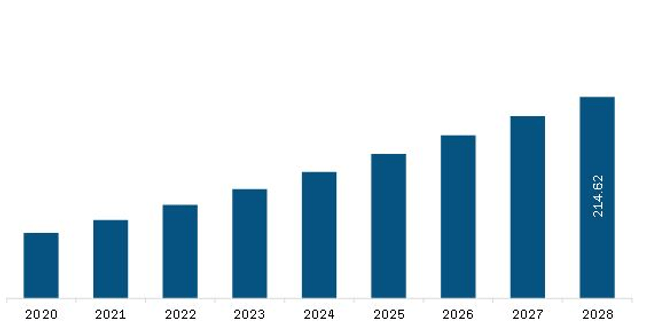
The South & Central America 3D printing medical devices market is expected to reach US$ 214.6 million by 2028 from US$ 84.1 million in 2021; it is expected to grow at a CAGR of 14.3% from 2021 to 2028.
3D printers are used to manufacture a variety of medical devices, including those with complex geometry or features that match a patient’s unique anatomy. A few devices are printed from a standard design, and then multiple identical copies of the same device are made. Other devices, called patient-matched or patient-specific devices, are created from the patient-specific imaging data. The choice of technology used for 3D printing depends on many factors, including the intended use of printed products and the simplicity of the printer, among others. Powder bed fusion is the most common technology used for the 3D printing of medical devices. This technique is compatible with various materials used in medical devices, such as titanium and nylon. With 3D printing, creating patient-specific, tactile reference models from CT and MRI scans is both affordable and simple. These models provide an additional perspective that helps physicians better prepare for surgeries, resulting in drastically reduced time and cost of an actual procedure performed within an operating room. This may benefit patients through greater satisfaction, lowered anxiety, and shortened recovery time. In addition to this, the launch of new biocompatible medical 3D printing materials helps in the development of new surgical tools and techniques with the ultimate goal of improving the clinical experience during surgery. The tools that can be printed using 3D printing techniques include sterilizable fixation trays, contouring templates, and implant sizing models, which can be used to size implants in the operating room before the first cut, allowing surgeons to save time and improve accuracy during complex procedures.
COVID-19 cases are on the rise in South and Central America; the rising number of cases in Brazil, Peru, Chile, Ecuador, and Venezuela is anticipated to have a negative impact on the market. There has been an increase in the number of cases in South American countries since the outbreak of COVID-19's second wave. According to the International Council of Nurses, due to high virus transmission, the number of mortalities among health professionals in Brazil is higher than in other nations. As Brazil has many populated areas and regions with small houses with 6-7 people per house, the virus spreads like wildfire. Currently, the south and Central American countries are speedily increasing their clinical programs to fight against the covid-19. The covid-19 has impacted the market in negative way owing to disruptions in supply chain of medical devices and increased emphasis of medical devices companies to manufacture PPE kits, gloves, masks and other infection protection kits which has affected the market growth.
With the new features and technologies, vendors can attract new customers and expand their footprints in emerging markets. This factor is likely to drive the 3D printing medical devices market. The South & Central America 3D printing medical devices market is expected to grow at a good CAGR during the forecast period.
South & Central America 3D Printing Medical Devices Market Revenue and Forecast to 2028 (US$ Million)
- This FREE sample will include data analysis, ranging from market trends to estimates and forecasts.
South & Central America 3D Printing Medical Devices Market Segmentation
By Component
- Software and Services
- Equipment
- 3D Printers
- 3D Bioprinters
- Materials
- Plastics Material
- Metal and Metal Alloys
- Bioprinting Biomaterials
- Wax
- Others
By Technology
- Laser Beam Melting
- Direct Metal Laser Sintering
- Selective Laser Sintering
- Selective Laser Melting
- LaserCusing
- Photopolymerization
- Stereolithography
- Others
- Droplet Deposition/Extrusion Based Technologies
- Fused Deposition Modelling
- Multiphase Solidification
- Low Temperature Deposition Manufacturing
- Electron Beam melting
By Application
- Custom Prosthetics and Implants
- Craniomaxillofacial Implants
- Custom Dental Prosthetics and Implants
- Custom Orthopaedic Implants
- Surgical Guides
- Dental Guides
- Orthopaedic Guides
- Craniomaxillofacial Guides
- Spinal Guides
- Tissue Engineering Products
- Bone and Cartilage Scaffolds
- Ligaments and Tendons Scaffolds
- Surgical Instruments
- Surgical Fasteners
- Scalpels
- Retractors
- Hearing Aids
- Wearable Medical Devices
- Standard Prosthetic and Implants
- Others
By End-User
- Hospitals and Surgical Centres
- Dental and Orthopaedic Centres
- Medical Device Companies
- Pharmaceutical and Biotechnology Companies
- Academic and Research Institutes
- Others
By Country
- South & Central America
- Brazil
- Argentina
- Rest of South & Central America
Companies Mentioned
- EOS GmbH Electro Optical Systems
- Stratasys Ltd.
- 3D Systems, Inc.
- EnvisionTech, Inc.
- Concept Laser Gmbh (General Electric)
- SLM Solution Group AG
- Renishaw PL
South and Central America 3D Printing Medical Devices Report Scope
| Report Attribute | Details |
|---|---|
| Market size in 2021 | US$ 84.1 Million |
| Market Size by 2028 | US$ 214.6 Million |
| CAGR (2021 - 2028) | 14.3% |
| Historical Data | 2019-2020 |
| Forecast period | 2022-2028 |
| Segments Covered |
By Component
|
| Regions and Countries Covered |
South and Central America
|
| Market leaders and key company profiles |
|

- Historical Analysis (2 Years), Base Year, Forecast (7 Years) with CAGR
- PEST and SWOT Analysis
- Market Size Value / Volume - Regional, Country
- Industry and Competitive Landscape
- Excel Dataset
Recent Reports
Testimonials

The Insight Partners' SCADA System Market report is comprehensive, with valuable insights on current trends and future forecasts. The team was highly professional, responsive, and supportive throughout. We are very satisfied and highly recommend their services.
RAN KEDEM Partner, Reali Technologies LTDs
I requested a report on a very specific software market and the team produced the report in a few days. The information was very relevant and well presented. I then requested some changes and additions to the report. The team was again very responsive and I got the final report in less than a week.
JEAN-HERVE JENN Chairman, Future Analytica
We worked with The Insight Partners for an important market study and forecast. They gave us clear insights into opportunities and risks, which helped shape our plans. Their research was easy to use and based on solid data. It helped us make smart, confident decisions. We highly recommend them.
PIYUSH NAGPAL Sr. Vice President, High Beam Global
The Insight Partners delivered insightful, well-structured market research with strong domain expertise. Their team was professional and responsive throughout. The user-friendly website made accessing industry reports seamless. We highly recommend them for reliable, high-quality research services
YUKIHIKO ADACHI CEO, Deep Blue, LLC.
This is the first time I have purchased a market report from The Insight Partners.While I was unsure at first, I visited their web site and felt more comfortable to take the risk and purchase a market report.I am completely satisfied with the quality of the report and customer service. I had several questions and comments with the initial report, but after a couple of dialogs over email with their analyst I believe I have a report that I can use as input to our strategic planning process.Thank you so much for taking the extra time and making this a positive experience.I will definitely recommend your service to others and you will be my first call when we need further market data.
JOHN SUZUKI President and Chief Executive Officer, Board Director, BK Technologies
I wish to appreciate your support and the professionalism you displayed in the course of attending to my request for information regarding to infectious disease IVD market in Nigeria. I appreciate your patience, your guidance, and the fact that you were willing to offer a discount, which eventually made it possible for us to close a deal. I look forward to engaging The Insight Partners in the future, all thanks to the impression you have created in me as a result of this first encounter.
DR CHIJIOKE ONYIA MANAGING DIRECTOR, PineCrest Healthcare Ltd.Reason to Buy
- Informed Decision-Making
- Understanding Market Dynamics
- Competitive Analysis
- Identifying Emerging Markets
- Customer Insights
- Market Forecasts
- Risk Mitigation
- Boosting Operational Efficiency
- Strategic Planning
- Investment Justification
- Tracking Industry Innovations
- Aligning with Regulatory Trends
Unlock Exclusive Report Discounts
Enquire Now




 Get Free Sample For