
Tile Saw Market Share, Growth & Demand by 2034
Coverage: By Type (Handheld tile saws, Tabletop tile saws, Ooverhead motor tile saws); Blade Type (Dry blades, Wet blades); Distribution Channel (Online, Offline) , and Geography (North America, Europe, Asia Pacific, and South and Central America)
- Status : Data Released
- Report Code : TIPRE00018406
- Category : Manufacturing and Construction
- No. of Pages : 150
- Available Report Formats :


- Last update date : July 21, 2026


2025 Market Size
US$ 1.17 Bn
Base year value
2034 Forecast
US$ 2.15 Bn
Projected by 2034
CAGR 2026-2034
6.95 %
Growth rate
Addressable Market
US$ 14.96 Bn
(2026-2034)
The Tile Saw Market is projected to grow from US$ 1.17 Billion in 2025 to US$ 2.15 Billion by 2034, registering a CAGR of 6.95% during 2026–2034. The demand is fueled by tile-heavy residential renovations, commercial fit outs, and requirement for precision cutting of porcelain, ceramic, and stone tiles. There is a trend towards developing wet cutting technology, blade compatibility, and ready-to-use equipment for professional installation as well as more advanced do-it-yourself users.
The North American Tile Saw Market is fueled by a 6.4-6.9% CAGR during 2024, which can be attributed to renovation expenditure, demand for skillful contractors, and usage of large format tiles in kitchens, bathrooms, retail outlets, and hospitality sector. It is also driven by the demand for dust containment procedures and wet blades, which improves the quality of cuts while minimizing particulate exposure.
Tile Saw Market Assessment and Insights
- North America held 31–34% share in 2025 and is expected to grow at a 6.4–6.9% CAGR during 2026–2034, supported by remodeling demand, contractor tool replacement, and strong home improvement retail channels.
- US accounted for 78–82% of North America in 2025 and is projected to grow at a 6.3–6.8% CAGR during 2026–2034, led by renovation-led tile installation.
- Europe represented 24–27% share in 2025 and is forecast to grow at a 5.8–6.3% CAGR during 2026–2034, with Germany, the UK, France, Italy, and Spain sustaining demand through refurbishment activity.
- Asia Pacific captured 27–30% share in 2025 and is expected to expand at a 7.4–7.9% CAGR during 2026–2034, led by China, India, Japan, South Korea, and Australia.
- Largest Segment Tabletop tile saws held 42–46% market share in 2025 and are projected to grow at a 6.2–6.7% CAGR during 2026–2034.
- High Growth Segment Wet blades held 55–59% market share in 2025 and are forecast to advance at a 7.1–7.6% CAGR during 2026–2034.
- Key companies analyzed in detail: Blades and Bits, Stanley Black & Decker, Inc., GISON Machinery Co., Ltd., Gemini Saw Company Inc., Husqvarna AB, Marshalltown Company, MK Diamond Products, Inc., Robert Bosch GmbH, Sears Brands, LLC, and Q.E.P. Co., Inc.
Source: The Insight Partners' analysis based on proprietary research, government publications, company annual reports, investor presentations, industry databases, and expert interviews.
The equipment development trend is moving away from conventional tile cutters towards advanced wet saws that come with strong motors, sliding tables, adjustable fences, and improved water circulation. The growth of the Tile Saw Market can be attributed to this development as contractors now need equipment to create clean cuts in densely composed porcelain tiles while consumers need smaller equipment for their renovation work. The production aspect still depends on the quality of diamond blades, motors, and manufacturing capability along with inventory management by retailers.
The future demand in this market is expected to increase as there will be more interior finishing work linked with the construction of housing facilities, hotel renovations, and infrastructure development in the developing countries. The regulatory requirement of lowering dust emission, wet cutting safety, and proper site cleaning is also expected to drive the use of premium equipment in the market.
Tile Saw Market Report Scope
| Report Attribute | Details |
|---|---|
| Market size in 2025 | US$ 1.17 Billion |
| Market Size by 2034 | US$ 2.15 Billion |
| Global CAGR (2026 - 2034) | 6.95% |
| Historical Data | 2021-2024 |
| Forecast period | 2026-2034 |
Tile Saw Market Analysis
The demand side derives from installing floor and wall tiles, in which precision, water management, and speed have an immediate impact on labor productivity. The environment consists of manufacturers of blades, manufacturers of motors, assemblers of tools, distributors, rental houses, large retailers, and specialized construction dealers. The use of ceramic and porcelain tiles, increasing bathroom remodeling activity, and business renovation cycles keep drawing replacement buys toward the professional segment.
Supply factors include the price of steel frames, supply of diamond abrasives, the efficiency of electric motors, and logistics of bulky table-top and overhead machines. The manufacturers are juggling between economy-oriented consumer tools and more powerful contractor tools. Wet-cutting is important, as it ensures clean cuts, cooling of blades, and less dust, especially when installers are working with porcelain, vitrified tiles, granite, and stone-like materials.
Competitive positioning in the Tile Saw Market Report is based on brand credibility, serviceability, blade compatibility, distribution channels, and durability of products. Robert Bosch GmbH, Husqvarna AB, MK Diamond Products, Inc., Q.E.P. Co., Inc., and Stanley Black & Decker, Inc. compete using a wide range of construction tools, whereas Gemini Saw Company Inc. and GISON Machinery Co., Ltd. serve niche cuttings requirements.
There are investments made in lightweight frames, water retention, reduced noise levels, and accessories to encourage frequent blade replacements. Entry-level saws receive more promotion from retailers and online distributors, whereas rental services prefer durable models with low maintenance costs. Competitive advantage increasingly relies on performance on the jobsite rather than the power of motors.
● REPORT CUSTOMIZATION
Tailor This Report To Align With Your Specific Business Requirements
This report can be customized to align precisely with your business objectives, scope, and target markets. Customization options include tailored segmentation, geography, competitive analysis, and strategic insights to support informed decision-making.
Customize This Report →WHAT YOU CAN ADJUST
- ● Segmentations
- ● Geography
- ● Competitive Analysis
- ● Language Preferences
Tile Saw Market: Strategic Insights
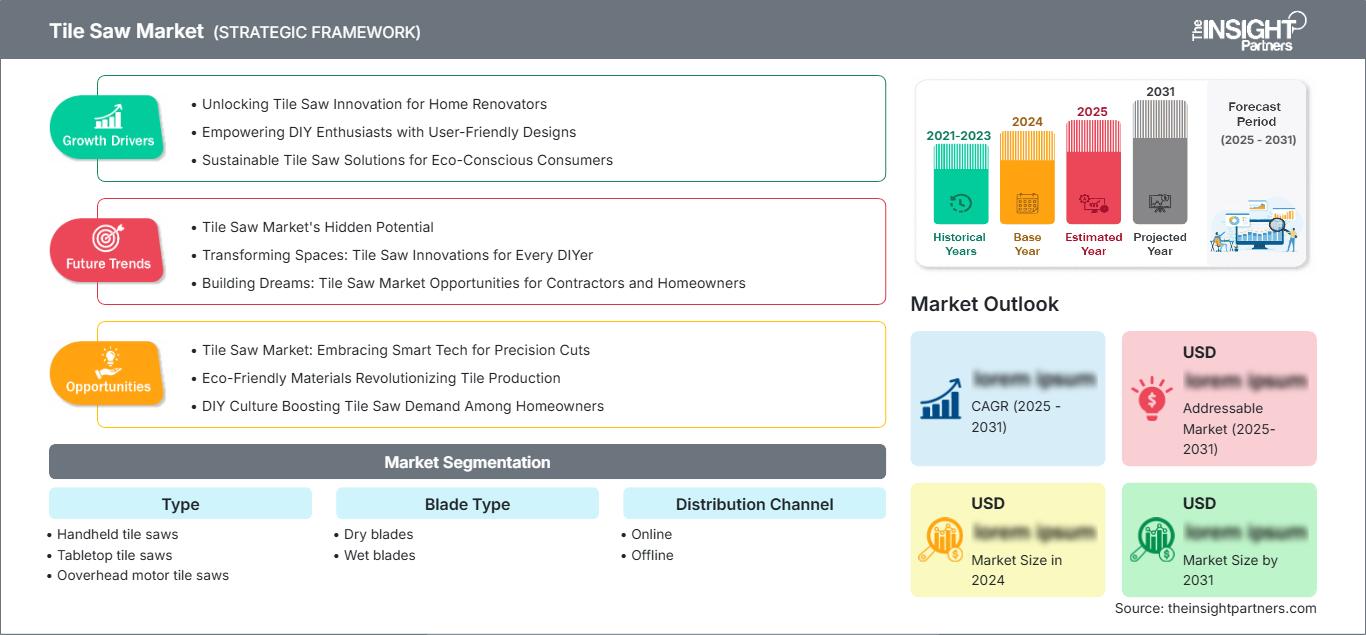
Regional Insights
North America Tile Saw Market
North America held 31–34% share in 2025 and is projected to grow at a 6.4–6.9% CAGR during 2026–2034. The Tile Saw Market share in the region is supported by mature remodeling channels, high contractor tool ownership, and frequent replacement of worn blades and saw components.
Demand is strongest in residential renovation, multifamily upgrades, retail refurbishment, and hospitality interiors. Wet saws benefit from indoor dust control expectations, while tabletop systems remain attractive because they combine portability with sufficient cutting capacity for ceramic, porcelain, and stone tile formats.
U.S. Tile Saw Market
The U.S. accounted for 78–82% of North America in 2025 and is expected to expand at a 6.3–6.8% CAGR during 2026–2034. Demand is linked to contractor networks, home improvement chains, rental fleets, and a large installed base of remodeling-focused users.
Company presence is broad, with Husqvarna AB, Robert Bosch GmbH, MK Diamond Products, Inc., Q.E.P. Co., Inc., and Stanley Black & Decker, Inc. serving professional and retail channels. Applications concentrate on bathroom upgrades, kitchen backsplashes, flooring replacement, and commercial tenant improvement projects.
Europe Tile Saw Market
Europe represented 24–27% share in 2025 and is forecast to grow at a 5.8–6.3% CAGR during 2026–2034. Germany remains the leading country because of skilled trades, renovation standards, and consistent demand for precision equipment in residential and commercial refurbishment.
The UK market benefits from repair, maintenance, and improvement activity, with compact tabletop saws preferred by contractors working in constrained urban properties. Germany emphasizes durable equipment and blade quality for porcelain and engineered surfaces, supporting premium wet cutting adoption among professional installers.
France, Italy, and Spain contribute through renovation of apartments, hospitality properties, and public facilities. Southern Europe’s tile culture creates steady replacement demand, while regulatory focus on cleaner worksites favors wet blades and enclosed water management in professional applications.
APAC Tile Saw Market
APAC captured 27–30% share in 2025 and is projected to grow at a 7.4–7.9% CAGR during 2026–2034. China remains the leading country, supported by tile manufacturing scale, housing upgrades, and commercial interior finishing demand.
Japan and South Korea favor compact, precise tools for high-quality interiors, while India and Australia add growth through urban housing, retail fit-outs, and contractor mechanization. Policy emphasis on infrastructure and formal construction practices supports broader adoption of efficient cutting systems.
Middle East & Africa Tile Saw Market
Middle East & Africa is expected to grow at a 6.8–7.3% CAGR during 2026–2034. Saudi Arabia is the leading country, with demand tied to large hospitality, residential, and public infrastructure programs that use premium ceramic and porcelain finishes.
The UAE supports high-end commercial interiors, South Africa adds replacement demand through urban renovation, and Rest of MEA contributes through energy-linked infrastructure and housing development. Harsh jobsite conditions favor durable saws, reliable pumps, and blades suited to dense tile and stone surfaces.
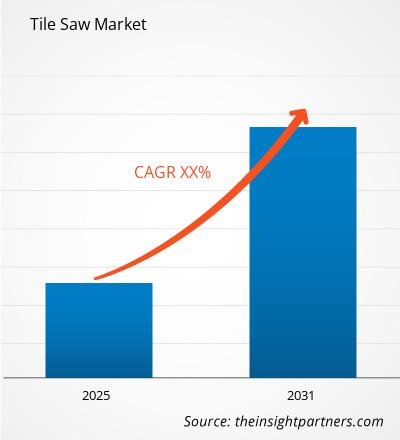
Segmentation Analysis
Type
Type is expected to grow at a 6.5–7.0% CAGR during 2026–2034. The Tile Saw Market scope across type categories reflects a balance between portability, cutting capacity, and professional productivity. Handheld models serve quick repair jobs, tabletop units dominate recurring renovation work, and overhead motor saws support heavier-duty applications where straight-line accuracy and material stability are critical.
- Handheld tile saws support small repairs, edge trimming, and field cuts where mobility matters. Demand is strongest among installers handling scattered jobs, compact spaces, and occasional residential upgrades.
- Tabletop tile saws remain the preferred format for repeat cutting tasks because they combine stability, manageable price points, and broad compatibility with ceramic, porcelain, and stone-look tiles.
- Overhead Motor Tile Saws address professional jobs requiring larger tiles, consistent straight cuts, and better line visibility. Their value is strongest in commercial flooring, façade, and premium interior projects.
Blade Type
Blade Type is projected to grow at a 6.8–7.3% CAGR during 2026–2034. Wet blades lead because water cooling improves blade life, cut quality, and dust control. Dry blades remain relevant for quick exterior work and locations where water access is constrained, but tightening workplace cleanliness expectations are gradually strengthening wet-cutting adoption.
- Dry blades are valued for speed, convenience, and outdoor use where cleanup requirements are lower. They serve maintenance crews, small contractors, and users making limited cuts.
- Wet blades hold strategic importance because they deliver cleaner edges on hard tiles, reduce heat buildup, and align with professional expectations for dust reduction and longer blade service life.
Distribution Channel
Distribution Channel is estimated to grow at a 6.6–7.1% CAGR during 2026–2034. Offline stores remain important for demonstration, blade matching, and professional advice, while online platforms expand comparison-led purchasing. Manufacturers are increasingly aligning product content, spare parts visibility, and reviews to reduce selection risk for buyers.
- Online channels are scaling as buyers compare motor ratings, blade sizes, reviews, and bundled accessories. E-commerce is especially relevant for compact saws, blades, and replacement parts.
- Offline channels remain essential for contractors who need immediate availability, service support, product inspection, and expert recommendations on saw capacity, water systems, and blade selection.
Opportunity Snapshot
| Type | Revenue Contribution | Trend Tag | Adoption Stage |
| Handheld tile saws | Medium | Mobile Cuts | Scaling |
| Tabletop tile saws | High | Renovation Core | Mature |
| Overhead Motor Tile Saws | Medium | Large Format | Scaling |
Tile Saw Market Growth Drivers and Impact Analysis
Renovation-Led Tile Installation Demand
Remodeling of residential areas will continue to play a central role since the replacement of tiles usually involves the accurate cutting of tiles around pipes, cabinets, stairs, and corners. Contractors have started using stationary saws to minimize wastage of materials since porcelain and stone look-alike tiles are expensive. The home buyer or owner uses the small saws even in their bathrooms and kitchens. The implications of the market include increased turnovers of mid-priced saws and blades.
Shift Toward Large-Format Porcelain and Dense Tiles
Big porcelain tiles exert more strain on the cutting machine due to their long travel distance, better stability, and less chip formation. With the trend towards large slabs in designs, the installer needs saws that can remain stable when doing wide cuts. This results in increased preference for saws with higher capacity tabletops and overhead motors. This is evident from the premiumization trend whereby the buyer favors rigidity of the table, cooling of the blade, stability of the motor, and water handling ability of the saw over lower initial costs.
Workplace Dust Control and Cleaner Cutting Practices
Dust-control requirements are affecting equipment choices in both interior renovations and commercial applications. Wet cutting limits dust generation, maintains the temperature of the blade, and provides a better edge, which makes it ideal for projects where contractors need to protect occupied buildings or adhere to safety standards. The response from manufacturers includes improvements in splash guards, pumps, tanks, and containment devices. The effects on the industry include quicker adoption of wet blades and the promotion of saws that operate cleanly and are easy to clean up after use.
Tile Saw Market Future Trends
Smarter Water Management in Compact Saws
The Tile Saw market trends indicate that the future is likely to see systems which would be compact and allow clean cuts without wasting water and spraying everywhere. The tile saws which would come in the future are going to have features like more reliable pumps, tray filtration, splash protection, and maintenance free cleaning system. These characteristics will hold much importance for renovation jobs in residential, commercial, hotel, and retail properties, where the time taken to clean up will impact the bottom line of the contractors.
Blade-System Bundling and Lifecycle Selling
The manufacturers would certainly look at the blades, pumps, guides, stands, and spare parts as one integral part of revenue generation instead of being accessories. Matching the right blade with the appropriate saw is bound to make the users happier, help get better results from cutting and promote future purchases. Product pages online would increasingly help buyers based on hardness of tiles, size of blades, and kind of projects.
Tile Saw Market Opportunities
Contractor-Focused Rental and Service Programs
Rental networks provide an efficient method through which high-end saws may be adopted since most builders will require higher capacity tools on only some projects. Tile Saw Market Forecasts will enable suppliers to stock fleets according to renovation periods, regional tile sizes, and commercial interior projects. Programs such as blade change services, pump servicing, calibration, and rapid exchanges can boost equipment availability. This approach suits manufacturers that are well made and easy to service, as well as have connections in the rental networks.
Online Configuration Tools for Saw and Blade Matching
Digital configurators can assist in overcoming purchasing risk by ensuring that the saw capacity, blade type, material to be cut, cut length, and user ability level are considered. This becomes highly relevant when comparing hand-held, table-top, and overhead motorized models via e-commerce channels. Manufacturers and distributors can capitalize on the potential to guide customers toward a compatible model and make available information on replacement parts and project suitability. The biggest chance lies in the mid-level market segment.
Recent Developments
- June 2026: Robert Bosch GmbH — Bosch Power Tools announced 39 new jobsite tools and accessories across core categories for North America, reinforcing its contractor-focused platform strategy and accessory ecosystem. The rollout supports precision, durability, and productivity themes relevant to construction cutting tools and related jobsite equipment.
- May 2026: Husqvarna AB — Husqvarna Group announced its intention to discontinue its non-core stone diamond tools business, signaling portfolio discipline within construction-related cutting categories. The decision may influence channel focus, product prioritization, and competitive dynamics in diamond tooling adjacent to masonry and tile cutting applications.
Frequently Asked Questions

- Comprehensive Market Sizing and Forecast Analysis
- Detailed Segmentation Analysis
- In-Depth Market Dynamics Assessment
- Regional and Country-Level Insights
- Competitive Landscape and Company Benchmarking
- Strategic Business Intelligence
Recent Reports
Testimonials

The Insight Partners' SCADA System Market report is comprehensive, with valuable insights on current trends and future forecasts. The team was highly professional, responsive, and supportive throughout. We are very satisfied and highly recommend their services.
RAN KEDEM Partner, Reali Technologies LTDs
I requested a report on a very specific software market and the team produced the report in a few days. The information was very relevant and well presented. I then requested some changes and additions to the report. The team was again very responsive and I got the final report in less than a week.
JEAN-HERVE JENN Chairman, Future Analytica
We worked with The Insight Partners for an important market study and forecast. They gave us clear insights into opportunities and risks, which helped shape our plans. Their research was easy to use and based on solid data. It helped us make smart, confident decisions. We highly recommend them.
PIYUSH NAGPAL Sr. Vice President, High Beam Global
The Insight Partners delivered insightful, well-structured market research with strong domain expertise. Their team was professional and responsive throughout. The user-friendly website made accessing industry reports seamless. We highly recommend them for reliable, high-quality research services
YUKIHIKO ADACHI CEO, Deep Blue, LLC.
This is the first time I have purchased a market report from The Insight Partners.While I was unsure at first, I visited their web site and felt more comfortable to take the risk and purchase a market report.I am completely satisfied with the quality of the report and customer service. I had several questions and comments with the initial report, but after a couple of dialogs over email with their analyst I believe I have a report that I can use as input to our strategic planning process.Thank you so much for taking the extra time and making this a positive experience.I will definitely recommend your service to others and you will be my first call when we need further market data.
JOHN SUZUKI President and Chief Executive Officer, Board Director, BK Technologies
I wish to appreciate your support and the professionalism you displayed in the course of attending to my request for information regarding to infectious disease IVD market in Nigeria. I appreciate your patience, your guidance, and the fact that you were willing to offer a discount, which eventually made it possible for us to close a deal. I look forward to engaging The Insight Partners in the future, all thanks to the impression you have created in me as a result of this first encounter.
DR CHIJIOKE ONYIA MANAGING DIRECTOR, PineCrest Healthcare Ltd.Reason to Buy
- Informed Decision-Making
- Understanding Market Dynamics
- Competitive Analysis
- Identifying Emerging Markets
- Customer Insights
- Market Forecasts
- Risk Mitigation
- Boosting Operational Efficiency
- Strategic Planning
- Investment Justification
- Tracking Industry Innovations
- Aligning with Regulatory Trends





 Get Free Sample for