
Virus-Like Particles Market Size, Trends & Growth by 2034
Coverage: By Product Type (Hepatitis, Cancer, Others); Source (Yeast, Insect cells, Others); Application (Vaccine, and Therapeutics and Imaging Agents)
- Status : Data Released
- Report Code : TIPRE00025763
- Category : Life Sciences
- No. of Pages : 150
- Available Report Formats :


- Last update date : February 05, 2026


2025 Market Size
US$ 6.25 Bn
Base year value
2034 Forecast
US$ 12.15 Bn
Projected by 2034
CAGR 2026-2034
7.61 %
Growth rate
Addressable Market
US$ 82.63 Bn
(2026-2034)
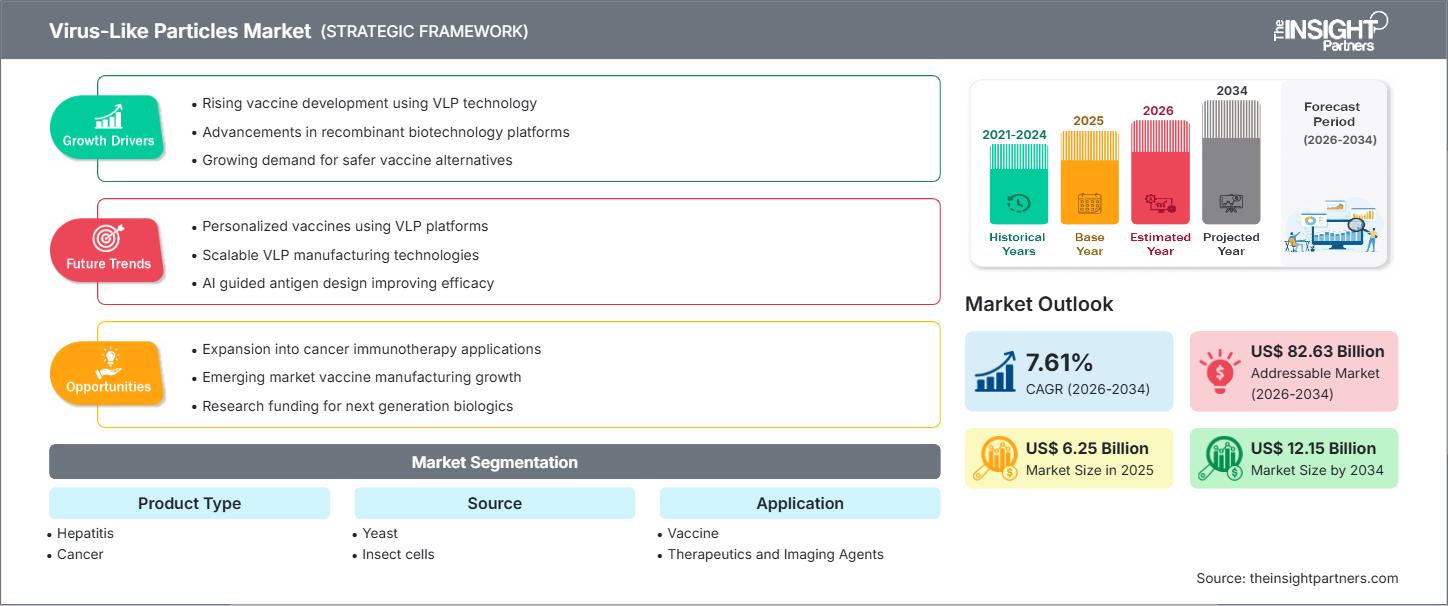
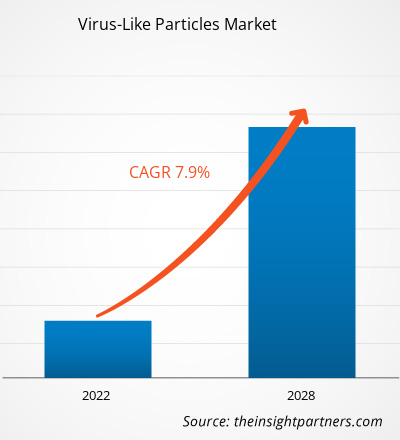
The global virus-like particles market size is expected to reach US$ 12.15 billion by 2034 from US$ 6.25 billion in 2025. The market is anticipated to register a CAGR of 7.61% during the forecast period of 2026–2034.
Virus-Like Particles Market Analysis
The Virus-Like Particles (VLP) market requires stakeholders to transition from traditional vaccine development toward high-margin "payload" delivery strategies to effectively capitalize on projected growth. One important opportunity is to use virus-like particles (VLPs) as targeted carriers for RNA therapeutics and CRISPR components. This approach could be a strong alternative to lipid nanoparticles (LNPs) for crossing the blood-brain barrier. It is also important for decision-makers to consider insect cell and yeast expression systems, since these methods can scale up to meet global demand for pandemic preparedness and seasonal respiratory vaccines. Companies that use AI-based modeling to design synthetic scaffolds can develop multivalent vaccines more quickly, giving them a clear competitive edge. Focusing research and development on oncology-related immunotherapies and creating localized manufacturing hubs in the Asia-Pacific region can turn the favorable safety profile of VLP technology into a sustainable, scalable revenue stream that addresses both infectious and non-communicable diseases.
Virus-Like Particles Market Overview
The virus-like particles market is a specialized sector of biotechnology focused on producing and applying self-assembling nanostructures that mimic the external architecture of viruses. Since these particles do not have a viral genome, they cannot cause infection; however still trigger a strong immune response. Most of the market focuses on VLP-based vaccines, like those for Hepatitis B and Human Papillomavirus (HPV), which use these particles to show many antigens to the immune system. In addition to vaccines, VLPs are also used to deliver cancer drugs and imaging agents directly to targeted areas. This overview provides the foundational "map" of a technology-driven sector that bridges the gap between traditional immunization and next-generation precision medicine.
Market Assessment and Insights
- Global market for Virus-Like Particles was valued at US$ 6.25 Billion in 2025
- Annual market size is expected to reach US$ 12.15 Billion by 2034
- Total addressable market (TAM) during 2026-2034 is projected to reach approximately US$ 82.63 Billion
- Market is anticipated to register a CAGR of 7.61% during the forecast period
- The United States represents a key market, supported by Rising vaccine development using VLP technology, Advancements in recombinant biotechnology platforms, Growing demand for safer vaccine alternatives, as well as evolving industry dynamics
- Market analysis covers North America, Europe, Asia-Pacific, South and Central America, Middle East and Africa, with growth evaluated across the forecast period
- Market opportunities such as Expansion into cancer immunotherapy applications, Emerging market vaccine manufacturing growth, Research funding for next generation biologics are expected to influence market dynamics and addressable market
- Report profiles industry participants, including Merck & Co., Inc., GlaxoSmithKline plc., Pfizer Inc., Dynavax Technologies, Sanofi, Wantai BioPharm, Serum Institute of India Pvt. Ltd., BHARAT BIOTECH, LG Chem, VBI Vaccines Inc., while analyzing competitive strategies and innovation developments
-
Source: The Insight Partners' analysis based on proprietary research, government publications, company annual reports, investor presentations, industry databases, and expert interviews.
● REPORT CUSTOMIZATION
Tailor This Report To Align With Your Specific Business Requirements
This report can be customized to align precisely with your business objectives, scope, and target markets. Customization options include tailored segmentation, geography, competitive analysis, and strategic insights to support informed decision-making.
Customize This Report →WHAT YOU CAN ADJUST
- ● Segmentations
- ● Geography
- ● Competitive Analysis
- ● Language Preferences
Virus-Like Particles Market: Strategic Insights
-
Get Top Key Market Trends of this report.This FREE sample will include data analysis, ranging from market trends to estimates and forecasts.
Virus-Like Particles Market Drivers and Opportunities
Market Drivers:
- Rising Demand for High-Efficacy Vaccines and Immunotherapies: Healthcare organizations around the world are witnessing more cases of infectious diseases and chronic illnesses such as cancer. As a result of this, there is a growing need for VLPs, which offer better immune response and safety than traditional attenuated vaccines.
- Technological Advancements in Expression Systems: The transition to recombinant technology in yeast and insect cell lines has significantly increased the scope of VLP production. These systems enable scalable, cost-effective manufacturing that meets the global demand for rapid vaccine deployment during health crises.
- Increasing Government Initiatives and Funding for Preventive Care: VLPs are one of several biopharmaceutical solutions whose widespread implementation is supported by national health strategies. From global immunization initiatives to regional pandemic preparedness acts, providers are being incentivized to adopt VLP-based platforms for broad-spectrum protection.
Market Opportunities:
- Expansion into Oncology and Personalized Medicine: VLPs are increasingly used for cancer vaccine development in emerging markets and established biopharma centers. These delivery systems flexibly carry tumor-associated antigens, helping meet the rising need for precision oncology.
- Integration with Advanced Imaging and Targeted Therapeutics: Combining VLPs with fluorescent markers and therapeutic agents improves diagnosis and treatment. Using VLPs as nanocarriers supports better clinical decisions and more efficient delivery of chemotherapy drugs to targeted areas.
- Demand for Multi-Antigen Platforms and Workflow Optimization: The trend for polyvalent vaccines that protect against multiple strains or different pathogens simultaneously is a main driver of VLP innovation. These systems enable administrative burden reduction for healthcare systems and set the efficient utilization of resources for national vaccine inventories.
Virus-Like Particles Market Report Segmentation Analysis
The virus-like particles market share is analyzed across various segments to provide a clearer understanding of its structure and growth potential. Below is the standard segmentation approach used in industry reports:
By Product Type:
- Hepatitis
- Cancer
By Source:
- Yeast
- Insect Cells
By Application:
- Vaccines
- Therapeutics and Imaging Agents
By Geography:
- North America
- Europe
- Asia Pacific
- South & Central America
- Middle East & Africa
Virus-Like Particles Market Report Scope
| Report Attribute | Details |
|---|---|
| Market size in 2025 | US$ 6.25 Billion |
| Market Size by 2034 | US$ 12.15 Billion |
| Global CAGR (2026 - 2034) | 7.61% |
| Historical Data | 2021-2024 |
| Forecast period | 2026-2034 |
| Segments Covered |
By Product Type
|
| Regions and Countries Covered |
North America
|
| Market leaders and key company profiles |
|
Virus-Like Particles Market Players Density: Understanding Its Impact on Business Dynamics
The Virus-Like Particles Market is growing rapidly, driven by increasing end-user demand due to factors such as evolving consumer preferences, technological advancements, and greater awareness of the product's benefits. As demand rises, businesses are expanding their offerings, innovating to meet consumer needs, and capitalizing on emerging trends, which further fuels market growth.
Virus-Like Particles Market Share Analysis by Geography
Asia Pacific is expected to grow fastest in the coming years. Emerging markets in South & Central America, the Middle East, and Africa also have many untapped opportunities for VLP providers to expand.
The virus-like particles market shows a different growth trajectory in each region due to factors such as biopharmaceutical infrastructure, R&D investment, regulatory environments, and the prevalence of infectious diseases. Below is a summary of market share and trends by region:
North America
- Market Share: Holds the largest market share due to a mature biopharmaceutical sector and high R&D investments.
- Key Drivers:
- Strong presence of major biopharma players
- Advanced clinical trial infrastructure
- High public awareness of preventive vaccination
- Trends: Shift toward self-assembling VLP technology and integrated bioprocessing units to streamline manufacturing and reduce time-to-market.
Europe
- Market Share: Driven by public healthcare systems and strong government support for cancer research.
- Key Drivers:
- Stringent safety regulations and EMA-aligned protocols
- Robust national immunization programs
- Investment in VLP-based cancer immunotherapy
- Trends: Increasing use of VLP platforms for the development of vaccines against emerging respiratory and zoonotic viruses.
Asia Pacific
- Market Share: Fastest-growing region owing to the rapid industrialization of the biopharma sector in China, India, and South Korea.
- Key Drivers:
- Government-supported "Make in India" and "Made in China 2025" initiatives
- Rising patient volumes and healthcare expenditure
- Expansion of local contract manufacturing organizations (CMOs)
- Trends: Local manufacturing of affordable VLP-based vaccines for domestic consumption and export to other emerging economies.
South and Central America
- Market Share: Emerging market focusing on local production to reduce import dependency.
- Key Drivers:
- Rising prevalence of vector-borne diseases like Zika and Dengue
- Public-private partnerships for regional vaccine self-sufficiency
- Modernization of biological manufacturing facilities in Brazil and Mexico
- Trends: Partnerships between global biotech firms and regional institutes (like Fiocruz or Butantan) to facilitate VLP technology transfer for endemic disease control.
Middle East and Africa
- Market Share: Developing market with growth potential driven by national health security goals.
- Key Drivers:
- National e-health strategies and localization of biopharma production
- Rising demand for cost-effective hepatitis and HPV vaccines
- Sovereign wealth fund investments in life sciences
- Trends: Focus on establishing modular VLP production hubs to respond rapidly to regional viral outbreaks and public health emergencies.
Virus-Like Particles Market Players Density: Understanding Its Impact on Business Dynamics
High Market Density and Competition
Competition is intensifying due to the presence of global pharmaceutical leaders such as Merck & Co., Inc., GlaxoSmithKline plc., and Pfizer Inc. Specialized biotechnology firms and large-scale manufacturers like the Serum Institute of India and LG Chem also contribute to the increasingly crowded market landscape.
This competitive environment pushes vendors to differentiate through:
- Scalable Production Platforms: Utilizing advanced single-use bioreactors for yeast, insect cell (baculovirus), and mammalian cell lines to ensure high-yield manufacturing.
- Platform Versatility: Developing "plug-and-play" VLPs that can be easily conjugated with diverse antigens for rapid response to emerging infectious disease outbreaks.
- Strategic Research Partnerships: Collaborating with global research institutes to expand VLP applications beyond vaccines into oncology and chronic disease management.
- Advanced Adjuvant Integration: Enhancing the immunogenicity of VLP candidates through proprietary adjuvant technologies to improve clinical efficacy across various age groups.
Opportunities and Strategic Moves
- Collaboration with public health organizations and non-governmental organizations (NGOs) can expand vaccine distribution in emerging economies, thereby advancing global immunization and strengthening pandemic preparedness.
- Utilizing AI-driven protein modeling and computational design can improve virus-like particle (VLP) stability and enable precise targeting of immune pathways for next-generation therapeutics.
Major Companies operating in the Virus-Like Particles Market are:
- Merck & Co., Inc. – United States
- GlaxoSmithKline plc. – United Kingdom
- Pfizer Inc. – United States
- Dynavax Technologies – United States
- Sanofi – France
- Wantai BioPharm – China
- Serum Institute of India Pvt. Ltd. – India
- BHARAT BIOTECH – India
- LG Chem – South Korea
Disclaimer: The companies listed above are not ranked in any particular order.
Virus-Like Particles Market News and Recent Developments
- In March 2024, Merck & Co. announced plans to initiate clinical development of a next-generation multivalent HPV vaccine leveraging its proprietary virus-like particle technology, alongside trials evaluating a single-dose GARDASIL 9 regimen. This development highlights continued innovation, pipeline expansion, and long-term growth potential in the VLP vaccine market.
- In Feb 2024, AstraZeneca announced the successful completion of the acquisition of Icosavax, Inc., a US-based clinical-stage biopharmaceutical company focused on developing differentiated, high-potential vaccines using an innovative, protein virus-like particle (VLP) platform. As a result of the acquisition, Icosavax has become a subsidiary of AstraZeneca, with operations in Seattle, US. The acquisition underscores growing pharmaceutical investment and confidence in VLP-based vaccine technologies.
Virus-Like Particles Market Report Coverage and Deliverables
The "Virus-Like Particles Market Size and Forecast (2021–2034)" report provides a detailed analysis of the market covering below areas:
- Virus-Like Particles Market size and forecast at global, regional, and country levels for all the key market segments covered under the scope
- Virus-Like Particles Market trends, as well as market dynamics such as drivers, restraints, and key opportunities
- Detailed PEST and SWOT analysis
- Virus-Like Particles Market analysis covering key market trends, global and regional framework, major players, regulations, and recent market developments
- Industry landscape and competition analysis covering market concentration, heat map analysis, prominent players, and recent developments in the Virus-Like Particles Market
- Detailed company profiles
Frequently Asked Questions
1. The increasing demand for high-efficacy vaccines and technological advancements in yeast and insect cell expression systems
2. The growth of government initiatives and funding for preventive healthcare

- Comprehensive Market Sizing and Forecast Analysis
- Detailed Segmentation Analysis
- In-Depth Market Dynamics Assessment
- Regional and Country-Level Insights
- Competitive Landscape and Company Benchmarking
- Strategic Business Intelligence
Recent Reports
Testimonials

The Insight Partners provided valuable market intelligence that supported our global go-to-market strategy. Their team was professional, responsive, and attentive to our feedback, providing thoughtful analysis and helpful methodological clarifications throughout the project.
Junmo Kim Chief Financial Officer (CFO), Enertech Co., Ltd.
The Insight Partners' SCADA System Market report is comprehensive, with valuable insights on current trends and future forecasts. The team was highly professional, responsive, and supportive throughout. We are very satisfied and highly recommend their services.
RAN KEDEM Partner, Reali Technologies LTDs
I requested a report on a very specific software market and the team produced the report in a few days. The information was very relevant and well presented. I then requested some changes and additions to the report. The team was again very responsive and I got the final report in less than a week.
JEAN-HERVE JENN Chairman, Future Analytica
We worked with The Insight Partners for an important market study and forecast. They gave us clear insights into opportunities and risks, which helped shape our plans. Their research was easy to use and based on solid data. It helped us make smart, confident decisions. We highly recommend them.
PIYUSH NAGPAL Sr. Vice President, High Beam Global
The Insight Partners delivered insightful, well-structured market research with strong domain expertise. Their team was professional and responsive throughout. The user-friendly website made accessing industry reports seamless. We highly recommend them for reliable, high-quality research services
YUKIHIKO ADACHI CEO, Deep Blue, LLC.
This is the first time I have purchased a market report from The Insight Partners.While I was unsure at first, I visited their web site and felt more comfortable to take the risk and purchase a market report.I am completely satisfied with the quality of the report and customer service. I had several questions and comments with the initial report, but after a couple of dialogs over email with their analyst I believe I have a report that I can use as input to our strategic planning process.Thank you so much for taking the extra time and making this a positive experience.I will definitely recommend your service to others and you will be my first call when we need further market data.
JOHN SUZUKI President and Chief Executive Officer, Board Director, BK Technologies
I wish to appreciate your support and the professionalism you displayed in the course of attending to my request for information regarding to infectious disease IVD market in Nigeria. I appreciate your patience, your guidance, and the fact that you were willing to offer a discount, which eventually made it possible for us to close a deal. I look forward to engaging The Insight Partners in the future, all thanks to the impression you have created in me as a result of this first encounter.
DR CHIJIOKE ONYIA MANAGING DIRECTOR, PineCrest Healthcare Ltd.Reason to Buy
- Informed Decision-Making
- Understanding Market Dynamics
- Competitive Analysis
- Identifying Emerging Markets
- Customer Insights
- Market Forecasts
- Risk Mitigation
- Boosting Operational Efficiency
- Strategic Planning
- Investment Justification
- Tracking Industry Innovations
- Aligning with Regulatory Trends






 Get Free Sample for