
Anti-Ageing Drugs Market Growth, Share & Trends by 2034
Coverage: By Type (Injectable, Oral, Topical); Drug Class (Antioxidants and enzymes, Serums and supplements, Stem cells); Applications (Skin, Hair, Muscles, Age-related disorders, Others), and Geography (North America, Europe, Asia Pacific, and South and Central America)
- Status : Data Released
- Report Code : TIPRE00018084
- Category : Life Sciences
- No. of Pages : 150
- Available Report Formats :


- Last update date : August 13, 2026


2025 Market Size
US$ 19.94 Bn
Base year value
2034 Forecast
US$ 40.70 Bn
Projected by 2034
CAGR 2026-2034
8.25 %
Growth rate
Addressable Market
US$ 272.37 Bn
(2026-2034)
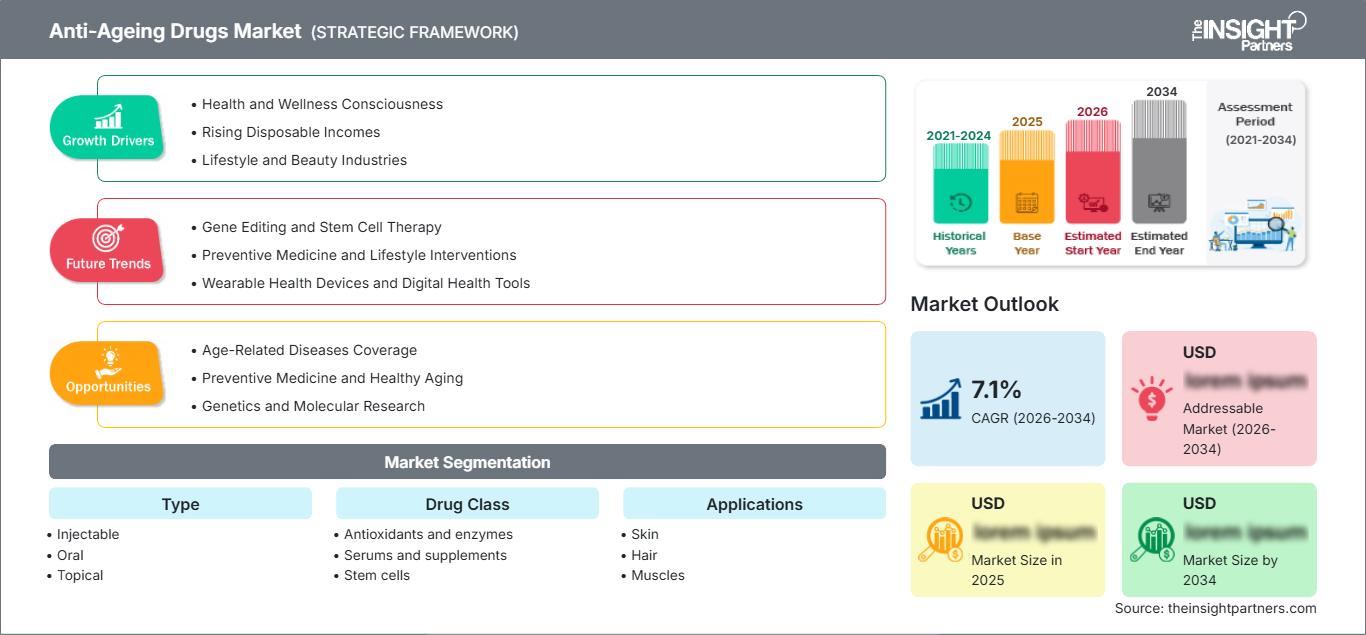
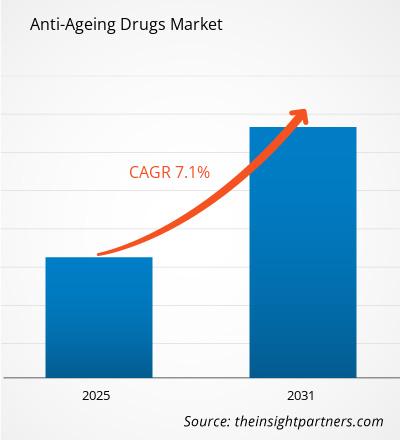
The anti-ageing drugs market is projected to grow from US$ 19.94 Billion in 2025 to US$ 40.70 Billion by 2034, registering a CAGR of 8.25% during 2026–2034. The market reflects sustained demand for scientifically validated therapies that address visible ageing, tissue degeneration, oxidative stress, and age-associated physiological decline across skin, hair, muscles, and chronic age-related disorders.
Across North America, the anti-ageing drugs market size is supported by higher procedural acceptance, specialist dermatology networks, and faster uptake of injectable and prescription-grade topical therapies. The region is estimated to grow at a CAGR range of 7.6–8.1% during 2026–2034, with demand anchored by medical aesthetics clinics, preventive health consumers, and increased physician-led use of biologically active formulations.
Anti-Ageing Drugs Market Assessment and Insights
- North America accounted for 36–39% share in 2025 and is growing at a CAGR of 7.6–8.1% between 2026–2034, driven by high injectable penetration, physician-administered procedures, and premium skincare adoption.
- US represented 82–86% share of North America in 2025 and is growing at a CAGR of 7.4–7.9% between 2026–2034, supported by advanced dermatology access and brand concentration.
- Europe held 26–29% share in 2025 and is growing at a CAGR of 7.1–7.6% between 2026–2034, led by Germany, France, the UK, Italy, and Spain.
- Asia Pacific captured 23–26% share in 2025 and is growing at a CAGR of 9.0–9.6% between 2026–2034, led by China, Japan, South Korea, India, and Australia.
- Largest Segment injectable products held 50–55% market share in 2025, growing at a CAGR of 7.8–8.3% between 2026–2034, due to measurable outcomes and clinic-based delivery.
- High Growth Segment stem cells held 12–16% market share in 2025, growing at a CAGR of 10.2–11.0% between 2026–2034, supported by regenerative medicine pipelines and longevity research.
- Key companies analyzed in detail: Galderma Group AG, Sanofi S.A., AbbVie Inc., Daewoong Pharmaceutical Co., Ltd., Revitacare SAS, Merz Pharma GmbH & Co. KGaA, Nu Skin Enterprises, Inc., Lineage Cell Therapeutics, Inc., Elysium Health, Inc., La Roche-Posay Laboratoire Dermatologique, DermaFix, and L’Oréal S.A.
Source: The Insight Partners' analysis based on proprietary research, government publications, company annual reports, investor presentations, industry databases, and expert interviews.
The practice of medicine has evolved from correctives for wrinkles to being driven by biological mechanisms, where neuromodulators, fillers, antioxidants, enzymes, peptides, NAD-related nutritional supplements, and cellular therapy form a continuum of interventions targeting visible and functional signs of aging. Production trends are also evolving, with sterile injectable products, controlled active ingredients in topical formulations, and science-proven nutritional supplements calling for stricter standards in terms of quality, production batches, training, and post-market surveillance.
In the coming years, the market for anti-aging drugs will gain momentum due to the emergence of a middle-class group of patients in Asia Pacific, growth of medical tourism routes, and acknowledgment of the minimally invasive aesthetic procedures on the part of regulators. Investment focus will be on sustained injectable treatments and regenerative dermatology procedures.
Anti-Ageing Drugs Market Report Scope
| Report Attribute | Details |
|---|---|
| Market size in 2025 | US$ 19.94 Billion |
| Market Size by 2034 | US$ 40.70 Billion |
| Global CAGR (2026 - 2034) | 8.25% |
| Historical Data | 2021-2024 |
| Forecast period | 2026-2034 |
Anti-Ageing Drugs Market Analysis
Growth drivers in the anti-ageing drugs industry include aging populations, early consumer engagement, and wider clinical recognition of minimally invasive treatment options. Aging trends of WHO and healthcare expenditures by OECD countries suggest growing challenges for management of age-related issues. Increasing consumer demand for skin protection through minimally invasive treatments such as skin barrier restoration and hair thickness promotion has been observed.
Supply chain drivers have become more specific. Injectables manufacturers are dependent on sterilized fill-finish operations, cold chain or other handling procedures, and clinical education. Topical and oral drugs require quality assurance of active ingredients, dermatology trials, and claims validation. Clinics, pharmacies, online channels and wellness practices specializing in longevity medicine make an interconnected supply chain system.
Anti-ageing drugs market analysis highlights a highly competitive market dominated by players in the areas of pharmaceutical aesthetics, dermatological treatments and regenerative sciences. Competitors like AbbVie Inc., Galderma Group AG, Merz Pharma GmbH & Co. KGaA and Daewoong Pharmaceutical Co., Ltd. are known for their injectables-based portfolio and physician network, while competitors such as L'Oréal S.A., La Roche-Posay Laboratoire Dermatologique, Nu Skin Enterprises, Inc. and Elysium Health, Inc. leverage their access through topical and supplements-based approaches.
Positioning is becoming increasingly reliant on clinical evidence, unique mechanisms and global market reach. Players like Sanofi S.A. and Lineage Cell Therapeutics, Inc. highlight the significance of aging science in relation to pharmaceuticals and cell-therapy, while Revitacare SAS and DermaFix cater to the professional and specialty skincare space. The direction of investments includes long-term, combined protocols and repeatable care-based products.
● REPORT CUSTOMIZATION
Tailor This Report To Align With Your Specific Business Requirements
This report can be customized to align precisely with your business objectives, scope, and target markets. Customization options include tailored segmentation, geography, competitive analysis, and strategic insights to support informed decision-making.
Customize This Report →WHAT YOU CAN ADJUST
- ● Segmentations
- ● Geography
- ● Competitive Analysis
- ● Language Preferences
Anti-Ageing Drugs Market: Strategic Insights
Regional Insights
North America anti-ageing drugs market
North America accounted for 36–39% share in 2025, giving the region the highest anti-ageing drugs market share globally. Its CAGR range of 7.6–8.1% during 2026–2034 reflects established injectable adoption, high specialist density, strong reimbursement-adjacent dermatology infrastructure, and stronger consumer willingness to pay for preventive aesthetic care.
The region’s structural advantage lies in FDA-regulated product pathways, rapid physician education, and clinic chains able to standardize protocols. Demand is expanding beyond facial aesthetics to hair restoration, skin quality, and wellness-linked ageing management. Canada remains smaller than the US but benefits from similar clinic models and rising acceptance of biologically active topical and injectable therapies.
U.S. anti-ageing drugs Market
The US represented 82–86% of North America in 2025 and is growing at a CAGR of 7.4–7.9% during 2026–2034. Market depth is supported by dermatologists, plastic surgeons, med-spas, and high brand visibility across neuromodulators, hyaluronic acid injectables, topical retinoids, antioxidants, and supplements.
Company presence is unusually concentrated. AbbVie Inc., Galderma Group AG, Merz Pharma GmbH & Co. KGaA, Elysium Health, Inc., and Nu Skin Enterprises, Inc. reinforce strong distribution and education networks. Applications are shifting from single-site wrinkle correction toward full-face balancing, neck rejuvenation, hair support, and early intervention among consumers in their thirties and forties.
Europe anti-ageing drugs Market
Europe accounted for 26–29% of market share in 2025 and is growing at a CAGR of 7.1–7.6% for 2026–2034. Germany is leading the region due to aesthetic physician procedures, pharmaceutical production expertise, and adoption of protocols for regeneration and dermatology. The UK demonstrates stable growth owing to private aesthetic clinics and increased interest in nonsurgical facelifts.
Germany has an advantage due to the regional presence of Merz Pharma GmbH & Co. KGaA along with established specialist practice standards. There is a substantial demand in Germany for injectables, actives, and treatments in age dermatology. This demand is driven by high levels of healthcare spending and patients' desire for medically managed results over cosmetics.
France, Italy, and Spain contribute to growth with their premium skincare tradition, pharmacy dermatology, and aesthetic medicine tourism. The reputation of dermocosmetics is boosted in France with L'Oréal S.A. and La Roche-Posay Laboratoire Dermatologique. In Italy and Spain there is a procedure-based development driven by private clinics, aesthetic medicine societies, and consumer acceptance of minimally invasive treatments.
APAC anti-ageing drugs Market
APAC accounted for 23–26% share in 2025 and is growing at a CAGR of 9.0–9.6% during 2026–2034, the fastest regional pace. China is the leading country by scale, while Japan and South Korea lead in product sophistication, clinic protocols, and early adoption of aesthetic injectables.
India and Australia add momentum through urban dermatology clinics, wellness spending, and digital consumer education. Policy support for biopharmaceutical manufacturing in South Korea, China’s expanding medical aesthetics infrastructure, and Japan’s ageing population are creating demand for skin, hair, and age-related disorder applications within the anti-ageing drugs market.
Middle East & Africa anti-ageing drugs Market
Middle East & Africa is growing at a CAGR of 8.0–8.6% during 2026–2034, with Saudi Arabia as the leading country. The UAE remains a premium hub for medical aesthetics, supported by international clinics, tourism, and high discretionary spending on physician-administered rejuvenation.
South Africa and the Rest of MEA are developing more gradually as product availability, practitioner training, and income distribution vary widely. Energy-linked wealth creation, healthcare infrastructure investment, and private clinic expansion in Gulf markets provide the strongest regional base for injectables, topical actives, and combination protocols.
Segmentation Analysis
Type
The Type segment is growing at a CAGR of 8.0–8.6% during 2026–2034. The anti-ageing drugs market scope across type is broadening as patients combine injectable procedures with oral supplements and topical maintenance. Clinical trust, product safety, duration of effect, and repeat-use economics determine adoption, with injectables remaining the benchmark for visible and measurable outcomes.
- Injectable products dominate demand due to stronger practitioner control, rapid visible outcomes, and expanding indications across facial contouring, lines, skin quality, and selected tissue-support applications.
- Oral products are gaining relevance among longevity-focused consumers seeking antioxidants, NAD-related compounds, collagen support, and systemic maintenance, although evidence standards remain a differentiating factor.
- Topical products remain essential for daily use, prevention, and post-procedure maintenance, especially in dermatology-led regimens using retinoids, peptides, antioxidants, and barrier-support ingredients.
Drug Class
The Drug Class segment is growing at a CAGR of 8.1–8.7% during 2026–2034. Demand is shifting from isolated beauty claims toward mechanisms involving oxidative stress, extracellular matrix support, cellular repair, and regenerative pathways. Evidence quality, tolerability, and compatibility with combined regimens influence prescribing, retail positioning, and long-term adherence.
- Antioxidants and enzymes are important for oxidative stress management, photodamage support, and prevention-focused regimens, particularly when paired with topical or oral products.
- Serums and supplements bridge clinical and consumer channels by offering accessible maintenance, recurring revenue potential, and compatibility with injectables, professional skincare, and wellness programs.
- Stem cells represent the highest growth platform, supported by regenerative research, tissue-repair potential, and interest in cellular ageing pathways, although regulatory scrutiny remains material.
Applications
The Applications segment is growing at a CAGR of 8.2–8.8% during 2026–2034. Application-based demand increasingly reflects broader ageing management rather than appearance alone. Skin remains the largest use case, while hair, muscles, and age-related disorders are gaining attention as patients seek integrated management of visible and functional ageing.
- Skin applications lead usage because wrinkles, laxity, pigmentation, hydration loss, and texture changes are highly visible and suited to injectables, topicals, antioxidants, and professional protocols.
- Hair applications are expanding through scalp health, follicle-support treatments, nutrient-based products, and regenerative approaches that target thinning and age-associated density loss.
- Muscles represent a developing application area linked to sarcopenia, facial muscle modulation, posture-related ageing, and broader interest in maintaining strength and tone.
- Age-related disorders provide long-term strategic relevance as therapies addressing inflammation, cellular senescence, mitochondrial decline, and tissue degeneration move closer to clinical validation.
Opportunity Snapshot
| Segment Name | Revenue Contribution | Trend Tag | Adoption Stage |
|---|---|---|---|
| Skin | High | Skin Quality | Mature |
| Hair | Medium | Scalp Renewal | Scaling |
| Muscles | Low | Sarcopenia Care | Emerging |
| Age-related disorders | Medium | Longevity Therapy | Emerging |
Anti-Ageing Drugs Market Growth Drivers and Impact Analysis
Ageing Population and Earlier Preventive Intervention
The worldwide trend towards having an older population demographic will make it easier to target skin, hair, muscles, and age-related disorders applications. Additionally, consumers are increasingly becoming preventive as they begin using the product even before visible signs of aging develop, thus creating multiple cycles within their lives. The driver will have a clear commercial effect since injectables, topicals, and oral supplements can be a continuous revenue stream. For clinics, the benefit is in providing long-term care to patients compared to one-off procedures; for manufacturers, portfolio diversification becomes key. When it comes to anti-aging drug products, success is seen where products demonstrate visible results, predictability, and safety.
Clinical Validation of Injectables and Regenerative Approaches
Approval through regulation and controlled clinical trials are contributing significantly to the development of trust in anti-ageing professional solutions. Hyaluronic acid fillers, neuromodulators, biostimulators, and certain regenerative techniques are now competing on the basis of clinical evidence, expanded indications, and longevity. As a result, there is a change in market dynamics whereby there is an increased need for medical supervision rather than unregulated beauty procedures. Any company which proves patient satisfaction, functionality, and safety among diverse patient groups has the potential for high-value positioning in the market. The effect is most felt in North America, Europe, South Korea, and Japan.
Expansion of Medical Aesthetic Infrastructure
Rapid proliferation of dermatology clinics, med-spa centers, aesthetic networks, and training institutes for physicians increases the availability of products and procedures. It is important to improve infrastructure because anti-aging treatments need special expertise and discipline in product storage and follow-up care. Clinics that are opening in Asia Pacific and the Middle East are creating opportunities to accelerate access to injectable, topical, and combined therapies in those regions. Booking technologies, financing, and the impact of influencers are helping to convert interest into services received. The outcome of this activity for business is increased number of clinics, repeat business, and educational programs.
Anti-Ageing Drugs Market Future Trends
Biology-Led Personalization
The next phase of anti-ageing drugs market trends will center on personalization using skin diagnostics, biomarker panels, genetic risk indicators, and treatment-history analytics. Instead of standard wrinkle-focused regimens, clinics may design protocols around collagen loss, pigmentation risk, inflammation, oxidative stress, or scalp ageing. This trend supports premium consultative models and creates demand for products that can be sequenced safely. Manufacturers will need stronger evidence packages showing how injectables, oral products, topical actives, and regenerative therapies perform in combination. Personalization will also improve retention because patients can track progress and adjust treatment plans over time.
Longer-Duration and Combination Protocols
Longer-duration products and structured combination protocols are expected to reshape treatment economics. Patients increasingly prefer fewer visits without sacrificing natural-looking outcomes, while clinics seek higher-value plans that combine neuromodulators, fillers, biostimulators, serums, and supplements. This trend will encourage investment in formulations with extended durability, improved tolerability, and predictable integration into maintenance routines. Combination protocols will also support broader application coverage, moving from facial lines to neck, hands, hair, and early tissue degeneration. Companies with education platforms and cross-category portfolios will be better positioned than single-product suppliers in this environment.
Anti-Ageing Drugs Market Opportunities
Regenerative Dermatology Platforms
Regenerative dermatology offers a significant investment path because it aligns clinical ageing science with high-value aesthetic and therapeutic applications. The anti-ageing drugs market Forecasts suggest that stem cell-derived materials, biostimulators, exosome-adjacent research, and tissue-repair products can attract specialist clinics if developers demonstrate safety, reproducibility, and measurable outcomes. Companies should prioritize regulated development pathways, practitioner training, and evidence generation rather than broad wellness claims. Partnerships with dermatology centers, academic hospitals, and contract manufacturers can reduce execution risk. The strongest opportunities will be in markets where consumers accept premium physician-led care and regulators support clearly defined product classifications.
Integrated Skin and Hair Ageing Programs
Integrated programs combining injectable procedures, topical maintenance, oral supplements, and hair-support protocols can improve patient lifetime value. Skin and hair concerns often appear together, especially among ageing consumers seeking visible rejuvenation without surgery. Providers can build structured programs using diagnostics, treatment schedules, and measurable follow-up indicators. This opportunity favors companies with complementary products, professional education, and data-backed claims. It also supports subscription models for maintenance products between clinic visits. Asia Pacific, the US, and Gulf markets are attractive because consumers are receptive to bundled aesthetic, dermatology, and wellness services delivered through trusted clinical channels.
Recent Developments
- June 2026: AbbVie Inc. announced that Allergan Aesthetics received US FDA approval for SKINVIVE by JUVÉDERM to reduce horizontal neck lines and improve neck appearance in adults over 21, expanding the product beyond cheek smoothness and creating a first approved hyaluronic acid injectable option for this specific neck ageing indication.
- April 2026: Merz Pharma GmbH & Co. KGaA, through Merz Aesthetics, received US FDA approval for RADIESSE for treatment of wrinkles in the décolleté area in patients aged 22 and older, positioning the calcium hydroxylapatite biostimulator as an approved face and body regenerative aesthetic product.
- November 2025: Galderma Group AG received US FDA approval for Restylane Lyft with Lidocaine for chin augmentation to improve chin profile in adults over 21 with mild-to-moderate chin retrusion, extending its hyaluronic acid injectable portfolio across facial folds, midface, hands, and lower-face contouring.
Frequently Asked Questions

- Comprehensive Market Sizing and Forecast Analysis
- Detailed Segmentation Analysis
- In-Depth Market Dynamics Assessment
- Regional and Country-Level Insights
- Competitive Landscape and Company Benchmarking
- Strategic Business Intelligence
Recent Reports
Testimonials

The Insight Partners' SCADA System Market report is comprehensive, with valuable insights on current trends and future forecasts. The team was highly professional, responsive, and supportive throughout. We are very satisfied and highly recommend their services.
RAN KEDEM Partner, Reali Technologies LTDs
I requested a report on a very specific software market and the team produced the report in a few days. The information was very relevant and well presented. I then requested some changes and additions to the report. The team was again very responsive and I got the final report in less than a week.
JEAN-HERVE JENN Chairman, Future Analytica
We worked with The Insight Partners for an important market study and forecast. They gave us clear insights into opportunities and risks, which helped shape our plans. Their research was easy to use and based on solid data. It helped us make smart, confident decisions. We highly recommend them.
PIYUSH NAGPAL Sr. Vice President, High Beam Global
The Insight Partners delivered insightful, well-structured market research with strong domain expertise. Their team was professional and responsive throughout. The user-friendly website made accessing industry reports seamless. We highly recommend them for reliable, high-quality research services
YUKIHIKO ADACHI CEO, Deep Blue, LLC.
This is the first time I have purchased a market report from The Insight Partners.While I was unsure at first, I visited their web site and felt more comfortable to take the risk and purchase a market report.I am completely satisfied with the quality of the report and customer service. I had several questions and comments with the initial report, but after a couple of dialogs over email with their analyst I believe I have a report that I can use as input to our strategic planning process.Thank you so much for taking the extra time and making this a positive experience.I will definitely recommend your service to others and you will be my first call when we need further market data.
JOHN SUZUKI President and Chief Executive Officer, Board Director, BK Technologies
I wish to appreciate your support and the professionalism you displayed in the course of attending to my request for information regarding to infectious disease IVD market in Nigeria. I appreciate your patience, your guidance, and the fact that you were willing to offer a discount, which eventually made it possible for us to close a deal. I look forward to engaging The Insight Partners in the future, all thanks to the impression you have created in me as a result of this first encounter.
DR CHIJIOKE ONYIA MANAGING DIRECTOR, PineCrest Healthcare Ltd.Reason to Buy
- Informed Decision-Making
- Understanding Market Dynamics
- Competitive Analysis
- Identifying Emerging Markets
- Customer Insights
- Market Forecasts
- Risk Mitigation
- Boosting Operational Efficiency
- Strategic Planning
- Investment Justification
- Tracking Industry Innovations
- Aligning with Regulatory Trends





 Get Free Sample for