
Aromatherapy Diffusers Market Size, Share & Demand by 2034
Coverage: By Product (Ultrasonic, Nebulizers, Evaporative, Others); Distribution Channel (Supermarkets and Hypermarkets, Specialty Stores, Online Retail, Others) , and Geography (North America, Europe, Asia Pacific, and South and Central America)
- Status : Data Released
- Report Code : TIPRE00028116
- Category : Consumer Goods
- No. of Pages : 150
- Available Report Formats :


- Last update date : August 28, 2026


2025 Market Size
US$ 1.77 Bn
Base year value
2034 Forecast
US$ 4.97 Bn
Projected by 2034
CAGR 2026-2034
12.19 %
Growth rate
Addressable Market
US$ 29.58 Bn
(2026-2034)
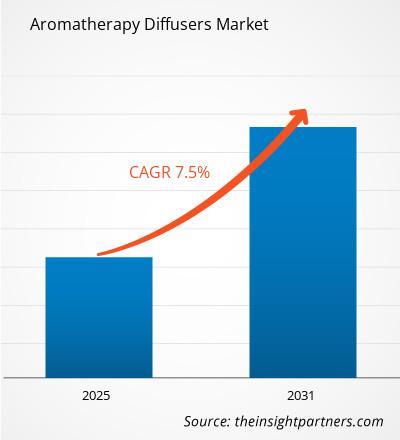
The aromatherapy diffusers market was valued at US$ 1.77 Billion in 2025 and is projected to reach US$ 4.97 Billion by 2034; it is expected to register a CAGR of 12.19% during 2026–2034. Demand is being shaped by wellness routines, rising household spending on air-care products, wider essential oil availability, and device innovation across ultrasonic, nebulizing, and evaporative formats.
North America remains a high-value consumption base, with the aromatherapy diffusers market size supported by premium wellness retail, spa-inspired home environments, and rapid online replenishment of essential oils. The region is estimated to grow at a CAGR of 10.5–11.5% during 2026–2034, supported by design-led products, multifunctional humidifier-diffuser formats, and stronger adoption across bedrooms, workspaces, clinics, yoga studios, and hospitality settings.
Aromatherapy Diffusers Market Assessment and Insights
- North America held 34–37% share in 2025 and is growing at a CAGR of 10.5–11.5% between 2026–2034, supported by premium retail penetration, wellness-led home upgrades, and strong replacement demand for ultrasonic and waterless devices.
- US represented 78–82% of North America in 2025 and is growing at a CAGR of 10.2–11.2% between 2026–2034, driven by specialty wellness chains, online retail, and design-forward home fragrance adoption.
- Europe accounted for 24–27% share in 2025 and is growing at a CAGR of 9.8–10.8% between 2026–2034, led by Germany, the UK, France, Italy, and Spain through natural living and spa retail channels.
- Asia Pacific held 28–31% share in 2025 and is growing at a CAGR of 14.0–15.0% between 2026–2034, led by China, Japan, India, South Korea, and Australia as wellness retail and e-commerce expand.
- Largest Segment: Ultrasonic, with 58–62% market share in 2025 and a CAGR of 11.5–12.5% between 2026–2034, owing to affordability, quiet operation, and broad household use.
- High Growth Segment: Online Retail, with 31–35% market share in 2025 and a CAGR of 15.0–16.0% between 2026–2034, supported by direct-to-consumer bundles, subscriptions, and product comparison behavior.
- Key companies analyzed in detail: Organic Aromas, Brahmz India Pvt. Ltd., Edens Garden, Puzhen Life Co., Ltd., SpaRoom, Ryohin Keikaku Co., Ltd., New Green Air Inc., Vitruvi, CAMPO Beauty, Saje Natural Wellness.
Source: The Insight Partners' analysis based on proprietary research, government publications, company annual reports, investor presentations, industry databases, and expert interviews.
The device design itself evolved from the basic misting systems to wellness technology that features silence, lighting, timers, room coverage, rechargeable battery packs, and even waterless oil dispersal. Manufacturing itself is evolving away from basic plastic models into ceramic, glass, bamboo, and recycled product materials due to the need for brand distinction, not relying on cheaper production. In addition, the procurement of ultrasonic plates, pumps, atomizers, and batteries is being synchronized with the oil sales.
Future demand will grow in urban homes, wellness hospitality, beauty retail, and office relaxing environments. Emerging markets are the most active in the Asia Pacific and selected Middle Eastern markets, where there is a growing consumption of premium home-care products. The regulatory developments regarding the indoor safety products, fragrance components, and emissions-free materials also work in favor of those brands that can prove oil purity, safety of the device, and proper packaging.
Aromatherapy Diffusers Market Report Scope
| Report Attribute | Details |
|---|---|
| Market size in 2025 | US$ 1.77 Billion |
| Market Size by 2034 | US$ 4.97 Billion |
| Global CAGR (2026 - 2034) | 12.19% |
| Historical Data | 2021-2024 |
| Forecast period | 2026-2034 |
Aromatherapy Diffusers Market Analysis
The aromatherapy diffusers market growth is tied to the convergence of mental wellness habits, indoor lifestyle upgrades, and consumer preference for natural scent delivery. Demand is high for diffusers that are part of a regimen that comprises essential oils, sleeping aids, yoga supplies, bathing, and decor. Ultrasonic models win due to their easy-to-use nature and affordability.
On the supply side, there is segmentation between dedicated brands and lifestyle stores and private labels importing from China. Value differentiating factors include tank size, mist time, automatic turn off, Bluetooth technology, battery-operated models, and atomization without water. The value chain is composed of electronics manufacturers, ceramics and glass manufacturers, essential oils, packaging firms, and omnichannel retailers.
Competitive intensity is increasing as Organic Aromas, Vitruvi, Edens Garden, Saje Natural Wellness, CAMPO Beauty, and Ryohin Keikaku Co., Ltd. position devices around design, portability, oil integrity, and lifestyle use. The aromatherapy diffusers market analysis indicates that premium brands are defending margins through bundles and proprietary refills, while mass brands compete on price and availability.
Investment trends are tilting towards online buying, subscription-based sales of oil, refill systems, and unique material types. The New Green Air Inc. focuses on a wide variety of wholesale products, while the Puzhen Life Co., Ltd. concentrates on sensory and ceramic forms of the product. In addition, the SpaRoom caters to the value segment of the home wellness channel.
● REPORT CUSTOMIZATION
Tailor This Report To Align With Your Specific Business Requirements
This report can be customized to align precisely with your business objectives, scope, and target markets. Customization options include tailored segmentation, geography, competitive analysis, and strategic insights to support informed decision-making.
Customize This Report →WHAT YOU CAN ADJUST
- ● Segmentations
- ● Geography
- ● Competitive Analysis
- ● Language Preferences
Aromatherapy Diffusers Market: Strategic Insights

Regional Insights
North America aromatherapy diffusers market
North America accounted for 34–37% share in 2025 and is expected to grow at a CAGR of 10.5–11.5% during 2026–2034. The regional outlook reflects strong spending on home wellness, sleep-focused routines, and premium air-care products. The aromatherapy diffusers market share is supported by higher device replacement rates, established e-commerce logistics, and specialist brands with loyal oil-buying communities.
One of the advantages is the retail structure that enables consumers to identify devices via beauty stores, health stores, online stores, and online platforms. Demand is largely affected by silent operation, safe automatic shutoff, waterless devices, and design. Most sales are driven by the U.S., whereas Canada remains very strong on natural wellness products and essential oils.
U.S. aromatherapy diffusers Market
The U.S. represented 78–82% of North America aromatherapy diffusers market in 2025 and is projected to grow at a CAGR of 10.2–11.2% during 2026–2034. Adoption focuses on health-oriented retailing, sleeping, office environments, and beauty-based self-care practices. Companies have made significant inroads, including Edens Garden, Organic Aromas, CAMPO Beauty, Saje Natural Wellness, and Vitruvi through direct and mass retail routes.
The use of applications is transitioning from sporadic use of fragrances to targeted diffusions in the bedroom, bathroom, meditation room, and office environments. Consumers are evaluating spray volume, capacity, material quality, and refills before purchasing. Specialty retailers promote premium discovery, while online retail quickens repurchasing of oils and devices through product reviews and subscriptions.
Europe aromatherapy diffusers Market
Europe held 24–27% share of the aromatherapy diffusers market in 2025 and is forecast to expand at a CAGR of 9.8–10.8% during 2026–2034, with Germany as the leading country. The European market is influenced by natural living, spa culture, design moderation, and consumer preference for nontoxic domestic products. In the UK, there is a good use of gifting in wellness, as well as lifestyle shopping, where online shopping is used in promoting portable and ceramic-based diffusers.
In Germany, the consumer-driven spending behavior and discipline in purchasing durable goods, the concept of apothecary wellness, and consumer preference for essential oil products that have traceable botanical origins make it a leader. In France, the support for aromatherapy is driven by the proximity of pharmacies, as well as the high-end perfume culture.
APAC aromatherapy diffusers Market
APAC accounted for 28–31% share in 2025 and is growing at a CAGR of 14.0–15.0% during 2026–2034, making it the fastest regional growth pocket. China remains the dominant player thanks to e-commerce volume, home technology trial-and-error, and inexpensive device production. The Japanese factor design-driven consumerism via minimalistic homes and well-established lifestyle stores.
The South Korean, Indian, and Australian markets are growing through the merging of beauty and wellness, the practice of yoga, and gift-giving practices for special occasions. Strengths of the industry include electronics manufacturing, ceramic availability, and faster product development cycles. The policy focuses on domestic consumption, e-commerce, and wellness tourism, which helps in promoting devices utilized in residential and commercial contexts.
Middle East & Africa aromatherapy diffusers Market
The Middle East & Africa is projected to grow at a CAGR of 11.0–12.0% during 2026–2034, with the UAE leading demand through premium retail, hospitality, luxury residences, and spa-led wellness tourism. Saudi Arabia is growing with respect to investments in lifestyle retail and wellness infrastructure, whereas South Africa boosts the demand by means of specialty stores in cities and online marketplaces.
Regional penetration is facilitated with the help of fragrance-loving culture, scented hotels, as well as growing investments in malls, resorts, clinics, and residential areas. Growing energy and infrastructure development boost the logistics of retail and premium import deliveries. The rest of MEA is rather selective with respect to its demand for branded diffusers.
Segmentation Analysis
Product
Product is expected to grow at a CAGR of 11.7–12.7% during 2026–2034. The aromatherapy diffusers market scope across product types is widening as consumers choose between low-noise ultrasonic models, oil-concentrated nebulizers, and low-maintenance evaporative formats. Adoption depends on price, room size, maintenance tolerance, oil purity preferences, and whether buyers prioritize décor, portability, or scent intensity.
- Ultrasonic remains the leading product type because it offers quiet misting, accessible pricing, light features, and broad availability. Its strategic importance lies in mass adoption across bedrooms, living rooms, offices, and wellness gifting.
- Nebulizers serve consumers seeking concentrated oil diffusion without water or heat. These devices are strategically important in premium niches where stronger scent throw, material quality, and essential oil integrity drive purchasing decisions.
- Evaporative products address simple, portable, and lower-power use cases. Demand is steady in cars, small offices, wardrobes, and travel formats where convenience outweighs advanced controls or high mist output.
Distribution Channel
Distribution Channel is expected to grow at a CAGR of 12.6–13.6% during 2026–2034. Channel performance reflects a mix of tactile product discovery and digital replenishment. Specialty stores support premium education, supermarkets and hypermarkets provide volume access, and online retail accelerates comparisons, subscriptions, bundle purchases, and cross-selling between diffuser devices and essential oil blends.
- Supermarkets and Hypermarkets capture value-oriented shoppers seeking convenient, affordable wellness accessories. Their role is strongest for entry-level ultrasonic devices, seasonal gifting, and bundled products placed near home-care or personal-care aisles.
- Specialty Stores remain important for premium education, fragrance testing, and product demonstration. Beauty, wellness, home décor, and spa retailers influence higher-ticket purchases by linking device design with lifestyle positioning.
- Online Retail is the strongest growth channel because consumers compare reviews, specifications, oil compatibility, and pricing. Direct-to-consumer stores also improve margins through refill bundles, loyalty programs, and subscription-based replenishment.
Opportunity Snapshot
| Product | Revenue Contribution | Trend Tag | Adoption Stage |
| Ultrasonic | High | Quiet Mist | Mature |
| Nebulizers | Medium | Waterless Premium | Scaling |
| Evaporative | Low | Portable Scent | Emerging |
Aromatherapy Diffusers Market Growth Drivers and Impact Analysis
Expansion of home wellness routines
The trend towards making homes multipurpose wellness centers through investments in sleep devices, relaxation activities, meditative practices, and comfort has positively impacted diffusers as they are relatively cheap as opposed to large equipment and can easily fit into one’s lifestyle without undergoing installation processes. These are key drivers for diffusers in the bedroom, living room, home office, and bathroom, where there is a need for equipment that is silent and maintenance-free. Additionally, oil brands have helped drive this trend by providing oils for different uses, such as sleep, energy, focus, and relaxation.
Growth of omnichannel wellness retail
Diffusers are becoming available in retail spaces in beauty shops, lifestyle stores, marketplaces, direct websites, and wellness-specific stores. This benefits consumer discoverability since diffusers will now be found among sleep products, bath products, candles, skincare, and essential oils. The business implication is significant since consumers are able to experience products and design in stores and purchase oils on the internet later on. This becomes possible for brands that have good omnichannel practice since they have inventory visibility and shopper data to bundle their offerings together. Retail relationships help reduce consumer risk in trying out a product because of safety and credibility concerns.
Shift toward design-led and waterless devices
This has resulted in changes in product development that are geared towards offering ceramic coating options, glass tanks, car versions, cordless designs, and waterless cold air diffusers. This has led to increases in average sales prices, as well as segmentation of products into basic ultrasonic diffusers and premium nebulizers or cartridge diffusers. In addition, those customers who require high levels of scent delivery without having issues regarding standing water find the waterless diffuser designs attractive. Companies that ensure effective atomization, safety and ease of refilling will be able to increase their profit margins while attracting customers who had been using candles or plug-in air fresheners before.
Aromatherapy Diffusers Market Future Trends
Smart diffusion and connected scent scheduling
The next phase of aromatherapy diffusers market trends will include app-linked timers, room-based scent scheduling, battery diagnostics, and compatibility with broader smart-home routines. Connected features will matter most in premium households, hospitality, and wellness clinics where users want predictable scent intensity and minimal manual intervention. Device makers may use data from refill cycles and preferred run times to improve bundle recommendations. This trend can also reduce misuse by prompting cleaning, oil replacement, and safe operating intervals. The commercial outcome will be stronger customer retention and higher differentiation beyond price, especially for brands with proprietary scent cartridges or connected hardware.
Material transparency and cleaner indoor positioning
Future demand will be shaped by greater scrutiny of indoor product emissions, synthetic fragrance disclosure, and device material safety. Buyers will ask whether devices are BPA-free, easy to clean, compatible with pure oils, and designed to avoid heat degradation. Brands are likely to emphasize ceramic, glass, recycled materials, and transparent ingredient sourcing. This trend will influence packaging claims, retailer requirements, and premium pricing logic. Companies that align product design with safer indoor-use expectations can appeal to families, pet-conscious households, clinics, and boutique hospitality venues while reducing the risk of vague wellness claims that regulators may challenge.
Aromatherapy Diffusers Market Opportunities
Premium bundles for sleep and stress routines
Brands can convert device sales into higher lifetime value by building curated bundles around sleep, stress, focus, and recovery routines. The aromatherapy diffusers market Forecasts favor companies that combine device hardware with refill oils, usage guidance, subscription replenishment, and trial-size blends. Investment should focus on consumer education, packaging clarity, and channel-specific bundles for online, specialty, and gifting occasions. Sleep-focused bundles are especially attractive because they encourage habitual evening use and repeat purchases. Companies that demonstrate safe use instructions, clear scent benefits, and consistent device performance can differentiate from generic marketplace products while protecting premium margins.
Hospitality, spa, and workplace wellness channels
Commercial environments offer a scalable opportunity because diffusers can support ambiance in boutique hotels, yoga studios, spas, clinics, salons, and offices. Buyers in these channels value durability, coverage, refill economics, and consistent scent experience more than a low entry price. Vendors can develop professional-grade assortments with larger coverage, quiet operation, tamper-resistant settings, and bulk oil supply. Partnerships with wellness consultants, hospitality designers, and spa operators can create recurring B2B revenue. The opportunity is strongest where scent is part of the customer experience, but where open flames, aerosol sprays, or synthetic air fresheners are less desirable.
Frequently Asked Questions

- Comprehensive Market Sizing and Forecast Analysis
- Detailed Segmentation Analysis
- In-Depth Market Dynamics Assessment
- Regional and Country-Level Insights
- Competitive Landscape and Company Benchmarking
- Strategic Business Intelligence
Recent Reports
Testimonials

The Insight Partners' SCADA System Market report is comprehensive, with valuable insights on current trends and future forecasts. The team was highly professional, responsive, and supportive throughout. We are very satisfied and highly recommend their services.
RAN KEDEM Partner, Reali Technologies LTDs
I requested a report on a very specific software market and the team produced the report in a few days. The information was very relevant and well presented. I then requested some changes and additions to the report. The team was again very responsive and I got the final report in less than a week.
JEAN-HERVE JENN Chairman, Future Analytica
We worked with The Insight Partners for an important market study and forecast. They gave us clear insights into opportunities and risks, which helped shape our plans. Their research was easy to use and based on solid data. It helped us make smart, confident decisions. We highly recommend them.
PIYUSH NAGPAL Sr. Vice President, High Beam Global
The Insight Partners delivered insightful, well-structured market research with strong domain expertise. Their team was professional and responsive throughout. The user-friendly website made accessing industry reports seamless. We highly recommend them for reliable, high-quality research services
YUKIHIKO ADACHI CEO, Deep Blue, LLC.
This is the first time I have purchased a market report from The Insight Partners.While I was unsure at first, I visited their web site and felt more comfortable to take the risk and purchase a market report.I am completely satisfied with the quality of the report and customer service. I had several questions and comments with the initial report, but after a couple of dialogs over email with their analyst I believe I have a report that I can use as input to our strategic planning process.Thank you so much for taking the extra time and making this a positive experience.I will definitely recommend your service to others and you will be my first call when we need further market data.
JOHN SUZUKI President and Chief Executive Officer, Board Director, BK Technologies
I wish to appreciate your support and the professionalism you displayed in the course of attending to my request for information regarding to infectious disease IVD market in Nigeria. I appreciate your patience, your guidance, and the fact that you were willing to offer a discount, which eventually made it possible for us to close a deal. I look forward to engaging The Insight Partners in the future, all thanks to the impression you have created in me as a result of this first encounter.
DR CHIJIOKE ONYIA MANAGING DIRECTOR, PineCrest Healthcare Ltd.Reason to Buy
- Informed Decision-Making
- Understanding Market Dynamics
- Competitive Analysis
- Identifying Emerging Markets
- Customer Insights
- Market Forecasts
- Risk Mitigation
- Boosting Operational Efficiency
- Strategic Planning
- Investment Justification
- Tracking Industry Innovations
- Aligning with Regulatory Trends





 Get Free Sample for