
Autism Disorder And Treatment Market Size, Share & Growth by 2034
Coverage: By Type (Asperger Syndrome, Pervasive Developmental Disorder, Autistic Disorder); Mechanism of Action (Antipsychotics, Anticonvulsants, Antidepressants, Stimulants, Others); Therapy Type (Behavioral Therapy, Occupational Therapy, Physical Therapy, Speech Therapy, Others); Route of Administration (Oral, Intravenous, Others); End User (Hospitals, Homecare, Specialty Clinics, Others) , and Geography (North America, Europe, Asia Pacific, and South and Central America)
- Status : Data Released
- Report Code : TIPRE00007556
- Category : Life Sciences
- No. of Pages : 150
- Available Report Formats :


- Last update date : November 02, 2026


2025 Market Size
US$ 37.9 Bn
Base year value
2034 Forecast
US$ 58.54 Bn
Projected by 2034
CAGR 2026-2034
4.95 %
Growth rate
Addressable Market
US$ 437.69 Bn
(2026-2034)
The autism disorder and treatment market is valued at US$ 37.9 Billion in 2025 and is projected to reach US$ 58.54 Billion by 2034, expanding at a 4.95% CAGR during 2026–2034. The market encompasses pharmacological and non-pharmacological interventions addressing autism-related symptoms and functional needs. Its scope is structured across Type, Mechanism of Action, Therapy Type, and Route of Administration, covering Asperger Syndrome, Pervasive Developmental Disorder, Autistic Disorder, antipsychotics, anticonvulsants, antidepressants, stimulants, behavioral, occupational, physical, and speech therapies, and oral and intravenous administration.
North America is expected to maintain substantial commercial importance, supported by established diagnostic infrastructure, comparatively high treatment utilization, specialist availability, and continued investment in neurodevelopmental research. The region is modeled at approximately ~5% CAGR through 2034, with growth supported by earlier identification, expanding access to behavioral and supportive therapies, and continued pharmaceutical development targeting irritability and associated symptoms. The United States remains the principal demand center within the region because of its large, diagnosed population and extensive specialist and therapy ecosystem.
Autism Disorder And Treatment Market Assessment and Insights
Regional Outlook
- North America: ~39% of the global autism disorder and treatment market share in 2025 | ~5% CAGR through 2034. Market position: North America represents the largest regional market, supported by extensive diagnosis and intervention infrastructure, high utilization of behavioral services, specialist availability, insurance-supported care pathways, and a mature pharmaceutical ecosystem.
- US: ~87% of North American market revenue in 2025 | ~5% CAGR through 2034. Market position: The US represents the dominant country market in North America, reflecting broad diagnostic coverage, high therapy utilization, specialist networks, and substantial clinical research activity across pharmacological and behavioral interventions.
- Europe: ~28% of the global market in 2025 | ~4% CAGR through 2034. Market position: Europe is a mature market supported by public healthcare systems and expanding neurodevelopmental services. Germany represents the leading country in Europe, with the UK, France, Italy, and Spain contributing through established clinical and therapy networks.
- Asia Pacific: ~23% of the global market in 2025 | ~6% CAGR through 2034. Market position: Asia Pacific is the fastest-growing region, supported by improving diagnosis, rising awareness, expanding pediatric healthcare infrastructure, and greater access to specialist and behavioral interventions. China represents the leading country in Asia Pacific.
Segment Outlook
- Therapy Type: ~46% Share in 2025 | ~5% CAGR through 2034. Market position: Behavioral Therapy leads because it is central to functional skill development and symptom management and is commonly integrated with speech, occupational, educational, and family-centered interventions across pediatric and long-term care pathways.
- Mechanism of Action: ~30% Share in 2025 | ~6% CAGR through 2034. Market position: This segment has a comparatively faster growth profile as pharmaceutical development expands beyond established symptom-control approaches toward differentiated mechanisms, pediatric formulations, and treatments targeting irritability, aggression, attention, sleep, and associated neuropsychiatric symptoms.
Competitive Coverage
AbbVie Inc., Johnson & Johnson Services, GlaxoSmithKline plc, F. Hoffmann-La Roche Ltd, Eli Lilly and Company, Abbott, Novartis AG, Intra-Cellular Therapies, Inc., Coronis Neurosciences Ltd., Otsuka Pharmaceutical Co., Ltd.
Methodology
The Insight Partners follows Data Collection & Secondary Research, Primary Research, Data Analysis, and Data Triangulation & Final Review to validate market estimates and insights.
Source: The Insight Partners' analysis based on proprietary research, government publications, company annual reports, investor presentations, industry databases, and expert interviews.
As awareness of autism increases and diagnostic approaches become more sophisticated, demand is becoming more focused on early intervention and intervention that lasts longer over time. The treatment environment now encompasses drugs for coexisting conditions alongside behavioral, occupational, physical, and speech therapies. Technology is even impacting treatment delivery in areas such as online assessments, teletherapy support, electronic care management, and data-enabled monitoring services. Thus, the size of the market in the case of autism disorder and treatments is a broader ecosystem than just pharmaceuticals.
Moving ahead to 2034, emerging economies will play an increasingly important role in driving demand as pediatric screening capabilities, specialist training, and healthcare infrastructure continue to evolve. In addition, investments are being made in therapies that are built around particular symptom areas and clinical endpoints. Regulations promoting pediatric development, digital health solutions, and evidence-based therapies can enhance commercialization strategies. Disability programs in the public sector and the expansion of healthcare providers in the private sector are other drivers, particularly in Asia Pacific and certain Middle Eastern countries.
Autism Disorder And Treatment Market Report Scope
| Report Attribute | Details |
|---|---|
| Market size in 2025 | US$ 37.9 Billion |
| Market Size by 2034 | US$ 58.54 Billion |
| Global CAGR (2026 - 2034) | 4.95% |
| Historical Data | 2021-2024 |
| Forecast period | 2026-2034 |
Autism Disorder And Treatment Market Analysis
The autism disorder and treatment market is inherently driven by demand resulting from increasing numbers of patients due to effective screening, awareness of the disease, and recognition of autism among other age groups. According to the estimates of the World Health Organization, 1 in 127 people in the world had autism in 2021. Furthermore, in the United States, 1 in 31 eight-year-olds has been diagnosed with autism in 2022. Thus, one can identify a significant target population, yet identification procedures depend on geographic location. Demand, in turn, will depend on diagnoses rates, treatment access, care, reimbursement, and presence of specialists.
The value chain in the autism disorder and treatment market encompasses research and clinical trials, manufacturing, distribution, prescribing by specialists, treatment, education, and monitoring. Pharmaceutical companies provide drugs that treat related symptoms, while therapists provide treatment programs. The supply is affected by clinical results, regulations, formulations, specialization, and reimbursement, while behavioral and speech therapies may be limited by capacity of the workforce, and pharmaceuticals depend on regulatory approval, manufacturing, intellectual property, and distribution.
Competitive environment in the autism disorder and treatment market includes diversified pharma companies, neurosciences companies, and differentiated companies with approach to neurodevelopmental diseases. Acquisition of Intra-Cellular Therapies by Johnson & Johnson has increased the neuroscience offerings of the latter company, and lumateperone program of Intra-Cellular Therapies has been evaluated for irritability associated with autism spectrum disorder. Otsuka has presence with aripiprazole for irritability associated with autistic disorder. Roche has been involved with evaluation of autism-related mechanism and digital approach, whereas Novartis has been involved with gene-regulation approach for neurodevelopmental disorders.
Investment focus areas in the autism disorder and treatment market have shifted towards defined symptom domain, outcome measures, pediatric development, digital measures, and therapeutic approaches which can complement behavior-based intervention. AbbVie, GlaxoSmithKline, Eli Lilly and Company, Abbott, and others diversified healthcare companies have neuroscience, pediatric, diagnostic, and therapeutic capabilities which can help in entering the adjacent autism-related spaces. Thus, strategic positioning requires not only drug development, but also evidence building, specialist relations, therapy combination, patient assistance, and geographic reach.
● REPORT CUSTOMIZATION
Tailor This Report To Align With Your Specific Business Requirements
This report can be customized to align precisely with your business objectives, scope, and target markets. Customization options include tailored segmentation, geography, competitive analysis, and strategic insights to support informed decision-making.
Customize This Report →WHAT YOU CAN ADJUST
- ● Segmentations
- ● Geography
- ● Competitive Analysis
- ● Language Preferences
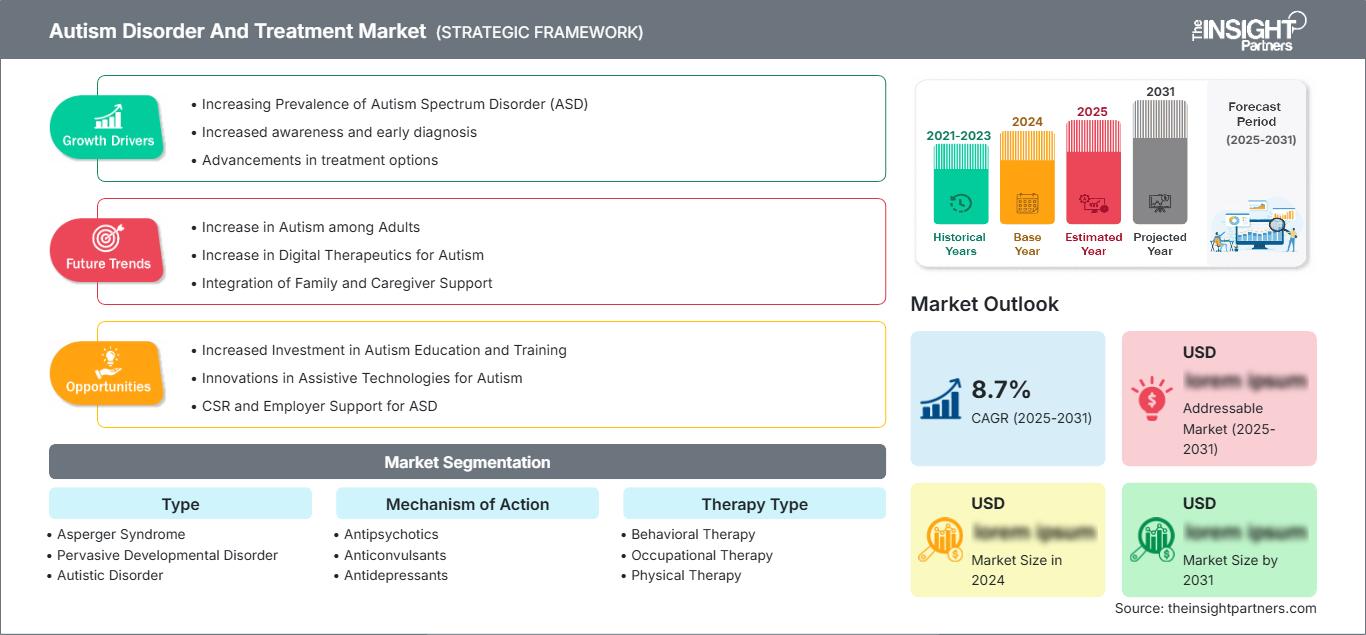
Autism Disorder And Treatment Market: Strategic Insights
Regional Insights
North America autism disorder and treatment market
North America represents the largest regional market, accounting for approximately ~39% of global autism disorder and treatment market size in 2025, with a modeled ~5% CAGR through 2034. The area is fortunate to have a good infrastructure for pediatric health care, diagnoses, therapy, medications, and relatively well-developed means of compensation. Also, US surveillance figures show that there is quite a lot of identified prevalence in the region, with CDC estimating 1 out of 31 eight-year-olds identified with autism in the 2022 ADDM Network sites. The disparities among the various areas highlight the importance of diagnostic and service availability as drivers of demand.
Canada plays an important role in supplying the area with public healthcare, developmental programs, and growing focus on early diagnosis and support of families. The US is still the largest country market in North America due to the size of its specialist ecosystem and high level of activities in pharmaceutical and biotech industries. The demand comes from medication for the associated conditions and therapies, behavioral, occupational, physical, and speech ones.
U.S. autism disorder and treatment market
The United States accounts for approximately ~87% of North American revenue in 2025 and is modeled to expand at approximately ~5% CAGR through 2034. This status is validated through comprehensive diagnosis, developmental clinics, behavioral services, pediatric psychiatry, and the provision of pharmaceuticals. CDC surveillance found autism in about one child out of 31 eight-year-olds from 16 participating communities in 2022; however, the agency adds that the ADDM data cannot be considered representative of the whole country.
The competition consists of Johnson & Johnson Services, Intra-Cellular Therapies, Otsuka Pharmaceutical, AbbVie, Eli Lilly and Company, among others in the pharmaceutical and healthcare industry. Behavioral approaches are vital for treatment while pharmacology deals only with symptoms associated with autism. Development is thus tied to patient identification, therapeutic approaches, caregiver need, provider availability, development of treatment options, and multidisciplinary approach delivery by providers.
Europe autism disorder and treatment market
Europe accounts for approximately ~28% of global revenue in 2025 and is projected to expand at approximately ~4% CAGR through 2034. The region has relatively mature healthcare infrastructure, established pediatric services, and increasing emphasis on early developmental assessment. Germany is the leading country in Europe based on the modeled market structure, supported by a large healthcare system and established specialist networks. The UK also represents a significant market because of structured national health services and established autism assessment and support pathways.
The contribution from France, Italy, and Spain is derived from an increase in developmental services, pediatric neurology, psychiatry, rehabilitation, and speech. The level of market penetration depends on reimbursement policies within each country, diagnostic waiting periods, therapists' availability, and disability support. The need for pharmaceuticals in the market is mainly focused on related symptoms, but behavior therapy and speech interventions have a high proportion of service use. The presence of infrastructure in this region limits growth, yet ongoing diagnosis, proper coordination of services, and interventions ensure future demand.
APAC autism disorder and treatment market
Asia Pacific represents approximately ~23% of global revenue in 2025 and is expected to grow at approximately ~6% CAGR through 2034, making it the fastest-growing regional market. China is considered as the most developed country in the Asia Pacific region owing to its large population, growth in the pediatric healthcare sector, and availability of developmental and behavioral health services. The healthcare infrastructure in Japan is considered advanced, and there are well-trained specialists in the region. South Korea is gradually developing an understanding about autism as well as improving in the diagnosis of autism disorders.
India offers an emerging market owing to improved awareness about autism, developmental screening, private healthcare providers, and specialists' training. Australia has developed systems for diagnosis as well as provision of disability support services. Greater awareness about autism and increased investment in urban healthcare have widened the target market for treatment of autism.
Middle East & Africa autism disorder and treatment market
Middle East & Africa is expected to expand at approximately ~5% CAGR through 2034, supported by increasing awareness, improving specialist infrastructure, and investment in pediatric and rehabilitation services. Saudi Arabia represents an important market in the Middle East, while the UAE benefits from comparatively advanced private healthcare infrastructure and specialist service development. South Africa provides a significant access point for specialized developmental and rehabilitation services in the region.
Healthcare expansion is closely connected with public investment, private hospital development, specialist workforce availability, and family awareness. Energy and infrastructure development indirectly support healthcare capacity by enabling new hospitals, clinics, diagnostic centers, and specialist facilities. Market access nevertheless remains uneven, particularly where specialist therapists and diagnostic professionals are concentrated in major urban centers. Continued infrastructure investment and development of multidisciplinary care pathways can improve treatment availability.

Segmentation Analysis
Type
The Type segment encompasses Asperger Syndrome, Pervasive Developmental Disorder, and Autistic Disorder as specified in the market taxonomy. Commercial demand is influenced by diagnostic classification, historical coding, clinical documentation, and the transition toward spectrum-based diagnostic frameworks. Consequently, classification changes can affect reported segment composition without necessarily representing an equivalent change in underlying patient need.
- Asperger Syndrome: Demand is increasingly integrated into broader autism spectrum classification systems in contemporary diagnostic practice. Its commercial relevance remains connected with previously diagnosed populations, longitudinal records, specialist services, and continued support requirements.
- Pervasive Developmental Disorder: This category retains relevance in historical and administrative datasets. Its importance for market analysis lies in mapping legacy diagnoses and service utilization into contemporary autism care pathways.
- Autistic Disorder: This category represents the central diagnostic construct within the supplied taxonomy and remains commercially relevant across medication, behavioral services, developmental assessment, and multidisciplinary care.
Mechanism of Action
Mechanism of Action is modeled at approximately ~6% CAGR from 2026 to 2034. The segment includes pharmacological approaches used primarily to manage associated symptoms rather than eliminate the core characteristics of autism. Growth is supported by continuing clinical research, differentiated receptor targets, pediatric development, and demand for therapies with improved tolerability and measurable outcomes. Established antipsychotic use provides a commercial foundation, while research into alternative mechanisms can broaden future treatment options.
- Antipsychotics: Antipsychotics remain commercially important for managing selected associated symptoms such as irritability and aggression. Their established clinical use creates a substantial base for the segment while tolerability considerations encourage continued innovation.
- Anticonvulsants: These therapies are relevant where autism coexists with seizure disorders or other neurological conditions. Their role illustrates the importance of comorbidity management within multidisciplinary autism care.
- Antidepressants: Antidepressants can be used for selected co-occurring symptoms or psychiatric conditions. Their position is shaped by patient-specific prescribing, comorbidity patterns, and evidence requirements for pediatric populations.
- Stimulants: Stimulants address attention and hyperactivity symptoms in selected patients, particularly when autism overlaps with attention-related disorders. Demand is influenced by individualized treatment plans and clinician assessment of benefit and tolerability.
Therapy Type
Therapy Type represents the largest main segment, with an estimated ~5% CAGR from 2026 to 2034. Behavioral Therapy leads because structured behavioral intervention is widely incorporated into autism care, while occupational, physical, and speech therapies address communication, functional, sensory, motor, and adaptive needs. Service intensity is influenced by age, symptom profile, caregiver participation, education systems, reimbursement, and availability of trained professionals. Expansion of multidisciplinary care supports sustained demand.
- Behavioral Therapy: Behavioral interventions form a core component of structured autism support, focusing on communication, social interaction, adaptive skills, and behavior management. Demand is strongly linked to diagnosis, early intervention, therapy intensity, and availability of qualified practitioners.
- Occupational Therapy: Occupational therapy addresses functional activities, sensory needs, motor coordination, and adaptive skills. Its strategic importance increases where care models emphasize independence and participation in school, home, and community environments.
- Physical Therapy: Physical therapy is applied where motor, coordination, balance, mobility, or physical development needs are present. Its contribution is generally complementary to behavioral and occupational interventions.
- Speech Therapy: Speech therapy addresses communication, language, and functional interaction needs. Demand remains closely linked to early identification, multidisciplinary assessment, educational support, and individualized developmental goals.
Route of Administration
Route of Administration is modeled at approximately ~6% CAGR from 2026 to 2034, reflecting the continuing importance of oral therapies alongside potential development of specialized formulations and advanced therapeutic approaches. Oral administration remains commercially significant because of convenience and established pharmaceutical infrastructure, whereas intravenous delivery can become relevant for emerging biologic or specialty interventions where systemic exposure or formulation requirements justify supervised administration.
- Oral: Oral administration represents the established delivery pathway for many medicines used in autism-related symptom management. Convenience, established manufacturing, outpatient use, and pediatric formulation development support its continued commercial importance.
- Intravenous: Intravenous administration remains a specialized pathway and may become more relevant where emerging therapies require supervised infusion. Its adoption depends on clinical evidence, administration infrastructure, monitoring requirements, and treatment economics.
Opportunity Snapshot
| Therapy Type | Revenue Contribution | Trend Tag | Adoption Stage |
|---|---|---|---|
| Behavioral Therapy | High | Early Intervention | Mature |
| Occupational Therapy | Medium | Functional Skills | Scaling |
| Physical Therapy | Low | Motor Support | Scaling |
| Speech Therapy | High | Communication Care | Mature |
Autism Disorder And Treatment Market Growth Drivers and Impact Analysis
Earlier Diagnosis Expands the Addressable Treatment Population
Earlier identification directly expands the period during which individuals can access structured interventions and increases the likelihood of multidisciplinary treatment planning. CDC surveillance demonstrates that identified autism prevalence has increased substantially over successive monitoring periods, reaching approximately 1 in 31 eight-year-old children across participating US communities in 2022. This does not mean that prevalence changes are attributable to one factor, because identification practices, diagnostic access, and surveillance methods also influence observed rates. Commercially, earlier diagnosis can increase demand for behavioral, speech, occupational, and supportive services while creating additional opportunities for pharmaceutical treatment of associated symptoms. Providers able to coordinate multiple interventions can capture greater longitudinal care demand.
Expansion of Multidisciplinary Care Increases Therapy Utilization
Autism management frequently requires more than one intervention because communication, behavioral, sensory, developmental, and physical needs can differ substantially among individuals. This creates a multidisciplinary service model in which behavioral, occupational, physical, and speech therapies can be combined according to patient requirements. The commercial effect is an increase in therapy intensity and recurring service utilization rather than reliance on a single treatment episode. Healthcare systems that strengthen referral networks, specialist training, and care coordination can improve access to these services. For suppliers and providers, the opportunity is increasingly linked to integrated delivery models that connect diagnosis, therapy planning, caregiver education, progress monitoring, and long-term follow-up.
Pharmaceutical Innovation Broadens Treatment Options for Associated Symptoms
Pharmaceutical development remains an important market driver because currently available medicines primarily address associated symptoms rather than the defining characteristics of autism. Established antipsychotic treatments create a commercial base, while research programs are exploring additional mechanisms and more targeted symptom management. New development activity can increase market value when therapies demonstrate clinically meaningful benefits, tolerability, pediatric suitability, and manageable administration requirements. It can also encourage greater differentiation among manufacturers. The resulting market impact extends beyond new product sales because improved treatment options can influence prescribing patterns, specialist engagement, clinical trial investment, and the development of companion patient-support services.
Autism Disorder And Treatment Market Future Trends
Digital Measurement and Remote Therapy Integration
Digital tools are likely to become more deeply integrated into autism care as providers seek continuous information between clinical visits. Remote therapy platforms, caregiver reporting, digital assessments, wearable measurements, and structured behavioral data can support longitudinal monitoring and improve communication between families and clinicians. The autism disorder and treatment market trends are therefore expected to move toward models in which treatment progress is documented through multiple data sources rather than episodic clinic assessments alone. For pharmaceutical developers, better digital endpoints may also strengthen clinical trial design by improving measurement of real-world symptoms. Adoption will depend on clinical validation, usability, privacy safeguards, reimbursement, and interoperability with existing healthcare systems.
More Targeted Neurodevelopmental Drug Development
Future pharmaceutical development is expected to increasingly focus on defined symptom domains and biologically informed patient groups rather than treating autism as a single homogeneous condition. Research into receptor signaling, neurodevelopmental pathways, genetics, and biomarkers could support more differentiated clinical development strategies. Such approaches may also encourage partnerships between pharmaceutical companies, academic institutions, diagnostics developers, and specialist clinical networks. The commercial implications include greater segmentation of clinical trials, more precise patient recruitment, and potential development of therapies designed around specific symptom profiles. The pathway remains scientifically challenging because autism is heterogeneous and treatment outcomes can vary substantially across individuals.
Autism Disorder And Treatment Market Opportunities
Integrated Therapy Networks in Underserved Geographies
A major opportunity exists in building coordinated autism therapy networks in countries where diagnosis is increasing faster than specialist capacity. Providers can combine behavioral, speech, occupational, and physical services through regional centers supported by telehealth and standardized care protocols. This model can reduce geographic dependence on highly concentrated specialist workforces while allowing complex cases to be escalated to tertiary centers. Investors and healthcare organizations can also develop caregiver-training programs that extend therapy support beyond clinical settings. The autism disorder and treatment market Forecasts point to increasing commercial relevance of such models as Asia Pacific, the Middle East, and other developing healthcare systems strengthen developmental screening and disability-support infrastructure.
Specialized Pediatric Formulations and Patient Support Platforms
Another opportunity is the development of pediatric-friendly formulations and integrated support programs around pharmacological treatment. Administration convenience, dose flexibility, tolerability, caregiver education, adherence monitoring, and communication with clinicians can materially affect treatment utilization. Companies with established neuroscience portfolios can leverage formulation expertise, specialty distribution, and patient-support capabilities to address these needs. Digital adherence tools and remote follow-up can complement traditional specialist visits, particularly where healthcare systems are geographically dispersed. Commercial strategies that connect medication with education, monitoring, and care coordination can differentiate offerings without assuming that pharmaceutical treatment replaces behavioral or supportive interventions.
Recent Developments
- September 2026: Johnson & Johnson Services Johnson & Johnson clinical-trial platform continued to list its Phase 3 study of lumateperone for irritability associated with autism spectrum disorder in pediatric patients. The randomized study is evaluating high-dose and low-dose lumateperone against placebo in children and adolescents, reflecting continued development of pharmacological options for autism-associated symptoms.
- September 2026: Acadia Pharmaceuticals Inc.'s scientific publications reported Phase 2 randomized clinical-trial work evaluating pimavanserin for irritability in children and adolescents with autism spectrum disorder. The program addresses an established unmet treatment need and investigates a selective serotonin receptor approach distinct from currently approved antipsychotic options.
- April 2025: F. Hoffmann-La Roche Ltd announced a planned US$50 billion investment in US pharmaceuticals and diagnostics over five years, including new and expanded R&D and manufacturing facilities. Although the investment spans multiple therapeutic areas, the expanded neuroscience and advanced development infrastructure is relevant to companies maintaining neurodevelopmental research capabilities.
Frequently Asked Questions

- Comprehensive Market Sizing and Forecast Analysis
- Detailed Segmentation Analysis
- In-Depth Market Dynamics Assessment
- Regional and Country-Level Insights
- Competitive Landscape and Company Benchmarking
- Strategic Business Intelligence
Recent Reports
Testimonials

The Insight Partners provided valuable market intelligence that supported our global go-to-market strategy. Their team was professional, responsive, and attentive to our feedback, providing thoughtful analysis and helpful methodological clarifications throughout the project.
Junmo Kim Chief Financial Officer (CFO), Enertech Co., Ltd.
The Insight Partners' SCADA System Market report is comprehensive, with valuable insights on current trends and future forecasts. The team was highly professional, responsive, and supportive throughout. We are very satisfied and highly recommend their services.
RAN KEDEM Partner, Reali Technologies LTDs
I requested a report on a very specific software market and the team produced the report in a few days. The information was very relevant and well presented. I then requested some changes and additions to the report. The team was again very responsive and I got the final report in less than a week.
JEAN-HERVE JENN Chairman, Future Analytica
We worked with The Insight Partners for an important market study and forecast. They gave us clear insights into opportunities and risks, which helped shape our plans. Their research was easy to use and based on solid data. It helped us make smart, confident decisions. We highly recommend them.
PIYUSH NAGPAL Sr. Vice President, High Beam Global
The Insight Partners delivered insightful, well-structured market research with strong domain expertise. Their team was professional and responsive throughout. The user-friendly website made accessing industry reports seamless. We highly recommend them for reliable, high-quality research services
YUKIHIKO ADACHI CEO, Deep Blue, LLC.
This is the first time I have purchased a market report from The Insight Partners.While I was unsure at first, I visited their web site and felt more comfortable to take the risk and purchase a market report.I am completely satisfied with the quality of the report and customer service. I had several questions and comments with the initial report, but after a couple of dialogs over email with their analyst I believe I have a report that I can use as input to our strategic planning process.Thank you so much for taking the extra time and making this a positive experience.I will definitely recommend your service to others and you will be my first call when we need further market data.
JOHN SUZUKI President and Chief Executive Officer, Board Director, BK Technologies
I wish to appreciate your support and the professionalism you displayed in the course of attending to my request for information regarding to infectious disease IVD market in Nigeria. I appreciate your patience, your guidance, and the fact that you were willing to offer a discount, which eventually made it possible for us to close a deal. I look forward to engaging The Insight Partners in the future, all thanks to the impression you have created in me as a result of this first encounter.
DR CHIJIOKE ONYIA MANAGING DIRECTOR, PineCrest Healthcare Ltd.Reason to Buy
- Informed Decision-Making
- Understanding Market Dynamics
- Competitive Analysis
- Identifying Emerging Markets
- Customer Insights
- Market Forecasts
- Risk Mitigation
- Boosting Operational Efficiency
- Strategic Planning
- Investment Justification
- Tracking Industry Innovations
- Aligning with Regulatory Trends





 Get Free Sample for