Decorative Paints Market Size, Growth & Demand by 2034
Decorative Paints Market Size and Forecast (2021 - 2034), Global and Regional Share, Trend, and Growth Opportunity Analysis Report Coverage: By Type (Water Based and Solvent Based) and Application (Residential and Non-Residential)
Historic Data: 2021-2024 | Base Year: 2025 | Forecast Period: 2026-2034- Report Date : Apr 2026
- Report Code : TIPRE00015887
- Category : Chemicals and Materials
- Status : Upcoming
- Available Report Formats :


- No. of Pages : 150

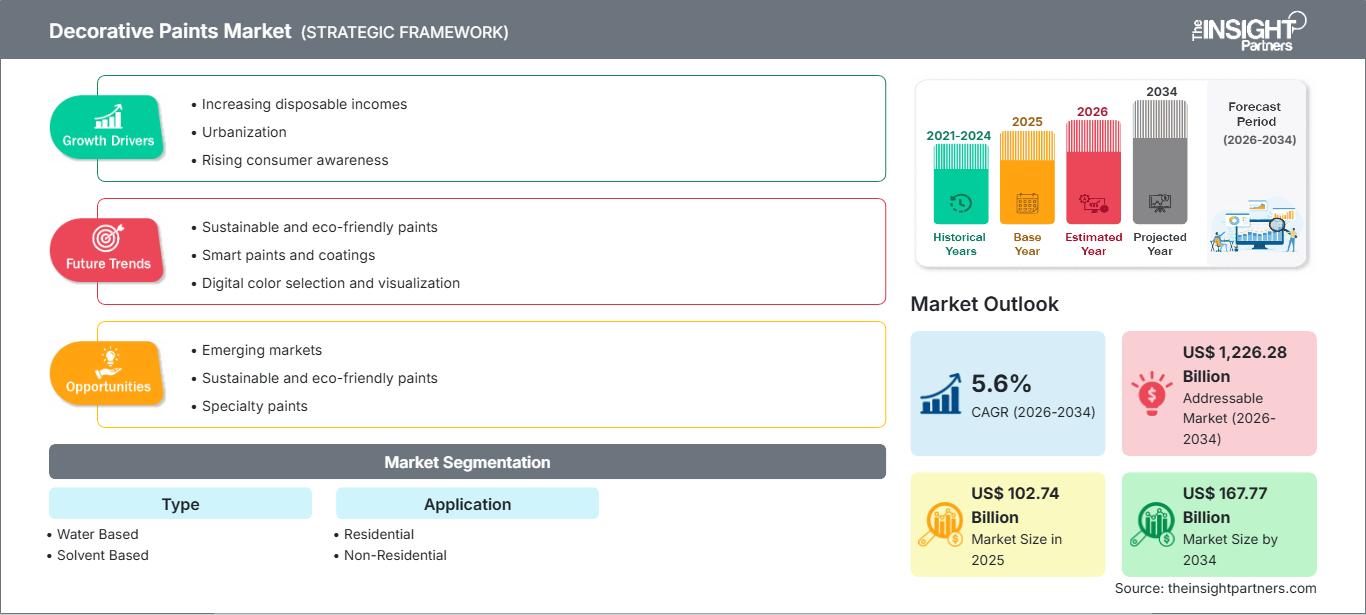
The global Decorative Paints market size is projected to reach US$ 167.77 billion by 2034 from US$ 102.74 billion in 2025. The market is anticipated to register a CAGR of 5.6% during the forecast period 2026–2034. Key market dynamics include a heightening global focus on sustainable "green" building materials, rising urbanization in emerging economies, and an increase in consumer discretionary spending on home aesthetics. Additionally, the market is expected to benefit from the expansion of organized real estate projects, the shortening of residential repainting cycles, and the integration of advanced functional properties like antimicrobial and self-cleaning technologies.
Decorative Paints Market Analysis
The decorative paints market analysis indicates a definitive pivot toward high-performance, low-emission formulations as regulatory pressure on Volatile Organic Compounds (VOC) intensifies. Businesses must adapt to a "solution-oriented" sales model where products are bundled with digital tools like AI-driven color visualizers and AR application previews. Strategic opportunities lie in the premiumization of textures, where consumers are willing to pay a surplus for finishes that mimic natural stone, silk, or metal. To succeed, manufacturers should focus on supply chain localized resilience, particularly in sourcing sustainable resins and pigments, to mitigate the volatility of crude-oil-linked raw material costs. Competitive differentiation is now moving beyond color variety to include health-centric branding, positioning paints as air-purifying agents rather than just aesthetic layers.
Decorative Paints Market Overview
Decorative paints provide the primary aesthetic and protective finish for the global construction and renovation sectors. Traditionally dominated by oil-based enamels, the decorative paints industry has seen a massive transition toward water-borne acrylic emulsions due to environmental awareness and ease of application. The market is split between the "Do-It-Yourself" (DIY) segment, prevalent in North America and Europe, and the "Do-It-For-Me" (DIFM) segment, which remains dominant in Asia-Pacific. As the real estate sector recovers post-pandemic, the demand for both interior and exterior coatings is surging, fueled by urban migration and the "Housing for All" initiatives in developing nations. While heritage brands maintain strong distribution networks, new entrants are disrupting the space through aggressive digital marketing and eco-certified product lines. For instance, the market in the US represents a mature landscape defined by a robust home-improvement culture and a pivot toward "clean-label" chemistry. Market expansion is driven by steady residential activity in suburban regions and a significant consumer shift toward water-based, low-emission formulations that prioritize indoor air quality and sustainable living.
Customize This Report To Suit Your Requirement
Get FREE CUSTOMIZATIONDecorative Paints Market: Strategic Insights
-
Get Top Key Market Trends of this report.This FREE sample will include data analysis, ranging from market trends to estimates and forecasts.
Decorative Paints Market Drivers and Opportunities
Market Drivers:
- Rapid Global Urbanization and Housing Projects: As millions migrate to urban centers, particularly in India, China, and Africa, the demand for new residential units and commercial hubs is skyrocketing. Government-backed affordable housing schemes are acting as a massive volume driver for the decorative segment.
- Growing Consumer Focus on Interior Aesthetics and Personalization: The "home as a sanctuary" trend, amplified by social media influence, has led homeowners to invest more frequently in repainting. Shorter repainting cycles (reducing from 8 years to 4–5 years) are significantly boosting market turnover.
- Stringent Environmental Regulations and Sustainability: Regulatory bodies like the EPA and REACH are enforcing strict limits on VOC emissions. This shift is driving the adoption of eco-friendly, water-based, and bio-based paints, which now command a growing share of the premium market.
Market Opportunities:
- Integration of Nanotechnology and Smart Coatings: There is significant potential in developing "smart" decorative paints that offer functional benefits such as heat insulation, self-healing surfaces, and antimicrobial protection for healthcare and hospitality environments.
- Expansion in Tier 2 and Tier 3 Cities: While urban markets are maturing, the rising disposable income in smaller cities and rural areas presents an untapped frontier for organized paint manufacturers to expand their distribution footprints.
- E-commerce and Digital Color Consulting: Developing robust D2C (Direct-to-Consumer) platforms and virtual reality tools allows brands to bypass traditional retail barriers, offering personalized experiences and doorstep delivery of customized "tinted" paints.
Decorative Paints Market Report Segmentation Analysis
The Decorative Paints Market share is analyzed across various segments to provide a clearer understanding of its structure, growth potential, and emerging trends. Below is the standard segmentation approach used in most industry reports:
By Type:
- Water-Based: The dominant technology segment, characterized by low odor, quick drying times, and low VOC content. It is the preferred choice for indoor residential applications due to health and safety benefits.
- Solvent-Based: Though declining in interior use due to environmental concerns, these paints remain vital for exterior surfaces and wood finishes requiring high durability, superior gloss, and resistance to extreme weather conditions.
By Application:
- Residential: The largest application segment, encompassing new construction and the high-volume "repaint and remodel" market. Growth is driven by population expansion and the rise of the DIY home improvement culture.
- Non-Residential: Includes commercial offices, hotels, hospitals, and infrastructure projects. This segment demands high-performance coatings that combine aesthetic appeal with extreme durability and ease of maintenance.
By Geography:
- North America
- Europe
- Asia Pacific
- South & Central America
- Middle East & Africa
Decorative Paints Market Report Scope
| Report Attribute | Details |
|---|---|
| Market size in 2025 | US$ 102.74 Billion |
| Market Size by 2034 | US$ 167.77 Billion |
| Global CAGR (2026 - 2034) | 5.6% |
| Historical Data | 2021-2024 |
| Forecast period | 2026-2034 |
| Segments Covered |
By Type
|
| Regions and Countries Covered |
North America
|
| Market leaders and key company profiles |
|
Decorative Paints Market Players Density: Understanding Its Impact on Business Dynamics
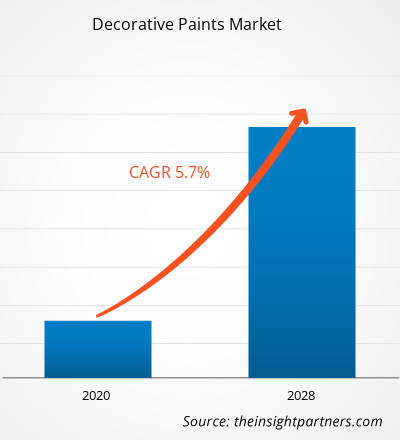
The Decorative Paints Market is growing rapidly, driven by increasing end-user demand due to factors such as evolving consumer preferences, technological advancements, and greater awareness of the product's benefits. As demand rises, businesses are expanding their offerings, innovating to meet consumer needs, and capitalizing on emerging trends, which further fuels market growth.
Decorative Paints Market Share Analysis by Geography
Asia-Pacific is expected to grow fastest in the coming years. Emerging markets in South & Central America, the Middle East, and Africa also have many untapped opportunities for premium decorative paint producers and infrastructure-focused manufacturers to expand. The decorative paints market is undergoing a significant transformation, moving from traditional chemical coatings to high-value sustainable solutions. Growth is driven by rapid urban development, a surge in "green" building mandates, and the expansion of the luxury home renovation sector. Below is a summary of market share and trends by region:
1. North America
- Market Share: Holds a substantial revenue share (approx. 22-25%) characterized by high per-capita consumption and a mature architectural stock.
- Key Drivers:
- Surge in commercial and institutional construction across the United States.
- Rapid shift to low-VOC water-borne technologies led by strict California and Northeast regulations.
- AI-driven color-matching platforms are accelerating repainting cycles in urban metros.
- Trends: Homeowners are moving away from "quick flips" toward high-quality, durable finishes that offer longevity, while the DIY segment remains resilient as a cost-effective tool for home transformation.
2. Europe
- Market Share: Commands a significant global share, anchored by stringent environmental standards and a massive renovation sector in Western Europe.
- Key Drivers:
- Construction-sector renovation boom boosting demand for high-performance architectural coatings.
- Strict EU environmental mandates (REACH) are driving a 100% transition to sustainable water-based platforms.
- Rising demand for heritage-site restoration requires breathable, high-durability mineral paints.
- Trends: A strategic shift toward bio-based binders and nano-enabled protective systems, coupled with the rise of "wellbeing" paints that improve indoor air quality.
3. Asia-Pacific
- Market Share: The largest and fastest-growing region globally, acting as the primary engine for volume and value growth.
- Key Drivers:
- Massive infrastructure investment and "Smart City" projects in China and India.
- Accelerating urbanization and rising disposable incomes are leading to a preference for premium interior finishes.
- Government-led affordable housing programs are multiplying, coating touchpoints across residential clusters.
- Trends: Shorter repainting intervals in Tier-1 cities (narrowing from 5–7 years to 3–5 years) and heavy reliance on digital AR tools for color visualization.
4. South and Central America
- Market Share: Emerging market with a resurgent residential sector, particularly in Brazil and Colombia.
- Key Drivers:
- Resurgent residential and commercial construction activity is reaching pre-pandemic levels.
- Increasing infrastructure modernization projects and regional connectivity benefits.
- Rapid adoption of "cool-roof" reflective coatings in tropical urban centers to combat heat.
- Trends: Growth of "farm-to-table" style boutique paint brands and the introduction of online DIY micro-brands that bypass traditional retail barriers.
5. Middle East and Africa
- Market Share: Developing market with high demand visibility driven by tourism-led giga-projects and rapid urban sprawl.
- Key Drivers:
- Public megaproject pipelines in the GCC, such as Saudi Arabia's NEOM and Dubai's Expo City.
- Tourism-led construction boom across the Red Sea and Gulf regions.
- Urban housing rebound in key African economies like Egypt, Nigeria, and Kenya.
- Trends: Implementation of self-cleaning facade technologies for high-rise maintenance and a focus on solar-reflective coatings to enhance building energy efficiency in arid climates.
High Market Density and Competition
Competition is intensifying due to the presence of established leaders such as Nippon Paint, Akzo Nobel N.V., BASF SE, Dow Inc., Axalta Coating Systems, Asian Paints, PPG Industries Inc., RPM International Inc., and Kansai, which also contribute to a diverse and rapidly expanding market landscape.
This competitive environment pushes vendors to differentiate through:
- Premiumization and Health-Centric Branding: Position decorative paints as more than just aesthetic coatings by emphasizing functional benefits like air purification, antimicrobial properties, and zero-VOC certifications for health-conscious homeowners.
- Product Innovation in Texture and Finish: Beyond standard colors, companies now offer high-end artisanal finishes, including metallic sheens, velvet textures, and "smart" coatings that provide thermal insulation or self-cleaning capabilities for exterior surfaces.
- Vertical Integration and Service Extension: Major players are moving beyond product sales to manage the entire "beautification" journey. This includes acquiring specialized pigment subsidiaries and offering end-to-end professional painting services to ensure quality control and brand loyalty.
Opportunities and Strategic Moves
- Expansion into Smart Cities and Green Building Projects: Partner with large-scale infrastructure developers and government bodies to supply eco-certified coatings for sustainable urban housing and "Smart City" initiatives, particularly in the surging Asia-Pacific and Middle East markets.
- Hyper-Personalization via Digital D2C Channels: Leverage e-commerce and digital consulting platforms to tap into the growing DIY (Do-It-Yourself) segment. Offering customized, small-batch "designer" colors directly to consumers through online portals removes traditional retail barriers and increases margins.
- Investment in Bio-Based and Regenerative Raw Materials: Incorporate sustainable chemistry and plant-based resins into paint formulations to appeal to environmentally conscious Gen Z and Millennial consumers who prioritize ethical sourcing and low carbon footprints in home decor.
Major Companies operating in the Decorative Paints Market are:
- Nippon Paint
- Akzo Nobel N.V.
- BASF SE
- Dow Inc.
- Axalta Coating Systems
- Asian Paints
- PPG Industries Inc.
- RPM International Inc
- Kansai
Disclaimer: The companies listed above are not ranked in any particular order.
Decorative Paints Market News and Recent Developments
- In November 2025, Akzo Nobel N.V. and Axalta Coating Systems Ltd. entered into a definitive agreement to combine in an all-stock merger of equals, creating a premier global coatings company with an enterprise value of approximately $25 billion. The combination brought together two industry leaders with complementary portfolios of highly regarded brands, including their prominent lines of Decorative Paints, to better serve customers across key end markets and enhance value for shareholders, employees, and other stakeholders. Anchored in both companies' histories and broad expertise, the combined business established a highly attractive financial profile and industry-leading innovation capabilities with a balanced global footprint spanning over 160 countries.
- In March 2025, Nippon Paint Holdings Co., Ltd. announced that it had completed the acquisition and payment procedures for all equity interests of LSF11 A5 TopCo LLC and its subsidiaries. This strategic move made the specialty formulator a subsidiary of Nippon Paint Holdings, effectively strengthening the group's global supply chain for raw materials used in the production of Decorative Paints. By integrating AOC's operations across the Americas and Europe, the company enhanced its chemical formulation expertise to support its high-performance architectural coatings divisions.
Decorative Paints Market Report Coverage and Deliverables
The "Decorative Paints Market Size and Forecast (2021–2034)" report provides a detailed analysis of the market covering below areas:
- Decorative Paints Market size and forecast at global, regional, and country levels for all the key market segments covered under the scope
- Decorative Paints Market trends, as well as market dynamics such as drivers, restraints, and key opportunities
- Detailed PEST and SWOT analysis
- Decorative Paints Market analysis covering key market trends, global and regional framework, major players, regulations, and recent market developments
- Industry landscape and competition analysis covering market concentration, heat map analysis, prominent players, and recent developments in the Decorative Paints Market.
- Detailed company profiles
Frequently Asked Questions

- Historical Analysis (2 Years), Base Year, Forecast (7 Years) with CAGR
- PEST and SWOT Analysis
- Market Size Value / Volume - Global, Regional, Country
- Industry and Competitive Landscape
- Excel Dataset
Recent Reports
Testimonials

The Insight Partners' SCADA System Market report is comprehensive, with valuable insights on current trends and future forecasts. The team was highly professional, responsive, and supportive throughout. We are very satisfied and highly recommend their services.
RAN KEDEM Partner, Reali Technologies LTDs
I requested a report on a very specific software market and the team produced the report in a few days. The information was very relevant and well presented. I then requested some changes and additions to the report. The team was again very responsive and I got the final report in less than a week.
JEAN-HERVE JENN Chairman, Future Analytica
We worked with The Insight Partners for an important market study and forecast. They gave us clear insights into opportunities and risks, which helped shape our plans. Their research was easy to use and based on solid data. It helped us make smart, confident decisions. We highly recommend them.
PIYUSH NAGPAL Sr. Vice President, High Beam Global
The Insight Partners delivered insightful, well-structured market research with strong domain expertise. Their team was professional and responsive throughout. The user-friendly website made accessing industry reports seamless. We highly recommend them for reliable, high-quality research services
YUKIHIKO ADACHI CEO, Deep Blue, LLC.
This is the first time I have purchased a market report from The Insight Partners.While I was unsure at first, I visited their web site and felt more comfortable to take the risk and purchase a market report.I am completely satisfied with the quality of the report and customer service. I had several questions and comments with the initial report, but after a couple of dialogs over email with their analyst I believe I have a report that I can use as input to our strategic planning process.Thank you so much for taking the extra time and making this a positive experience.I will definitely recommend your service to others and you will be my first call when we need further market data.
JOHN SUZUKI President and Chief Executive Officer, Board Director, BK Technologies
I wish to appreciate your support and the professionalism you displayed in the course of attending to my request for information regarding to infectious disease IVD market in Nigeria. I appreciate your patience, your guidance, and the fact that you were willing to offer a discount, which eventually made it possible for us to close a deal. I look forward to engaging The Insight Partners in the future, all thanks to the impression you have created in me as a result of this first encounter.
DR CHIJIOKE ONYIA MANAGING DIRECTOR, PineCrest Healthcare Ltd.Reason to Buy
- Informed Decision-Making
- Understanding Market Dynamics
- Competitive Analysis
- Identifying Emerging Markets
- Customer Insights
- Market Forecasts
- Risk Mitigation
- Boosting Operational Efficiency
- Strategic Planning
- Investment Justification
- Tracking Industry Innovations
- Aligning with Regulatory Trends




 Get Free Sample For