
Medical Thrombus Aspiration Catheter Market Trends, Size & Forecast by 2034
Coverage: By Product Type (Hydrophilic Type, Lumen Type); Application (Hospital, Clinic, Others), and Geography (North America, Europe, Asia Pacific, and South and Central America)
- Status : Data Released
- Report Code : TIPRE00013467
- Category : Life Sciences
- No. of Pages : 150
- Available Report Formats :


- Last update date : June 26, 2026


2025 Market Size
US$ 2.17 Bn
Base year value
2034 Forecast
US$ 4.65 Bn
Projected by 2034
CAGR 2026-2034
8.9 %
Growth rate
Addressable Market
US$ 30.64 Bn
(2026-2034)
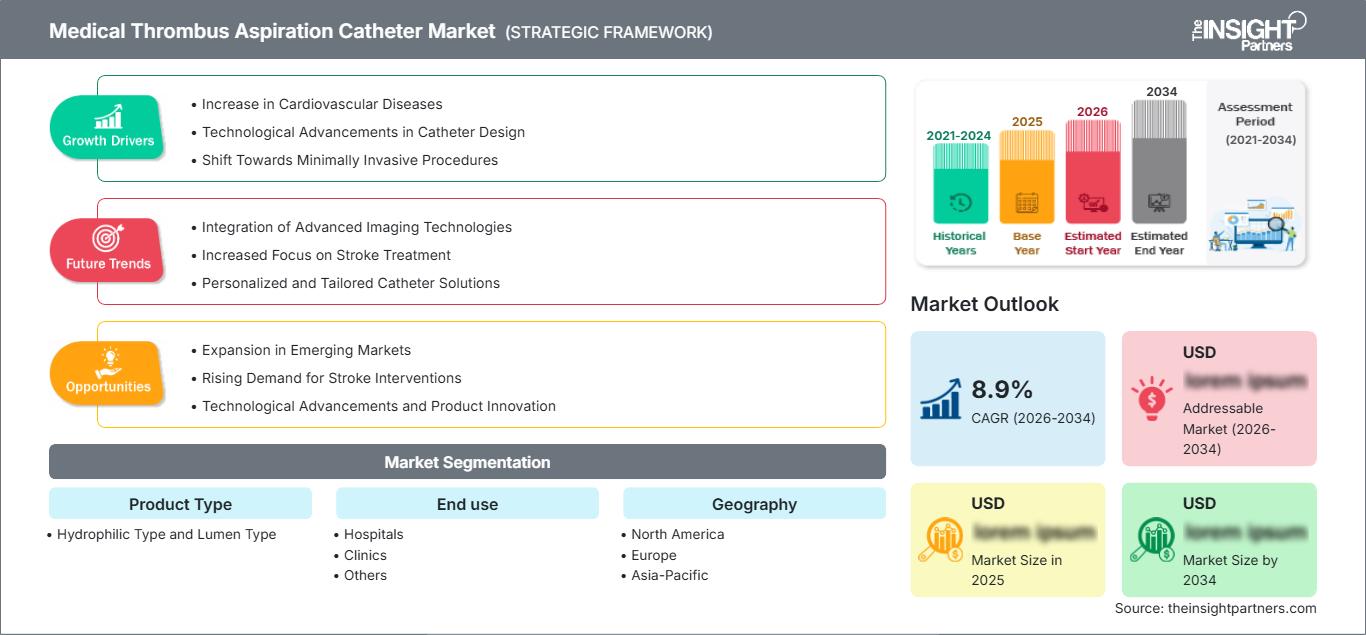
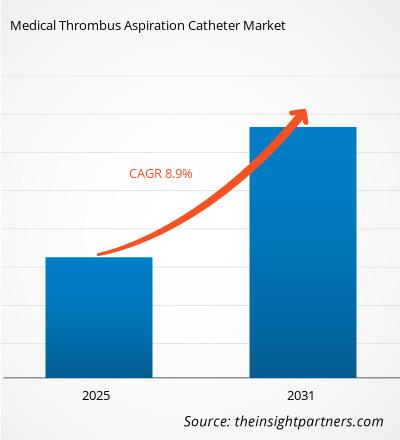
The global medical thrombus aspiration catheter market size is projected to reach US$ 4.65 billion by 2034 from US$ 2.17 billion in 2025. The market is anticipated to register a CAGR of 8.9% during the forecast period 2026–2034.
Key market dynamics include a heightening global focus on minimally invasive surgeries, rising consumer and clinical awareness regarding the critical importance of rapid revascularization to restore blood flow in acute vascular events, and a significant shift toward large-bore, high-trackability mechanical systems. Additionally, the market is expected to benefit from the growing integration of AI-powered diagnostic triage tools that accelerate stroke care pathways, the expansion of specialized cardiac catheterization labs across emerging economies, and the increasing inclusion of aspiration thrombectomy in high-value interventional segments like treating acute coronary syndrome and pulmonary embolism.
Medical Thrombus Aspiration Catheter Market Analysis
The medical thrombus aspiration catheter market analysis shows a shift toward high-performance mechanical and large-bore aspiration platforms as clinicians prioritize high first-pass success rates and minimal vessel wall trauma. The market is bifurcated into traditional manual aspiration tools for standard coronary cases and high-growth, automated or pulse-adapted aspiration systems optimized for large-vessel peripheral and neurovascular occlusions. Strategic opportunities are emerging in specialized neurointerventional and endovascular centers, where the rising incidence of ischemic strokes and complex deep vein thrombosis cases creates an acute demand for advanced clot-retrieval devices. The analysis also notes that market expansion depends heavily on clinical trial sponsorships, validating safety profiles, and navigating stringent regulatory clearance processes such as FDA and CE mark pathways. Competitive differentiation now stands out depending on engineering innovations that highlight adaptive suction algorithms, hydrophilic coatings for superior trackability through tortuous anatomy, and device miniaturization to access smaller distal vessels. This approach helps leading medical device manufacturers secure lucrative group purchasing organization hospital contracts and command premium pricing.
Medical Thrombus Aspiration Catheter Market Overview
Interventional stroke and cardiovascular care have evolved from highly complex, niche surgical alternatives to mainstream first-line clinical protocols. The market includes dedicated neurovascular aspiration catheters, coronary thrombectomy devices, and peripheral vascular systems. Both global medical technology giants and specialized vascular startups compete in this market, using advanced materials like nitinol reinforcement, multi-lumen polymers, and specialized hydrophilic outer jackets. Growing demand for fast-acting, minimally invasive clot extraction options among healthcare providers in North America and Europe has increased the adoption of mechanical and aspiration thrombectomy as a standard of care. North America leads in revenue due to its highly established healthcare infrastructure and favorable reimbursement structures like specific CPT codes, while Asia-Pacific is advancing rapidly in regional manufacturing facilities, clinical trial adoptions, and healthcare retail networks. The US market is the most developed, driven by an aging baby-boomer demographic susceptible to target diseases like myocardial infarctions and acute ischemic stroke. Competition among medical device brands is fueling greater technological variety, emphasizing enhanced cross-selling synergies where catheters are bundled with proprietary guidewires, microcatheters, and stent retrievers.
● REPORT CUSTOMIZATION
Tailor This Report To Align With Your Specific Business Requirements
This report can be customized to align precisely with your business objectives, scope, and target markets. Customization options include tailored segmentation, geography, competitive analysis, and strategic insights to support informed decision-making.
Customize This Report →WHAT YOU CAN ADJUST
- ● Segmentations
- ● Geography
- ● Competitive Analysis
- ● Language Preferences
Medical Thrombus Aspiration Catheter Market: Strategic Insights
-
Get Top Key Market Trends of this report.This FREE sample will include data analysis, ranging from market trends to estimates and forecasts.
Medical Thrombus Aspiration Catheter Market Drivers and Opportunities
Market Drivers
- Surging Global Burden of Cardiovascular and Ischemic Diseases: The rising global prevalence of target acute conditions like acute coronary syndrome, ischemic strokes, and peripheral arterial diseases directly expands the clinical patient pool requiring immediate mechanical clot aspiration.
- Clinical Shift Toward Minimally Invasive Interventions: The strong clinical preference for catheter-based thrombectomy over systemic pharmacological thrombolytics, due to immediate clot resolution and significantly lower systemic bleeding risks, is driving massive institutional adoption.
- Technological Innovations in Catheter Architecture: Continuous advancements in catheter design, including the implementation of large-bore diameters, kink-resistant dual lumens, and advanced distal tip microstructures, have dramatically boosted suction force and procedural speed.
Market Opportunities
- Expansion of Ambulatory Surgical Centers and Outpatient Clinics: Beyond traditional emergency hospital cath labs, the increasing capability and authorization of outpatient vascular centers to perform minor thromboembolic interventions present a massive new retail supply channel.
- Integration of Artificial Intelligence and Smart Suction Networks: Developing adaptive, AI-supported aspiration systems that dynamically modify pulse rates and suction pressures to maximize clot extraction while minimizing blood loss represents a highly lucrative frontier for R&D.
- Untapped Growth in Emerging APAC and Latin American Corridors: Forming localized distribution partnerships and setting up manufacturing hubs in fast-developing markets like China, India, and Brazil can tap into a surging middle-class demand for advanced structural heart and stroke care.
Medical Thrombus Aspiration Catheter Market Report Segmentation Analysis
The medical thrombus aspiration catheter market share is analyzed across various segments to provide a clearer understanding of its structure, growth potential, and emerging trends. Below is the standard segmentation approach used in most industry reports:
By Product Type
- Hydrophilic Type: A dominant and fast-growing segment utilizing specialized chemical coatings that become highly lubricious upon contact with moisture. This property reduces friction against the vessel wall, making it highly preferred for navigating complex, tortuous neurovascular and peripheral pathways.
- Lumen Type: Consists of multi-lumen and dual-lumen architectures designed for structural strength and dedicated wire tracking. This remains a foundational volume driver within routine coronary interventions due to its established track record and cost efficiencies.
By Application
- Hospital
- Clinic
By Geography
- North America
- Europe
- Asia Pacific
- South & Central America
- Middle East & Africa
Medical Thrombus Aspiration Catheter Market Report Scope
| Report Attribute | Details |
|---|---|
| Market size in 2025 | US$ 2.17 Billion |
| Market Size by 2034 | US$ 4.65 Billion |
| Global CAGR (2026 - 2034) | 8.9% |
| Historical Data | 2021-2024 |
| Forecast period | 2026-2034 |
| Segments Covered |
By Product Type
|
| Regions and Countries Covered |
North America
|
| Market leaders and key company profiles |
|
Medical Thrombus Aspiration Catheter Market Players Density: Understanding Its Impact on Business Dynamics
The Medical Thrombus Aspiration Catheter Market is growing rapidly, driven by increasing end-user demand due to factors such as evolving consumer preferences, technological advancements, and greater awareness of the product's benefits. As demand rises, businesses are expanding their offerings, innovating to meet consumer needs, and capitalizing on emerging trends, which further fuels market growth.
Medical Thrombus Aspiration Catheter Market Share Analysis by Geography
Asia-Pacific is expected to grow fastest in the coming years. Emerging markets in South & Central America, the Middle East, and Africa also have many untapped opportunities for advanced medical device manufacturers and endovascular innovators to expand.
The medical thrombus aspiration catheter market is undergoing a significant transformation, moving from a niche interventional option to a global frontline treatment for acute thromboembolic conditions. Growth is driven by an aging global populace, rising rates of obesity and hypertension, and clinical guidelines favoring mechanical intervention over standalone drug therapies. Below is a summary of market share and trends by region:
1. North America
- Market Share: Holds the largest global share, anchored by an established network of comprehensive stroke centers and high healthcare expenditure.
- Key Drivers:
- High regional incidence of obesity-related acute coronary syndrome and deep vein thrombosis.
- Favorable, well-defined Medicare and private insurance add-on reimbursement codes that incentivize premium device usage.
- Strong concentration of leading market innovators and early clinical trial adoptions.
- Trends: Widespread integration of AI-imaging triage software in emergency networks to expedite patient transit to thrombectomy-capable facilities, directly increasing target procedure volumes.
2. Europe
- Market Share: Represents a highly mature, major global market sector characterized by well-structured national healthcare networks and stringent centralized device regulations.
- Key Drivers:
- Robust, widespread deployment of formalized stroke networks connecting rural hospitals to central interventional hubs.
- High domestic clinical utilization of mechanical aspiration systems across major regional sub-economies like Germany, France, and the UK.
- Strong emphasis on post-market surveillance data and clinical safety outcomes.
- Trends: A strategic shift toward adopting eco-efficient, single-use, large-bore neurovascular catheter sets while dealing with strict documentation lifecycles mandated by revised European Medical Device Regulations.
3. Asia-Pacific
- Market Share: Positioned as the fastest-growing region globally, fueled by massive demographic shifts and rapid healthcare modernization across emerging economies.
- Key Drivers:
- A vast, expanding patient population in nations like China and India is experiencing rising rates of lifestyle-induced hypertension and vascular occlusions.
- Aggressive government initiatives to construct new specialty cardiac and neurointerventional hospitals in second- and third-tier urban centers.
- Rising disposable incomes and expanding public medical insurance coverage.
- Trends: Rapid shift toward localized device innovation, marked by leading multi-national entities entering joint B2B partnerships or setting up regional manufacturing and R&D plants to navigate domestic pricing pressures.
4. South and Central America
- Market Share: An emerging, evolving market landscape featuring a growing private healthcare tier in key metropolitan hubs like São Paulo and Santiago.
- Key Drivers:
- Increasing medical training and local clinical awareness regarding the distinct clinical benefits of rapid mechanical clot aspiration over standalone systemic thrombolysis.
- Modernization of private clinical cath labs to attract medical tourism and offer state-of-the-art emergency services.
- Public healthcare investments targeting reduced long-term stroke disability costs.
- Trends: Gradual growth of specialized boutique interventional distribution firms and a steady rise in importing FDA-approved, hydrophilic catheter systems to cater to high-income private patient segments.
5. Middle East and Africa
- Market Share: A developing market segment marked by stark sub-regional variations, shifting from highly advanced, subsidized healthcare models in the GCC to developing rural spaces.
- Key Drivers:
- High regional prevalence of metabolic risk factors and cardiovascular diseases, boosting the baseline necessity for interventional cardiology tools.
- Strategic government investments in smart healthcare cities and premium emergency infrastructure across the Gulf region.
- Growing integration of long-shelf-life, robust catheter kits capable of enduring transport across diverse, arid geographies.
- Trends: Implementation of specialized telehealth and emergency digital networks to quickly spot large-vessel occlusions, paired with a focus on importing high-end mechanical aspiration portfolios to serve top-tier state hospitals.
High Market Density and Competition
Competition is intensifying due to the presence of established medical technology leaders such as Medtronic plc, Boston Scientific Corporation, and Terumo Corporation. Regional interventional experts and niche innovators like Biotronik, AMG International, and Penumbra Inc., alongside specialized vascular device creators like Teleflex Incorporated, Nipro Corporation, and Hexacath, also contribute to a diverse and rapidly expanding market landscape.
This competitive environment pushes vendors to differentiate through:
- Premiumization and Functional Branding: Positioning advanced catheters as premium, safety-centric options by emphasizing their high first-pass clot extraction rates, minimized procedural times, and reduced risk of distal embolization where the clot breaks apart.
- Comprehensive Portfolio Bundling: Companies maximize revenue by bundling aspiration catheters with adjacent interventional lines—including specialty microcatheters, nitinol guidewires, balloon dilators, and proprietary continuous vacuum pump consoles.
- Vertical Integration and Supply Command: Leading producers control internal engineering of critical components—from drawing custom nitinol braids to applying specialized hydrophilic polymer surfaces. This ensures tight quality control, mitigates supply chain logjams, and meets strict regulatory standards.
Opportunities and Strategic Moves
- Partner with major hospital purchasing networks, comprehensive stroke facilities, and digital healthcare platforms to integrate catheter lines directly into emergency cardiovascular and neuro-critical care pathways.
- Incorporate robust clinical trial registries, cost-benefit economic data, and specialized physician-led training programs to secure high-tier placement on hospital formulary lists and appeal to value-conscious healthcare administrators.
Major Companies operating in the Medical Thrombus Aspiration Catheter Market are:
- Terumo Corporation
- Medtronic
- Biotronik
- Amg International
- Teleflex Corporation
- Boston Scientific
- Nipro
- Merit Medical Systems
- SAI Infusion Technologies
- Endocor
Disclaimer: The companies listed above are not ranked in any particular order.
Medical Thrombus Aspiration Catheter Market News and Recent Developments
- In September 2025, Terumo Neuro, a global leader in neurovascular innovation and a wholly owned subsidiary of Terumo Corporation, unveiled new real-world EMEA physician preference data for the SOFIA Flow 88 Aspiration Catheter at the 2025 European Society of Minimally Invasive Neurological Therapy (ESMINT) 17th Annual Congress. The data, presented publicly for the first time, demonstrates strong performance compared to other aspiration catheters1 in key performance metrics such as trackability, navigation, and overall physician-rated experience.
- In June 2025, Stryker announced the launch of its AXS Lift Intracranial Base Catheter, a novel device developed to simplify neurovascular access and enhance the delivery of interventional therapies. The catheter is engineered to provide both access and stable support from groin puncture to the cavernous segment of the internal carotid artery (ICA), reducing the need for multiple catheters during complex procedures.
Medical Thrombus Aspiration Catheter Market Report Coverage and Deliverables
The Medical Thrombus Aspiration Catheter Market Size and Forecast (2021–2034) report provides a detailed analysis of the market covering the following areas:
- Medical Thrombus Aspiration Catheter Market size and forecast at global, regional, and country levels for all the key market segments covered under the scope.
- Medical Thrombus Aspiration Catheter Market trends, as well as market dynamics such as drivers, restraints, and key opportunities.
- Detailed PEST and SWOT analysis tailored to interventional medical devices.
- Medical Thrombus Aspiration Catheter Market analysis covering key market trends, global and regional regulatory frameworks, major players, and recent medical device developments.
- Industry landscape and competition analysis covering market concentration, heat map analysis, prominent players, and recent commercial developments in the Medical Thrombus Aspiration Catheter Market.
- Detailed company profiles.
Frequently Asked Questions

- Comprehensive Market Sizing and Forecast Analysis
- Detailed Segmentation Analysis
- In-Depth Market Dynamics Assessment
- Regional and Country-Level Insights
- Competitive Landscape and Company Benchmarking
- Strategic Business Intelligence
Recent Reports
Testimonials

The Insight Partners' SCADA System Market report is comprehensive, with valuable insights on current trends and future forecasts. The team was highly professional, responsive, and supportive throughout. We are very satisfied and highly recommend their services.
RAN KEDEM Partner, Reali Technologies LTDs
I requested a report on a very specific software market and the team produced the report in a few days. The information was very relevant and well presented. I then requested some changes and additions to the report. The team was again very responsive and I got the final report in less than a week.
JEAN-HERVE JENN Chairman, Future Analytica
We worked with The Insight Partners for an important market study and forecast. They gave us clear insights into opportunities and risks, which helped shape our plans. Their research was easy to use and based on solid data. It helped us make smart, confident decisions. We highly recommend them.
PIYUSH NAGPAL Sr. Vice President, High Beam Global
The Insight Partners delivered insightful, well-structured market research with strong domain expertise. Their team was professional and responsive throughout. The user-friendly website made accessing industry reports seamless. We highly recommend them for reliable, high-quality research services
YUKIHIKO ADACHI CEO, Deep Blue, LLC.
This is the first time I have purchased a market report from The Insight Partners.While I was unsure at first, I visited their web site and felt more comfortable to take the risk and purchase a market report.I am completely satisfied with the quality of the report and customer service. I had several questions and comments with the initial report, but after a couple of dialogs over email with their analyst I believe I have a report that I can use as input to our strategic planning process.Thank you so much for taking the extra time and making this a positive experience.I will definitely recommend your service to others and you will be my first call when we need further market data.
JOHN SUZUKI President and Chief Executive Officer, Board Director, BK Technologies
I wish to appreciate your support and the professionalism you displayed in the course of attending to my request for information regarding to infectious disease IVD market in Nigeria. I appreciate your patience, your guidance, and the fact that you were willing to offer a discount, which eventually made it possible for us to close a deal. I look forward to engaging The Insight Partners in the future, all thanks to the impression you have created in me as a result of this first encounter.
DR CHIJIOKE ONYIA MANAGING DIRECTOR, PineCrest Healthcare Ltd.Reason to Buy
- Informed Decision-Making
- Understanding Market Dynamics
- Competitive Analysis
- Identifying Emerging Markets
- Customer Insights
- Market Forecasts
- Risk Mitigation
- Boosting Operational Efficiency
- Strategic Planning
- Investment Justification
- Tracking Industry Innovations
- Aligning with Regulatory Trends





 Get Free Sample for