
Digital Therapeutic Device Market Share, Growth & Forecast by 2034
Digital Therapeutic Device Market Size and Forecasts (2021–2034), Global and Regional Share, Trends, and Growth Opportunity Analysis Report Coverage : by Product (Pain Management Devices, Rehabilitation Devices, Respiratory Therapy Devices, Insulin Pumps); Application (Preventive, Treatment/Care); End user (Hospitals, Clinics, Homecare Settings, Healthcare Organizations); and Geography (North America, Europe, Asia Pacific, and South and Central America)
- Status : Data Released
- Report Code : TIPRE00040735
- Category : Life Sciences
- No. of Pages : 150
- Available Report Formats :


- Last update date : July 16, 2026


2025 Market Size
US$ 918.23 Mn
Base year value
2034 Forecast
US$ 1,811.6 Mn
Projected by 2034
CAGR 2026-2034
8.87 %
Growth rate
Addressable Market
US$ 12,946.11 Mn
(2026-2034)
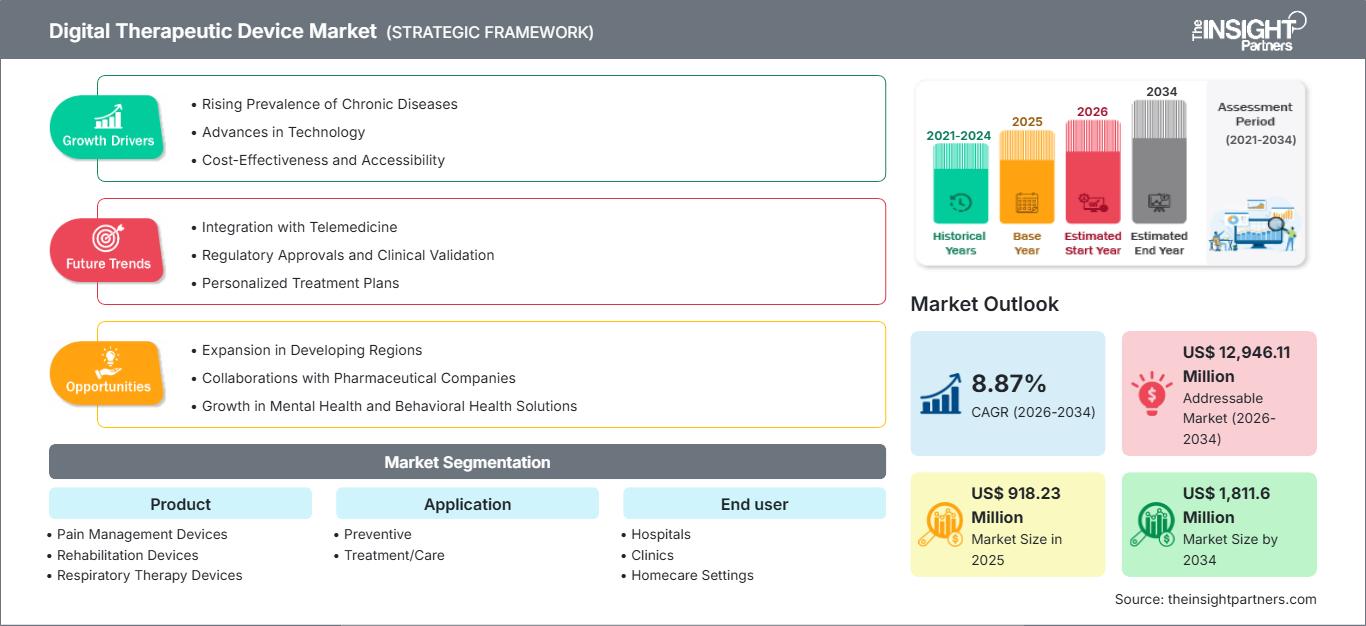
The digital therapeutic device market was valued at US$ 918.23 million in 2025 and is projected to reach US$ 1,811.6 million by 2034, registering a CAGR of 8.87% during 2026–2034. The growth of market can be observed from the inclusion of clinically proven digital therapeutic devices in the plan of managing diseases that occur both acutely and chronically. Growth in market is driven by increasing use of connected healthcare devices, prevalence of diseases caused by lifestyle factors, and ongoing development of software therapeutic devices.
It is projected that North America will continue to dominate in terms of the size of the regional market during the forecast period owing to favorable reimbursement programs, adoption of digital healthcare, and investment in connected healthcare facilities. It is estimated that the market size for digital therapeutic devices in North America will grow at a CAGR of 8.2-9.0% from 2026 to 2034 due to increased use of prescription digital therapeutics and collaborations among healthcare providers, technology providers, and regulatory bodies to improve patient outcomes.
Digital Therapeutic Device Market Assessment and Insights
- North America: Accounted for 38–42% digital therapeutic devices market share in 2025 and is projected to grow at a CAGR of 8.2–9.0% during 2026–2034, supported by mature healthcare infrastructure, rapid adoption of digital therapeutics, favorable reimbursement initiatives, and strong investments in connected healthcare technologies.
- U.S.: Represented 80–84% of the market in North America in 2025 and is expected to register a CAGR of 8.3–9.1% through 2034, driven by increasing chronic disease prevalence, FDA-cleared digital therapeutic products, and expanding telehealth integration.
- Europe: Held 26–30% share in 2025 and is expected to register a CAGR of 8.0–8.8% by 2034. Germany, the UK, and France continue to lead regional adoption owing to digital health reimbursement frameworks, healthcare digitization, and supportive regulatory initiatives.
- Asia Pacific: Accounted for 22–26% share in 2025 and is anticipated to expand at the highest regional CAGR of 9.5–10.3%, supported by healthcare digitalization, increasing smartphone penetration, government health technology programs, and rising chronic disease incidence across China, Japan, India, and South Korea.
- Largest Segment – Hospitals: Held a market share of 42–46% in 2025 and is expected to grow at a CAGR of 8.3–9.0%, driven by increasing deployment of connected therapeutic devices, integrated patient management systems, and institutional investments in digital healthcare.
- High Growth Segment – Homecare Settings: Accounted for 24–28% market share in 2025 and is projected to register a CAGR of 9.8–10.6%, supported by expanding remote patient monitoring, aging populations, and increasing demand for home-based chronic disease management solutions.
- Key companies analyzed in detail: Omada Health, Inc., Propeller Health, Big Health Ltd., Akili Interactive Labs, Inc., Click Therapeutics, Inc., Happify Health, Inc., Teladoc Health, Inc., 2bPrecise, LLC, Modus Health LLC, and Welldoc, Inc.
Source: The Insight Partners' analysis based on proprietary research, government publications, company annual reports, investor presentations, industry databases, and expert interviews.
From software-led treatment interventions that were initially limited in scope, the market has grown into a critical element in modern-day clinical practice due to advancements in the fields of artificial intelligence, connected medical devices, cloud computing, and continuous monitoring of patients. Advancements in terms of interoperability, cybersecurity, and regulation have driven commercial success of the devices, and have made it possible for healthcare practitioners to incorporate digital therapeutics in their treatment process. Such progress is helping to foster greater patient engagement, increasing adherence to therapy, and delivering value-based healthcare delivery.
For the future, growth will continue to focus on scalable digital health systems, personalized therapeutic devices, and AI-driven clinical decision support systems. Healthcare modernization efforts coupled with digital health infrastructural investments in emerging regions of Asia Pacific and the Middle East are opening up new avenues of commercialization. In addition, regulatory development, increasing reimbursement coverage, and collaboration between technology manufacturers, healthcare organizations, and pharma companies are projected to drive global market expansion in the forecasted period.
Digital Therapeutic Device Market Report Scope
| Report Attribute | Details |
|---|---|
| Market size in 2025 | US$ 918.23 Million |
| Market Size by 2034 | US$ 1,811.6 Million |
| Global CAGR (2026 - 2034) | 8.87% |
| Historical Data | 2021-2024 |
| Forecast period | 2026-2034 |
Digital Therapeutic Device Market Analysis
Growth in the market is anticipated due to increased demand for technology-driven healthcare solutions, which would help in managing various diseases effectively while cutting down the cost associated with treatment in the long run. Growing prevalence of diabetes, respiratory ailments, neurodegenerative diseases, chronic pain, and mental disorders would prompt healthcare practitioners to adopt clinically proven digital therapeutic devices in their treatments. The combination of wearables, cloud, mobile health apps, and AI allows continuous tracking and personalized interventions and ensures better medication adherence. Simultaneously, collaborations between hardware providers, software companies, healthcare providers, and payers are contributing towards improving the value chain through quick commercialization, regulation, and payment adoption.
There is increasing emphasis on the development of interoperable platforms that can connect with EHRs and remote monitoring systems. The supply dynamics for this market are getting supported by growing investments in digital infrastructure, software development, cybersecurity, and cloud health services. Growing regulatory framework for software-based medical devices and adoption of virtual healthcare models are improving market access.
Competition within the market is characterized by continuous product innovation, strategic partnerships, clinical validation studies, and portfolio expansion. Omada Health, Inc., Welldoc, Inc., Click Therapeutics, Inc., Akili Interactive Labs, Inc., and Teladoc Health, Inc., are a few companies mentioned in the digital therapeutic devices market report continue to strengthen their competitive positions through evidence-based therapeutic platforms addressing chronic diseases, behavioral health, and neurological disorders. Meanwhile, Propeller Health, Big Health Ltd., Happify Health, Inc., 2bPrecise, LLC, and Modus Health LLC are expanding their digital health capabilities through advanced analytics, remote monitoring technologies, and personalized patient engagement solutions.
Investment in the market is growing strongly as there is an increasing emphasis on preventive medicine, value-based care, and decentralized healthcare provision. The growing trend of venture capitalist investments, acquisitions, and collaborations in the pharmaceutical industry and the medical devices sector alongside software development is driving innovations in the market. Investments in artificial intelligence, machine learning, digital biomarkers, and predictive analytics for better outcomes in the clinical setting and higher efficiency are also taking place.
● REPORT CUSTOMIZATION
Tailor This Report To Align With Your Specific Business Requirements
This report can be customized to align precisely with your business objectives, scope, and target markets. Customization options include tailored segmentation, geography, competitive analysis, and strategic insights to support informed decision-making.
Customize This Report →WHAT YOU CAN ADJUST
- ● Segmentations
- ● Geography
- ● Competitive Analysis
- ● Language Preferences
Digital Therapeutic Device Market: Strategic Insights
Regional Insights
North America Digital Therapeutic Devices Market
North America accounted for 38–42% of the global digital therapeutic devices market in 2025 and is projected to expand at a CAGR of 8.2–9.0% during 2026–2034. Strong healthcare spending, extensive digital health infrastructure, favorable reimbursement initiatives, and widespread adoption of connected healthcare technologies continue to support regional growth. Growing prevalence of chronic diseases and increasing physician acceptance of digital therapeutics further strengthen market demand across hospitals, specialty clinics, and homecare settings.
The region also benefits from continuous investments in artificial intelligence, cloud-enabled healthcare platforms, and remote patient monitoring technologies. Strategic collaborations among healthcare providers, insurers, technology companies, and regulatory agencies are accelerating commercialization of clinically validated therapeutic solutions while improving patient engagement, treatment adherence, and long-term disease management outcomes across diverse therapeutic areas.
U.S. Digital Therapeutic Devices Market
The United States represented 80–84% of the digital therapeutic devices market in North America in 2025 and is expected to register a CAGR of 8.3–9.1% through 2034. The country maintains leadership owing to strong adoption of prescription digital therapeutics, extensive telehealth utilization, advanced healthcare IT infrastructure, and increasing investments in connected medical technologies. Growing demand for personalized disease management solutions continues to encourage product innovation and commercialization.
The presence of leading industry participants, established reimbursement pathways, and ongoing FDA clearances supports sustained market expansion. Hospitals, integrated healthcare networks, and homecare providers are increasingly deploying digital therapeutic devices to improve chronic disease management, reduce hospital readmissions, and enhance patient outcomes through continuous monitoring and personalized therapeutic interventions.
Europe Digital Therapeutic Devices Market
Europe accounted for 26–30% of the global digital therapeutic devices market in 2025 and is projected to expand at a CAGR of 8.0–8.8% during 2026–2034. Regional growth is supported by increasing healthcare digitalization, expanding reimbursement pathways for digital therapeutics, and government initiatives promoting technology-enabled patient care. Germany remains the leading market due to its progressive digital health policies, while the UK and France continue to strengthen adoption through investments in connected healthcare infrastructure.
Germany leads the digital therapeutic devices market in Europe owing to its Digital Healthcare Act (DVG), well-established reimbursement framework for digital health applications, and robust healthcare infrastructure. The country continues to encourage the integration of clinically validated digital therapeutic devices into chronic disease management, mental health treatment, and rehabilitation programs. Growing collaboration among healthcare providers, technology developers, and insurers further supports market expansion and innovation.
The United Kingdom, France, Italy, and Spain are witnessing steady adoption of digital therapeutic devices as healthcare providers increasingly implement remote patient monitoring, virtual care, and personalized treatment solutions. National digital health strategies, rising chronic disease burden, and investments in healthcare information technology are strengthening regional demand. These countries are also expanding partnerships between public health systems and technology companies to improve patient access, treatment adherence, and healthcare efficiency.
APAC Digital Therapeutic Devices Market
Asia Pacific represented 22–26% of the global digital therapeutic devices market in 2025 and is projected to register the fastest regional growth at a CAGR of 9.5–10.3% during the forecast period. Rapid healthcare digitalization, expanding smartphone penetration, and increasing healthcare expenditure continue to accelerate regional adoption.
China and Japan remain the largest regional markets due to strong investments in digital healthcare infrastructure and growing regulatory support for connected medical technologies. South Korea is advancing digital therapeutics through innovation-driven healthcare policies.
India and Australia are experiencing increasing adoption supported by telemedicine expansion, government digital health initiatives, and growing awareness of chronic disease management. These developments are expected to strengthen long-term regional growth.
Middle East & Africa Digital Therapeutic Devices Market
The Middle East & Africa digital therapeutic devices market is expected to grow at a CAGR of 7.4–8.2% during 2026–2034. Governments across the region are investing in healthcare modernization, digital transformation, and connected care platforms to improve healthcare accessibility and operational efficiency.
Saudi Arabia and the United Arab Emirates are leading regional adoption through national digital health strategies, smart hospital initiatives, and investments in artificial intelligence-enabled healthcare technologies. These initiatives continue to accelerate deployment of digital therapeutic solutions.
South Africa and the Rest of the Middle East & Africa are gradually expanding digital therapeutic adoption through improved healthcare infrastructure, wider internet connectivity, and growing investments in remote healthcare delivery. Although adoption remains comparatively lower than developed markets, ongoing healthcare reforms are expected to support steady market expansion.
Segmentation Analysis
Product
The product segment in the digital therapeutic devices market is projected to grow at a CAGR of 8.8–9.5% during 2026–2034. Continuous technological advancements, increasing regulatory approvals, and growing demand for connected therapeutic solutions are driving adoption across multiple clinical applications. Manufacturers are focusing on integrating artificial intelligence, cloud connectivity, and real-time patient monitoring capabilities to improve therapeutic outcomes while enhancing patient engagement and long-term disease management.
- Pain Management Devices: Growing utilization of non-pharmacological therapies, wearable technologies, and digital pain management platforms is supporting demand, particularly among patients seeking personalized and continuous treatment solutions for chronic pain conditions.
- Rehabilitation Devices: Rising incidence of neurological disorders, orthopedic injuries, and post-surgical rehabilitation needs is driving adoption of digitally connected rehabilitation devices that improve therapy adherence and enable remote clinical supervision.
- Respiratory Therapy Devices: Increasing prevalence of asthma, chronic obstructive pulmonary disease (COPD), and other respiratory disorders is encouraging wider deployment of connected respiratory therapeutic devices capable of supporting continuous monitoring and personalized treatment.
- Insulin Pumps: Advanced insulin pump technologies integrated with continuous glucose monitoring systems are improving diabetes management through automated insulin delivery, enhanced patient convenience, and better glycemic control.
Application
The application segment in the digital therapeutic devices market is anticipated to expand at a CAGR of 8.9–9.7% throughout the forecast period. Rising emphasis on preventive healthcare, early disease detection, and personalized treatment strategies is encouraging healthcare providers to integrate digital therapeutic devices across both preventive and treatment-focused care pathways. Increasing patient engagement and remote healthcare delivery continue to strengthen long-term market demand.
- Preventive: Digital therapeutic devices are increasingly utilized to promote healthy lifestyles, monitor health risks, and support early intervention programs aimed at reducing disease progression and improving long-term wellness.
- Treatment/Care: Healthcare providers continue to deploy digital therapeutic devices to improve medication adherence, optimize disease management, enable continuous monitoring, and enhance clinical outcomes across a broad range of chronic conditions.
End User
The end user segment in digital therapeutic devices market is expected to register a CAGR of 8.9–9.6% during 2026–2034. Growing demand for personalized healthcare, increasing adoption of remote patient monitoring, and wider acceptance of digital health platforms are encouraging healthcare providers and patients to utilize digital therapeutic devices across diverse care settings. The shift toward value-based healthcare and home-centered disease management continues to strengthen adoption across all end-user categories.
- Hospitals: Hospitals remain the largest end-user segment due to their extensive adoption of clinically validated digital therapeutic devices for chronic disease management, rehabilitation, and post-discharge patient monitoring. Integration with electronic health records and multidisciplinary care pathways further supports utilization.
- Clinics: Specialty and primary care clinics are increasingly implementing digital therapeutic devices to improve patient engagement, enable continuous monitoring, and enhance treatment adherence while reducing unnecessary hospital visits and supporting efficient outpatient care delivery.
- Homecare Settings: Homecare settings are experiencing the fastest adoption as patients increasingly prefer convenient, connected healthcare solutions that facilitate continuous disease management, remote consultations, and personalized therapeutic interventions outside traditional healthcare facilities.
- Healthcare Organizations: Healthcare organizations are expanding investments in digital therapeutic platforms to improve population health management, optimize resource utilization, support preventive care initiatives, and strengthen data-driven clinical decision-making across integrated healthcare networks.
Opportunity Snapshot
| Application | Revenue Contribution | Trend Tag | Adoption Stage |
| Hospitals | High | Connected Care | Mature |
| Clinics | Medium | Virtual Care | Scaling |
| Homecare Settings | High | Remote Monitoring | Scaling |
| Healthcare Organizations | Medium | Population Health | Emerging |
Digital Therapeutic Device Market Growth Drivers and Impact Analysis
Growing Burden of Chronic Diseases and Long-Term Disease Management
The rising incidence of chronic diseases like diabetes, cardiovascular ailments, breathing problems, obesity, neurodegenerative disorders, and psychological disorders is driving up the global demand for digital therapeutic devices. There is a move towards continuous disease management approaches, which involve the participation of the patient, monitoring from afar, and intervention based on scientific findings. These digital therapeutic devices provide information about patients in real time, helping doctors in taking informed decisions and designing customized treatment regimens, while also improving medication compliance. The use of digital therapeutic devices is gaining traction due to the desire to reduce the rate of hospitalization and costs involved in treatment among other factors.
Expansion of Remote Patient Monitoring and Connected Healthcare
Fast growth of remote patient monitoring devices and the creation of connected healthcare systems are providing favorable grounds for the application of digital therapeutic devices. The presence of wearable sensors, analytics on clouds, artificial intelligence, and mobile health applications allows for constant tracking of patient's health status outside traditional clinical settings. Telemedicine services are being incorporated into the use of digital therapeutics by healthcare providers, which helps improve their performance and avoid unnecessary visits. This trend favors healthcare accessibility especially in cases of an aging population and chronic diseases treatment. The growth of investment into healthcare digitization is likely to boost the demand for digital therapeutic devices.
Supportive Regulatory Frameworks and Increasing Clinical Validation
Regulatory authorities in several large healthcare markets have been working on setting more definitive procedures for assessing and clearing digital therapeutic devices in order to promote their commercialization as well as instill more confidence in physicians. The number of peer-reviewed clinical trials which have shown that the digital therapeutics are safe, effective, and cost-effective has been increasing and this helps to promote acceptance on the part of healthcare providers, insurance companies, and patients. Positive reimbursement procedures for selected prescription digital therapeutics make these devices even more accessible to the market while motivating their developers to create innovative solutions based on software.
Digital Therapeutic Device Market Future Trends
Artificial Intelligence-Driven Personalized Digital Therapeutics
AI is revolutionizing the digital therapeutic devices market trends through the provision of personalized treatment paths for each patient, taking into account their unique health parameters and behavior patterns. Through AI-powered algorithms, it will be easier to monitor the effectiveness of therapy and provide recommendations for personalized treatment plans. The use of predictive analytics in combination with wearable technologies and cloud platforms will make disease identification and treatment more proactive. Intelligent digital therapeutics are being adopted by healthcare providers to optimize decision making, avoid complications, and deliver value-based healthcare services. The evolution of regulations around AI medical software will drive investments into the development of adaptive treatments, offering a highly personalized experience.
Expansion of Integrated Digital Health Ecosystems
The market is currently undergoing a shift from individual digital therapeutic devices to more integrated digital health ecosystems, which incorporate remote patient monitoring, telemedicine, electronic health records, and clinical decision support systems. The development of such ecosystems allows for the smooth flow of information between patients, doctors, carers, and health care organizations along with enhanced coordination of care. Health care organizations are gradually adopting interoperable platforms that include therapeutic software, medical devices, and analytics all in one digital ecosystem. Ecosystems help in the constant monitoring and prompt clinical action. Increasing cooperation between technology firms, pharma companies, health care organizations, and insurers will promote the development of ecosystems and digital therapeutic devices.
Digital Therapeutic Device Market Opportunities
Expansion into Emerging Healthcare Markets
Economic opportunities for development abound among the emerging markets, especially with the continual government investment towards digitization of health care, internet access, and telemedicine facilities. Many countries in the Asia Pacific region, Latin America, and the Middle East region are developing their digital health strategies and promoting access to health care through internet facilities. The increased use of smartphones, awareness of chronic conditions and diseases management, and lack of health care personnel have led to more users adopting digital therapy devices. This would allow companies to benefit from these trends through developing cost-effective and locally adopted therapy platforms.
Development of Disease-Specific Prescription Digital Therapeutics
Growing clinical acceptance of prescription digital therapeutics creates significant opportunities for manufacturers to develop evidence-based solutions targeting specific chronic and behavioral health conditions. Therapeutic areas including diabetes, cardiovascular diseases, respiratory disorders, insomnia, anxiety, depression, neurological rehabilitation, and substance use disorders continue to attract research investment due to increasing patient populations and unmet clinical needs. Companies that generate robust clinical evidence, secure regulatory approvals, and establish reimbursement pathways will be well positioned to strengthen their competitive advantage. Future innovation is expected to focus on integrating artificial intelligence, digital biomarkers, and real-time patient monitoring into prescription therapeutic platforms that deliver measurable improvements in clinical outcomes and healthcare efficiency.
Recent Developments
- May 2025: Omada Health, Inc. announced its initial public offering (IPO), strengthening its capital position to accelerate expansion of its virtual chronic care and digital therapeutic platform while supporting investments in clinical innovation, artificial intelligence capabilities, and broader commercial adoption.
- January 2025: Teladoc Health, Inc. expanded its integrated chronic care and virtual health offerings by introducing enhanced artificial intelligence capabilities designed to improve patient engagement, personalized care recommendations, and remote disease management across multiple therapeutic areas.
- October 2024: Click Therapeutics, Inc. announced continued advancement of its prescription digital therapeutics pipeline through strategic collaborations and clinical development programs targeting neurological and psychiatric disorders, supporting broader commercialization opportunities in regulated digital medicine.
Frequently Asked Questions

- Comprehensive Market Sizing and Forecast Analysis
- Detailed Segmentation Analysis
- In-Depth Market Dynamics Assessment
- Regional and Country-Level Insights
- Competitive Landscape and Company Benchmarking
- Strategic Business Intelligence
Recent Reports
Testimonials

The Insight Partners' SCADA System Market report is comprehensive, with valuable insights on current trends and future forecasts. The team was highly professional, responsive, and supportive throughout. We are very satisfied and highly recommend their services.
RAN KEDEM Partner, Reali Technologies LTDs
I requested a report on a very specific software market and the team produced the report in a few days. The information was very relevant and well presented. I then requested some changes and additions to the report. The team was again very responsive and I got the final report in less than a week.
JEAN-HERVE JENN Chairman, Future Analytica
We worked with The Insight Partners for an important market study and forecast. They gave us clear insights into opportunities and risks, which helped shape our plans. Their research was easy to use and based on solid data. It helped us make smart, confident decisions. We highly recommend them.
PIYUSH NAGPAL Sr. Vice President, High Beam Global
The Insight Partners delivered insightful, well-structured market research with strong domain expertise. Their team was professional and responsive throughout. The user-friendly website made accessing industry reports seamless. We highly recommend them for reliable, high-quality research services
YUKIHIKO ADACHI CEO, Deep Blue, LLC.
This is the first time I have purchased a market report from The Insight Partners.While I was unsure at first, I visited their web site and felt more comfortable to take the risk and purchase a market report.I am completely satisfied with the quality of the report and customer service. I had several questions and comments with the initial report, but after a couple of dialogs over email with their analyst I believe I have a report that I can use as input to our strategic planning process.Thank you so much for taking the extra time and making this a positive experience.I will definitely recommend your service to others and you will be my first call when we need further market data.
JOHN SUZUKI President and Chief Executive Officer, Board Director, BK Technologies
I wish to appreciate your support and the professionalism you displayed in the course of attending to my request for information regarding to infectious disease IVD market in Nigeria. I appreciate your patience, your guidance, and the fact that you were willing to offer a discount, which eventually made it possible for us to close a deal. I look forward to engaging The Insight Partners in the future, all thanks to the impression you have created in me as a result of this first encounter.
DR CHIJIOKE ONYIA MANAGING DIRECTOR, PineCrest Healthcare Ltd.Reason to Buy
- Informed Decision-Making
- Understanding Market Dynamics
- Competitive Analysis
- Identifying Emerging Markets
- Customer Insights
- Market Forecasts
- Risk Mitigation
- Boosting Operational Efficiency
- Strategic Planning
- Investment Justification
- Tracking Industry Innovations
- Aligning with Regulatory Trends





 Get Free Sample for