Hematologic Malignancies Market Size, Segments, and Growth by Forecast by 2031
Hematologic Malignancies Market Size and Forecasts (2021 - 2031), Global and Regional Share, Trends, and Growth Opportunity Analysis Report Coverage : by Disease (Leukemia, Lymphoma); Therapy (Chemotherapy, Immunotherapy); End User (Hospital Pharmacies, Retail Pharmacies); and Geography (North America, Europe, Asia Pacific, and South and Central America)
Historic Data: 2021-2023 | Base Year: 2024 | Forecast Period: 2025-2031- Report Date : Apr 2026
- Report Code : TIPRE00039961
- Category : Life Sciences
- Status : Upcoming
- Available Report Formats :


- No. of Pages : 150

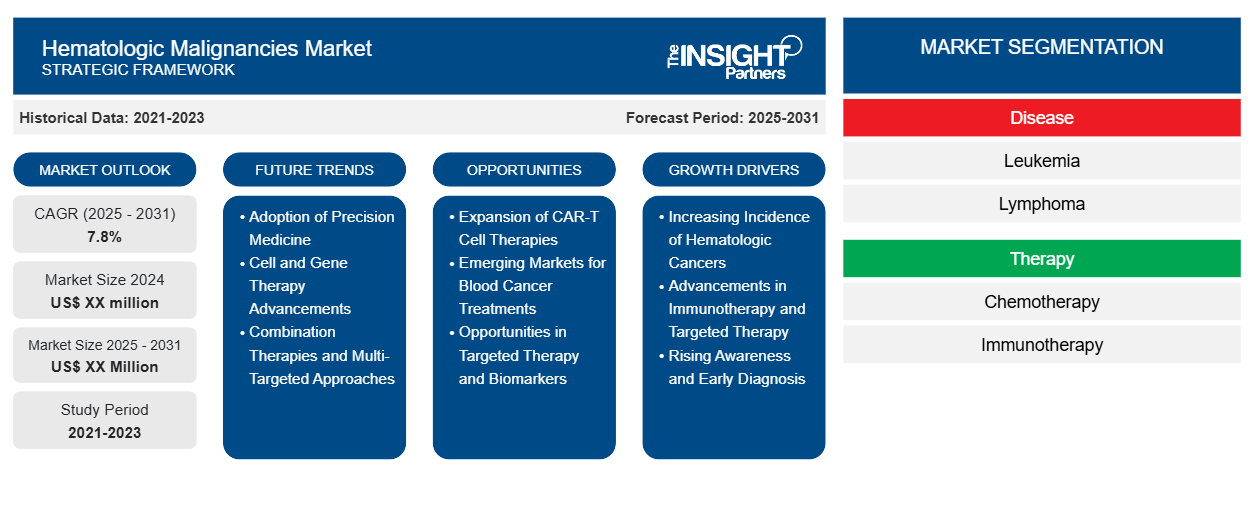
The Hematologic Malignancies Market is expected to register a CAGR of 7.8% from 2025 to 2031, with a market size expanding from US$ XX million in 2024 to US$ XX Million by 2031.
The report is segmented by Disease (Leukemia, Lymphoma), Therapy (Chemotherapy, Immunotherapy), End User (Hospital Pharmacies, Retail Pharmacies, Other). The global analysis is further broken-down at regional level and major countries. The Report Offers the Value in USD for the above analysis and segments.
Purpose of the Report
The report Hematologic Malignancies Market by The Insight Partners aims to describe the present landscape and future growth, top driving factors, challenges, and opportunities. This will provide insights to various business stakeholders, such as:
- Technology Providers/Manufacturers: To understand the evolving market dynamics and know the potential growth opportunities, enabling them to make informed strategic decisions.
- Investors: To conduct a comprehensive trend analysis regarding the market growth rate, market financial projections, and opportunities that exist across the value chain.
- Regulatory bodies: To regulate policies and police activities in the market with the aim of minimizing abuse, preserving investor trust and confidence, and upholding the integrity and stability of the market.
Hematologic Malignancies Market Segmentation
Disease
- Leukemia
- Lymphoma
Therapy
- Chemotherapy
- Immunotherapy
End User
- Hospital Pharmacies
- Retail Pharmacies
Customize This Report To Suit Your Requirement
Get FREE CUSTOMIZATIONHematologic Malignancies Market: Strategic Insights
-
Get Top Key Market Trends of this report.This FREE sample will include data analysis, ranging from market trends to estimates and forecasts.
Hematologic Malignancies Market Growth Drivers
- Increasing Incidence of Hematologic Cancers: The growing prevalence of hematologic malignancies such as leukemia, lymphoma, and myeloma is a primary driver for market growth. Factors like genetic predispositions, environmental factors, and aging populations contribute to the rise in cases. Early detection and advancements in treatment options further enhance the demand for hematologic malignancy therapeutics and diagnostics.
- Advancements in Immunotherapy and Targeted Therapy: Innovative treatments, such as immunotherapies (e.g., CAR-T cells) and targeted therapies, are revolutionizing the hematologic malignancies market. These therapies offer higher efficacy, fewer side effects, and improved survival rates compared to traditional chemotherapy, significantly boosting market demand. The development of new drug classes and clinical trials also accelerates market growth.
- Rising Awareness and Early Diagnosis: Increased awareness of hematologic malignancies, along with advances in diagnostic technology, is improving early detection rates. Early diagnosis helps in timely treatment, which enhances patient outcomes. Diagnostic tools like genetic testing, biomarkers, and liquid biopsy are facilitating earlier and more accurate diagnoses, contributing to market expansion.
Hematologic Malignancies Market Future Trends
- Adoption of Precision Medicine: Precision medicine, which tailors treatment based on an individual’s genetic makeup, is becoming a prominent trend in hematologic malignancies. By identifying specific genetic mutations, healthcare providers can offer more effective, targeted therapies, improving patient outcomes and minimizing side effects. This trend is transforming the therapeutic landscape of blood cancers.
- Cell and Gene Therapy Advancements: The hematologic malignancies market is experiencing a surge in cell and gene therapy research. Therapies like CAR-T (Chimeric Antigen Receptor T-cell) therapy are showing great promise in treating blood cancers. The success of these therapies is driving significant investment and research into developing even more advanced treatments, making this a key trend in the market.
- Combination Therapies and Multi-Targeted Approaches: Combination therapies, which involve using multiple drugs with different mechanisms of action, are gaining traction. By targeting various pathways simultaneously, these approaches can improve treatment outcomes, reduce resistance, and manage relapsed cases. Multi-targeted treatment strategies are expected to expand in hematologic malignancies, offering more hope for patients.
Hematologic Malignancies Market Opportunities
- Expansion of CAR-T Cell Therapies: CAR-T cell therapy represents a significant opportunity in the treatment of hematologic malignancies. With approvals for various types of blood cancers, this innovative treatment modality has shown excellent results. Ongoing research and development could further expand its application across a wider range of hematologic cancers, offering an exciting opportunity for market players.
- Emerging Markets for Blood Cancer Treatments: As healthcare access improves in emerging markets, there is a growing opportunity for hematologic malignancy treatments in these regions. Increased awareness, better diagnostic facilities, and rising healthcare investments will fuel demand for both established and novel treatments, creating lucrative market opportunities, particularly in Asia-Pacific and Latin America.
- Opportunities in Targeted Therapy and Biomarkers: The discovery of new biomarkers and molecular targets is opening up fresh avenues for targeted therapies. These therapies allow for more personalized treatments for patients, minimizing adverse effects. Identifying new targets for drug development will drive the growth of the hematologic malignancies market, particularly for novel drug candidates in clinical trials.
Hematologic Malignancies Market Report Scope
| Report Attribute | Details |
|---|---|
| Market size in 2024 | US$ XX million |
| Market Size by 2031 | US$ XX Million |
| Global CAGR (2025 - 2031) | 7.8% |
| Historical Data | 2021-2023 |
| Forecast period | 2025-2031 |
| Segments Covered |
By Disease
|
| Regions and Countries Covered |
North America
|
| Market leaders and key company profiles |
|
Hematologic Malignancies Market Players Density: Understanding Its Impact on Business Dynamics
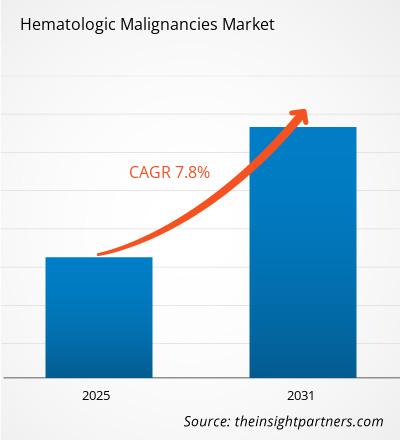
The Hematologic Malignancies Market is growing rapidly, driven by increasing end-user demand due to factors such as evolving consumer preferences, technological advancements, and greater awareness of the product's benefits. As demand rises, businesses are expanding their offerings, innovating to meet consumer needs, and capitalizing on emerging trends, which further fuels market growth.
Key Selling Points
- Comprehensive Coverage: The report comprehensively covers the analysis of products, services, types, and end users of the Hematologic Malignancies Market, providing a holistic landscape.
- Expert Analysis: The report is compiled based on the in-depth understanding of industry experts and analysts.
- Up-to-date Information: The report assures business relevance due to its coverage of recent information and data trends.
- Customization Options: This report can be customized to cater to specific client requirements and suit the business strategies aptly.
The research report on the Hematologic Malignancies Market can, therefore, help spearhead the trail of decoding and understanding the industry scenario and growth prospects. Although there can be a few valid concerns, the overall benefits of this report tend to outweigh the disadvantages.
Frequently Asked Questions

- Historical Analysis (2 Years), Base Year, Forecast (7 Years) with CAGR
- PEST and SWOT Analysis
- Market Size Value / Volume - Global, Regional, Country
- Industry and Competitive Landscape
- Excel Dataset
Recent Reports
Testimonials

The Insight Partners' SCADA System Market report is comprehensive, with valuable insights on current trends and future forecasts. The team was highly professional, responsive, and supportive throughout. We are very satisfied and highly recommend their services.
RAN KEDEM Partner, Reali Technologies LTDs
I requested a report on a very specific software market and the team produced the report in a few days. The information was very relevant and well presented. I then requested some changes and additions to the report. The team was again very responsive and I got the final report in less than a week.
JEAN-HERVE JENN Chairman, Future Analytica
We worked with The Insight Partners for an important market study and forecast. They gave us clear insights into opportunities and risks, which helped shape our plans. Their research was easy to use and based on solid data. It helped us make smart, confident decisions. We highly recommend them.
PIYUSH NAGPAL Sr. Vice President, High Beam Global
The Insight Partners delivered insightful, well-structured market research with strong domain expertise. Their team was professional and responsive throughout. The user-friendly website made accessing industry reports seamless. We highly recommend them for reliable, high-quality research services
YUKIHIKO ADACHI CEO, Deep Blue, LLC.
This is the first time I have purchased a market report from The Insight Partners.While I was unsure at first, I visited their web site and felt more comfortable to take the risk and purchase a market report.I am completely satisfied with the quality of the report and customer service. I had several questions and comments with the initial report, but after a couple of dialogs over email with their analyst I believe I have a report that I can use as input to our strategic planning process.Thank you so much for taking the extra time and making this a positive experience.I will definitely recommend your service to others and you will be my first call when we need further market data.
JOHN SUZUKI President and Chief Executive Officer, Board Director, BK Technologies
I wish to appreciate your support and the professionalism you displayed in the course of attending to my request for information regarding to infectious disease IVD market in Nigeria. I appreciate your patience, your guidance, and the fact that you were willing to offer a discount, which eventually made it possible for us to close a deal. I look forward to engaging The Insight Partners in the future, all thanks to the impression you have created in me as a result of this first encounter.
DR CHIJIOKE ONYIA MANAGING DIRECTOR, PineCrest Healthcare Ltd.Reason to Buy
- Informed Decision-Making
- Understanding Market Dynamics
- Competitive Analysis
- Identifying Emerging Markets
- Customer Insights
- Market Forecasts
- Risk Mitigation
- Boosting Operational Efficiency
- Strategic Planning
- Investment Justification
- Tracking Industry Innovations
- Aligning with Regulatory Trends




 Get Free Sample For