
Agricultural Biotechnology Market Demand, Share & Growth by 2034
Coverage: by Application (Vaccine Development, Transgenic Crops and Animals, Antibiotic Development, Nutritional Supplements, Flower Culturing, Biofuels); Organism Type (Plants, Animals, Microbes), and Geography (North America, Europe, Asia Pacific, and South and Central America)
- Status : Data Released
- Report Code : TIPRE00010454
- Category : Life Sciences
- No. of Pages : 150
- Available Report Formats :


- Last update date : July 22, 2026


2025 Market Size
US$ 163.91 Bn
Base year value
2034 Forecast
US$ 286.67 Bn
Projected by 2034
CAGR 2026-2034
6.41 %
Growth rate
Addressable Market
US$ 2,038.61 Bn
(2026-2034)
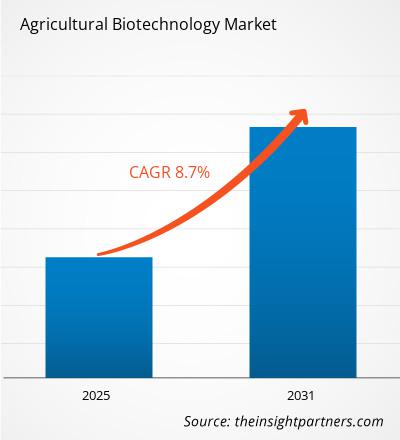
The Agricultural Biotechnology Market was valued at US$ 163.91 Billion in 2025 and is projected to reach US$ 286.67 Billion by 2034, registering a CAGR of 6.41% during 2026–2034. Expansion is supported by wider commercialization of genetically improved crops, increasing investment in biological crop inputs, stronger public research funding, and broader adoption of molecular breeding technologies designed to improve agricultural productivity while strengthening resilience against climate variability.
North America remains one of the most mature regional ecosystems owing to advanced biotechnology research, strong intellectual property protection, extensive commercial cultivation of biotechnology-enabled crops, and continuous investment by seed developers. The Agricultural Biotechnology Market size in the region is expected to expand at a healthy mid-single-digit pace as precision breeding, biological crop protection, and genome-editing technologies receive growing commercial attention.
Agricultural Biotechnology Market Assessment and Insights
- North America: Accounted for an estimated 36–40% share in 2025 and is projected to expand at 5.8–6.4% CAGR during 2026–2034. Strong biotechnology regulation, extensive GM crop cultivation, and continuous R&D investments support long-term commercial leadership.
- U.S.: Represented approximately 82–86% of North America in 2025 and is expected to grow at 5.9–6.5% CAGR due to large-scale commercial farming, biotechnology innovation, and leading academic research infrastructure.
- Europe: Held approximately 22–25% market share in 2025 and is forecast to register 5.5–6.2% CAGR, led primarily by France, Germany, the Netherlands, Spain, and the United Kingdom through innovation in sustainable agriculture and biological products.
- Asia Pacific: Represented roughly 27–31% of global revenue in 2025 and is projected to record the fastest regional expansion at 7.0–7.8% CAGR, supported by China, India, Japan, Australia, and South Korea.
- Largest Segment: Application accounted for approximately 62–66% market share in 2025 and is anticipated to grow at 6.5–7.1% CAGR, supported by diversified commercial biotechnology deployment across crop improvement and biological innovation.
- High Growth Segment: Biofuels is expected to demonstrate the fastest expansion, supported by renewable energy initiatives, advanced microbial biotechnology, and sustainable feedstock development, while representing a comparatively smaller revenue base.
- Key companies analyzed in detail: ADAMA Ltd., ChemChina, Corteva Agriscience, Evogene Ltd., KWS SAAT SE & Co. KGaA, Groupe Limagrain, Marrone Bio Innovations, Mitsui & Co., Ltd., Nufarm Limited, Performance Plants Inc.
Source: The Insight Partners' analysis based on proprietary research, government publications, company annual reports, investor presentations, industry databases, and expert interviews.
Modern agricultural biotechnology continues to transition from conventional transgenic crop development toward integrated innovation platforms incorporating genome editing, biological crop protection, microbial solutions, artificial intelligence, and precision breeding. Commercial research increasingly emphasizes climate resilience, nitrogen-use efficiency, disease resistance, and improved resource productivity, while partnerships between technology providers and agricultural producers accelerate commercialization of next-generation biological solutions.
Looking ahead, commercialization is expected to broaden across emerging agricultural economies as governments pursue food security, climate adaptation, and sustainable production strategies. Investments in regulatory modernization, genomic research, and digital agriculture platforms are likely to encourage wider deployment of biotechnology innovations while improving farmer productivity and strengthening long-term agricultural resilience.
Agricultural Biotechnology Market Report Scope
| Report Attribute | Details |
|---|---|
| Market size in 2025 | US$ 163.91 Billion |
| Market Size by 2034 | US$ 286.67 Billion |
| Global CAGR (2026 - 2034) | 6.41% |
| Historical Data | 2021-2024 |
| Forecast period | 2026-2034 |
Agricultural Biotechnology Market Analysis
Growing pressure to improve agricultural productivity while reducing environmental impact continues to stimulate Agricultural Biotechnology Market growth. Rising food demand, climate-related production risks, declining arable land availability, and increasing resistance to pests encourage wider adoption of biotechnology-enabled crop improvement, microbial technologies, and biological crop protection. International organizations increasingly recognize innovation as an essential component of future food security strategies.
The value chain increasingly integrates genomic research institutions, seed developers, biotechnology companies, biological input manufacturers, precision agriculture technology providers, distributors, and commercial farming enterprises. Improvements in molecular breeding, genome sequencing, CRISPR-based gene editing, and microbial formulation technologies continue enhancing development efficiency while expanding commercial applications across multiple agricultural production systems.
Competitive positioning within the Agricultural Biotechnology Market analysis is increasingly defined by research capabilities, intellectual property portfolios, regulatory expertise, and strategic collaborations. Corteva Agriscience continues investing in collaborative innovation platforms, while Evogene advances computational biology applications for crop improvement. ADAMA Ltd., ChemChina, KWS SAAT SE & Co. KGaA, Groupe Limagrain, Nufarm Limited, Mitsui & Co., Ltd., Marrone Bio Innovations, and Performance Plants Inc. strengthen competitive differentiation through biological technologies, breeding innovation, and regional expansion initiatives.
Investment activity increasingly targets biological crop inputs, microbial technologies, genome-editing platforms, and digital breeding solutions rather than solely conventional genetic modification. Public-private partnerships, venture funding, and collaborations between research institutions and commercial developers are expected to accelerate technology transfer while improving commercialization efficiency for sustainable agricultural production systems.
● REPORT CUSTOMIZATION
Tailor This Report To Align With Your Specific Business Requirements
This report can be customized to align precisely with your business objectives, scope, and target markets. Customization options include tailored segmentation, geography, competitive analysis, and strategic insights to support informed decision-making.
Customize This Report →WHAT YOU CAN ADJUST
- ● Segmentations
- ● Geography
- ● Competitive Analysis
- ● Language Preferences
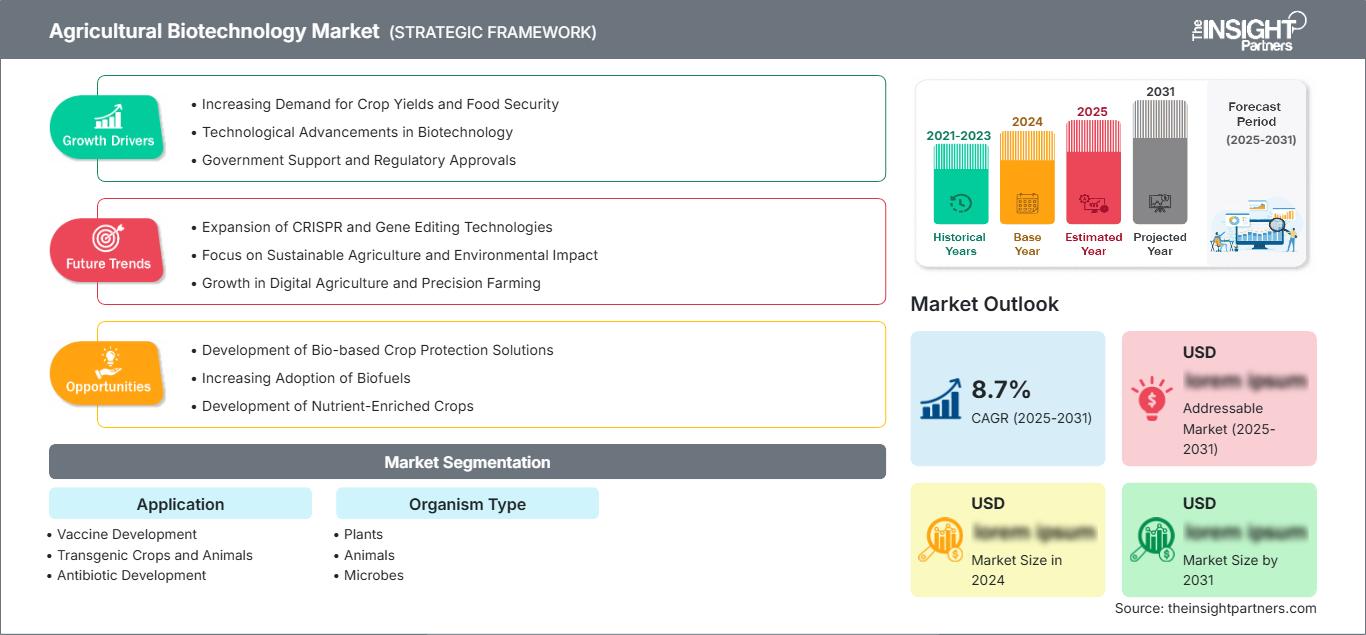
Agricultural Biotechnology Market: Strategic Insights
Regional Insights
North America Agricultural Biotechnology Market
North America remained the largest regional Agricultural Biotechnology Market in 2025, accounting for an estimated 36–40% of global revenue and is projected to expand at a 5.8–6.4% CAGR through 2034. The region benefits from strong biotechnology research capabilities, favorable commercialization pathways, high adoption of genetically improved crops, and continued investments in biological crop protection products. The United States and Canada maintain advanced regulatory frameworks supporting innovation in precision breeding, gene editing, and microbial agricultural technologies. Commercial farming operations continue integrating biotechnology with precision agriculture platforms to improve productivity while reducing environmental impact. Public research institutions, private biotechnology companies, and multinational seed developers collaborate extensively on climate-resilient crops, biological inputs, and digital breeding technologies. Strong intellectual property protection, high R&D expenditure, and continued investment by leading agricultural technology companies reinforce North America's long-term competitive position.
U.S. Agricultural Biotechnology Market
The United States represented approximately 82–86% of the North American Agricultural Biotechnology Market in 2025 and is anticipated to record a 5.9–6.5% CAGR during the forecast period. The country benefits from extensive commercial cultivation of biotechnology-enabled crops, a mature seed industry, advanced university research, and sustained investment from global agricultural biotechnology companies. The Agricultural Biotechnology Market share remains highest in the United States because of large-scale adoption of biotechnology across corn, soybean, cotton, and specialty crop production. Companies including Corteva Agriscience, Bayer, and numerous biotechnology innovators continue expanding investments in biological crop protection, genome editing, and digital breeding platforms. Federal research funding and collaboration between public institutions and industry participants continue accelerating commercialization of innovative agricultural solutions.
Europe Agricultural Biotechnology Market
Europe accounted for an estimated 22–25% of global revenue of the Agricultural Biotechnology Market during 2025 and is projected to grow at 5.5–6.2% CAGR through 2034. Although commercial cultivation of genetically modified crops remains comparatively limited, investment in plant genomics, biological crop protection, molecular breeding, and sustainable agriculture continues expanding throughout the region. The United Kingdom strengthens agricultural biotechnology through university research, precision breeding initiatives, and innovation funding that support climate-resilient agriculture. Germany maintains leadership in industrial biotechnology, seed development, and biological crop protection, supported by strong research institutions and advanced manufacturing capabilities. France, Italy, and Spain continue investing in sustainable crop improvement, biological inputs, and precision agriculture technologies, strengthening regional competitiveness while supporting European food security objectives. Proposed regulatory changes regarding gene-edited crops could further accelerate innovation across European agriculture.
APAC Agricultural Biotechnology Market
Asia Pacific represented approximately 27–31% of global revenue in 2025 and is expected to register the highest regional growth at 7.0–7.8% CAGR. Reflecting current Agricultural Biotechnology Market trends, China, India, Japan, South Korea, and Australia continue expanding investments in crop genetics, biological crop protection, and biotechnology research supporting food security. Government-backed agricultural modernization programs, expanding biotechnology infrastructure, and increasing demand for climate-resilient crops are encouraging wider commercialization across the region. China remains the leading market owing to extensive public investment, while India continues strengthening biotechnology research supporting improved agricultural productivity.
Middle East & Africa Agricultural Biotechnology Market
The Middle East & Africa region is forecast to expand at a 5.2–5.8% CAGR through 2034, according to the Agricultural Biotechnology Market forecast. Saudi Arabia, the UAE, South Africa, and several African economies are increasingly investing in biotechnology solutions that improve agricultural productivity under water scarcity and changing climatic conditions. Regional governments continue supporting sustainable agriculture through research partnerships, improved seed technologies, biological crop inputs, and controlled-environment agriculture. Growing emphasis on food security, climate adaptation, and agricultural resilience is expected to create long-term opportunities for biotechnology developers.
Segmentation Analysis
Application
The Application segment is projected to grow at a 6.5–7.1% CAGR during 2026–2034. The Agricultural Biotechnology Market scope continues expanding as biotechnology applications diversify beyond genetically modified crops toward biological crop protection, renewable biofuels, plant-derived pharmaceuticals, and advanced breeding technologies. Continuous innovation and supportive agricultural policies are expected to sustain long-term adoption.
- Vaccine Development : Plant-based biotechnology platforms continue supporting innovative vaccine production methods through scalable expression systems, improving manufacturing flexibility while expanding opportunities for agricultural biotechnology beyond conventional crop improvement.
- Transgenic Crops and Animals: This remains the largest commercial application owing to widespread adoption of improved crop varieties delivering higher productivity, enhanced pest resistance, and greater tolerance to environmental stress across global farming systems.
- Antibiotic Development: Agricultural microorganisms continue supporting discovery and production of novel bioactive compounds, contributing to biotechnology innovation through industrial fermentation and microbial engineering applications.
- Nutritional Supplements: Biotechnology enables development of nutrient-enhanced crops and functional agricultural ingredients supporting improved food quality, human nutrition, and livestock productivity across diverse agricultural value chains.
- Flower Culturing: Tissue culture technologies continue supporting rapid propagation of ornamental plants while improving disease resistance, genetic uniformity, and commercial production efficiency.
- Biofuels: Rising investment in renewable energy encourages biotechnology innovation for advanced biomass conversion, microbial engineering, and sustainable feedstock development supporting long-term commercialization.
Organism Type
The Organism Type segment is expected to expand at a 6.2–6.8% CAGR through 2034. Continuous advances in plant genomics, microbial biotechnology, and animal genetics are improving productivity while supporting sustainable agricultural development across commercial farming systems.
- Plants: Plant biotechnology is the leading field in terms of genetic engineering, genome engineering, molecular breeding, and biological traits that increase agricultural productivity and climate change adaptation.
- Animals: Biotechnology for animals is concerned with the improvement of breeding efficiency, disease resistance, reproduction techniques, and livestock productivity.
- Microbes: The microbial field of biotechnology keeps growing thanks to biological crop protection, nitrogen fixation, soil health enhancement, and industrial fermentation.
Opportunity Snapshot
| Application | Revenue Contribution | Trend Tag | Adoption Stage |
|---|---|---|---|
| Vaccine Development | Medium | Plant Vaccines | Emerging |
| Transgenic Crops and Animals | High | Gene Editing | Mature |
| Antibiotic Development | Medium | Microbial Discovery | Scaling |
| Nutritional Supplements | Medium | Biofortification | Scaling |
| Flower Culturing | Low | Tissue Culture | Mature |
| Biofuels | High | Renewable Feedstock | Scaling |
Agricultural Biotechnology Market Growth Drivers and Impact Analysis
Increasing Adoption of Sustainable Agricultural Solutions
Concerns about the environment, climate change, and increasing efforts to boost productivity in agriculture have led to an increased need for biotech-based solutions in the agricultural sector. Biological pesticides, microorganisms used in agriculture, and improved seeds are among the ways through which farmers can use biotechnology to optimize the use of resources and cut down their reliance on agricultural chemicals. The development of regenerative agricultural techniques and sustainable policies in key agricultural economies has created a conducive atmosphere for the development of biotechnological innovations. Environment-friendly policies have encouraged businesses to adopt sophisticated biological solutions and precision breeding programs and produce more durable crops.
Rising Investments in Crop Genetics and Genome Editing Technologies
Breakthroughs in molecular biology, gene editing, and genomics are greatly shaping the future of agricultural innovation. Tools such as CRISPR breeding technology, sequencing, and trait discovery tools have enabled the rapid creation of plants that can give better yields, exhibit high disease resistance, and survive in different environments. Both public research institutes and biotechnology firms are increasingly investing in the development of new breeding technologies to meet future agricultural demands. Incorporation of artificial intelligence in genomics has been making research more efficient through precise identification of desirable traits. Such advancements are projected to improve the commercial prospects of biotech innovations and expansion into other fields, including crops, livestock, and microorganisms.
Growing Focus on Global Food Security and Climate Resilience
Factors such as an increase in population growth, weather patterns, and agricultural resource shortages have led to an increasing demand for technological innovation through biotechnology. Various governments and agricultural institutions have focused on technologies that will help increase productivity, minimize losses, and increase resistance against climatic conditions such as drought, pests, and diseases. Seeds, biologicals, and climate change-resistant agricultural products made possible by the use of biotechnology have become key factors in sustaining a productive food system. Emerging economies are investing in agricultural infrastructure and technological innovations that will aid productivity among farmers.
Agricultural Biotechnology Market Future Trends
Expansion of AI-Enabled Agricultural Biotechnology Platforms
The application of artificial intelligence is anticipated to revolutionize research in agricultural biotechnology through improved gene analysis, trait detection, and breeding processes. Platforms that leverage artificial intelligence technologies can analyze massive biological data sets for rapid identification of traits and efficient breeding cycles of crops. Biotechnology innovations of the future would involve genomic data along with environmental factors to create tailored agricultural applications. More organizations are turning their attention to digital technologies that can enhance decision-making during the research and commercialization process. Such innovations will enable the creation of more climate-resistant crops, improve the performance of biological products, and increase efficiency in the use of resources.
Increasing Commercialization of Microbial and Biological Inputs
With increasing consumer interest in sustainable agriculture practices, greater use of microbial solutions within the field is anticipated. The beneficial microbes, biofertilizers, and biological plant protectants are emerging as alternatives that contribute to soil wellness and better plant growth. Market growth in the future would be driven by efficient microbial discovery process, advanced fermentation technologies, and innovative product formulations. Microbial technologies are being developed by agricultural companies as solutions for improving nutrient efficiency, disease resistance, and crops’ resiliency. With growing government support for sustainable inputs in major agricultural territories, the role of microbial biotechnology in contemporary farming would be significant.
Agricultural Biotechnology Market Opportunities
Growth Potential in Emerging Agricultural Economies
Emerging economies across Asia Pacific, Latin America, and Africa present significant opportunities due to increasing agricultural modernization programs and rising demand for productivity-enhancing technologies. Governments are expanding investments in biotechnology research, agricultural infrastructure, and farmer support initiatives to improve food production capabilities. Companies focusing on region-specific crop challenges, climate adaptation, and affordable biotechnology solutions can access expanding opportunities in these markets. Agricultural Biotechnology Market Forecasts indicate that investment in localized biotechnology platforms, partnerships with research institutions, and technology transfer programs will become increasingly important for market participants seeking long-term growth. Developing tailored solutions for smallholder and commercial farming systems can further strengthen adoption across diverse agricultural landscapes.
Strategic Partnerships for Advanced Biotechnology Development
Partnerships among biotechnology firms, research organizations, universities, and agriculture businesses are presenting new avenues for rapid innovation. Strategic partnerships provide organizations with the ability to merge their skills in genomics, molecular biology, crops, and commercialization capabilities. Joint investments in research programs, licensing, and technology platforms are likely to be on the rise as companies aim to gain competitive advantage in biotechnology innovations. Partnerships are likely to help save time during research, improve the process of validating products, and facilitate the process of regulatory approval in many regions. Organizations that have created their own innovation ecosystems will be better able to solve future agricultural problems.
Recent Developments
- January 2026: Corteva announced continued expansion of its biologicals and digital agriculture innovation initiatives focused on improving sustainable crop productivity and advancing technology-driven agricultural solutions. The company continues investing in research platforms supporting seed innovation, crop protection, and biotechnology applications.
- October 2025: ADAMA Ltd expanded its portfolio development activities focused on sustainable crop protection solutions and agricultural technologies designed to support modern farming practices. The company continues to strengthen its innovation capabilities through product development and strategic agricultural partnerships.
- June 2025: Evogene Ltd. highlighted advancements in computational biology platforms supporting the discovery and development of agricultural biological products. The company continues applying artificial intelligence and biological data analysis to accelerate the identification of agricultural solutions.
Frequently Asked Questions

- Comprehensive Market Sizing and Forecast Analysis
- Detailed Segmentation Analysis
- In-Depth Market Dynamics Assessment
- Regional and Country-Level Insights
- Competitive Landscape and Company Benchmarking
- Strategic Business Intelligence
Recent Reports
Testimonials

The Insight Partners' SCADA System Market report is comprehensive, with valuable insights on current trends and future forecasts. The team was highly professional, responsive, and supportive throughout. We are very satisfied and highly recommend their services.
RAN KEDEM Partner, Reali Technologies LTDs
I requested a report on a very specific software market and the team produced the report in a few days. The information was very relevant and well presented. I then requested some changes and additions to the report. The team was again very responsive and I got the final report in less than a week.
JEAN-HERVE JENN Chairman, Future Analytica
We worked with The Insight Partners for an important market study and forecast. They gave us clear insights into opportunities and risks, which helped shape our plans. Their research was easy to use and based on solid data. It helped us make smart, confident decisions. We highly recommend them.
PIYUSH NAGPAL Sr. Vice President, High Beam Global
The Insight Partners delivered insightful, well-structured market research with strong domain expertise. Their team was professional and responsive throughout. The user-friendly website made accessing industry reports seamless. We highly recommend them for reliable, high-quality research services
YUKIHIKO ADACHI CEO, Deep Blue, LLC.
This is the first time I have purchased a market report from The Insight Partners.While I was unsure at first, I visited their web site and felt more comfortable to take the risk and purchase a market report.I am completely satisfied with the quality of the report and customer service. I had several questions and comments with the initial report, but after a couple of dialogs over email with their analyst I believe I have a report that I can use as input to our strategic planning process.Thank you so much for taking the extra time and making this a positive experience.I will definitely recommend your service to others and you will be my first call when we need further market data.
JOHN SUZUKI President and Chief Executive Officer, Board Director, BK Technologies
I wish to appreciate your support and the professionalism you displayed in the course of attending to my request for information regarding to infectious disease IVD market in Nigeria. I appreciate your patience, your guidance, and the fact that you were willing to offer a discount, which eventually made it possible for us to close a deal. I look forward to engaging The Insight Partners in the future, all thanks to the impression you have created in me as a result of this first encounter.
DR CHIJIOKE ONYIA MANAGING DIRECTOR, PineCrest Healthcare Ltd.Reason to Buy
- Informed Decision-Making
- Understanding Market Dynamics
- Competitive Analysis
- Identifying Emerging Markets
- Customer Insights
- Market Forecasts
- Risk Mitigation
- Boosting Operational Efficiency
- Strategic Planning
- Investment Justification
- Tracking Industry Innovations
- Aligning with Regulatory Trends





 Get Free Sample for